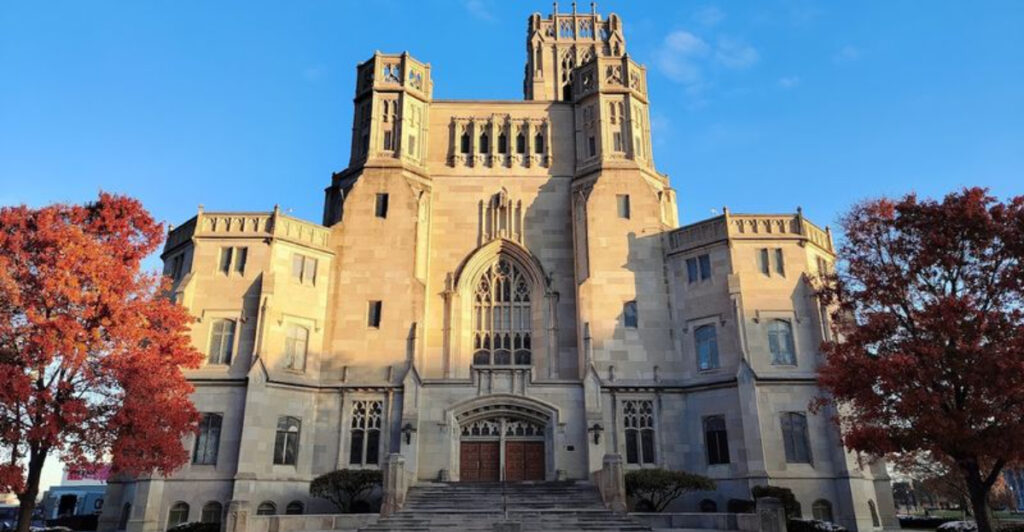
Towering limestone walls, soaring Gothic arches, and intricate Tudor-inspired details make the Scottish Rite Cathedral one of Indianapolis’ most striking architectural landmarks. Completed in 1929, this extraordinary building ranks among the largest Masonic structures in the world, combining ceremonial spaces with an acclaimed theater, elegant ballrooms, and remarkable craftsmanship throughout.
Guided tours reveal ornate woodwork, stained glass, carved stone, and fascinating stories that bring nearly a century of history to life. Whether you’re passionate about architecture, history, or hidden landmarks, this Indianapolis masterpiece offers an unforgettable look at one of Indiana’s most impressive buildings.
A Skyline Statement in Limestone
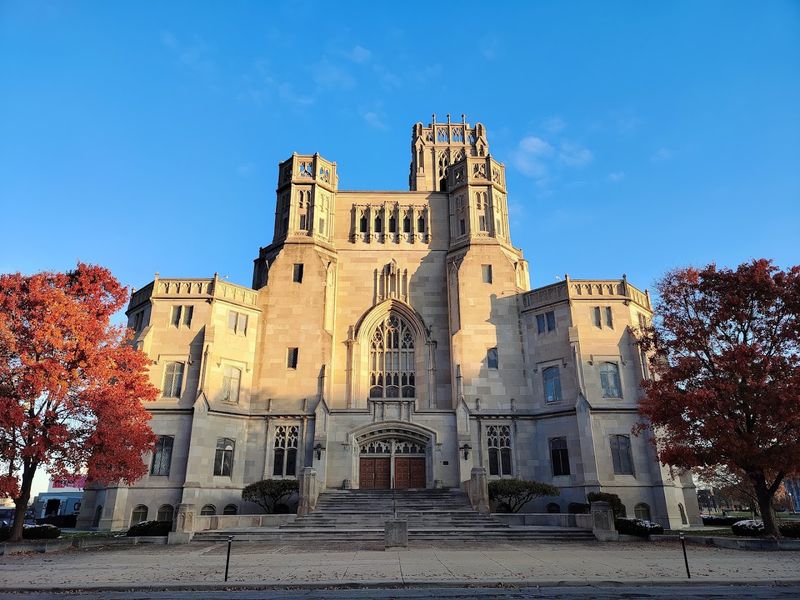
On Meridian Street, the Scottish Rite Cathedral does not ease into view – it commands the block. The building’s Tudor-Gothic profile rises in pale limestone with pointed arches, crisp tracery, and a tower that pulls your eyes upward before you have time to sort out the details.
Even in a city center filled with solid early twentieth century architecture, this place reads as unusually ambitious. The massing is part of the effect. Instead of presenting a flat facade and calling it done, the cathedral stacks setbacks, windows, parapets, and carved elements in a way that keeps changing as you move along the sidewalk.
From one angle it looks fortified, from another it looks ceremonial, and then a closer look reveals decorative finesse that softens the weight of all that stone.
You notice how deliberately it sits in the streetscape. Meridian gives it breathing room, so the exterior can do its full performance without being crowded by neighboring structures.
That matters here, because scale is one of the storylines, and this is the kind of building that needs distance to show how carefully its proportions were handled.
There is also a very Indianapolis contrast at work. Glass towers and everyday downtown traffic create a practical modern frame, while the cathedral stands there with old-world drama, almost daring the surrounding block to keep up.
The combination makes the first encounter stronger, not softer, because the building never blends into the background.
If you are arriving for a tour, concert, wedding, or simply a curbside look, the exterior already gives away the central truth: this is not an incidental historic building. It was designed to impress, and it still does, long before you reach the doors.
Inside the Great Hall, Red Velvet Meets Carved Wood
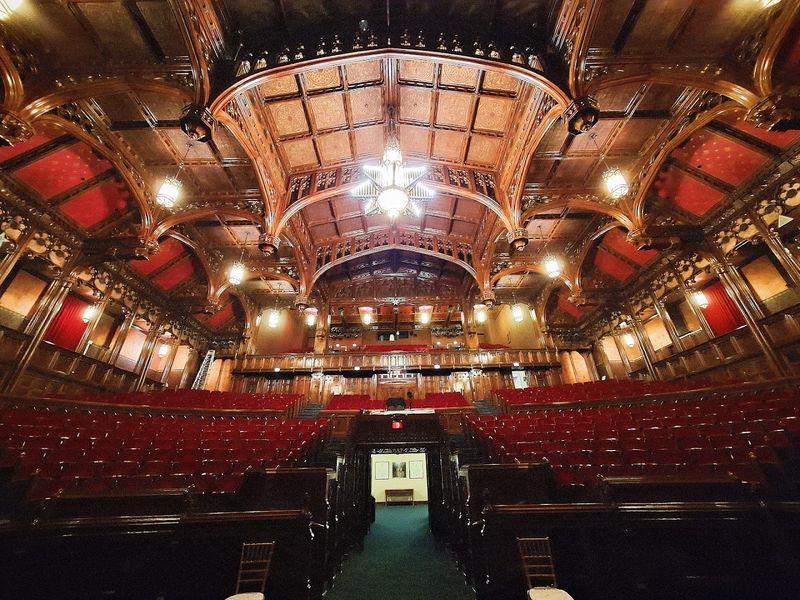
Once inside, the tone shifts from monumental to richly theatrical. Dark wood, deep color, and elaborate detailing create a room that looks built for ceremony but adapts surprisingly well to public events.
It is the kind of interior where your eyes keep bouncing between the stage, the balcony lines, the wall ornament, and the ceiling overhead.
The performance hall gets much of the attention, and for obvious reasons. Red seating and warm wood tones give the room a classic sense of occasion without tipping into stiffness, while the architecture frames performances rather than fighting with them.
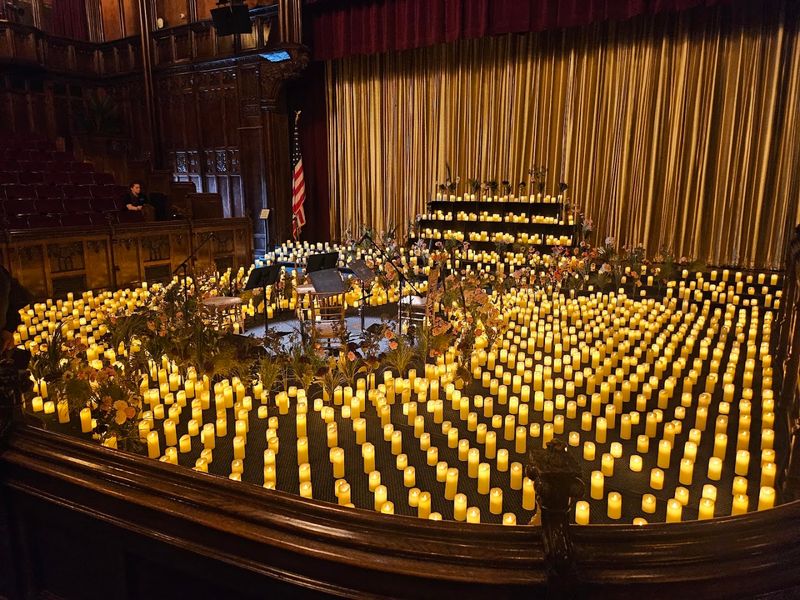
Candlelight concerts have become a popular draw here, and the setting makes sense for music because the room already carries a visual rhythm before a single note begins.
Acoustics are part of the appeal too. This is not a blank contemporary box dressed up for events at the last minute.
Hard surfaces, volume, and old-school craftsmanship help create a sound environment that many listeners find especially rewarding for strings and other intimate live performances.
Yet the hall never reads as museumlike. Ushers, guests arriving in date-night clothes, and the low bustle before an event give it motion and present-day life.
That practical layer matters because it keeps the cathedral from becoming a frozen artifact. You are not just looking at preserved grandeur – you are watching it function.
Comfort details can vary depending on seating and event setup, and tighter rows have been noted by some attendees. Even so, the visual experience does a lot of heavy lifting.
Few venues in downtown Indianapolis can turn the simple act of finding your seat into part of the evening’s entertainment.
Indiana Stone, Symbol, and Small Details You Could Miss
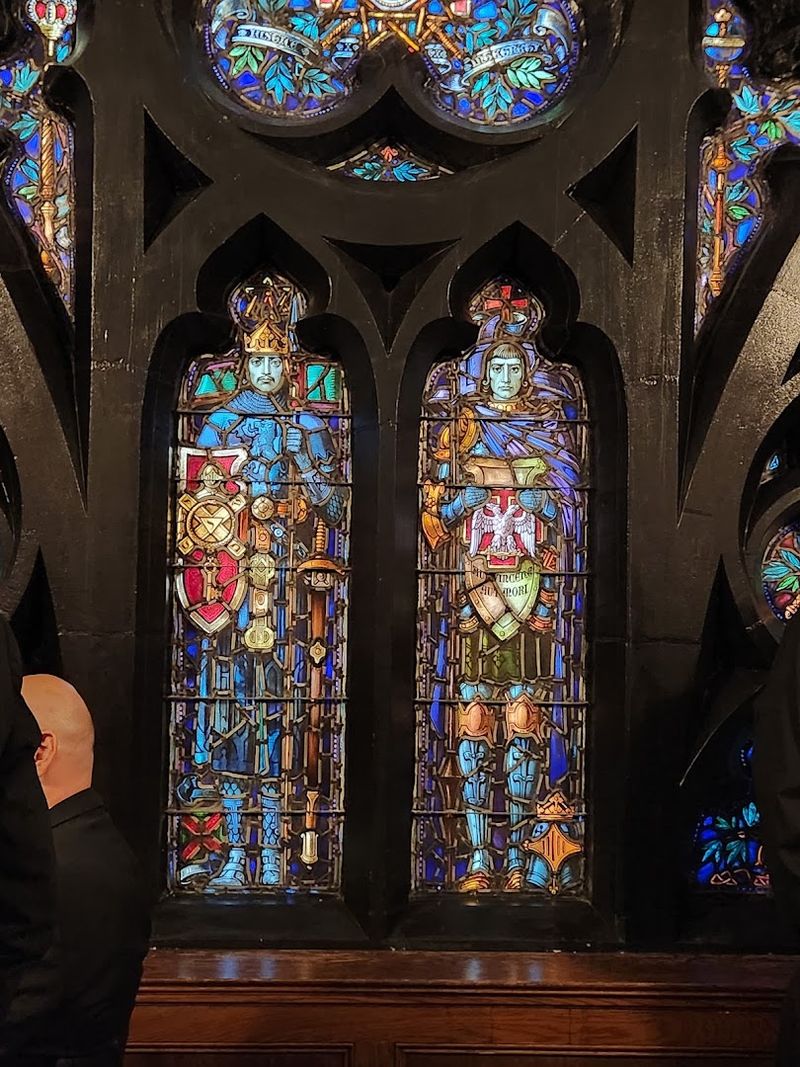
Big buildings often get flattened into one easy adjective, and here that word is usually beautiful. Fair enough, but the Scottish Rite Cathedral becomes more interesting when you stop treating it as a single spectacle and start reading the smaller details.
The carvings, symbolic motifs, stained glass, and layered decorative programs reward patient looking in a way that giant landmark buildings do not always manage.
Freemasonry is woven into the structure, and that symbolism is not tucked away as an afterthought. Guides and informed visitors often point out visual references that can be easy to miss if you move too quickly through the building.
Even without decoding every sign, you can tell that ornament here was meant to communicate identity, ritual, and hierarchy rather than simply fill space.
The stained glass deserves extra time. Instead of acting only as colorful decoration, it helps modulate the interior mood by filtering daylight into softer tones that change across the day.
Combined with the darker wood interiors, those windows create moments that feel almost stage-lit, which helps explain why the building adapts so well to tours and performances alike.
Then there is the craftsmanship itself. Stone edges stay sharp, woodwork feels deliberate rather than fussy, and repeated patterns give the rooms a disciplined visual structure.
It is a reminder that large-scale architecture can still hold attention at close range when the materials and detailing are taken seriously.
If you visit with a camera or even just a careful eye, this is where the cathedral pulls ahead of many grand venues. The wow factor is obvious from the start, but the second layer – symbols, glass, carving, and texture – is where the building becomes truly absorbing.
The Indianapolis Backstory Built Into the Walls
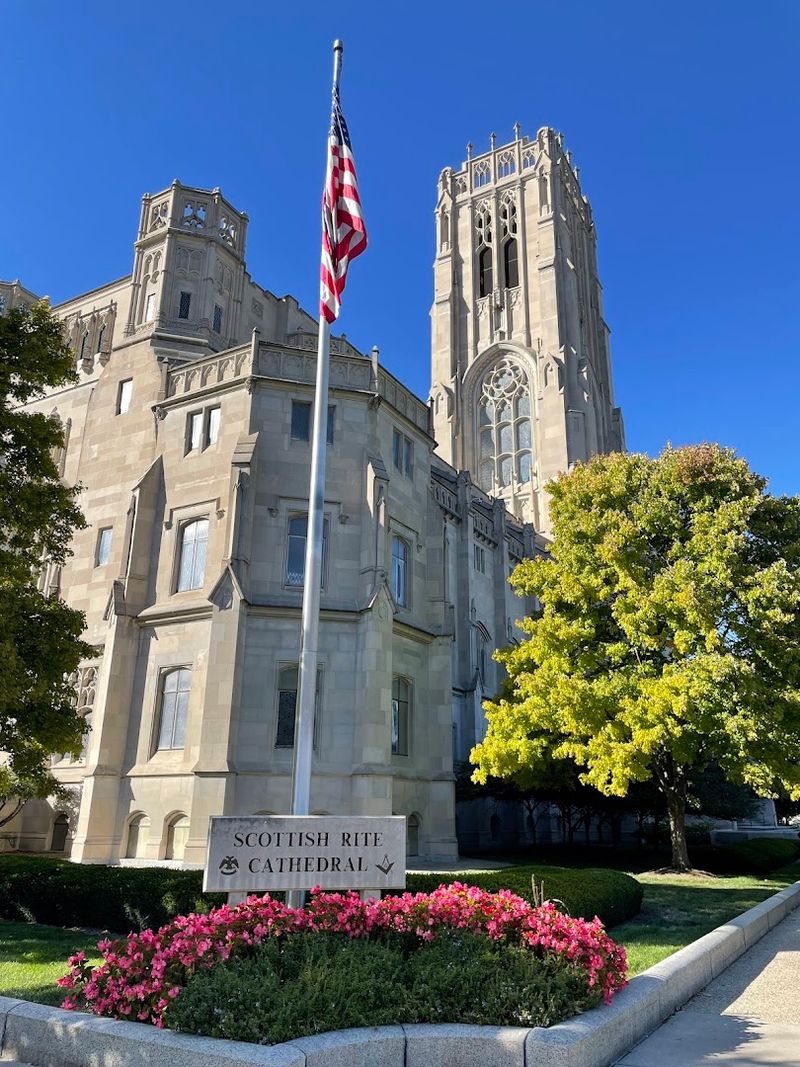
The Scottish Rite Cathedral is impressive because of its design, but also because of what it represents in Indianapolis history. This was not conceived as a modest meeting place hidden from public view.
Its size, visibility, and architectural ambition place it squarely in an era when fraternal organizations, civic confidence, and monumental construction often overlapped in highly visible ways.
That context helps explain the building’s unusual scale. Masonic architecture in the United States ranges widely, but this cathedral has long been recognized as one of the largest of its kind in the world.
You do not need a lecture in institutional history to sense that importance. The sheer amount of stone, volume, and ceremonial planning tells you immediately that this was meant to project permanence.
Indianapolis was growing into a major city when landmarks like this took shape, and the cathedral reflects that momentum. Its placement near the downtown core gave the organization presence in one of the city’s most formal corridors.
Rather than retreating from urban life, the building inserts itself directly into it, announcing both identity and confidence.
At the same time, the structure has not been locked into one chapter of the past. It still functions as a Masonic center while also opening itself to public-facing uses, which keeps the site woven into the city’s present.
That continuity matters more than a plaque ever could. You are seeing a building that remains active instead of merely commemorated.
For travelers, that blend is part of the appeal. You get the gravitas of a historic institution, but the experience is not sealed behind glass.
Indianapolis has plenty of architecture worth noting, yet few places tie civic scale, fraternal history, and ongoing public life together this convincingly.
Best Time to Go: Tour Hours vs Candlelight Evenings
This is one of those places where timing changes the entire experience. Visit during a scheduled public tour, and the cathedral reads as an architectural study full of symbolism, craftsmanship, and quiet visual drama.
Come for an evening event, especially a candlelit performance, and the same rooms shift into something more immersive, where lighting and music amplify the building’s built-in grandeur.
Daytime favors detail. You can better appreciate the stonework, wood carving, stained glass, and the disciplined geometry that organizes the interiors.
Tours are especially useful here because this is not a building that reveals everything at a glance. Context sharpens what you see, particularly when symbolic features and historical uses are explained room by room.
Evening events deliver a different kind of payoff. Dimmer light compresses the space visually, making the hall feel more intimate than you might expect from such a large structure.
Candles across the stage, formal seating, and the surrounding architecture create a cinematic frame that suits string performances and special programs particularly well.
The choice depends on what you want most. If architecture is your focus, daytime gives you clarity and a slower pace.
If you are chasing mood, book an event and let the building do its dramatic after-dark work. Neither option replaces the other, which is why repeat visits make sense here more than at many historic venues.
One practical note: public access is not constant across the week, so planning ahead matters. That limited availability can actually improve the experience, because when the doors are open, the visit feels more intentional than casual. This is not a drop-in lobby stop – it is a destination with a schedule.
How the Cathedral Works as an Event Space
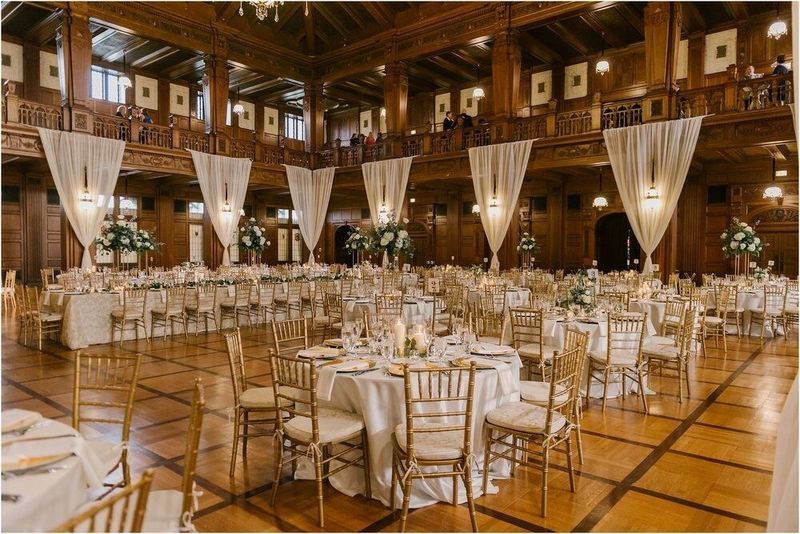
Plenty of historic buildings look good in photographs and then struggle when real crowds show up. The Scottish Rite Cathedral is more compelling because it functions as a working venue without sacrificing its architectural character.
Weddings, concerts, and special gatherings all use the same grand setting, and the building’s design gives those events more visual substance before any formal program starts.
Part of that comes down to sequence. Arrival matters here. You approach a serious facade, pass into interiors with ceremonial scale, and settle into rooms that already feel staged in the best sense.
That built-in progression adds occasion to even relatively short events, which is one reason the venue lands so well for celebrations and date-night programming.
The hall itself does a lot of the work. It frames a performance attractively, supports acoustics well for many live programs, and offers sightlines that make the stage easy to read.
You are not relying on temporary decor to create mood, because the wood, color, and Gothic detailing handle that immediately.
There are practical tradeoffs, and historic charm does not erase them. Some seating configurations can be tighter than modern purpose-built venues, especially for longer events.
That is useful to know in advance, not as a dealbreaker but as a realistic part of attending a program in a preserved architectural setting rather than a contemporary auditorium.
Still, the cathedral’s event success is easy to understand once you see it in motion. Staff and volunteers help move people through a building that could otherwise feel intimidating, and the grand rooms never become cold or distant. Instead, they lend texture and weight to occasions that might feel ordinary elsewhere.
Why This Indiana Landmark Outclasses the Usual Downtown Stop
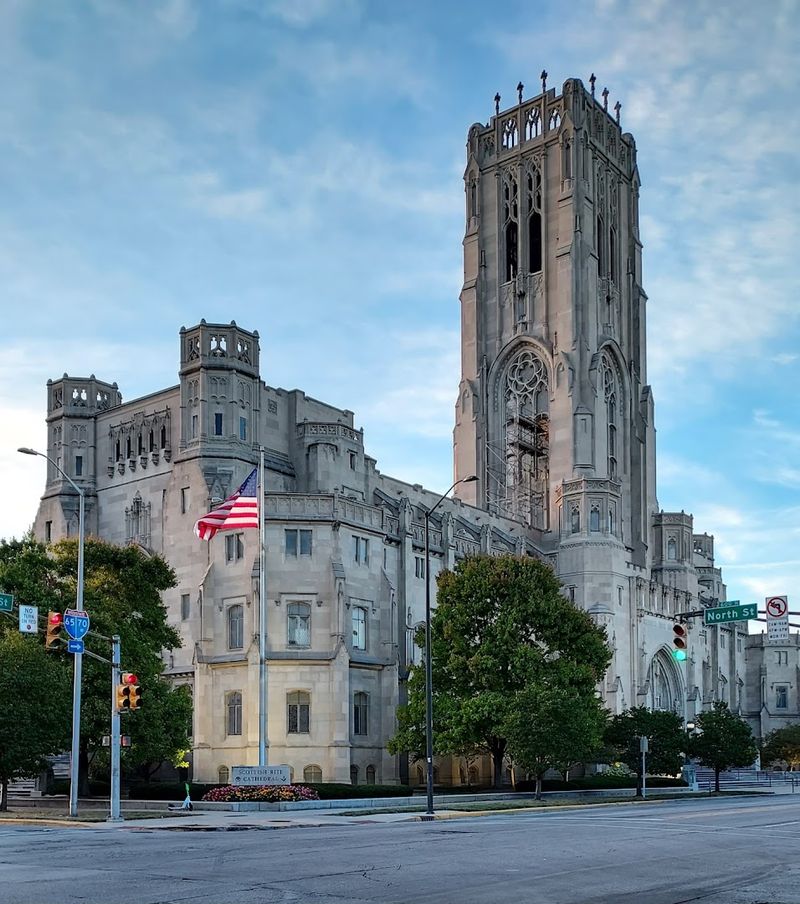
Some downtown landmarks earn attention because they are convenient. The Scottish Rite Cathedral earns it because almost nothing about it feels ordinary once you are in front of it.
Size gets you to pause, but the staying power comes from how many roles the building manages to play at once: civic landmark, ceremonial space, performance venue, and architectural showpiece.
That range is rare. Plenty of historic attractions are visually strong but static, useful for a quick exterior look and little more.
Here, the architecture works on several speeds. You can admire it from the sidewalk, study the craftsmanship during a tour, or experience it as part of a live event where acoustics, lighting, and scale all become active rather than decorative.
Its location helps too. Set on Meridian Street near the heart of Indianapolis, the cathedral is easy to pair with a wider downtown outing, yet it never dissolves into the background of a full schedule.
In fact, it has the opposite effect. A stop here tends to sharpen the rest of the day by giving you one place with unmistakable character instead of another interchangeable urban attraction.
The best part is that the building does not need hype to justify itself. The exterior already delivers a memorable cityscape moment, the interiors reward slow looking, and the history adds depth without requiring prior interest in Masonic institutions.
You can arrive curious about architecture, concerts, Indianapolis history, or simply unusual places and still leave with plenty to talk about.
If one landmark has to represent a more dramatic side of Indiana’s built environment, this one makes a strong case. It is grand without being hollow, ornate without losing function, and distinctive enough to reset your expectations for what a downtown visit can include.