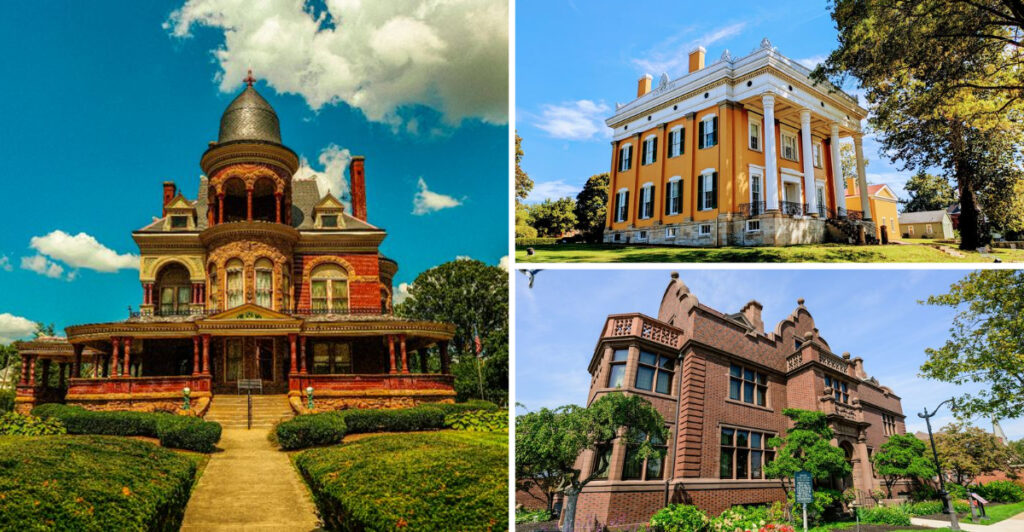
Indiana’s historic homes offer far more than beautiful architecture—they preserve the stories of the people who helped shape the state’s past. From elegant Victorian mansions and Gilded Age estates to the homes of influential authors, politicians, and entrepreneurs, these landmarks invite visitors to step inside another era.
Guided tours reveal original furnishings, handcrafted details, family heirlooms, and fascinating history that bring each property to life. Whether you’re passionate about architecture, local history, or simply exploring remarkable places, these 11 Indiana heritage homes provide an unforgettable glimpse into Indiana’s rich and enduring past.
1. Lanier Mansion State Historic Site (Madison)
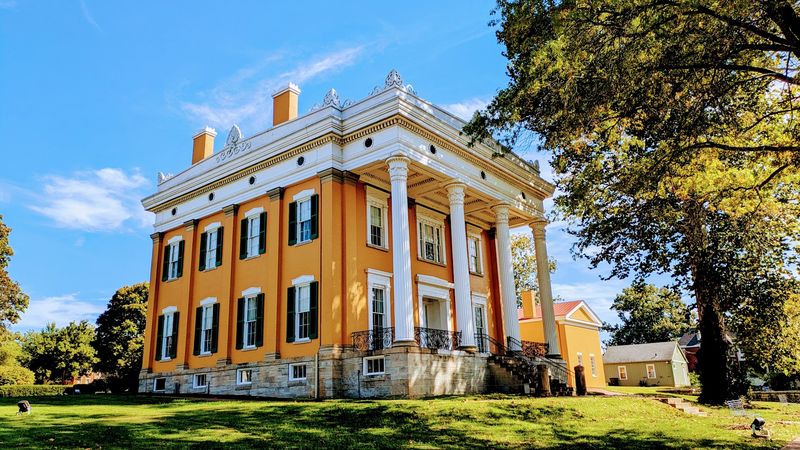
Madison has plenty of architectural eye candy, but Lanier Mansion plays in a different league. This 1844 Greek Revival showpiece rises above the Ohio River with the kind of balance and confidence that makes newer buildings look unsure of themselves.
Even before stepping inside, you get that crisp, formal look: tall columns, strong symmetry, and a facade designed to impress without trying too hard.
Inside, the details shift from stately to downright elegant. Period furnishings, carefully restored rooms, and a grand staircase create the kind of interior that rewards slow looking, not rushed wandering.
The spaces are refined, but they do not come off as cold. You can picture conversations in the parlors, guests moving through the halls, and the daily rhythm of a prosperous nineteenth century household.
The mansion also carries a broader Indiana story through James F.D. Lanier, the financier who lived here. Guided tours connect the beautiful rooms to his role in helping finance Indiana during the Civil War, which gives the visit more weight than a simple architecture stop. That mix matters.
You are not just looking at decorative trim and polished furniture, but at a home tied to decisions that reached far beyond Madison.
Plenty of historic houses lean heavily on one thing, usually beauty or biography. Lanier Mansion has both, plus a riverfront setting that sharpens the whole experience.
The result is polished without being stiff and substantial without becoming lecture heavy. If Indiana heritage homes are your goal, this one sets a very high bar right out of the gate.
2. Culbertson Mansion State Historic Site (New Albany)
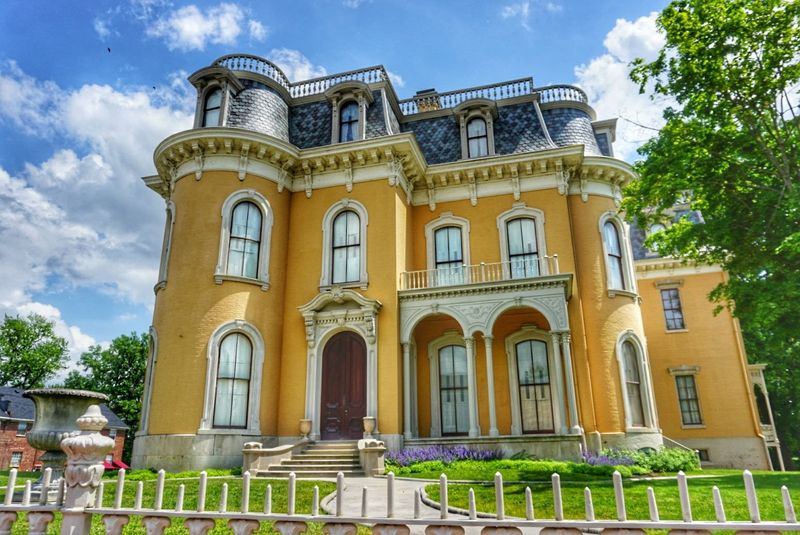
New Albany goes big with Culbertson Mansion, and the house does not waste time pretending otherwise. Built for entrepreneur William Culbertson, once Indiana’s wealthiest citizen, this 25 room Victorian residence is full of the kind of flourish that turns every doorway into a scene change.
The exterior already hints at extravagance, but the real performance starts indoors. Here, ceilings are hand painted, stained glass catches the light, and ornate woodwork seems determined to prove that plain surfaces are for other people. Room after room leans into Gilded Age luxury with rich finishes and decorative confidence.
It is the sort of place where you keep glancing up, then sideways, then back again because every surface appears to have received extra attention.
That visual abundance would be enough on its own, yet guided tours add the human scale that keeps the mansion from becoming a giant ornament box. The Culbertson family story brings context to the grandeur and helps explain how wealth, ambition, and social standing shaped the home.
You begin to read the rooms differently once they are linked to a family navigating status, business success, and public life in nineteenth-century Indiana.
Some heritage homes invite quiet contemplation. Culbertson Mansion is more theatrical than that, and that is exactly its strength.
It gives you craftsmanship, personality, and a strong sense of how wealth announced itself in that era. For anyone drawn to Victorian interiors with serious visual payoff, this stop delivers carved detail, color, and scale in a way that is hard to shake once you leave.
3. Hillforest House Museum (Aurora)
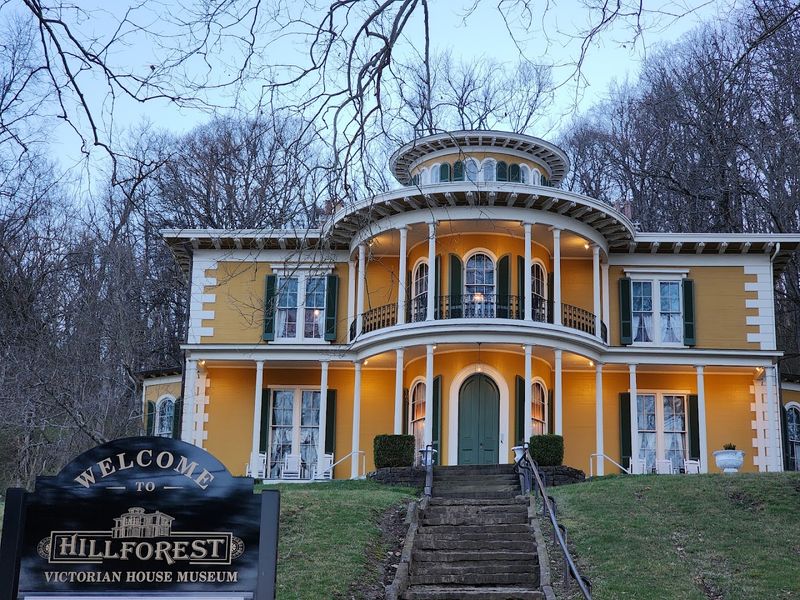
Perched above the Ohio River, Hillforest House Museum has a profile that immediately stands apart from the usual historic house lineup.
Built in 1855 for industrialist Thomas Gaff, this Italian Renaissance-style mansion carries a lighter, more distinctive look than many grand homes of its era. The riverside setting does plenty of the work, but the architecture holds your attention all by itself.
One of the most memorable features here is the use of circular rooms, which changes the whole mood of the interior. Instead of moving through a predictable series of square spaces, you get curves, unusual sightlines, and a layout that feels intentionally dramatic without crossing into excess.
Original furnishings help anchor the house in its own time, making the rooms read as lived spaces rather than stage sets assembled after the fact.
Because Hillforest is so visually specific, it tends to stick in your mind differently than larger or more ornate mansions. You remember the shape of the rooms, the way the house looks out toward the river, and the sense that this was built with both comfort and display in mind.
That combination gives the visit a fresh rhythm. It is polished, but there is also a breezy quality that suits the overlook above the water.
Aurora has no shortage of charm, and Hillforest sharpens it into something more architectural and memorable. The house offers elegance, yes, but also a clear personality.
For travelers who enjoy heritage homes that break away from standard layouts and predictable silhouettes, this one earns its place fast. It is a smart pick when you want history with river views and a floor plan you will still be talking about later.
4. Gene Stratton-Porter State Historic Site (Rome City)
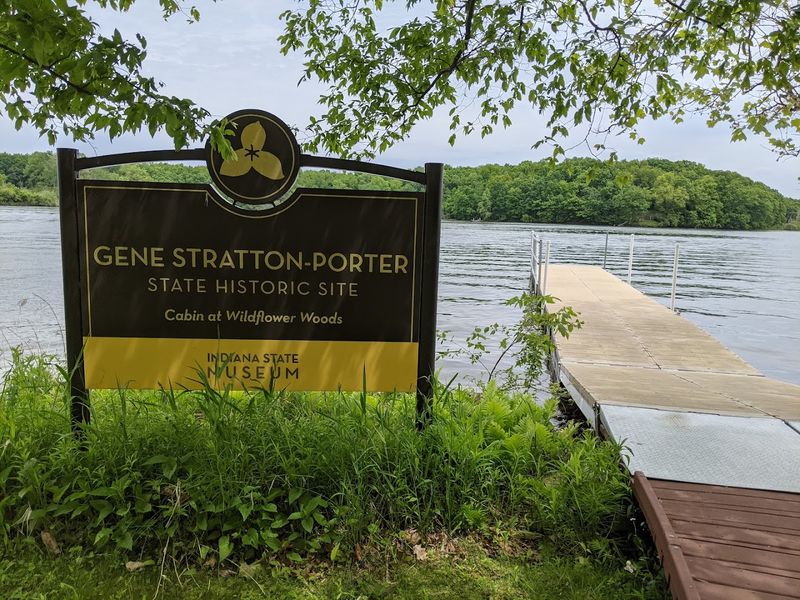
Not every Indiana heritage home relies on grandeur to make an impression. At the Gene Stratton-Porter State Historic Site in Rome City, the draw is more personal: a lakeside home tied to one of the state’s most influential writers, photographers, and conservationists.
The setting immediately helps. Water, gardens, and a lived-in scale create a connection between the house and the creative life it supported.
Inside, original furnishings and personal artifacts bring the story down to a human level. Instead of overwhelming you with size or ornament, the home invites close attention to the objects, workspaces, and domestic details that shaped Stratton-Porter’s daily world.
That intimacy matters because her legacy spans several fields. Literature, photography, and environmental advocacy all meet here in rooms that still suggest focus, discipline, and curiosity.
Guided tours deepen that connection by tracing how place influenced her work. The gardens and surrounding landscape are not decorative side notes, but part of the larger story of someone who observed nature carefully and translated it into art and advocacy.
You leave with a stronger sense of how home, environment, and creative practice can reinforce each other. It is a different kind of historical power than a mansion built to impress guests.
This site works especially well for visitors who want biography and setting to speak in the same voice. The house offers literary history, but it also gives you a grounded picture of a person whose influence reached far beyond one profession.
Rome City provides the calm backdrop, and the home supplies the texture. Together, they create a visit that is thoughtful, specific, and refreshingly unpretentious.
5. Levi and Catharine Coffin State Historic Site (Fountain City)
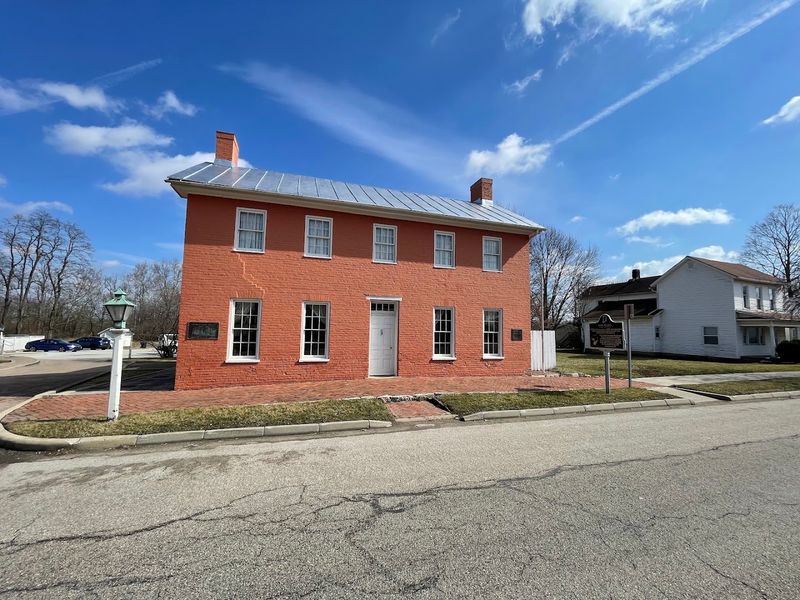
Some historic homes impress through style. The Levi and Catharine Coffin State Historic Site in Fountain City hits harder through purpose.
This preserved Quaker home is known as the “Grand Central Station” of the Underground Railroad, and that title immediately changes the way you read the rooms.
The house becomes more than architecture. It becomes evidence of courage, risk, and moral conviction lived out under one roof.
The home itself is modest compared with Indiana’s mansions, but that understatement gives the visit unusual force. Simple spaces take on immense meaning once guided tours explain how the Coffin family sheltered thousands of freedom seekers and helped them continue north.
Ordinary domestic features become charged with history. Hallways, doors, and room arrangements no longer register as neutral details once you understand the stakes attached to movement through the house.
What stands out most is the clarity of the story. The site does not need decorative excess or theatrical staging because the history carries its own gravity.
Visitors are asked to consider not only what happened here, but what it required from the people involved: planning, discipline, and a willingness to face consequences. That gives the experience a directness that many house museums never reach, even when their interiors are more lavish.
Fountain City may be small, but this home occupies a major place in American history. It offers a crucial reminder that preservation is not only about saving beautiful things.
Sometimes it is about protecting sites where conscience took practical shape. Among Indiana heritage homes, the Coffin house provides one of the most meaningful visits because every room points beyond itself to a larger national story.
6. T.C. Steele State Historic Site (Near Nashville)
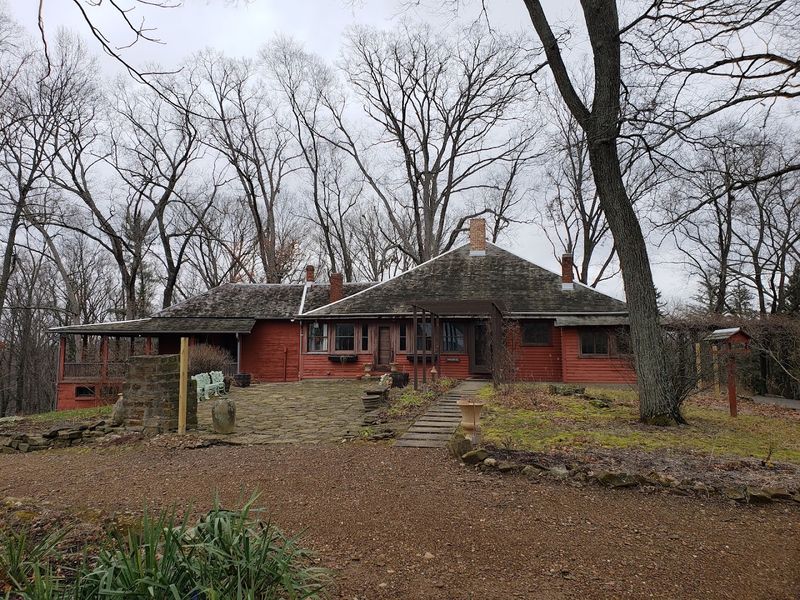
Brown County already knows how to charm, but the T.C. Steele State Historic Site adds artistic depth to the hills. Known as the House of the Singing Winds, the home and studio of Theodore Clement Steele sit in a landscape that clearly mattered to the painter who lived and worked here.
The setting is not background scenery. It is part of the whole point, and you notice that right away. Inside the residence, the experience is less about grand display and more about creative life taking shape in real rooms. Original artwork helps bridge the gap between the man, the house, and the land outside the windows.
You are not just seeing a preserved home, but a place where observation turned into paintings that helped define Indiana art. The studio adds another layer by showing how daily surroundings can fuel serious work.
The grounds deserve time too. Walking them helps explain why Brown County became such a powerful source of visual inspiration, with shifting light, rolling terrain, and that slightly hushed woodland character the region does so well.
This site works because it lets the house, studio, and landscape speak together. None of the pieces feel isolated. They reinforce one another in a way that makes the visit more immersive than a standard room-by-room tour.
For travelers who want a heritage home with a strong sense of place, this one lands beautifully. It combines art history, domestic space, and natural setting without making any of those parts compete for attention.
Near Nashville, where scenery often steals the show, T.C. Steele’s home proves that a historic site can match the landscape and add a smarter story to it.
7. James Whitcomb Riley Boyhood Home and Museum (Greenfield)
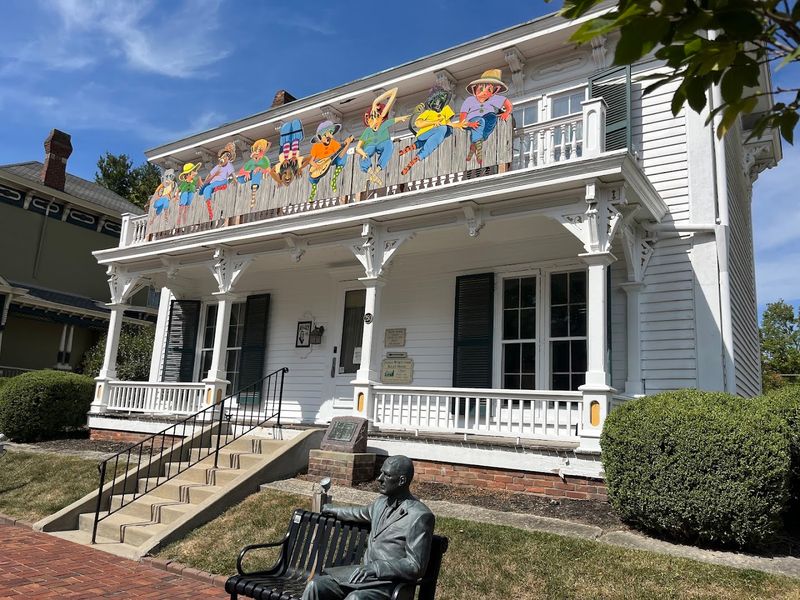
Greenfield’s James Whitcomb Riley Boyhood Home and Museum proves that a smaller house can still carry a major cultural footprint.
This modest nineteenth-century residence honors Indiana’s beloved “Hoosier Poet” with period rooms, manuscripts, and personal memorabilia that connect the public figure to a much more everyday beginning.
The scale works in its favor. You do not need a mansion to understand how powerful an early home can be in shaping a writer’s voice.
Walking through the rooms, the emphasis stays on Riley’s childhood and the experiences that later informed his literary legacy. That focus gives the museum a clear identity.
Rather than burying visitors under broad summaries, it lets domestic details and personal materials do the storytelling. Manuscripts add texture to the visit because they bridge the gap between household life and the polished work that reached audiences far beyond Greenfield.
The home also offers a useful contrast within Indiana’s broader collection of historic properties. Where some sites spotlight wealth, political influence, or architectural extravagance, this one centers language, memory, and formative experience.
Guided tours help tie those elements together without making the story feel remote. You get a stronger sense of how place, family life, and local surroundings can become the raw material for lasting literature.
There is an approachable quality here that makes the visit easy to settle into. The house does not rely on spectacle, and it does not need to.
Its strengths are specificity and connection. For anyone interested in Indiana’s literary history, this stop adds nuance to the bigger story of the state. It is quiet, focused, and full of details that reward readers, history fans, and curious travelers alike.
8. Seiberling Mansion (Kokomo)
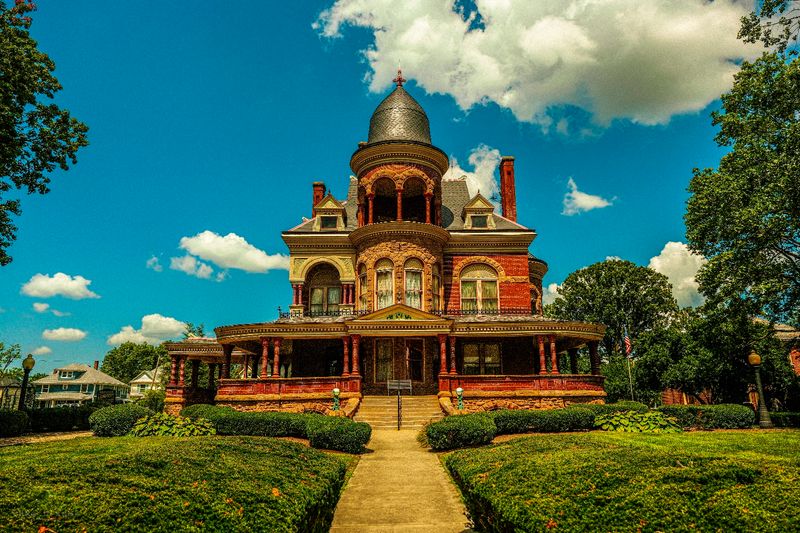
Kokomo’s Seiberling Mansion arrives with serious visual ambition. Built during Indiana’s natural gas boom, the house blends Romanesque Revival and Queen Anne elements into a structure that has no interest in blending into the background.
The exterior is bold, textured, and confidently elaborate, setting up an interior full of stained glass, ornate woodwork, and richly decorated rooms that know exactly how to hold your attention.
Inside, the craftsmanship does much of the talking. Wood surfaces are worked with real flair, decorative details stack up quickly, and the house carries that late nineteenth-century appetite for beauty on nearly every level.
Yet Seiberling is not merely a catalog of attractive surfaces. Operated by the Howard County Historical Society, it also connects those interiors to a larger local story about industry, growth, and the boom period that transformed Kokomo.
That industrial context gives the mansion extra bite. The home becomes a record of a city in ascent, when new money and civic energy could turn into highly visible domestic architecture.
Guided tours help frame the mansion as both residence and statement piece, which is exactly how many houses of that era functioned. You see private luxury, but you also see a community showing off its momentum through bricks, glass, and carved ornament.
Seiberling works especially well for visitors who enjoy homes with a little swagger. It is decorative, yes, but not shallow.
The place links craftsmanship to economic history in a direct, memorable way. Among Indiana’s heritage homes, this one offers a strong sense of time and place, with enough visual drama to satisfy architecture fans and enough local context to keep the story grounded in Kokomo itself.
9. John H. Barker Mansion (Michigan City)
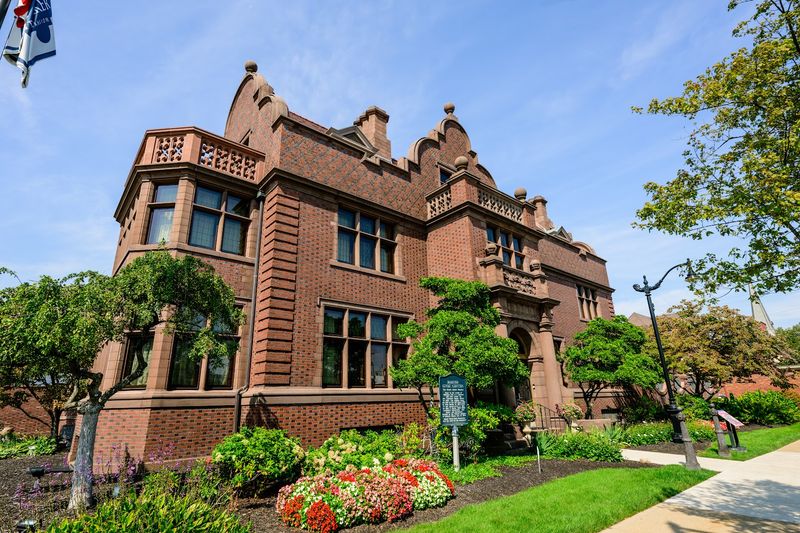
Michigan City’s John H. Barker Mansion leans straight into Gilded Age scale. With 38 rooms, original furnishings, and intricate woodwork, it offers the kind of layered domestic world that keeps you slowing down just to catch one more detail before moving on.
The house reflects the Barker family’s railroad fortune, but it does not present wealth as an abstract concept. Here, money becomes architecture, finish work, room arrangement, and visible lifestyle.
One feature tends to steal the spotlight: the indoor sunken garden. It is unusual, memorable, and exactly the sort of design move that gives a mansion its own personality instead of just another list of elegant rooms.
Around it, the rest of the interior continues the theme with decorative richness and preserved furnishings that help the place maintain continuity. The rooms look inhabited by a specific family, not simply styled for a museum brochure.
Guided and self-guided tours make the mansion accessible to different kinds of visitors, whether you prefer interpretation along the way or a slower, self-paced route through the house. That flexibility works well because there is plenty to absorb, from craftsmanship to family history to broader patterns of Gilded Age taste.
The Barker story helps tie all of it together, turning the mansion into a lens on status, industry, and domestic display in that period.
For sheer scale paired with distinctive detail, this is one of Indiana’s standout heritage homes. The famous garden gives it an extra hook, but the mansion would still be compelling without it.
Michigan City gets a historic site that is elegant, unusual, and architecturally satisfying, with enough original character to hold your interest room after room.
10. Eugene V. Debs Home (Terre Haute)
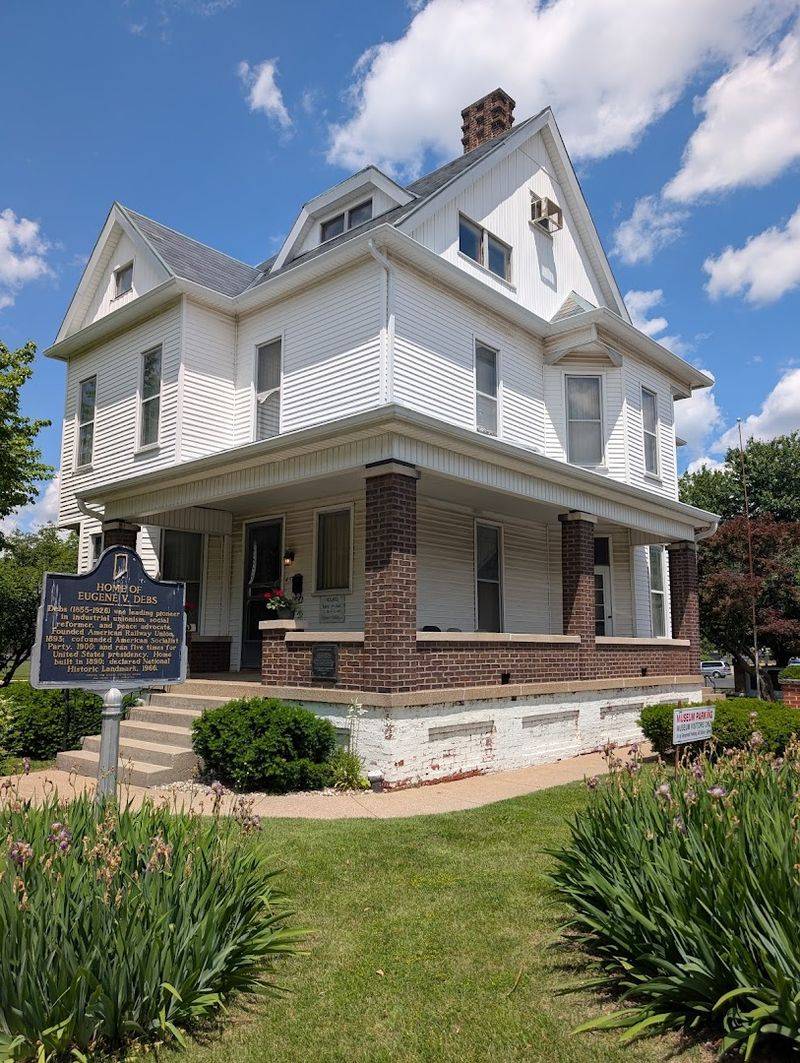
Terre Haute’s Eugene V. Debs Home offers a sharp change of pace from Indiana’s grander historic residences. The house is modest, and that modesty is exactly the point.
Debs was a labor leader and five-time presidential candidate whose influence came through organizing, speaking, and political conviction, not domestic extravagance.
The home provides a setting where public ideas and private life meet at a very human scale. Tours here focus on Debs’s life, his fight for workers’ rights, and his lasting impact on American politics and social reform. That gives the visit a different energy than a design-driven mansion tour.
You are not studying ornate ceilings or sweeping staircases. Instead, you are stepping into rooms that help frame the story of a figure who challenged power structures and became a national voice in debates that still resonate today.
The simplicity of the residence adds credibility to that story. It keeps the emphasis on Debs’s principles, campaigns, and public role rather than on decorative spectacle.
For visitors, that can be refreshing. The house works almost like a grounding device, reminding you that major movements and major ideas are often tied to ordinary domestic settings.
Political history becomes easier to grasp when it is anchored in a specific home rather than presented as a distant timeline.
Among Indiana heritage homes, this one stands out because it broadens the category itself. Preservation here is not about luxury or elite taste, but about civic memory and social change.
Terre Haute gains a site that asks bigger questions while staying rooted in local history. If you want a stop that adds political depth to an itinerary of historic houses, the Debs Home earns that slot easily.
11. William Henry Harrison’s Grouseland (Vincennes)
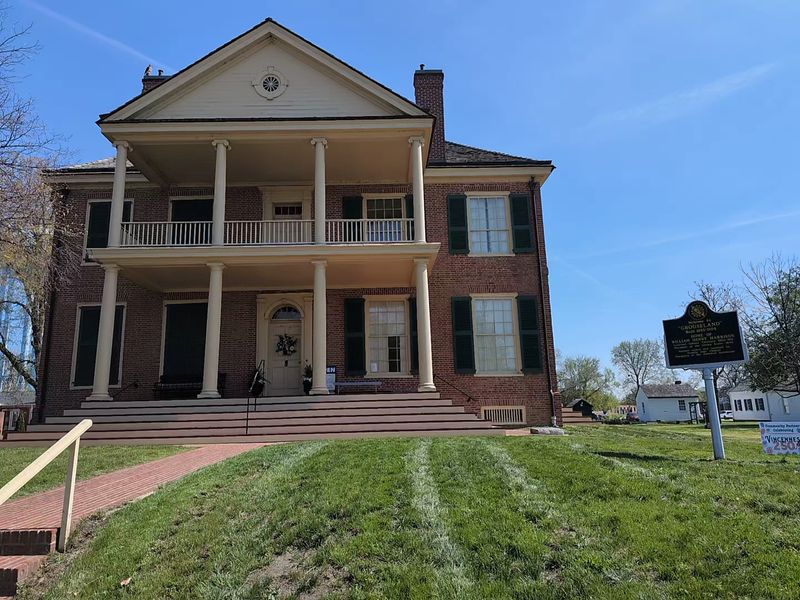
Vincennes brings deep history to the table, and Grouseland sits right in the middle of it. Built between 1802 and 1804, this Federal-style mansion served as the home of Indiana Territorial Governor and future U.S.
President William Henry Harrison. The house immediately carries a different historical charge than later mansions because it belongs to the early national and frontier period, when Indiana’s political future was still actively being shaped.
The architecture is refined but restrained, which suits the era. Restored period rooms and original artifacts help anchor the home in its time without overcomplicating the experience.
You move through spaces that suggest governance, hospitality, and domestic routine, all under the pressure of a rapidly changing frontier world. That balance between household life and public responsibility is one of the site’s strongest qualities.
Guided tours widen the lens beyond Harrison himself, touching on frontier politics, Native American treaty negotiations, and early Indiana history. Those themes give the mansion real substance.
The visit is not limited to furniture and floor plans, though both matter. Instead, the house becomes a stage for larger questions about power, territory, diplomacy, and expansion.
That broader frame makes Grouseland particularly rewarding for visitors who want context along with preservation.
Among Indiana’s heritage homes, Grouseland offers one of the clearest links between domestic space and early government. Vincennes already rewards history fans, and this site strengthens that reputation with a home that is both visually appealing and politically significant.
It is an excellent stop for anyone interested in the state’s earliest chapters, when architecture, leadership, and contested history were closely tied together under one roof.