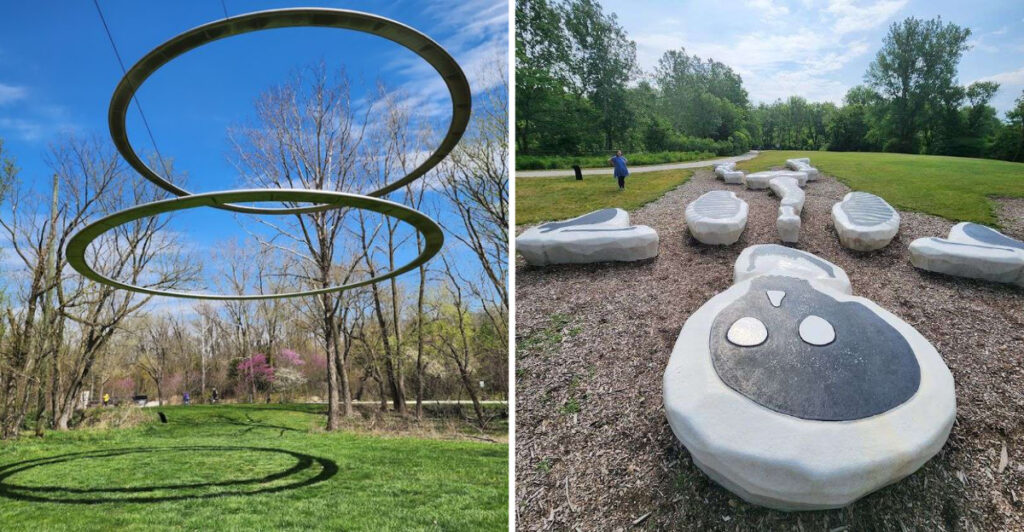
Art becomes even more memorable when it’s surrounded by forests, lakes, and open skies. The Virginia B. Fairbanks Art & Nature Park in Indianapolis blends large-scale contemporary sculptures with scenic walking trails, wetlands, and peaceful natural landscapes to create one of the city’s most distinctive attractions.
Free to explore and constantly offering new perspectives around every bend, the park invites visitors to experience world-class artwork outside the traditional museum setting. Whether you’re looking for a relaxing walk, striking photo opportunities, or an inspiring afternoon outdoors, this unique destination delivers the best of art and nature in one remarkable place.
A Forest Trail Where Major Art Appears Out of Nowhere
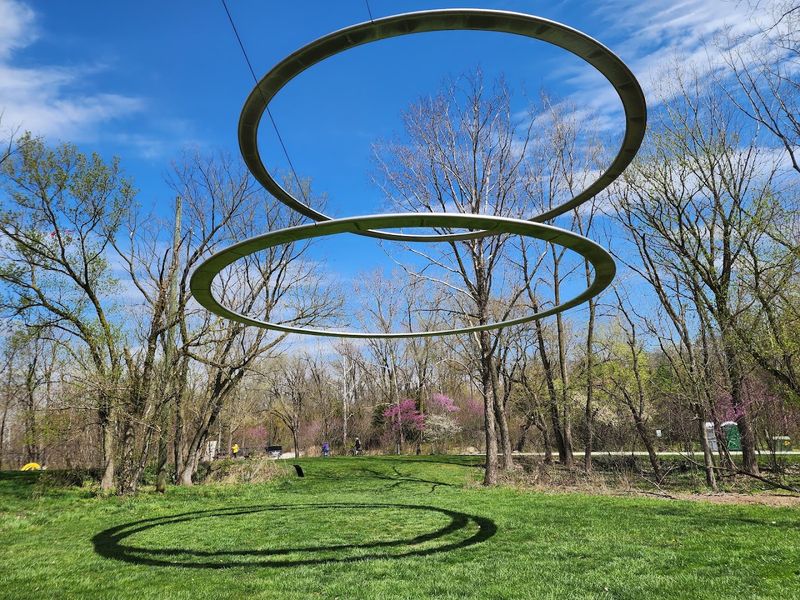
One minute the path is lined with trees and birdsong, and the next minute a giant artwork rises ahead like a plot twist. That surprise is one of the best parts of Virginia B. Fairbanks Art & Nature Park.
Instead of placing sculptures in formal rows, the park spreads them across 100 acres of woodland, meadow, and lakeside space, so each piece arrives with a little drama.
The setting changes how the art is seen. A tall sculpture can look bold against open sky, while another piece seems quieter when tucked near grass, water, or shade.
Even people who do not usually follow contemporary art can connect with it here, because the landscape gives every object a simple frame and a clear sense of place.
Walking through the park is not the same as moving through a museum gallery with white walls and one-way traffic. Here, the route breathes.
There is room to slow down, step aside, look again, and notice how weather, season, and distance can change an artwork in a few minutes.
That outdoor layout also makes the park feel approachable for mixed groups. One person may care most about sculpture, another may want a peaceful walk, and someone else may just want fresh air near the lake.
The park handles all three at once without forcing anyone into a strict plan. For first-time visitors, the smartest approach is simple. Start with a relaxed pace, keep eyes up at trail bends, and treat every clearing like a possible stage set.
The fun comes from not knowing whether the next thing in view will be wildflowers, water, or a serious piece of art sitting in the middle of it all.
Funky Bones Turns Serious Art Into a Playful Landmark
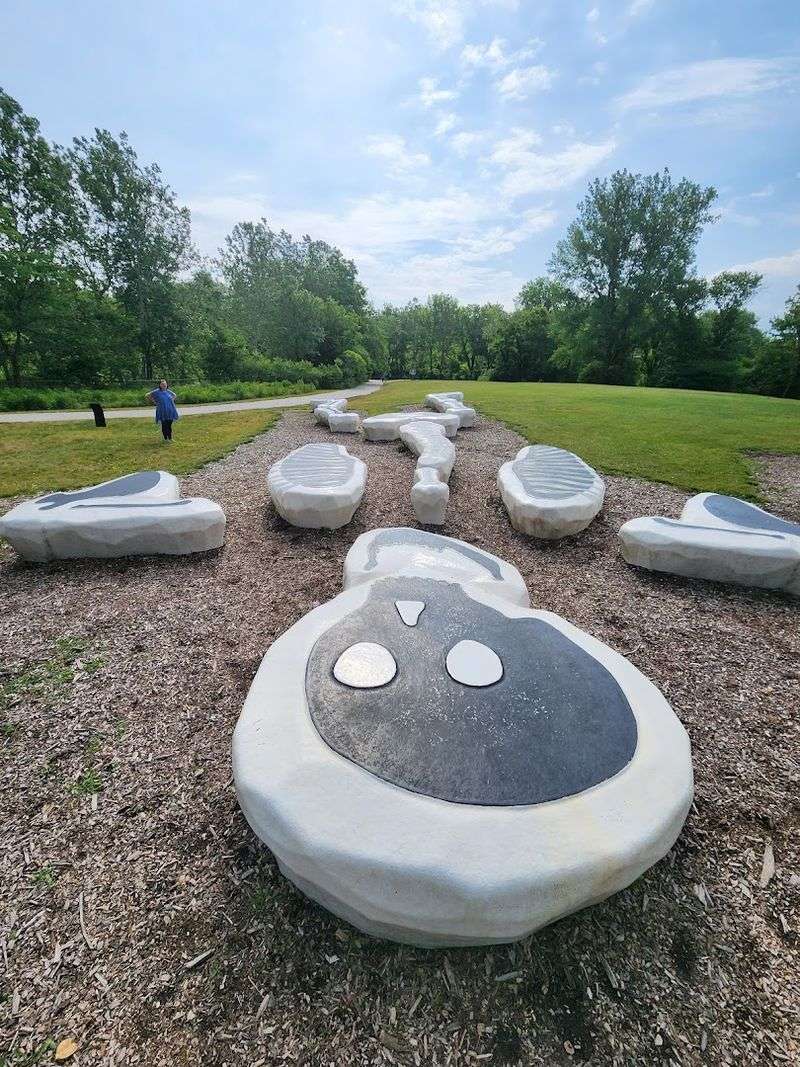
Not every expensive artwork acts formal, and that is exactly why Funky Bones catches so much attention. The famous sculpture, made of giant white bone shapes, brings a quick burst of humor to a park filled with big landscapes.
It is memorable at a glance, easy for kids to notice, and strange enough to make adults stop in the middle of a conversation.
The piece works because it is simple and odd at the same time. The forms look cartoonish from far away, but up close they become more sculptural and carefully arranged.
That shift gives the artwork broad appeal, since it can be enjoyed as a fun visual joke or studied as part of a larger art collection.
Its outdoor placement matters too. Bright white shapes against grass and sky create a bold contrast that almost turns the sculpture into a landmark inside the park.
People often use it as a meeting point, a photo stop, or the moment when the day changes from regular walk to art hunt.
There is another layer that makes the experience stronger. Because the work sits in an open environment rather than behind barriers and admission desks, it feels less distant.
Young visitors can be curious about form and scale, while older visitors can think about how public art changes when it lives under sunlight and clouds instead of ceiling lights.
If time is short, this is one of the easiest pieces to build a visit around. Use it as an anchor, then branch out to the trails and other installations.
That way the park becomes more than a place with one famous photo spot. It becomes a full loop of scenery, walking, and art that keeps changing after the camera is put away.
Lake Views, Meadows, and Woods Keep the Walk From Ever Feeling Flat
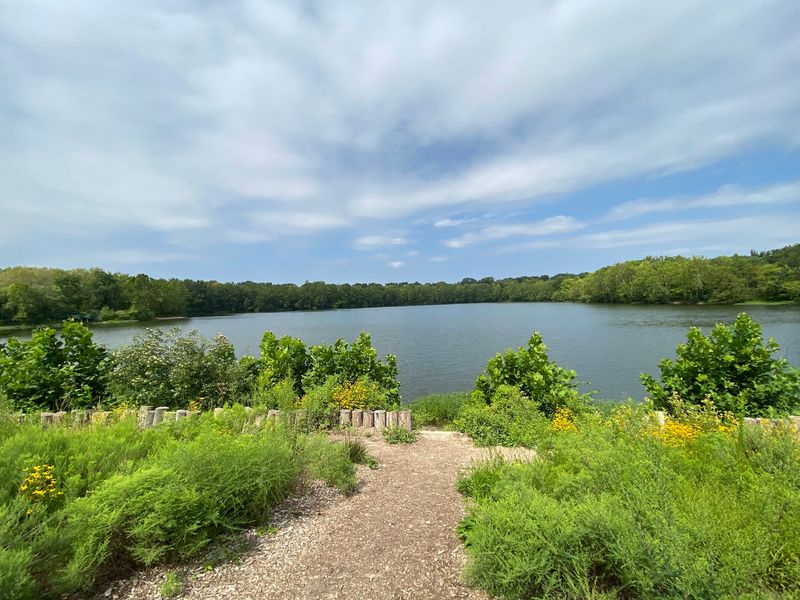
A park can have great art and still feel tiring if the route drags, but that is not the case here. The landscape keeps changing in useful, refreshing ways.
A loop around the lake, patches of woods, open meadow sections, and planted areas break the walk into scenes instead of one long stretch of sameness.
That variety helps every kind of visitor. Walkers who want exercise get a trail with enough movement to stay interesting.
Families get room to pause without blocking everyone else. Anyone coming mainly for views gets several distinct backdrops in one outing, from reflective water to tall grasses to shady tree cover.
The lake adds more than a pretty surface. It opens sightlines, cools the mood of the space, and creates moments where sculpture and nature share the same frame.
A piece near water can look sharper, quieter, or even more mysterious depending on cloud cover and the angle of the sun. Meadows bring a different energy. They widen the horizon and make the park feel larger than many people expect in the middle of Indianapolis.
In warm months, flowers and grasses add color and motion, while wooded sections offer relief when the day gets bright or hot.
For practical planning, comfortable shoes matter more than fancy gear. The paths are friendly for a casual outing, but the real pleasure comes from covering enough ground to see the park shift from one mood to another.
Go slowly near the narrow stretches, especially around busier lakeside sections, and allow extra time for side looks at the water, birds, and art plaques. A visit works best when the scenery is treated as part of the collection, not just the space between sculptures.
Why Free Admission Changes the Whole Experience
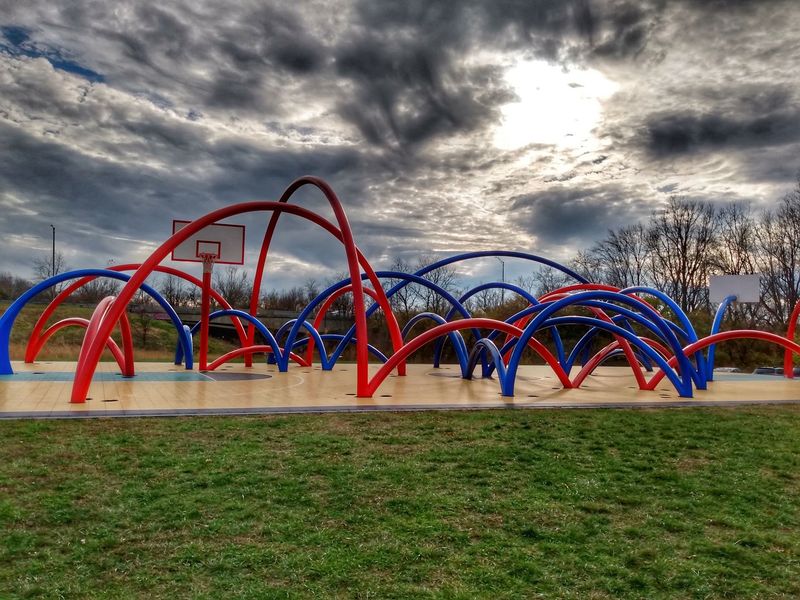
Free entry sounds like a small detail until it changes how a place is used. At Virginia B. Fairbanks Art & Nature Park, no ticket cost means there is less pressure to turn the day into a big production.
People can come for an hour, circle back another weekend, or stop in mainly for a walk and end up discovering major art along the way.
That freedom creates a more natural rhythm. A family does not need to calculate whether every child will stay interested long enough to justify admission.
A runner, cyclist, or dog walker can fit the park into ordinary life. Someone curious about sculpture but unsure about museum spaces can try it here without feeling committed or out of place.
The result is public art that behaves like part of the city rather than a separate, elite destination. Big contemporary works often carry an expensive reputation, and some museum collections can seem hard to approach.
In this park, cost is removed from the conversation, so attention shifts to looking, moving, and noticing. That matters for young visitors too. Kids can learn that serious art does not always come with hushed rooms and strict boundaries.
It can sit under open sky, near a trail, and share space with ducks, grasses, and joggers. That lesson quietly expands who art is for.
There is also a practical bonus. Free parking and open outdoor space make spontaneous visits easier than many cultural outings.
Instead of building a full-day budget around one attraction, visitors can pair the park with a picnic, a short neighborhood drive, or time at nearby Newfields grounds. When admission is not part of the math, curiosity has a better chance to lead the day, and that is when the park tends to work best.
An Indianapolis, Indiana Escape That Barely Feels Urban
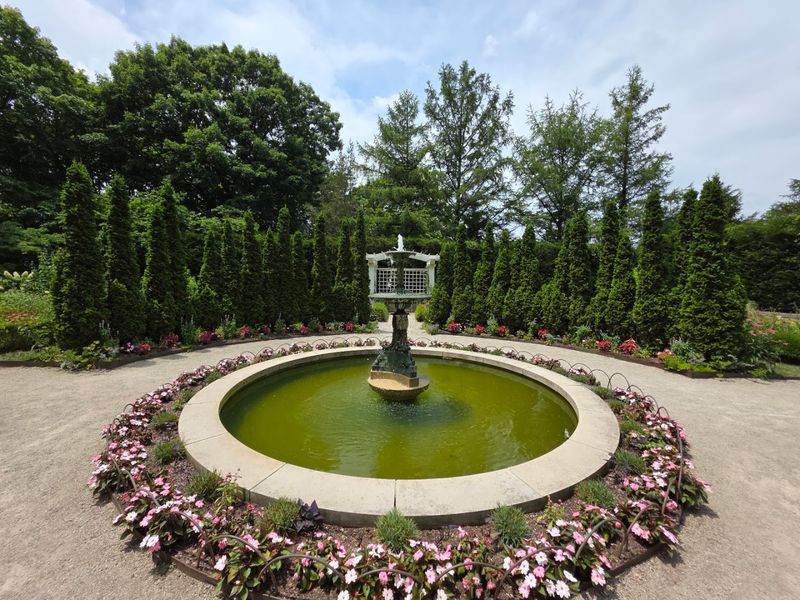
City parks often remind you that traffic is nearby, but this one creates a stronger break from everyday noise. Once the trails begin to curve around water, meadow, and woods, the urban setting starts to fade from attention.
That contrast is part of the surprise, especially for anyone expecting a standard landscaped park with a few statues dropped in.
The space gives Indianapolis something different from a quick downtown green patch. Here, there is room for distance between sights.
That breathing room lets sculpture appear in a more dramatic way and gives the natural parts of the park enough scale to matter on their own.
Birdlife, tall grasses, tree cover, and long water views help build that sense of separation. Even short visits can include quiet moments that feel far removed from streets and schedules.
A person may come for art and end up spending equal time watching the lake, scanning meadow edges, or following the line of a trail into shade.
Because the park sits within the orbit of Newfields, it also broadens what a cultural visit in Indianapolis can be. The museum side speaks in galleries and buildings.
The park answers with trails, weather, and objects set directly in the landscape. Together, they show two very different ways to spend time with art.
The smartest way to enjoy that outdoor calm is to avoid rushing for every sculpture at once. Choose a direction, settle into the pace of the paths, and let the city drop away little by little.
Late afternoon can be especially appealing when the light softens across the meadow and the lake reflects more color. In a metro area, that kind of visual quiet is not ordinary, and it helps explain why the park stands out so sharply in central Indiana.
Best Route for Seeing More Without Turning the Visit Into a March
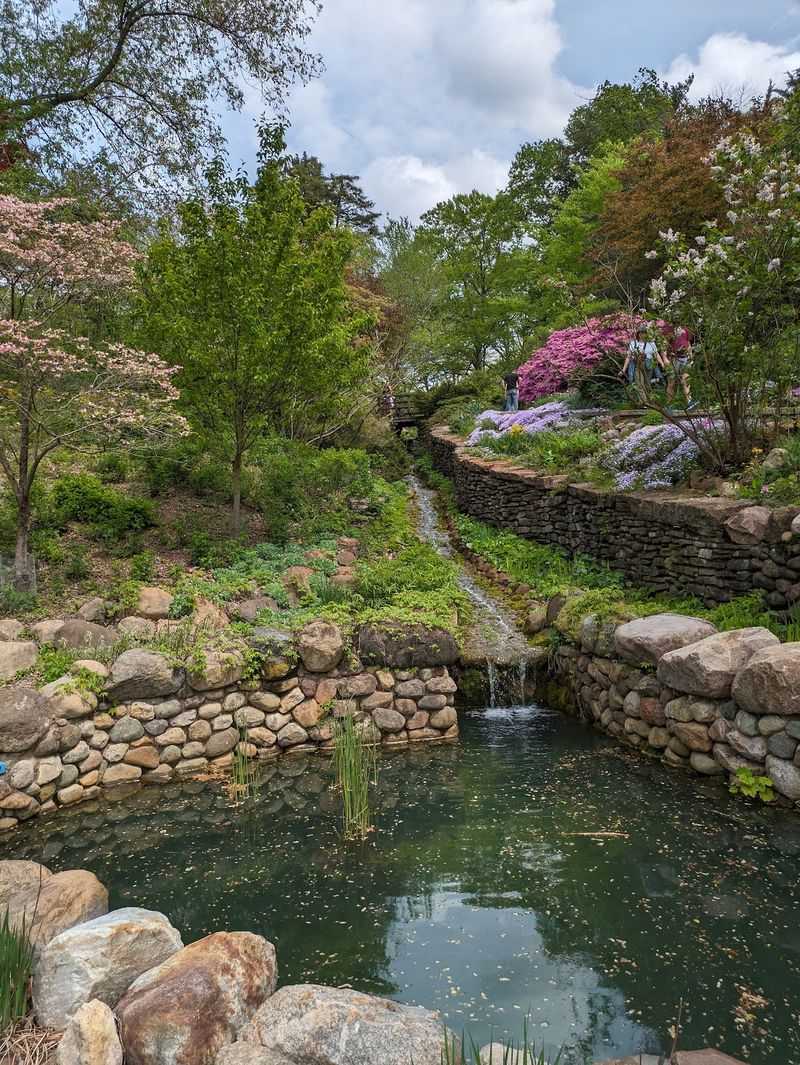
Trying to see everything too fast is the easiest way to miss what makes this park enjoyable. The better plan is to build the visit around movement, not checklist hunting.
A loop route near the lake gives a strong starting structure, then the sculptures, meadows, and wooded sections can unfold in a steady, readable order.
Beginning earlier in the day usually helps. The trails are easier to navigate when energy is high, the light is cleaner for photos, and the park often feels calmer before the busiest stretch.
Since the grounds generally open at 8:30 AM and close at 7:30 PM, there is a wide window to plan around weather and pace.
Keep the first part of the walk slow. It is tempting to rush toward a known piece like Funky Bones, but the park rewards people who notice transitions between installations and landscape. A sculpture framed by trees can hit differently after a shaded stretch than it would if reached by a direct sprint.
For groups, setting a loose turnaround point works better than promising every single corner. Kids and casual walkers usually stay happier when there is freedom to pause at plaques, watch birds, or sit for a minute rather than pushing through the whole route at one speed.
Leashed dogs fit well here too, especially on the broader parts of the trail. Pack lightly but smartly. Water, walking shoes, and dog bags if needed are more useful than anything fancy.
After rain, expect some sections to feel softer underfoot. Most of all, leave enough time to double back to one piece that caught attention the first time. In a park built around art and nature together, a second look is often better than a longer list.
The Final Surprise Is How Much the Park Teaches Without Acting Like a Lesson
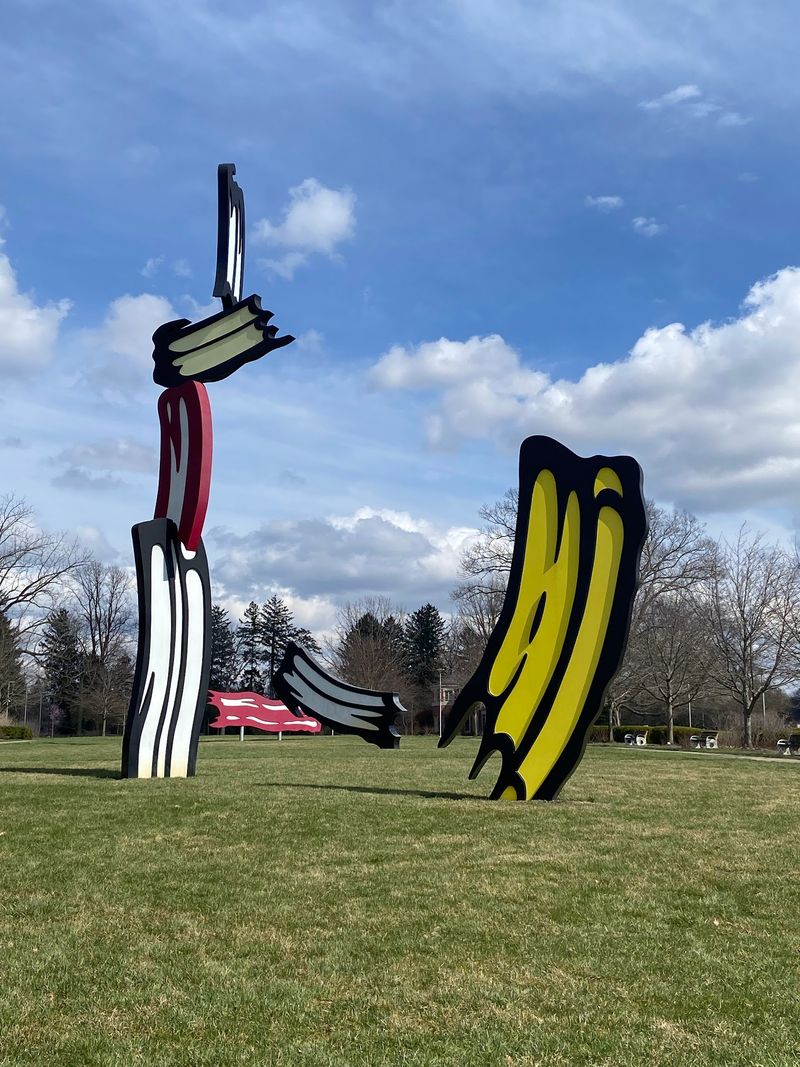
Some places teach by talking nonstop. This one teaches by letting the setting do half the work. At Virginia B. Fairbanks Art & Nature Park, labels and artworks add context, but the bigger lesson comes from seeing how scale, material, and placement change outside a museum building.
That makes the park especially strong for families, students, and anyone who learns best by wandering. A child can read a plaque, glance up at a sculpture, then compare it with the water, trees, or sky around it.
The connection is immediate. Art stops being a distant school subject and becomes part of a real place that can be walked through and discussed in simple terms.
Adults get a similar benefit. Contemporary sculpture can sometimes seem intimidating when introduced through theory first.
Here, the entry point is visual and physical. People notice shape, size, humor, texture, and location before they ever need specialized vocabulary.
Curiosity comes first, interpretation follows later. The park also teaches patience in a quiet way. Not every artwork reveals itself from one angle, and not every part of the landscape peaks at the same moment.
A bright meadow may command attention first, then a bench, a path turn, or a reflective lake edge starts to matter more. That slow unfolding is part of the value.
For anyone deciding whether the park deserves time, the clearest answer is yes if the goal is an outing with layers. It works as exercise, as scenery, as public art, and as an easy local field trip without an admission fee.
Very few places let million-dollar art live this casually beside trails and wild growth. Fewer still make the whole experience so easy to enter, understand, and return to again on an ordinary afternoon.