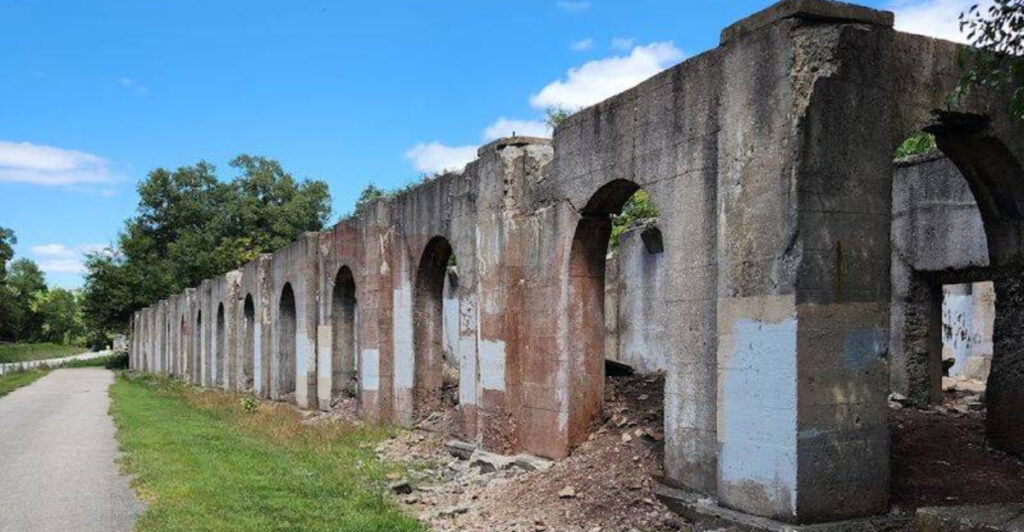
Some hiking trails lead to waterfalls or scenic overlooks. The paths at Joliet Iron Works Historic Site lead through the remarkable remains of one of Illinois’ most important industrial landmarks. As you walk past towering stone ruins, historic furnace foundations, and interpretive exhibits, the site reveals the story of the massive ironworks that helped fuel the nation’s growth during the 19th century.
Blending peaceful natural surroundings with fascinating history, this unique destination offers one of the state’s most memorable walks. It’s the perfect stop for anyone who enjoys discovering the stories hidden beyond the trail.
Brick Giants Rising Beside the Trail
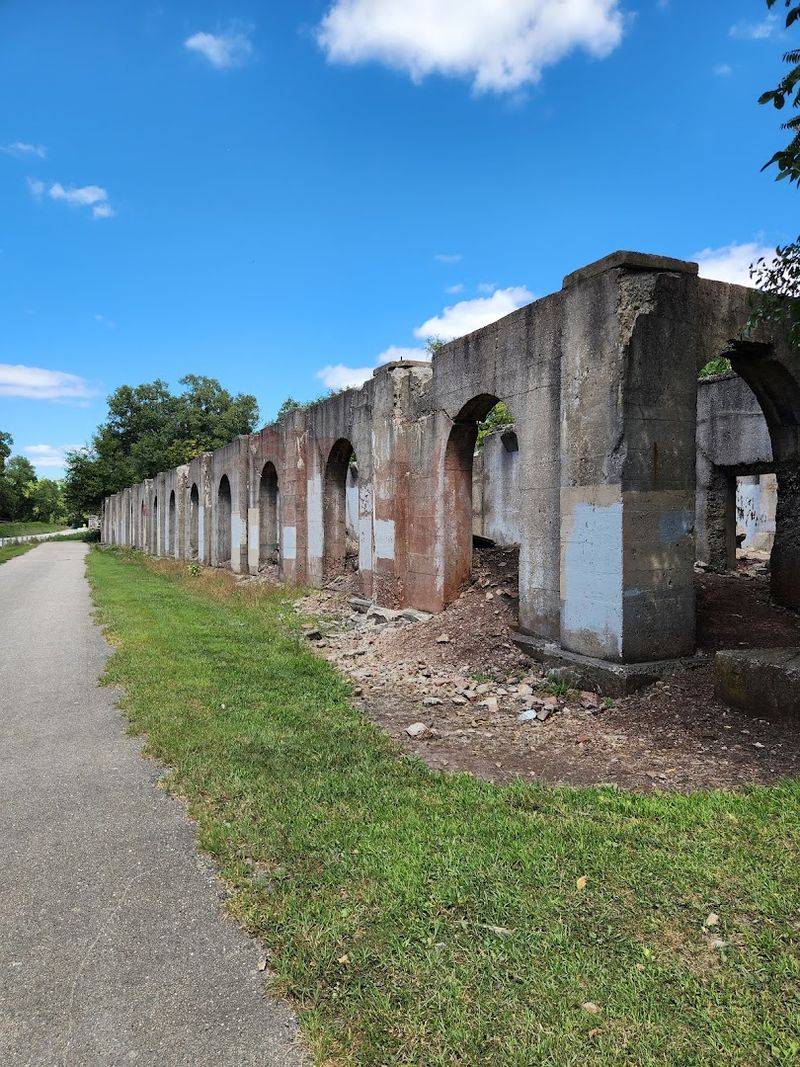
The surprise comes early here. Instead of entering a forest where history hides behind trees, walkers step into a broad open landscape where giant brick ruins stand in plain view.
Broken walls, heavy foundations, and old industrial shapes rise from the ground like pieces of a lost machine, making the first few minutes of the hike feel more like a movie set than a standard park path.
That strong visual impact matters because Joliet Iron Works was once one of the city’s biggest industrial sites. Even in ruin, the scale is easy to read.
The remaining structures look oversized compared with the walking path, and that contrast helps explain how large the operation once was without needing a long lecture before the hike even begins.
The route is friendly for many walkers, which adds to the appeal. Reviews often point to the paved or finely graveled path, and that means families, casual hikers, and even stroller users can take in the site without battling rough terrain the whole time.
The ruins stay close enough to watch and study, but fencing and walkways help guide movement through the most sensitive areas.
Photographers get plenty to work with too. A low angle can turn a leftover wall into a giant backdrop, while a wider shot can frame brick arches, rust-colored metal, and open sky in one image.
Morning and late afternoon light tend to bring out the texture in the old masonry. For a first visit, slow down at the opening stretch instead of rushing deeper down the trail. The earliest views do a lot of storytelling on their own.
Before any sign is read, the place already explains that Joliet once ran on iron, fire, labor, and massive industrial power.
A Hike That Doubles as an Open-Air Museum
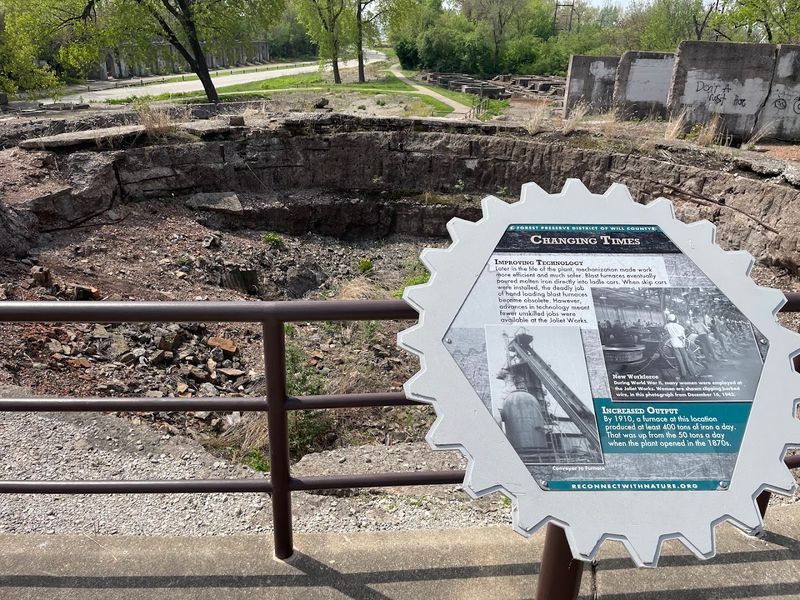
Plenty of trails offer scenery. Far fewer teach along the way without turning the walk into homework. At Joliet Iron Works Historic Site, the path works like an outdoor museum, where signs, markers, and preserved remains help explain what stood here and how the iron works shaped the city around it.
That format changes the rhythm of the hike. Instead of walking nonstop from one viewpoint to the next, people naturally pause, read, look up, and match old facts to the ruins in front of them.
Some markers focus on the plant as a whole, while others help connect the physical remains to the work that happened on site. One review even mentions a timeline brick walkway, which adds another simple but smart way to organize the story underfoot.
The educational side is especially useful for families and students. Kids who might lose interest on a long history tour often do better when the lesson is tied to something they can actually see, like a furnace base, a wall, or an old industrial platform.
Adults get the same benefit. Reading about labor, production, and daily work becomes more real when standing where that work once happened.
Not every sign answers every question, and some visitors wish for more details on each building. Even so, the main effect is strong.
The site gives enough information to create context without crowding the trail with too much text. That balance keeps the walk moving while still making it informative.
Anyone planning a visit should allow extra time for stops. The distance itself is not the whole experience here. Joliet Iron Works is best treated as a place to wander, read, and notice connections between the words on the placards and the large, silent structures waiting beside the path.
Where Industry Meets Water, Grass, and Sky
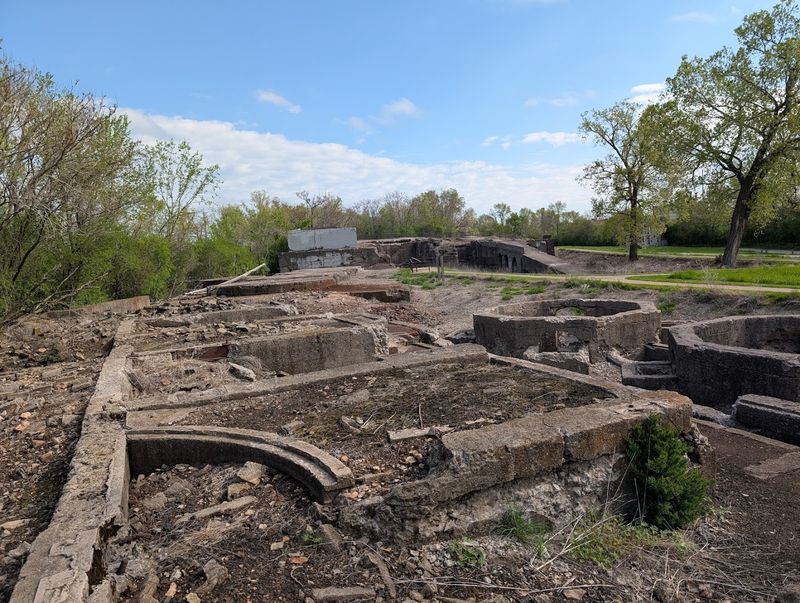
Not every memorable part of this hike is made of brick. One of the most interesting things about Joliet Iron Works Historic Site is how the industrial remains sit beside water, prairie growth, open sky, and connected trails.
That meeting of hard and soft scenery gives the walk a changing mood from one stretch to the next. Near the ruins, the view is all structure and history. A little farther along, the setting opens into greener space, with grasses, trees, and trail edges that soften the old factory footprint.
Reviews mention little ponds off to the side and the nearby I and M Canal Trail corridor, which adds another layer to the landscape. Instead of one single scene, the route shifts between industrial relics and restored outdoor space.
This contrast helps explain why the place works for more than history buffs. A person who arrives for photography may focus on the rusted remains and strong lines.
Someone who wants a light walk gets easy movement and changing scenery. A family can mix learning with a picnic stop or a short nature break, rather than treating the visit like a serious museum trip from start to finish.
Season matters here in a fun way. Fall can sharpen the red and brown tones of the ruins while tall grasses catch the light.
In warmer months, the green edges around the site make the industrial remains look even more dramatic. On overcast days, the place takes on a quieter, tougher look that suits its history.
Bring water, wear shoes with decent grip, and pause occasionally to look away from the ruins instead of only at them. Part of the story is in the setting itself.
Nature has not erased the iron works, but it has wrapped around it, turning a former factory landscape into a layered public trail.
The Workers Behind the Walls
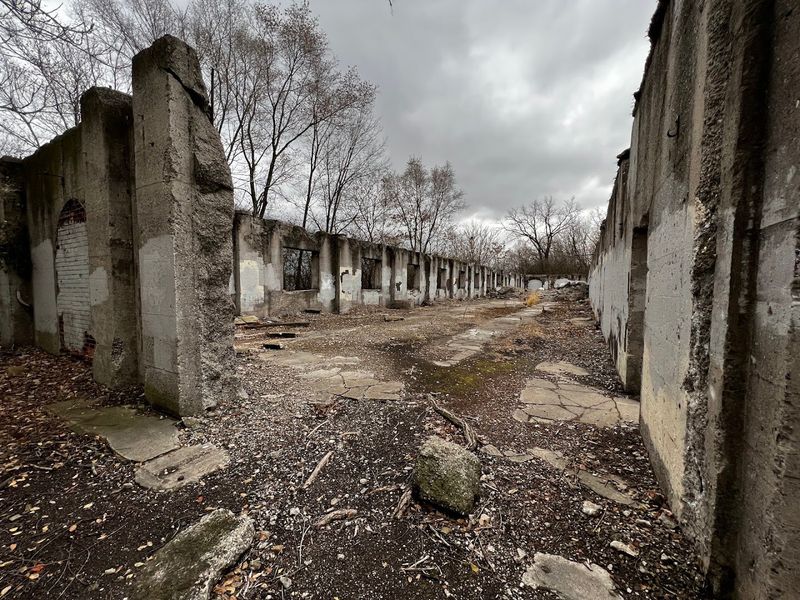
Big ruins can make it easy to focus only on machinery and scale. The deeper story at Joliet Iron Works Historic Site, though, is about people.
Behind every furnace, wall, and production area were workers handling heat, noise, danger, and long days in an industry that helped power growth in northern Illinois.
Some of the site’s markers talk about job life and labor, and that human angle gives the walk more weight. Industrial history is not only about what was built, but about who did the building and what daily life demanded from them.
The remains look impressive on their own, yet they become far more meaningful when connected to the effort, risk, and routine that once filled the property.
That is one reason the site can be especially interesting for anyone curious about working-class history or labor unions. Reviews hint at that connection, noting that the place speaks strongly to labor history.
It is not hard to see why. Standing beside the remains of an iron works encourages a different kind of question than a normal hike does.
Instead of asking only where the trail goes next, people start wondering what a shift here sounded like, how hot it felt, and how hard the work must have been.
The site does not need actors or flashy exhibits to make that point. The ruins do a lot of the work. Thick walls and industrial footprints suggest a place built for production, not comfort. That alone helps younger visitors understand that the past was often physically demanding in ways that are easy to forget today.
Reading the signs slowly is the best move in this section of the walk. The strongest lesson is not hidden in a single landmark.
It grows from matching the remaining structures with the human stories attached to them, one stop at a time along the trail.
How to Walk It Smart and See More
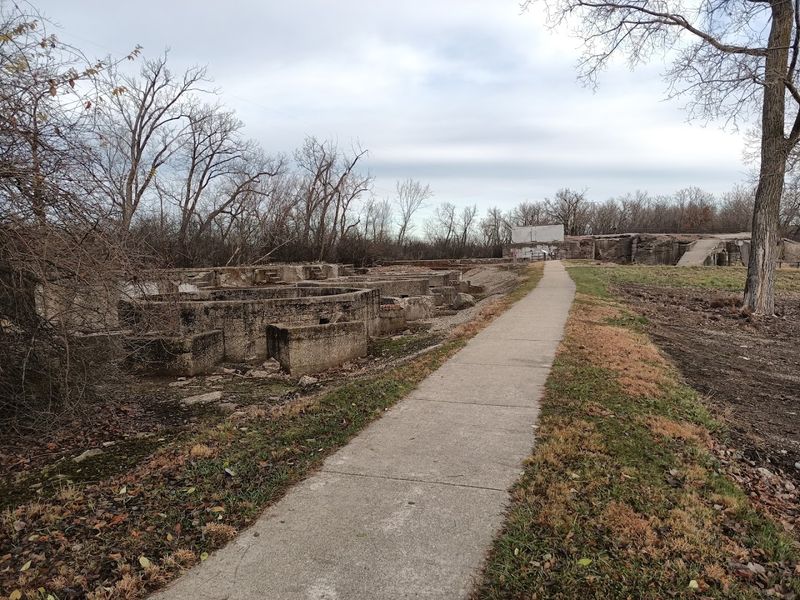
A little planning makes this walk much better. Joliet Iron Works Historic Site is not a hard hike, but it works best when treated as a slow exploration rather than a quick lap.
The trail is generally easy to follow, and the maintained path helps, yet the most rewarding visit comes from pacing the outing around stops, photos, and reading time.
Start with the main ruins and give that area real attention before heading farther down the connected trail. The historic core has the strongest concentration of structures and signs, so it deserves fresh eyes and unhurried energy.
If the group includes children, keeping them close to the walkway is a smart choice. Uneven ground, old materials, and occasional debris have been mentioned by past visitors, so sturdy shoes are better than sandals.
Timing also changes the experience. A morning visit often means softer light, cooler temperatures, and fewer distractions.
Later in the day, the site can look dramatic as shadows deepen around the walls and foundations, but it is still wise to finish before sunset since the preserve closes then. Bringing water, sunscreen, and a phone or camera is enough for most people.
This is not a gear-heavy outing. Walkers who like extra mileage can continue onto nearby trails after exploring the main site. Those who prefer a shorter trip can spend a couple of hours circling the ruins, reading placards, and taking breaks at benches or picnic areas.
That flexibility is one of the location’s strengths. If personal comfort is a concern, going with a friend or family group can make the visit feel easier, especially because the setting is fairly open and isolated in spots.
Once on the path, the best approach is simple. Move carefully, look up often, and let the site reveal itself in stages instead of rushing past it.
A Rare Illinois View With Prison Walls and Passing Trains
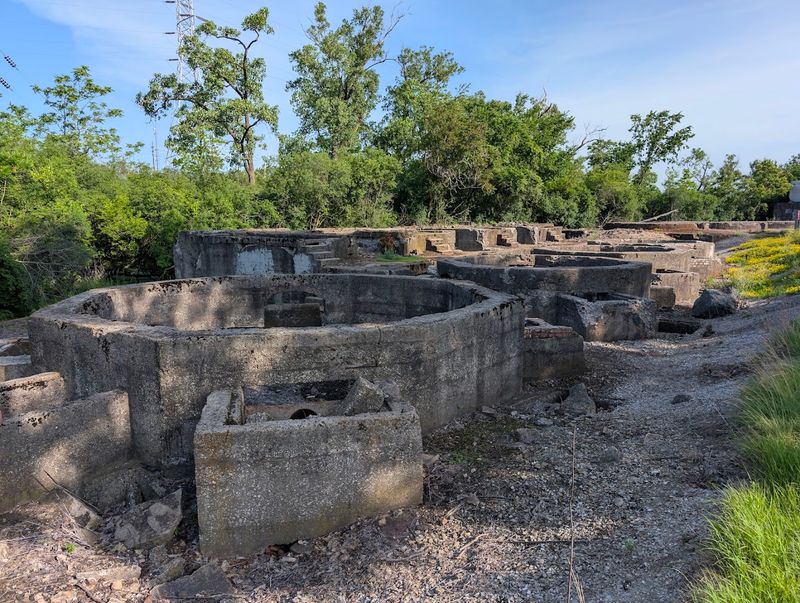
Every so often, a hike delivers a scene that could only belong to one place. At Joliet Iron Works Historic Site, one of those moments comes from the surrounding landmarks.
Old industrial remains, nearby rail lines, and distant views toward the Old Joliet Prison create a setting that is unmistakably tied to Joliet’s past.
The prison is not part of the hiking site itself, and fenced boundaries should be respected, but its presence in the background adds depth to the landscape. It reminds walkers that this part of the city holds several layers of history close together.
Then a train rolls by, and the whole view shifts again. The sound of rail traffic fits the industrial character of the area so naturally that it can seem like part of the exhibit.
For photographers, this section of the experience offers unusual compositions. A single frame can hold rough masonry, metal fencing, open trail, and another famous historic structure in the distance.
That mix gives the site a gritty visual character that feels very different from wooded preserves or riverfront parks. It is one reason the place appeals to people who enjoy abandoned architecture and urban history as much as hiking.
There is also a practical side to this setting. Because the area can feel quiet and somewhat isolated, paying attention to surroundings is wise.
Daylight visits are the best choice, and walking with another person may be more comfortable for some people. The maintained path and occasional official presence help, but common sense still matters.
Even with those cautions, this is one of the strongest parts of the visit. Few trails in Illinois combine ruins, rail movement, and a prison skyline in the same outing.
The result is not polished or cute. It is tougher, stranger, and far more specific to local history, which is exactly why it stands out.
Why This Free Historic Walk Is Hard to Forget
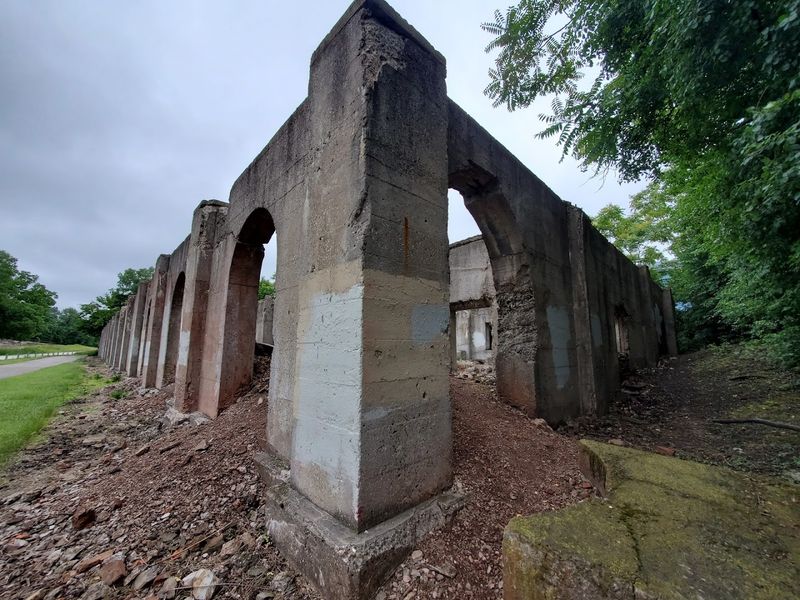
Free places sometimes get treated like backup plans. Joliet Iron Works Historic Site deserves better than that. With no admission fee, on-site parking, and a trail experience that mixes exercise, education, and striking ruins, it offers an outing that is easy to access while still feeling distinctive.
That combination is part of what makes the site such a smart pick for a weekend stop. A family can come for a low-cost afternoon, history fans can spend time reading signs and studying remains, and casual walkers can simply enjoy an unusual route without needing special equipment.
Some reviews mention picnic areas, benches, and seasonal restrooms or portable toilets, which help turn the visit into a comfortable half-day plan rather than a quick ten-minute stop.
The value is not only about saving money. It is about getting a layered experience in one place. There is room for a short educational walk, a longer trail extension, photo breaks, and quiet time outdoors. Many historic sites ask visitors to imagine what used to be there.
Here, enough physical evidence remains that imagination gets a strong assist from the landscape itself. Joliet has other famous landmarks, and some travelers may know the city first for the prison or transportation history. This site adds another important chapter.
It shows the industrial side of local growth in a way that is direct, visual, and easy to understand even for first-time visitors. That makes it useful for locals, road-trippers, and school-age kids alike.
The sharpest takeaway is simple. This is not a polished theme-park version of history. It is a real place with rough edges, surviving structures, and a story that still shows through the ground.
For anyone wanting an Illinois hike with character, Joliet Iron Works delivers something far more interesting than an ordinary park loop.
Share this story