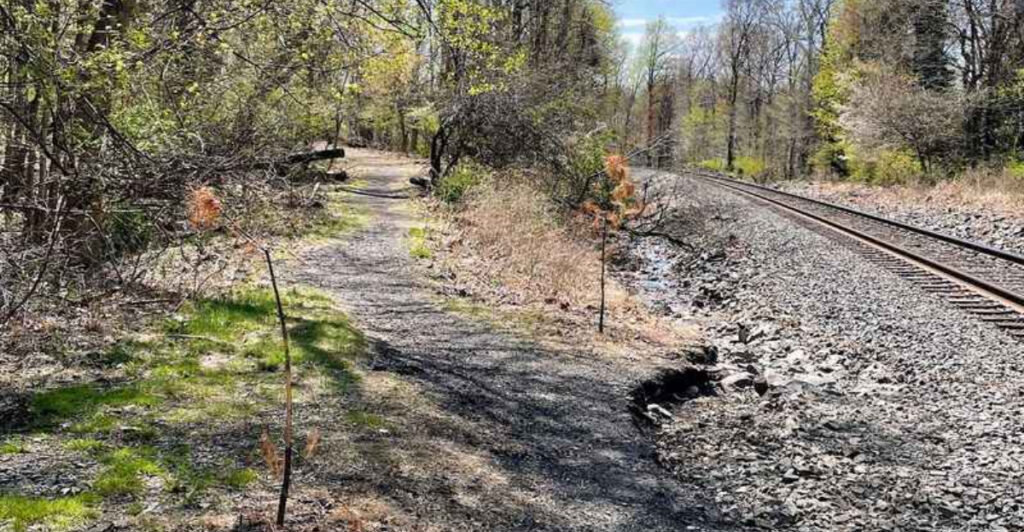
A concrete mile marker still points toward Jersey City, but no train is coming. Instead, footsteps crunch over gravel where locomotives once carried North Jersey commuters.
The West Essex Trail threads through Verona and Cedar Grove on an abandoned railroad bed, slipping behind neighborhoods, beneath leafy branches, and across old bridges before reaching the Passaic County line.
It is nearly level, refreshingly shaded, and packed with the kind of details that make a short walk feel like a real discovery.
One minute, traffic on Route 23 reminds you that you are in the middle of the suburbs. The next, you are looking down at the Peckman River, listening to water tumble over rocks while a deer disappears into the trees.
The trail does not demand technical gear, an ambitious dawn start, or heroic knees. It simply offers several miles of woods, water, wildlife, and railroad history hiding in plain sight.
Meet the West Essex Trail
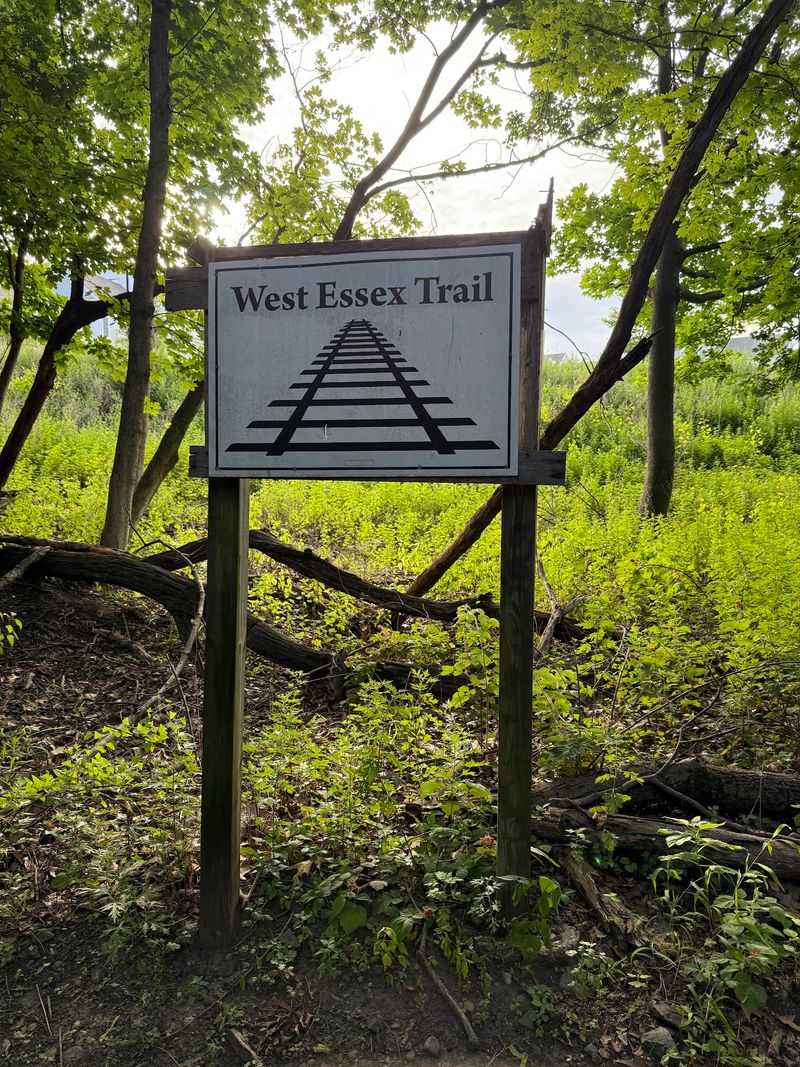
At 2.84 miles, the official Essex County portion of the West Essex Trail is short enough for a casual morning walk but long enough to feel like you went somewhere. It runs northeast from Arnold Way in Verona to the Essex–Passaic county line near Little Falls, passing through Cedar Grove along the way.
Walk the entire county-managed route in both directions and the outing comes to roughly 5.7 miles, though the many access points make it easy to choose a shorter stretch. This is a rail trail in the most literal sense.
The route follows the former Caldwell Branch of the Erie-Lackawanna Railroad, so the grade is gentle and the path moves through the landscape with the steady logic of an old train line. Most of the surface is packed dirt, cinder, and gravel rather than pavement.
That gives the walk a pleasantly rugged edge without turning it into a rock-scrambling expedition. The setting changes block by block.
Wooded corridors give way to road crossings, backyards appear through the trees, and Cedar Grove Community Park provides a more open interlude. Then the trail ducks back under its canopy and the suburbs seem to retreat again.
Walkers, runners, dog owners, and cyclists all use the route, especially around Fairview Avenue and Cedar Grove Park. A portion also overlaps with the yellow-blazed Lenape Trail, a much longer route connecting parks and reservations across Essex County.
You do not need to follow that entire network to appreciate the West Essex segment. Its appeal is precisely that it delivers the bones of a proper outdoor adventure without requiring a full day, a steep climb, or a long drive to one of New Jersey’s mountain parks.
An Old Railroad Route Finds New Life
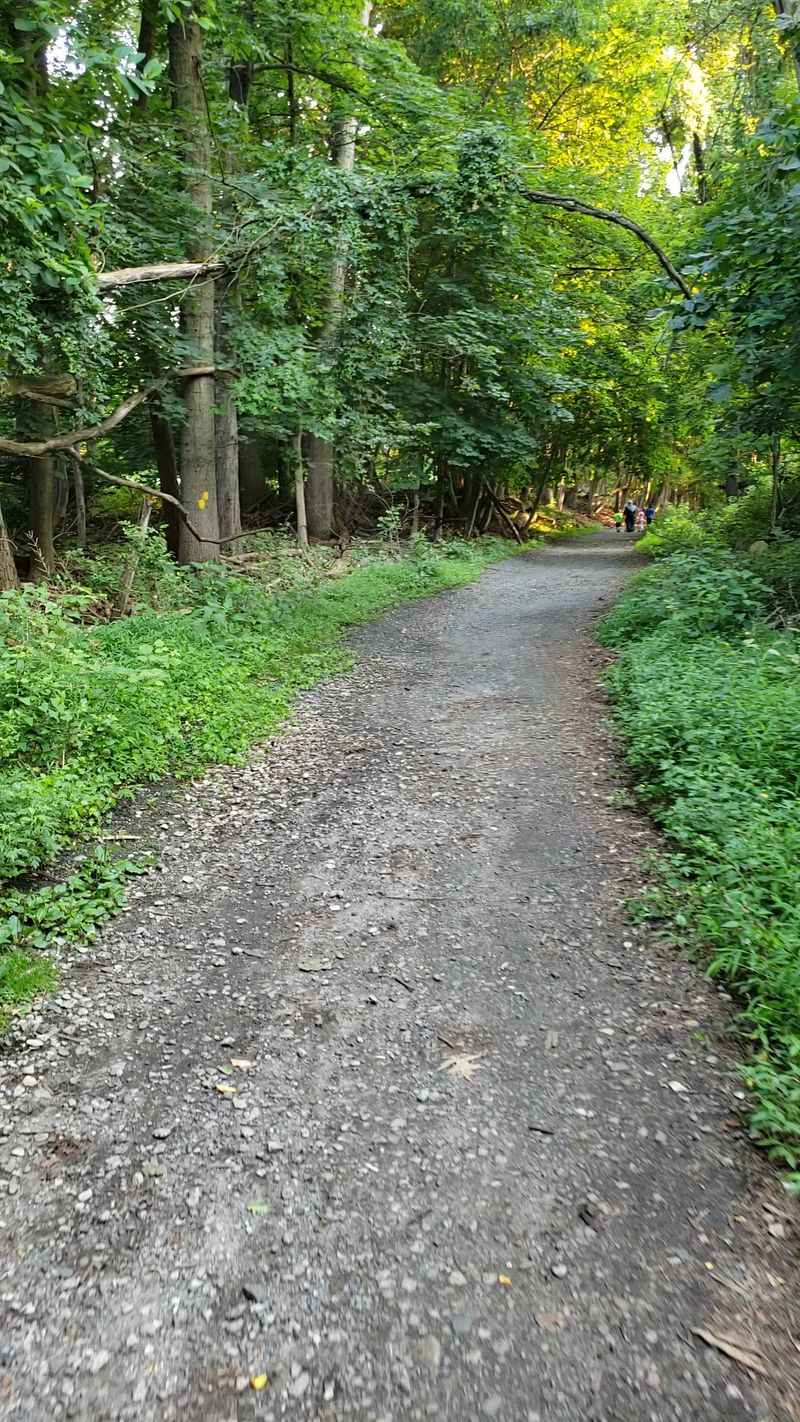
Long before this corridor became a place for dog walks and Saturday bike rides, the Caldwell Branch carried passengers between the western Essex County suburbs and the Erie Railroad system.
The line extended from Great Notch in Little Falls through Cedar Grove, Verona, Caldwell, and Essex Fells, linking local communities with trains bound toward Jersey City and Hoboken connections.
Passenger service dwindled as cars and buses took over, and the final passenger trains ran in 1966. Freight continued for several more years, but a major washout in 1975 damaged the line.
The remaining rails were removed in 1979. Essex County acquired the trail corridor in 1985 with Green Acres funding, preserving nearly three miles of the former right-of-way for public recreation.
The railroad has not vanished completely, however. Concrete mileposts remain beside the path, including markers that once told train crews how far they were from Jersey City.
Old ties, utility poles, signal equipment, bridge structures, and traces of former stations reward anyone who pays attention. Near Route 23, remnants associated with the old Cedar Grove station can still be found around the elevated rail bed.
Even the trail’s straight sections tell the story. Natural footpaths tend to curve around slopes and streams; railroads cut determined lines through them.
Here, embankments, elevated crossings, and the gradual grade reveal what the route was built to do. There is something satisfying about watching an obsolete piece of transportation infrastructure become useful again.
Commuters no longer wait beside the tracks, but the corridor still connects neighborhoods. Its new traffic moves more slowly and includes muddy sneakers, bicycle tires, leashed dogs, and the occasional stroller navigating a stubborn patch of gravel.
A Peaceful Escape Hidden in the Suburbs
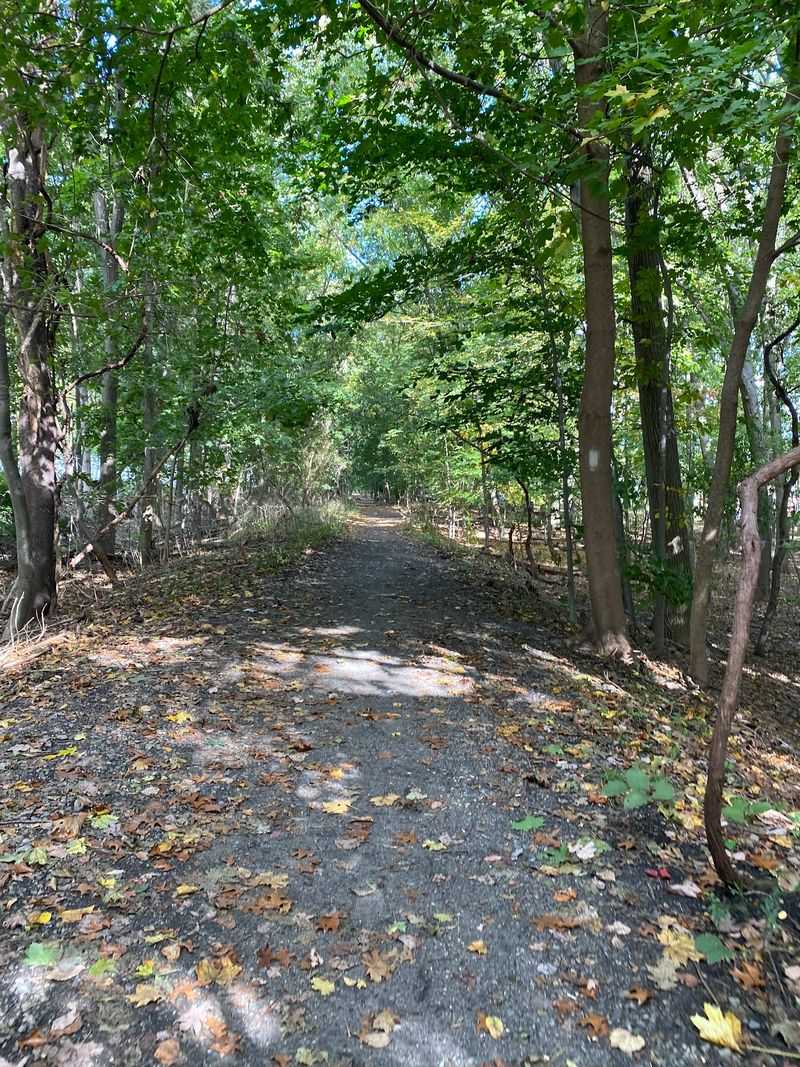
Route 23 is one of North Jersey’s busiest commercial arteries, filled with traffic lights, shopping centers, and the familiar soundtrack of engines accelerating between intersections. The West Essex Trail crosses above it.
That single contrast explains much of the route’s charm. From the old railroad bridge, walkers can look down at Pompton Avenue before continuing into a strip of woodland that feels surprisingly removed from the road below.
This is not untouched wilderness, and pretending otherwise would miss the point. The trail succeeds because it finds breathing room inside a heavily developed corner of the state.
Verona, Cedar Grove, and Little Falls surround it, yet the former rail corridor creates a long green passage between them. Trees and brush screen many nearby homes, while the sunken and elevated portions of the old rail bed further separate walkers from surrounding streets.
The result is a place where a quick after-work outing can feel more restorative than its location suggests. Cedar Grove Community Park adds another layer to the route.
The 77-acre county park sits along the trail and includes paved walking paths, a playground, fitness stations, bocce courts, and the Robert J. O’Toole Community Center.
Families can combine a trail walk with time at the playground, while anyone seeking extra mileage can explore the park’s paths or connect to nearby Hilltop Reservation. The yellow blazes of the Lenape Trail accompany the West Essex route for much of its length before turning east near Bowden Road.
Following that connection can lead walkers toward a broader network of Essex County green spaces. Still, there is no shame in keeping things simple.
A walk from Fairview Avenue to the Route 23 bridge and back provides woods, history, and a satisfying change of scenery without turning the day into a navigation exercise.
Waterfalls Wildlife and Woodland Views
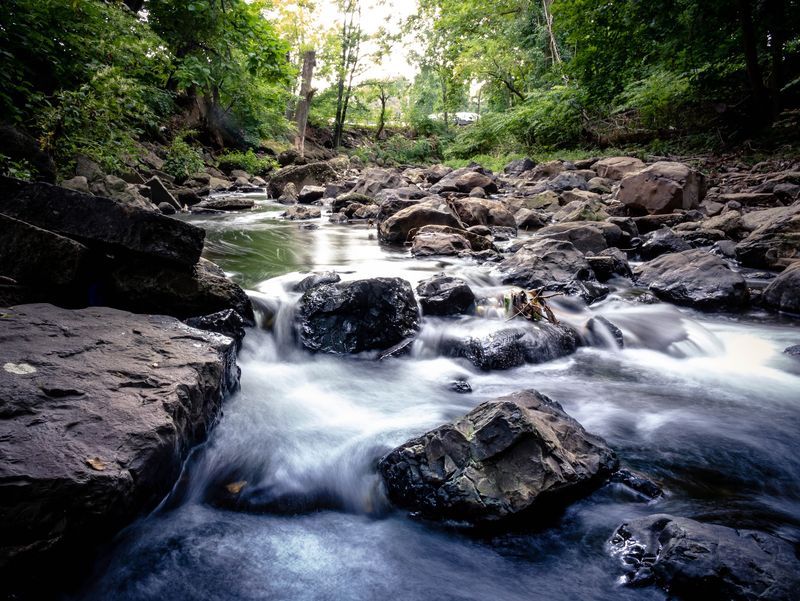
The sound usually reaches you before the best view does. Near the old trestle, the Peckman River runs over a rocky drop, adding the steady rush of moving water to a trail otherwise defined by birds, rustling leaves, and distant suburban traffic.
The railroad bridge carries the route above the river, creating one of the most memorable stops along the walk. This is not a towering waterfall with a designated viewing platform and souvenir shop.
It is a smaller, rough-edged feature tucked into the woods, which makes stumbling upon it all the more enjoyable. Nearby Devil’s Hole is a deep pool fed by the river and falls.
Its name may sound like a bit of local folklore, but the danger is real. The water can be deceptively deep, and currents around the pool are hazardous.
It is a place to view from the trail, not a swimming hole or a shortcut to the riverbank. The surrounding woods provide their own quiet surprises.
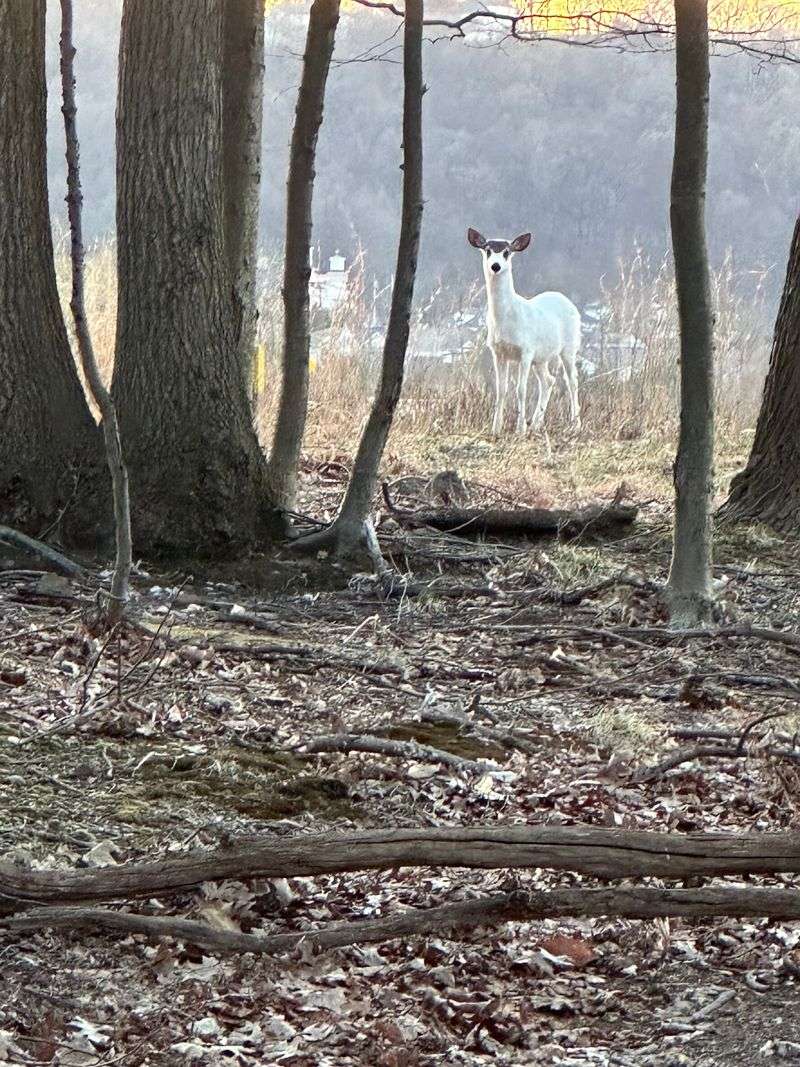
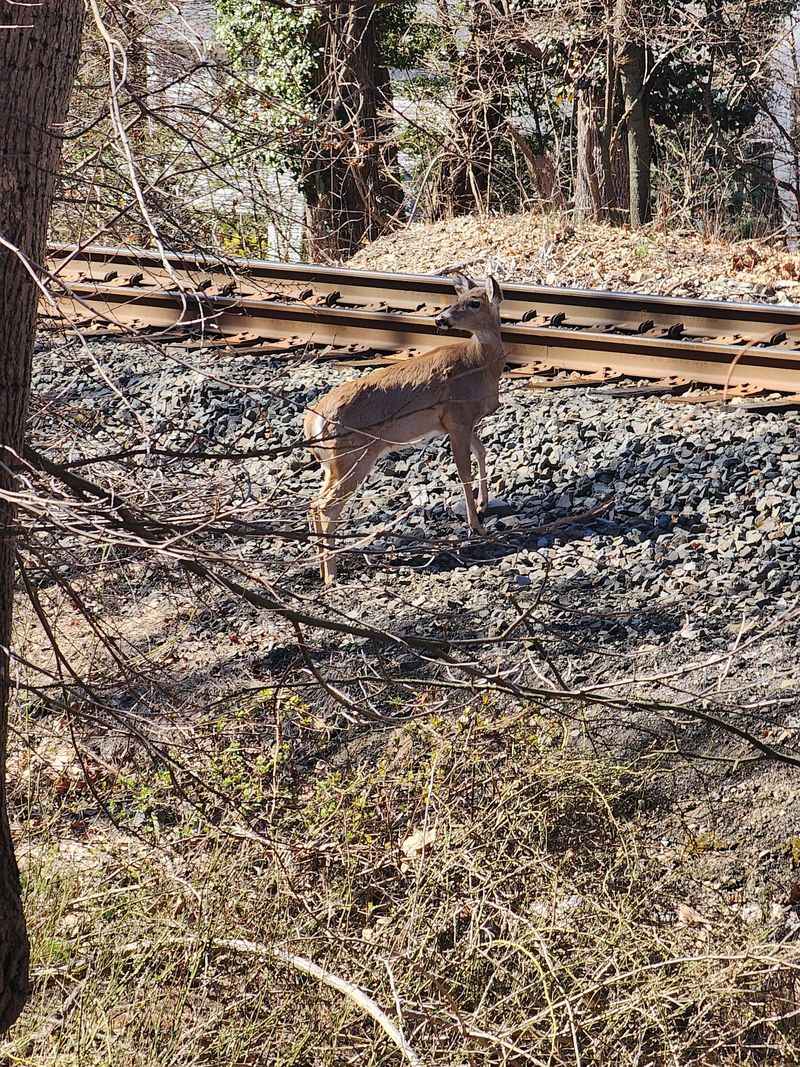
White-tailed deer are commonly seen around Cedar Grove Park and the more sheltered northern portions of the trail. Rabbits, squirrels, songbirds, and woodpeckers also make regular appearances, while spring brings patches of wildflowers and fresh green growth along the corridor.
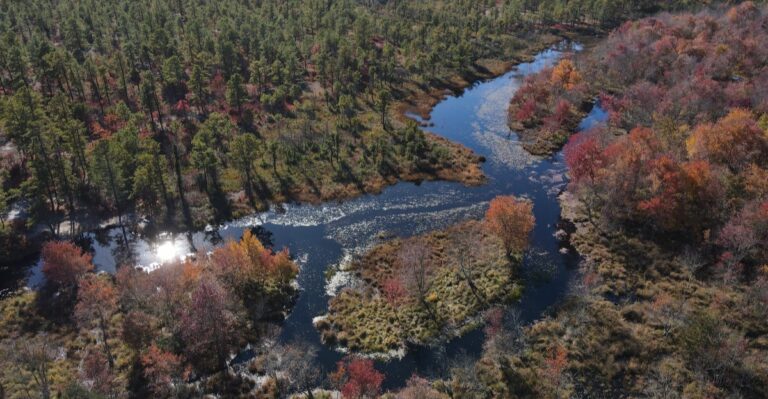
In autumn, the canopy turns gold, orange, and rust, scattering leaves across the dark cinder and pale gravel. Winter reveals features that summer foliage conceals, including old utility poles, railroad remnants, embankments, and the shapes of nearby hills.
The trail never builds toward one giant overlook. Instead, it offers a sequence of smaller rewards—a bridge, a flash of water, a mile marker, a deer standing perfectly still—that keep an otherwise straightforward walk interesting from one end to the other.
An Easy Adventure for Almost Anyone
A railroad could not manage sudden climbs, which is excellent news for anyone who prefers a walk without switchbacks. The West Essex Trail gains elevation gradually, and most visitors will notice the changing surface more than the incline.
Packed dirt and cinder make up much of the route, with gravel, exposed roots, loose stones, and muddy patches appearing in places. After heavy rain, low sections can hold water, and cyclists may leave ruts in softer ground.
Comfortable walking shoes are usually enough in dry conditions, but spotless white sneakers are a gamble. The relatively flat grade makes the trail approachable for beginners, older children, casual walkers, runners, and people returning to exercise.
Families frequently use the sections near Cedar Grove Park, and sturdy all-terrain strollers can handle many portions when the ground is dry. The route is not consistently smooth or paved, however, so standard strollers and wheelchairs may struggle with uneven areas, road crossings, and seasonal erosion.
Cyclists should also keep expectations realistic. This is better suited to hybrid, gravel, and mountain bikes than narrow road-bike tires.
Because the corridor is shared, riders need to slow down around walkers, dogs, and blind bends. Leashed dogs are a common sight, though owners should watch for ticks in warmer months and carry water during humid New Jersey summers.
The tree cover helps with shade, but it does not eliminate the heat. What makes the trail broadly appealing is its flexibility.
Nobody has to complete the full route to get something out of it. A 30-minute stroll can include railroad artifacts and a leafy escape, while a complete out-and-back gives energetic walkers close to six miles.
Those wanting more of a workout can branch into Hilltop Reservation, where the terrain climbs toward the Second Watchung Mountain and quickly becomes more like a conventional hike.
What to Know Before You Visit
The most convenient place to begin is near Cedar Grove Park and the Robert J. O’Toole Community Center at 199 Fairview Avenue in Cedar Grove.
The community center lot offers practical access to the middle portion of the route, and the nearby park is useful for anyone visiting with children. Another primary access point is along Fairview Avenue near Verona High School, while the official southern end lies at Arnold Way in Verona.
The northern end reaches the Essex–Passaic county line near Little Falls. Since this is a linear trail rather than a loop, every mile walked away from the starting point generally adds another mile to the return unless a second vehicle or pickup has been arranged.
Road crossings deserve attention. The path intersects local streets including Bowden Road, Keeney Street, Durrell Street, and Fairview Avenue.
Drivers may not expect trail users to emerge from the trees, so pause and check carefully even when the crossing looks quiet. Route 23 is crossed on an elevated bridge rather than at street level.
There are no cafés, water fountains, or restrooms spaced along the wooded corridor, so bring water and handle those needs around Cedar Grove Park before setting out. Bug spray is useful from late spring through early fall, and a tick check afterward is sensible.
Following rain, expect puddles, mud, and slick leaves near the river. The trail can be enjoyed throughout the year, but each season changes the experience: spring brings blooms and wet ground, summer offers deep shade, fall supplies the strongest color, and winter opens longer views through bare trees.
For the most balanced first visit, start at Cedar Grove Park, walk toward the Peckman River trestle, and let the old railroad grade reveal its history one quiet piece at a time.
Share this story