A full-size tent pitched beneath fluorescent lights is not something you expect to find along busy Route 17. Neither is a wall of backpacks waiting to be loaded with weight, a lineup of trail boots ready for a test walk, or enough camp cookware to make instant noodles feel like serious cuisine.
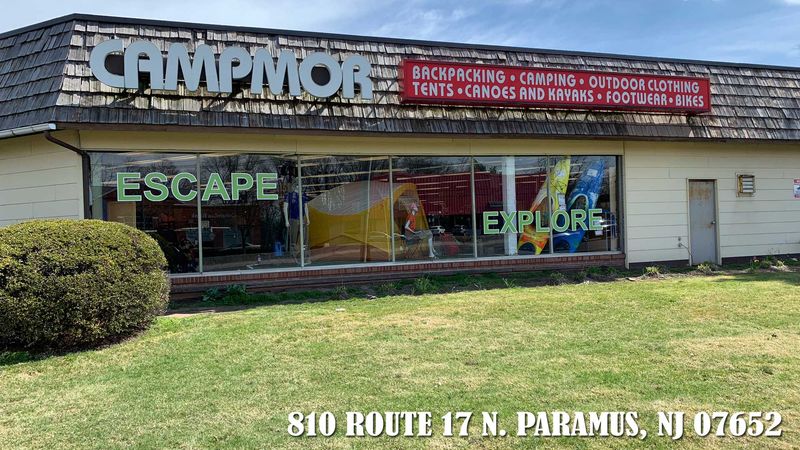
Yet that is exactly the kind of hands-on shopping that has kept outdoor enthusiasts returning to Campmor for nearly five decades. The family-owned business began in Bogota in 1978 and now operates a sprawling retail store at 810 Route 17 North in Paramus.
Inside, weekend campers browse beside long-distance hikers, parents inspect tents with their children, and staff members talk about pack capacity and boot fit without making newcomers feel as though they missed an orientation meeting.
Campmor may sell modern equipment, but the experience remains refreshingly old-school.
You can touch the gear, ask questions, change your mind, and leave better prepared than when you arrived.
From a Bogota Garage to a New Jersey Outdoor Landmark
Campmor’s story began in 1978, when a small mail-order operation started running out of a garage in Bogota. This was long before online carts, overnight shipping, and video reviews turned outdoor shopping into a largely screen-based exercise.
Customers discovered equipment through printed catalogs, placed their orders from home, and waited for boxes filled with tents, sleeping bags, boots, and other trail essentials. Those catalogs helped Campmor build a following well beyond Bergen County.
For many campers who came of age in the 1980s and 1990s, the arrival of a Campmor catalog meant circling dream gear, comparing tent weights, and trying to justify why one household clearly needed another flashlight.
The company grew as more people discovered hiking, backpacking, paddling, and family camping, eventually moving its physical retail presence to Paramus.
What did not disappear during that growth was the family-owned character of the business. Campmor has survived dramatic changes in retail, including the rise of national outdoor chains and the shift from catalogs to e-commerce.
Its staying power comes partly from occupying a useful middle ground. Customers can order equipment online, but North Jersey shoppers can also visit the store, inspect it closely, and ask someone who has used similar gear in actual rain, mud, heat, or snow.
The move from a garage in Bogota to a prominent Route 17 storefront mirrors the evolution of outdoor recreation in New Jersey itself. Camping is no longer limited to canvas tents, heavy metal cook kits, and whatever sleeping bag happened to be in the basement.
Modern shoppers arrive looking for ultralight shelters, technical layers, rooftop tents, water filters, and carefully fitted packs. Campmor has changed with them while keeping its original focus on practical equipment, fair value, and informed guidance.
That combination has turned a modest local startup into one of the state’s most recognizable outdoor retailers.
Inside Campmor’s Massive Paramus Gear Store
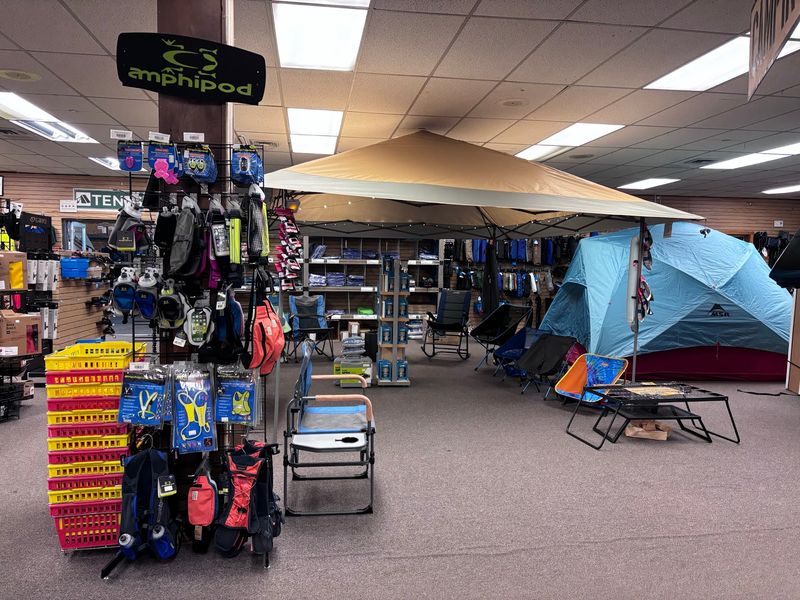
Walk through the doors in Paramus and the scale of the place becomes clear quickly. Campmor occupies more than 12,000 square feet, which is enough room to do more than hang a few jackets beside a display of water bottles.
Entire parts of the store are organized around how people spend time outside, from backpacking and car camping to paddling, cycling, climbing, running, and snow sports. The arrangement makes sense for shoppers planning a trip rather than hunting for one isolated product.
Tents and sleeping gear sit near other overnight necessities. Packs share territory with hydration reservoirs, dry bags, rain covers, and trekking poles.
Camp stoves lead naturally to cookware, utensils, coolers, food storage, and freeze-dried meals. The result feels less like wandering through unrelated departments and more like mentally packing the car.
Brand selection is broad without turning the store into a fashion showroom. Patagonia and The North Face appear alongside trail-focused names such as Oboz, Salomon, Smartwool, MSR, and NEMO.
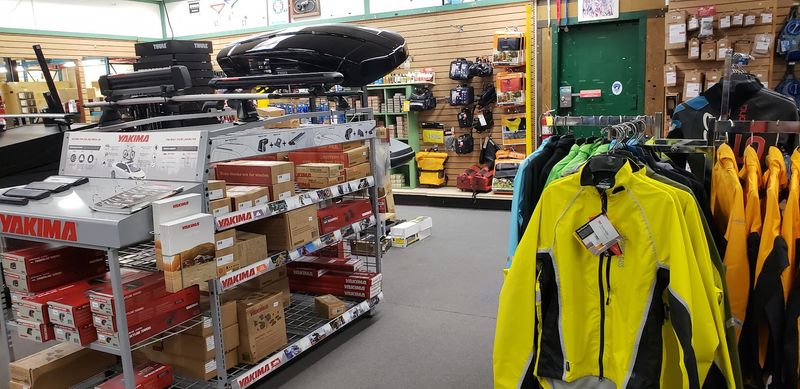
Thule and Yakima cover the vehicle-hauling side of an adventure with roof racks, cargo carriers, and bike racks. There are also compasses, binoculars, first-aid supplies, headlamps, fire starters, water filters, pocket tools, maps, and all the small things people tend to remember only after reaching camp.
Campmor is located at 810 Route 17 North, making it a convenient stop for Bergen County residents and travelers heading toward the hiking areas, reservoirs, and state parks farther north. The store opens from 10 a.m. to 5 p.m.
Monday through Wednesday, Friday, and Saturday, with Thursday hours extended until 7 p.m. Since Route 17 has its own opinions about how quickly anyone should get anywhere, checking the schedule before leaving is sensible.
Allowing more time than expected is equally wise. A five-minute headlamp errand can easily become a 45-minute investigation of tents, trail shoes, and tiny espresso makers.
Everything Campers Need for a Night Under the Stars
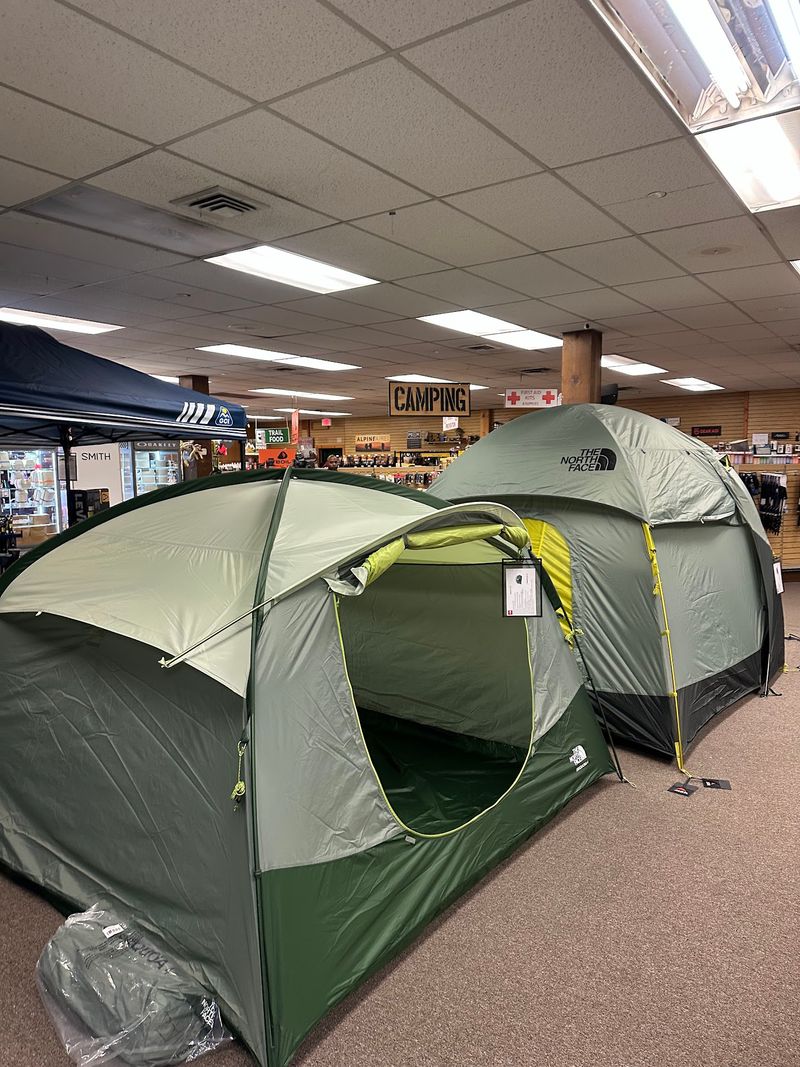
The tent display is where careful shopping often gives way to crawling around on the floor. Campmor sets up models so customers can step inside, check the ceiling height, inspect the doors, and decide whether the manufacturer’s idea of a three-person tent matches their own.
Parents can see whether children, sleeping pads, and a heap of duffel bags will actually fit. Backpackers can study pole geometry and vestibule space without relying on a handful of product photos.
That physical comparison matters because camping equipment involves more tradeoffs than it first appears. A large family tent offers generous room but takes up more trunk space.
A lightweight backpacking shelter is easier to carry but may require two occupants to become very comfortable with each other’s elbows. Staff can explain differences in packed size, season rating, ventilation, setup, and weather protection before anyone learns those lessons during a midnight downpour.
Nearby, sleeping bags come in different shapes, insulation types, and temperature ratings. Pads range from simple foam models to insulated inflatables designed to keep cold ground from stealing body heat.
Cots, hammocks, air mattresses, blankets, camp pillows, and repair accessories cover everyone from minimalist hikers to car campers who believe the outdoors should still include a decent night’s sleep. The camp kitchen selection is just as thorough.
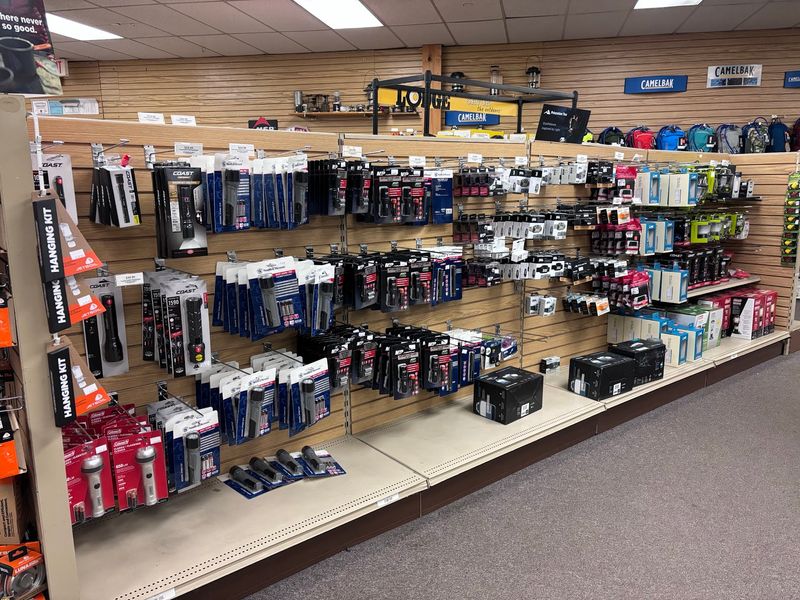
Shoppers can compare compact backpacking stoves, larger grills, cookware, mugs, coolers, water containers, utensils, coffee gear, and packaged trail meals. Lighting choices include headlamps, handheld flashlights, and lanterns suitable for illuminating a picnic table after dark.
Safety shelves hold first-aid kits, insect protection, emergency blankets, water-treatment equipment, and fire-starting supplies. The smartest part of the assortment is that it serves different versions of camping without insisting that one is more legitimate than another.
Someone preparing for a multi-day hike can count ounces and study packable stoves. A family headed to a drive-in campsite can focus on chairs, a roomy shelter, and a cooler that will survive a weekend of repeated opening.
Expert Advice From People Who Live for the Outdoors
A customer asks about a sleeping bag, and the conversation rarely stops at the temperature printed on its tag. Where will it be used?
What time of year? Will it sit in a car or travel inside a backpack?
Is the sleeper usually cold at night? What kind of pad will be underneath it?
Those questions are the difference between simply selling equipment and helping someone avoid a miserable Saturday night. Campmor’s staff includes people with firsthand experience in hiking, camping, paddling, climbing, skiing, and other outdoor pursuits.
That knowledge is especially useful for beginners, who may not know whether they need a 20-degree bag, a 50-liter pack, waterproof boots, trail runners, or a stove small enough to disappear inside a cooking pot. The discussion can begin with the trip rather than the most expensive item on the shelf.
Experienced outdoorspeople benefit for a different reason. They can ask detailed questions about pack suspension, tent materials, water-filter flow rates, roof-rack compatibility, or the way a particular boot fits through the heel.
When equipment will be carried for miles or trusted in bad weather, minor distinctions stop feeling minor. A zipper that is easy to operate with gloves or a jacket hood that turns cleanly with the head can matter far more than its appearance on a product page.
The same practical approach extends to vehicle equipment. Campmor carries roof racks, cargo boxes, bike carriers, and rooftop tents, with installation available for compatible systems.
Fit kits vary by vehicle make, model, and roof design, so buying the correct pieces requires more precision than pointing at a box. Having someone confirm the setup and explain how it locks, opens, or comes off can save considerable frustration in the driveway.
There is also room here for basic questions. Nobody is born knowing how to adjust a sternum strap or interpret a sleeping bag rating.
A good outfitter makes the learning curve less expensive, less intimidating, and considerably less likely to result in carrying six unnecessary pounds uphill.
Boots, Backpacks, and Gear You Can Try Before Buying
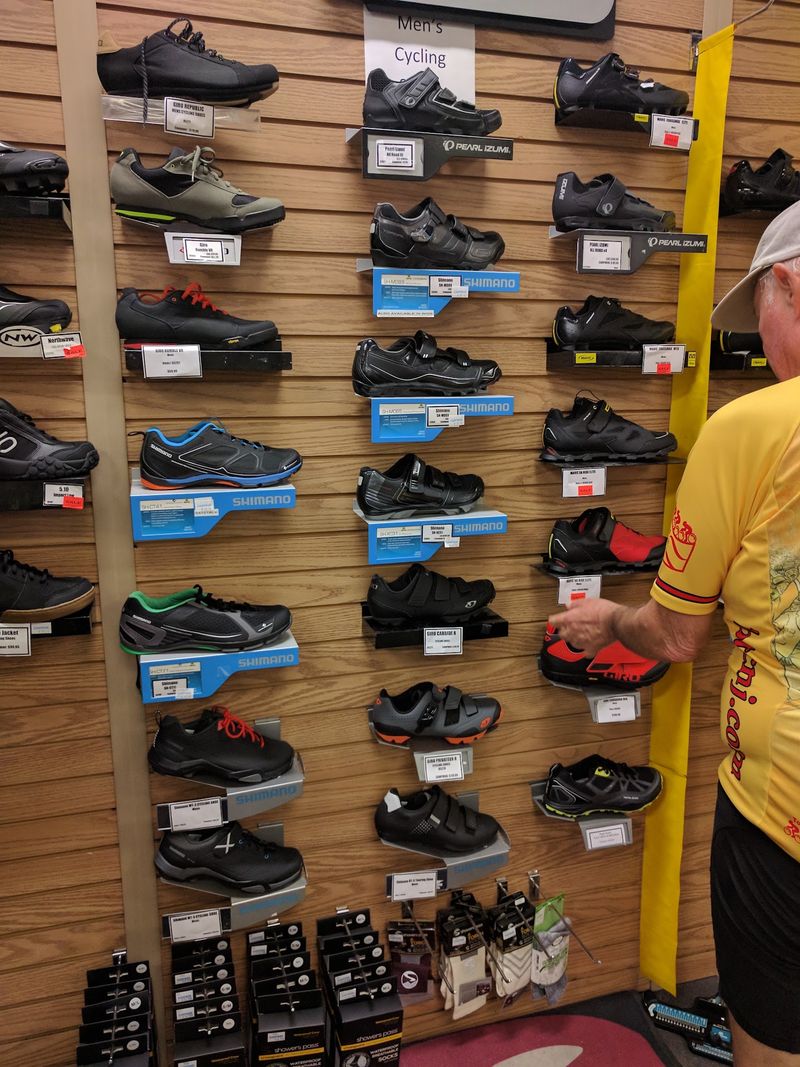
Boots have an annoying habit of feeling perfect in the store and revealing their true personality three miles from the parking lot. That is why Campmor’s footwear department is more useful than a row of boxes and a mirror.
Shoppers can compare hiking boots, trail-running shoes, water shoes, winter footwear, and other outdoor models while paying attention to heel movement, toe room, width, and the socks they will actually wear outside.
Fit becomes particularly important on descents, when toes slide toward the front of a shoe, and on longer outings, when feet naturally swell.
A knowledgeable fitter can suggest another size or shape before a small pressure point develops into a trip-ending blister. Brands such as Oboz and Salomon offer different constructions and fits, giving customers alternatives when the first promising pair does not cooperate.
Bringing along a familiar pair of hiking socks makes the test even more realistic. Backpacks receive the same hands-on treatment.
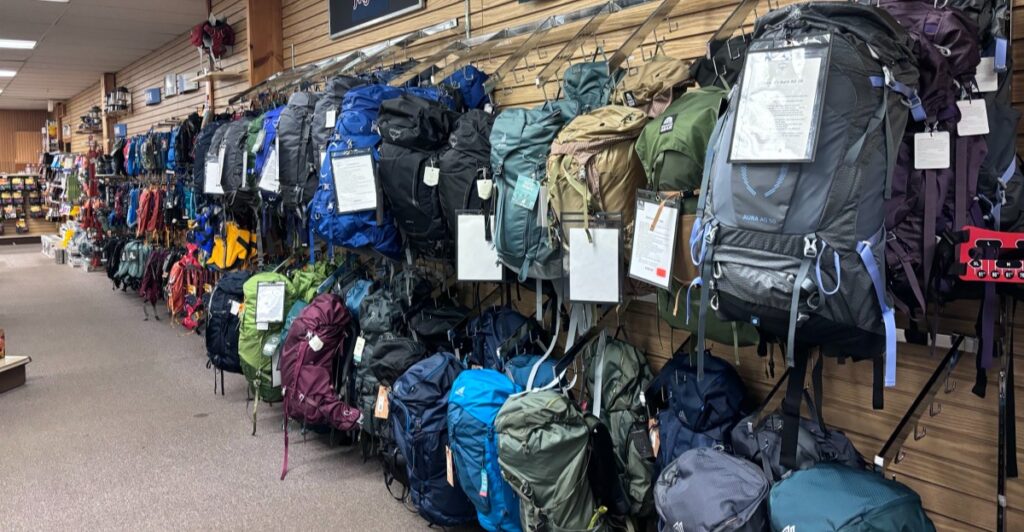
Daypacks, hydration packs, overnight models, and larger multi-day packs may look fairly similar when empty. Add weight, however, and differences in torso length, hip-belt placement, shoulder-strap shape, and frame design become obvious.
Campmor staff can help measure a shopper’s torso, adjust the suspension, and load a pack so it behaves more like it will on the trail. An empty backpack can flatter almost anyone; a weighted one is less diplomatic.
Trying equipment in person is valuable beyond boots and packs. Jackets can be tested over the layers normally worn beneath them.
Gloves can be checked for dexterity. Trekking poles can be adjusted to the correct height.
Tent doors, buckles, zippers, headlamps, camp chairs, and cookware can all be handled before money changes hands. That tactile side of shopping may sound old-fashioned, but technical outdoor gear makes it unusually relevant.
A half-pound difference feels abstract on a specification sheet and immediately noticeable in the hand. A backpack marked with the right capacity can still sit badly on the body.
At Campmor, shoppers get a chance to discover those problems under store lights instead of halfway up a New Jersey trail.
Why New Jersey Adventurers Keep Coming Back
Northern New Jersey is a practical place for an outdoor store to earn loyal customers. From Paramus, it is roughly an hour’s drive, depending on traffic, to trail systems around Ringwood State Park and the New Jersey Botanical Garden.
Campers heading toward the Delaware Water Gap, High Point, Stokes State Forest, or the campgrounds of the northwestern counties can pass through Bergen County with a shopping list and an empty section of trunk. Campmor also serves people whose adventures begin closer to home.
A first family campout may happen at a state park rather than deep in the backcountry. A new pair of boots might be destined for the Palisades, Ramapo Valley County Reservation, or a muddy local loop after a week of rain.
Paddling equipment can head toward a nearby reservoir, while a roof box may spend most of its life hauling luggage, skis, or beach supplies. The store understands that outdoor recreation does not need to involve a dramatic expedition to justify proper gear.
Generational loyalty adds another layer. Some customers first encountered Campmor through its mail-order catalogs, then visited the store as young adults, and now bring in their own children to pick out sleeping bags or try on hiking shoes.
Equipment eventually wears out, children grow, and camping styles change. The place remains familiar even when the shopping list does not.
Its community role extends beyond the sales floor through educational events, workshops, local partnerships, scouting organizations, hiking groups, paddling events, and customer gatherings.
Those connections keep Campmor tied to the people who use the products rather than simply the companies that manufacture them.
After nearly five decades, the store’s appeal is not complicated. It offers a deep inventory, people who understand it, and the increasingly rare freedom to examine equipment before committing to it.
Campmor started helping New Jersey residents get outdoors in 1978, and generations later, plenty of their adventures still begin beneath those Route 17 lights.
Share this story