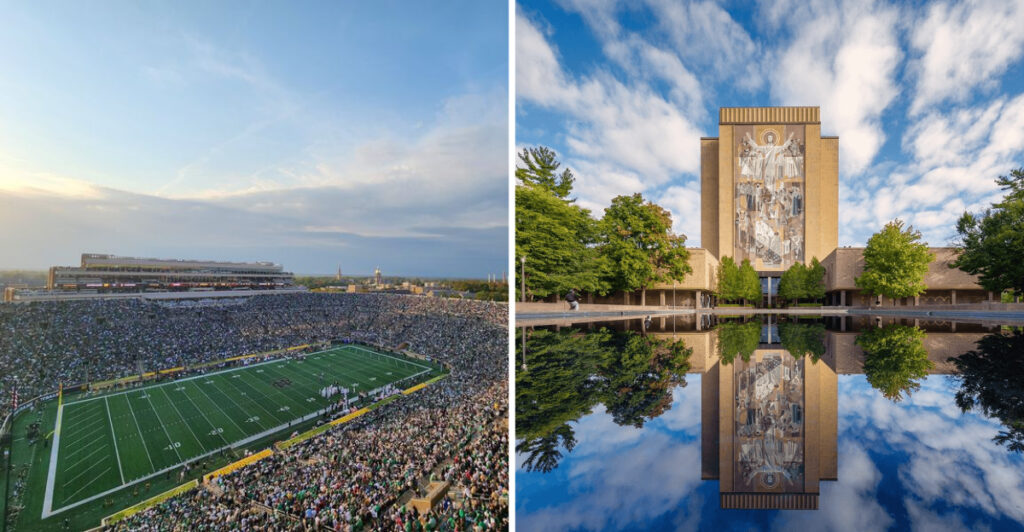
Few college football Saturdays carry the sense of tradition that surrounds Notre Dame Stadium in South Bend. Long before kickoff, the campus fills with fans, marching music, tailgates, and familiar rituals that make the game feel like only one part of the experience.
Once inside, decades of football history meet the roar of a packed crowd beneath one of the sport’s most recognizable names. Even visitors without deep Notre Dame ties can appreciate the energy and pageantry. For college football fans, experiencing game day here offers a memorable look at the traditions that make the sport special.
Where the Campus View Steals the Show
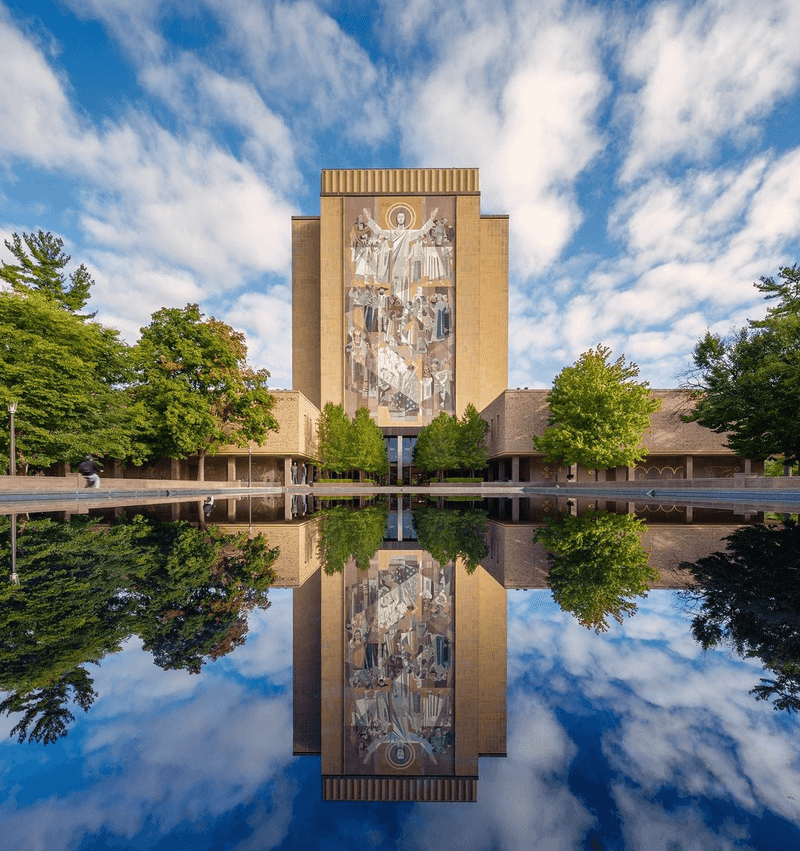
Long before kickoff, the setting does a lot of the talking. Notre Dame Stadium stands in the middle of one of the most recognizable campuses in college sports, and that location changes the whole mood of the day.
Instead of rising from a sea of parking lots, the stadium shares space with stone buildings, open lawns, and landmarks that make the walk in feel ceremonial.
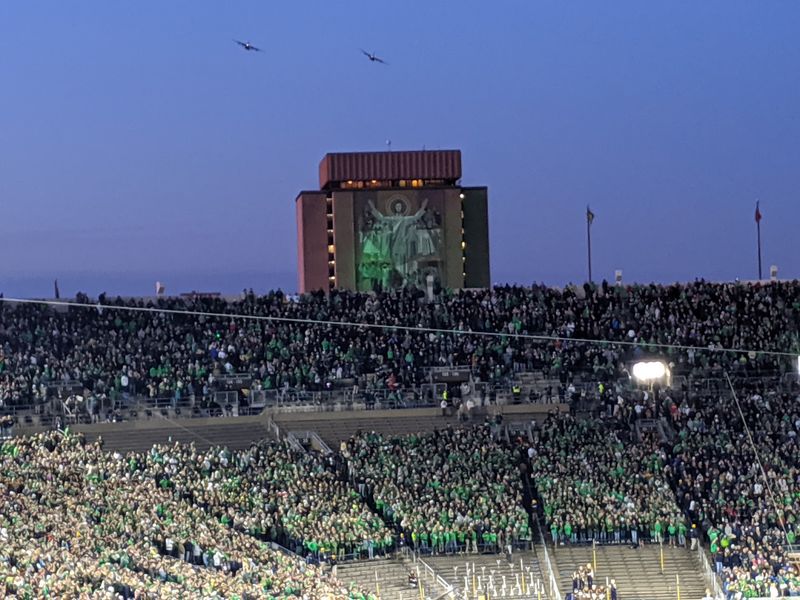
Inside, the visual payoff is one of the stadium’s biggest strengths. Fans often look up from the field and catch sight of the famous Word of Life mural, better known as Touchdown Jesus, beyond the bowl.
That view gives the place an identity that is hard to confuse with any other stadium in America. The building itself also adds to the effect. Renovations kept the venue tied to the older campus style, so it does not clash with its surroundings.
The result is a football stadium that feels connected to the university instead of separate from it, which is a major reason the game-day experience feels so complete.
For first-time visitors, arriving early is the smart move. The best approach is to treat the stadium area like part of the attraction, not just the spot where the game happens.
Walk the campus roads, pause for photos, and notice how the stadium sits among the university’s best-known sights.
That strong sense of place matters because college football is often about more than the scoreboard. At Notre Dame Stadium, the backdrop instantly tells you where you are and why this setting carries so much weight.
Before the band plays a note or the crowd rises on third down, the view has already started building the occasion.
Noise, Chants, and a Crowd That Stays Locked In
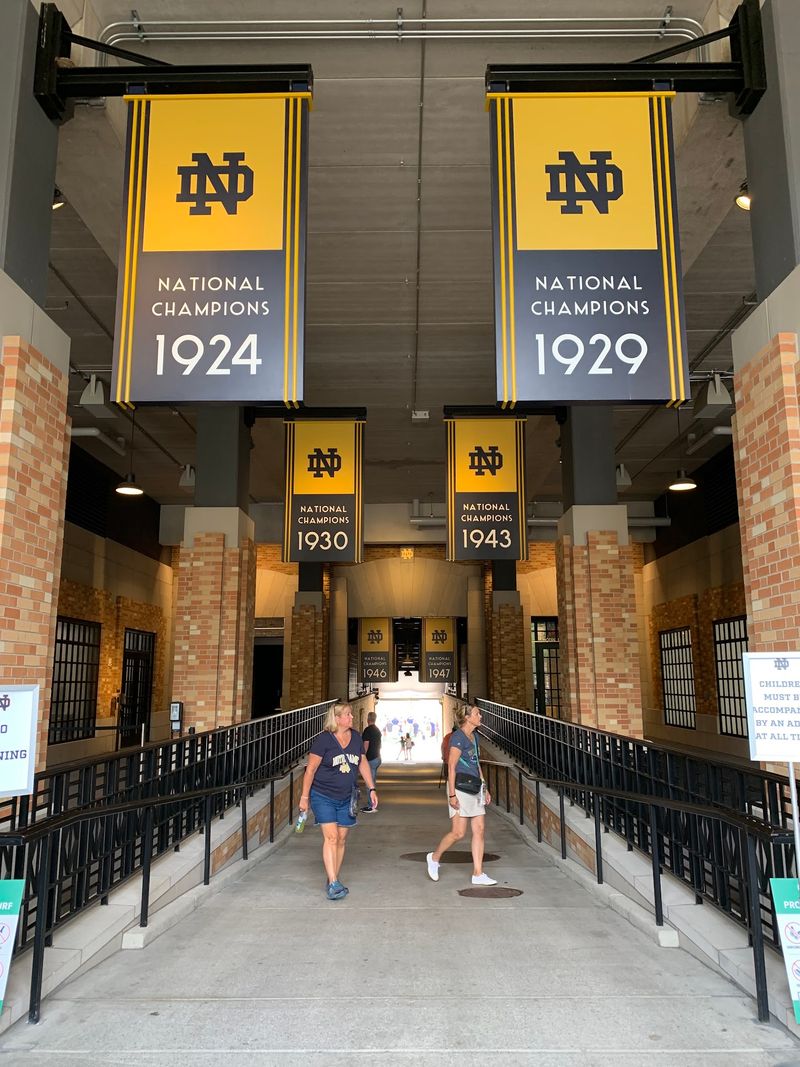
Once the seats fill up, the sound becomes the main event. Notre Dame Stadium is known for a crowd that can shift from steady anticipation to a wall of noise in seconds, especially when the game tightens or a big defensive play is brewing.
The bowl traps that energy well, so cheers carry with force instead of fading into open space. Part of the stadium’s reputation comes from how full it stays. Even in cold weather, rain, or snow, the stands are known to hold their shape deep into the fourth quarter.
That kind of commitment changes the feel of a game because the crowd does not act like a background piece. It behaves like an active part of the contest.
Chants, fight songs, and shared rituals help unify all that volume. A huge stadium can sometimes feel scattered, but here the crowd often moves with a clear rhythm.
Students, longtime season ticket holders, families, and one-time visitors all plug into the same beats, which gives the noise more punch than random shouting ever could.
If the goal is to experience the stadium at its loudest, choose a meaningful matchup and be in the seat before the opening sequence begins. Big moments start early, and the emotional climb of the day is easier to feel when there is no rush from the concourse.
Night games can add extra electricity, but afternoon kickoffs still bring serious force when the stadium is packed.
That sustained sound is one reason Notre Dame Stadium belongs in any conversation about elite college football environments. It is not only loud in bursts. It can stay urgent, focused, and powerful for hours, which gives game day a heartbeat that is hard to ignore.
Traditions That Give the Day Its Shape
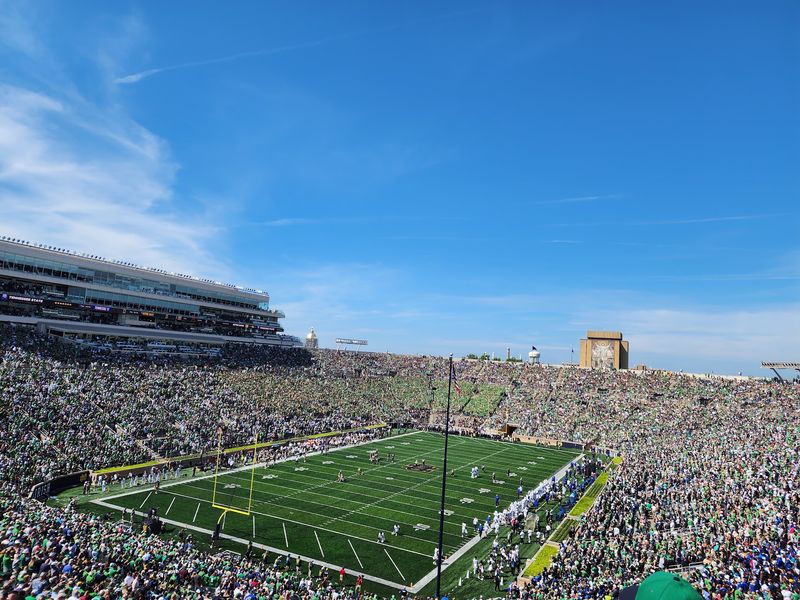
Every famous college venue has traditions, but Notre Dame Stadium benefits from something larger than a single ritual. The entire day follows a familiar rhythm, and that rhythm gives the experience weight.
By the time kickoff arrives, fans have already moved through a sequence of sights and sounds that makes the game feel like the center of a much bigger event.
That structure starts outside the stadium. Tailgates, campus walks, band activity, and pregame gathering spots help build anticipation in layers instead of all at once.
Rather than rushing straight to the turnstiles, many fans spend hours easing into the day, which makes the final entrance feel earned.
Inside the stadium, traditions continue to shape how the game unfolds. Songs and cheers connect generations of fans, while the program’s long history gives even routine moments extra meaning.
A school with Heisman winners, national titles, and decades of major games brings a built-in sense of occasion that newer venues cannot copy.
One useful tip is to avoid treating Notre Dame Stadium like an ordinary ticketed event. Show up with time to spare and leave room for the pregame buildup.
Wearing team colors also helps visitors blend into the flow, since game day here has a strong visual identity and fans clearly enjoy participating in it.
Tradition matters most when it still feels alive, not staged. At Notre Dame Stadium, the customs around football remain active because they are tied to campus life, alumni loyalty, and repeated habits passed down over time.
That gives the day a shape that newcomers can notice right away, and it helps explain why a single Saturday in South Bend can feel unusually full from start to finish.
Indiana Elegance in a Stadium Built for Football
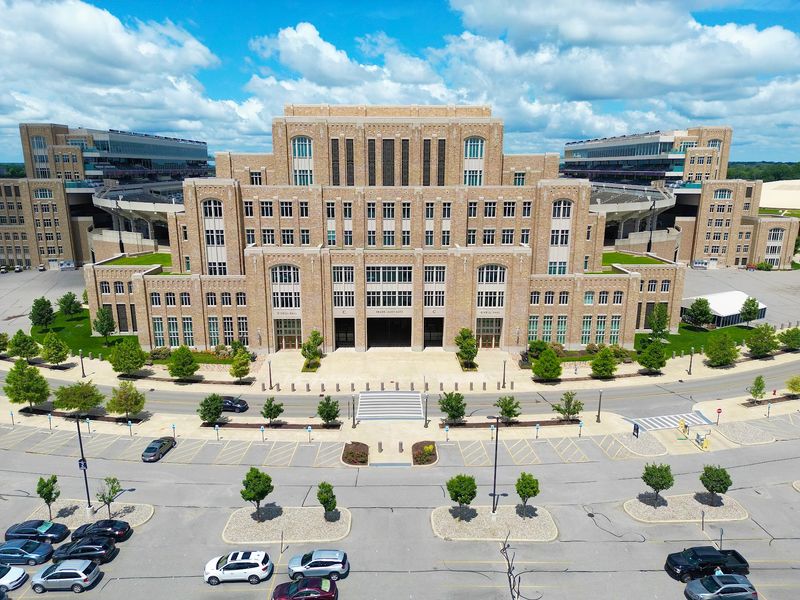
Some stadiums lean rough and industrial. Notre Dame Stadium takes a different route, offering a game-day setting that can feel surprisingly polished without losing its football edge. That balance is part of its charm, especially for visitors expecting only noise and nostalgia.
The concourses are often described as cleaner and more refined than many older college venues. Lines move through spaces that feel organized, and the design reflects the broader look of the university instead of chasing flashy gimmicks.
Even when the place is busy, the surroundings keep a certain order that helps the day feel less chaotic. Seating comfort also plays into the experience. Reports of solid legroom, good sightlines, and a strong overall view from many sections matter more than they may seem.
A loud crowd is exciting, but a stadium becomes easier to enjoy when fans are not constantly fighting cramped space or blocked angles.
That practicality helps Notre Dame Stadium appeal to more than die-hard alumni. Families, older fans, and first-timers can settle in and focus on the game rather than on inconveniences.
The venue still has the scale and emotion of a major college stadium, yet it delivers those things with a little more composure than some famous rivals.
Anyone planning a visit should take time to look beyond the field and notice the small functional details. Watch how the crowd circulates, how views open up from different levels, and how the building fits into the larger campus design.
Those parts may sound minor, but together they shape whether a full Saturday feels draining or smooth. In Indiana, plenty of football spaces value size and noise first. Notre Dame Stadium certainly has both, but it also offers an uncommon touch of elegance.
That extra layer helps explain why the venue is often praised not just as historic, but as comfortable, handsome, and unusually well put together.
Friendly Faces and a Crowd With Room to Breathe
Big stadiums can be thrilling, but they can also wear people down fast if the crowd is tense or the staff is hard to find. Notre Dame Stadium earns part of its reputation by avoiding that trap.
The human side of the experience often feels more welcoming than many high-profile sports venues. Ushers and event staff are regularly noted for being helpful, and that can change a day in real ways.
Clear directions, patient seat guidance, and smooth movement through entrances reduce stress before fans even settle in.
In a place that can hold more than 80,000 people, simple friendliness is not a small detail. It is part of the event’s operating system.
The crowd character also adds to the appeal. A major college football game naturally brings intensity, but the environment around Notre Dame Stadium is often described as energetic without tipping into disorder.
That distinction matters for families, casual fans, and neutral visitors who want the excitement of a huge game without the extra friction that sometimes comes with rowdier settings.
There is a practical lesson here for anyone planning a first visit. Arrive early enough to ask questions, let staff point the way, and avoid turning entry into a rushed scramble. If older relatives or kids are part of the group, that extra breathing room can make the whole day easier.
A stadium’s reputation is often built on touchdowns and traditions, yet the tone set by the people inside the gates can be just as important. Notre Dame Stadium benefits from a fan culture that tends to feel proud, focused, and social rather than hostile.
Pair that with organized staff support, and the game-day atmosphere becomes easier to enjoy from start to finish. In a sport known for extremes, that steadiness is a genuine strength.
How to Spend a Full Saturday at Notre Dame Stadium

The smartest way to enjoy Notre Dame Stadium is to stop thinking only about kickoff. A full Saturday here works best when the game is treated as the centerpiece of a larger campus experience.
That approach helps visitors understand why the stadium carries so much national attention. Start early and give the surrounding campus real time.
Walking through the area before the crowd peaks lets you notice the landmarks, architecture, and game-day buildup without feeling rushed. It also creates a clearer sense of how closely the stadium is tied to the university around it.
Tailgating is one of the easiest ways to catch the social side of the day. Nearby lots and gathering areas build a festive mood, but the campus setting keeps the pregame scene from feeling one-note.
Instead of endless pavement and grills alone, there is a mix of football energy and classic college scenery. When it is time to head inside, do not wait until the last minute. Early entry means less pressure at the gates and more time to watch the stadium come alive section by section.
Seeing the bowl fill, hearing the band warm up, and watching anticipation build is part of the experience, not dead time before the real action.
After the game, resist the urge to sprint straight to the car. Depending on traffic, a slower exit can actually be the easier option. It gives the crowd time to spread out and offers one more chance to absorb the campus at a calmer pace.
For first-timers, that all-day rhythm makes the visit stronger. Notre Dame Stadium shines during the game, but the lead-up and comedown matter too.
Build in walking time, dress for Indiana weather, and expect a long day rather than a quick event. That plan turns a simple ticket into a fuller college football experience.
Why This Place Belongs on the College Football Short List
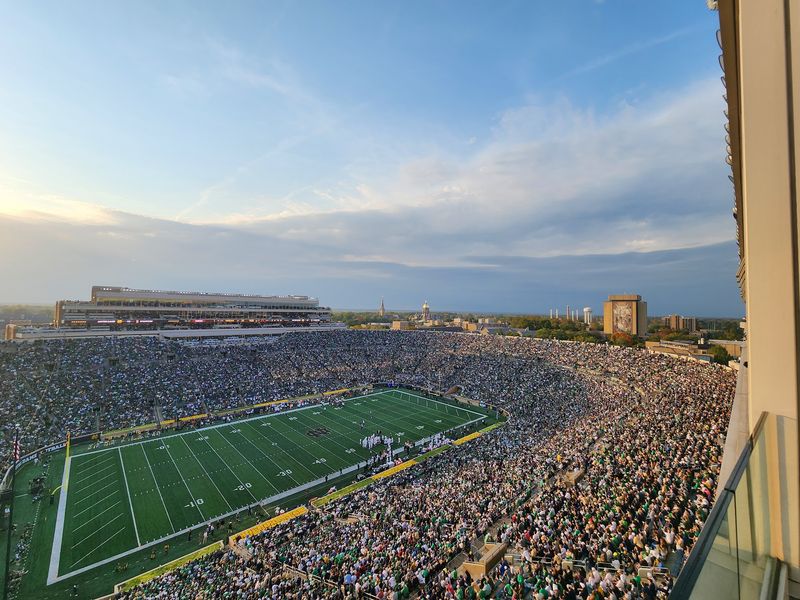
Plenty of college football stadiums are loud. Plenty are old. Plenty sit on attractive campuses. Notre Dame Stadium stands out because it combines all of those qualities in one place and gives each of them a clear role in the day.
The history is not hidden in a museum corner. It is part of the building’s identity and part of the way fans talk about the venue.
This is the home of a program with decades of national relevance, major rivalries, famous players, and traditions that still shape modern Saturdays.
Then there is the setting. The stadium’s location within the Notre Dame campus gives it a sense of ceremony that many larger venues cannot match.
Views tied to nearby landmarks, the polished design, and the walkable surroundings create a stronger lead-in than a standard drive-to-seat sports experience.
The crowd completes the equation. Energy inside the bowl can be fierce, but it is paired with organization, visible staff support, and a fan base that often keeps its focus on the game itself.
That combination gives the venue broad appeal, from lifelong supporters to travelers checking off a bucket-list stop.
For practical planning, choose a game with high stakes if possible, arrive with comfortable walking shoes, and prepare for changing weather. Fall in northern Indiana can shift quickly, and being ready for cold, wind, or rain makes a long stay much easier.
Staying through the final moments is also a wise move, since Notre Dame game days are built around more than only the first quarter buzz.
When national conversations turn to iconic college football environments, Notre Dame Stadium deserves a firm place near the top.
It offers spectacle without losing tradition, scale without losing order, and history without feeling frozen in the past. That rare mix is exactly why the stadium remains one of the country’s most recognizable game-day stages.
Share this story