A boulder balanced like it was placed by a giant, a wooden boardwalk stretching toward Barnegat Bay, and a narrow road disappearing into miles of salt marsh do not exactly fit New Jersey’s crowded reputation. That is precisely the point.
Beyond the Turnpike traffic and packed Shore towns, the state has an impressive collection of places where the soundtrack drops to birds, running water, wind through pine trees, and not much else. Some are carefully tended gardens where you can wander for an hour without buying a ticket.
Others are rugged preserves where a short walk can put highways and neighborhoods completely out of sight. A few sit surprisingly close to places you probably pass all the time.
Whether your idea of a reset involves flowers, forest trails, reservoirs, tidal marshes, or a bench with nobody waiting for it, these 15 New Jersey hideaways prove that finding some peace rarely requires crossing the state line.
1. Sayen House & Gardens – Hamilton
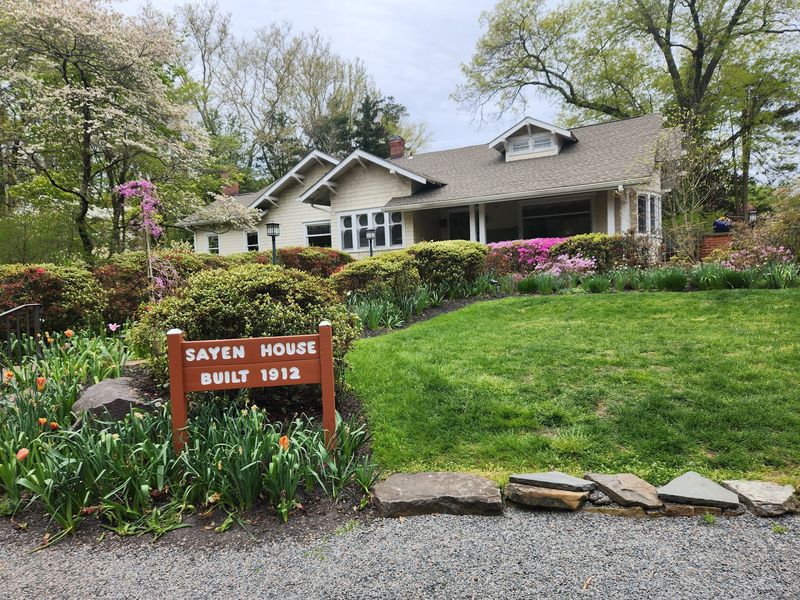
Spring is when this Hamilton favorite practically refuses to be subtle.
Thousands upon thousands of blooms spill across the property, with more than 1,000 azaleas, nearly 500 rhododendrons, dogwoods, and a huge seasonal display of flowering bulbs turning the grounds into something far removed from the surrounding suburban streets.
The beauty is not limited to one carefully staged flower bed, either. Walking paths thread between ponds, small bridges, gazebos, streams, wooded pockets, and open lawns, so it is easy to keep wandering after you have supposedly decided to head back to the car.
The gardens began with Frederick Sayen, an enthusiastic gardener and traveler who bought the 30-acre property in 1912 and filled it with plants collected from places including China, Japan, and England. Some descendants of those plantings remain part of the landscape today.
The best way to visit is without much of an agenda. Follow whichever path looks interesting, stop around the ponds, and give yourself enough time to explore beyond the areas closest to the historic house.
Admission is free, and the grounds are open daily from dawn to dusk. Dogs are welcome on leash, which makes this an especially easy choice when you want a peaceful afternoon without having to plan an entire excursion around it.
2. Laurelwood Arboretum – Wayne
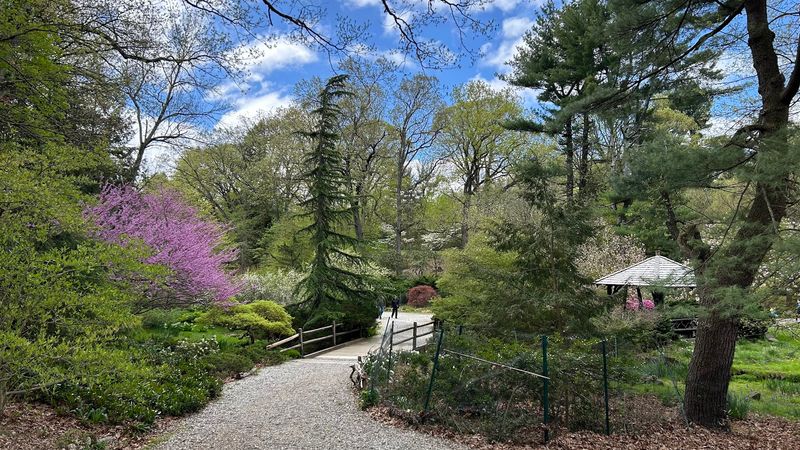
What began as a commercial nursery eventually became one of Wayne’s best places to disappear for an hour. Laurelwood covers 30 acres, but its network of gravel paths, woodland trails, ponds, streams, and densely planted garden areas makes it feel wonderfully layered.
One minute you are looking across a manicured planting; the next you are beneath mature trees with water running nearby and very little indication that northern New Jersey suburbia is right outside.
Rhododendrons and azaleas are among Laurelwood’s signatures, with hundreds of varieties joined by unusual trees and other ornamental plants accumulated over the property’s long horticultural history.
The former nursery origins help explain why the grounds feel less like one formal botanical garden and more like a collection of distinct little environments stitched together. Instead of marching straight through, take the side paths.
They are where Laurelwood works its magic, especially when blooms are peaking or the leaves begin changing in fall. Birdwatchers and photographers have plenty to work with, but this is equally good territory for doing absolutely nothing ambitious.
Find a bench, watch a pond for a while, and enjoy the novelty of having nowhere specific to be. The grounds are free to enter and currently open every day from 8 a.m. until dusk, making Laurelwood an easy low-effort escape when a full hiking day sounds like too much work.
3. Herrontown Woods – Princeton
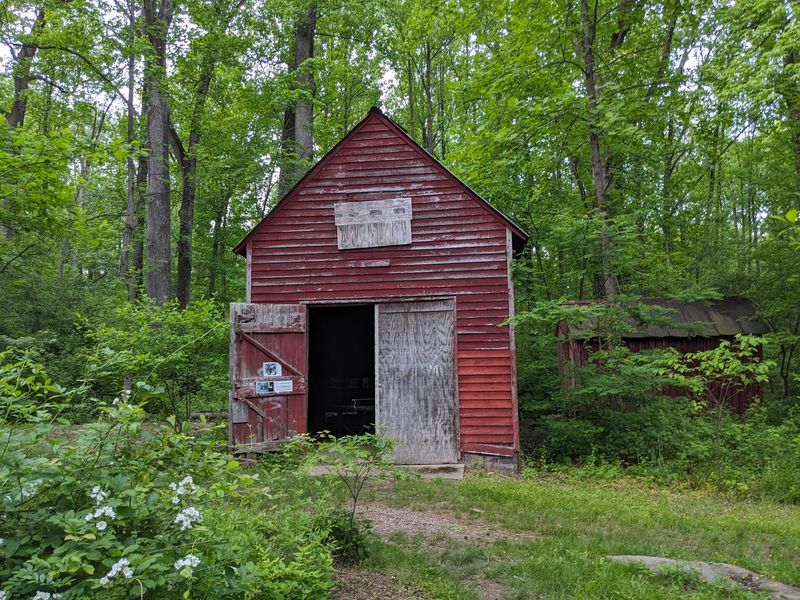
Princeton has plenty of polished scenery, but Herrontown Woods shows off the town’s scruffier, more mysterious side. The preserve began in 1957, when mathematician Oswald Veblen and his wife, Elizabeth, donated 81 acres as a sanctuary for plants and wildlife.
Additional land eventually pushed the protected area to just under 150 acres, creating a patchwork of upland forest, wooded wetlands, small creeks, old structures, and trails that feels surprisingly removed from the university-town bustle.
Start near the main parking area off Snowden Lane, where the Botanical Art Garden—usually shortened to the Barden—adds native plantings, seating, and a pavilion to what was once a pine grove.
From there, trails head toward the historic Veblen House and an 1870s farm cottage or deeper into the woods toward the Cascades, where a tributary of Harry’s Brook moves over rocks along the Princeton Ridge. That mix of natural and human history gives Herrontown more personality than the average neighborhood woods.
You might come for a simple hike and end up poking around stonework, old buildings, native gardens, and creek crossings instead. It is especially satisfying after rain, when the little waterways become more noticeable.
Wear shoes you do not mind getting dirty, resist the urge to rush the loop, and let this wonderfully odd corner of Princeton reveal itself gradually.
4. Cross Estate Gardens – Bernardsville
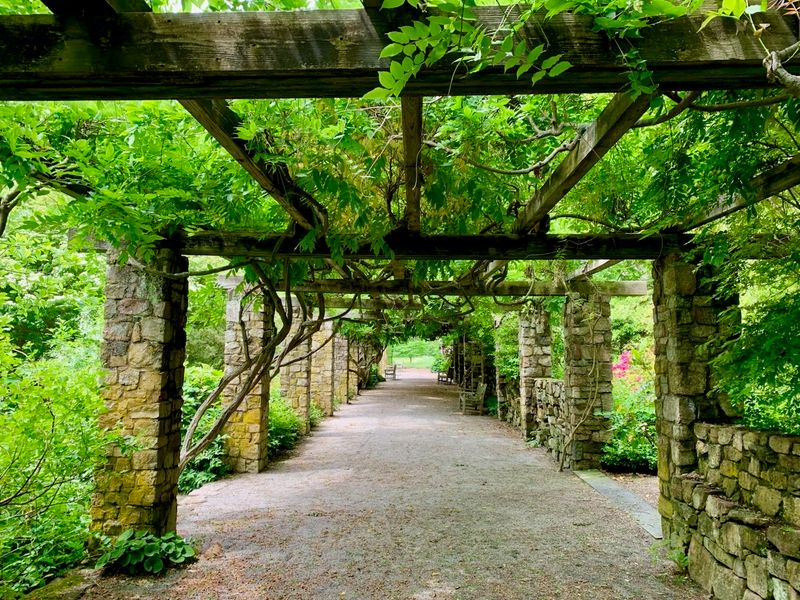
The wisteria-covered pergola is usually the moment people realize they have found somewhere special. Cross Estate Gardens sits within the New Jersey Brigade area of Morristown National Historical Park, yet the manicured landscape feels more like the forgotten grounds of an old country estate than a conventional national park stop.
The early-20th-century garden includes formal perennial beds, native plantings, mountain laurel, large specimen trees, and that long pergola, which becomes particularly memorable when its vines are in bloom. There is enough structure to make the gardens interesting without making them feel precious.
Gravel paths invite slow wandering, walls and plantings create small pockets of privacy, and the surrounding woods keep the whole property quiet. Once you have seen the gardens, there is an easy way to add some history and a little exercise.
A roughly one-mile hike leads toward the site where New Jersey Brigade troops encamped during the Revolutionary War era. Just remember that the return portion involves the uphill stretch.
The gardens themselves are accessible, although their paths are gravel, while the trail to the encampment is not ADA accessible. There are currently no public restrooms in the Cross Estate/New Jersey Brigade area, so plan accordingly.
This is one of those places where bringing coffee and walking slowly makes far more sense than trying to turn the visit into a checklist.
5. Frelinghuysen Arboretum – Morris Township
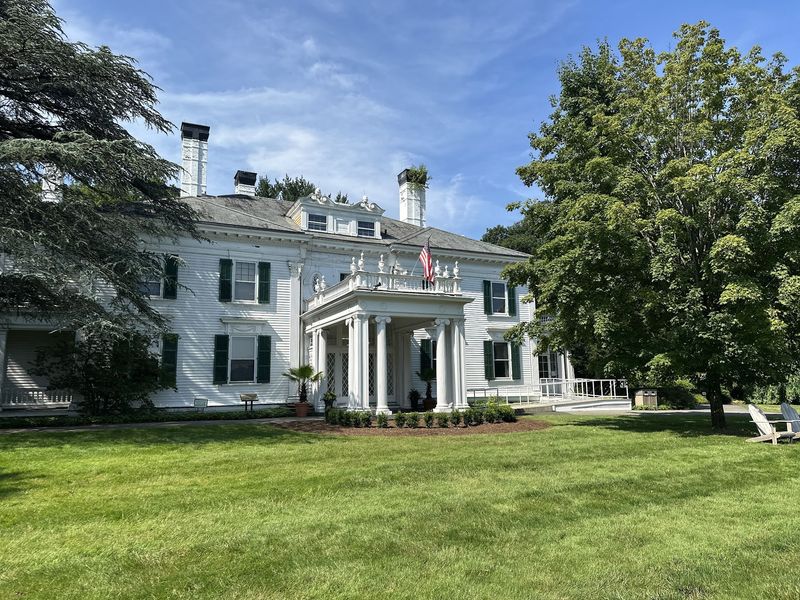
The grand Colonial Revival mansion grabs your attention first, which is understandable—it was built in 1891 as part of the country estate of George and Sara Frelinghuysen. But the real reason to linger is everything spreading outward from it.
The arboretum occupies roughly 124 acres of gardens, lawns, woodland, meadows, trails, and an enormous assortment of specimen trees and flowering plants. There is enough horticultural variety here that repeat visits rarely feel identical.
Spring brings the azalea trails and Rhododendron Loop into their own, while other corners focus on everything from small trees and cottage-style plantings to drought-tolerant species in the newer Gravel Garden. Even winter gets its own dedicated planting area designed around bark, fruit, fragrance, and cold-season interest.
For the calmest visit, skip the urge to cover every named garden and wander between the Great Lawn and the less formal edges of the property. The combination of broad open space and mature trees makes it easy to find a quieter route.
Most paths around the main garden areas are gentle enough for an unhurried stroll, and picnic-friendly lawns make this one of the better choices on the list when hiking boots are not part of the plan. The arboretum is generally open from 8 a.m. to sunset year-round.
One useful detail for pet owners: dogs are not permitted at Morris County’s arboreta.
6. Pyramid Mountain Natural Historic Area – Montville Township
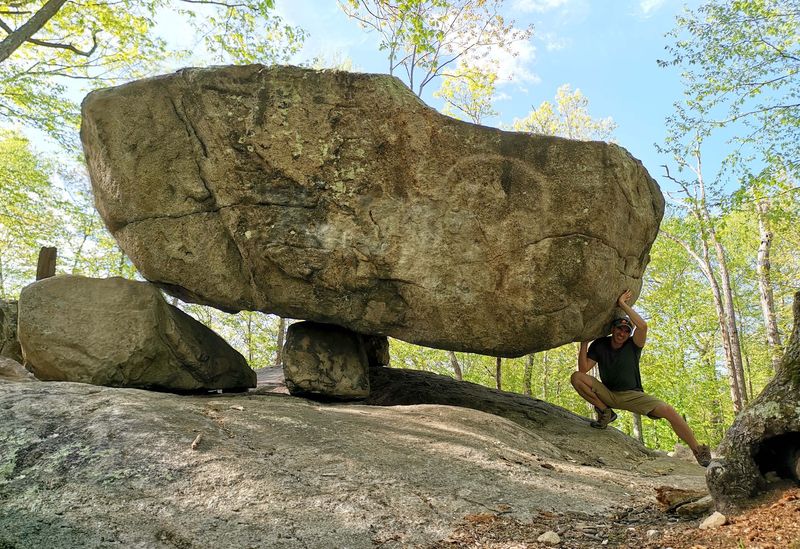
Tripod Rock looks like someone ignored the laws of physics for fun. The enormous glacial erratic rests atop smaller stones in the woods, and it is the landmark most associated with Pyramid Mountain—but it is hardly the only reason to lace up your hiking shoes.
More than 1,600 acres of ridges, wetlands, forest, rock outcroppings, and narrow valleys surround roughly 19 miles of trails, giving this Montville-area preserve the sort of rugged character people often assume requires a drive much farther north.
Other ice-age leftovers include Bear Rock and Whale Head Rock, deposited when glaciers shaped this landscape thousands of years ago.
If you prefer your quiet with a payoff, routes also lead toward waterfalls, reservoirs, and viewpoints. The preserve’s highest point reaches 934 feet, with a distant New York City skyline view that creates a particularly good New Jersey contradiction: Manhattan is visible, but it can feel remarkably far away.
These are genuine hiking trails rather than garden paths, so sturdy footwear and a downloaded or printed map are smart. Trails are open from sunrise to sunset, and visitors are required to stay on marked routes.
Bikes, rock climbing, and fishing are not permitted, while dogs can join you on a leash no longer than six feet. Visit early on a weekday and even Tripod Rock can feel surprisingly private.
7. Apshawa Preserve – West Milford
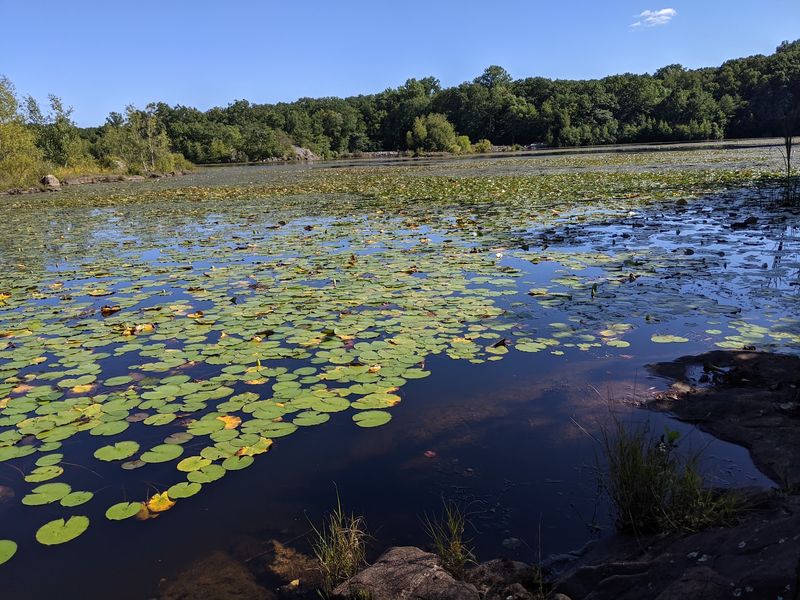
The 40-acre Butler Reservoir is the reward that keeps Apshawa from feeling like just another pleasant woodland walk. Reaching the water through the surrounding Highlands forest creates one of those satisfying moments when the trees open and the entire pace of the hike seems to slow down.
The West Milford preserve covers 583 acres, with more than five miles of marked trails moving through oak- and sugar-maple-dominated woods, past Apshawa Brook, and around varied terrain that gives you enough climbing to feel like you earned the scenery.
Birdwatchers have an obvious reason to linger near the reservoir, but even without binoculars, the combination of water, forest, and rocky northern New Jersey terrain makes this a solid place to unplug.
Apshawa is better approached as a hike than a casual park stroll, so bring water, wear shoes with decent traction, and take a photo of the current trail map before setting out. The preserve has had trail reroutes over the years, making an up-to-date map more useful than whatever route someone saved three summers ago.
Access is from Northwood Drive off Macopin Road, and the property is open year-round from dawn to dusk. Hiking is the main draw, although the preserve also allows several other forms of passive recreation.
If your goal is maximum quiet, arrive earlier in the day and make the reservoir the centerpiece rather than trying to race through every possible trail combination.
8. Franklin Parker Preserve – Chatsworth
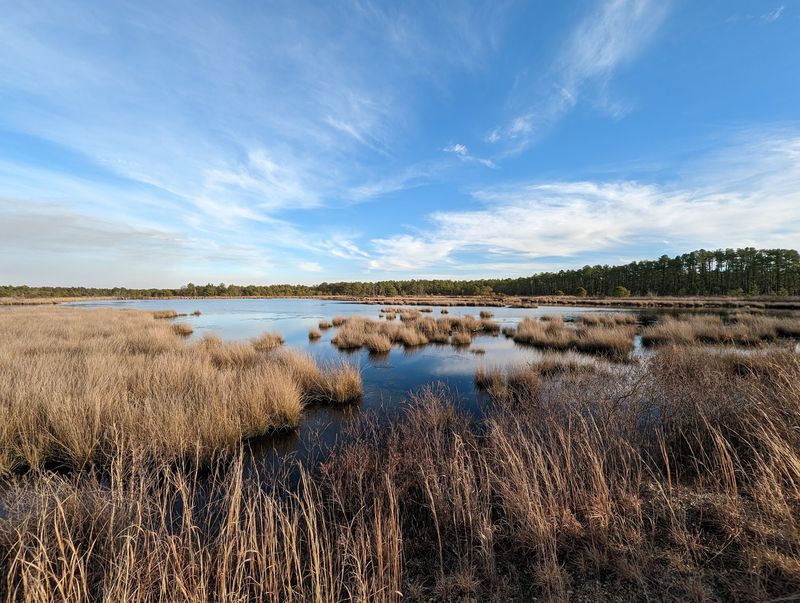
Silence feels different in the Pine Barrens. Instead of a dramatic mountain overlook or crashing waterfall, Franklin Parker Preserve gives you enormous skies, flat horizons, rust-colored water, pine-oak forest, wetlands, and long stretches where the landscape seems to keep going indefinitely.
At 11,415 acres, this is not a pocket park pretending to be wilderness. Roughly 5,000 acres are wetlands and another 4,400 acres are contiguous upland pine-oak forest, with 14 tributaries crossing the preserve before eventually feeding the Wading River.
That scale also makes Franklin Parker extraordinarily important habitat. More than 50 rare, threatened, or endangered species have been documented here, including Pine Barrens specialists that most New Jersey residents will never encounter in their own backyards.
For visitors, the trick is not to overcomplicate things. Pick an entrance and a manageable route, then let the open wetlands and sandy woods do the work.
The Chatsworth Lake entrance is an easy starting point to plug into your navigation, while a second access point is available near Speedwell. Hiking and birdwatching are obvious choices, but biking, horseback riding, and fishing are also among the permitted activities.
This is a place where carrying your own water and knowing your route matters more than finding a café or visitor center. Give Franklin Parker a few hours, and the noisy version of New Jersey starts to seem almost theoretical.
9. Cattus Island County Park – Toms River Township
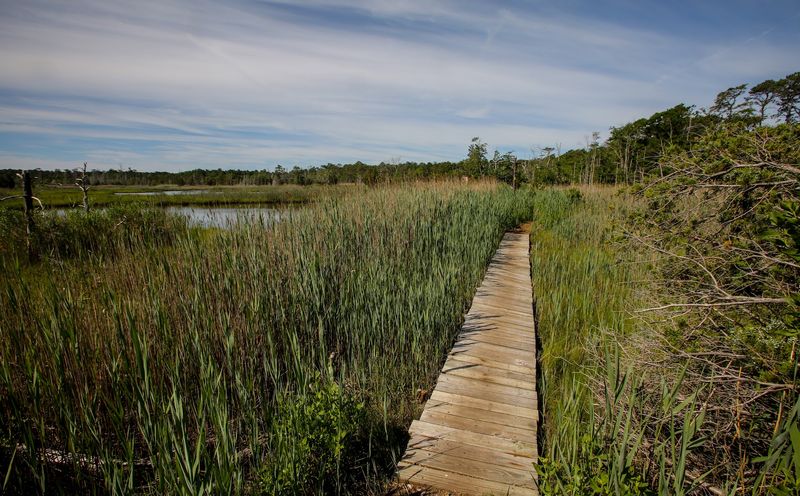
Barnegat Bay does most of the talking here. Trails and boardwalks move through coastal habitat until suddenly you are staring across open water, marsh, and sky with none of the boardwalk arcades or beach-town commotion people usually associate with Ocean County.
Cattus Island County Park protects 530 acres and offers about seven miles of trails, making it substantial enough for a real walk without requiring a major expedition.
One of the simplest options is following the main route toward the beach, but wandering the side trails rewards you with additional bay views, birding spots, and quieter sections of woods.
The park is particularly strong for anyone who enjoys wildlife without wanting a difficult hike. Native plants and pollinators fill the Butterfly Garden, while the Cooper Environmental Center has exhibits about the surrounding ecosystems, an osprey camera, live reptiles and fish, and an indoor bird-viewing area.
A 1,000-foot ADA-accessible boardwalk adds another easy way to experience the landscape. The park opens at 7 a.m., with closing times shifting seasonally, so morning visitors get both cooler temperatures and the best shot at having the trails largely to themselves.
Bring binoculars if you have them. Otherwise, just walk toward the bay, find one of the scenic overlooks, and stay longer than you planned.
10. Wells Mills County Park – Waretown
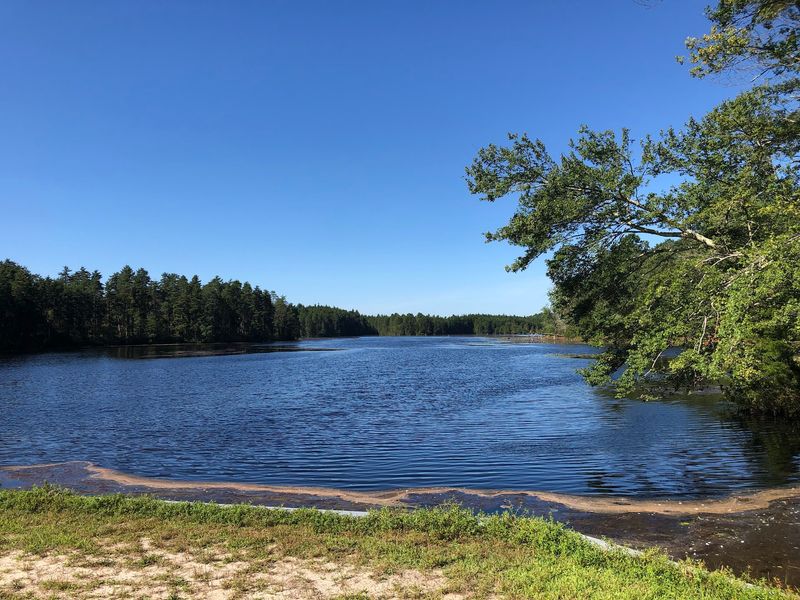
For a Pine Barrens escape that does not require navigating miles of lonely sand roads, Wells Mills is hard to beat. The Waretown park spreads across 910 acres, making it the largest property in the Ocean County park system, and much of that acreage is classic South Jersey pine-and-oak forest.
Wells Mills Lake sits at the center of the experience, with trails curling around the water and branching farther into the woods. You can choose a leisurely lakeside walk or commit to something longer, which makes the park useful for both “we need fresh air” afternoons and genuine hiking days.
Before heading out, stop inside the renovated three-story Nature Center. Exhibits cover local nature, history, and forest fires, and the upper-level Elizabeth Meirs Morgan Observation Deck gives you another perspective on the surrounding landscape.
Seasonal canoe rentals add an appealing option when the lake is calm, while fishing, picnicking, and biking are also available in designated areas. The park currently opens at 7 a.m., with closing times changing throughout the year.
One particularly useful local tip is to pick up a current printed trail map rather than relying entirely on an old screenshot; the county updates its trail information as conditions change.
On a still morning, when the lake is reflecting the tree line and the pines swallow most outside noise, Wells Mills can feel much farther from the Shore traffic than it actually is.
11. Rutgers Gardens & Helyar Woods – New Brunswick
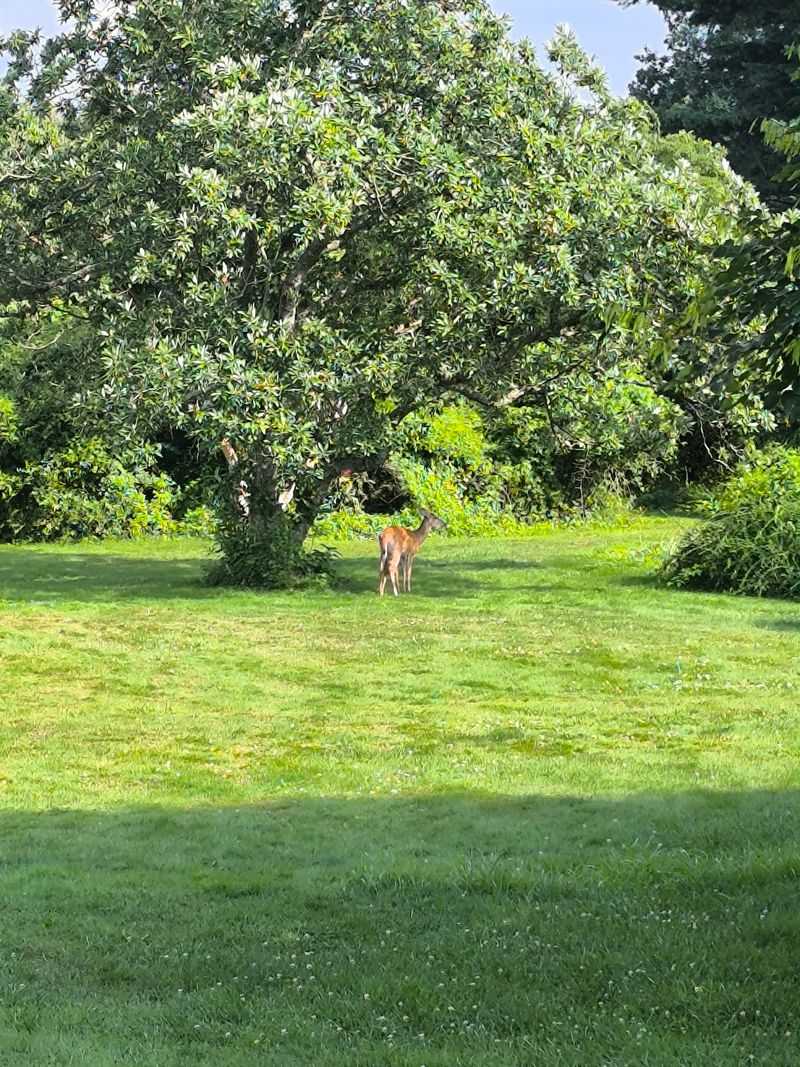
You can get off the New Jersey Turnpike near New Brunswick and, not long afterward, be walking beneath old trees beside springs and a stream. That contrast is a big part of what makes Rutgers Gardens such a satisfying surprise.
The university’s 180-acre botanical garden combines designed landscapes, plant collections, natural areas, research spaces, and the nearly 60-acre Helyar Woods, so you can choose between cultivated beauty and a proper forest walk without moving the car.
Start among the display gardens if you want an easy wander, especially around the extensive holly collection and seasonal plantings.
Then head into Helyar Woods, where trails wind through mature beech, oak, and maple forest. Springs, a stream, a meadow, and even an old quarry near Westons Mill Pond add variety to the route.
The transition is what makes the visit: neat garden beds gradually give way to roots, leaves, and woodland quiet. Admission is free, although donations are welcomed.
Rutgers Gardens is currently closed on Mondays, and operating hours change seasonally, so this is one spot where checking the schedule before leaving home is worthwhile. Bring your own snack if you want to linger; there are no refreshments sold on-site, but small blanket picnics are permitted.
Dogs are allowed on leash, and benches scattered through the gardens make doing very little entirely acceptable.
12. Palmyra Cove Nature Park – Palmyra
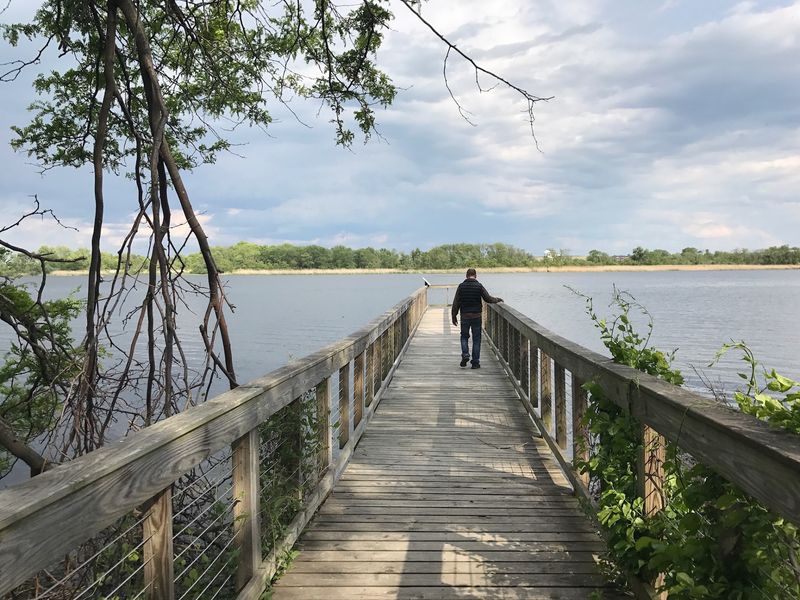
The Tacony-Palmyra Bridge is practically overhead, and Philadelphia sits just across the Delaware River. Somehow, Palmyra Cove still manages to feel like somebody slipped a nature preserve into a place where one should not logically fit.
The 250-acre park packs wetlands, woodlands, meadows, creek habitat, river shoreline, and a freshwater tidal cove into a remarkably compact stretch of Burlington County. That range is the reason to explore rather than simply walk to the water and turn around.
One trail may put you beneath trees; another opens onto marsh or a broad river view with the bridge framing the horizon. Low tide changes the shoreline again, making repeat visits feel different.
Birdwatching is particularly good because forest, wetland, and river habitats sit so close together, but there is also something entertaining about watching boats and distant traffic while standing somewhere that feels almost completely removed from them. The outdoor areas are open from dawn to dusk and admission is free.
Leave the bike and dog at home: the park is foot-traffic-only and does not permit pets. Fishing is allowed with the appropriate license, and kayaks and canoes may be launched from the beach area.
Palmyra Cove is not peaceful because civilization disappears. It is peaceful because nature somehow holds its ground right in the middle of it.
13. Maurice River Bluffs Preserve – Millville
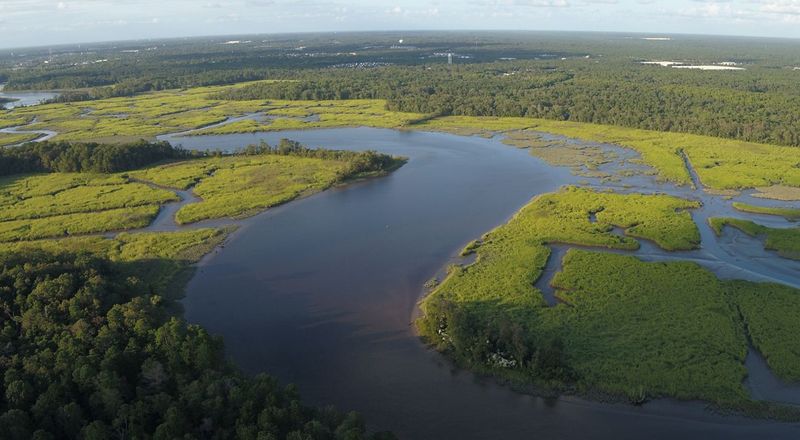
South Jersey is not famous for hills, which is exactly why the first good overlook at Maurice River Bluffs feels like such a pleasant curveball. The preserve protects more than 500 acres along the Maurice River near Millville, where forested bluffs rise above wetlands and create terrain you simply do not encounter in much of the region.
More than five miles of hiking trails explore the property, with routes passing ponds, woods, remnants of earlier land uses, and viewpoints over the river. A floating dock offers an especially peaceful place to look across extensive wild-rice marshes, and the river corridor is important habitat for migrating birds.
Bald eagles are among the headline residents; a pair has nested at the preserve. There is even a dedicated six-mile mountain-bike trail—separate from the foot trails—with elevation changes, berms, and small jumps, a rarity in this part of the state.
Hikers should stay off the bike-only route, and cyclists should watch carefully at trail intersections. If peace is the priority, stick to the hiking network and make the river your destination.
Dogs are permitted on leash, but camping, campfires, ATVs, and hunting are prohibited. Bring lunch and use one of the riverside picnic spots rather than rushing off afterward.
When the water is still and a bird moves across the marsh, the entire place seems to lower its voice.
14. Great Bay Boulevard Wildlife Management Area – Little Egg Harbor Township
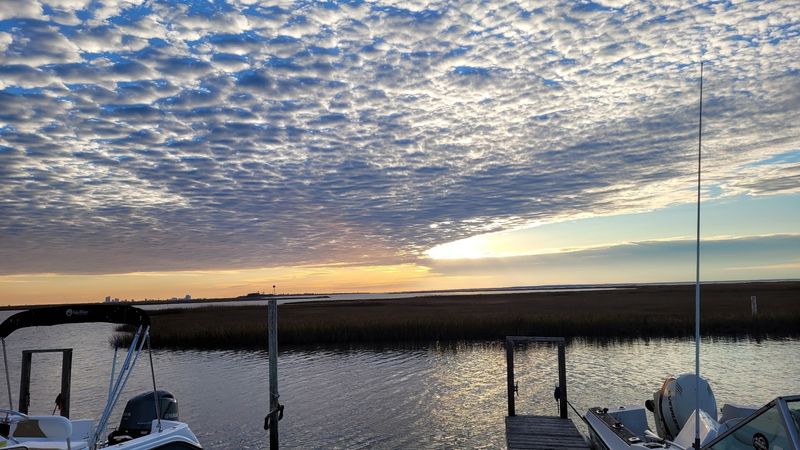
There is a point along Great Bay Boulevard where the road seems to have second thoughts about being a road at all. The narrow two-lane strip pushes into a huge expanse of salt marsh, water, islands, and sky, giving drivers and birdwatchers access to one of the least-disturbed marine wetland areas in the Northeast.
The surrounding wildlife management area covers 5,982 acres of fresh, brackish, and saltwater estuary. Interestingly, the boulevard began as part of an unrealized causeway project that would have connected the area toward Atlantic City.
What never became a transportation corridor now serves a far better purpose: providing access to marshland filled with wildlife. This is prime territory for slowing down, pulling into legal access areas, and watching the sky.
Ospreys use nesting platforms throughout the marsh, while sandpipers, willets, plovers, yellowlegs, oystercatchers, black skimmers, other shorebirds, and raptors frequent the area. Fishing is another major draw, and there is a public boat launch near Big Thorofare Inlet.
Do remember that this is a wildlife management area, not a conventional county park. Hunting and fishing are part of its intended recreational use, so checking current regulations and seasonal activity before wandering away from established access points is smart.
Come near sunrise or late afternoon and the marsh light alone can justify the drive.
15. Willowwood Arboretum – Chester Township
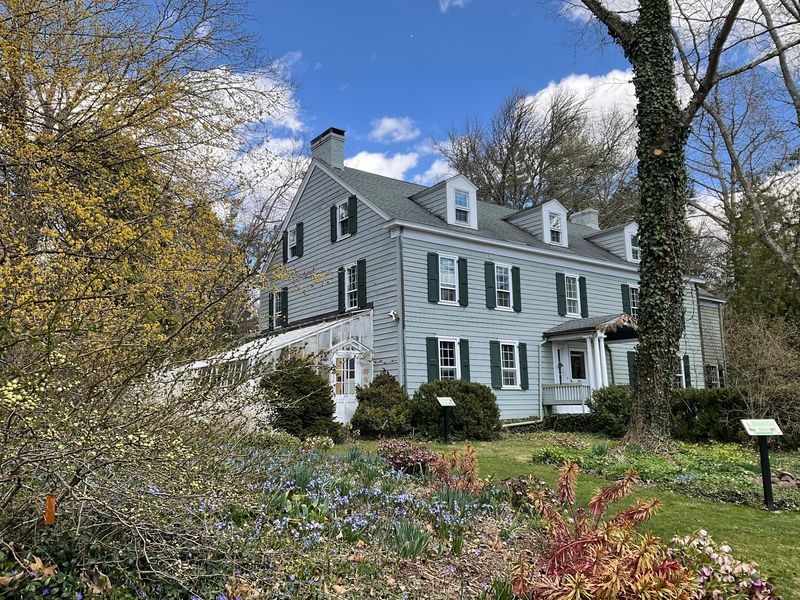
Willowwood feels less like a public attraction than an old country property whose owners stepped away and forgot to lock the gate. That impression makes sense.
The Chester Township arboretum grew from a historic farm and private plant collection before passing through Rutgers University ownership and eventually becoming part of the Morris County Park system in 1980.
Today, formal gardens sit beside informal plantings, old trees, fields, and meadow paths, creating the sort of place where following the less obvious route is usually the right decision.
More than 2,100 types of native and exotic plants are represented across the grounds, including rare specimens and several state Champion trees. The calendar changes the experience dramatically.
Lilacs announce spring, roses pick up in summer, autumn brings sharper scents and color through the conifer-lined landscape, and witch hazels give winter visitors something to seek out when most gardens have gone quiet.
Seven distinct garden areas provide enough structure for plant enthusiasts, but you do not need to know a cultivar from a conifer to enjoy yourself.
Walk the meadow paths, admire the old farm buildings, and resist trying to “complete” the property. Willowwood works best when you wander.
Hours generally follow daylight, with weekday access beginning at sunrise and weekend opening listed at 8 a.m. The quietest reward comes from staying long enough to notice how little traffic noise reaches the gardens at all.
Share this story