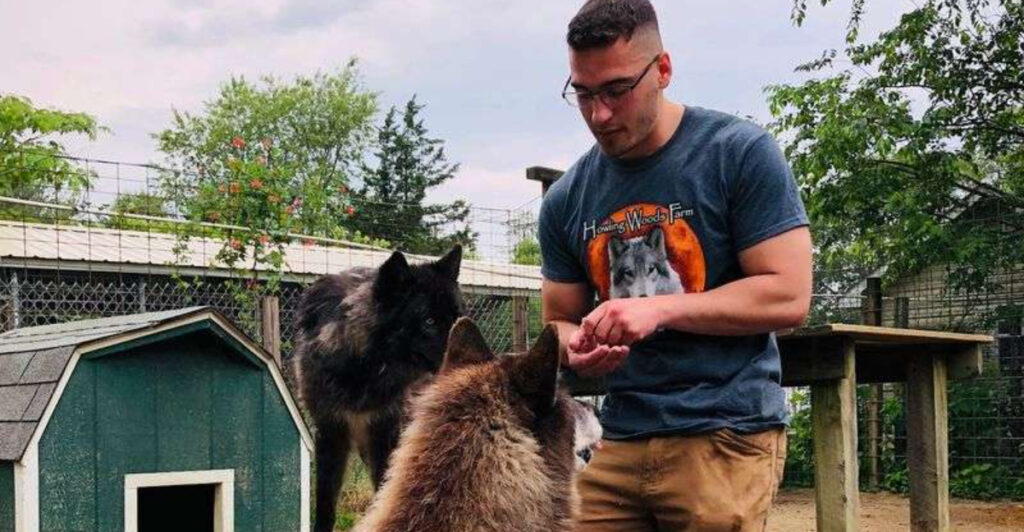
A 120-pound wolfdog named Orion has a habit of dropping onto his back for belly rubs. He also has a thing for tugging loose shirts, which is one reason visitors to Howling Woods Farm get a very specific dress code before stepping into an enclosure.
That combination—huge paws, wolf ancestry, and the comic timing of an oversized puppy—pretty much sums up why this Jackson Township rescue is so memorable. Howling Woods Farm is not a zoo, and these animals are not props lined up for photos.
It is a nonprofit rescue and education center built around domestic-bred wolfdogs and northern breeds that often need care ordinary shelters are not equipped to provide. Visits happen by appointment, and the experience is deliberately small and controlled.
You come to learn, watch, and, when the animals are comfortable with it, interact. The result feels far more personal than simply looking through a fence.
Inside Jackson Township’s Howling Woods Farm
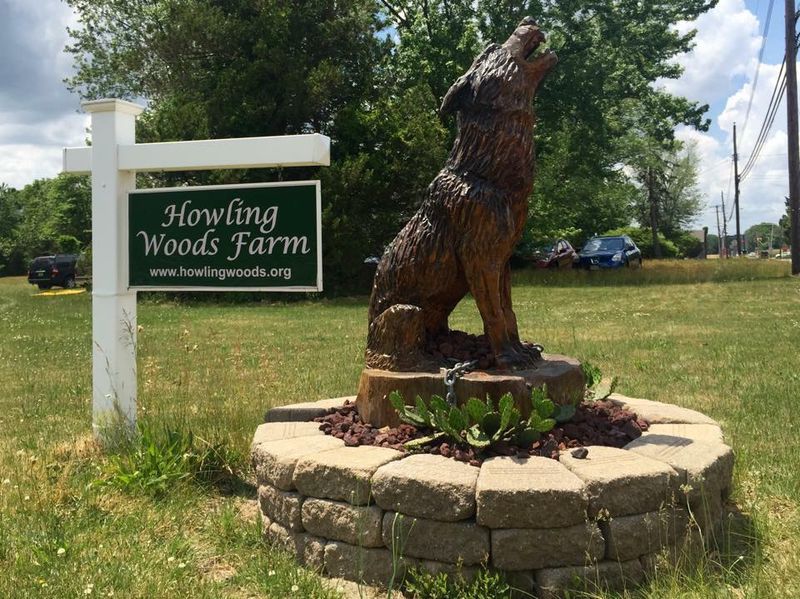
There is a good chance you have driven through Jackson Township thinking roller coasters, outlet shopping, or the roads that cut through this part of Ocean County. Howling Woods Farm adds a much stranger stop to that mental map.
The nonprofit sits at 1371 West Veterans Highway and operates as both an animal rescue and a learning center focused on wolves and wolfdogs. Its mission is not simply to house unusual animals.
The organization says it rescues and places abandoned or surrendered wolfdogs, educates the public and shelter professionals, and works to match each animal with an environment suited to its temperament and wolf content. It does not breed wolfdogs and does not encourage breeding them.
That matters once you start meeting the residents, because their backstories are often less romantic than their looks. Raven, a black-phase wolfdog with gray wolf, Siberian husky, Alaskan malamute, and German shepherd ancestry, was found tied to a highway guardrail in New York before arriving at Howling Woods in 2018.
Jack, the sanctuary’s tallest wolfdog, was found abandoned in a park ranger’s yard in upstate New York. Sayen was found roaming alone on the streets of Alabama.
Luna was surrendered after her owners decided her behavior was not working in their household. These are not animals assembled for a themed attraction; they arrived because somebody needed a place capable of handling them.
The farm gives them secure space, canine companionship, daily care, and, for some, the chance to become ambassadors in educational programs. That is the useful lens for a visit.
You are not walking into a collection of “pet wolves.” You are stepping into a rescue where individual histories explain why specialized places like this exist in the first place.
Why Wolfdogs Need a Different Kind of Rescue
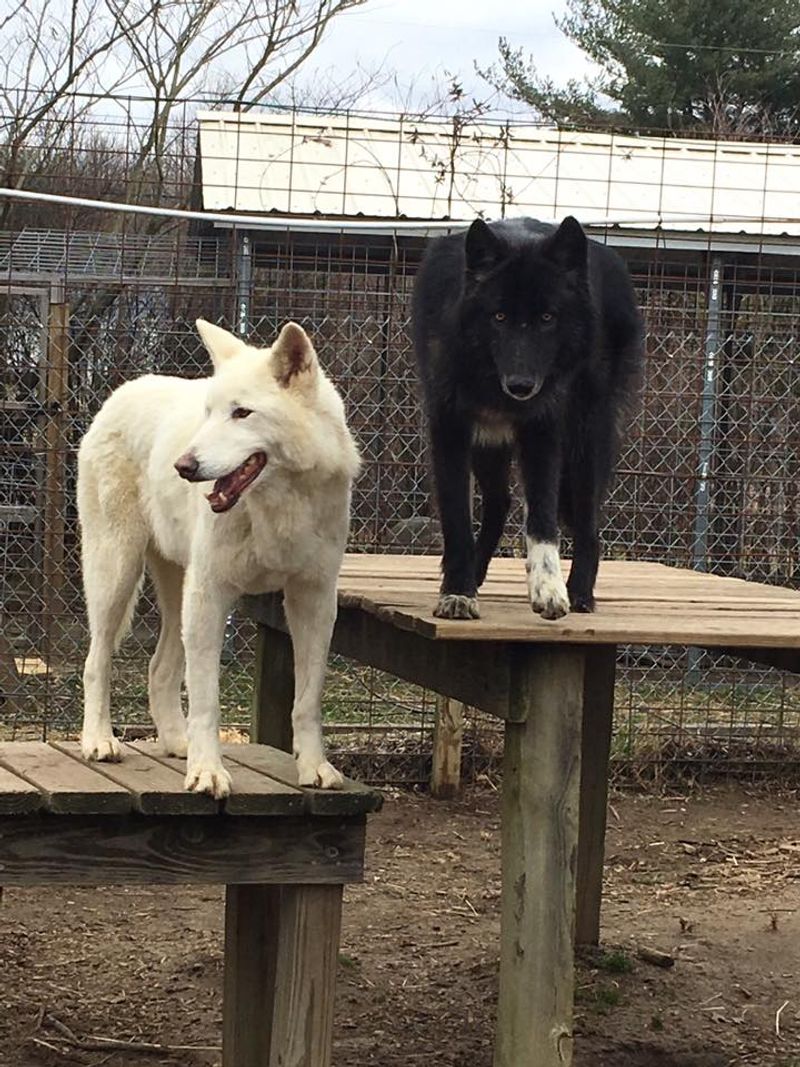
The tricky thing about a wolfdog is right there in the name. These animals have recent wolf ancestry mixed with domestic dog ancestry, and there is no single breed standard telling you exactly what personality, size, or behavior will show up.
Howling Woods notes that wolfdogs are commonly mixed with breeds such as Siberian huskies, Alaskan malamutes, and German shepherds, but even littermates can inherit very different combinations of traits.
One animal may be bold and social; another may be wary of strangers, highly independent, or much more driven to roam and explore.
That unpredictability is a big reason ordinary pet routines do not always translate well. Wolfdog sanctuaries warn that owners can become overwhelmed by strong prey drive, destructive behavior, escape tendencies, and the difficulty of safely placing an animal that does not fit normal shelter adoption channels.
Howling Woods approaches placement accordingly. Its adoption requirements call for a canine companion, secure outdoor containment at least six feet high, a veterinary reference, a home check, and an adoption application and contract.
The rescue also considers the temperament and wolf content of each animal rather than treating “wolfdog” as one neat category. That is a pretty sharp contrast with the fantasy version of wolfdog ownership, where somebody sees a dramatic face and imagines a slightly wilder husky.
The reality can involve serious containment, careful social structure, specialized handling, and compliance with state and local rules. For a rescue, that means saying no to placements that would be perfectly acceptable for an average dog.
It also means taking in animals whose options may already be narrow. Howling Woods exists in that gap between the animal someone thought they wanted and the animal they actually brought home.
Meet the Wolfdogs on Their Own Terms
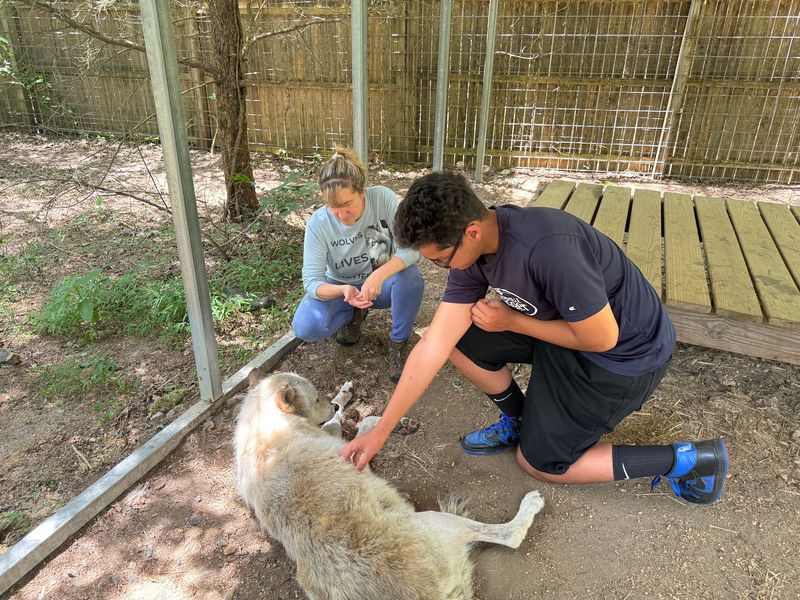
The first rule of meeting a wolfdog is simple: you do not get to decide that the wolfdog wants to meet you. That choice belongs to the animal.
A visit to Howling Woods is designed around that reality, which makes the experience more interesting than a standard petting-zoo setup. Some residents are naturally social with guests, while others prefer to watch from a comfortable distance.
Lyra, a high-content female born in 2018, is described by the rescue as curious but still aloof around crowds; she may occasionally offer guests a kiss, but affection is very much on her schedule. Orion is almost the opposite kind of character.
The high-content Alaskan malamute mix is known for enjoying visitors, tugging at loose clothing, and dramatically rolling over for belly rubs. Sayen, rescued from Alabama, serves as an ambassador animal and participates in off-site educational programs.
Then there is Raven, who tends to be shy and observant until he knows someone. During the one-hour tour, visitors can interact with animals and take photos, but the encounter is supervised and shaped by what is appropriate that day.
No one should arrive expecting a guaranteed cuddle, a staged selfie, or the same response from every resident. Wolfdogs can be curious, independent, playful, cautious, affectionate, or aloof, sometimes in combinations that do not fit neatly into the way people think about domestic dogs.
Watching them make their own choices is more revealing anyway. One may investigate a new person immediately; another may hang back and study the group.
By the end, you start paying less attention to how “wolf-like” each animal looks and more attention to the individual animal standing in front of you.
What Visitors Learn Beyond the Meet and Greet
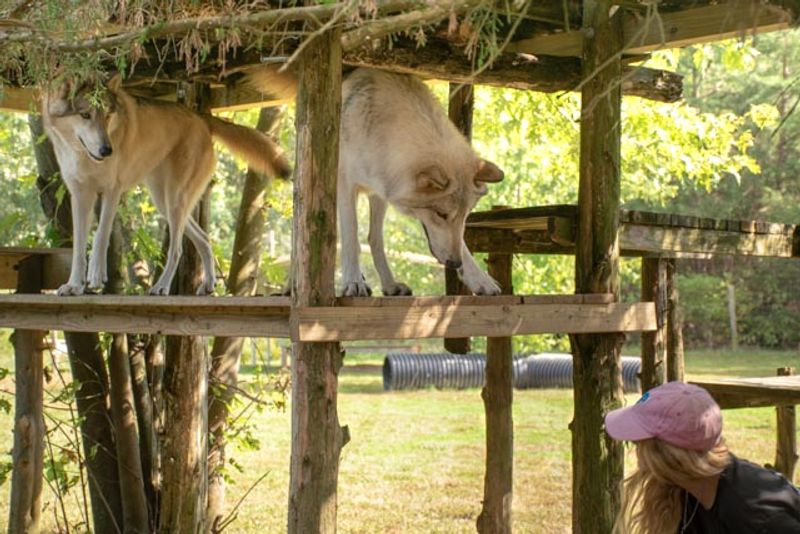
The photos are the easy part to remember. The lesson hiding behind them is what gives the visit some weight.
Howling Woods describes itself as an educational facility, and one of its stated goals is to dispel myths about wolves while giving the public, government officials, and shelter operators better information about wolves and wolfdogs. That education becomes much easier to absorb when the examples have names.
Jack is not an abstract warning about irresponsible breeding; he has a distinctive underbite that the rescue attributes to poor breeding practices. Luna is not a generic example of a difficult pet; she is a surrendered wolfdog whose previous owners said she was too shy and was bullying their pit bulls.
Raven’s story shows how quickly a wolfdog can wind up in a bad situation when an owner can no longer provide an appropriate home. Just as important, the farm pushes back against the idea that every wolfdog is basically the same animal in a different coat.
Visitors can see variations in size, confidence, sociability, and behavior within a single facility. There is also a quieter lesson in how the animals live.
The rescue emphasizes canine companionship and appropriate containment in its placement standards, and several residents share enclosures with compatible partners. Jack lives with Lyra; Sayen shares space with Bristol; Luna has a circle of canine companions she regularly interacts with.
Those relationships underline something easy to miss when wolfdogs are treated as exotic status symbols: their social and environmental needs matter more than the novelty of owning one. By the time the tour moves beyond introductions and photos, the message is fairly hard to miss.
The impressive part is not that these animals look wild. It is the amount of planning, patience, space, and expertise required to give them a stable life.
The Rules That Keep Every Encounter Safe
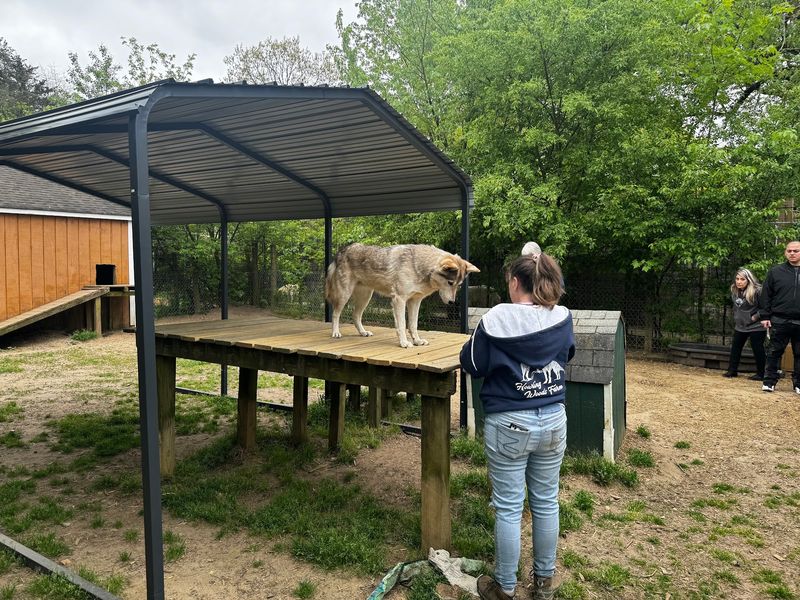
The dress code at Howling Woods is unusually specific, and Orion deserves at least some of the blame.
Because wolfdogs may investigate people at close range, visitors entering the pens are told to skip loose or dangling clothing, strong perfume or cologne, wool, real or imitation fur, down or puffy jackets, and most leather other than shoes.
Gum, candy, cigarettes, and other scented items should not be sitting in your pockets, either. Open-toed shoes and heels are also out.
These rules can sound fussy until you remember that a curious 100-plus-pound animal may be standing close enough to notice every interesting smell, flap, tassel, or texture you brought with you. Orion himself weighs about 120 pounds and is specifically known for pulling on loose-fitting clothing.
The behavioral rules are just as clear. Running, screaming, and loud noises are not allowed inside the pens, and adults are expected to keep children close.
Visitors must be at least 10 years old. Adults entering a wolfdog enclosure sign a hold-harmless release, and anyone under 18 needs a parent or legal guardian present to sign on their behalf.
The rescue also asks to be told in advance about medical accessories or external devices worn by anyone in the group. None of that is meant to make the experience intimidating.
It is what allows close interaction to happen without pretending these are ordinary family pets. The best approach is to arrive dressed simply, listen carefully to the handlers, and resist the urge to turn every moment into a photo opportunity.
If an animal approaches, great. If it chooses to hang back, that is part of the visit too. Respecting that boundary is not a limitation on the experience; it is one of the clearest lessons the farm offers.
How to Plan Your Visit to Howling Woods Farm
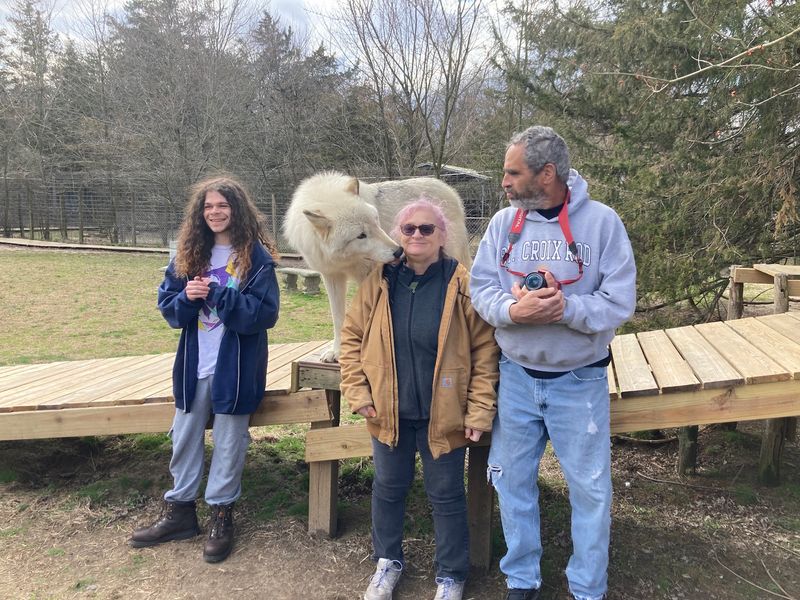
This is one New Jersey outing where showing up spontaneously will get you nowhere. Howling Woods Farm is appointment-only, and the rescue explicitly says visitors without an appointment will be turned away.
At the time of writing, the farm calendar lists visitor tours on Wednesdays, Fridays, and one day each weekend, with no tours on Mondays, Tuesdays, or Thursdays, though open dates can shift around events and off-site programs.
The practical move is to check the schedule first and then call 609-901-1387 on a weekday to book; appointments are handled by phone rather than email, text, or social media.
Tours last about one hour. There is no fixed admission price, but the farm requests a minimum donation of $30 for visitors age 13 and older and $15 for children ages 10 through 12.
Kids under 10 cannot visit. Parties of five or more are asked for a 50 percent deposit, and changes involving that deposit generally require at least 48 hours’ notice.
Credit cards, cash, and checks are accepted. The address is 1371 West Veterans Highway in Jackson Township, ZIP code 08527, putting the farm in central Ocean County.
Just do not plan it like a roadside attraction. Wear closed-toe shoes, leave the puffy jacket and dangling accessories at home, and give yourself enough time to arrive without rushing into the tour.
The farm also has a gift shop, but the real souvenir is usually more specific: the memory of a shy wolfdog deciding to come closer, or a 120-pound Orion deciding that your visit would be improved by a belly rub.