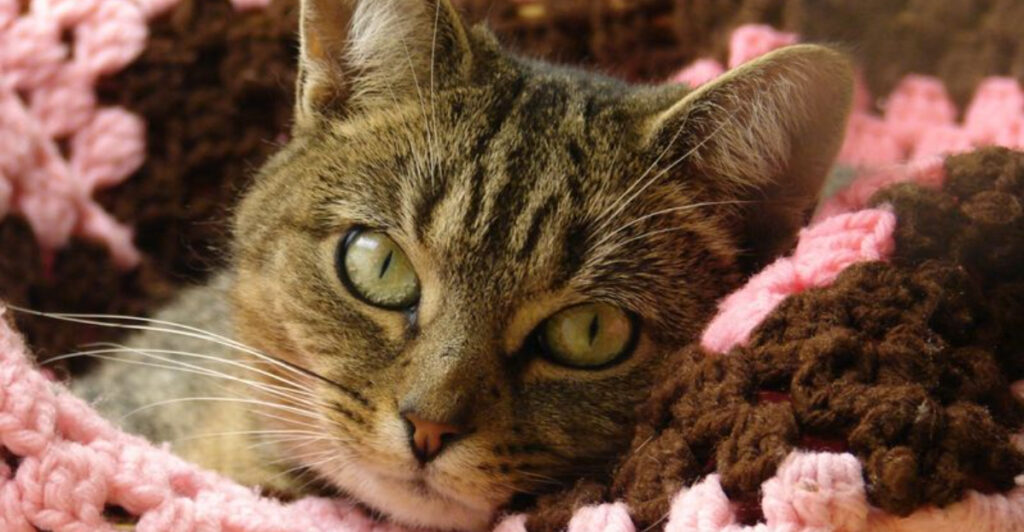
A shy Siamese kitten named Violet arrived in rural Hunterdon County weighing less than a pound, still figuring out stairs, toys, and the whole business of being a house cat. She also happened to make history.
In May 2026, Violet became the 5,000th cat taken in by Tabby’s Place, a sanctuary in Ringoes built for animals whose odds are often lousy before they ever reach the front door. Some residents are elderly.
Others are blind, incontinent, diabetic, FIV-positive, FeLV-positive, paraplegic, or recovering from injuries that would make adoption difficult almost anywhere else. Here, those complications are treated more like instructions than disqualifications.
Cats get veterinary care, open living spaces, sunny outdoor enclosures, and, when the right match comes along, a home. More than two decades after opening, Tabby’s Place has become one of New Jersey’s more unusual animal rescues, and its 5,000th arrival neatly captures why.
How Tabby’s Place Became a Haven for Cats With Nowhere Else to Go
The story started in April 1999 with the kind of news every pet owner dreads. Jonathan Rosenberg and his wife learned that their 15-year-old cat, Tabby, had untreatable cancer and only months to live.
For Rosenberg, the diagnosis prompted a bigger question about what he wanted to do with his own life. He left his job and committed himself to creating a sanctuary in Tabby’s memory.
Tabby died on September 15, 1999, four months after the diagnosis, but the idea inspired by him kept moving. Four years later, in 2003, Tabby’s Place officially began its work.
The mission sounds simple enough: rescue cats from situations that appear hopeless. In practice, that means ignoring one of the calculations that shapes many crowded shelters — how easy an animal will be to place.
Tabby’s Place says it does not select cats according to “adoptability.” Age, temperament, and serious medical needs are not automatic deal-breakers, and cats that never find an adopter can remain at the sanctuary for life.
That philosophy explains why the place has accumulated stories that would sound improbable if there weren’t actual cats attached to them.
Carrot, an incontinent senior, eventually found a home after years at the sanctuary. Other residents have arrived with neurological disorders, missing eyes, limited vision, mobility problems, or long histories of being passed over.
The remarkable part is that Tabby’s Place did not gradually stumble into caring for difficult cases. That was largely the point from the beginning.
Rosenberg took the grief of losing one cat and built a place where another cat’s diagnosis, age, or messy medical chart would not automatically become the end of the story.
Inside the Cage-Free Sanctuary Designed Around Cats
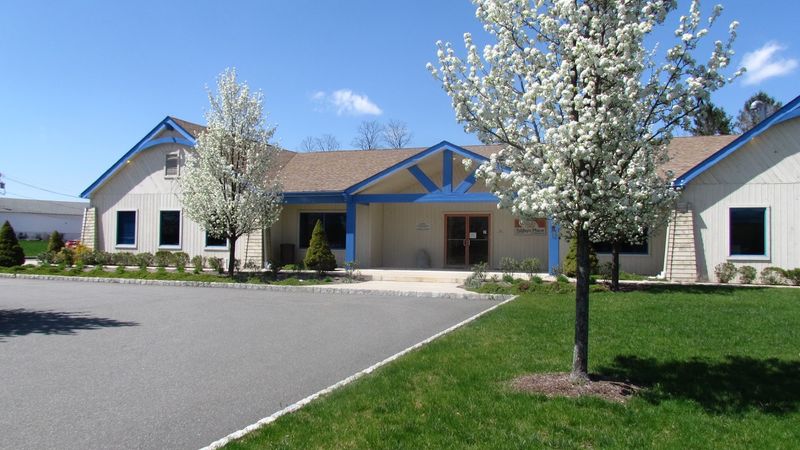
Walk into Tabby’s Place at 1100 U.S. Highway 202 in Ringoes and the setup starts making sense pretty quickly.
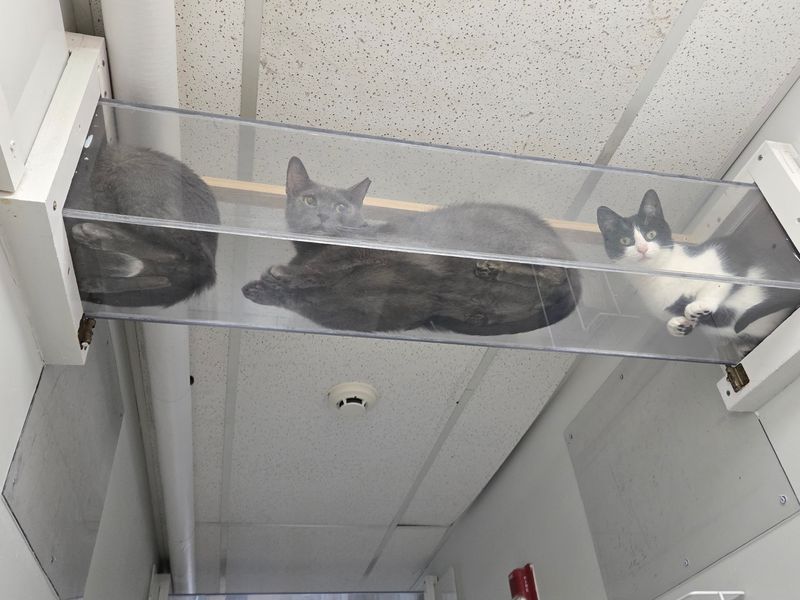
This is not a row of metal cages with cats staring through doors. The sanctuary was designed around bright communal suites, ramps, cubbies, climbing areas, and access to enclosed outdoor solariums.
Most suites connect to those sunrooms through ramps and clear tubes that cross above the hallways before descending to cat-sized ladders outside. It is basically feline infrastructure, with humans occasionally permitted to pass underneath.
The rooms also reflect the fact that different cats need different things. Suite A accommodates cats with conditions such as inflammatory bowel disease and incontinence that require controlled diets.
Suite C doubles as a weight-management area. Another suite can house roughly 10 to 12 FIV-positive cats, while the kitten room uses easily cleaned cubbies and seating that lets visitors and volunteers spend time with younger residents. “Cage-free” does not mean medical reality gets ignored.
A cat may occasionally need confinement for recovery, monitoring, dietary control, quarantine, or another health reason. The larger idea is that cages are not the default living arrangement.
There is also serious veterinary capability behind all those sunny nap spots. The on-site Medical Center includes an examination room, a sterile surgical suite, and separate recovery areas, allowing the team to handle much of the complicated care that comes with advanced-needs residents.
Tabby’s Place later expanded with Quinn’s Corner, a 5,000-square-foot addition created to accommodate cats with feline leukemia virus, or FeLV. The result feels less like a conventional shelter and more like a small cat neighborhood where the zoning board was clearly run by cats.
The Desperate Circumstances That Bring Cats Through Its Doors
In this part of New Jersey, a cat in trouble can turn up almost anywhere: behind a business, in a backyard colony, at a municipal shelter already stretched thin, or in a home where an owner suddenly can no longer provide care. Tabby’s Place gives priority to some of the cases that are hardest to solve.
Its intake criteria include local strays, orphaned kittens needing intensive care, cats from nearby shelters, and animals with significant medical or behavioral needs such as diabetes, paraplegia, FIV, or FeLV.
The organization is routinely full, so being in need does not automatically guarantee admission; the hardest part of rescue is that there are always more cats than available spaces.
Most residents come from the surrounding region, but the sanctuary’s reach has occasionally stretched much farther.
Several cats have made the trip from Lebanon, including Topache, an FIV-positive orange-and-white cat who had lost an eye, and Sanfour, who was found sick outside a veterinary clinic in Beirut and was left with limited vision after a severe respiratory infection.
Not every outdoor cat belongs inside, either. For community cats that are genuinely feral, Tabby’s Place uses Trap-Neuter-Return rather than trying to convert them into indoor residents.
Its TNR work is focused on six nearby municipalities — East Amwell, West Amwell, Delaware, Raritan, Lambertville, and Flemington — and trapped cats can receive treatment for problems such as wounds or dental disease before being returned.
Friendly cats, kittens, and particularly fragile animals may instead be brought into the sanctuary.
That mix of local street cats, shelter transfers, orphaned kittens, owner surrenders, and occasional international cases makes every intake different. The common denominator is usually simple: somewhere along the line, the easy option ran out.
Why Special-Needs and Senior Cats Are Never Written Off
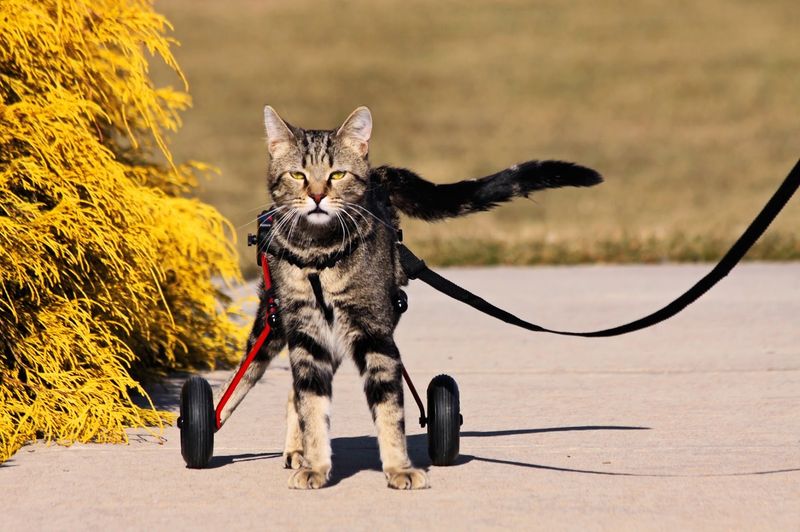
At any given time, roughly 30 to 40 percent of Tabby’s Place residents have chronic conditions such as diabetes, heart disease, or paraplegia. That number tells you almost everything about the sanctuary’s priorities.
These are not unusual exceptions tucked away from the main population; advanced-needs cats are a major part of daily life here. Olive is one of the clearest examples.
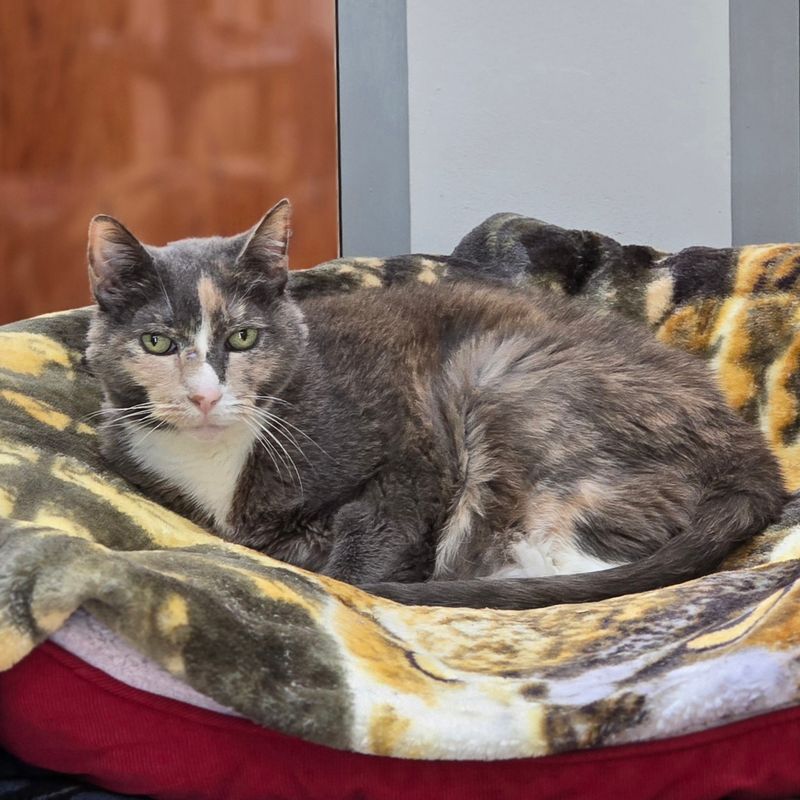
The 12-year-old paraplegic has become a fixture in the lobby, scooting around with far more speed than someone unfamiliar with disabled cats might expect. Staff do not know whether she was born paralyzed or injured as a young kitten, but she has spent years demonstrating that rear-leg paralysis and personality are two entirely separate matters.
Berry, meanwhile, was born with spina bifida, which gives him bowed rear legs and a distinctive hopping gait. His medical needs have included urinary complications, but updates from the sanctuary describe a cat energetic enough to race around the lobby once he is feeling well.
Age receives much the same treatment. In 2026, Tabby’s Place highlighted multiple residents older than 10, while its adoption listings included dozens of seniors.
Ducky provided the perfect rebuttal to anyone who assumes an elderly cat has missed her chance: at 18, after losing her person and living with kidney issues and an old front-leg injury, she was adopted. None of this means medical complications are romanticized.
Incontinence means laundry, cleaning, medication, and hands-on care. Diabetes means monitoring. Mobility problems can require specially arranged spaces. Older cats may need more veterinary attention, not less.
The difference is that those needs are treated as part of the job rather than evidence that a cat is beyond helping. Sometimes the happy ending is adoption.
Sometimes it is years of comfortable sanctuary care. Either way, “too old” and “too complicated” carry considerably less weight in Ringoes than they do in most places.
The 5,000th Rescue That Marked a Remarkable Milestone
Cat number 5,000 did not arrive with a brass band. She arrived tiny, shy, and outdoors-born. Violet, a Siamese kitten, entered Tabby’s Place in May 2026 and became the sanctuary’s official 5,000th resident more than two decades after its 2003 opening.
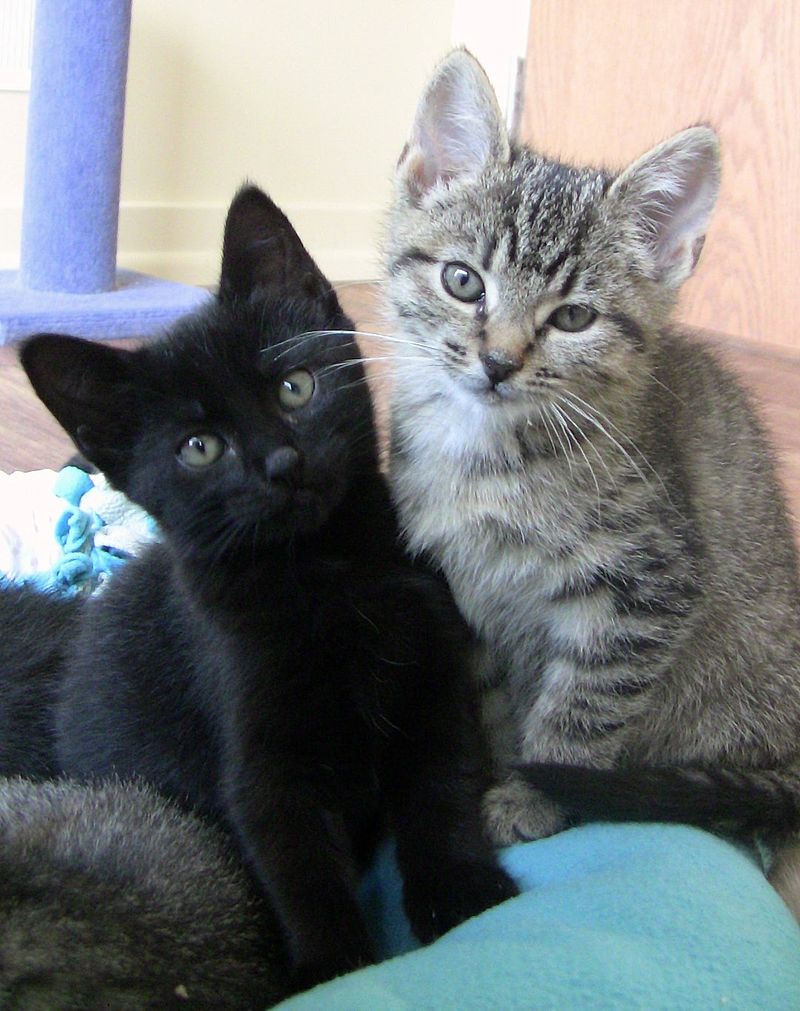
She was still under a pound when she went into foster care, where her foster caregiver reported that Violet and fellow kitten Whittaker were gaining weight, becoming more confident, learning to play with a wand toy, and experimenting with that formidable piece of kitten engineering known as the staircase.
It is difficult to invent a better representative for the milestone. Five thousand sounds enormous when written as a statistic, but Tabby’s Place has always operated around individual animals with very individual problems.
Among the thousands have been cats with paralysis, diabetes, blindness, FIV, FeLV, neurological disorders, injuries, behavioral challenges, and plain old bad luck. The organization has acknowledged that it could have processed a larger number of cats over the years by concentrating on easier cases requiring less time and money.
Instead, its model deliberately leaves room for animals that may need prolonged one-on-one attention. Violet’s story moved faster than those of many long-term residents.
After being born outdoors and arriving as a bashful kitten, she was adopted, turning the sanctuary’s big round number into a particularly tidy ending. By summer 2026, Tabby’s Place was already talking about life beyond the 5,000 mark, because rescue organizations have little opportunity to admire their own scoreboards.
New kittens kept arriving. Senior cats still needed homes.
Medically complicated residents still required treatment. The milestone matters less as a finish line than as proof of scale: one grieving cat owner’s idea from 1999 eventually became 5,000 separate chances for cats that might otherwise have had very few.
How Adoptions, Volunteers, and Supporters Keep the Mission Going
A typical day here involves considerably more than topping off food bowls and scratching whichever chin happens to be closest. Volunteers feed cats, clean rooms, wash dishes, tackle the sanctuary’s formidable laundry supply, give tours, socialize residents, take cats for stroller walks, and participate in outreach programs.
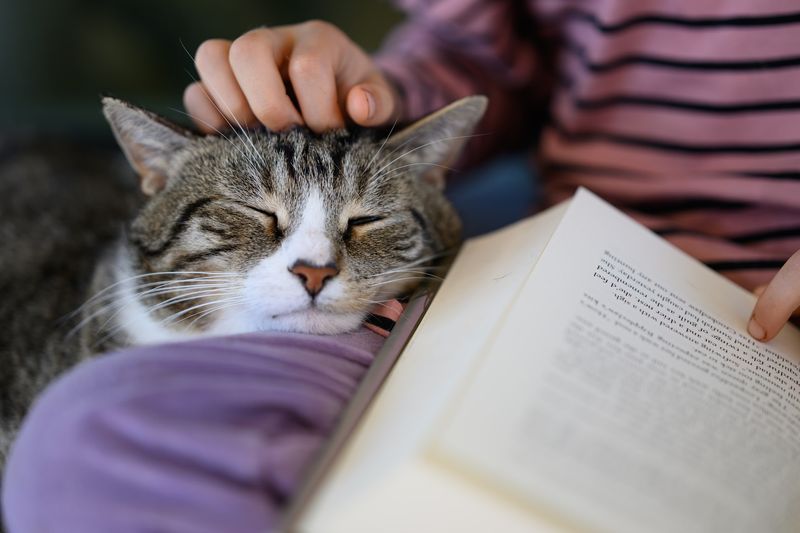
Regular volunteers generally commit to a recurring schedule such as once a week or twice a month, with typical shifts lasting two or three hours. There is even a reading program that lets children practice reading alongside feline listeners, an audience unlikely to complain about plot holes.
Adoption is equally structured. The current adoption fee is $150, and cats leave having received a veterinary examination, spay or neuter surgery, vaccinations, a microchip, parasite treatment, and testing for FeLV and FIV.
Prospective adopters complete a questionnaire and reference check before meeting potential matches, and the relationship does not simply end at pickup. Volunteers follow up after one week, one month, and three months to see how the cat is settling in.
Visitors can see the sanctuary at its Ringoes location, which is normally open from noon to 5 p.m. seven days a week except listed holidays, and guided tours generally run about 30 minutes. Behind all of that is the less photogenic reality of running a nonprofit filled with animals whose medical needs can be expensive.
Tabby’s Place says it receives no government funding and that more than 90 percent of its income comes from individual donors. Those donations, volunteer shifts, foster homes, medical work, and adoptions are what turn the sanctuary’s philosophy into something practical.
Five thousand rescues may be the number that gets attention, but the place runs on smaller numbers: one medication dose, one load of laundry, one adoption match, one volunteer shift, and one cat at a time.