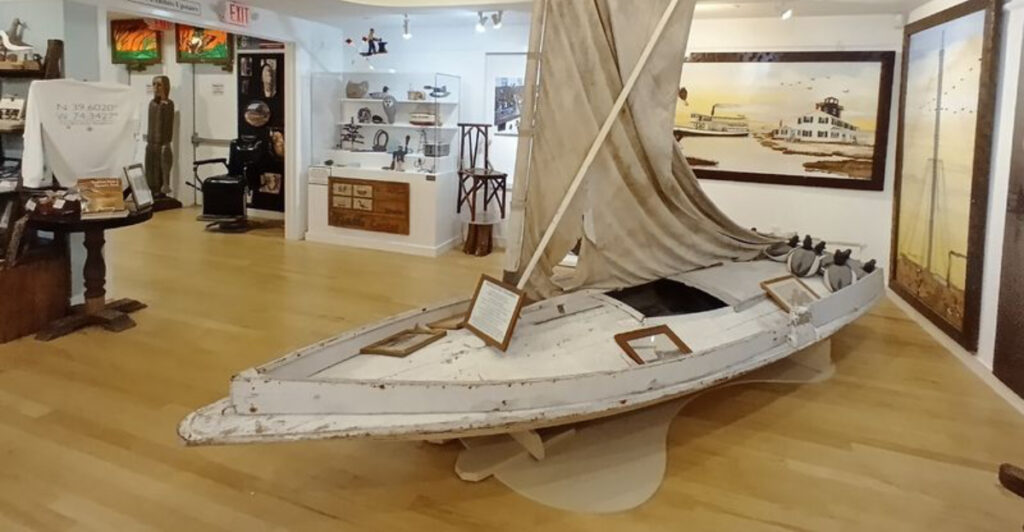
A survivor’s life jacket hangs near yellowed newspaper pages, stateroom keys, and photographs of a luxury liner burning off the New Jersey coast. Elsewhere, heavy diving helmets share space with antique navigation tools, dishes raised from sunken ships, and a map crowded with more than 500 wrecks.
This is not what most visitors expect to find tucked inside a modest building near the bay in Beach Haven. The New Jersey Maritime Museum may sit several blocks from the beach vacations unfolding around it, but the collection reaches far beyond beach umbrellas and boardwalk snacks.
Its rooms preserve disasters, rescues, working boats, dangerous dives, and the people who made their lives along the water. Opened in 2007 from a collection assembled over decades, the museum has continued growing through loans and donations.
Admission remains free, the volunteers know the stories, and a stop planned for 30 minutes can quietly swallow an entire afternoon.
A Hidden Maritime Treasure in Beach Haven
Beach Haven has no shortage of ways to fill a summer day. Fantasy Island lights up after dark, Thundering Surf Waterpark keeps families cool, and the ocean is rarely far from anyone’s plans.
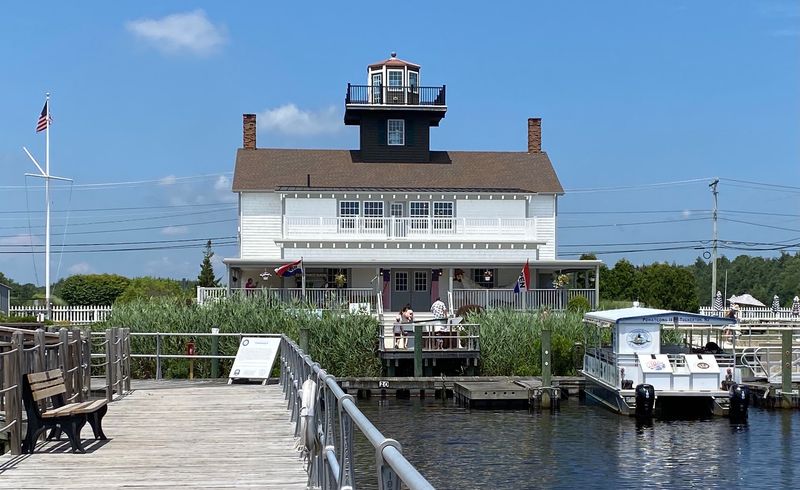
Yet one of the borough’s most absorbing attractions sits on the bay side at 528 Dock Road, where a shingled building holds what the museum describes as New Jersey’s largest collection of maritime history and artifacts. The setting could hardly be more fitting.
Long Beach Island has always lived with the Atlantic on one side and Barnegat Bay on the other, and generations of fishing crews, boat captains, lifesavers, divers, and vacationers have been shaped by those waters. The New Jersey Maritime Museum turns that relationship into something visitors can see up close.
Founder Deborah Whitcraft began collecting shipwreck information and maritime objects long before the museum existed. A diver and former owner of Triton Divers, she spoke publicly about her dream of creating a permanent home for the collection as early as 1983.
That ambition became real on July 3, 2007, when the museum opened its doors. Much of the original material came from Whitcraft’s personal archive, gathered through years of research and connections within the wreck-diving community.
Donations and long-term loans have since expanded it into a remarkably dense collection. The museum is privately funded, operated as a nonprofit, and staffed by volunteers, which helps explain why the experience feels so personal.
These are not anonymous objects placed behind glass with a few dry sentences attached. Many arrived through divers, researchers, local families, and people with direct connections to the stories.
That human thread runs through nearly every room, making this small Beach Haven museum feel less like a formal institution and more like the Jersey Shore’s overflowing maritime memory box.
Shipwreck Stories Pulled From the Jersey Shore
A large map provides the first reality check. It identifies more than 500 shipwrecks along the New Jersey coast, along with 43 former life-saving stations, 32 lighthouses and lightships, and 16 artificial reefs.
Anyone who thinks of the Shore only in terms of calm summer swims quickly gets a much different picture. Shifting sandbars, storms, fog, mechanical failures, wartime attacks, and heavy shipping traffic have sent vessels to the bottom for centuries.
The museum does not leave those wrecks as dots on a map. Its displays connect them to salvaged china, coins, tools, photographs, documents, and pieces of equipment brought back by experienced divers.
Among the most elegant objects are plates, pitchers, and platters recovered from the Aurora, which sank near Sandy Hook in 1827. Their survival feels improbable.
Items made for a dining table spent years beneath salt water and sediment before returning to the surface as evidence of another era. Other exhibits move into the demanding world of wreck diving itself.
Antique equipment includes a Mark V U.S. Navy diving outfit, double-hose regulators, rebreathers, and gear that looks punishingly heavy beside today’s streamlined equipment.
The museum also preserves material related to the Andrea Doria, the Italian ocean liner that collided with the Stockholm near Nantucket in 1956. The wreck rests in deep, dangerous water and has earned a reputation as the Mount Everest of scuba diving.
One especially significant artifact is the ship’s stern signal bell, recovered by diver Tom Packer in 1985. Nearby stories cover submarines, freighters, steamships, and schooners, each with its own collision, storm, fire, or unanswered question.
Together, these displays make New Jersey’s waters feel less like empty blue space and more like a vast underwater archive, with entire chapters of history still resting beyond the surf.
Inside the Haunting Morro Castle Exhibit
Early on September 8, 1934, the luxury liner Morro Castle was sailing north from Havana to New York when fire tore through the ship in rough weather off the New Jersey coast. The disaster killed 137 people and left survivors struggling in dark, turbulent water.
The burned vessel eventually drifted onto the beach near Convention Hall in Asbury Park, where its blackened hull became a grim public spectacle. Crowds arrived by the thousands to stare, take photographs, and buy souvenirs.
Nearly a century later, the museum’s extensive Morro Castle collection brings the tragedy back down to individual lives. An authenticated life jacket worn by a survivor sits among stateroom keys, signed menus, original newspaper reports, rescue notes, photographs, inscribed tokens, and 1934 news footage.
Small objects carry particular weight here. A menu suggests the ordinary elegance passengers expected from their voyage, while a room key points to cabins that became traps once smoke and flames spread.
The fuller story is even more disturbing. Captain Robert Willmott had died under mysterious circumstances shortly before the fire.
Safety drills had been neglected, lifeboats were poorly handled, and some had reportedly been painted into place. Confusion among officers and crew delayed an effective response as the wind drove flames through the liner’s wooden interiors.
Passengers who jumped into the sea faced high waves and the risk of injury from improperly held cork life preservers. Six of the ship’s 12 lifeboats were ultimately launched.
Investigations followed, but neither the exact cause of the fire nor the circumstances of the captain’s death were officially settled. Founder Deborah Whitcraft and museum docent Gretchen Coyle later coauthored Inferno at Sea, a book examining the disaster through stories of death and survival.
That depth of research shows in the exhibit. It does not reduce the Morro Castle to a sensational shipwreck tale.
It patiently reconstructs how poor preparation, human decisions, bad weather, and unresolved mysteries converged in one of the Jersey Shore’s darkest maritime events.
Artifacts That Bring New Jersey’s Seafaring Past to Life
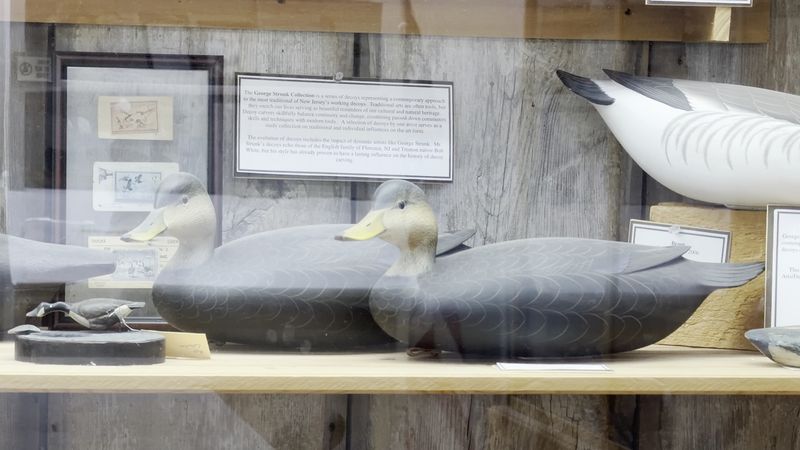
Not every object here comes with a dramatic sinking. Some of the best displays focus on the difficult everyday work required to travel, build, and save lives along the coast.
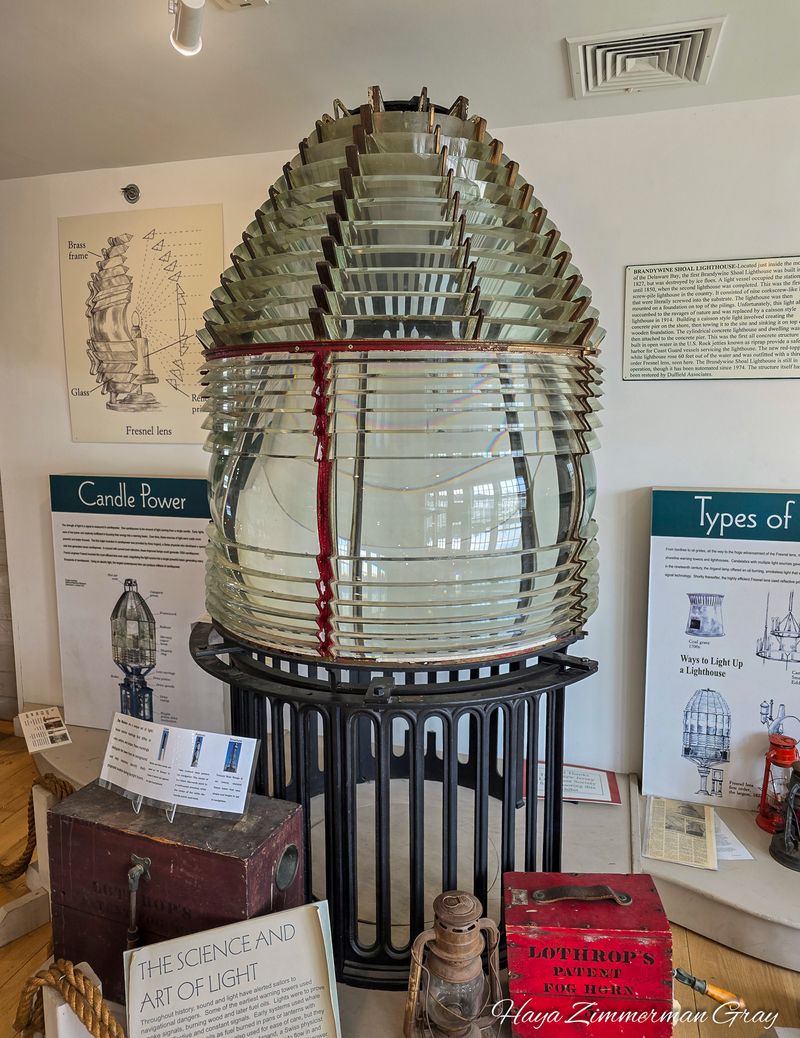
Antique navigational instruments include compasses, chronographs, inclinometers, taffrail logs, and a speaking trumpet. Before satellites and electronic screens gave captains a precise location, crews depended on such tools, careful calculations, and hard-earned knowledge of local waters.
The collection of 19th-century shipbuilding tools offers another reminder of how much labor sat behind every wooden vessel. Shipwrights shaped enormous hulls by hand, using specialized implements that now look deceptively simple in a display case.
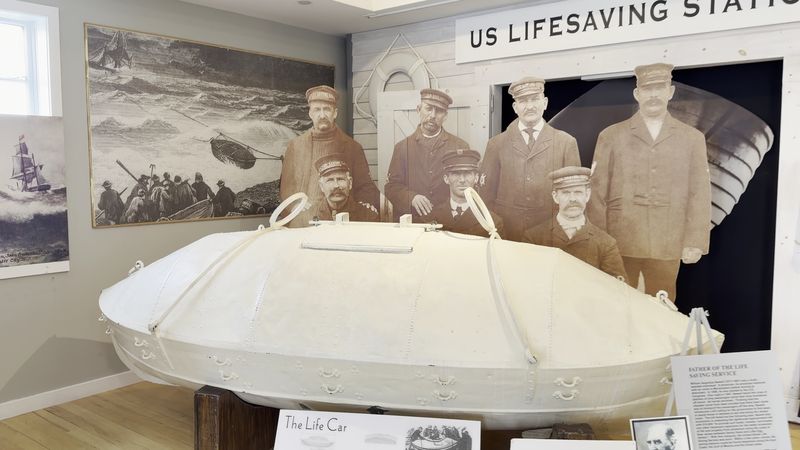
The U.S. Life-Saving Service exhibit is especially rich.
Long before the modern Coast Guard, surfmen stationed along isolated stretches of shoreline watched for vessels in trouble and launched rescue efforts in conditions most people would struggle to stand in.
The museum holds rare station logs, uniform buttons and medals, patrolman checks, a Lyle gun, a Coston signal canister, and a complete 39-volume run of the service’s annual reports from 1876 through 1914.
A Lyle gun fired a projectile carrying a line toward a stranded ship, establishing the first connection needed to bring people ashore. Once its purpose clicks, the device stops looking like a curious piece of iron and becomes a lifesaving tool.
The collection occasionally reaches much farther into the past. Fossils recovered from the continental shelf include walrus remains dating back more than 44,000 years, when the coastline and climate looked nothing like the Shore residents know today.
Historic photographs add yet another layer, particularly Dave Gurtcheff’s images of Beach Haven head boats from the 1930s and scenes of working coastal communities.
Instead of presenting maritime history as a parade of famous vessels, the museum gives equal space to the tools, records, and working people who kept New Jersey connected to the sea.
More Fascinating History Than Its Small Size Suggests
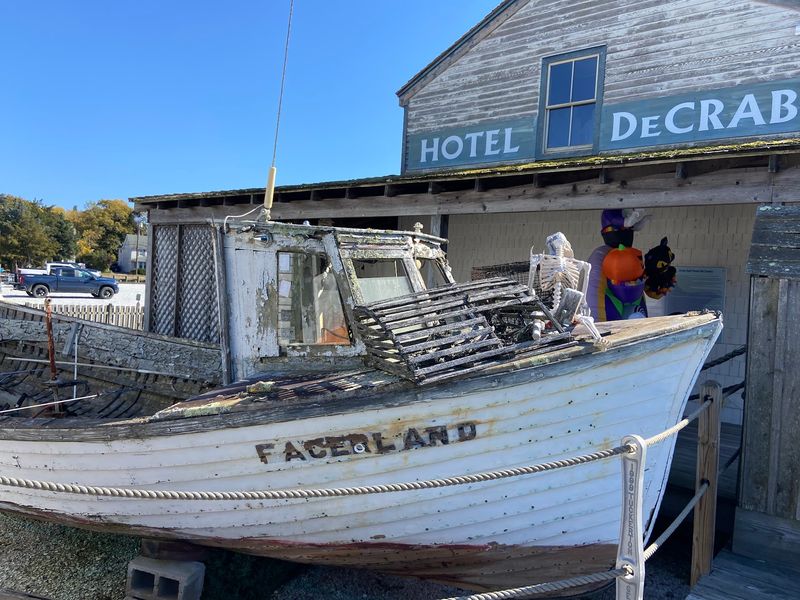
The building’s modest exterior is a terrible predictor of how long a visit will take. Inside, displays climb across multiple levels and spill from one subject into the next.
Turn away from diving equipment and there may be antique silver decorated with a New Jersey lighthouse. Follow a set of photographs and it can lead into a story about a coastal rescue, an old passenger boat, or the 1916 shark attacks that terrified communities along the Shore.
Those attacks are often flattened into the inspiration for Jaws, but the museum places them within local maritime history rather than treating them as a pop-culture footnote.
The same depth applies to wrecks such as the USS San Diego, a Navy armored cruiser lost off Long Island during World War I, and U-869, a German submarine whose identity challenged divers and historians for years.
Visitors who enjoy digging beyond display labels can explore an extensive research library containing hundreds of rare and out-of-print books, shipwreck files, photographs, issues of Sailor’s Magazine and Naval Journal, and records connected to the U.S. Life-Saving Service and Coast Guard.
The museum has also developed an online shipwreck database, but seeing the original documents and physical artifacts together creates a much stronger sense of scale. There is simply too much material to absorb in one quick circuit.
That abundance could feel chaotic in a larger institution; here, it adds to the charm. The collection reflects decades of curiosity rather than a narrow curatorial theme, so a polished piece of china may sit near corroded wreckage, a diver’s helmet, or a century-old station log.
Volunteers add context when questions arise, often supplying the kind of detail that never fits neatly on a plaque. The result is a place that rewards lingering.
Look closely enough, and nearly every cabinet contains an object capable of opening another story.
Why This Free Museum Deserves a Spot on Your LBI Itinerary
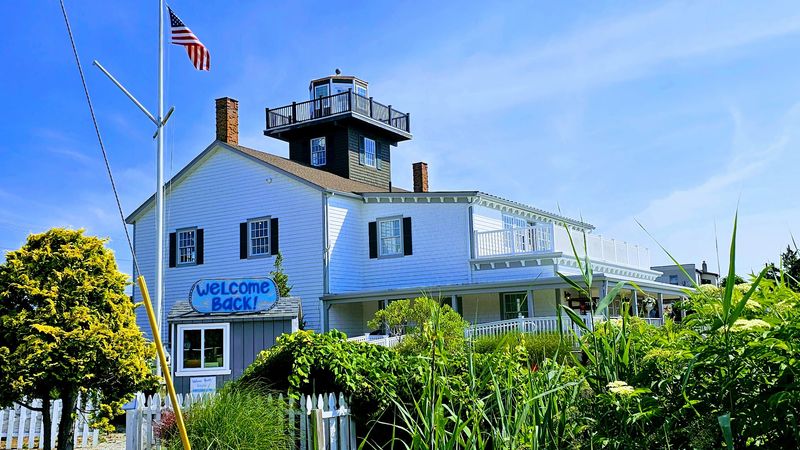
Practicality is one of the museum’s quiet advantages. There is no admission charge, although donations support the nonprofit and its expanding collection.
From June through August, the museum is normally open daily from 10 a.m. to 4 p.m. From September through May, regular hours shift to Friday, Saturday, and Sunday from 10 a.m. to 4 p.m.
Because schedules and special programs can change, checking current hours before making a dedicated trip is sensible. The Dock Road location also makes the museum easy to fold into a Beach Haven day without turning the outing into a complicated expedition.
It is close enough to the borough’s restaurants, shops, amusements, and beaches to work as a break from the midday sun, a rainy-day plan, or a slower stop between busier activities.
Families do not need to commit to an expensive ticket if younger visitors lose steam, while adults interested in shipwrecks can spend considerably longer than expected examining maps and recovered objects.
Summer programming sometimes adds hands-on children’s presentations, including sessions devoted to shellfish and Barnegat Bay. The museum can also arrange group visits and additional hours by request.
None of that changes the simple pleasure at the center of the experience. This is a locally built collection in the community whose history it preserves, run by people invested in keeping those stories accessible.
Beach Haven’s modern identity revolves around summer fun, but the island’s relationship with the water is older, rougher, and far more complicated than the view from a beach chair suggests