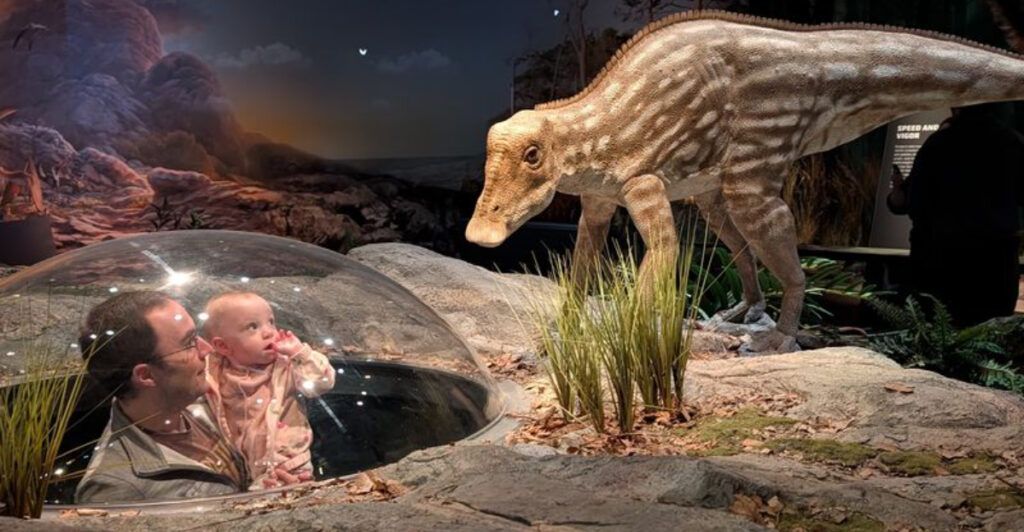
The dirt under your fingernails may contain a shark tooth that predates the Jersey Shore by roughly 66 million years. That is the wonderfully strange possibility at the Jean & Ric Edelman Fossil Park & Museum of Rowan University, where visitors can descend into a genuine fossil quarry and search for prehistoric remains.
This is not a sandbox filled with replicas or a staged treasure hunt with plastic bones planted beneath the surface. The greenish sediment here preserves evidence of the creatures that inhabited New Jersey near the end of the Cretaceous Period, when the region sat beneath a shallow sea.
Mosasaurs cruised overhead, turtles paddled through the water, and sharks left teeth that still turn up today. The experience pairs an active research site with a modern museum full of life-sized animals, interactive galleries, and working paleontologists.
Best of all, most fossil hunters leave with an authentic ancient discovery of their own.
A Prehistoric Adventure Awaits in Mantua
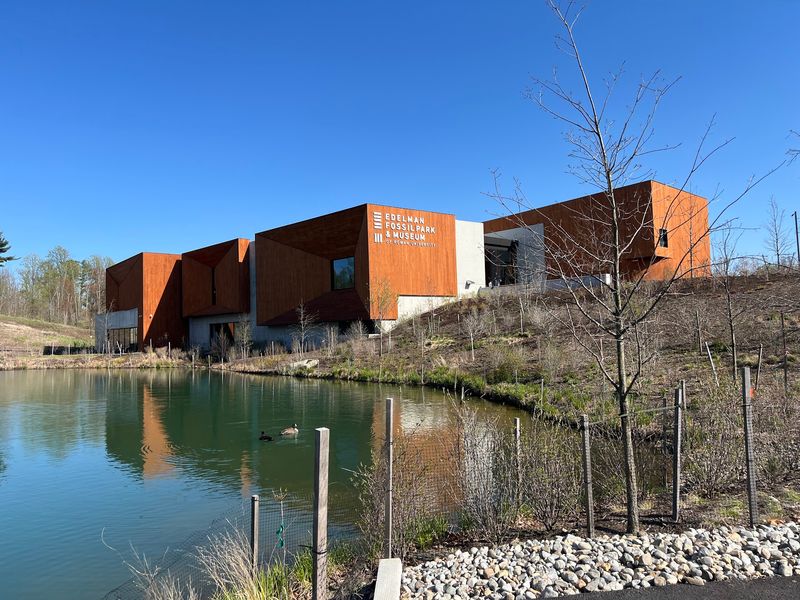
The first clue that this is not a typical South Jersey attraction appears in the address. The Jean & Ric Edelman Fossil Park & Museum sits at 66 Million Mosasaur Way in Mantua, a wonderfully appropriate location for a place built above one of New Jersey’s richest fossil beds.
It is only minutes from Philadelphia, yet the story beneath the property reaches back to an era when neither the city nor the Delaware River looked anything like they do today. The polished museum, which opened to the public in March 2025, rises beside a former marl quarry once operated by the Inversand Company.
Marl is a soft, mineral-rich sediment that was commercially mined for agricultural use. As workers dug through it, they repeatedly uncovered fossilized shells, shark teeth, turtle bones, and other remains.
Rowan University purchased the quarry property in 2015, preserving a site that had already attracted the attention of scientists for decades. Researchers and fossil hunters have since recovered more than 100,000 specimens representing over 100 species from the quarry.
The collection includes animals ranging from tiny marine snails to mosasaurs that grew about as long as a school bus. Even the setting has scientific significance.
The exposed sediments offer a rare look at the period surrounding the asteroid impact that ended the age of non-avian dinosaurs and eliminated roughly three-quarters of life on Earth. That heavy history never makes the place feel stuffy.
Families arrive with kids wearing dinosaur shirts, adults lean over display cases with equal enthusiasm, and everyone gets permission to be openly fascinated by old bones. The park occupies 123 acres, with the four-acre quarry at its center, while nature trails, outdoor spaces, and a prehistoric playground spread beyond the museum.
It feels less like a single building and more like a compact campus devoted to New Jersey’s deepest past.
This Is No Ordinary Museum Dig
Most fossil exhibits come with one very clear rule: look, but absolutely do not touch. Edelman Fossil Park takes a different approach by handing visitors a bucket and plastic shovel before leading them into the source of the specimens.
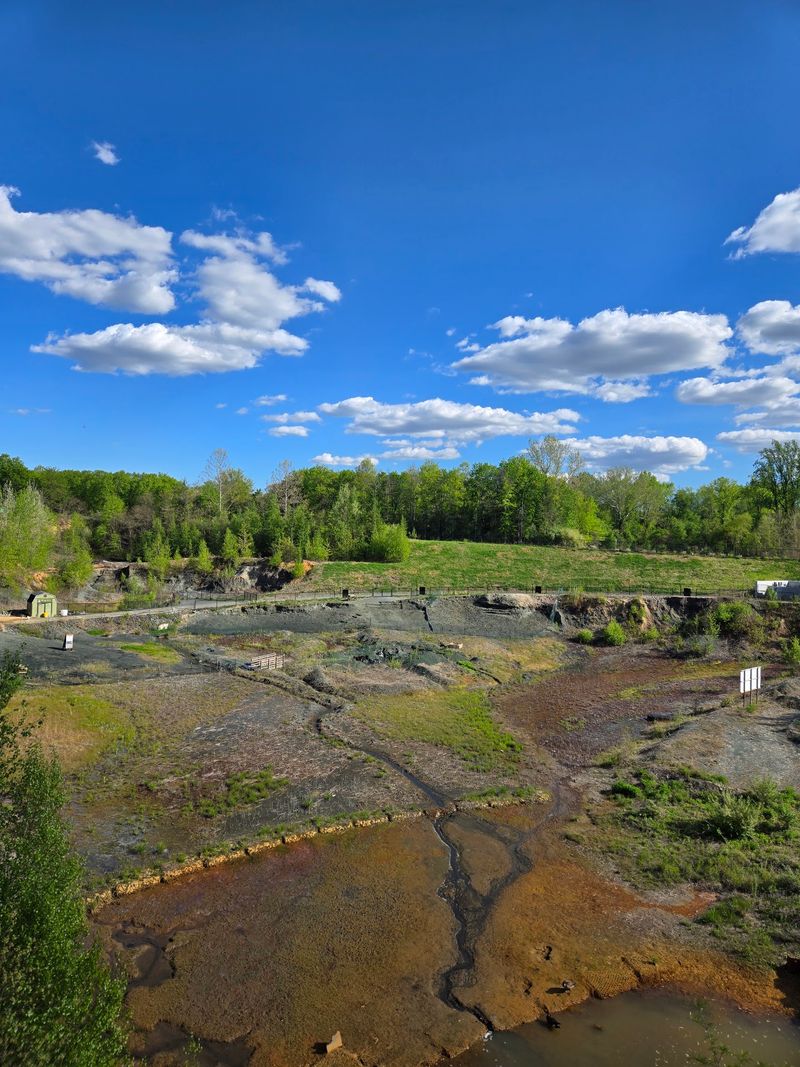
The Quarry Dig Experience unfolds inside the actual 45-foot-deep former marl pit, not in a manufactured digging station beside the gift shop. A scheduled session includes up to 60 minutes of searching, followed by time for fossil education and identification.
Guides explain how to scan the green-tinged sediment, distinguish bone or shell from ordinary rock, and examine promising pieces without damaging them. The work is not physically extreme; visitors are told to keep holes shallower than their wrists.
Patience matters far more than muscle. A small object that initially looks like a pebble might reveal the texture of a shell, the edge of a shark tooth, or another clue once the dirt is brushed away.
There is no need to arrive carrying an aspiring paleontologist’s tool kit. In fact, personal and metal tools are not permitted.
The park supplies the plastic shovels and buckets needed for the session. That keeps the experience manageable for beginners and protects the fossil bed from enthusiastic visitors who might otherwise attempt a full-scale excavation.
Getting dirty, however, is part of the bargain. The quarry is outdoors, the terrain can be uneven, and recent rain can turn a scientific outing into a fairly muddy one.
Closed-toed footwear is mandatory, with rubber boots strongly recommended. An accessible area allows guests who use wheelchairs or would have difficulty navigating the quarry floor to sift through genuine fossil-bearing material at a table.
The most satisfying part is how quickly the activity erases the line between museum visitor and participant. One minute, you are listening to an explanation of Cretaceous sediments.
The next, you are squinting at a muddy fragment and wondering whether you just found something that last saw daylight before humans existed.
Mosasaurs Sharks and Sea Turtles Once Ruled Here
Picture Mantua without roads, subdivisions, or backyard grills. Late in the Cretaceous Period, much of southern New Jersey rested beneath a warm coastal sea filled with animals that would look wildly out of place beside today’s bluefish and striped bass.
The fossils preserved at Edelman help reconstruct that vanished ecosystem piece by piece. Mosasaurs were among its largest predators.
These enormous marine reptiles were not dinosaurs, although they lived alongside them and possessed all the right qualifications for starring in a nightmare. Some grew to the length of a school bus, propelling themselves through the water with powerful tails and seizing prey with long jaws lined with sharp teeth.
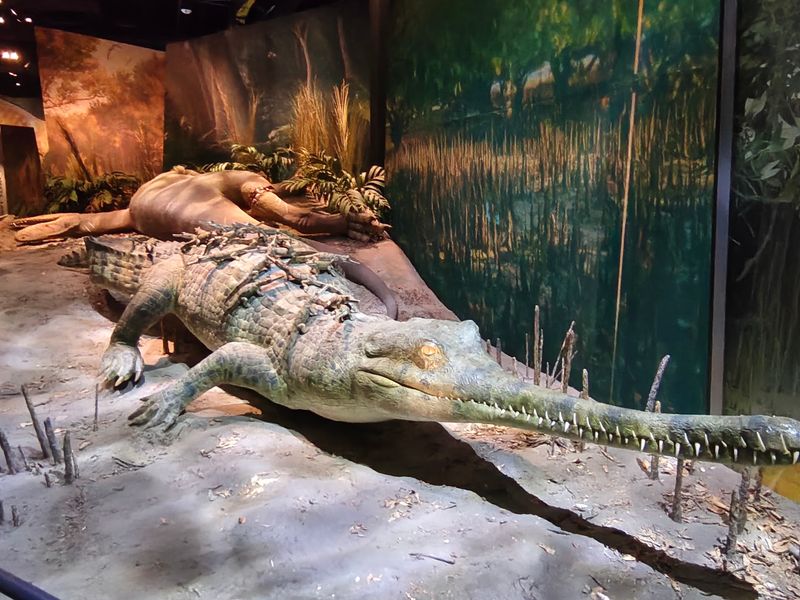
The museum’s Monstrous Seas gallery features a 55-foot mosasaur based on discoveries associated with the New Jersey quarry, giving visitors a dramatic sense of the animal’s scale. Sea turtles, marine crocodiles, bony fish, and prehistoric sharks also inhabited these waters.
Shark teeth are especially exciting quarry finds because sharks continually shed and replaced them. Hard structures fossilize more readily than soft tissue, which is why a tooth may survive millions of years after the rest of the animal disappeared.
Brachiopods, marine snails, oysters, and other invertebrates add smaller but equally useful evidence about the environment. Land animals occasionally entered the record too.
Bones and fragments could wash out from the nearby shoreline before settling onto the seafloor. That is how remains connected with dinosaurs such as hadrosaurs reached marine sediment, even though the quarry itself represents an underwater habitat.
What makes the fossil bed remarkable is not simply the number of specimens. The layers preserve a snapshot of life near the end of the Cretaceous, along with chemical evidence associated with the asteroid-driven mass extinction 66 million years ago.
A humble shell or tooth therefore belongs to a much larger story. Each object helps scientists understand which creatures lived here, how the ecosystem functioned, and what happened as one of Earth’s most consequential eras came to an abrupt close.
Fossil Hunters Can Take a 66-Million-Year-Old Find Home
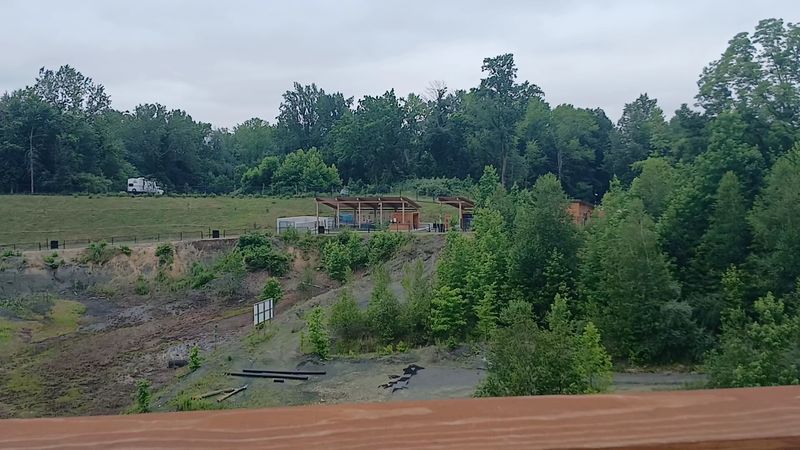
There is a peculiar thrill in holding an object that is older than every mountain hike, boardwalk, and historic house in New Jersey by tens of millions of years. At the end of the quarry experience, each visitor gets to take one fossil home.
It might be a shell, a shark tooth, or another common specimen, but it is authentic material recovered from the site rather than a souvenir imported for the museum store. Guides help examine and identify discoveries before anyone leaves the quarry.
If you uncover several fossils, you may choose a favorite. The extras remain behind so they can be shared with guests who were not fortunate enough to find one.
It is a thoughtful system that keeps the experience rewarding without treating the research site like an unlimited prehistoric grab bag. There is one important exception.
A scientifically significant discovery stays with the museum for study and preservation. That might sound disappointing until you consider the tradeoff: the finder’s name is recorded with the specimen in the museum’s collection notes and potentially in future displays or the wider fossil record.
Losing the mantelpiece souvenir would sting a little less if the object turned out to answer a genuine scientific question. Common finds can still be surprisingly meaningful.
A fragment does not need to belong to a giant predator to reveal something about the past. A fossilized oyster records the existence of an ancient seafloor.
A shark tooth points to a food web that operated over what is now Gloucester County. Even a small shell has survived shifting continents, changing climates, and 66 million years of geological pressure before landing in someone’s palm.
The keep-one policy also changes the emotional weight of the visit. Museum replicas can be beautifully made, but an object pulled from real Cretaceous sediment carries a different charge.
Long after the mud has been cleaned from your shoes, that modest fossil remains tangible proof that prehistoric New Jersey was stranger and far more dramatic than its modern landscape suggests.
Life-Sized Creatures Bring Ancient New Jersey Back to Life
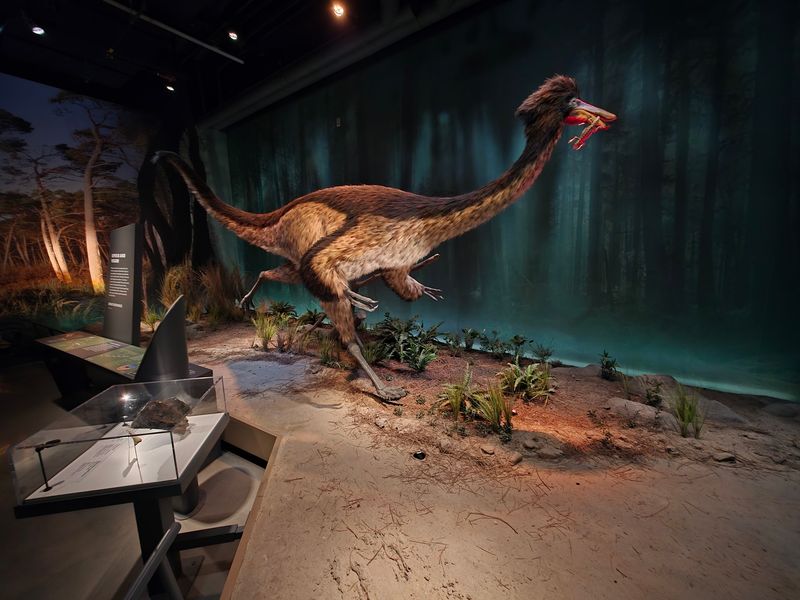
A 55-foot mosasaur has a way of making even confident adults feel pleasantly undersized. Inside the museum, towering reconstructions and immersive scenes give shape to animals that would otherwise exist only as scattered teeth, shells, and bone fragments.
The galleries focus on the world recorded by the quarry, keeping the spectacle tied closely to discoveries made in New Jersey. Dinosaur Coast introduces the land animals that lived near the ancient shoreline.
Full-scale models show how hadrosaurs and other creatures moved through the region at the end of the Cretaceous Period. Monstrous Seas shifts the action underwater, where mosasaurs, sharks, turtles, and marine crocodiles occupied a busy coastal ecosystem.
The scale is impressive, but the displays do more than produce wide-eyed reactions. They connect complete animals with the isolated fossils visitors may later find in the quarry.
Elsewhere, the Collections & Conservation area offers a look at the careful work that follows a discovery. Guests can watch paleontologists prepare and preserve genuine fossils behind glass.
It is a useful reminder that excavation is only the opening chapter; cleaning, stabilizing, cataloging, comparing, and studying a specimen can take considerably longer than pulling it from the ground. Younger visitors have plenty of reasons to keep moving.
Discovery Forest provides hands-on exploration, while Critter Cove introduces living animals and includes a marine touch tank. An interactive fossil scavenger hunt threads another activity through the galleries.
Outdoors, Pterosaur Pterrace features a 45-foot Pteranodon play structure, a toddler slide, a web swing, a climbable forest, and a dinosaur sandbox. There is even an optional free-roaming virtual reality experience for visitors who want another layer of prehistoric immersion.
Yet the museum’s strongest effect comes from the relationship between its pieces. You can see an ancient animal at full scale, examine the evidence scientists used to understand it, and then step outside to search the same fossil-bearing ground.
Few museums can close that loop so neatly.
What to Know Before Heading Into the Quarry
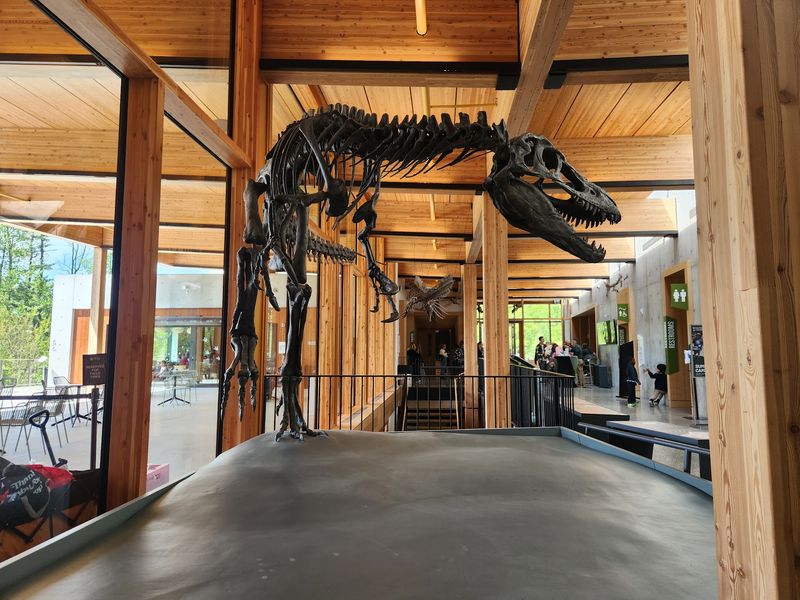
A little planning prevents a 66-million-year journey from being derailed by the wrong shoes. The museum is open daily from 10 a.m. to 5 p.m., with the last entry at 3:30 p.m.
It closes on Thanksgiving, Christmas Eve, Christmas Day, and New Year’s Day. Advance online reservations are recommended, particularly on weekends and school holidays.
General admission currently costs $29 for adults and $24 for children ages 3 through 12. Children 2 and younger enter free.
Admission provides all-day access to the main galleries, full-scale dinosaur displays, Discovery Forest, and the interactive fossil scavenger hunt. The Quarry Dig Experience is a separate $25 add-on to museum admission, while a standalone quarry ticket costs $34.
The optional virtual reality experience is another $15. Quarry sessions operate seasonally, generally from March through November, and every person entering the dig area needs a ticket except children 2 and younger.
Visitors must be at least 16 to dig independently; anyone younger needs an accompanying adult. Arriving at the outdoor Fossil Field Station five to 10 minutes before the reserved time keeps the session running smoothly.
Dress for dirt rather than family photos. Closed-toed shoes are required, boots are preferable, and sunscreen plus a reusable water bottle are sensible additions.
Wipes, towels, and spare shoes or clothing can rescue the car ride home after a wet session. Since the museum may ask muddy guests to clean up before reentering, scheduling the quarry at the end of the visit is the easiest approach.
Quarry Grounds café serves coffee, breakfast items, grab-and-go lunches, and hot paninis, while the veranda overlooks the quarry. The property also includes nature trails and the Pterosaur Pterrace playground for anyone with energy left after digging.
Even the address makes navigation memorable: 66 Million Mosasaur Way, Mantua, New Jersey. It is an unusually fitting destination for a day that ends with Cretaceous dirt on your boots and an authentic fossil in your hand.