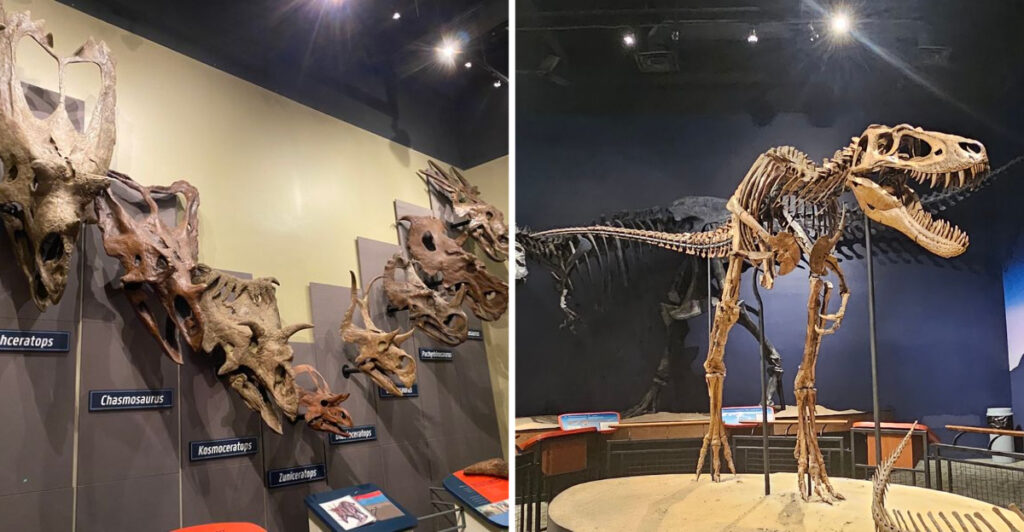
Coming face-to-face with a dinosaur skeleton has a way of making millions of years suddenly feel much closer. At the Burpee Museum of Natural History in Rockford, fossils, ancient bones, geological specimens, and exhibits tied to the region lead visitors through chapters of Earth’s history that unfolded long before modern Illinois existed.
Dinosaurs may command plenty of attention, especially from younger visitors, but there is much more tucked throughout the museum to investigate. Science becomes something you can see rather than simply read about in a textbook. For curious families and fossil fans, Burpee turns an afternoon in Rockford into a journey deep into the past.
Four Floors That Pull You In Fast
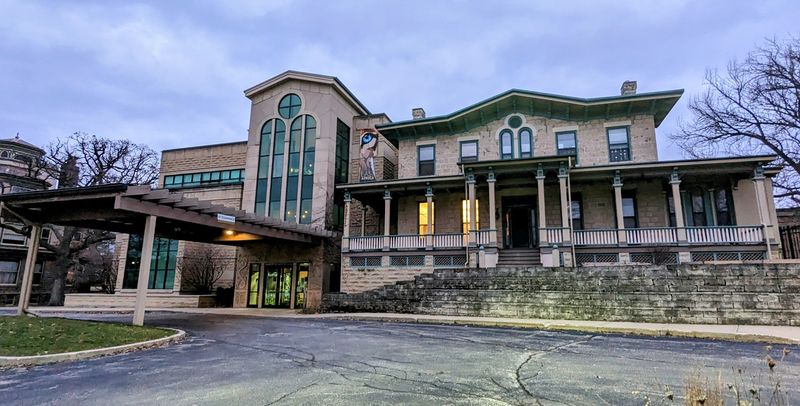
Not every museum needs huge halls to feel exciting. Burpee works differently, using its medium size to keep the visit focused, easy to follow, and full of quick surprises as you move from floor to floor.
The building packs a lot into four levels, so the experience has motion. One gallery may place you in front of ancient bones, while the next shifts toward geology, regional nature, or cultural history. That steady change keeps younger visitors engaged because there is always another room ahead with a different scale, color, or subject.
A smaller layout also helps in a practical way. Families can see a lot without wearing themselves out, and adults who like reading exhibit text do not have to choose between speed and depth. Burpee is large enough to feel substantial, but compact enough that an afternoon does not turn into a marathon.
The museum has a clean, organized flow that supports browsing. Elevators make moving between levels simpler for multi generation groups, and the galleries are arranged in a way that invites curiosity instead of confusion. Rather than feeling lost in an endless maze, visitors can settle into the rhythm of discovery and actually notice details.
That rhythm matters because natural history is a story built in layers. At Burpee, the building itself mirrors that idea, with one level leading into another as the subjects widen from local landscapes to prehistoric life. The result is a museum that feels approachable for first timers and still rewarding for returning visitors.
For anyone traveling with kids, grandparents, or a mixed group with different attention spans, that balance is a real strength. Burpee makes it possible to move at an easy pace, stop when something catches your eye, and still leave feeling like the day was full.
Jane Steals the Spotlight
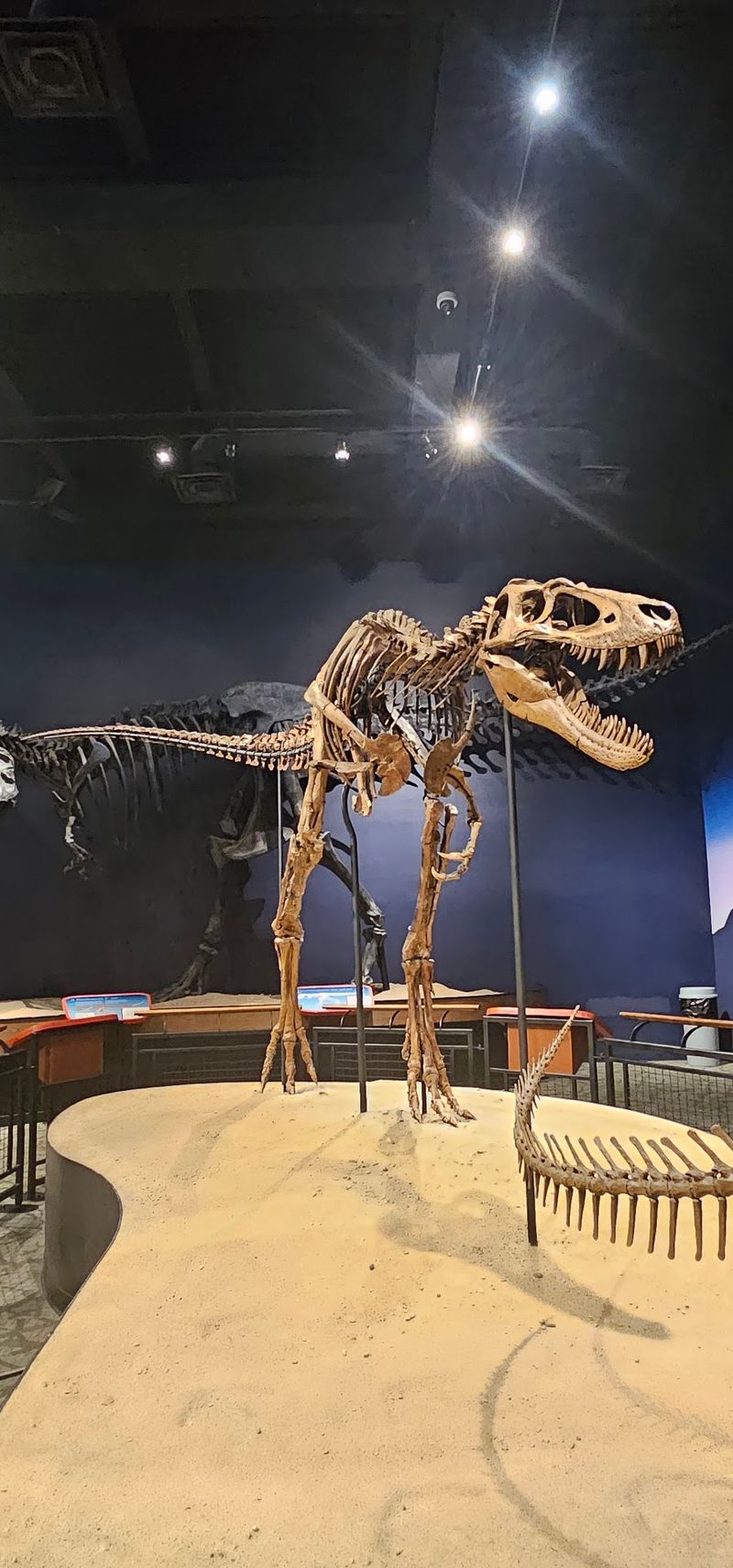
One skeleton changes the whole energy of the museum. Jane, the famous juvenile Tyrannosaurus rex, gives Burpee the kind of centerpiece that makes people stop mid step and look up.
Seeing a dinosaur mount in person is different from seeing one in a book. Bone by bone, the scale becomes real, and the room suddenly feels more alive because the shape suggests motion, hunting, and muscle, even though everything is still.
Kids usually lock onto the teeth and skull first, while adults often notice the long legs, balance, and the science needed to rebuild a creature from ancient remains.
Jane matters because the exhibit connects Rockford to a much bigger story. A museum in northern Illinois is not only displaying dinosaurs as decoration. It is showing that serious fossil work and careful interpretation can happen here, close enough for families to experience without traveling to a giant city institution.
The display also creates a good entry point for learning how paleontology works. Labels, nearby fossils, and supporting exhibits help explain how scientists compare bones, study growth stages, and ask questions that do not always have simple answers. That mystery is part of the fun.
Visitors are not just told a fact and sent on their way. They are invited to think about how evidence builds a picture of the past.
Even when some interactive screens are not working, Jane still has strong impact because the fossil itself does the heavy lifting. The mount has presence.
It turns a regular museum stop into the kind of visit where children start naming dinosaurs in the car afterward and adults end up reading more than they expected. If the goal is to travel back in time, Jane is the moment that opens the door.
Illinois Deep Time in One Building
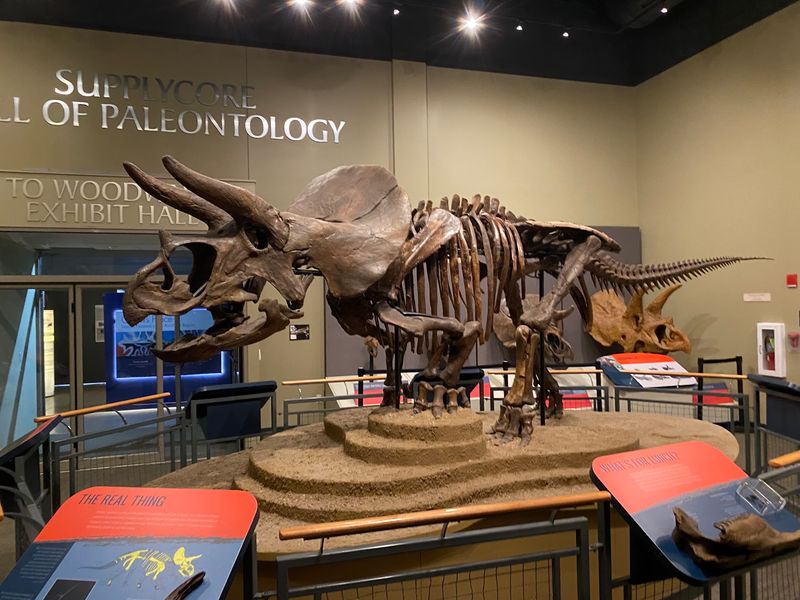
Ancient Illinois was not always cornfields, roads, and river towns. Burpee does an excellent job showing how the state changed across enormous stretches of time, turning local ground into a much bigger story about seas, ice, stone, plants, and vanished animals.
That local angle gives the museum real power. Instead of presenting natural history as a faraway subject that only happened in deserts or famous dig sites, the exhibits tie science back to the Midwest. Fossils, minerals, and geology displays help explain that the land under everyday feet has a long record written into it, even if most people never notice.
Visitors can move from dinosaur material into rocks, gems, and Ice Age life without the transition feeling random. The museum links these topics through time and place. One section may highlight fossils and ancient environments, while another points toward the materials that shape landscapes and the clues scientists use to study them.
For school age kids, that approach makes learning easier. Big terms become simpler when they connect to a map, a specimen case, or an animal that once lived in the region.
Adults benefit too, especially anyone who has ever wondered why museums display stones next to skeletons. Burpee quietly answers that question by showing that geology and life are part of the same timeline.
This is also where the museum becomes more than a dinosaur stop. Dinosaurs may draw people in, but the Illinois story gives the visit depth. It broadens the experience from one star attraction into a fuller picture of change over millions of years.
By the time visitors leave these galleries, local history starts to look different. A bluff, riverbank, or road cut can suddenly seem less ordinary once the museum teaches how much time is hidden inside the landscape.
Live Reptiles Add a Jolt of Present-Day Life
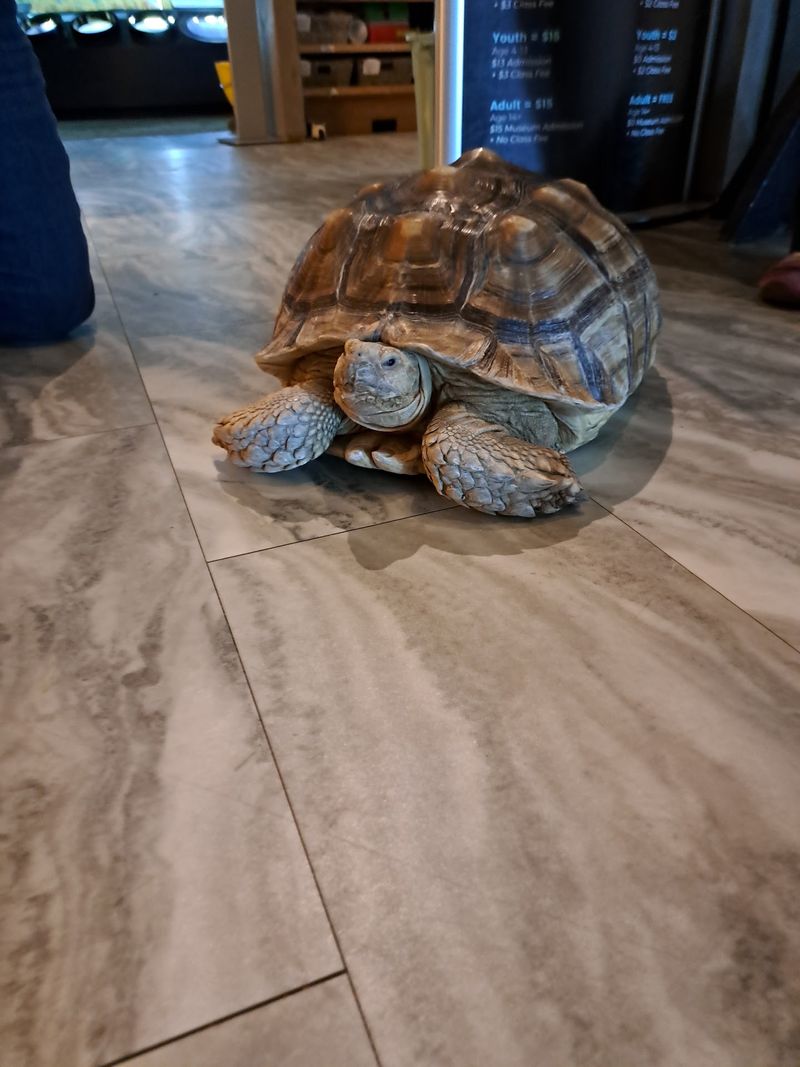
Just when the fossil halls have you thinking only about the distant past, a snake shifts in its enclosure or a turtle lifts its head. Burpee smartly breaks up the prehistoric story with live animal exhibits that bring the museum back into the present.
The reptile and amphibian area changes the pace of the visit in a useful way. Bones and rock displays ask for careful looking, but live creatures reward patience differently.
A lizard may blink, climb, or pause under a heat lamp. A snake may curl into a shape that suddenly makes body design easier to understand than any diagram could.
That contrast keeps children tuned in, especially during longer visits. It also helps adults reset their attention. After reading labels and studying fossils, stepping into a room with moving animals creates a fresh burst of energy without breaking the science theme.
The museum still teaches adaptation, habitat, and survival, just through living examples instead of ancient evidence.
Some visits may include staff interactions, feeding moments, or short explanations that make the room even stronger. When that happens, the learning becomes immediate and personal. A child who hesitated near a snake enclosure may end up asking ten questions about scales, diet, or camouflage.
There is also a practical advantage here for families. The live animal galleries give younger kids a reward in the middle or later part of the museum, which helps balance out sections that require slower reading. That makes the whole building easier to enjoy as a group.
Burpee does not treat live animals like a side attraction. They fit the museum’s larger mission by showing that natural history is not only about extinction and ancient worlds. It is also about the living creatures that help explain how life works right now.
Science Happens Here, Not Just in Textbooks
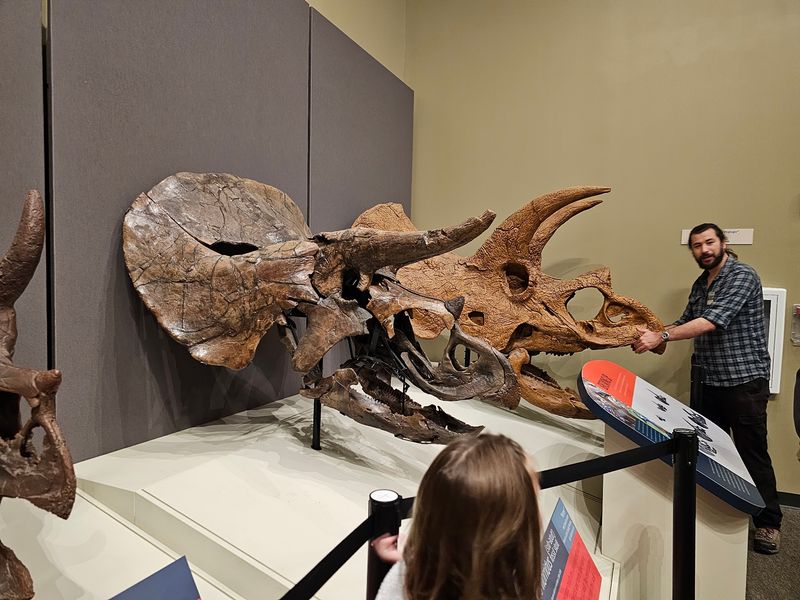
Museums are often treated like storage spaces for old objects. Burpee pushes against that idea by presenting science as active work, not a frozen collection of answers on signs and labels.
That spirit comes through in the way exhibits explain evidence. Fossils are not simply placed in cases as trophies. They are part of a process that includes comparison, preparation, interpretation, and the steady testing of ideas.
For kids, this can be a major shift. Science stops looking like a list to memorize and starts looking like a puzzle built from careful observation.
Burpee’s educational identity also shows up through tours, workshops, classes, and the strong teaching tone across the building. The museum invites visitors to ask how scientists know what they know. That is a much more useful question than simply asking for the name of a dinosaur or the age of a rock.
There is a local pride to that approach. In Rockford, this museum serves as a learning center as much as an attraction, making it valuable for school trips, homeschool families, and curious adults who want more than a quick photo stop.
The best natural history museums do not just impress visitors. They train people to notice details and think more carefully about evidence.
Even the museum’s size helps here. In a giant institution, scientific ideas can get swallowed by the scale of the building. At Burpee, the educational thread stays visible.
Visitors can connect one exhibit to the next and build understanding step by step instead of feeling buried under too much information.
That makes the experience richer long after the visit ends. A child might leave interested in fossils, while an adult may leave newly alert to how museums shape knowledge. Burpee turns natural history into an active conversation, which is a rare strength for a regional museum.
How to Explore Burpee Without Feeling Rushed
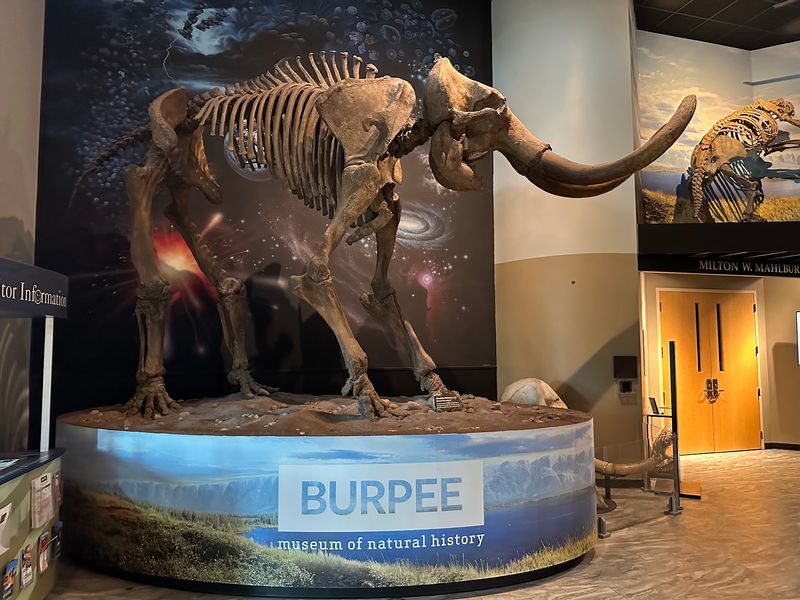
A smart visit here is less about racing and more about pacing. Burpee is manageable in size, but it rewards a little planning so the strongest galleries do not blur together.
Starting earlier in the day is a good move, especially for families with children who arrive full of energy and questions. The museum opens at 10 AM every day of the week, which makes scheduling straightforward.
Morning visits often leave more mental room for reading exhibit text, lingering with the big fossils, and circling back to a favorite room before attention starts to fade.
Most groups can enjoy the museum in about one and a half to two hours, though dinosaur fans may want longer. That time frame is useful because it means Burpee can anchor a day in Rockford without taking over the whole schedule. It also helps visitors avoid the common mistake of moving too fast at first and burning out before the upper floors.
For the smoothest route, begin with the headline exhibits, then branch into geology, local natural history, and live animals. That order works well because it grabs attention early, then broadens into context. Families with younger children may want to save some energy for the children’s area, which can act as a welcome release valve near the end of the visit.
Comfort matters too. Wear shoes that are easy to walk in, even though the museum is not enormous, because stairs, standing, and repeated stops add up. If an interactive screen is temporarily down, skip frustration and focus on the objects themselves.
The strongest parts of Burpee do not depend on technology to be interesting. A little patience makes the day better. Slow down at the skeletons, read more than one label, and let the museum unfold by floor instead of trying to finish it all at once.
Why Rockford’s Burpee Museum Earns Repeat Visits
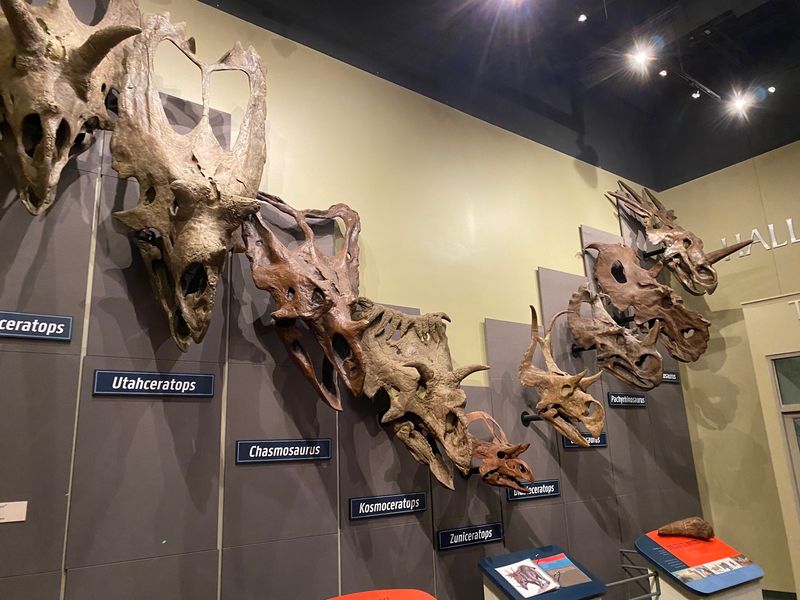
Some museums impress once and then fade into the background. Burpee has the opposite effect because it combines a headline dinosaur experience with enough variety to make a return trip make sense.
Part of that staying power comes from the mix. Jane provides the big visual moment, but the museum does not stop there. Local geology, fossils, cultural material, live reptiles, and children’s spaces keep the visit from narrowing into a single topic.
One trip may focus on dinosaurs. Another may lean toward animals, regional history, or hands-on learning. Its position in Rockford also adds to the appeal.
Burpee feels rooted in the city rather than dropped in as a generic attraction. That local connection matters because the museum is not only teaching abstract natural history.
It is helping explain the land, life, and science tied to northern Illinois in a way that is accessible for everyday visitors.
The museum’s scale plays a role too. Large enough to offer substance, small enough to stay comfortable, it works for grandparents with grandchildren, school groups, tourists passing through, and adults who simply want a thoughtful afternoon indoors.
That flexibility is harder to achieve than it looks. Many places either overwhelm visitors or underdeliver. Burpee usually lands in the useful middle.
There is also a pleasing sense of range inside the building. Ancient predators, Ice Age traces, mineral displays, and live creatures all sit within one experience, so the museum keeps changing shape as you move through it. That movement helps the visit feel active instead of static.
For Illinois travelers, Burpee stands out because it offers serious natural history without big-city stress. The museum teaches, surprises, and keeps things approachable.
By the end, deep time does not seem remote anymore. It feels connected to one city block in Rockford, and that is exactly what makes the place special.