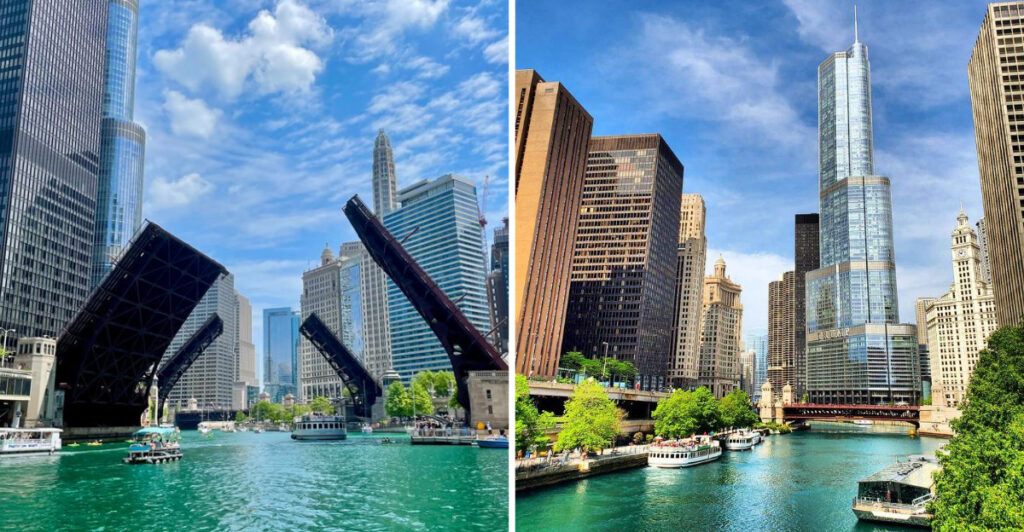
Chicago looks completely different when you explore it from the water’s edge. The Chicago Riverwalk stretches through the heart of downtown, placing pedestrians between the river and a dramatic wall of skyscrapers that reveals just how varied the city’s architecture can be.
Boats glide past below while bridges, public spaces, restaurants, and gathering spots break up the route without taking away from the urban scenery. Best of all, walking lets you notice details that disappear from a car window. For 1.25 miles, the Riverwalk turns one of America’s busiest downtowns into a surprisingly inviting place to wander.
Where The Skyline Drops To The Water
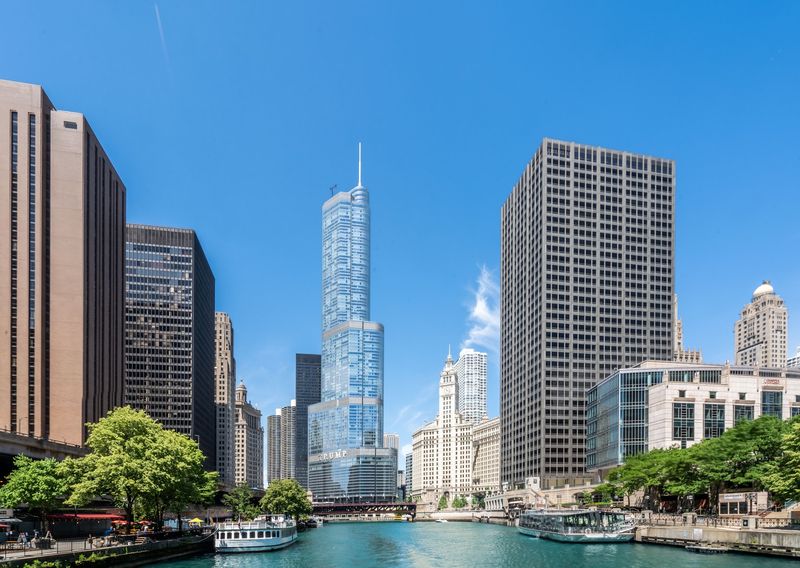
Downtown Chicago can seem huge from the street, but the Riverwalk changes the scale in a smart way. Once you step down toward the water, the city stops feeling like a rush of traffic and starts working like a long outdoor room.
The path runs along the south bank of the Chicago River, and that lower level gives the whole place a distinct look. Street noise still exists, yet the river adds breathing room, and the buildings above frame the walkway like tall walls in a man-made canyon.
That contrast is the first big reason the Riverwalk stands out. You are in the center of one of America’s biggest downtowns, but instead of hurrying past office towers, you get a front-row route beside moving water, bridge structures, dock areas, and open seating.
Plenty of urban waterfronts feel disconnected from the city around them. Chicago Riverwalk does the opposite, keeping you close to the river while surrounding you with architecture, bridge traffic, and the steady rhythm of downtown life.
Looking up is part of the fun here. Glass towers catch the light, older buildings bring weight and texture, and the river reflects all of it in broken lines that shift every time a boat passes.
The walkway also makes Chicago easier to read. From this lower path, bridges become landmarks, building styles are easier to compare, and the shape of the river helps visitors understand how the city fits together.
For first-time visitors, that layout is especially useful. Instead of guessing where to go next, you can simply keep walking and let the skyline guide the experience block by block.
Few places in the city blend structure and scenery this smoothly. The Riverwalk gives Chicago a calmer face without taking away the drama overhead.
A 1.25-Mile Walk That Rarely Breaks Its Rhythm
Some city walks are pleasant for ten minutes, then suddenly end at a fence, a busy road, or a confusing detour. Chicago Riverwalk is different because its roughly 1.25-mile route gives walkers a real sense of progress instead of a series of disconnected fragments.
That uninterrupted feeling matters more than it sounds. A steady path lets families, runners, couples, and solo travelers move at their own pace without constantly stopping to figure out where the walkway picks up again.
Here, the route invites wandering. You can start near the eastern end by the lake side of downtown and continue westward along the river, passing one bridge after another while the view keeps changing without losing its basic flow.
There is comfort in that continuity. Benches, steps, and places to pause appear often enough that the walk never turns into a test of endurance, yet the path is long enough to feel like an outing instead of a quick photo stop.
Access points to the street level make the design even more useful. If someone wants a snack, a restroom break, or a quick exit toward another downtown destination, the Riverwalk connects back up without making the experience feel broken.
That also means visitors do not need a perfect plan before arriving. The best approach is often simple: wear comfortable shoes, pick a direction, and let the river set the tempo.
Morning walkers get more space, while afternoons and evenings bring more activity from diners, boat traffic, and after-work crowds. Even then, the linear layout helps foot traffic keep moving better than many busy public spaces.
For a downtown attraction, the Riverwalk is surprisingly easy to use. It offers one of the simplest pleasures in Chicago, a long, clear place to keep going.
Chicago, Illinois Serves Up A Skyscraper Canyon On Foot
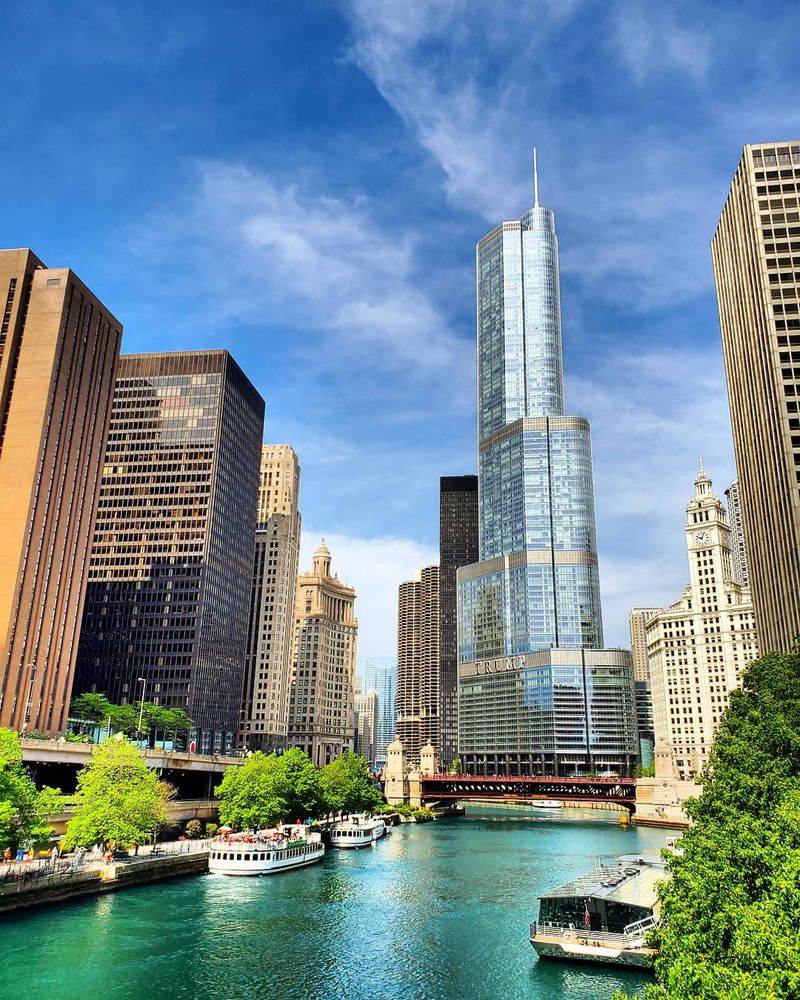
Standing beside the river, the skyscrapers do not sit politely in the background. They rise almost straight above the walkway, creating one of the sharpest big-city views in Chicago, Illinois.
That canyon effect gives the Riverwalk its signature personality. On a normal downtown sidewalk, tall buildings can feel repetitive, but beside the water they gain depth, reflection, and spacing that make each block more dramatic.
Light plays a huge role here. Morning brings cleaner shadows and cooler colors, while late afternoon turns windows gold and throws long shapes across the river, making even a short walk look like a moving architecture exhibit.
Chicago is famous for its buildings, and the Riverwalk is one of the easiest places to study them without needing a ticket. Modern glass facades, older stone details, and sturdy bridge frames all stack together in the same view, sometimes within a single glance.
The river helps organize the scene. Instead of staring upward from a crowded corner, you get open sightlines that let you compare heights, shapes, and textures while boats glide through the middle of the picture.
Photos are easy to take here, but the experience works even better in motion. As you walk, one tower slides behind another, bridges cut across the frame, and reflections keep changing with every ripple on the water.
Cloudy weather can even improve the mood. Gray skies sharpen the outlines of the buildings and give the river a steel-blue tone that matches Chicago’s tougher architectural side.
For anyone who likes city design, this stretch is more than scenic. It is a ground-level lesson in why Chicago remains one of America’s great architecture cities, with the river acting like the perfect viewing aisle.
Boats, Bridges, And Constant Motion At Eye Level
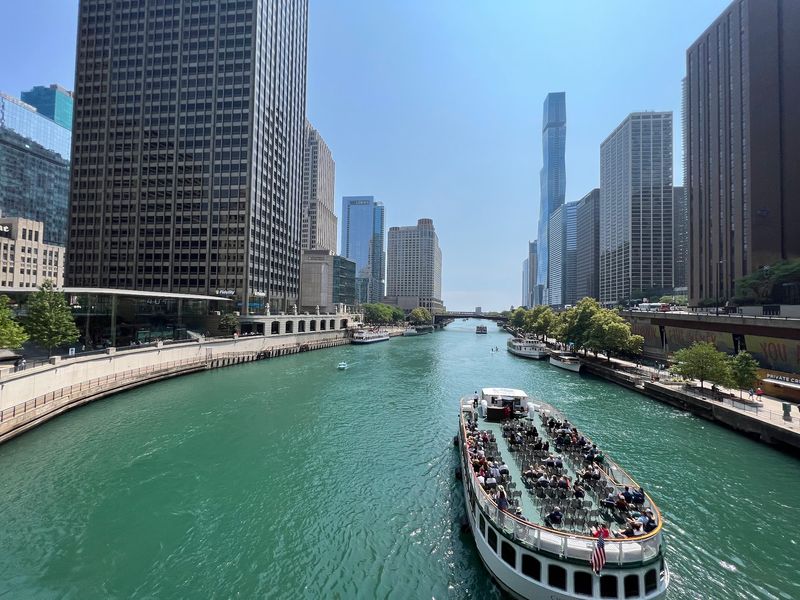
A quiet path alone would not explain the Riverwalk’s popularity. Much of the fun comes from the motion on the water, where tour boats, kayaks, and working river traffic turn an ordinary walk into an ever-changing show.
Boat tours are a major part of the scene, and even people who never board one still benefit. Watching vessels slide under the bridges adds timing and movement to the view, while voices from passing tours sometimes drift across the water with bits of Chicago history.
Kayaks bring a different pace. Their low position on the river makes the downtown walls look even taller, and from the walkway they add color and human scale against the larger tour boats.
Then there are the bridges, which give the Riverwalk much of its personality. Each crossing briefly changes the light, frames the water in a new way, and reminds walkers that this part of Chicago still functions as a working corridor, not just a scenic backdrop.
For kids, bridge openings and boat traffic can be the highlight. For adults, the same action keeps the walk from turning static, especially if there is time to sit on the steps or along the edge and simply watch the river operate.
That active setting also makes the Riverwalk a strong people-watching spot. Commuters, sightseers, runners, diners, photographers, and paddlers all pass through the same space, giving the area a mix of purpose and play.
The best strategy is not to rush the full length too fast. Pick one or two places to linger, because the scene changes every few minutes as boats pass, bridge shadows shift, and another slice of city life drops into view.
Motion is the secret ingredient here. The Riverwalk succeeds because the path is steady while everything around it keeps moving.
More Than A Walkway: Cafes, Docks, And Places To Pause
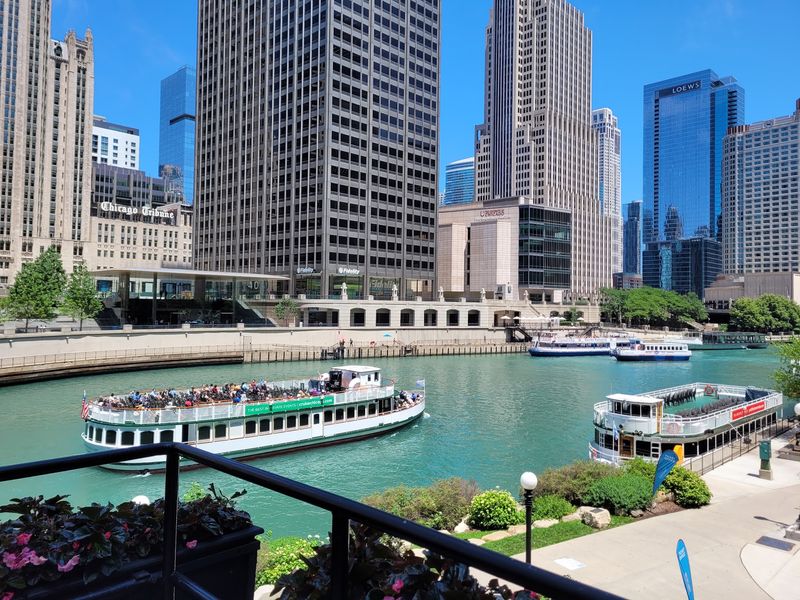
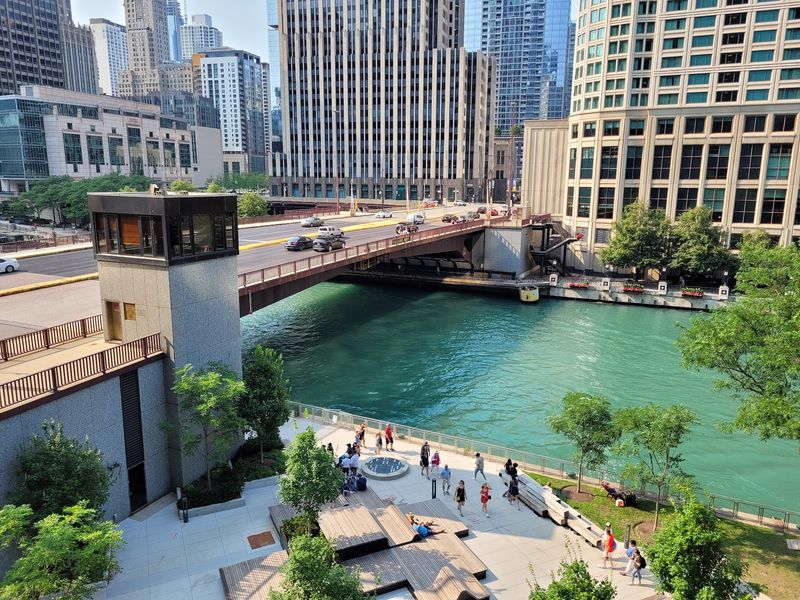
Half the appeal of the Riverwalk is that it does not force everyone to keep moving. The path works just as well for stopping, snacking, sitting by the water, or watching the city slide past from one spot.
Along the route, pockets of activity break up the long linear walk. Outdoor dining areas, casual drink stops, seating steps, and dock spaces give each section its own use, so the experience shifts from travel corridor to hangout zone and back again.
That variety is practical. Someone in the group may want coffee, another person may want a full meal, and somebody else may simply need a bench in the shade, and the Riverwalk handles those different moods better than many urban promenades.
Public seating matters more than fancy design details. When a place offers room to rest without asking for a purchase every few minutes, it becomes easier to spend real time there and notice the small things, like ripples off a passing boat or the layered steel lines under a bridge.
The dock areas add another visual layer. Even when you are not boarding a boat, those edges create moments of arrival and departure that keep the riverfront from feeling flat.
Fishing spots and lookout points also widen the audience. Some visitors are there for architecture, some for lunch, some for exercise, and some just want a clean place downtown where the water is close and the view does the work.
Season matters here, since some food and drink spots are more active in warmer months. Still, the Riverwalk’s basic strength does not depend on buying anything, which is part of why it remains useful to locals and travelers alike.
A strong public space gives people options without confusion. Chicago Riverwalk does exactly that, offering motion for those who want it and pauses for those who do not.
Best Times To Catch The Riverwalk In Its Best Light
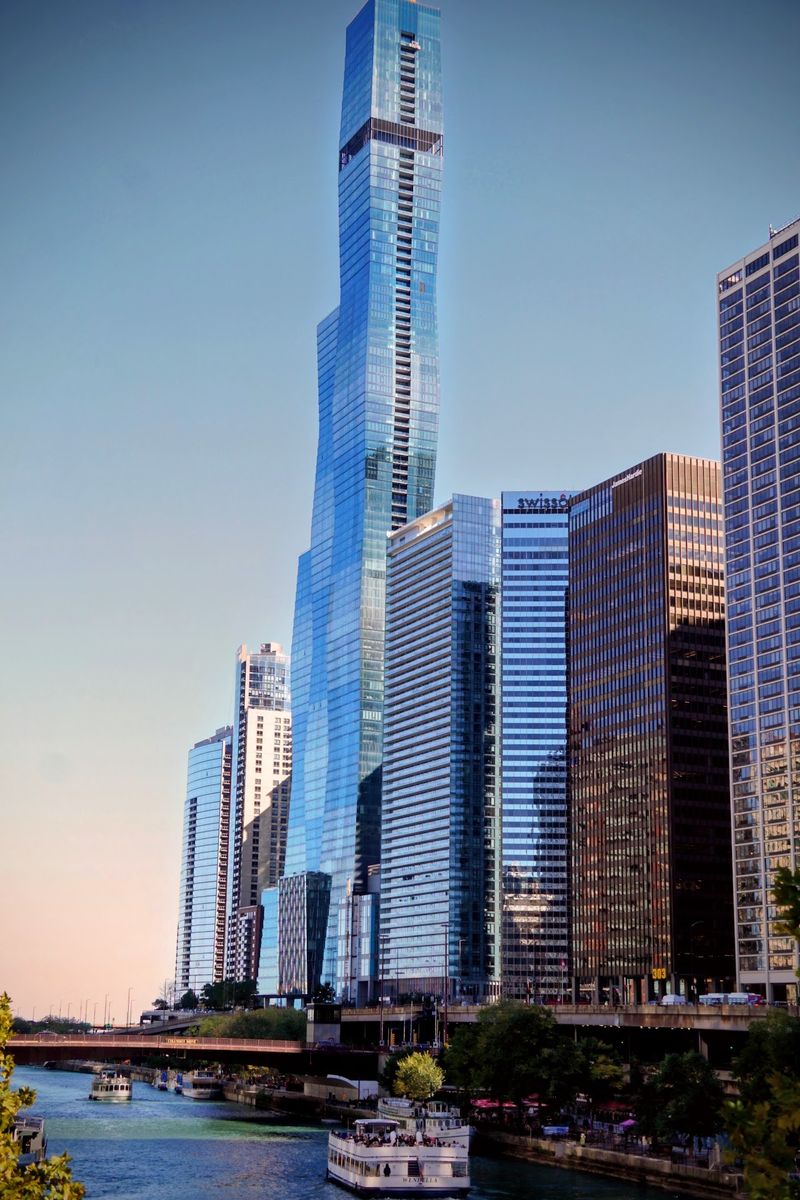
Timing changes the Riverwalk more than many first-time visitors expect. The same stretch can feel brisk and spacious in the morning, bright and social in the afternoon, and richly dramatic once sunset starts coloring the glass towers.
Early hours are ideal for a quieter walk. The path usually has more room for runners, photographers, and anyone who wants to study the buildings without weaving through dinner crowds or pausing behind group tours.
Midday offers the clearest look at architectural details and river activity. Boats are easier to see, the water often looks brighter, and the path has a lively but straightforward energy that works well for families or visitors fitting several downtown stops into one day.
By late afternoon, the Riverwalk starts to shift. Outdoor tables fill, boat traffic becomes part of the entertainment, and the changing angle of the sun adds gold light to windows, steel bridge parts, and rippling water.
Sunset is the crowd favorite for obvious reasons. Reflections sharpen, building lights begin to appear, and the entire corridor turns into a layered mix of shadow, color, and moving light that suits both casual strolling and serious photo taking.
Night has its own appeal too, though it brings more noise and energy. If a peaceful visit matters most, aim earlier; if city sparkle is the goal, stay long enough to watch the skyline brighten over the river.
Weather also shapes the visit. Warm months bring fuller patios and heavier foot traffic, while cooler seasons can reveal more of the architecture by thinning out distractions and opening longer sightlines along the path.
The simplest plan is to match the Riverwalk to your mood. It rewards both calm mornings and lively evenings, just in completely different ways.
Why This Downtown Stretch Earns A Spot On Any Chicago Day
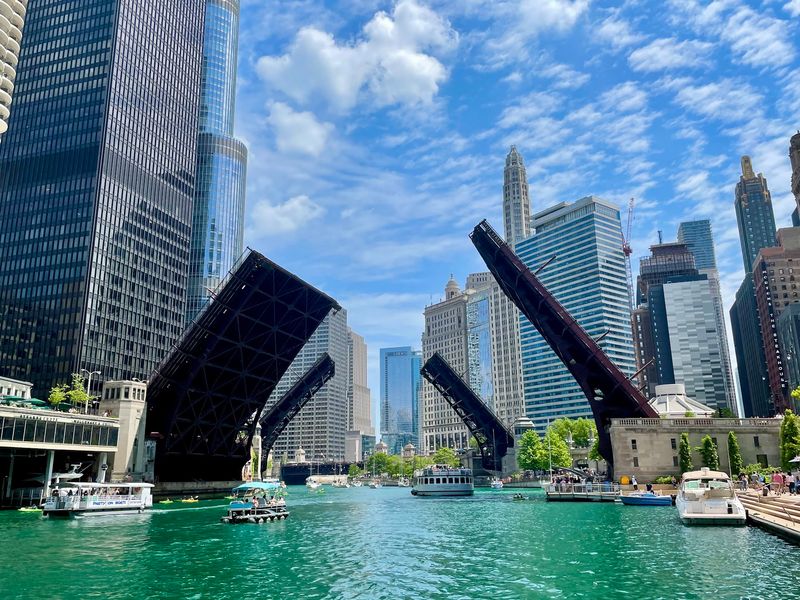
Not every famous city attraction is easy to recommend to almost everyone. Chicago Riverwalk comes close because it asks very little from visitors while giving back a strong mix of scenery, movement, and useful public space.
For newcomers, it offers a quick understanding of downtown Chicago without requiring deep planning. For locals, it stays relevant because the river traffic, light, weather, and skyline never present exactly the same scene twice.
The setting helps explain why it works so well. You are walking through the middle of a major American city, yet the river softens the hard edges, and the lower level path creates a pocket where people can slow down without stepping far from the action.
That balance makes the Riverwalk unusually flexible. It can be a morning exercise route, a sightseeing stop between museums and parks, a place to wait for a boat tour, a lunch setting, or an evening walk when downtown lights begin to glow.
Practical details support the experience too. Regular hours, multiple access points, room to sit, and nearby connections to the surrounding Loop area mean the Riverwalk fits easily into a larger Chicago day instead of demanding one all by itself.
Even small choices improve the visit. Comfortable shoes help, arriving earlier can reduce crowd pressure, and leaving extra time often pays off because the most enjoyable moments are usually the unscripted ones, like a bridge lifting or a sudden burst of sunset color on the water.
Most important, the Riverwalk gives Chicago a walkable front porch. It turns architecture into scenery, infrastructure into entertainment, and a downtown river into a place where people actually want to spend time.
That is why the 1.25-mile stretch stands out. It is simple to use, hard to rush, and deeply tied to the character of the city around it.