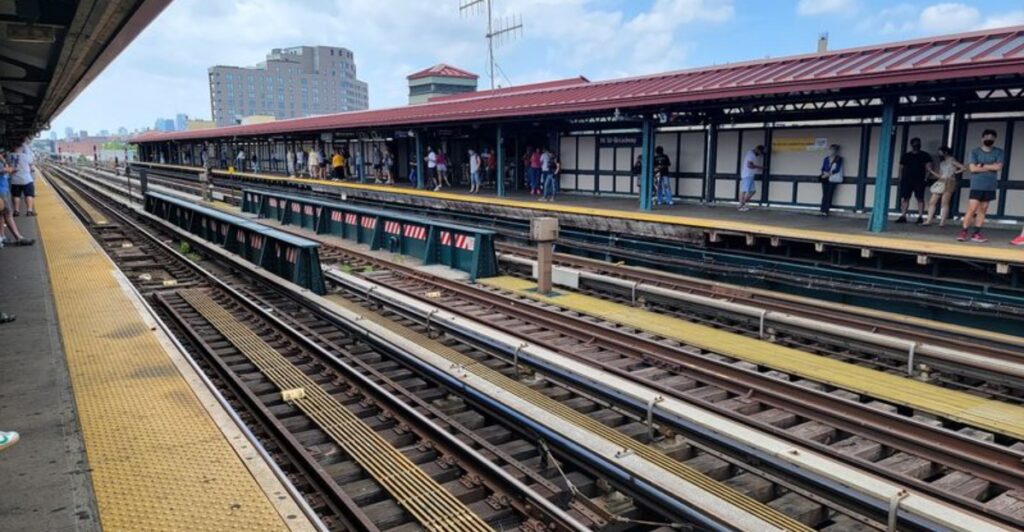
New York is one of the best food cities in the world, and the subway is the easiest way to taste it. A single ride can take you from hand-pulled noodles to Greek grilled fish, from spicy momos to warm soul food.
Each stop has its own sounds, smells, signs, and stories, so eating near the train can feel like a small trip around the globe. Bring a MetroCard or tap your phone, wear comfortable shoes, and come hungry because these stops lead to some of the city’s most exciting food streets.
1. Jackson Hts-Roosevelt Ave, A Global Street Food Carnival
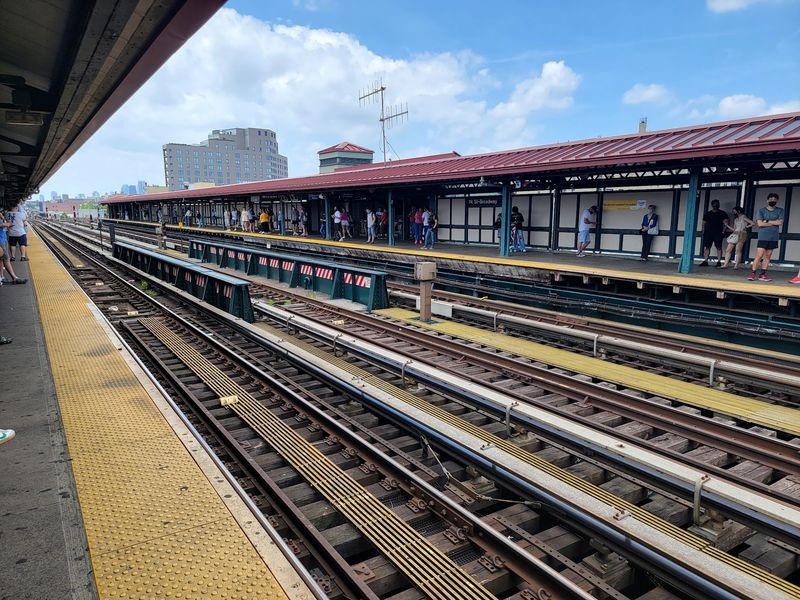
The first thing you may notice here is the smell of something sizzling before you even reach the sidewalk.
Around Jackson Hts-Roosevelt Ave, food seems to come from every direction, and that is what makes the stop feel like a street food carnival with no ticket needed.
This Queens station connects the 7, E, F, M, and R trains, so it is easy to reach from many parts of New York.
Step outside and you are close to Colombian bakeries, Tibetan momo carts, Mexican taco trucks, Indian sweet shops, Bangladeshi snacks, and Nepalese restaurants packed into a few busy blocks.
Come with a small group if you can, because sharing lets you try more.
Start with momos, which are soft dumplings often filled with beef, chicken, or vegetables, then add a fresh arepa or a taco al pastor from a cart.
If you like spice, ask for hot sauce on the side first, since some sauces here can surprise you fast.
Roosevelt Avenue can be crowded, especially after work and on weekends.
That is part of the fun, but keep your bag close and pause near storefronts instead of blocking the sidewalk.
Many places are casual and quick, so do not expect fancy service, expect strong flavors, low prices, and food made for regular neighbors.
A helpful plan is to walk along 37th Avenue and Roosevelt Avenue, then turn onto side streets when something smells good.
Look for lines with local families, delivery workers, and cab drivers.
Those lines often point to the most trusted bites.
For dessert, try jalebi, tres leches cake, or a cup of kulfi.
Few New York stops show the city’s immigrant energy as clearly as this one.
Jackson Hts-Roosevelt Ave is not polished in a postcard way, but it is alive, generous, and delicious from the first bite.
2. Flushing-Main St, NYC’s Dumpling Capital Awaits
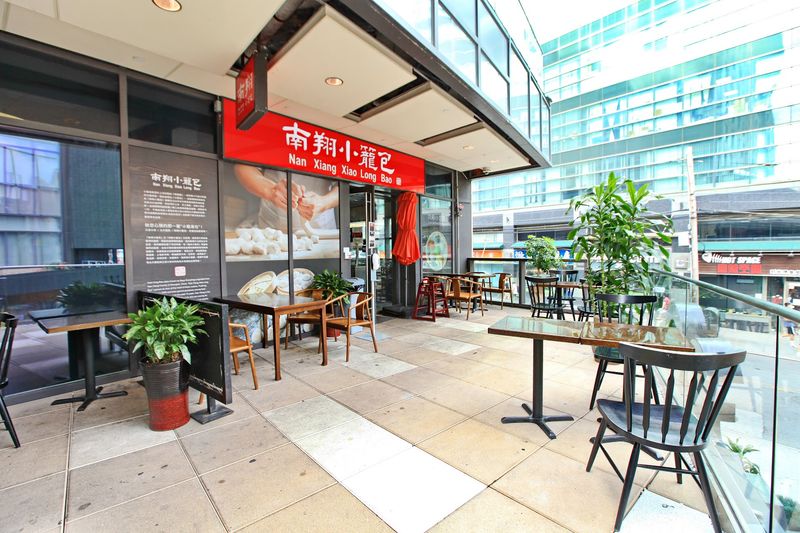
If dumplings could choose a hometown in New York, many would point straight to Flushing-Main St. The last stop on the 7 train drops you into one of the city’s richest food neighborhoods, where steam rises from windows and menus seem to stretch forever.
Flushing is famous for Chinese food, but that simple label does not tell the whole story.
You can find food from many regions, including Shanghai soup dumplings, Sichuan noodles, Taiwanese fried chicken, Cantonese roast meats, Korean-Chinese dishes, and sweet bubble tea.
The fun is in noticing how different one block can feel from the next.
Start with dumplings if it is your first visit.
Soup dumplings are a favorite, but they need care.
Bite a tiny hole, sip the broth, then eat the rest, or you may burn your mouth and your shirt at the same time.
Pan-fried dumplings are easier for walking and often come with crispy bottoms and juicy centers.
Food courts are a smart choice when no one can agree on one restaurant.
Inside malls and lower-level spaces, you can order lamb noodles, scallion pancakes, rice rolls, hot pot ingredients, and desserts from different counters.
Bring cash, because some smaller vendors still prefer it, though many now take cards or phone payments.
Main Street gets packed, so visit earlier in the day if you want shorter waits.
Weekday afternoons can be calmer, while weekend lunches feel like a festival.
Do not be afraid of a menu with photos; pointing is completely normal when you are learning.
Save room for something sweet or cold before heading back to the train.
A taro drink, egg tart, mango dessert, or sesame ball can finish the trip nicely.
Flushing-Main St rewards curious eaters, and even one visit can make you start planning the next.
3. Canal St, Chinatown’s Chaotic, Delicious Heart
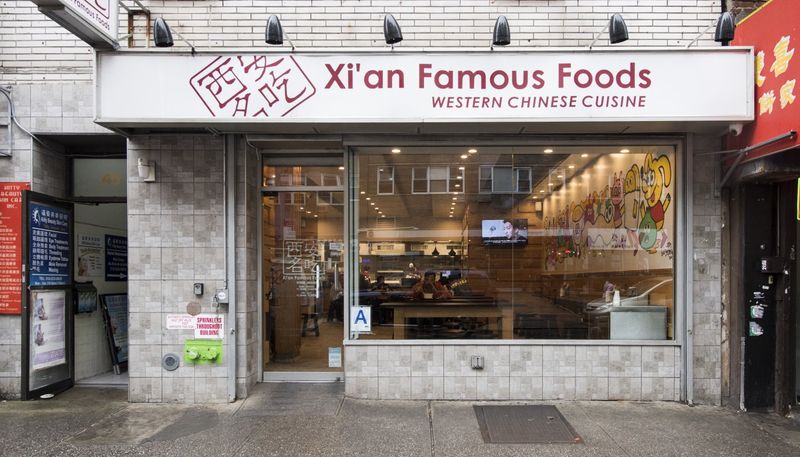
Canal St greets you with noise, color, and the quick pace of a neighborhood that never seems to slow down.
One minute you are near jewelry shops and souvenir stands, and the next you are staring at roast ducks hanging in a window like a promise.
This stop serves several lines depending on which Canal St station you use, including the 6, J, N, Q, R, W, and Z trains nearby.
That makes it one of the easiest gateways into Manhattan’s Chinatown, a food area where old family businesses sit close to newer dessert shops and stylish cafes.
A good first bite is a baked pork bun, egg tart, or pineapple bun from a bakery.
These are easy to carry and usually affordable.
After that, look for wonton noodle soup, hand-pulled noodles, rice rolls, congee, or a plate of roast pork over rice.
Many meals here are fast, filling, and friendly to a tight budget.
Canal Street itself can feel messy, so wander south and east onto Mott, Bayard, Doyers, and Pell Streets.
Doyers Street has a dramatic bend and a long history, including old theaters and restaurants.
Today, it is also a fun place for photos, as long as you stay aware of people trying to pass.
For the best experience, avoid judging a restaurant only by its outside look.
Some plain rooms serve unforgettable food.
If you see workers eating a late lunch there, that is usually a good sign.
Tea, soup, and shared plates make meals feel relaxed, even when the sidewalk outside is wild.
Bring patience, especially during Lunar New Year season or weekend afternoons.
Lines can form fast, but they often move faster than expected.
Canal St is not calm or tidy, yet that is part of its charm.
It gives you Chinatown in full motion, loud, crowded, flavorful, and deeply New York.
4. 74 St-Broadway, Where Momos And Birria Share The Block
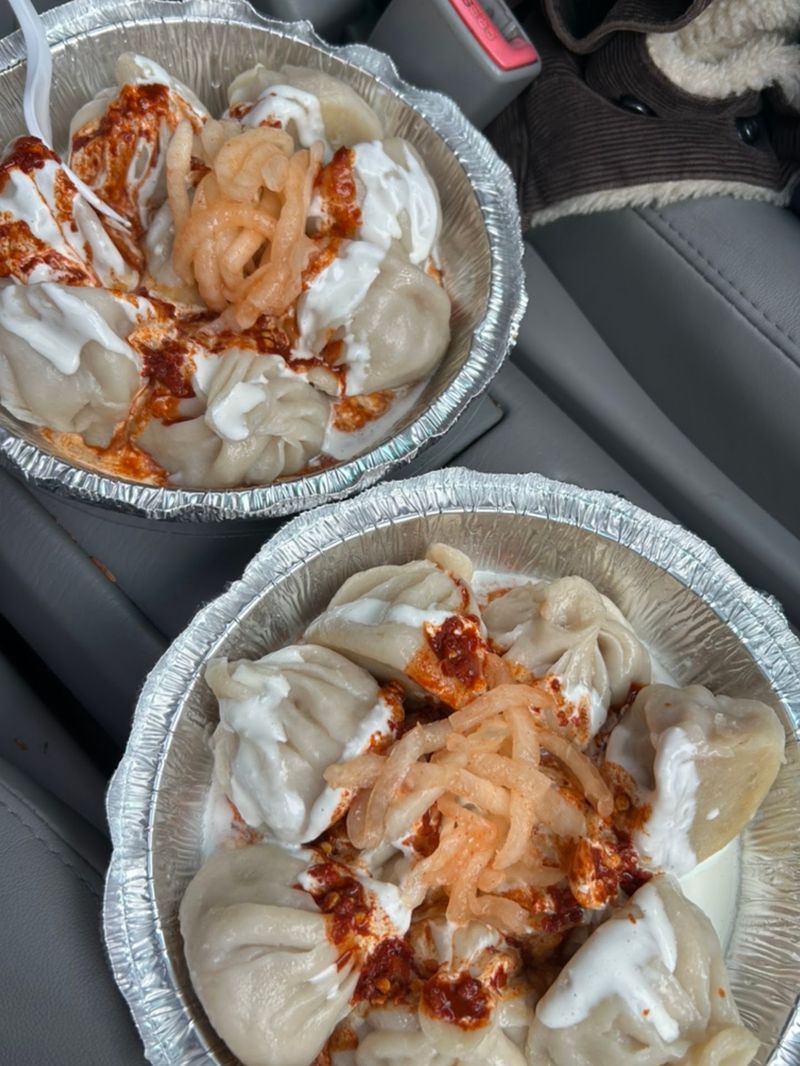
Few blocks in New York feel as happily mixed as the streets around 74 St-Broadway.
A momo cart may stand near a taco truck, while a South Asian sweet shop glows beside a Mexican bakery, and somehow it all makes perfect sense.
This stop is close to the Jackson Heights-Roosevelt Ave transit hub, with the 7 train and other lines nearby.
The area is especially useful if you want a food walk that does not require a strict plan.
Just follow 74th Street, Broadway, and Roosevelt Avenue, and you will meet flavors from Tibet, Nepal, India, Bangladesh, Mexico, Ecuador, and Colombia.
Momos are the local star.
These dumplings are usually steamed or fried and served with sauces that can be bright, smoky, or very spicy.
Try a few kinds if a vendor offers them, because each cart has its own style.
Beef momos are common, but chicken and vegetable versions are easy to find too.
Birria brings a different kind of comfort.
The tacos are often filled with tender meat, folded into tortillas, and served with a rich dipping broth.
They are messy in the best way, so grab napkins before you take the first bite.
If you are sharing, order a cup of consommé for the table.
Between savory stops, step into a shop for mango lassi, masala chai, or fresh juice.
Sweet shops offer colorful treats like ladoo, barfi, and gulab jamun.
Some are very sweet, so one or two pieces may be enough unless you have a serious sugar plan.
Evenings feel especially lively here, with commuters, families, students, and food lovers crossing paths under the tracks.
The rumble of the train becomes part of the soundtrack. 74 St-Broadway proves that New York food is not separated into neat boxes.
It is shared on corners, eaten standing up, and remembered long after the ride home.
5. Brighton Beach, Little Odessa Serves It Up Big
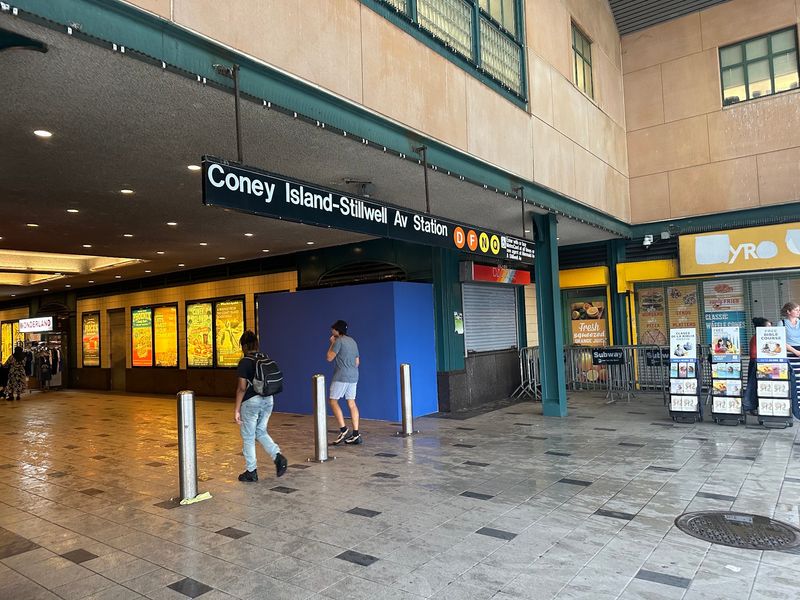
A salty breeze changes the mood as soon as the train reaches Brighton Beach.
Under the elevated tracks, shops sell smoked fish, dark bread, pastries, salads, and hot meals that tell the story of a neighborhood often called Little Odessa.
The B and Q trains bring you close to both the food strip and the ocean.
That mix is special, because you can eat a big Eastern European meal and then walk to the boardwalk in minutes.
In New York, few food stops come with waves as a bonus.
Start with a market visit, even if you plan to sit down later.
Glass cases may hold pickled vegetables, beet salads, stuffed cabbage, herring, cured meats, and cakes layered with cream.
Ask politely if you are unsure what something is.
Many counters are busy, but pointing and smiling can help.
For a sit-down meal, look for borscht, pelmeni, vareniki, kebabs, or chicken Kyiv.
Borscht is beet soup, often served with sour cream, and it can taste bright, earthy, and comforting all at once.
Pelmeni and vareniki are dumplings, one usually meat-filled and the other often filled with potato, cheese, or cherries.
Brighton Beach Avenue is the main food path, but side streets can lead to quieter bakeries and cafes.
Try a slice of honey cake or a pastry with poppy seeds.
If you want something simple for the beach, buy fresh bread, cheese, fruit, and a few prepared salads for an easy picnic.
The neighborhood has deep roots in communities from Ukraine, Russia, Georgia, and other parts of the former Soviet Union.
Signs in Cyrillic give the streets a different feel from most of Brooklyn.
Brighton Beach is hearty, seaside, and a little old-school.
Come for the food, stay for the boardwalk, and leave with crumbs on your coat.
6. Grand St, Where Old World Flavor Meets New York Cool
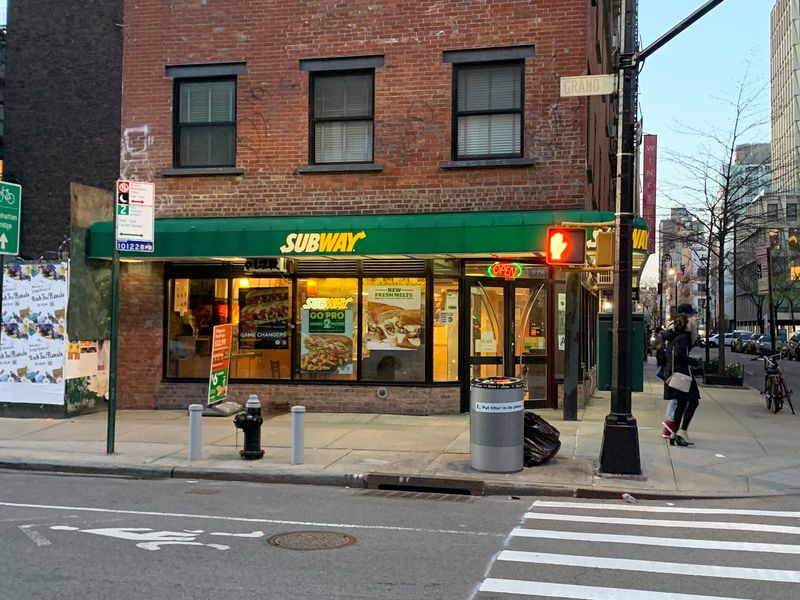
Grand St has a way of making the past feel close, even while new restaurants keep popping up.
Around this Lower East Side stop, old food traditions share space with modern counters, bakeries, bars, and tiny dining rooms full of character.
The B and D trains stop at Grand St, placing you near the edge of Chinatown, the Lower East Side, and Little Italy.
That location gives you a food map with many layers.
You can move from dumplings to knishes, from noodles to bagels, from old-school sweets to creative small plates without walking far.
History matters here.
The Lower East Side was once a major landing place for immigrants, especially Jewish, Italian, and Chinese families over different periods.
Food became a way to build community, earn a living, and keep memories alive.
That is why a simple pickle, bialy, or bowl of soup can feel bigger than lunch.
Begin with something classic.
A pastrami sandwich, smoked fish, rugelach, or a knish gives you a taste of the neighborhood’s older food story.
Then cross toward Chinatown for dumplings, roast meats, or a sponge cake.
The best part is how the flavors do not fight each other.
They sit side by side, like neighbors on a stoop.
Grand St is also good for people who enjoy wandering.
Small storefronts may not look famous, but they can be full of regulars.
If you see a bakery with a short line and warm trays coming out, stop.
Freshness often matters more than a long review.
Visit during the day for bakeries and markets, or come at night for a cooler downtown feel.
Prices range widely, so check menus before sitting.
Grand St is not just one food scene.
It is a bridge between old New York flavor and the city’s restless new ideas.
7. 36 Ave, Astoria’s Secret International Food Street
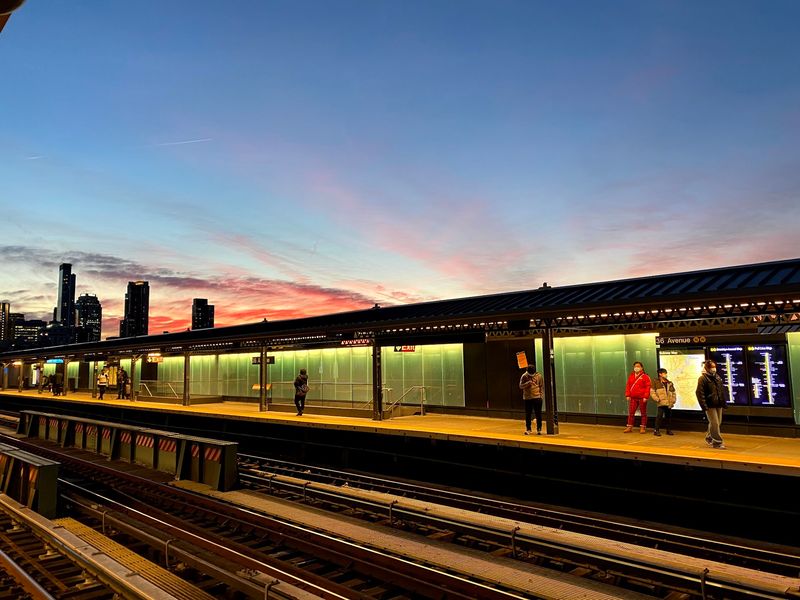
Not every great food stop shouts for attention. 36 Ave in Astoria feels more like a tip from a friend, the kind of place where a quiet block can lead to Brazilian snacks, Balkan plates, Middle Eastern sweets, and excellent coffee.
The N and W trains stop here, north of Long Island City and south of busier Ditmars.
Because many visitors skip it, the area can feel more local and relaxed.
That makes it perfect for eaters who like discovering places without fighting huge crowds.
Walk along 36th Avenue and nearby streets, and you will see how international Astoria really is.
Depending on where you turn, you may find cevapi, burek, tacos, falafel, grilled meats, espresso drinks, pizza, and Latin American comfort food.
The mix is not flashy, but it is steady and real.
Burek is a smart snack to try if you see it.
This flaky pastry can be filled with meat, cheese, spinach, or potato, and one slice can feel like a full meal.
For something lighter, look for a cafe with strong coffee and a small pastry.
Astoria knows how to turn a simple break into a good afternoon.
Because 36 Ave is less touristy, service can feel neighborly.
Staff may recognize regulars, and menus may be short because the kitchen knows what it does well.
Ask what is popular if you are unsure.
You may get a better answer than anything you could find online.
This stop works well before a movie, after a museum visit in Queens, or when you want dinner away from the loudest parts of Manhattan.
Bring a curious mood instead of a checklist. 36 Ave rewards slow walking, second glances, and the joy of finding a great meal where you did not expect one.
8. Astoria-Ditmars Blvd, Greek Food That Hits Different
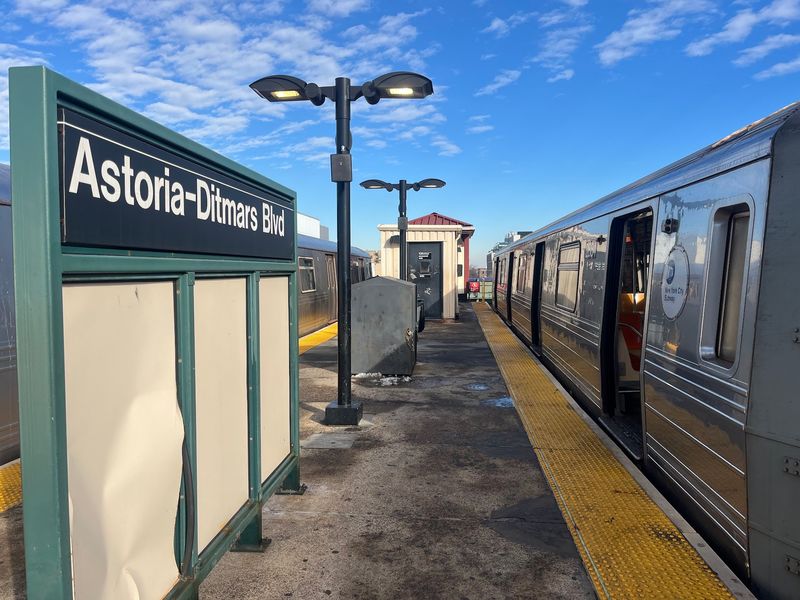
Grilled meat, lemon, oregano, and warm bread seem to float through the air near Astoria-Ditmars Blvd. This Queens stop has long been tied to Greek food, and the neighborhood still knows how to make a meal feel like a family gathering.
The N and W trains end here, so it is hard to miss your stop.
From the station, walk along Ditmars Boulevard and the nearby avenues to find tavernas, bakeries, cafes, seafood spots, and casual counters.
Astoria has changed over the years, but Greek flavor remains one of its strongest signatures.
If you are hungry, order souvlaki, gyro, or a platter with grilled chicken, pork, lamb, or seafood.
Add lemon potatoes, Greek salad, tzatziki, and warm pita.
The food is simple in the best way, built around fresh herbs, olive oil, char, salt, and brightness.
Seafood is a big reason people come here.
Whole grilled fish, calamari, octopus, and shrimp can turn dinner into something that feels close to the islands, even with the subway above ground nearby.
If prices worry you, check the menu first, because fish by the pound can add up.
For a cheaper stop, visit a bakery.
Try spanakopita, tiropita, baklava, or loukoumades if you spot them.
A Greek frappe or strong coffee can keep you going while you stroll.
Bakeries are also great for take-home treats, especially if you want to share something later.
Evening is a lovely time to visit, when restaurants fill and sidewalks feel social.
Do not rush if you sit down for a full meal.
Greek dining often feels best when plates are shared and conversation stretches.
Astoria-Ditmars Blvd offers comfort, sparkle, and a little vacation feeling, all at the end of a regular New York train line.
9. Fordham Rd, The Bronx Serves Italian, Latin, And Everything Between
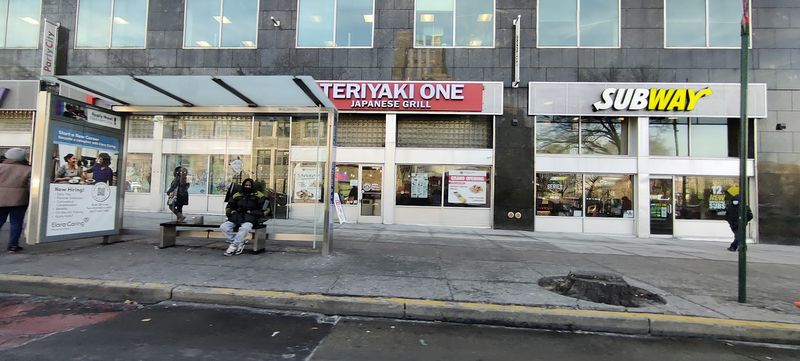
Fordham Rd moves with big Bronx energy, loud buses, packed sidewalks, store music, and the smell of food tucked between shopping stops.
It is not a quiet food crawl, but it is full of flavor if you know where to look.
The B and D trains stop at Fordham Rd, and nearby transit can connect you toward Arthur Avenue, one of New York’s best-known Italian food areas.
That means one trip can bring Latin American snacks, Jamaican patties, pizza slices, Dominican plates, Mexican bites, and old-school Italian markets into the same adventure.
Start near Fordham Road if you want quick food.
You may find empanadas, chopped cheese, roast chicken, pastelitos, tacos, or fresh juice.
This is a working neighborhood, so many places are built for speed and value.
A filling plate can often cost less than a trendy snack downtown.
If you head toward Arthur Avenue, slow down and enjoy the change in mood.
The area is known for Italian bakeries, cheese shops, pasta stores, butchers, cafes, and red-sauce restaurants.
Grab a cannoli, fresh mozzarella, bread, or a slice of pizza.
The indoor retail market is a useful stop when the weather is bad or your group wants different things.
Fordham is also close to major Bronx landmarks, including Fordham University and the Bronx Zoo area.
That makes it easy to build a full day around food, walking, and exploring.
Wear comfortable shoes, because the blocks can feel longer when crowds are thick.
The best approach is flexible.
Eat something quick near the train, then make your way to a sit-down meal or market snack.
The Bronx does not always get the food attention it deserves, but Fordham Rd shows how deep and varied its tables can be.
Come with respect, appetite, and enough time to follow the good smells.
10. 125 St, Harlem’s Soul Food And African Flavors Run Deep
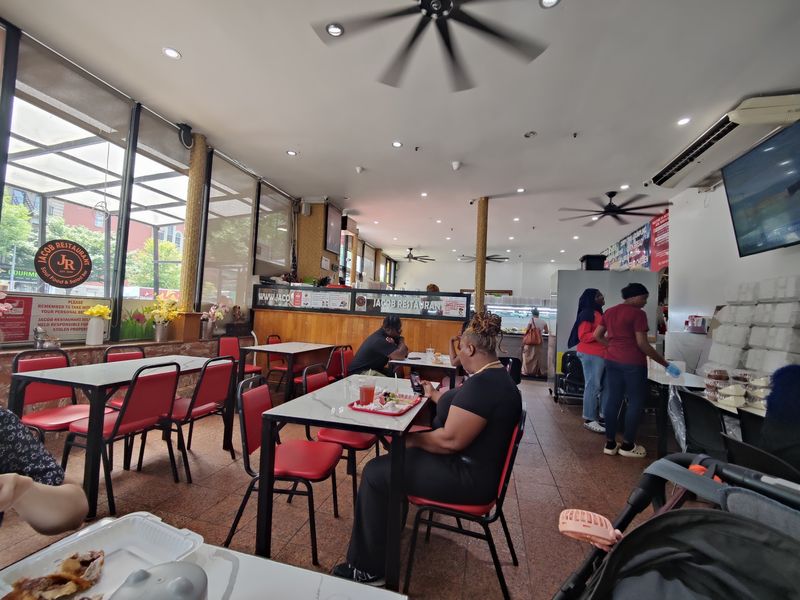
125 St carries music, history, and kitchen warmth in the same breath.
Along Harlem’s main corridor, soul food restaurants, African kitchens, Caribbean spots, bakeries, and cafes help tell the story of a neighborhood that has shaped New York culture for generations.
Several subway lines stop at different 125 St stations, including the A, B, C, D, 2, 3, 4, 5, and 6, depending on the avenue.
That makes Harlem easy to reach from many parts of the city.
Once you arrive, your food choices can stretch from classic comfort plates to bold West African stews.
Soul food is a natural starting point.
Fried chicken, smothered pork chops, mac and cheese, collard greens, cornbread, catfish, candied yams, and peach cobbler all have deep roots in Black American cooking.
These dishes are filling, but they are also tied to family, celebration, survival, and care.
African flavors add another powerful layer.
Look for Senegalese, Ghanaian, Nigerian, and Ethiopian dishes around Harlem and nearby blocks.
Jollof rice, yassa chicken, egusi soup, suya, injera, and stewed fish can bring heat, spice, and comfort in very different ways.
If a dish is new to you, ask how it is usually eaten.
Harlem is also famous for gathering places.
A meal here can fit naturally with a visit to the Apollo Theater, a walk past brownstones, or a Sunday gospel experience if you plan respectfully.
Reservations help for well-known restaurants, especially at brunch or after events.
Come hungry, but also come ready to listen.
Food in Harlem is closely tied to art, migration, faith, and pride. 125 St is more than a place to grab lunch near the train.
It is a doorway into one of New York’s most important cultural neighborhoods, where every plate can carry a story.