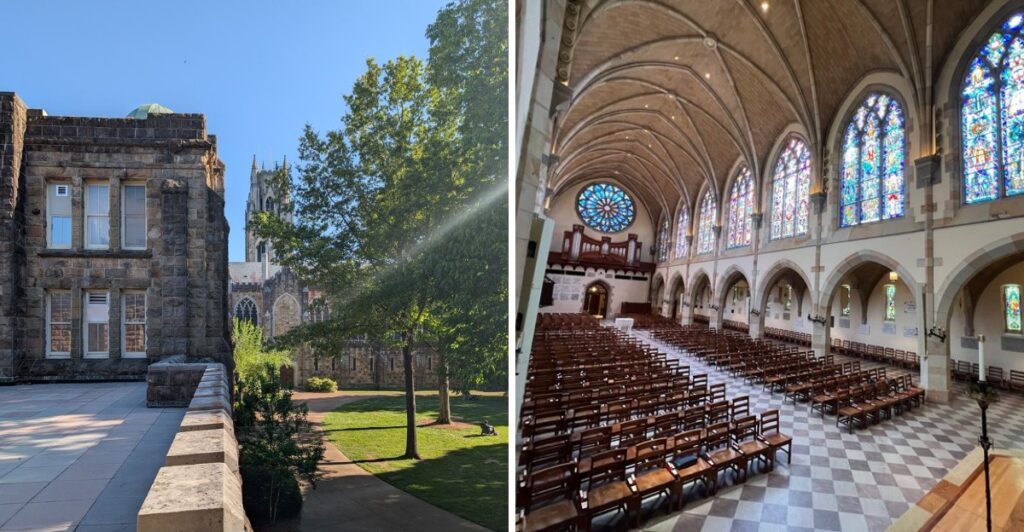
Rising above the wooded campus of the University of the South, All Saints’ Chapel brings a striking touch of Gothic beauty to Tennessee’s Cumberland Plateau. Its soaring stone exterior, pointed arches, stained-glass windows, and intricate interior details create an atmosphere that feels both grand and deeply peaceful. Visitors do not need to attend a formal service to appreciate the craftsmanship, and there is no attraction-style admission fee required to step inside and experience the space.
One of the chapel’s most remarkable features is the Leonidas Polk Memorial Carillon, housed inside the 134-foot Shapard Tower. The instrument contains 56 bronze bells cast in France and installed during the chapel’s expansion in 1958 and 1959. Together, the bells weigh approximately 23 tons and cover a musical range of nearly five octaves.
The largest, known as the Great Bourdon, weighs an impressive 7,500 pounds. When the carillon is played, its resonant tones carry across the university grounds and give the mountaintop campus an unforgettable soundtrack. The chapel remains an active center of university life, hosting Episcopal worship, choir performances, community gatherings, and Sewanee’s celebrated Festival of Lessons and Carols.
Yet even outside scheduled events, its architectural beauty makes it a worthwhile stop for history lovers, photographers, and travelers exploring the plateau. All Saints’ Chapel offers more than an attractive building. It combines art, music, history, and a powerful sense of stillness in one memorable setting, proving that some of Tennessee’s most impressive landmarks can still be enjoyed without purchasing a ticket.
A Carillon System With 56 Bronze Bells That Ring Across The Mountains
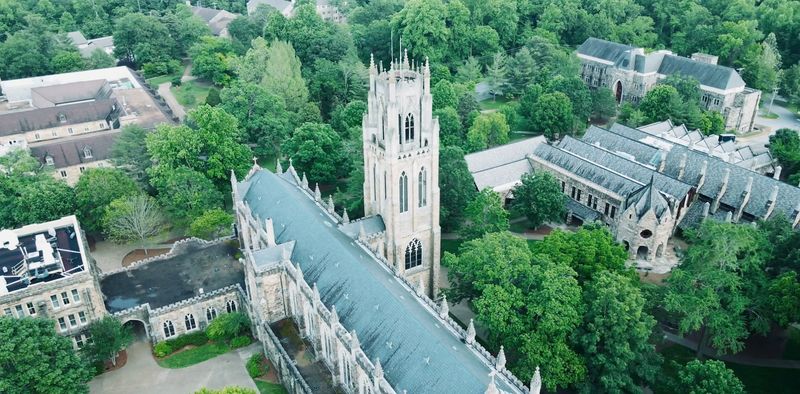
The sound hits you before you even see the chapel. Fifty-six bronze bells housed in the tower create a carillon system that sends music rolling across the Cumberland Plateau every afternoon. Each bell was cast specifically for this chapel, ranging from small treble bells to massive bass bells that weigh hundreds of pounds.
University carillonneurs climb the tower stairs to play concerts on a keyboard-like instrument connected to the bells. Their feet work pedals while their hands strike wooden keys, creating melodies that can be heard for miles. Students set their watches by the daily concerts, and locals plan their afternoon walks to coincide with the performances.
The carillon tradition dates back centuries in Europe, but few American colleges invested in such elaborate bell systems. All Saints’ Chapel joined an elite group when these bells were installed. The investment transformed the entire campus soundscape and gave Sewanee a musical identity heard nowhere else in Tennessee.
Visitors often stop whatever they’re doing when the bells start ringing. The music floating over the mountain creates an almost magical atmosphere that makes you feel transported to another time and place. Some people drive up to campus specifically during concert times just to park and listen.
The bells ring for special occasions too, marking graduations, weddings, and important university events. Each celebration gets its own musical program, carefully selected to match the mood. Holiday concerts draw crowds who gather on the lawn below, bundled in blankets, looking up at the tower while Christmas carols echo across the frozen landscape.
Recording the bells has become a popular activity for visitors. The acoustics on the mountain create a natural amplification that makes even smartphone recordings sound spectacular. Many former students say hearing those bells again, even in a recording, instantly transports them back to their college days on the Domain.
Gothic Architecture That Looks Straight Out Of Medieval Europe
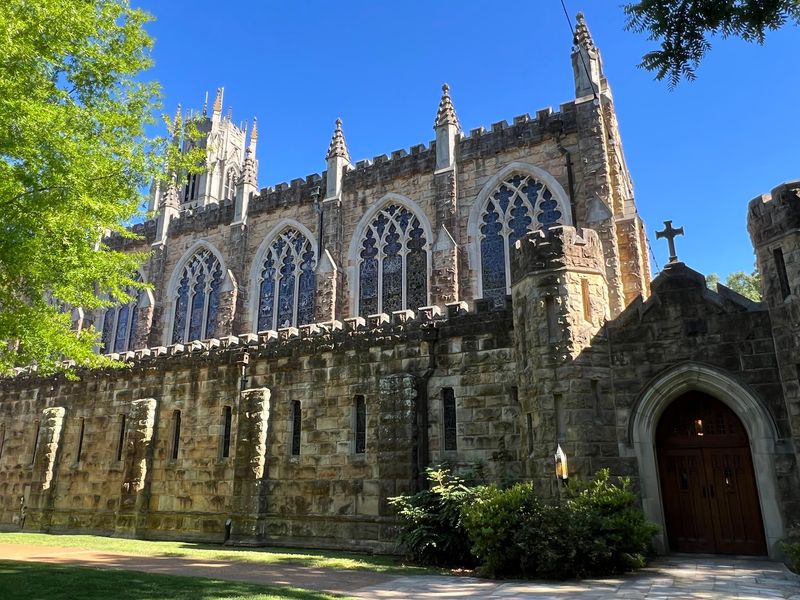
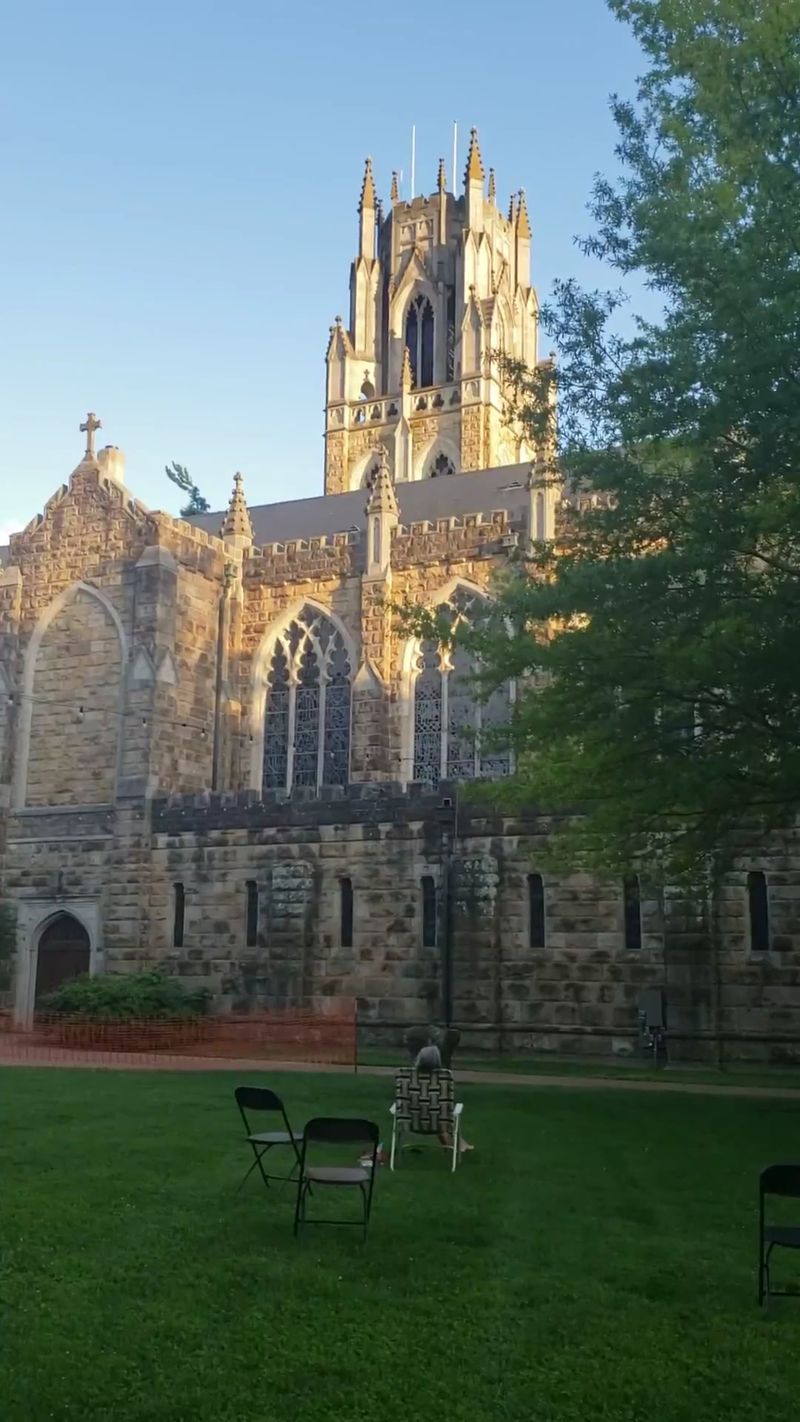
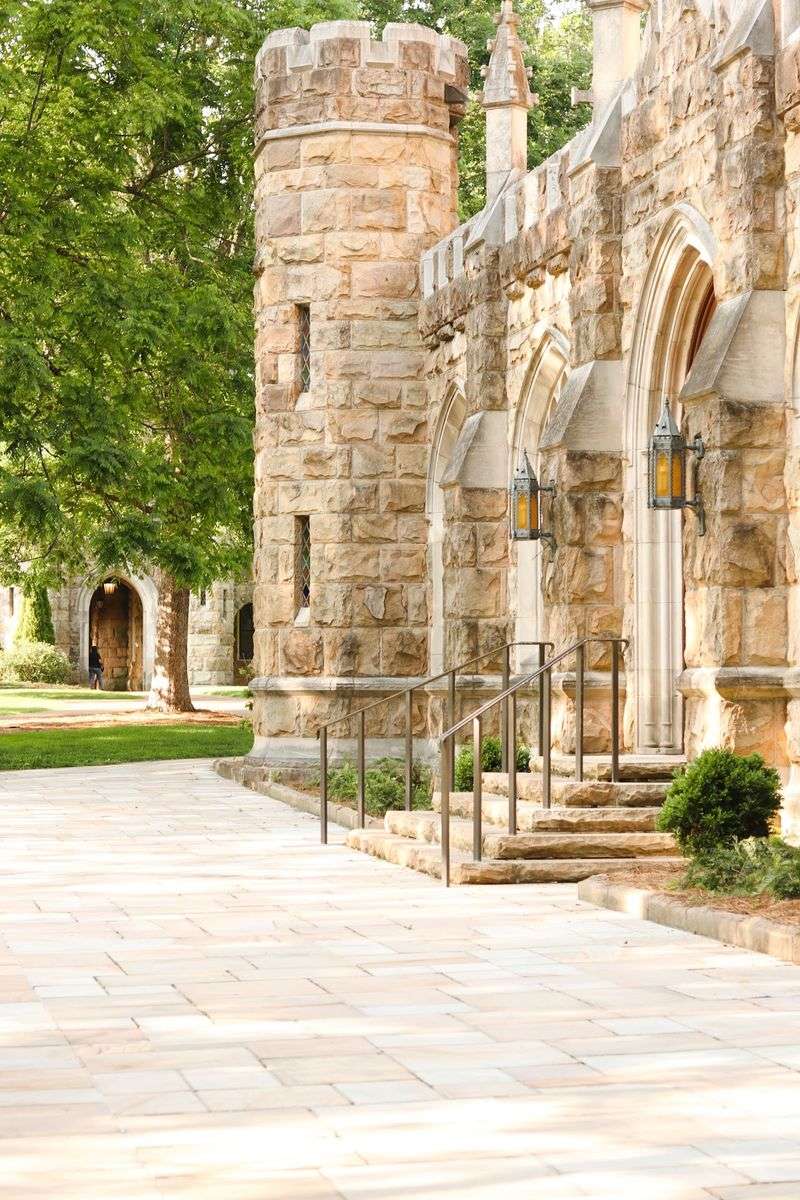
Walking up to All Saints’ Chapel feels like stumbling onto a European cathedral that somehow landed on a Tennessee mountain. The Gothic Revival architecture features every classic element: pointed arches, ribbed vaults, flying buttresses, and stone tracery that would make medieval masons proud. Except this masterpiece was completed in 1959, not 1259.
The exterior stonework alone deserves hours of examination. Local Tennessee sandstone was cut and fitted by craftsmen who understood traditional building methods. No two stones are exactly alike, yet they fit together with precision that modern construction rarely achieves.
Gargoyles peer down from the roofline, not just for decoration but serving their original purpose as water spouts during rain. The main entrance features a massive wooden door bound with iron hardware, heavy enough that opening it feels like a ceremonial act. Detailed carvings surround the doorway, depicting biblical scenes and university symbols.
The tower rises 274 feet above the mountain, visible from miles away. Its design mirrors the great bell towers of England and France, with open arches near the top allowing sound to travel in all directions. Climbing to the bell chamber requires permission and strong legs, but those who make the journey get rewarded with panoramic views stretching across three states.
Multiple reviewers compare the campus to Hogwarts, and the comparison isn’t far off. The Gothic buildings clustered around the chapel create a cohesive architectural landscape that feels completely removed from typical American college campuses. Stone walkways connect the buildings, lined with lampposts that could have been transplanted from Victorian London.
Photography enthusiasts camp out at different times of day to capture the chapel in various lights. Morning fog rolling through the arches creates an ethereal effect. Sunset turns the sandstone golden.
Storm clouds gathering behind the tower produce dramatic shots that look like movie posters. Every angle offers something worth photographing, and the changing seasons provide endless variety.
Completely Free Admission With No Tours Or Tickets Required
Here’s the best part about All Saints’ Chapel: you don’t need tickets, reservations, or even a good reason to visit. The doors open at 8 AM daily and stay open until 4:30 PM, welcoming anyone who wants to step inside. No admission fee, no donation box pressuring you at the entrance, no guided tour you’re required to join.
This open-door policy reflects the Episcopal tradition of hospitality and the university’s commitment to sharing its treasures with the broader community. You’re free to wander at your own pace, sit in the pews as long as you want, or simply stand in the nave soaking in the atmosphere. Security is present but unobtrusive, there to help rather than monitor.
The chapel sees visitors from around the world who’ve made special trips just to experience this place. Yet it never feels crowded or rushed. Even on busy weekends, the vast interior provides enough space for everyone to find their own quiet corner for reflection.
Parking is readily available near the chapel, and the campus doesn’t charge for visitor parking either. The whole experience costs you nothing except the gas to drive up the mountain. Compared to tourist attractions that nickel-and-dime visitors at every turn, this generosity feels almost shocking.
Self-guided exploration lets you focus on whatever interests you most. Some people spend their entire visit studying the stained glass. Others examine the woodwork or test the acoustics by humming quietly.
Photographers can take their time setting up shots without feeling rushed by a tour group schedule.
Brochures available near the entrance provide background information about the chapel’s history and artistic features. These guides help you understand what you’re seeing without requiring you to join an official tour. You can read as much or as little as you want, then explore at whatever pace feels right.
The only real rule is respect. This remains an active place of worship, so services take priority over tourism. Check the schedule if you’re planning a visit during typical service times, though most of the week the chapel is wide open for visitors.
Stained Glass Windows That Rival European Cathedrals
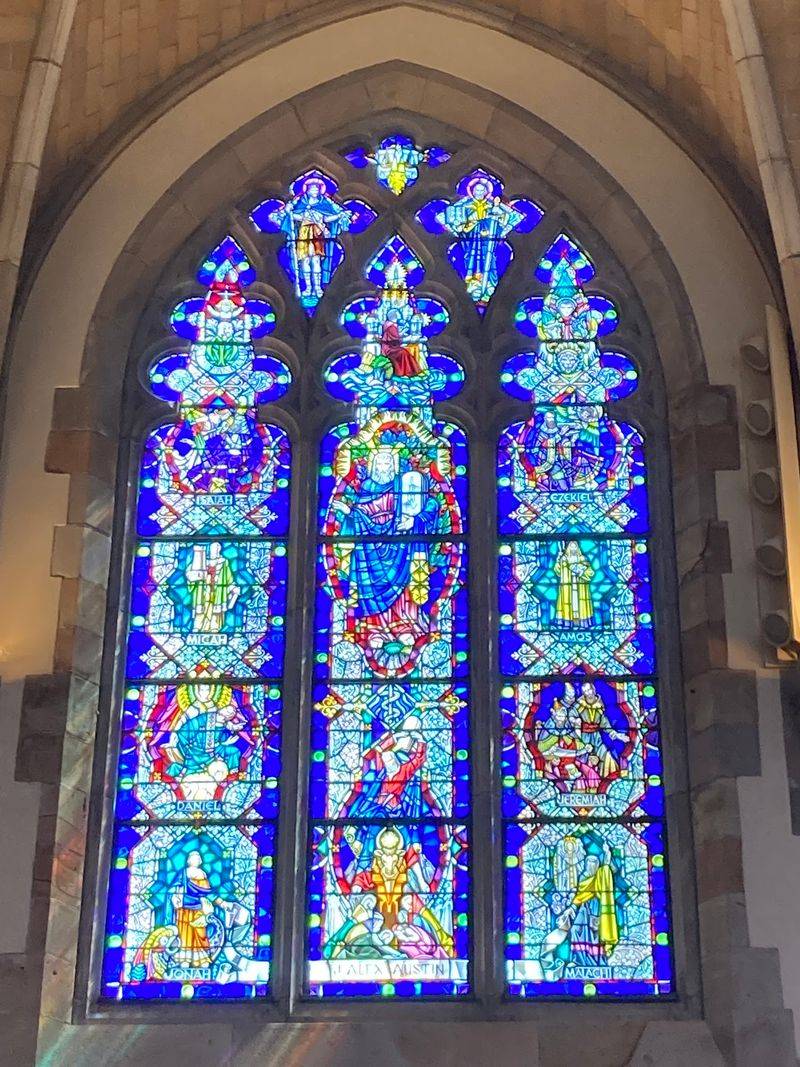
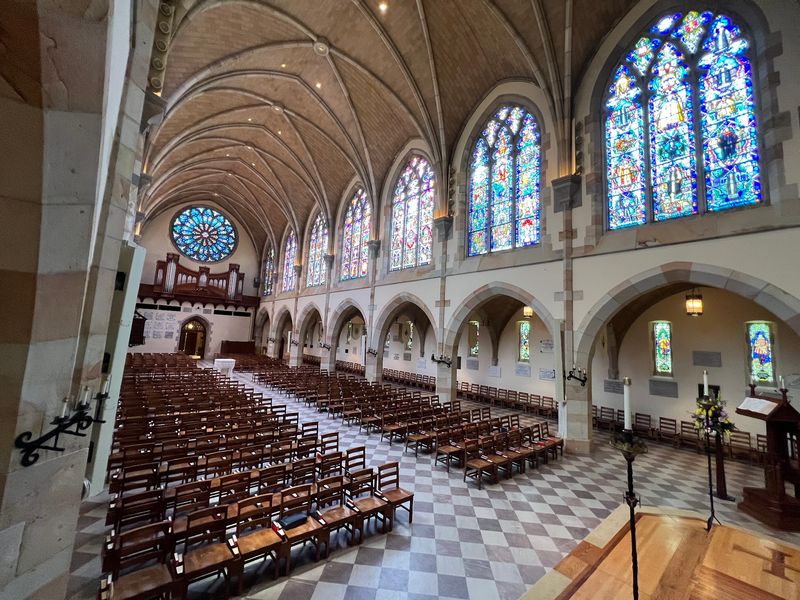
Step inside All Saints’ Chapel and prepare to spend the next hour staring upward. The stained glass windows represent some of the finest ecclesiastical art in America, created by master craftsmen who understood both the technical and spiritual dimensions of their work. Every window tells a story, and the collection as a whole creates a visual Bible that spans from Genesis to Revelation.
The front-facing rose window is a replica of the famous window at Notre Dame Cathedral in Paris. When afternoon sun pours through it, the entire nave explodes with colored light. Blues, reds, golds, and greens splash across the stone floor and wooden pews in constantly shifting patterns as the sun moves across the sky.
Side windows depict saints, scholars, and significant figures from Christian history and various academic disciplines. You’ll find windows dedicated to medicine, law, literature, science, and other fields of study. Each figure is rendered in exquisite detail, from the folds in their robes to the expressions on their faces.
The windows weren’t all installed at once. Different donors sponsored individual windows over the years, creating a collection that spans several decades and multiple studios. Yet somehow they work together as a unified whole, the color palettes and artistic styles complementing rather than clashing with each other.
Brochures identify each window’s subject and explain the symbolism woven into the designs. Without this guide, you might miss the subtle details: specific flowers representing virtues, animals symbolizing different qualities, architectural elements referencing biblical passages. The artists packed layers of meaning into every square inch.
Photographers face a delightful challenge capturing these windows. The contrast between the bright glass and dark interior requires careful exposure settings. Morning light hits the east windows perfectly, while late afternoon brings the west side to life.
Cloudy days produce softer, more even lighting that reveals details lost in harsh sunlight.
Multiple visitors mention the stained glass as their favorite feature, with some returning multiple times to study different windows more closely. The artistry justifies the repeated visits because you simply cannot absorb everything in one trip.
Interior Woodwork And Stone Carving That Showcases Master Craftsmanship
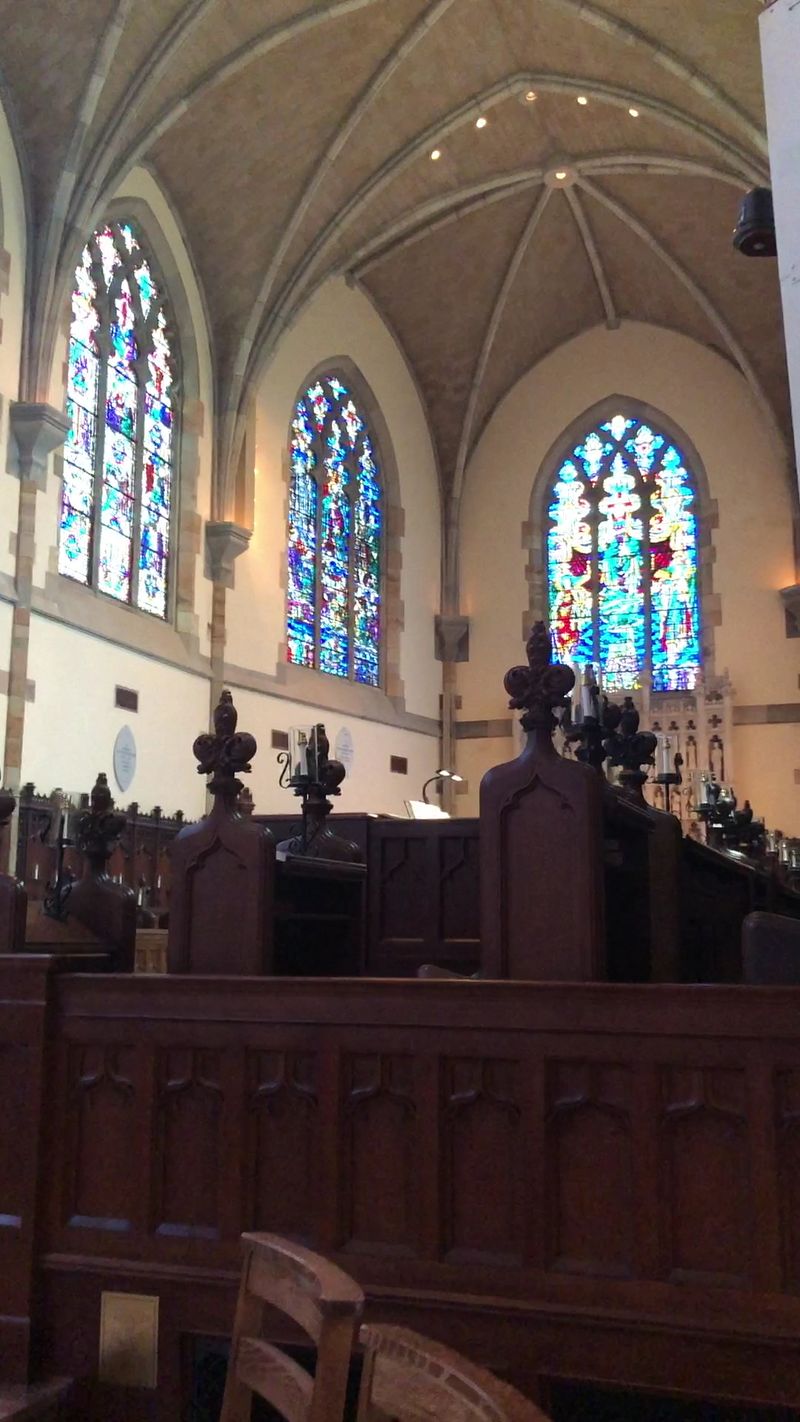
Beyond the stained glass, the interior craftsmanship of All Saints’ Chapel deserves equal attention. The wooden pews, carved from solid oak, feature intricate details that reveal themselves slowly. Run your hand along the armrests and you’ll find smooth curves worn by decades of worshippers.
Look closer at the pew ends and discover decorative carvings that vary from row to row.
The choir stalls display even more elaborate woodwork. Each seat includes a misericord, a small carved bracket on the underside that allowed medieval monks to rest while appearing to stand during long services. These hidden carvings often feature whimsical or humorous subjects, a tradition the Sewanee craftsmen honored with their own creative interpretations.
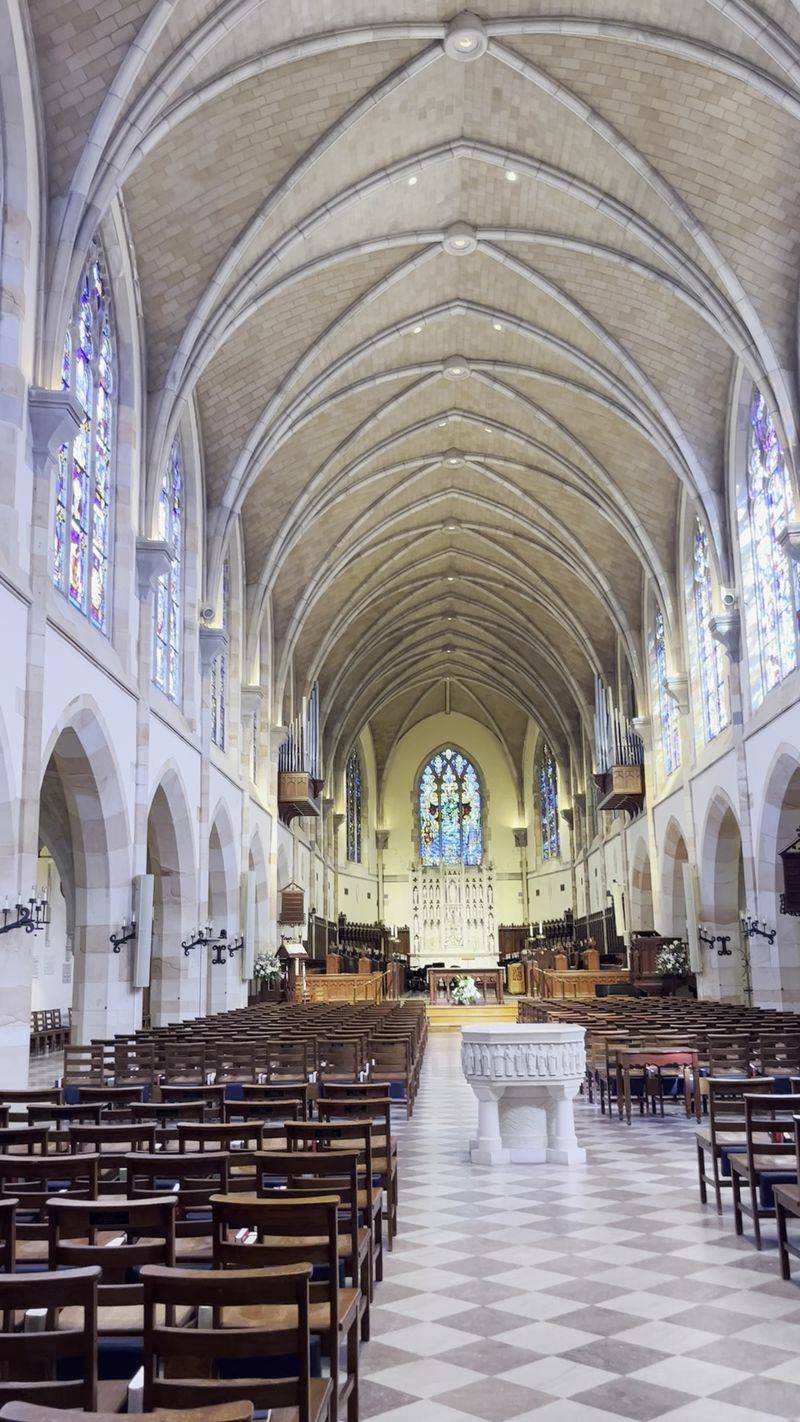
Stone columns rise from floor to ceiling, their capitals carved with foliage patterns and symbolic imagery. The vaulted ceiling overhead demonstrates the engineering genius of Gothic design, distributing weight through a system of ribs and arches that seems to defy gravity. Walking down the central aisle, you can see how each architectural element supports the others in perfect balance.
The altar area features the most concentrated craftsmanship. The reredos behind the altar includes carved panels depicting biblical scenes, each one a miniature masterpiece. The altar rail, communion table, and bishop’s throne all showcase woodworking techniques that few modern craftsmen still practice.
Candles throughout the chapel aren’t just decorative. Large candelabras hold dozens of candles that get lit for services, creating flickering light that dances across the stone walls. The effect transforms the space from impressive to magical, especially during evening services when electric lights are dimmed.
Acoustics in the chapel are phenomenal, designed to carry voices and music throughout the space without amplification. Students who perform here talk about how the building itself seems to enhance their voices. Even whispered conversations near the altar can be heard clearly at the back of the nave, a quirk of the architecture that surprises first-time visitors.
The craftsmanship extends to practical details most people never notice. Door hinges, light fixtures, floor tiles, and even heating grates were custom-designed to match the Gothic aesthetic. Nothing feels like an afterthought or modern intrusion.
A 4.9-Star Rating From Over 100 Visitors Who Call It Stunning
Numbers don’t lie, and All Saints’ Chapel’s 4.9-star rating from 117 reviews tells you everything you need to know about visitor satisfaction. That’s not just good; that’s exceptional by any standard. Getting unanimous praise from over a hundred different people with different tastes and expectations is nearly impossible, yet this chapel manages it.
Reading through the reviews reveals consistent themes. Words like “stunning,” “breathtaking,” “incredible,” and “awe-inspiring” appear repeatedly. People struggle to find vocabulary adequate to describe their experience.
Several reviewers admit they visited skeptically, expecting a nice college chapel, only to find themselves completely blown away by what they discovered.
The few reviews that aren’t perfect five stars still gush with praise. Even the pickiest visitors can’t find much to criticize. Occasionally someone mentions wishing they had more time or wanting better weather for photography, but nobody complains about the chapel itself.
Many reviewers specifically mention making special trips just to see the chapel. These aren’t people who happened to be in the area and stopped by on a whim. They drove hours out of their way because they’d heard about All Saints’ and wanted to experience it firsthand.
The fact that they still give five-star reviews after building up high expectations speaks volumes.
Comparison to famous landmarks appears frequently in reviews. People who’ve visited European cathedrals, including Notre Dame itself, say All Saints’ holds its own against those international treasures. Some reviewers call it the most beautiful building they’ve seen in the South, or even in America.
The emotional impact surprises visitors who weren’t expecting it. Multiple reviews describe feeling moved to tears or experiencing unexpected spiritual moments. Even non-religious visitors report feeling something profound in the space.
The chapel affects people on levels beyond simple aesthetic appreciation.
Repeat visitors leave updated reviews after second and third trips, noting how the chapel reveals new details each time. The complexity and richness of the space rewards multiple visits, with people discovering things they missed on previous trips. That depth keeps people coming back and keeps the reviews overwhelmingly positive.
Located On The University Of The South’s Spectacular Campus
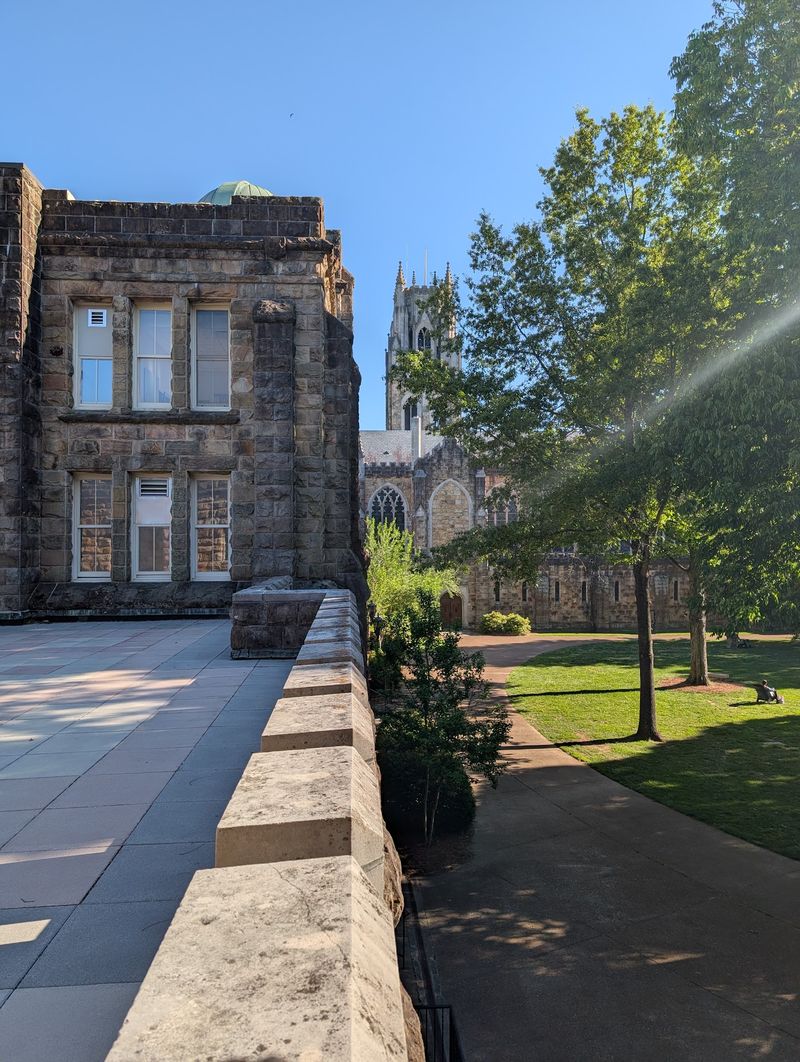
All Saints’ Chapel serves as the crown jewel of a campus that reviewers consistently call one of America’s most beautiful. The University of the South, known locally as Sewanee, occupies 13,000 acres atop the Cumberland Plateau. Gothic buildings cluster around the chapel, connected by tree-lined paths that wind through perfectly maintained grounds.
The campus architecture maintains remarkable consistency. Rather than the hodgepodge of styles that characterize most universities, Sewanee committed to Gothic Revival throughout. Walking across campus feels like exploring a medieval village, with stone buildings featuring pointed arches, steep roofs, and detailed stonework at every turn.
Multiple reviewers mention the Harry Potter comparisons, and they’re not exaggerating. The resemblance to Hogwarts is striking, from the Great Hall-style dining facility to the ivy-covered dormitories. Students in academic robes walking between classes complete the effect, making visitors do double-takes.
The campus sits at the edge of a plateau, offering dramatic overlooks where the mountain drops away to reveal valleys stretching for miles. Sunset viewing spots near the chapel provide some of Tennessee’s most spectacular vistas. On clear days, you can see the Smoky Mountains in the distance.
Visitors are welcome to explore the entire campus, not just the chapel. The university encourages public access to its grounds, understanding that the beauty belongs to everyone. Walking paths crisscross the Domain, leading to overlooks, gardens, and historic buildings worth exploring.
The surrounding town of Sewanee is tiny but charming, with local shops and restaurants catering to students and visitors. The whole area maintains a peaceful, removed-from-the-world quality that makes it feel like a retreat from modern life. Cell service can be spotty, which somehow adds to the appeal.
Special events on campus draw visitors year-round. The Fourth of July parade held in front of All Saints’ Chapel has become a beloved tradition. Concerts, lectures, and theatrical performances take advantage of the stunning venues.
Checking the university calendar before visiting might reveal events worth timing your trip around, though the campus impresses regardless of what’s happening.
Perfect Acoustics For Concerts And Musical Performances
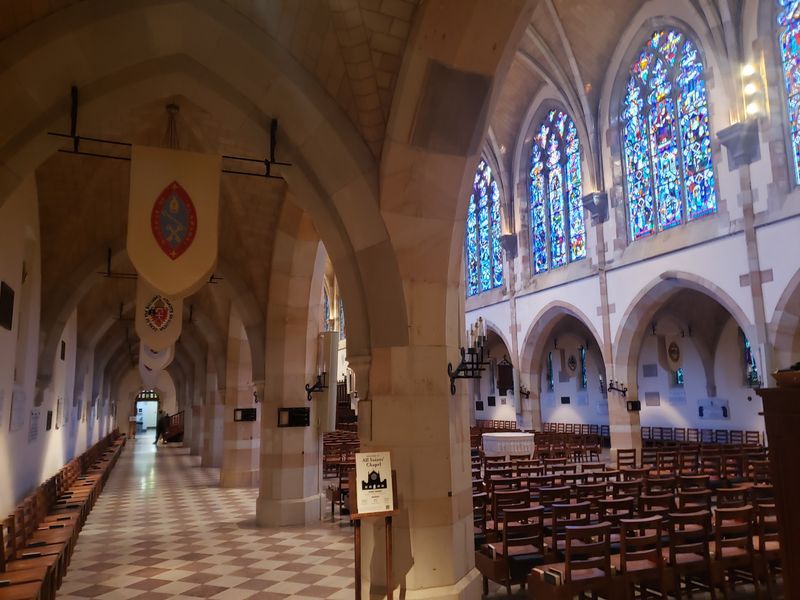
Music sounds different inside All Saints’ Chapel. The Gothic architecture that makes the space visually stunning also creates acoustic properties that musicians dream about. Every note hangs in the air, supported by the stone walls and vaulted ceiling before slowly fading away.
Chords blend together naturally without muddy overlap, and even the softest pianissimo carries to the back rows.
The university takes full advantage of these acoustics by hosting regular concerts throughout the academic year. Chamber music groups, classical pianists, choral ensembles, and organ recitals fill the calendar. Many performances are free and open to the public, giving visitors another reason to plan their trips around the event schedule.
The pipe organ deserves special mention. This massive instrument features thousands of pipes ranging from pencil-thin treble pipes to bass pipes taller than a person. Hearing a skilled organist unleash the full power of this instrument in the chapel is a physical experience.
You don’t just hear the music; you feel it vibrating through your body.
Student musicians perform regularly, using the chapel for recitals and practice. Lucky visitors might arrive during an impromptu practice session and get treated to a private concert. One reviewer mentioned hearing a student pianist and being absolutely mesmerized by how the music filled the space.
The acoustics work equally well for voices. The chapel choir performs here regularly, their harmonies swelling and blending in ways that give listeners goosebumps. Solo singers discover that the space naturally amplifies and enriches their voices, adding warmth and depth without electronic enhancement.
Recording engineers love working in this space despite the challenges it presents. The natural reverb creates a lush sound that digital effects can’t quite replicate. Professional recordings made in the chapel have been released commercially, preserving performances for audiences who can’t visit in person.
Even ordinary sounds become beautiful here. Footsteps echo musically across the stone floor. Pages turning in hymnals create a soft rustling that somehow fits the atmosphere.
During silent moments, you become aware of the building itself breathing, settling, existing as a living space rather than just a structure.
Open Daily From 8 AM To 4:30 PM Year-Round
Consistency matters when planning a visit, and All Saints’ Chapel delivers with reliable hours seven days a week. The doors open at 8 AM every morning and stay open until 4:30 PM every afternoon, Monday through Sunday. This dependable schedule means you can plan your visit with confidence, knowing the chapel will be accessible when you arrive.
The year-round access is particularly valuable. Many tourist attractions close during off-season months or limit winter hours, but All Saints’ welcomes visitors through all four seasons. Each season offers its own rewards: spring flowers blooming around the campus, summer sunshine illuminating the stained glass, fall foliage creating a colorful backdrop, winter snow transforming the Gothic buildings into a Christmas card scene.
Morning visits offer different advantages than afternoon trips. Early arrivals often have the chapel to themselves, creating opportunities for quiet reflection without crowds. The morning light hits the east-facing windows beautifully, making that the ideal time for photographing those particular glass panels.
Afternoons bring the carillon concerts and often more activity on campus. Students crossing the quad, the dining hall buzzing with lunch crowds, and generally more life happening around the chapel. If you want to experience the chapel as part of a functioning university rather than just a tourist site, afternoon visits provide that context.
The 4:30 PM closing time gives you plenty of daylight during most of the year to explore both the chapel and surrounding campus. Summer visitors can easily spend several hours touring the grounds before closing. Winter visitors need to arrive earlier to maximize daylight, but the shorter days also mean more dramatic lighting conditions.
Special services and events sometimes restrict public access to certain areas, but the university posts notices about these closures. Major holidays might see adjusted hours, so checking the website before making a long drive is wise. Generally, though, you can count on the chapel being open and accessible.
The consistent hours also make All Saints’ a reliable stop on longer road trips through Tennessee. Whether you’re passing through on a Monday morning or arriving on a Sunday afternoon, you know the chapel will be open and ready to welcome you.
A Peaceful Place For Reflection And Spiritual Renewal
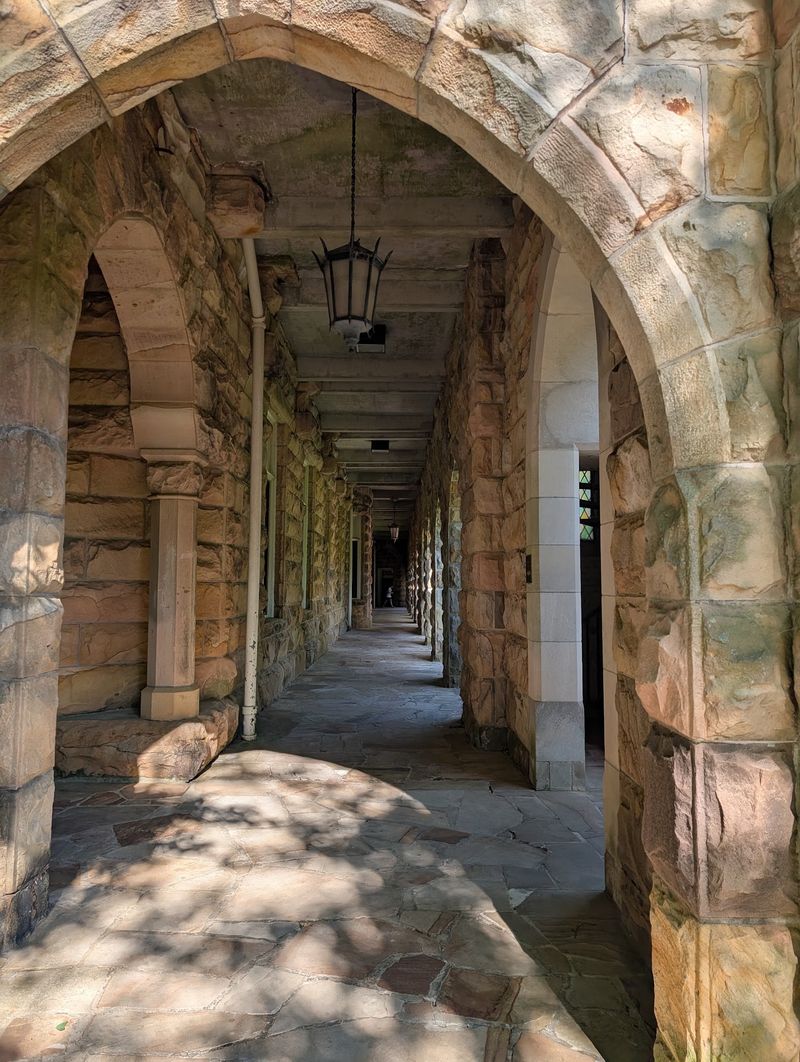
Something about All Saints’ Chapel invites you to slow down and breathe. Multiple reviewers describe it as peaceful, relaxing, and perfect for reflection. Even people who arrived as casual tourists find themselves sitting quietly in the pews, thinking about things they normally don’t make time to consider.
The space creates a natural pause in the rush of daily life.
The spiritual atmosphere doesn’t require you to be religious. Many visitors describe profound experiences despite having no church background or active faith practice. The building itself seems designed to quiet the mind and open the heart, regardless of what you believe or don’t believe.
Active worshippers find even more meaning here. Regular services bring the chapel to life with liturgy, music, and community. Visitors are welcome to attend services, experiencing the space as it was intended to be used rather than as a museum piece.
The Episcopal tradition emphasizes beauty in worship, and All Saints’ delivers that in abundance.
The chapel provides rare commodity in modern life: genuine silence. Cell phones don’t work well on the mountain, removing that constant distraction. The thick stone walls muffle outside noise.
Inside, even whispers seem intrusive. This deep quiet allows thoughts to settle and clarity to emerge.
Some visitors report unexpected emotional reactions. Tears, joy, peace, or feelings they struggle to name wash over them without warning. The beauty and stillness create conditions for whatever needs to surface to come forward.
Whether you call that spiritual experience, emotional release, or aesthetic response doesn’t matter. The effect is real.
The chapel serves different needs for different people. Some come seeking answers to specific questions. Others arrive carrying grief or stress, looking for a place to set down their burdens temporarily.
Still others simply want to experience beauty and transcendence. All Saints’ accommodates every intention without judgment.
Returning visitors often mention how the chapel provides consistency in changing times. Life moves forward, circumstances shift, but the chapel remains constant. Coming back after months or years away, people find the same peace they remembered, still waiting for them in the stone and glass and silence.
Historic Significance As Part Of The Harvard Of The South
The University of the South carries the unofficial title “Harvard of the South,” and while that comparison might sound like marketing hype, it reflects genuine academic prestige and historical significance. Founded in 1857 by Episcopal bishops from across the southern states, Sewanee was envisioned as a university that would rival the great institutions of the North and Europe.
All Saints’ Chapel represents the spiritual and physical heart of this vision. The decision to build such an elaborate chapel wasn’t about showing off but about creating a sacred space worthy of the university’s mission. The bishops who founded Sewanee understood that education involves more than intellectual training; it requires moral and spiritual formation as well.
The chapel’s construction spanned decades, with the current building completed in 1959 after previous versions and expansions. This long timeline reflects both the ambition of the project and the care taken to get every detail right. Rushing would have compromised quality, so the university waited until proper funding and skilled craftsmen were available.
Historical exhibits around campus explain Sewanee’s role in southern education and culture. The university weathered the Civil War, Reconstruction, economic depressions, and social upheavals while maintaining its commitment to academic excellence. All Saints’ Chapel witnessed and supported the community through all these changes.
The academic standards remain rigorous today. Students wear academic gowns to class, a tradition that reinforces the seriousness of scholarship while creating that Hogwarts atmosphere visitors love. The university attracts top students from around the country, many drawn specifically by the unique campus and traditions.
All Saints’ hosts major university events: convocations, graduations, memorial services, and celebrations. These ceremonies gain extra weight and meaning from the setting. Graduating in this chapel creates memories that last lifetimes, connecting students to generations of alumni who walked the same aisles.
Visitors interested in educational history will find Sewanee fascinating beyond just the chapel. The university archives preserve documents and artifacts from its founding era. Campus tours explain the symbolism built into the architecture and landscape.
Understanding this context enriches appreciation for All Saints’ as more than just a pretty building but as a living piece of American academic heritage.
Free Parking And Easy Access On The Mountain Campus
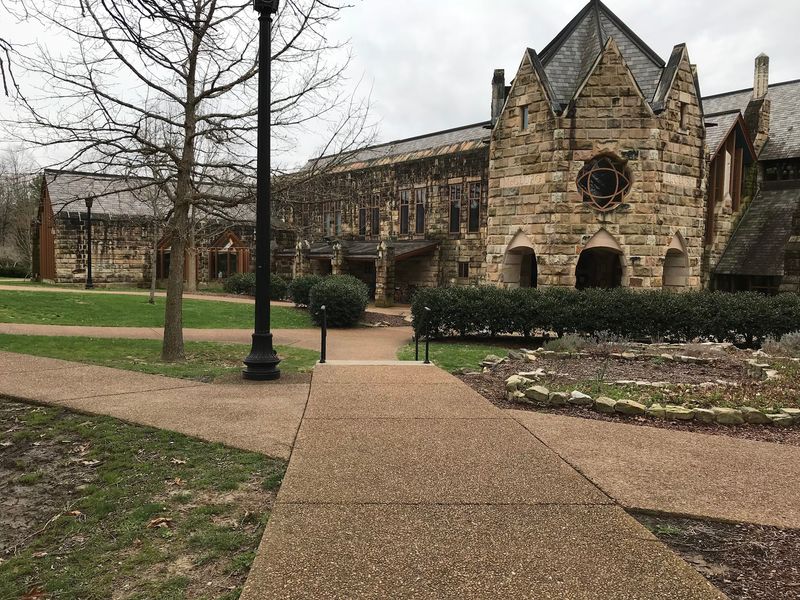
Getting to All Saints’ Chapel is straightforward, and once you arrive, parking couldn’t be easier. The university provides ample visitor parking near the chapel without charging fees or requiring permits. You can pull into designated visitor spots, grab your camera, and walk straight to the chapel entrance within minutes of arriving on campus.
The mountain location might sound remote, but good roads make the journey pleasant rather than challenging. Highway 41A runs through Sewanee, connecting to Interstate 24 about 30 minutes away. The drive up the mountain offers scenic views that make the trip part of the experience rather than just a means to an end.
Clear signage guides visitors to the chapel and parking areas. The university understands that many guests are unfamiliar with the campus layout, so directional signs appear at key intersections. You won’t spend frustrating minutes driving in circles trying to figure out where to go.
Accessibility matters, and the chapel provides accommodations for visitors with mobility challenges. Ramps allow wheelchair access to the main entrance. Interior aisles are wide enough for wheelchairs and walkers.
Accessible parking spots are located close to the entrance, minimizing the distance people need to travel.
The campus sits at about 2,000 feet elevation, which means temperatures run cooler than in the valleys below. Summer visitors appreciate the natural air conditioning, though it also means bringing a light jacket even on warm days. Winter can bring snow and ice, so checking weather conditions before making the drive is smart.
GPS coordinates work reliably for navigation, and the address (735 University Ave, Sewanee, TN 37383) plugs easily into any mapping app. Cell service can be spotty on parts of the mountain, so downloading offline maps before you leave home prevents navigation headaches if you lose signal.
The surrounding area offers other attractions worth combining with your chapel visit. Natural areas like Stone Door and Foster Falls are nearby. The charming town of Monteagle sits just down the mountain with restaurants and shops.
Planning a full day in the area lets you experience more of what this beautiful corner of Tennessee offers beyond just the chapel, though honestly, the chapel alone justifies the trip.