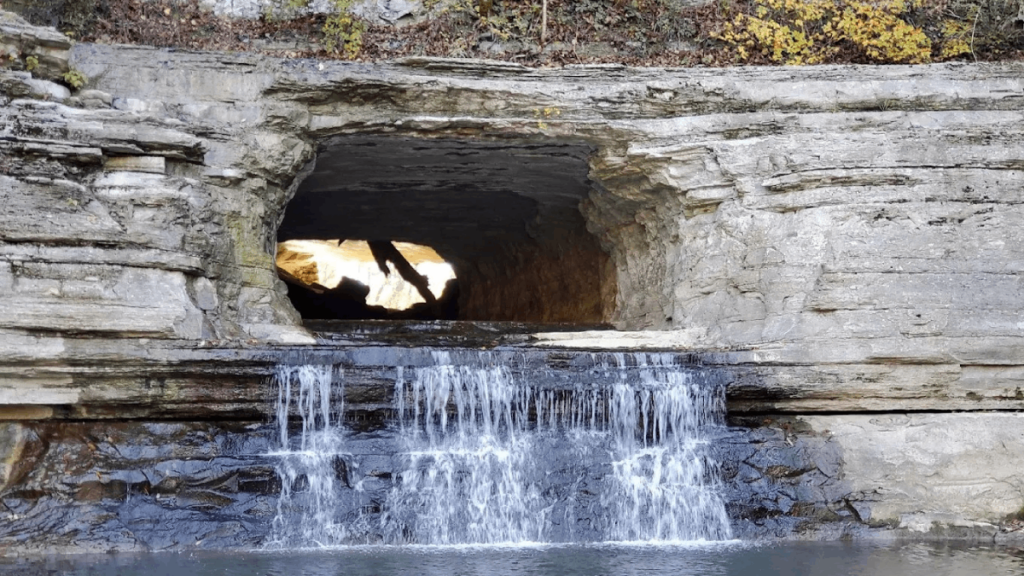
Deep in the woods near Kingston Springs, Tennessee, there’s a tunnel carved through solid rock that changed American industry forever. Built in the early 1800s, the Montgomery Bell Tunnel was the first successful water diversion project in the United States.
Today, visitors can walk right up to this amazing piece of history and see the work of engineers who had nothing but gunpowder and determination.
A Hidden Piece of Engineering History in Tennessee
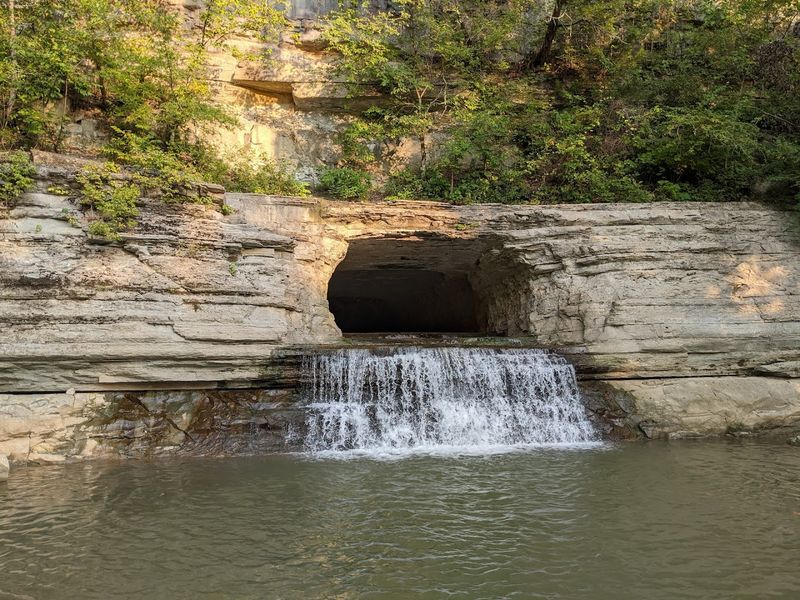
Most people driving through Tennessee never realize they’re passing near a groundbreaking piece of American history. Tucked away in the forests of Kingston Springs sits a tunnel that represents a major leap forward in engineering. While it might not look like much compared to modern construction, this modest passageway through solid rock was revolutionary for its time.
Back in the early 1800s, controlling water flow was a huge challenge for industry. Factories and furnaces needed reliable water power to operate, but nature didn’t always cooperate. Rivers curved in inconvenient directions, and seasonal changes affected water levels unpredictably.
Montgomery Bell, an ambitious industrialist, decided to solve this problem in a way no American had successfully done before. He would carve straight through a limestone ridge to redirect an entire creek. The result became a landmark achievement, proving that large-scale water diversion was possible in the United States.
Discover the Montgomery Bell Tunnel in Kingston Springs
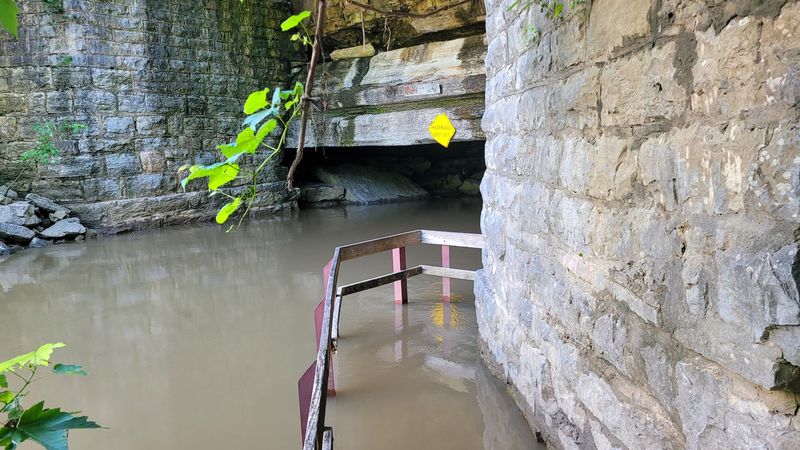
Located just west of Nashville in Kingston Springs, the Montgomery Bell Tunnel sits within a beautiful natural area that’s surprisingly easy to visit. The tunnel measures 290 feet long and was hand-carved through a narrow limestone ridge. Completed around 1819, it successfully diverted the Harpeth River through solid rock, creating a shortcut that powered Bell’s industrial operations.
What makes this tunnel truly special is its place in American engineering history. Before this project, no one in the United States had managed to complete a functioning water diversion tunnel through bedrock. European engineers had accomplished similar feats, but American technology lagged.
Bell’s success proved that American engineers and workers could tackle ambitious infrastructure projects. The tunnel still stands today and serves as a genuine piece of living history that changed how Americans thought about reshaping their landscape.
How the Tunnel Was Carved Through Limestone
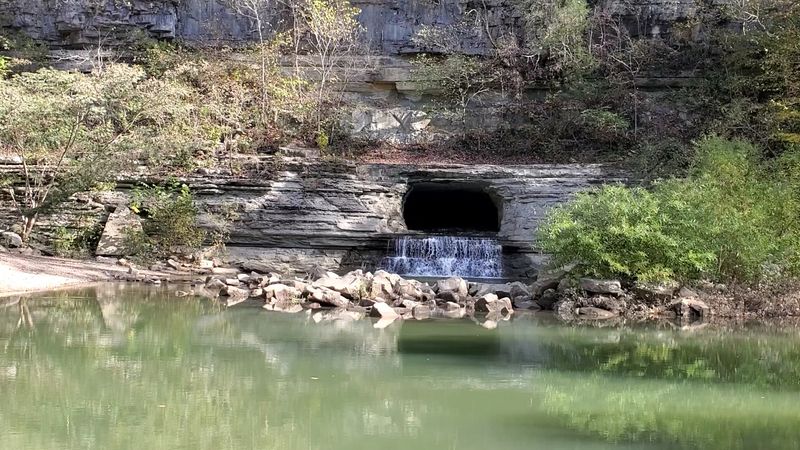
Building the Montgomery Bell Tunnel required incredible effort and primitive tools by today’s standards. Workers used black powder explosives to blast through the limestone ridge, a dangerous and imprecise method. Each explosion had to be carefully planned to avoid collapsing the tunnel or wasting precious gunpowder, which was expensive.
The labor force consisted primarily of enslaved people who worked under brutal conditions. They drilled holes into the rock face by hand, packed them with explosives, and then cleared away tons of broken stone after each blast. The work was dangerous and slow.
Engineers had no modern surveying equipment or power tools to guide their work. They relied on basic measurements and experience to keep the tunnel on course through the ridge. Despite these limitations, the tunnel alignment proved remarkably accurate.
Why Montgomery Bell Needed the Tunnel
Montgomery Bell wasn’t digging through solid rock just for fun—he had serious business reasons. Bell operated several iron furnaces in the area that produced metal for tools, weapons, and equipment. These furnaces required constant water power to run the massive bellows that kept fires hot enough to melt iron ore.
The natural curve of the Harpeth River created a problem for Bell’s operations. Water flowed in a wide loop around the limestone ridge, making it difficult to harness efficiently. By cutting straight through the ridge, Bell could redirect water in a much shorter path, creating a powerful flow that drove his waterwheels.
This tunnel gave Bell a competitive advantage over other iron producers. Reliable water power meant consistent production, which meant more profit. The project cost a fortune and took years to complete, but it paid off by making Bell one of Tennessee’s wealthiest industrialists.
What Visitors Can See at the Tunnel Today
Today’s visitors can experience the Montgomery Bell Tunnel through a pleasant short hike that’s suitable for most fitness levels. The trail winds through pretty woods alongside the creek, offering peaceful views and the sound of flowing water. According to visitor reviews, the hike isn’t overly crowded, making it a nice escape from busy tourist attractions.
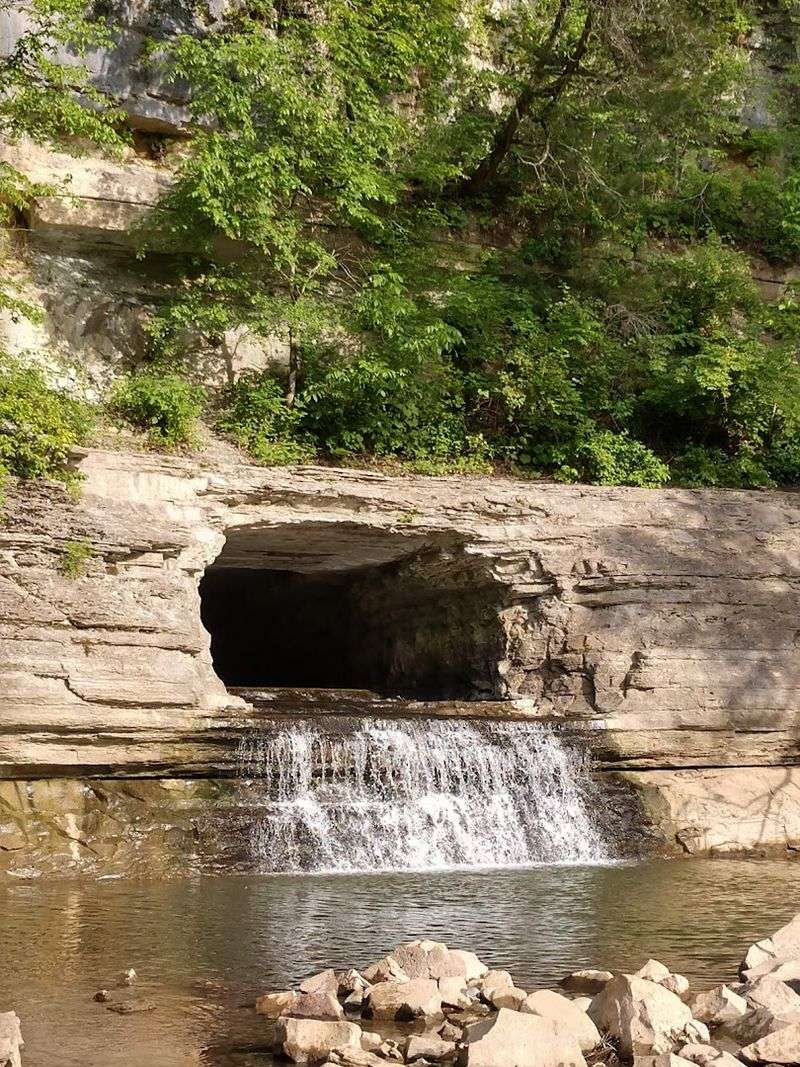
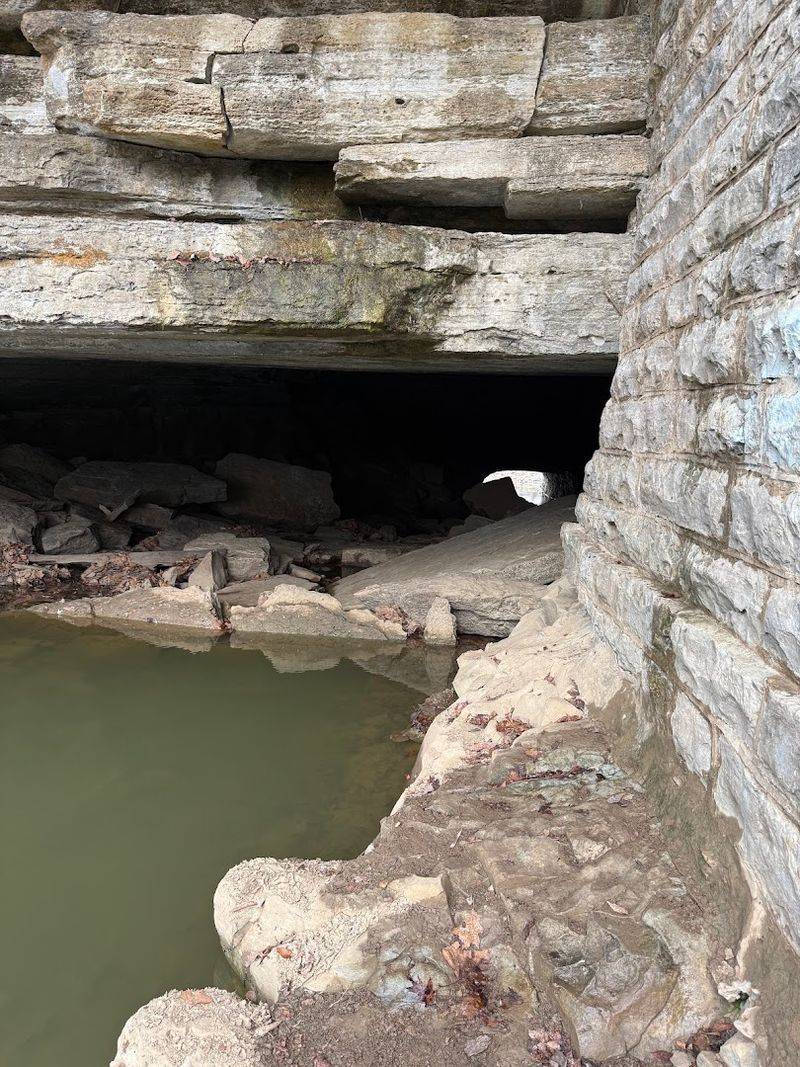
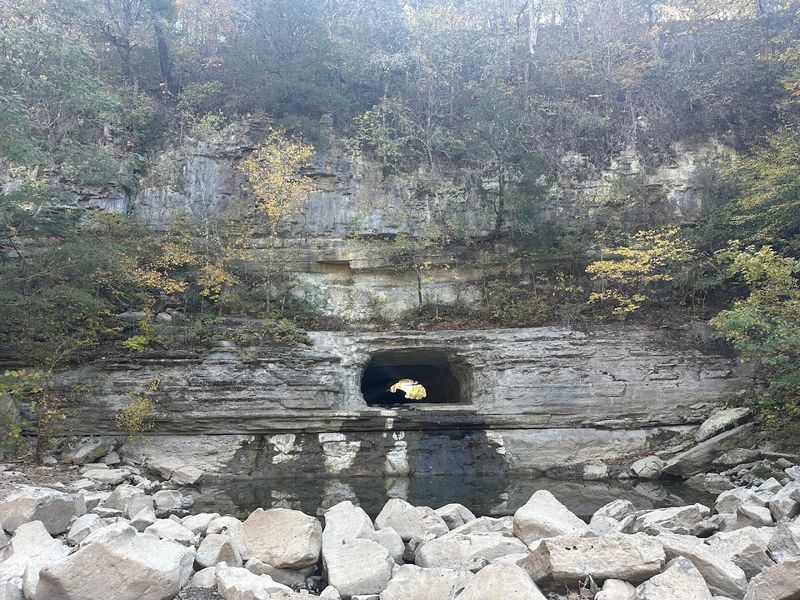
When water levels are high, you might see waterfalls near the tunnel entrance, though dry seasons can reduce the flow. Either way, the preserved stone entrance remains impressive, showing how workers shaped solid rock with hand tools and explosives.
You can walk right up to the tunnel opening and peer through to the other side. It’s free to visit and offers a genuine connection to early American industrial history.
Why This Tunnel Is One of Tennessee’s Most Overlooked Historic Sites
Despite being America’s first successful water diversion tunnel, the Montgomery Bell Tunnel remains surprisingly unknown even to many Tennessee residents. Major tourist guides often skip it entirely, focusing instead on more famous attractions. This engineering landmark deserves far more recognition than it receives.
Part of the problem is location—Kingston Springs isn’t a major tourist destination, and the tunnel requires a short hike rather than convenient roadside viewing. Unlike restored historical sites with visitor centers and gift shops, this tunnel sits quietly in the woods, preserved but not heavily promoted.
Yet this humble status actually adds to its charm. Visitors who make the effort discover an authentic piece of history without crowds or commercialization. You’re experiencing the same tunnel that amazed people two centuries ago when American engineering was proving itself capable of great achievements.
For history buffs and engineering enthusiasts, it’s an absolute must-see that offers something genuinely special and historically significant.