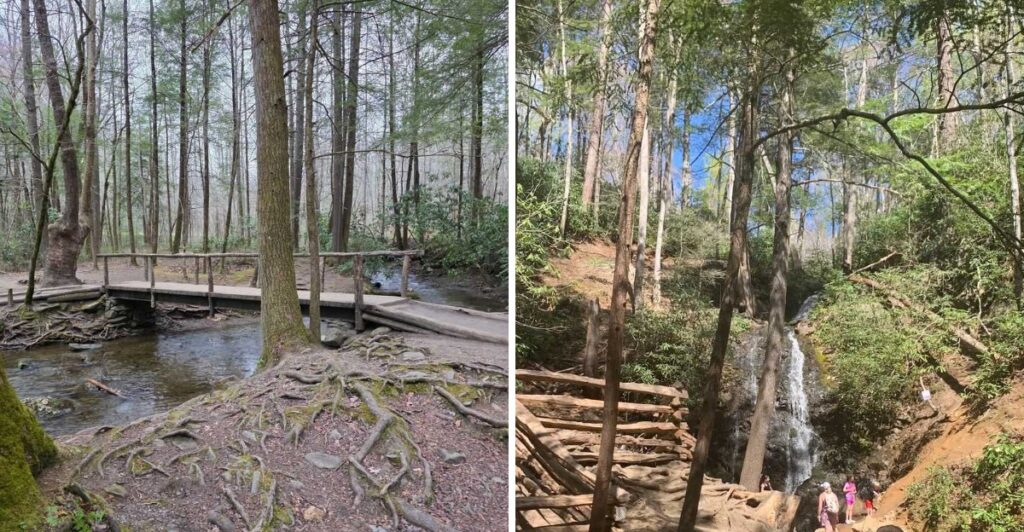
Finding a waterfall shouldn’t require hours of climbing steep mountain paths or navigating treacherous terrain. Cataract Falls in Gatlinburg offers something rare and wonderful: a genuine Smoky Mountain waterfall experience that practically anyone can reach in about ten minutes. Tucked right behind the Sugarlands Visitor Center, this accessible trail proves that some of Tennessee’s most beautiful natural features don’t require athletic prowess or advanced hiking skills to enjoy.
The Easiest Waterfall Access in the Smokies
Most waterfall hikes demand stamina, proper footwear, and a willingness to sweat. Cataract Falls flips that script completely. Starting directly behind the Sugarlands Visitor Center, this trail welcomes everyone from toddlers taking their first nature walk to grandparents using walkers or wheelchairs.
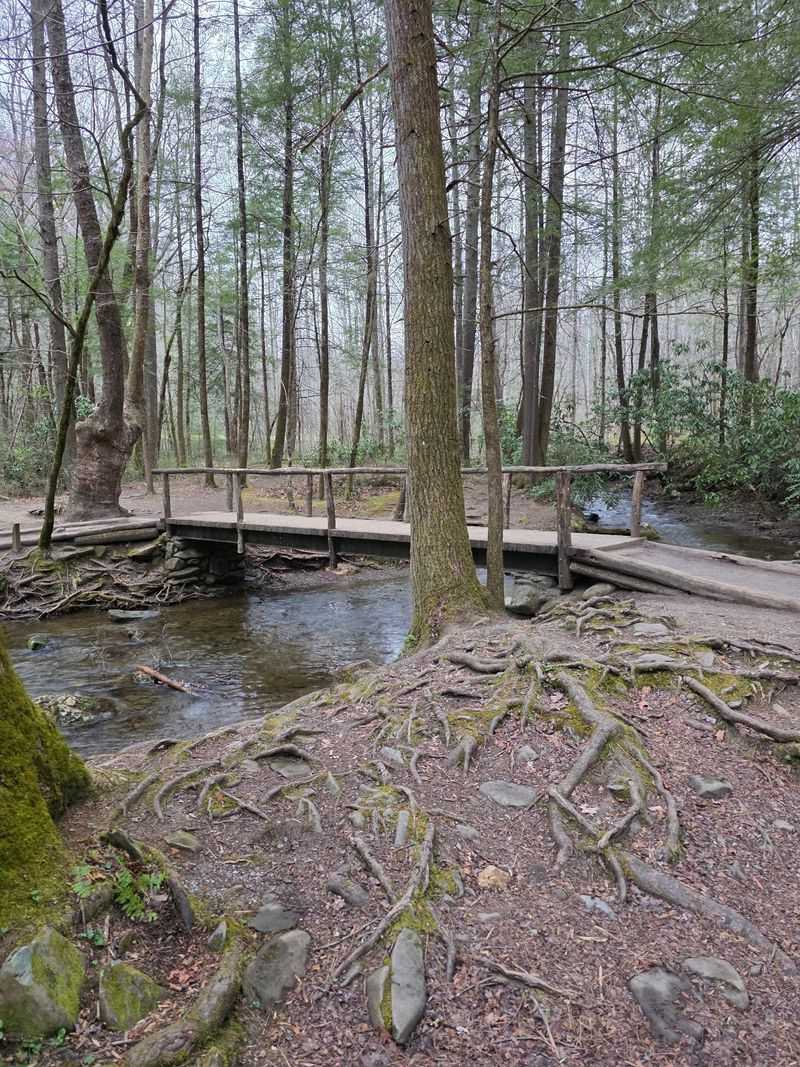
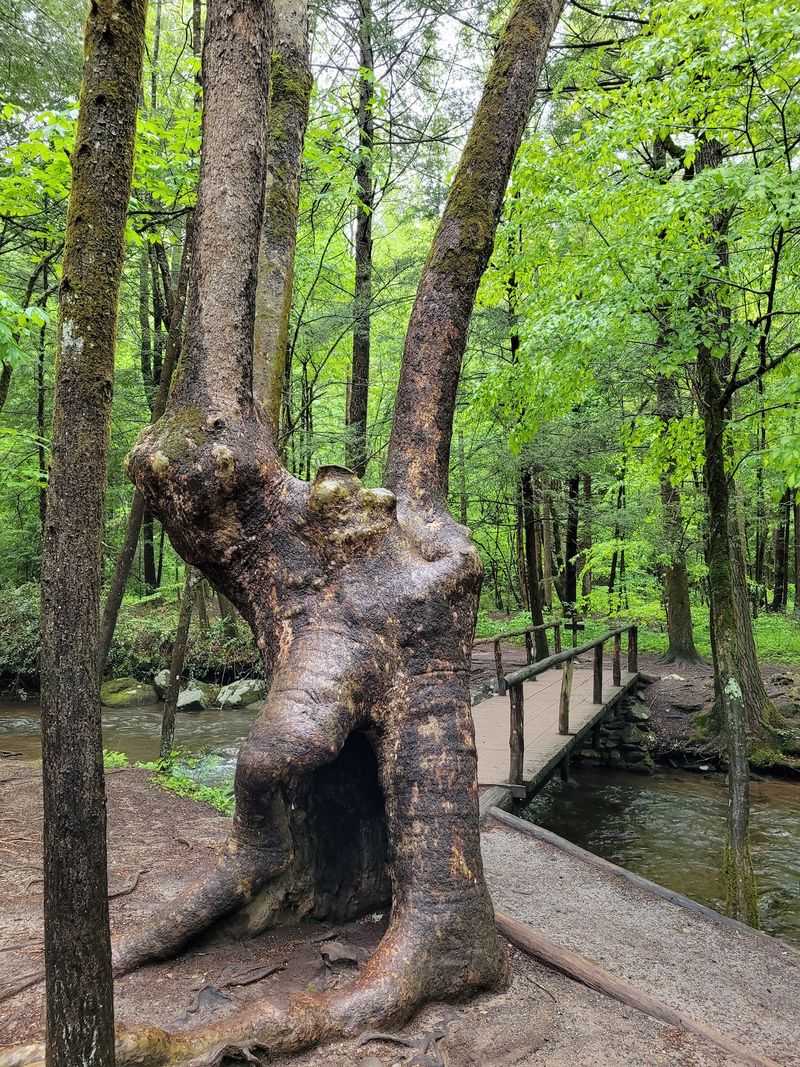
The path itself stays mostly flat throughout the entire journey, with only the gentlest inclines that barely register as uphill. Well-compacted gravel and dirt make up the surface, wide enough for two strollers to pass comfortably. Wooden bridges add charm without adding difficulty, spanning the creek at strategic points along the way.
Park officials designed this trail with accessibility in mind, recognizing that natural beauty shouldn’t be reserved for the physically fit. Families pushing strollers navigate it successfully, though muddy conditions after rain can create minor challenges. Benches positioned along the route offer rest stops for anyone needing a breather.
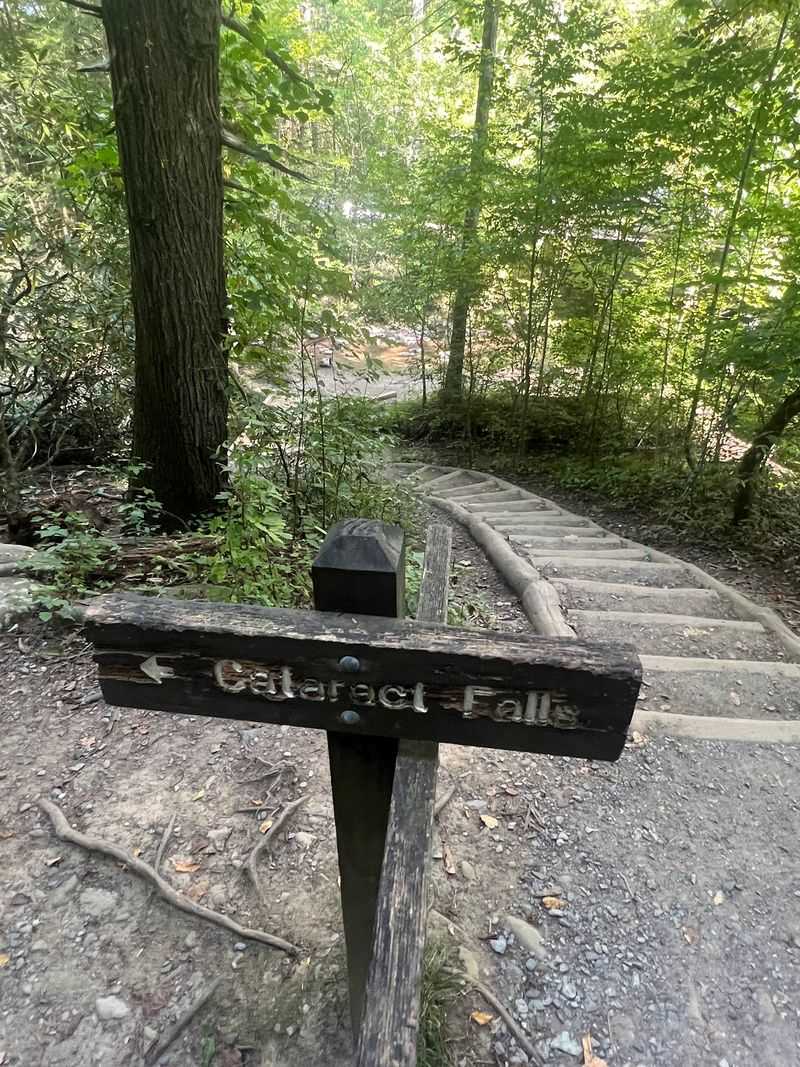
Signage appears frequently, ensuring nobody gets lost despite the straightforward path. The trail follows Fighting Creek upstream, providing constant scenic companionship and natural white noise that drowns out parking lot sounds. Trees create a canopy overhead, offering shade even during summer’s hottest hours.
Unlike backcountry trails requiring preparation and caution, this walk feels more like a pleasant stroll through someone’s very large, very beautiful backyard. Kids run ahead without parents worrying about dangerous drop-offs or confusing trail junctions. The simplicity becomes the point rather than a compromise.
That ten-minute estimate holds true for most visitors, though families with young children often stretch it to twenty or thirty minutes. Not because the trail presents challenges, but because there’s so much to explore along the way. Creek access points tempt kids to splash and search for minnows, while interpretive signs identifying native trees invite educational pauses.
Accessibility doesn’t diminish the experience. The forest still feels wild, the creek still sounds pristine, and the destination still delivers that satisfying payoff of reaching an actual waterfall without the usual hiking investment.
Right Behind the Visitor Center
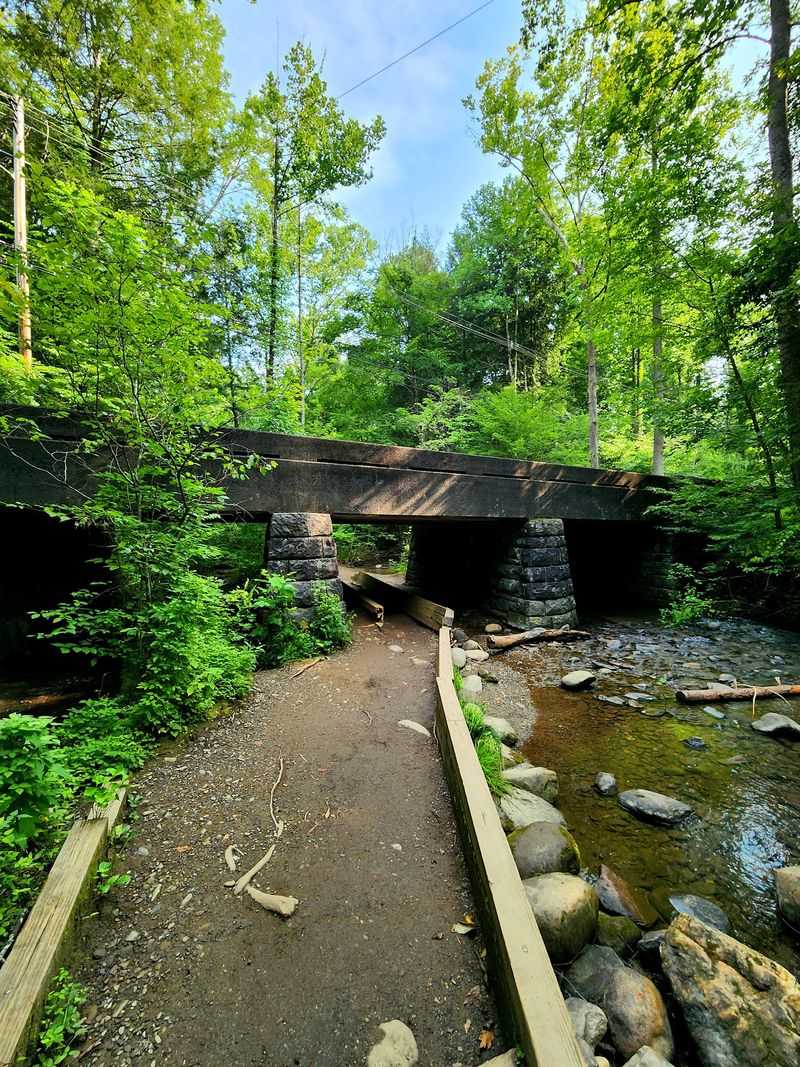
Convenience rarely gets discussed in waterfall guides, but location matters tremendously when you’re traveling with mixed-ability groups or limited time. Cataract Falls occupies prime real estate, literally steps from one of the park’s busiest hubs. After grabbing maps and asking rangers questions inside the visitor center, you simply walk out the back door and start hiking.
This proximity creates unique advantages beyond mere convenience. Restrooms sit nearby, eliminating one of hiking’s most awkward logistical problems. If someone in your group decides the trail isn’t for them, they can easily return to the visitor center without disrupting everyone else’s plans.
The parking situation deserves mention because it directly impacts your experience. The Sugarlands lot fills quickly, especially on weekends and during peak leaf-peeping season. Arriving before 9 AM usually guarantees a spot, while late morning arrivals might circle for twenty minutes waiting for someone to leave.
That $5 daily parking pass required throughout the Smokies applies here too. Purchase it online before arriving or at self-service kiosks near the entrance. Having your license plate number ready speeds up the process considerably.
Starting from such a developed area might sound less authentic than trailheads reached via winding mountain roads. Reality proves otherwise. Within two minutes of leaving pavement, forest surrounds you completely.
The visitor center disappears from view and sound, replaced by rustling leaves and flowing water.
This accessibility makes Cataract Falls an ideal first stop when entering the park from Gatlinburg. Use it as a warmup hike before tackling longer trails, or as your entire hiking plan if the group includes anyone hesitant about mountain terrain. The psychological boost of reaching a waterfall early in your visit shouldn’t be underestimated.
Families often coordinate their timing around visitor center hours, arriving when it opens to watch the orientation film, then heading straight to the falls before crowds build. This strategy works beautifully, especially with elementary-age kids whose attention spans appreciate the quick transition from educational indoor content to hands-on outdoor exploration.
A Creek-Side Journey Worth Savoring
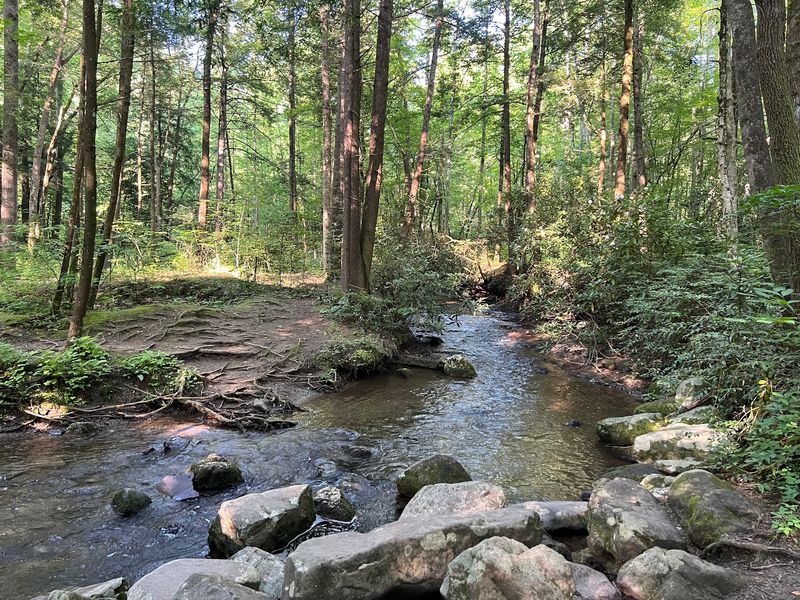
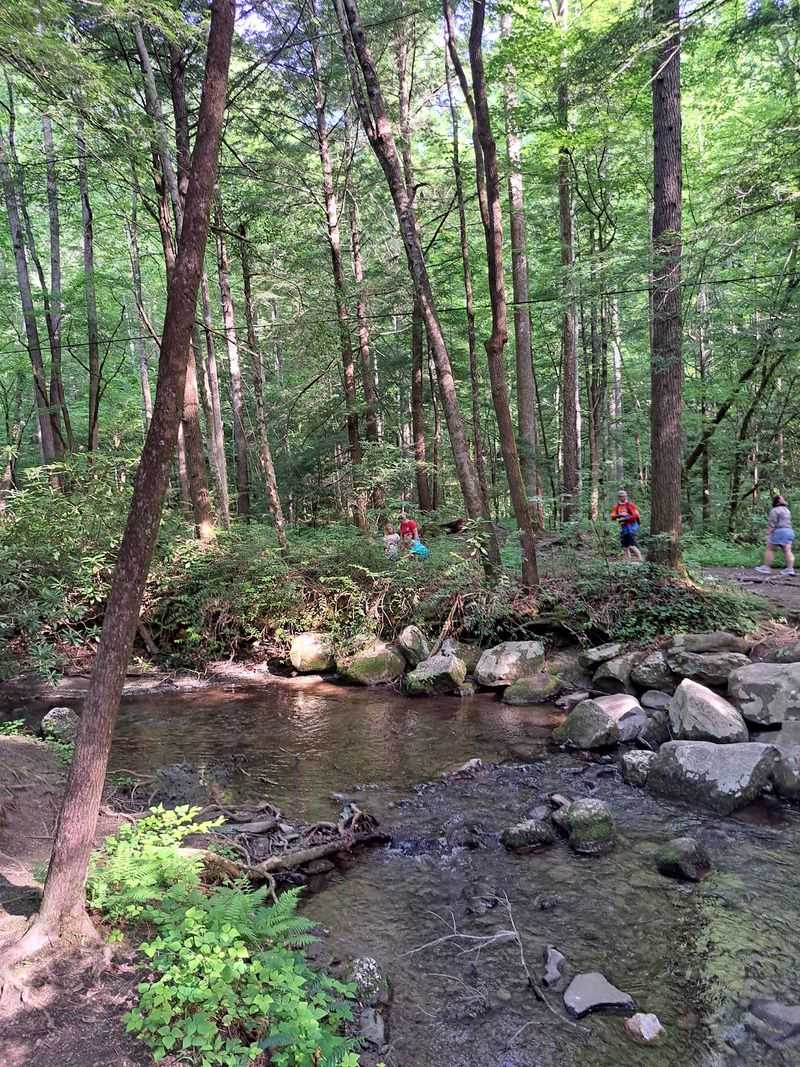
Fighting Creek serves as your constant companion along this trail, and honestly, it might steal the show from the waterfall itself. Crystal-clear water tumbles over smooth stones, creating countless miniature cascades that entrance kids and adults alike. The sound alone justifies the walk, a natural symphony that shifts in pitch and volume as the creek widens and narrows.
Parents quickly learn to build extra time into this supposedly quick hike. Children spot the water immediately and develop urgent needs to touch it, throw rocks into it, search for crawdads beneath submerged logs, and generally become aquatic explorers. Smart families bring water shoes or sandals, accepting that dry feet were never really an option.
The creek’s accessibility is deliberate and wonderful. Multiple spots along the trail offer easy entry points where the bank slopes gently and the water runs shallow enough for safe wading. Smooth rocks provide natural seating for adults supervising the aquatic chaos while cooling their own feet.
Summer visitors especially appreciate these creek interactions. When temperatures climb into the 80s and 90s, that mountain water feels shockingly cold and absolutely perfect. Kids emerge from brief splashing sessions refreshed and ready to continue hiking, which beats dealing with overheated, cranky children any day.
The vegetation surrounding the creek deserves attention too. Rhododendrons create tunnel-like sections where branches arch overhead, particularly stunning when blooming. Ferns grow in impossible profusion, their fronds catching dappled sunlight in ways that make photographers reach for their cameras.
One reviewer mentioned spotting ghost pipes along the trail, those peculiar white plants that look more like fungi than flowers. Observant hikers also notice different tree species marked by small identification signs, turning the walk into an informal botany lesson. Maples, hemlocks, and various oaks create the canopy, while smaller understory plants fill every available niche.
The creek’s presence also moderates temperature. Even on hot days, the corridor along the water stays noticeably cooler than exposed areas, making this trail comfortable when others become sweltering marches.
The Waterfall Itself: Small but Mighty
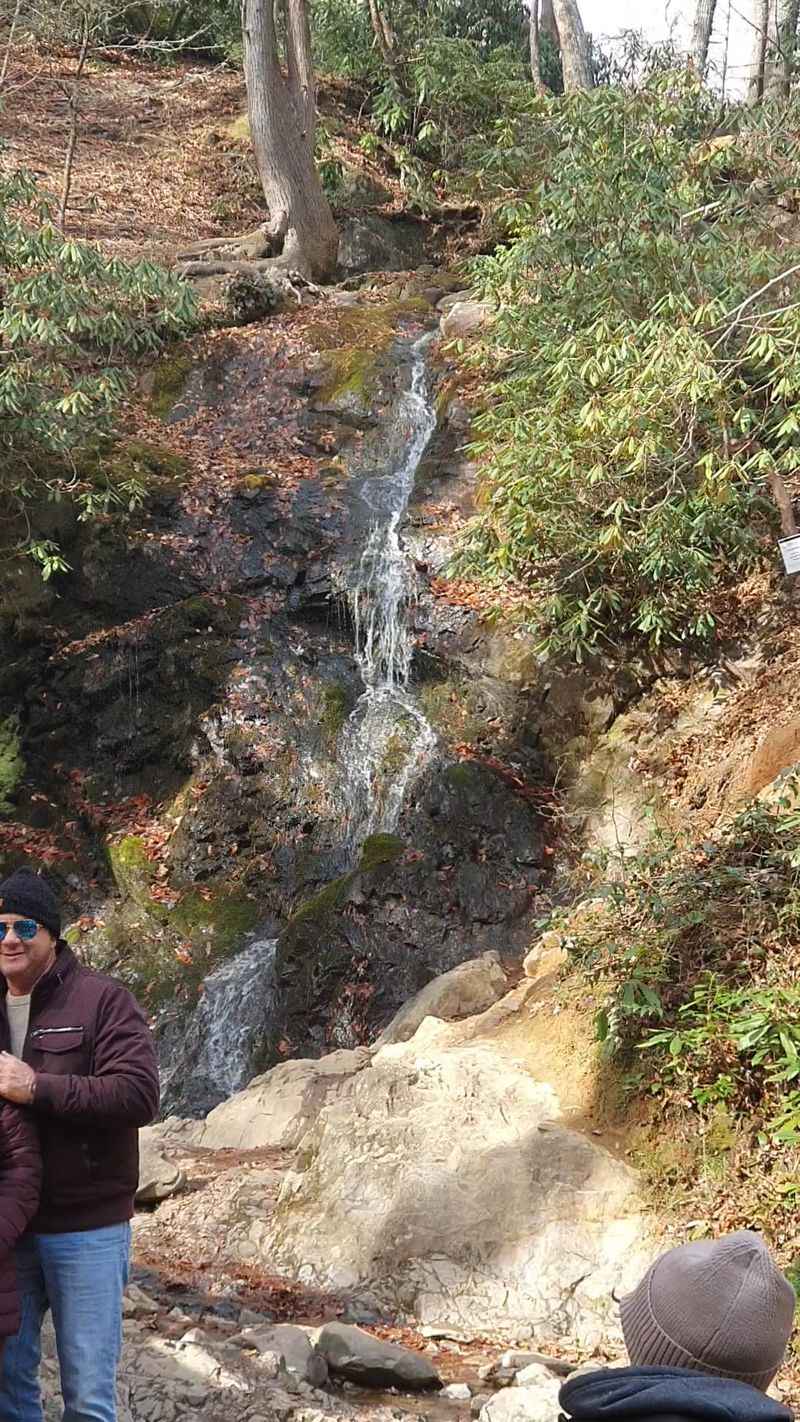
Honesty matters when discussing waterfalls, so here’s the truth: Cataract Falls won’t make anyone forget Niagara. This is an intimate waterfall, maybe 25 feet tall depending on how you measure, dropping over a rock face into a small pool below. If you’re expecting thundering torrents and misty spray zones, adjust those expectations now.
What it lacks in size, it compensates for in charm and setting. The falls occupy a lovely grotto-like space where moss covers everything not actively underwater. After rain, the flow increases dramatically, transforming the modest trickle into something genuinely impressive.
Dry spells reduce it to a whisper, though even then the setting remains photogenic.
Recent park management decisions blocked direct access to the falls, preventing the climbing and scrambling that once occurred. Barriers now keep visitors at a respectful viewing distance, which protects both the waterfall environment and clumsy tourists from themselves. Some people grumble about this restriction, but it has allowed vegetation to recover and reduced erosion around the falls.
Photography opportunities abound despite the viewing restrictions. The angle actually works well for capturing the entire scene without awkward cropping. Morning light filters through the trees beautifully, while afternoon visits benefit from softer, diffused illumination.
Bring a tripod if you want those silky-water long exposures.
The pool below the falls remains accessible, and kids love wading into the shockingly cold water for photos. Parents snap countless pictures of children touching the waterfall spray, faces scrunched against the temperature. These moments become vacation highlights despite the falls’ modest dimensions.
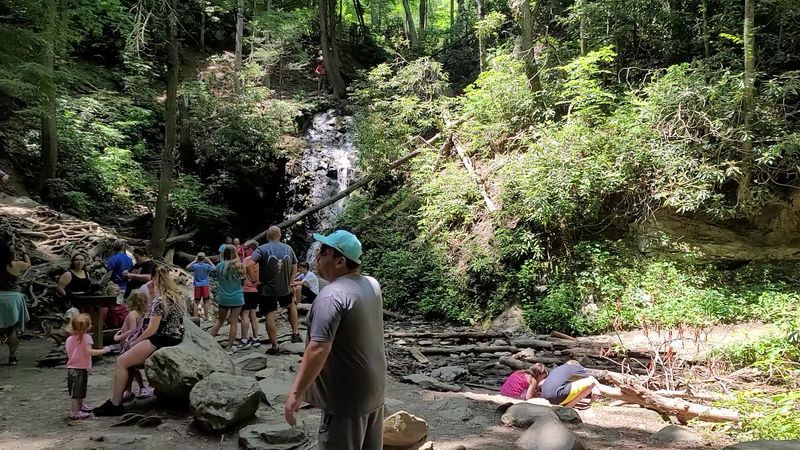
Crowds gather at the falls, especially midday during summer and fall. The viewing area can accommodate maybe twenty people comfortably, so arriving early or late helps avoid the tourist scrum. Weekday mornings in particular offer near-solitude, letting you experience the falls with only bird calls for company.
The return trip takes about the same time as the approach, meaning your total investment stays under thirty minutes unless creek exploration extends it. That efficiency makes Cataract Falls perfect for trip planning, a reliable activity that delivers without devouring your entire day.
Perfect for Families with Young Children
Ask any parent about hiking with young kids and watch them recall trails that promised easy family fun but delivered meltdowns, exhaustion, and regret. Cataract Falls actually lives up to its family-friendly billing. Toddlers complete this hike successfully, often multiple times in the same visit because they enjoy it so much.
The flat terrain means even two-year-olds can walk significant portions independently, building their confidence while giving parents a break from constant carrying. Strollers work here, unlike 90% of mountain trails where they become expensive anchors. That flexibility matters enormously when traveling with kids at different developmental stages.
Multiple families in the reviews mentioned bringing children ranging from infants to elementary schoolers, all of whom handled the trail without issues. The short distance prevents the “are we there yet” whining that plagues longer hikes, while the destination provides enough payoff to feel like a real accomplishment.
Creek access along the way functions as natural entertainment and bribery. Promise kids they can play in the water after reaching the falls, and watch motivation soar. The shallow, slow-moving sections near the trail pose minimal danger, though supervision remains essential because rocks get slippery and currents can surprise.
Educational opportunities hide throughout the experience. Tree identification signs teach kids about native species, while the creek ecosystem offers hands-on biology lessons. Spotting salamanders, minnows, or even the occasional snake creates memorable moments that beat any nature documentary.
One practical tip: bring extra clothes for kids. Despite best intentions, children will get wet. Accepting this reality and preparing accordingly eliminates frustration and allows everyone to relax.
Waterproof bags protect phones and cameras from splash zone chaos.
The trail’s popularity means your kids will see other families, which often helps reluctant hikers feel more enthusiastic. Watching peers navigate the trail successfully provides motivation that parental encouragement sometimes can’t match. Conversely, crowding can overwhelm sensitive children, making early morning visits preferable for some families.
Bathrooms at the nearby visitor center solve another common family hiking problem. That security blanket helps parents relax and kids feel more adventurous.
Accessibility for All Abilities
True accessibility in outdoor recreation remains frustratingly rare. Too many “easy” trails still involve obstacles that exclude people using mobility aids, recovering from injuries, or simply dealing with aging bodies that don’t climb like they used to. Cataract Falls represents a genuine effort to let everyone experience Smoky Mountain beauty.
Wheelchairs and walkers navigate this trail successfully, though conditions matter. After heavy rain, mud and puddles create challenges that may require assistance or strategic route-finding. Dry conditions present minimal obstacles, with the packed surface providing stable rolling terrain.
The width accommodates mobility devices comfortably, without that claustrophobic feeling some accessible trails create when vegetation crowds the path. Two wheelchairs can pass each other without complicated maneuvering, and walkers never feel squeezed by approaching hikers.
Wooden bridges along the route include railings and gradual approaches rather than abrupt steps. These details matter enormously for anyone balancing carefully or relying on assistive devices. Someone actually thought about real-world accessibility rather than just checking regulatory boxes.
That said, calling this trail fully wheelchair accessible requires caveats. Manual wheelchair users might struggle with subtle inclines that able-bodied walkers barely notice. Electric wheelchairs or scooters handle the terrain more easily, though battery range should exceed the round-trip distance comfortably.
Seniors comprise a significant portion of visitors, many tackling this trail specifically because it doesn’t demand the stamina their bodies no longer possess. The benches positioned along the route acknowledge that rest breaks matter, providing dignity rather than forcing people to admit defeat.
Visitors recovering from surgery, managing chronic conditions, or dealing with temporary injuries also appreciate this trail. You can experience legitimate wilderness without risking your recovery or safety. That psychological boost of getting outdoors matters tremendously when health issues typically force indoor confinement.
The short distance proves crucial for accessibility. Even if the trail takes three times longer than typical, you’re still looking at a thirty-minute adventure rather than an all-day ordeal. That manageable scope encourages people to try rather than automatically ruling themselves out of hiking activities.
Managing the Crowds
Popularity creates problems, and Cataract Falls suffers from its own success. The combination of easy access and minimal effort attracts massive crowds during peak seasons, transforming a nature walk into something resembling a theme park queue. Managing expectations and timing visits strategically makes all the difference.
Weekends bring the worst congestion, particularly Saturday mornings when day-trippers from surrounding areas converge on Gatlinburg. The trail can feel like a highway of humanity, with constant streams of people heading both directions. Solitude becomes impossible, and even finding space at the waterfall viewing area requires patience.
Weekday visits, especially Tuesday through Thursday, offer dramatically different experiences. Arrive early on a Wednesday morning and you might share the trail with only a handful of others. The same waterfall that felt mobbed on Saturday becomes peacefully yours, allowing actual connection with nature rather than crowd management.
Time of day matters as much as day of week. The period between 10 AM and 2 PM sees peak traffic, when tour groups, families, and casual visitors all converge. Early morning before 9 AM or late afternoon after 4 PM provide breathing room, with the added bonus of better lighting for photography.
One reviewer mentioned noise levels, specifically loud conversations that disrupt the natural soundscape and scare away wildlife. This frustration is valid but difficult to control. Busy trails attract people treating them like outdoor malls rather than wild spaces.
Adjusting your own timing offers the only reliable solution.
Parking lot congestion directly correlates with trail crowding. If the Sugarlands lot looks packed, the trail will be too. Some visitors choose to skip Cataract Falls entirely when parking proves difficult, opting for less accessible but consequently less crowded alternatives.
Shoulder seasons offer sweet spots for visitation. Late April through May and September through October provide pleasant weather without summer’s overwhelming crowds or winter’s cold. Spring brings wildflowers and rushing water from snowmelt, while fall delivers spectacular foliage without the leaf-peeper madness of peak color weeks.
Beyond the Falls: Extending Your Adventure
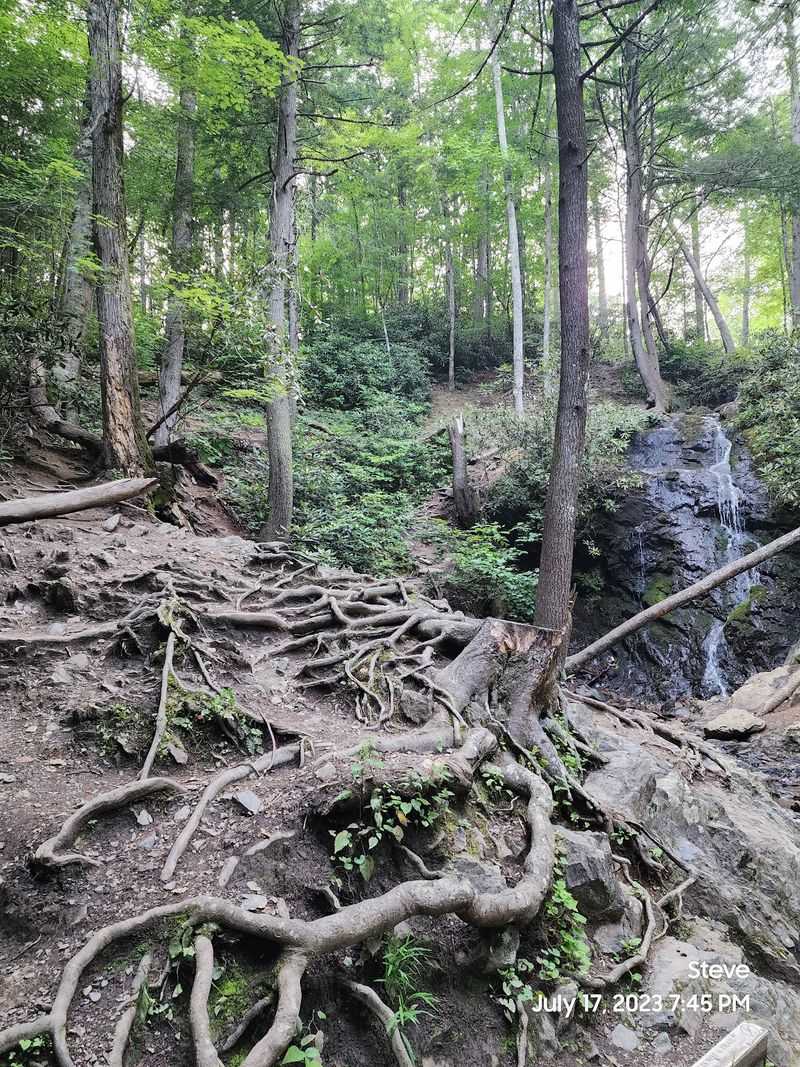
Most visitors treat Cataract Falls as a destination, snapping photos and retracing their steps back to the parking lot. Fewer realize that the waterfall marks just the beginning of a much longer trail system leading deeper into the mountains. Cove Mountain Trail continues beyond the falls, offering opportunities for those wanting more challenge.
About a mile and a half up the trail, an old homesite provides a scenic spot for picnicking or extended photography. Stone foundations hint at the families who once carved lives from these mountains before the park absorbed their land. Exploring these ruins adds historical dimension to the natural beauty.
The trail eventually connects to other paths, including the route to Laurel Falls, though that destination sits roughly eight miles from Cataract Falls. Few people complete that entire journey in one push, but knowing the connection exists helps with trip planning. You’re hiking part of a larger network rather than an isolated fragment.
Terrain changes dramatically once you pass Cataract Falls. The flat, easy walking disappears, replaced by legitimate mountain trail with elevation gain, roots, rocks, and sections requiring careful footing. This shift filters crowds naturally, as casual visitors turn back while serious hikers continue upward.
For families with mixed abilities, the strategy of sending some members beyond the falls while others return to the visitor center works beautifully. Teenagers or fit adults can satisfy their desire for challenge while grandparents or young children enjoy the shorter option without feeling they’re holding everyone back.
Wildlife sightings increase on the less-traveled upper sections. Bear encounters happen occasionally, as multiple reviews mentioned. Following proper bear safety protocols becomes essential beyond the heavily trafficked lower trail.
Make noise, travel in groups, and know how to respond if you encounter a bear.
The upper trail’s difficulty makes the lower section’s accessibility even more impressive. Park designers created a perfect gateway experience, letting people sample mountain hiking without committing to serious exertion, while still providing options for those craving more.
Wildlife and Natural Features
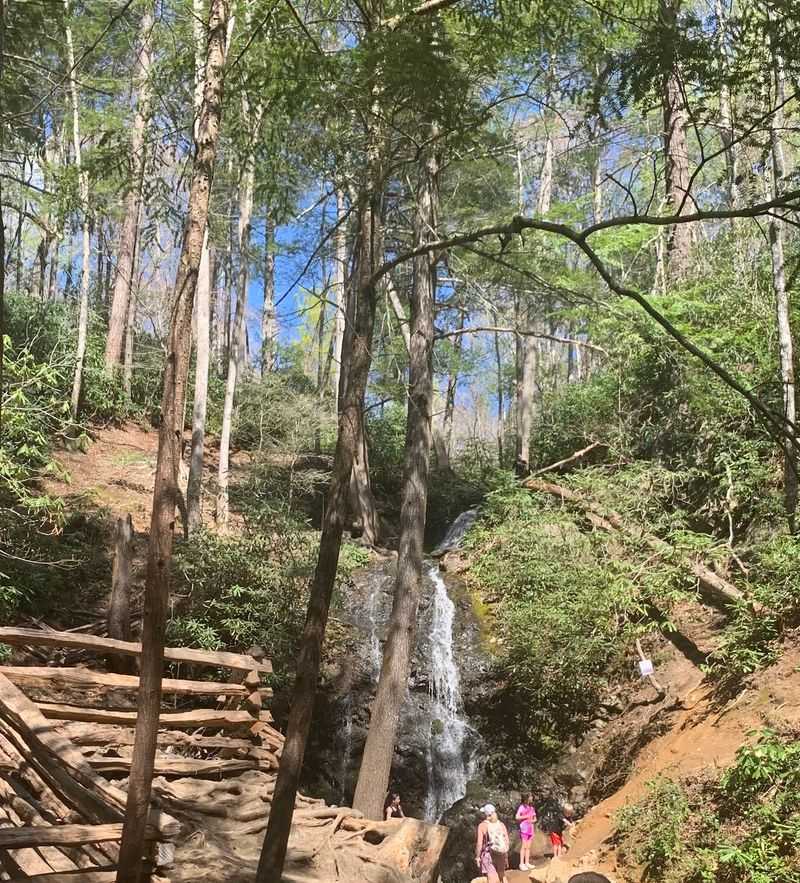
Every Smoky Mountain trail carries the possibility of wildlife encounters, and Cataract Falls is no exception despite its heavy foot traffic. Black bears occasionally appear near the trailhead or parking lot, reminding visitors that this remains wild country regardless of how developed it feels. Several reviews mentioned bear sightings, including one family who discovered a bear in the parking lot upon returning from their hike.
Bear awareness matters even on this short, popular trail. Never approach bears for photos, no matter how cute they appear. Keep food secured and dispose of trash properly.
If you encounter a bear, make noise, appear large, and back away slowly rather than running. Bears typically avoid humans when given the opportunity, but surprise encounters can turn dangerous quickly.
Smaller wildlife appears more frequently and less dramatically. White-tailed deer browse near the trail during quiet hours, while chipmunks and squirrels provide constant entertainment. Bird watchers spot numerous species, from common chickadees to occasional pileated woodpeckers hammering away at dead trees.
The creek ecosystem supports its own community of creatures. Salamanders hide beneath rocks, their presence indicating the pristine water quality that makes the Smokies globally significant for amphibian diversity. Minnows dart through shallow pools, while water striders skate across the surface tension.
One reviewer mentioned spotting a garter snake, which startled but delighted their children. Snakes in the Smokies are generally harmless, though copperheads and timber rattlesnakes do inhabit the park. Watching where you step and avoiding reaching into crevices without looking provides adequate protection.
Plant diversity rivals the animal life. Beyond the obvious trees and ferns, look for ghost pipes, those bizarre white plants that lack chlorophyll and survive by parasitizing fungi in the soil. Spring brings wildflowers including trilliums and violets, while summer showcases rhododendron blooms in spectacular displays.
The forest composition itself tells stories about elevation, moisture, and disturbance history. Hemlocks struggle against invasive adelgids, while tulip poplars grow to impressive sizes in protected coves. Reading the landscape adds layers of understanding that transform a simple walk into an ecological education.
Practical Tips for Your Visit
Success on any trail involves more than just showing up. Even this easy walk benefits from smart planning and proper preparation. Start with that parking pass, purchasing it online before arrival to skip the kiosk lines.
Having your license plate number saved on your phone speeds up the process considerably.
Footwear matters less here than on technical trails, but proper shoes still beat sandals or flip-flops. The trail surface stays relatively smooth, but roots and occasional rocks can trip unwary walkers. Water shoes or sport sandals work well for families planning creek exploration, avoiding the hassle of changing shoes multiple times.
Bring water even for this short hike, especially during summer when temperatures and humidity soar. Dehydration happens faster than people expect, particularly with children who forget to drink until they’re already thirsty. Small backpacks or hip packs carry water bottles without feeling burdensome for a ten-minute walk.
Timing your visit requires balancing multiple factors. Early morning offers solitude, cooler temperatures, and better wildlife viewing but means skipping the visitor center orientation if you arrive before it opens. Late afternoon provides similar benefits with the added advantage of stopping at the visitor center first for maps and information.
Bug spray becomes essential during summer months, when mosquitoes and gnats make outdoor activities miserable without protection. The creek corridor’s moisture creates ideal breeding conditions, and standing still for waterfall photos turns you into a buffet. DEET-based repellents work best, though natural alternatives provide some protection for those preferring to avoid chemicals.
Photography equipment can range from smartphones to professional cameras. The trail’s ease allows carrying heavier gear without struggle, and the lighting conditions under the forest canopy benefit from camera capabilities that phones can’t match. A small tripod enables long-exposure shots that transform the waterfall into silky streams.
Consider packing out more than you pack in. The trail’s popularity generates litter despite the presence of trash cans at the trailhead. Carrying a small bag for picking up others’ trash improves the experience for everyone and protects the environment we all came to enjoy.