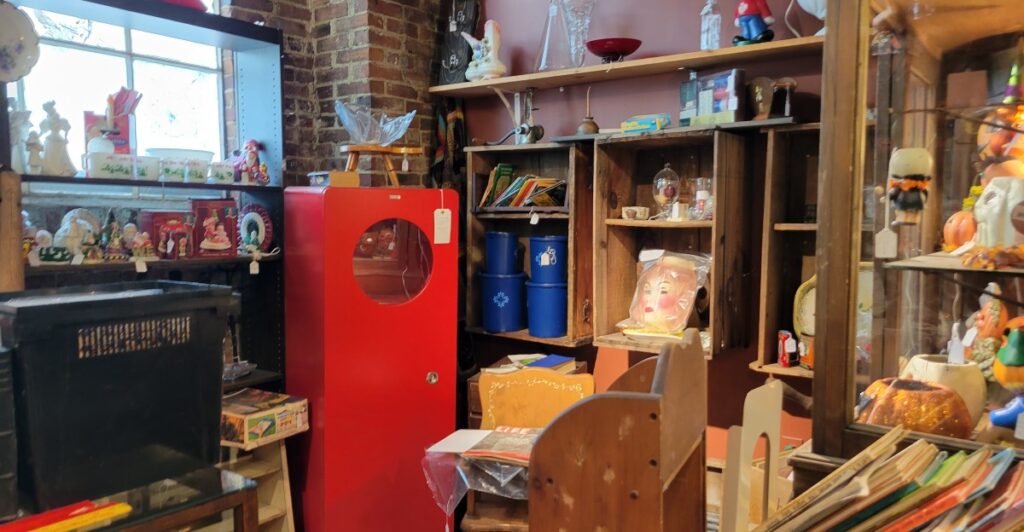
A wooden ceiling arches high above the aisles, and somewhere below it sits a lamp you didn’t know you wanted, a stack of old records, and a piece of furniture that might require measuring your front door. Historic Burlington Antiques and Art Emporium has a way of turning a quick look into a long afternoon.
The shop fills a former car dealership on High Street in Burlington, with more than 65 dealers bringing their own tastes and discoveries into the same enormous space. One booth might pull you toward polished glassware; the next could have you studying a box of old photographs.
You don’t need to know a thing about antiques to enjoy the hunt. Half the fun is finding an object whose purpose you can’t immediately guess, then realizing you’ve spent ten minutes thinking about it.
Give this place a little time, and the aisles will happily take the rest.
Historic Burlington Antiques and Art Emporium Makes Browsing an Adventure
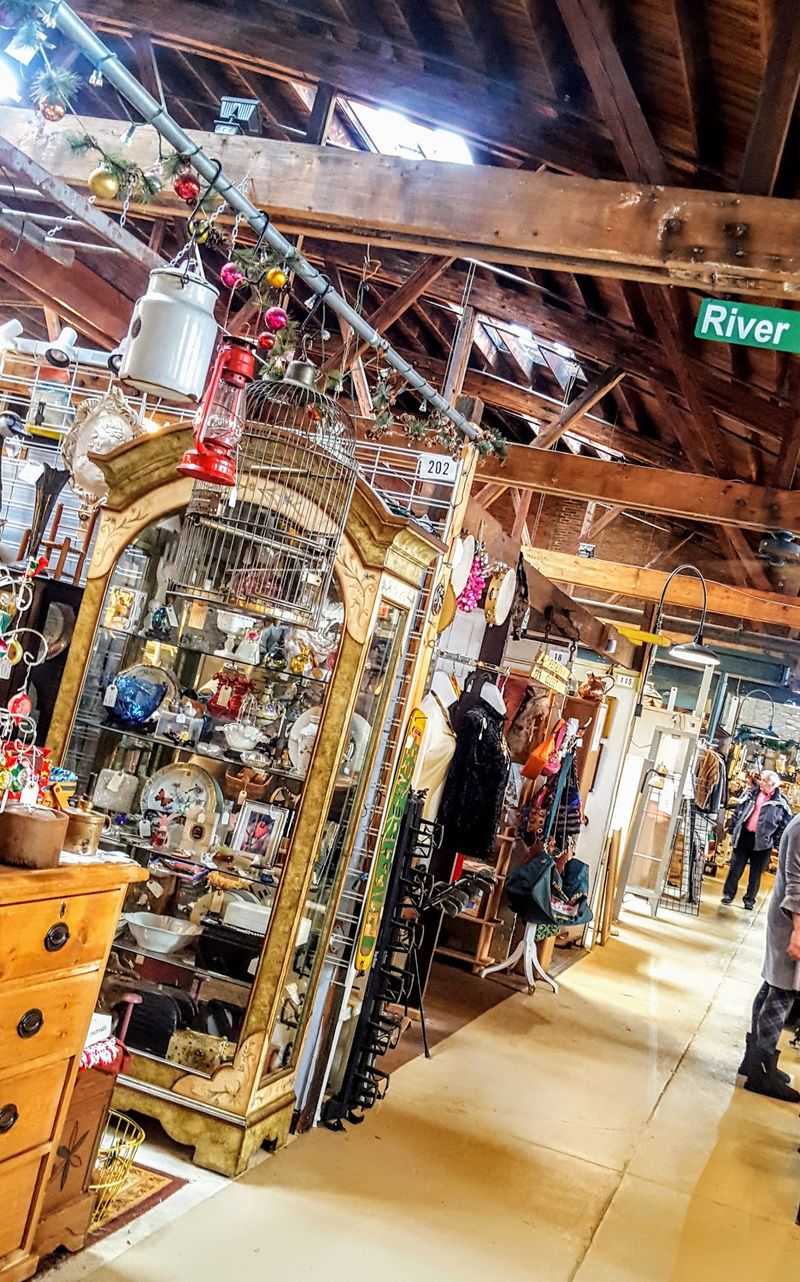
At 424 High Street, a single storefront opens into roughly 14,000 square feet of things to inspect. That scale is part of the appeal, but it isn’t simply a matter of having lots of stuff.
Every few steps, the focus changes. You can go from a display of china to a shelf of old radios, then find yourself looking at toys you remember from childhood or books that were already old when your grandparents were young.
The shop’s inventory also includes pottery, clocks, photographs, kitchenware, trains and military collectibles. It is a place where following your curiosity works better than following a shopping list.
Start with the larger aisles if you like, then double back through the dealer spaces that caught your eye. An item tucked below eye level can be more interesting than the centerpiece in the window.
It helps to slow down around crowded shelves, where a familiar shape or color might pull your attention toward something you would have walked past in a hurry. Anyone who has ever regretted missing a good find knows that the second pass is often the dangerous one.
The emporium works for people with very different missions. A collector can search for a particular piece, while someone furnishing an apartment can look for a table or lamp with a little history behind it.
A companion who claims to have no interest in antiques may end up lingering over vintage advertisements or a toy train. You can arrive with a purpose, but the shop is good at changing it.
By the time you reach the far end of one aisle, the plan you brought through the front door may have given way to an entirely different find.
An Old Car Dealership Gives the Shop Its Remarkable Setting
Before shoppers came here to look for antique furniture, people came to this building to buy and repair cars. The structure at 424 High Street was built in the early twentieth century and later housed Anderson Motors, a Chrysler Plymouth dealership that operated there until 1972.
Its next chapter took considerably more work. Scott Carlbon bought the property in 1998 and undertook a major renovation before the emporium opened in June 2001.
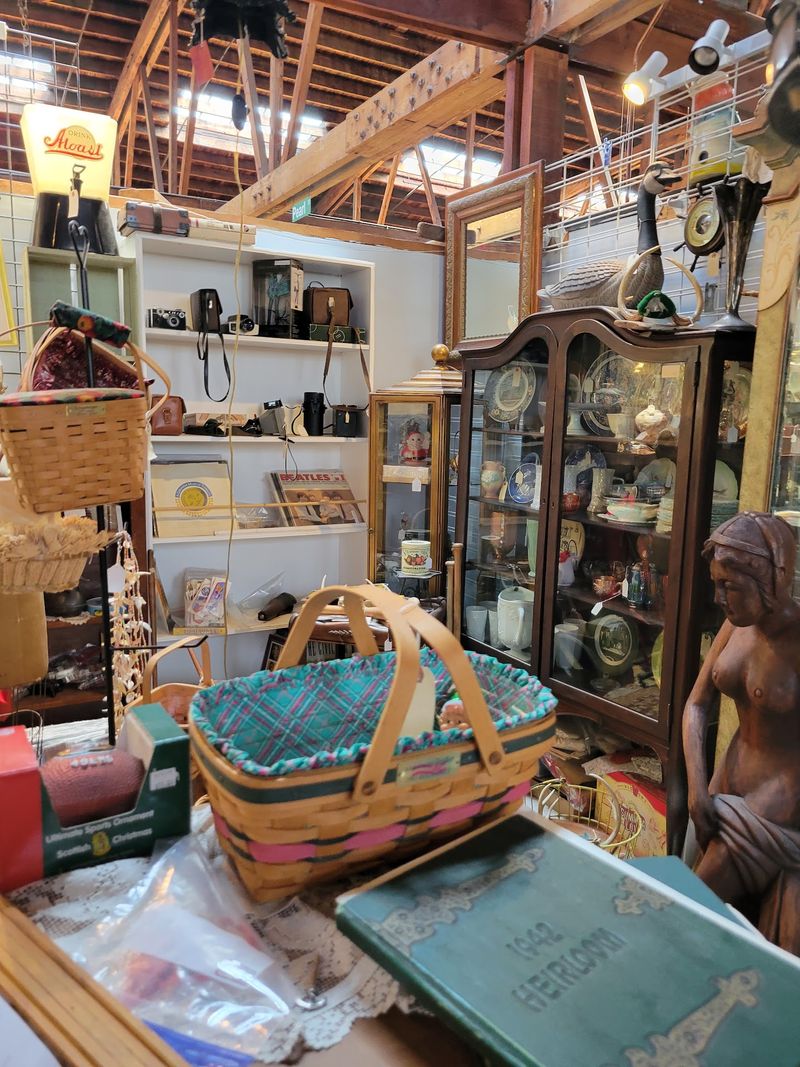
Look up today, and the arched wooden trusses give the room a character few shops could build from scratch. The ceiling rises about 35 feet above the merchandise.
That height gives large wardrobes, cabinets and artwork room to breathe, while the old brick and timber remind you that the building has a story of its own. Carlbon reportedly saw the space and thought it resembled a giant barn or an upside-down ark.
Once you are inside, either description makes more sense than the words “former dealership” might have suggested. Burlington is a fitting place for such a transformation.
The city’s historic downtown gives you more to see once you step back onto High Street, and the Delaware River is only about two blocks from the emporium. Here, the old building is still doing what a commercial building should do: welcoming people in and giving them a reason to stay.
Its previous life isn’t hidden behind decorative signs. It shows up in the proportions of the room, the long sightlines and that remarkable sweep of wood overhead.
More Than 65 Dealers Bring Their Own Finds Under One Roof
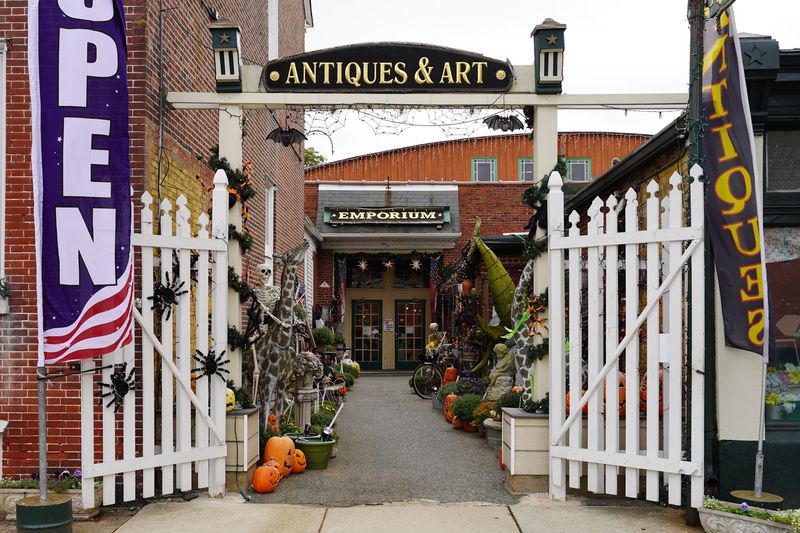
One dealer’s idea of a perfect find might be a piece of Depression glass. Another might come back from a hunt with a stack of magazines, a framed painting or a box of old tools.
Putting more than 65 antique and collectible dealers together means the emporium has no single taste guiding every shelf. The result feels less like one enormous store and more like a collection of small shops sharing a roof.
That variety changes the way you browse. A carefully arranged display may invite you to pause over every piece, while a packed booth rewards a patient look into its corners.
If one dealer’s selection isn’t for you, the next one may be. Collectors can concentrate on the categories they love, and casual browsers have the freedom to discover a category they never expected to care about.
An old kitchen utensil can be every bit as entertaining to inspect as a formal piece of art. The dealers also keep adding merchandise, so the shop isn’t a place you can see once and consider finished.
The chair you noticed on an earlier visit may be gone; a different dealer may have brought in a mirror that fits the space above it. That turnover gives the aisles their sense of possibility without requiring you to treat every purchase like an emergency.
Sometimes the right souvenir of a visit is simply a better idea of what you’re looking for. There is a practical advantage to having so many sellers together, too.
If you are trying to choose a lamp, picture frame or side table, you can compare different eras and styles in the same trip. You might arrive certain you want something ornate and leave thinking about a much simpler piece.
The shop gives you enough range to change your mind.
Vintage Furniture and Artwork Can Stop You in Your Tracks
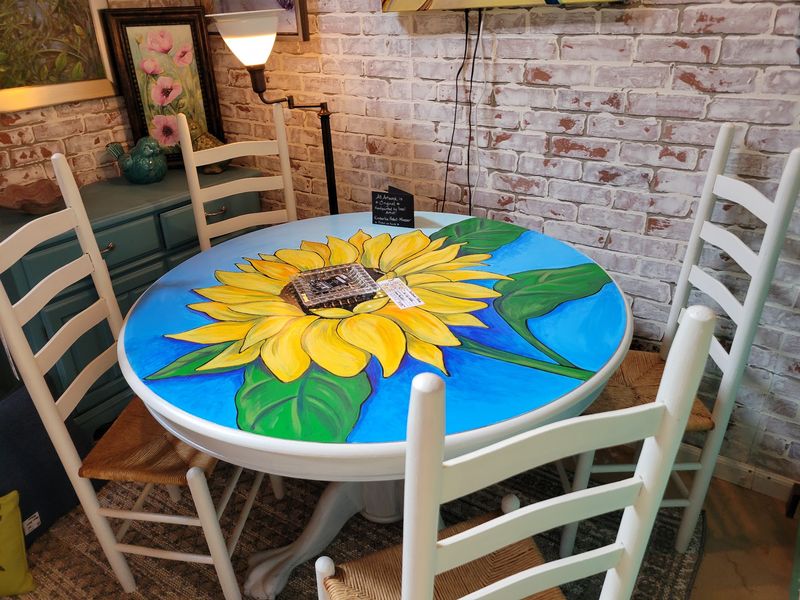
A dresser is easier to judge when you can stand in front of it, open a drawer and see just how much room it would take up at home. The emporium’s furniture is especially tempting for that reason.
Tables, cabinets, chairs and other pieces offer a chance to notice proportions and details that disappear in a photograph. You may come looking for something useful and find yourself admiring the shape of a handle or the wear along an edge.
Keep your eyes on the walls as well as the floor. Paintings, prints, photographs and framed art add another layer to the search, and they’re worth examining even if you have no empty wall waiting at home.
A small picture can be easy to overlook beside a tall piece of furniture. Step back, look again, and you may find that it gives a whole corner of the shop its personality.
The emporium lists furniture, paintings and photographs among its regular categories, though individual pieces will change as dealers bring in new stock. If you are shopping for your home, bring measurements.
That beautiful cabinet is less beautiful when it cannot turn a hallway corner, and a table’s generous size looks different once you picture chairs around it. Check the condition of an older piece closely, too.
Marks from use may be exactly what you like about it; a loose joint or a missing part is something to factor into your decision. Even when you leave the furniture where it stands, this part of the shop can be useful.
Seeing objects from different periods side by side makes it easier to work out which shapes and finishes you actually enjoy. One room might be all polished wood and formal portraits; a few steps later, you could be drawn to a brighter print or a modest little table.
The surprise is often what stops you.
Jewelry, Records and Collectibles Reward a Closer Look
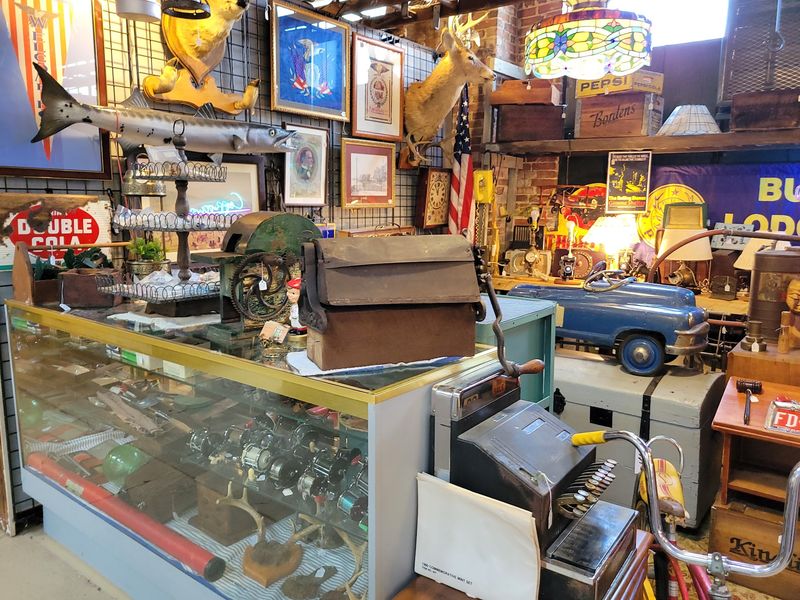
The smallest objects can take the longest to browse. A jewelry case asks you to look piece by piece, while a stack of records can hold your attention one sleeve at a time.
Then there are the collectibles you didn’t set out to find: an old clock, a piece of pottery, a toy, a photograph or a kitchen item whose design has outlasted its everyday use. The emporium carries a wide mix of these smaller finds, which makes it a good place to linger even if a large antique won’t fit in your car.
Try giving one display your full attention instead of scanning everything at once. Look past the first row on a shelf.
Read the labels on old packaging. Study the back of a framed image if the dealer has made it accessible.
Little details can tell you more about an object than its first impression does, and noticing them is part of the pleasure. There is no prize for covering the entire shop at speed.
Small pieces also offer a manageable way into antique shopping. You may have no room for a sideboard, but a book, a bit of glassware or a piece of jewelry can come home without requiring a floor plan.
If you collect something specific, the number of dealers gives you several places to search. If you don’t, let the displays suggest a theme.
You might discover you have a fondness for vintage radios, or spend far more time than expected comparing the colors of old pottery. The best finds aren’t always the rarest ones.
Sometimes an object catches your attention because it reminds you of a relative’s house, a childhood kitchen or an album you forgot you loved. That moment of recognition can happen in any aisle here.
It is a good reason to leave enough time for the small things.
What to Know Before Visiting the Burlington Emporium
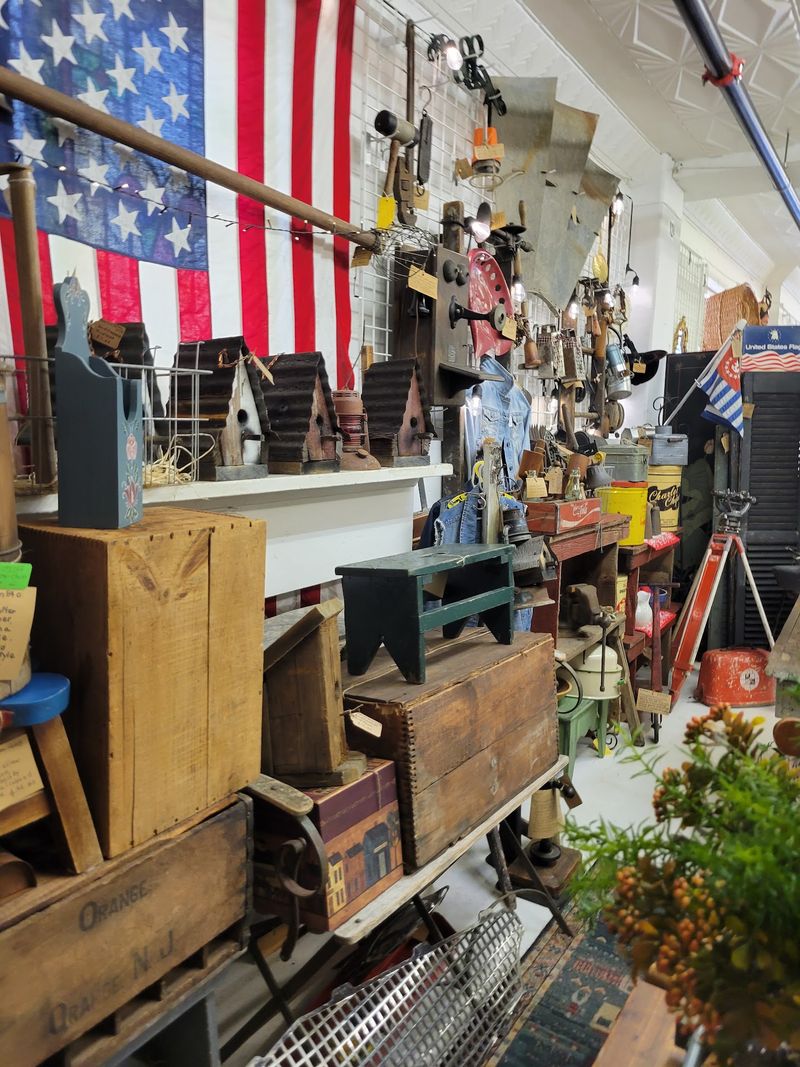
The shop is at 424 High Street in Burlington, across from the post office. Its current posted hours are 11 a.m. to 5 p.m. daily, following a change that added Mondays and ended the later Thursday and Friday hours.
Because schedules can change around holidays or events, it is sensible to confirm the hours before making a long drive. The shop lists parking and a loading area, useful if your browsing turns into a furniture purchase.
Allow more time than you think you need. This is a large building with many dealer spaces, and a visit feels more enjoyable when you can revisit an aisle after seeing the rest.
Comfortable shoes help. So do measurements if you have a particular spot at home in mind, especially for furniture or a large framed piece.
For a smaller purchase, it can be enough to know the dimensions of your shelf. It is also worth checking for sales and events before you go.
The mix of merchandise changes as dealers refresh their spaces, and discounts may exclude certain items. The selection itself is the more dependable reason to come.
Once you have finished inside, you can keep the afternoon going on foot. High Street has other places to browse, and the Delaware River is close enough for a short walk.
That is a particularly nice way to clear your head after an hour or two of comparing objects from several decades at once. Of course, you may first need to make one last pass through the emporium.
The little thing you noticed near the entrance has a way of staying on your mind.
Share this story