History becomes surprisingly easy to explore on foot in Galesburg. Near Knox College and downtown, stately Victorian homes, brick streets, and houses dating to the community’s earliest years turn an ordinary neighborhood stroll into a walk through generations of Illinois stories.
Look closer and those buildings connect to an even richer past involving celebrated writers, railroad history, and the fight against slavery. Much of it sits close enough together that there is little need to hurry between stops. Put on comfortable shoes and start wandering, because Galesburg rewards anyone willing to slow down and appreciate its history one house—and one porch—at a time.
Brick Streets and Porches Everywhere You Turn
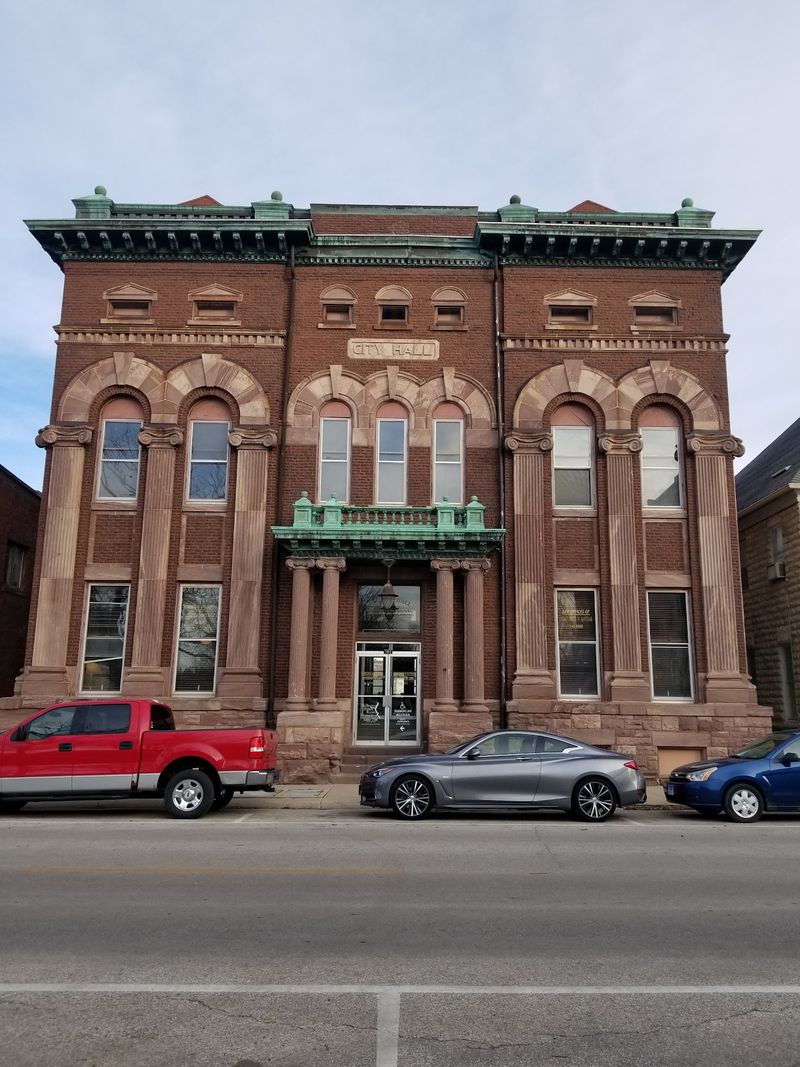
Start walking a few blocks from the downtown square and the pavement changes under your feet. Galesburg is famous for its brick streets, and many of them still rumble softly when a car rolls past. The town even calls itself a place with deep ties to brick making, since Galesburg paving bricks were once shipped far beyond Illinois.
Those red streets set the stage for the houses. Big front porches line up like seats at a parade, one after another. Many homes sit close together on narrow lots, which is exactly why so much history fits into such a small space.
Look up as you walk. Rooflines jump from steep gables to tiny towers to flat Italianate tops with fancy brackets under the edges. Paint colors range from calm cream to deep green, rusty red, and even purple trim.
The neighborhoods around Knox College and along streets like North Prairie Street and North Broad Street are good places to begin. Old trees arch over the sidewalks, so summer walks stay shady. In fall, orange leaves pile up against iron fences and stone steps.
Notice the small things, too. Old carriage steps sometimes sit near the curb, left over from the days when people climbed out of horse-drawn buggies. Stone hitching posts and worn iron boot scrapers still show up near a few front walks.
Street signs help you keep your bearings, but getting a little lost here is part of the fun. Every corner seems to reveal another house with carved wood, stained glass, or a porch swing swaying in the breeze. Keep your camera ready, because the next block often tops the last one.
A slow pace works best. Driving past these homes hides the details that make them special, so park near the square and let your feet set the tempo.
Old Main and the College Neighborhood
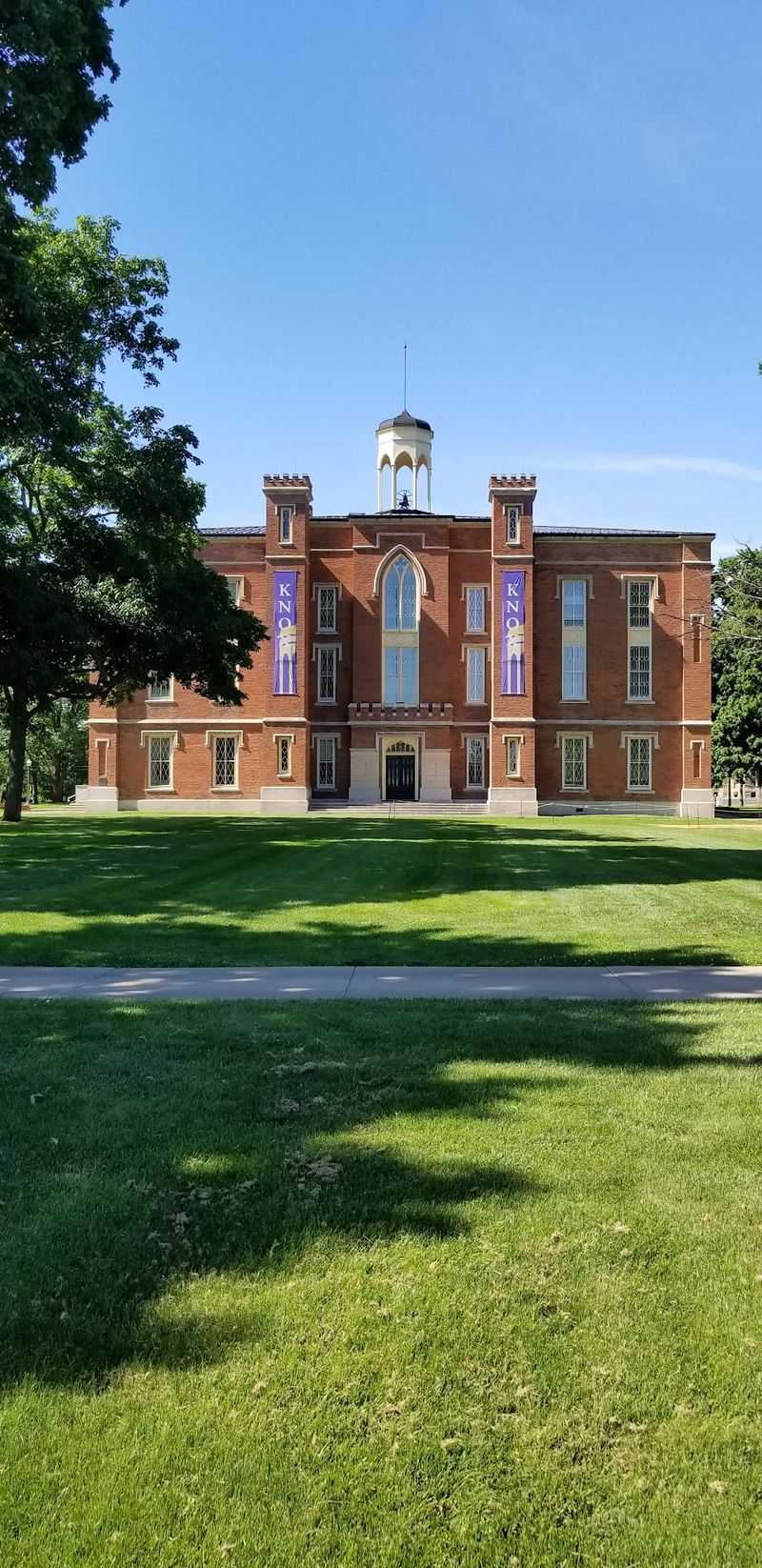
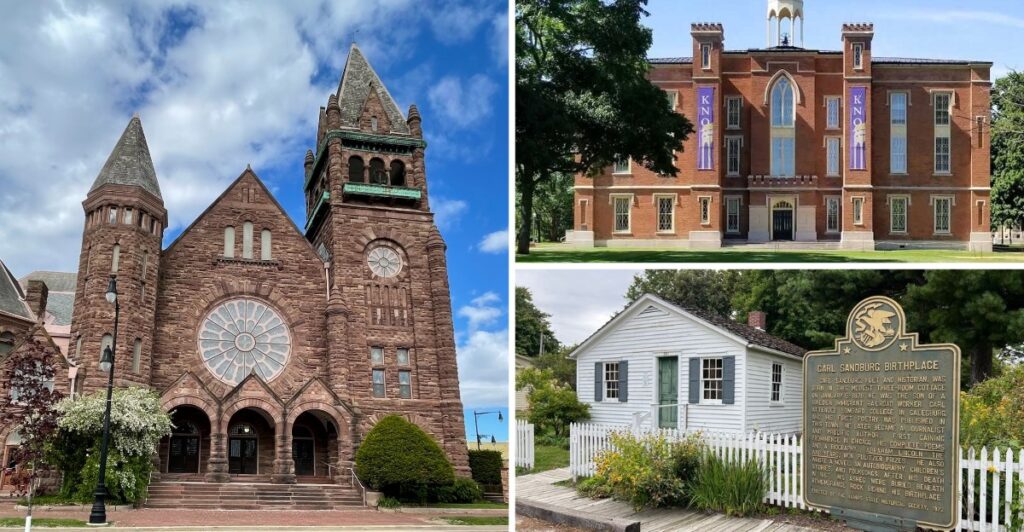
In 1858, Abraham Lincoln and Stephen Douglas stood outside a brick college building and argued about slavery in front of a huge crowd. That building, Old Main at Knox College, still stands today. It is the only remaining site from the famous Lincoln-Douglas debates that survives in its original form.
Old Main makes a strong anchor for any historic house walk. Its pointed windows and twin towers give it a castle-like look. A plaque marks the debate spot on the east side, so you can stand close to where history happened.
The streets around campus are packed with older homes. Many were built for professors, ministers, and local business owners who wanted to live near the college. Some are now used by the school, while others remain private family homes.
Knox College was founded in the 1830s by settlers from New York who came west with big plans. They set up the college and the town together, which explains why the neighborhood grew up so tightly around the campus. The college helped shape the look of the whole area.
As you walk, you will see Greek Revival homes with simple columns, Italianate houses with tall narrow windows, and later Queen Anne homes with lots of trim. Each style shows a different moment in the town’s growth. You can almost read the calendar by looking at the rooflines.
Campus paths are pleasant for walking, and the lawns give you a great view of the older buildings. Keep in mind that classes happen during the school year, so be respectful of students and staff. Weekends are often quieter for strolling.
From Old Main, head north or east and let the side streets lead you. The houses keep coming, block after block, with barely a gap between them.
Tiny Cottage, Giant Poet
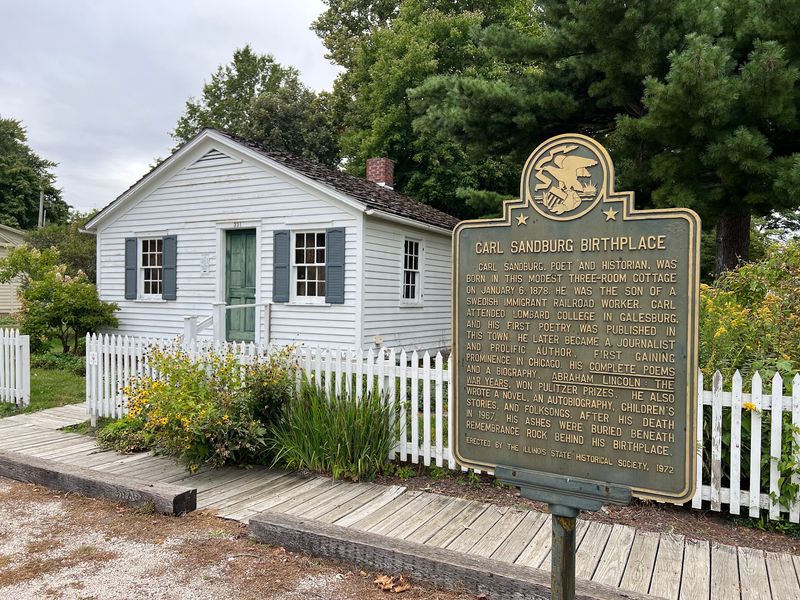
Not every famous house in Galesburg is a mansion. One of the most important is a small three-room cottage on East Third Street. Carl Sandburg, the poet who later won Pulitzer Prizes, was born there in 1878.
His parents were Swedish immigrants, and his father worked for the railroad. The family did not have much money. The little home shows how many working families lived in the town back then, with simple rooms and plain wooden walls.
Today the site is known as the Carl Sandburg State Historic Site. Inside, you can see furniture from the time period and learn about Sandburg’s early life. He left school young and worked jobs like delivering milk and shining shoes before becoming a writer.
Out back, a quiet garden path leads to Remembrance Rock. That is where Sandburg’s ashes rest, under a large granite boulder. The name comes from his only novel, and the spot is peaceful and shaded.
Sandburg later wrote about growing up in Galesburg in his book Always the Young Strangers. Reading a few pages before your visit can make the cottage feel even more personal. You will spot places he describes around town.
Here is a fun fact to share with friends. Sandburg also wrote a huge biography of Abraham Lincoln, and Lincoln had debated in Galesburg just twenty years before the poet was born. The town’s history loops together in surprising ways.
Check hours before you go, since state historic sites can have limited schedules. The cottage sits in a neighborhood of modest homes, a nice contrast to the fancy houses near the college. Seeing both sides of town gives you a fuller picture of how people really lived.
Spot the Styles Like an Architecture Detective
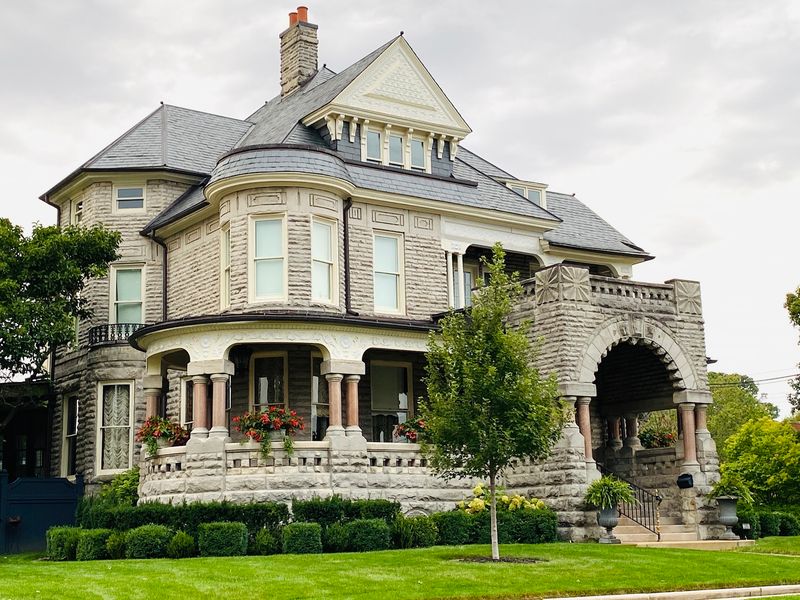
Ready for a game? Pick any block in the older part of Galesburg and try to name every house style you see. It is harder than it sounds, because some homes mix two or three styles at once.
Queen Anne houses are the showoffs. Look for round towers, wraparound porches, and shingles cut into shapes like fish scales. Their paint jobs often use several colors to make the trim pop.
Italianate homes are calmer but still fancy. They usually have low roofs with wide edges held up by carved brackets. Tall windows with curved tops are another clue.
Greek Revival homes are some of the oldest in town. They often have a triangle shape at the top of the front wall, much like an old temple. Simple columns or flat boards around the door complete the look.
Later in time, you will spot Craftsman bungalows and Prairie-style homes. These have low, wide shapes, thick porch posts, and deep overhangs. They show how tastes changed in the early 1900s.
Bring a notebook or use your phone to snap close-up photos. Doors are especially fun to study, since many still have old glass panels, brass knobs, and carved frames. Chimneys and foundation stones also tell you a lot about when a house was built.
Kids can turn this into a scavenger hunt. Give points for a tower, a porch swing, a stained glass window, or a house painted in more than three colors. You will be surprised how fast the score climbs.
Always stay on the sidewalk. Most of these homes are private, and families live inside. Admiring from the curb is the polite way to play detective.
Secret Rooms and the Road to Freedom
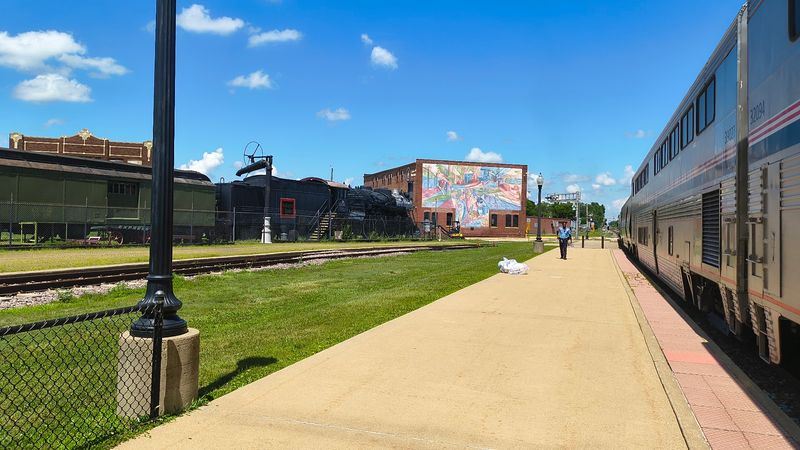
Long before the Civil War, Galesburg had a bold reputation. Many of its founders were strongly against slavery, and some residents helped people escaping slavery travel north on the Underground Railroad. That brave history is part of the story hiding behind some of the town’s old walls.
The founders came from New York with religious beliefs that pushed them to speak out. Knox College leaders and local church members were among the voices calling for freedom. Galesburg earned a name as a place where escaping people could find help.
Historians have worked hard to sort out which stories are proven and which are legends. Secret rooms and hidden tunnels make exciting tales, but not every rumor holds up. Local markers and museum displays share what has been documented, which is the best place to start.
Knox College was also one of the early colleges to welcome Black students. Hiram Revels, who later became the first Black United States senator, studied there. That detail surprises many people who visit for the first time.
While walking, keep an eye out for historical markers. They often point to churches, homes, and spots tied to this period. Reading them adds depth to what might look like an ordinary brick building.
A good tip is to pair your house walk with a stop at local history exhibits in town. They help connect the dots between the buildings and the people who lived in them. You leave understanding why these homes matter beyond their pretty trim.
This chapter of history turns a simple stroll into a lesson in courage. Standing on these streets, you are walking the same paths as people who took real risks to do what they believed was right.
Planning a Galesburg, Illinois House Walk
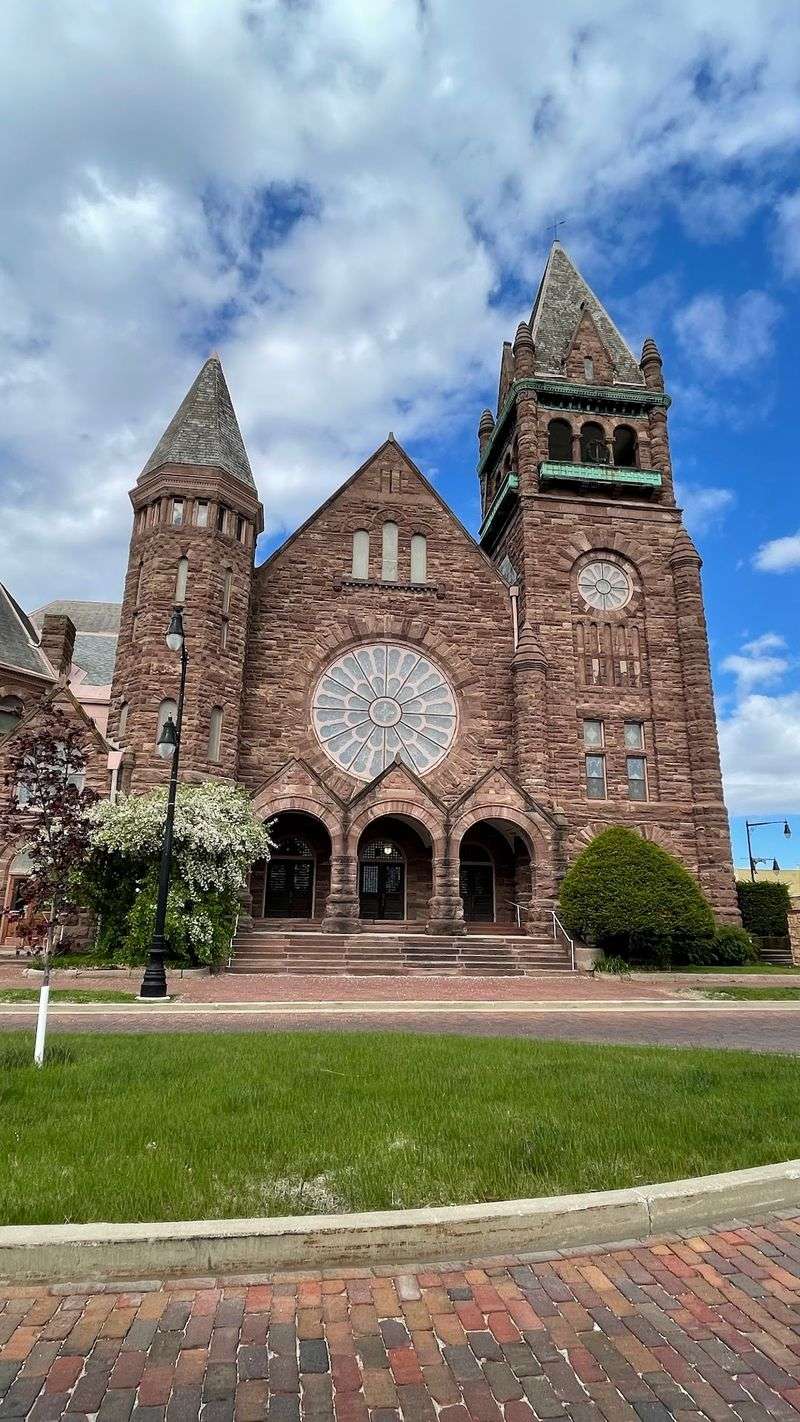
Timing can make or break a historic house walk. Late spring and early fall are the sweet spots in Galesburg, with mild weather and trees at their best. Summer works too, but bring water, since Illinois afternoons can get hot and sticky.
Park near the downtown area along Main Street. From there, you can reach the college neighborhood and several historic streets on foot. Most walks can be done in one to three hours, depending on how often you stop to stare.
Wear good shoes. Brick streets and old sidewalks are uneven in spots, and tree roots have pushed some slabs up over the years. Watch your step, especially if you are looking up at rooftops.
Morning light is great for photos of east-facing homes, while late afternoon brings a warm glow to others. Cloudy days are also good for photos, because the soft light shows off paint colors without harsh shadows. Try both if you have the time.
Plan a lunch break downtown. The historic storefronts along Main Street and Seminary Street hold local shops and places to eat. It is a nice chance to rest your feet before the next round of exploring.
Galesburg sometimes hosts events that open up historic spaces or celebrate local heritage. Check local event calendars before your trip. A special tour day can give you a peek at places normally closed to the public.
Getting there is easy. Galesburg sits along Interstate 74 and is about 45 miles northwest of Peoria. Amtrak trains also stop in town, which fits nicely with its railroad roots and makes a car-free trip possible.
Pack a small map, snacks, and patience. The best finds usually appear on the blocks you did not plan to visit.
Rails, Bricks, and a Town That Kept Its Past
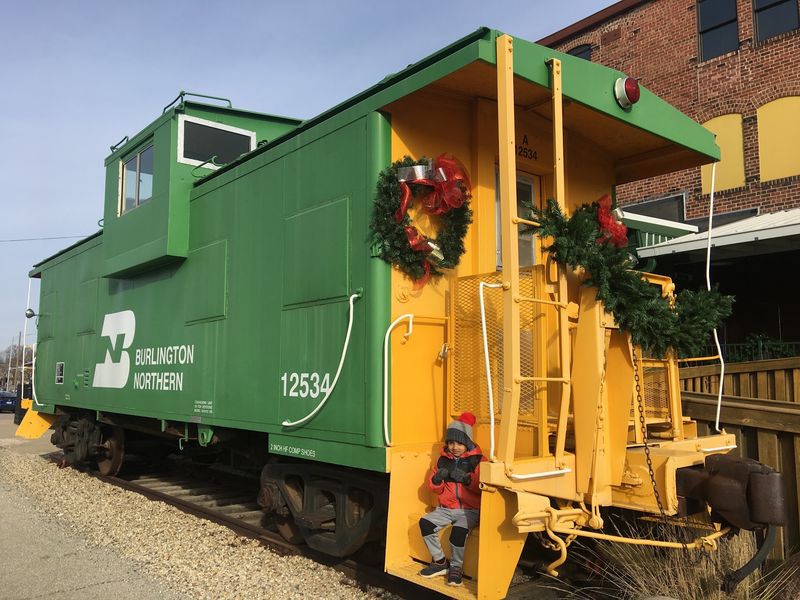
Trains built Galesburg, and you can still hear them rolling through town day and night. The railroad arrived in the 1850s, and the city became a major rail hub. Jobs on the tracks brought workers and money, and that money helped pay for many of the homes you see today.
The Galesburg Railroad Museum shows off this history with a steam locomotive, a caboose, and plenty of old railroad gear. Seeing it helps explain why so many solid houses went up in such a short time. The town was busy, growing, and proud.
Here is the surprising part. Many towns tore down their old houses to make room for new buildings. Galesburg kept a large number of its historic homes standing, which is why the neighborhoods still feel so full.
Brick played a role, too. Local brick companies made strong paving bricks, and the streets lasted for generations. Those tough streets and sturdy homes gave the town a lasting look instead of a patched-together one.
Walking from the railroad museum to the college neighborhood tells the whole story in one loop. You pass working-class areas, fancy homes, churches, and downtown shops. Each part shows a different side of the same growing town.
Small details reward sharp eyes. Old railroad bells, painted signs on brick walls, and faded ads above storefronts still hint at the busy past. Look for them between the houses and on the sides of downtown buildings.
By the end of the walk, the number of historic homes packed into these few blocks makes sense. Rails brought people, bricks held the town together, and residents chose to save what they built. A distant train whistle sounds as you head back to the car.
Share this story