A stone foundation appears between the trees. A few steps later, the trail crosses an old railroad bed, and the woods begin to look less like wilderness and more like a place with a past.
New Jersey has plenty of hikes where that shift happens. Former iron towns sit beside rivers that once powered furnaces. Quarry pits hide under hardwoods. Cranberry bogs have slowly given way to cedar and maple.
Some sites have been carefully preserved; elsewhere, a low wall or an oddly level stretch of ground is all that remains. The best walks let you enjoy the landscape while noticing what people built, worked, and eventually left behind.
Bring shoes suited to uneven ground, give historic structures room to stand, and allow extra time for the stops that catch your eye. On these 12 trails, the interesting part is often just beyond the next bend.
1. Watchung Reservation History Trail – Mountainside
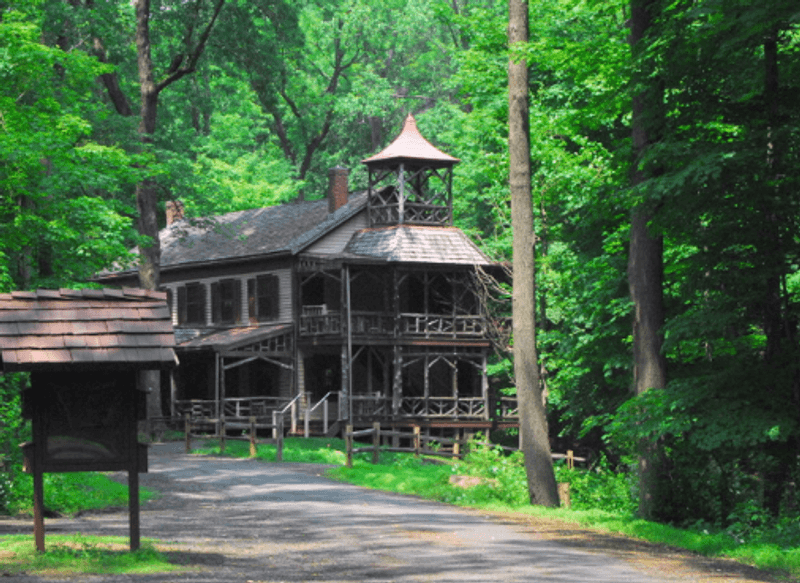
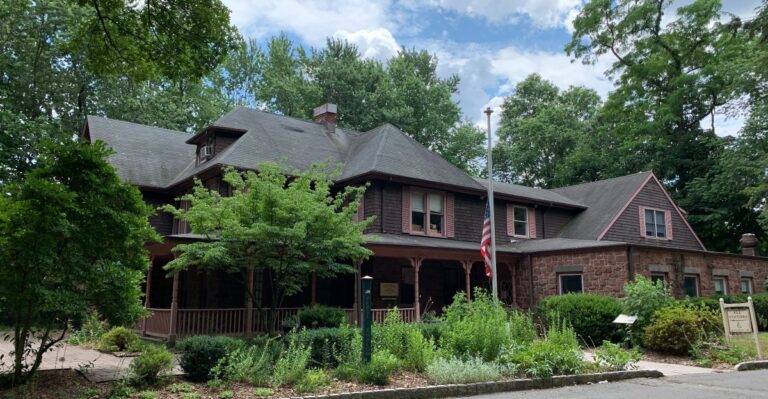
Pink blazes lead through the woods of Watchung Reservation, but the most memorable stretch takes you into Feltville. This former mill town has houses, a church building, and a cemetery that give the phrase “deserted village” considerably more substance than a few scattered stones.
The buildings are easy to spot; the trail encourages you to look beyond them for signs of how the surrounding land was used. The full History Trail runs about six miles and links sites throughout the reservation.
Signs mark places connected to its earlier farms, settlements, and park history. You can begin at the Trailside Nature & Science Center, or use the parking area near Feltville if the village is your main reason for coming.
That flexibility makes this a good choice whether you want a substantial walk or an unhurried look around the historic district. Feltville is especially compelling because it does not feel sealed off from the woods.
The paths, trees, and surviving buildings occupy the same space, letting you picture the daily walk between a worker’s home and the mill. Follow the marked route rather than cutting across the grounds, and leave time to read the signs.
They turn a collection of handsome old structures into a much fuller story.
2. Hasenclever Iron Trail – Hewitt
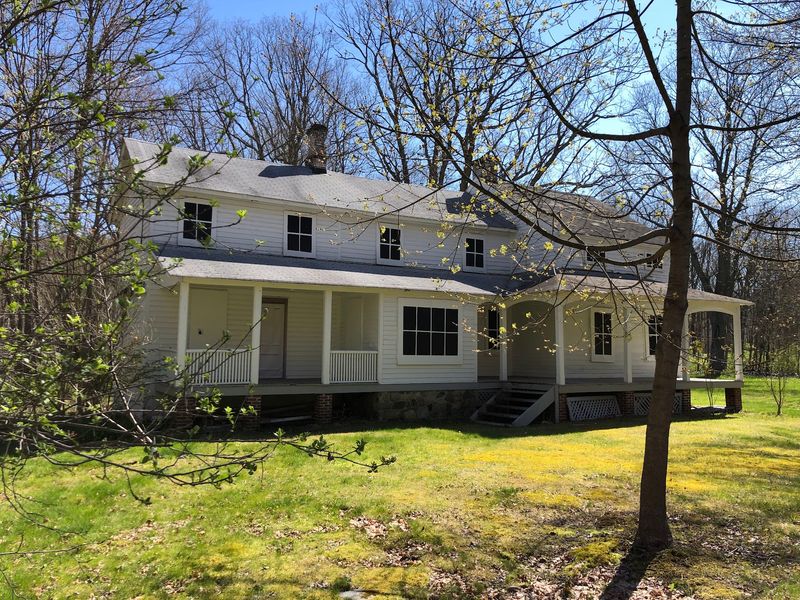
An old road through the forest once connected ironworking operations at Long Pond and Ringwood. Today, its yellow blazes mark the Hasenclever Iron Trail, a comparatively easy 1.3-mile walk with interpretive signs along the way.
The route asks you to imagine wagons and workers using the same corridor when the surrounding hills were part of a busy iron industry. Begin by exploring the Long Pond Ironworks historic area.
Furnace remains, foundations, and other industrial structures beside the Wanaque River give you a sense of the operation’s scale before you head onto the trail. Then the walk shifts into the woods, where the signs help explain features that could otherwise disappear into the undergrowth.
What looks like a quiet forest road becomes a connection between two working sites. This is a strong pick for someone who enjoys history but does not want every step to be a steep climb.
The distance is manageable, and the combination of ruins and trail offers more to consider than the mileage suggests. Take your time around the historic structures, keep to the marked paths, and resist the temptation to climb on old masonry.
The ironworks has weathered enough already.
3. Hampton Memorial Trail at Crossley Preserve – Berkeley Township
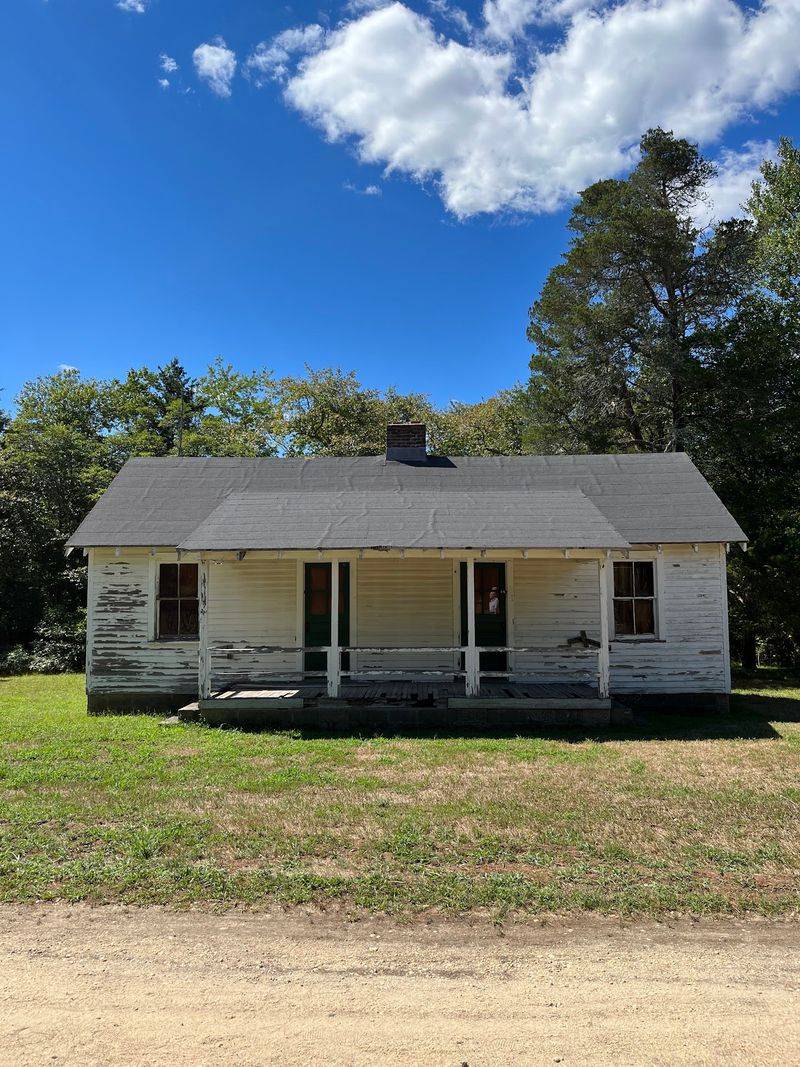
At Crossley Preserve, the industrial past is easy to miss if you arrive expecting towering brick ruins. This was clay country.
Workers dug pits, and a small railroad carried the clay out to waiting train cars. The Hampton Memorial Trail follows the preserve through a landscape where the former works are being steadily reclaimed by the Pine Barrens.
Look for the trail’s interpretation of Crossley’s surviving features and artifacts as you walk. The old clay operation is the reason this place appears on the list, but its natural recovery is just as absorbing.
Pitch pine, shrub oak, and laurel now grow around the traces of industry; elsewhere, the route passes through lowlands and areas shaped by past fires. It is a walk that rewards attention to the ground and the plants around you.
Come ready for a quieter outing than a restored historic village provides. There are no rows of furnished buildings to tour, and the clues can be subtle.
That makes the moment you recognize an old industrial feature more satisfying: the terrain starts to explain why people worked here and how they moved what they dug. Stay with the trail and its markers, both to protect the preserve and to make sense of the site in the order it was intended to be explored.
4. Quarry Trail at Goat Hill Preserve – Lambertville
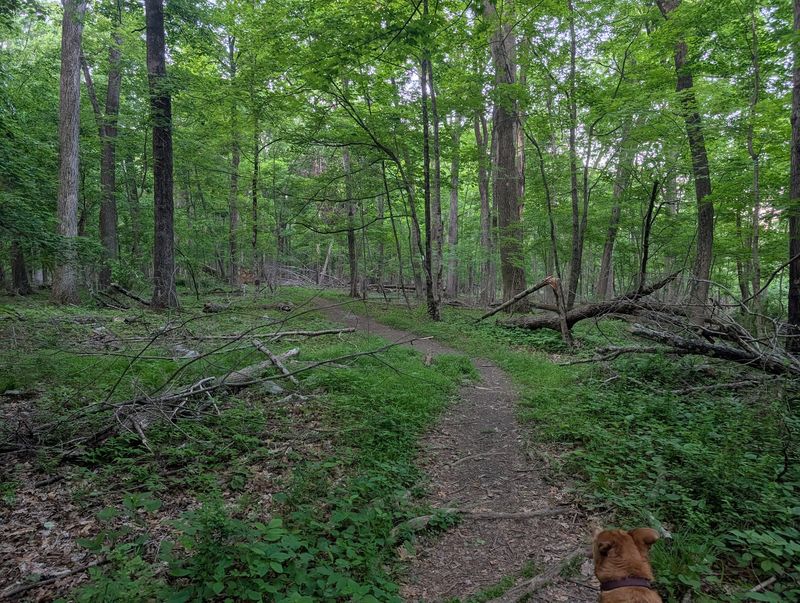
A view across the Delaware River might be what gets you to Goat Hill. The abandoned quarry is what makes you slow down once you are there.
The white-marked Quarry Trail runs along the hillside near Lambertville, passing a former stone-working site that operated from the late 1800s into the 20th century. Start from the preserve’s parking area and connect to the Quarry Trail from the Overlook Trail.
A short spur leads toward Washington’s Rock and its broad river view; farther along, another spur reaches the old quarry, where evidence of the operation remains. You can also take the Old Mill spur for a look toward the remains of riverside mill sites.
With connectors between the preserve’s trails, there is room to make a walk that suits your time and energy. The quarry produced paving blocks, and the hillside helped workers move stone down toward railroad cars below.
Knowing that changes the way the landscape reads. Those exposed rocks are part of a former workplace, not simply a dramatic backdrop for photos.
The river overlooks add plenty of appeal, but keep an eye on your footing near rocky edges. This is a place to admire the view and the workmanship from secure ground.
5. Rockhopper Trail – West Amwell Township
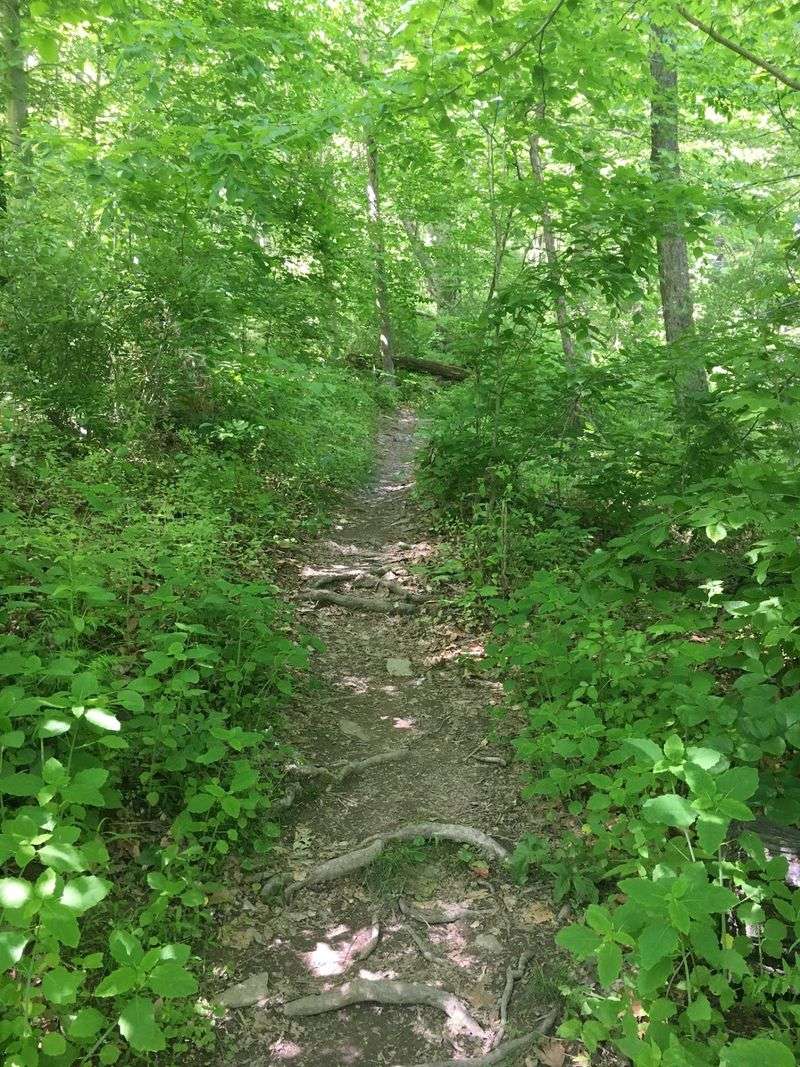
The first clue is underfoot: a rougher patch of trail winding among small quarry pits in mature hardwood forest. Rockhopper Trail does not deliver one enormous excavation.
Instead, its abandoned 19th-century pits appear throughout the opening landscape, making this West Amwell walk feel like a gradual discovery. The blue-marked route runs about 2.3 miles between trailheads.
Along the way, it joins portions of old Rock Road, descends toward a brook, and continues in the direction of Lambertville. That changing terrain gives the hike a satisfying rhythm.
One moment you are studying the marks of former stone extraction; later, you are following an old travel route through the trees. The quarry history is part of the walk rather than a single stop at its end.
This is a point-to-point trail, so decide how you will return before setting out. You can park at the small lot near the Route 518 trailhead and walk back the way you came, or plan a longer outing that ends near town.
Expect some rocky footing, particularly toward the southern end, and watch for the blue blazes where the path changes character. Rockhopper rewards a steady pace and a willingness to notice modest traces of work that the forest has nearly absorbed.
6. Coopermine Trail – Hardwick Township
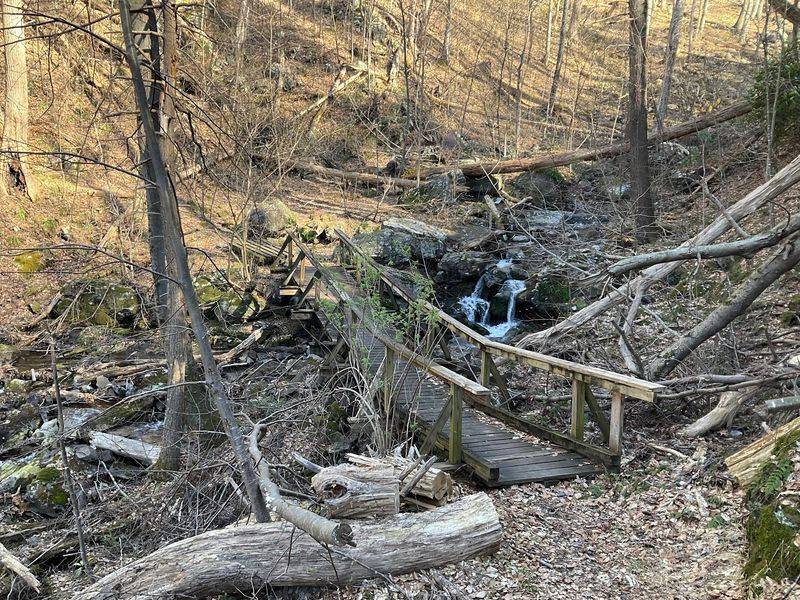
A mine’s story does not end at the entrance to a shaft. At Pahaquarry, the remains of a processing mill show that digging copper was only one part of a larger operation.
The Coopermine Trail passes the mill foundation and closed mine openings within Delaware Water Gap National Recreation Area, offering a striking contrast between industrial ambition and the wooded landscape around it. Give the visible remains your attention without treating the shafts as places to investigate.
They are closed to protect important bat habitat. The accessible trail and the structures you can see from it provide plenty to consider: ore had to be extracted, processed, and moved through this remote stretch of northwest New Jersey.
Later, the same area served as a Boy Scout camp, adding another chapter to a site that could be mistaken for ordinary woodland on a quick pass. This is a good trail for hikers who like to pause and piece together a place.
You are unlikely to get the full story by rushing straight through. Look for the mill foundation, notice how the route sits in the terrain, and allow the setting to do some of the work.
Before heading out, check the park’s current trail information and bring a map. The historic remains are intriguing enough without an unplanned detour into the woods.
7. Donkeys Corner Trail – Hardwick Township
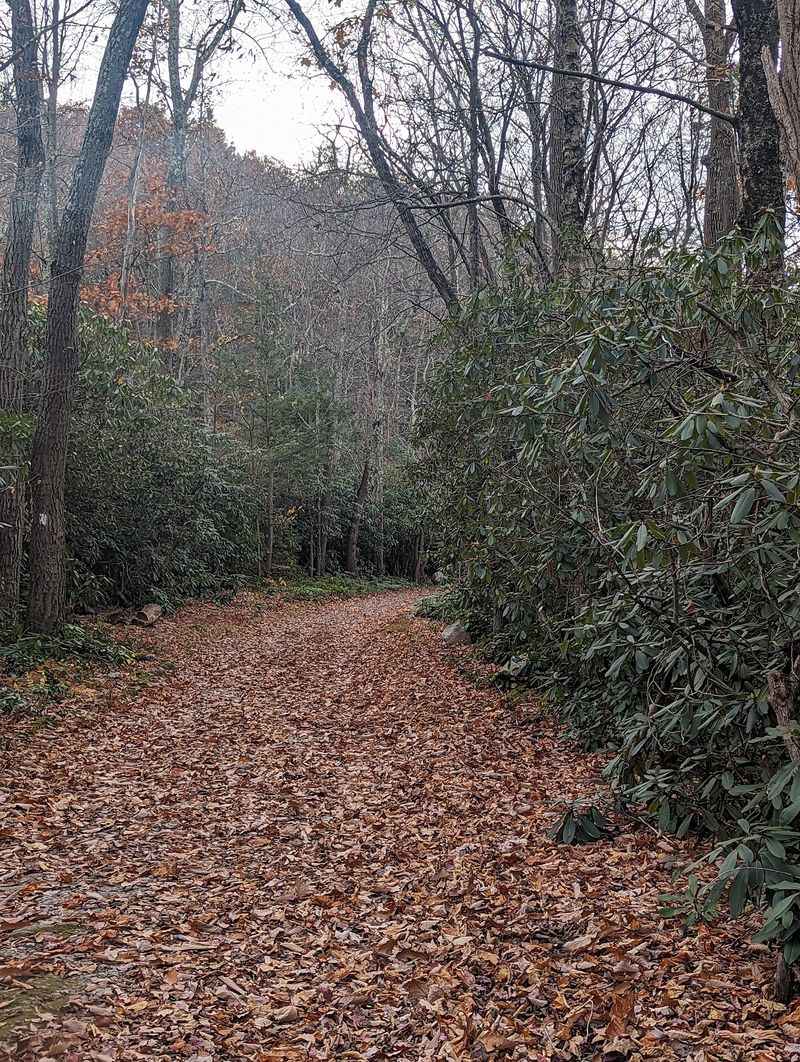
Millbrook Village gives this hike a particularly good beginning. You can look around the historic village, then follow a former road toward another settlement site that is much less visible today.
That journey between what remains and what has nearly disappeared is the appeal of Donkeys Corner Trail. The route runs 1.8 miles one way from Millbrook Village toward the former site of Donkeys Corner.
It parallels Van Campen Brook before climbing a wooded hillside to Blue Mountain Lake Road. The brookside start feels gentle; the uphill section reminds you that this was a working route across real terrain, not a level path built solely for recreation.
Plan for a return walk unless you have arranged transportation at the other end. Take some time at Millbrook before entering the woods.
Its surviving and reconstructed buildings help establish the sort of rural community that once occupied this valley, giving context to the less obvious former settlement farther along. Then let the old road guide your imagination without expecting a complete village to appear at every turn.
The hike is best enjoyed as a passage through connected places. Restrooms are available at Millbrook, making it a practical place to start, regroup, and spend a few extra minutes after your walk.
8. Sussex Branch Trail at Waterloo Village – Stanhope
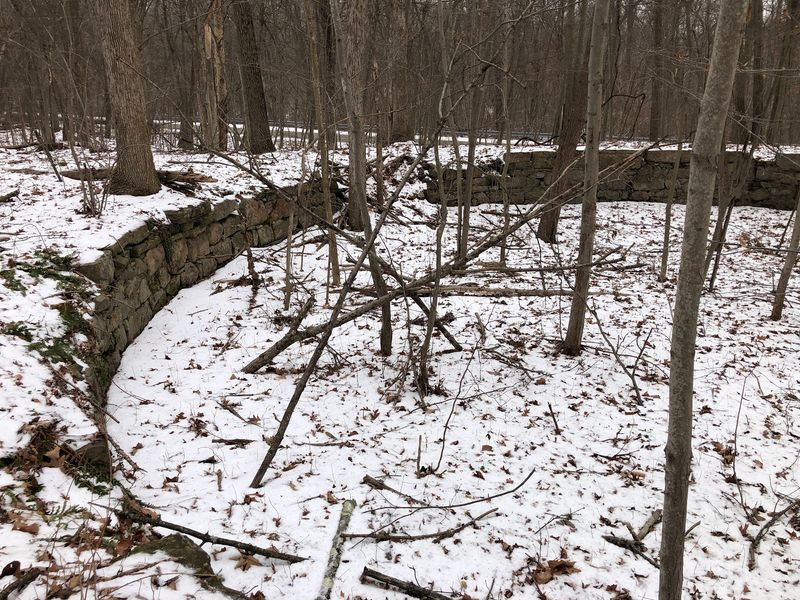
Railroads and canals competed, connected, and left complicated marks around Waterloo. The Sussex Branch Trail offers one way into that history: a former rail corridor near a 19th-century village that grew beside the Morris Canal.
Walk the section between Waterloo Road and Cranberry Lake, and you may spot traces of an old siding among the more familiar pleasures of a wooded trail. Waterloo Village itself deserves time before or after the walk.
Its buildings and canal setting show why this spot became a center of activity. The broader area also holds remains associated with an inclined plane, the machinery that helped canal boats overcome a change in elevation.
Some of those features are reached on separate trails, so use a current map if you hope to explore beyond the Sussex Branch route. The pleasure here lies in recognizing that several transportation stories overlap.
A quiet rail trail, a village street, and the remains of canal engineering all occupy a fairly small area. You do not need to identify every foundation to enjoy the outing, though reading the site interpretation makes the details more rewarding.
Give yourself enough time for both a walk and a look around the village. Treating Waterloo as a quick stop between trailheads would miss much of what makes it unusual.
9. Blue Trail at Plainsboro Preserve – Plainsboro
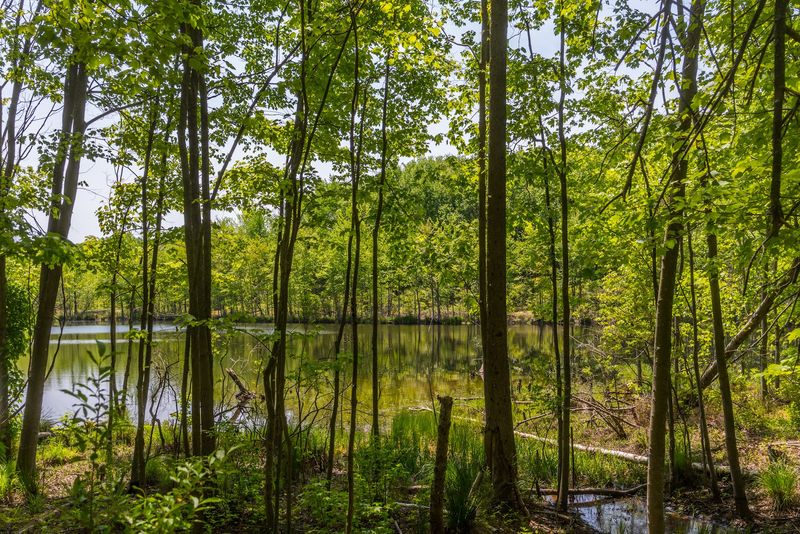
The abandoned industrial relics along Plainsboro Preserve’s Blue Trail arrive as a surprise. This is a place better known for woods, wetlands, and McCormack Lake, yet an old roadway on the route carries evidence of an earlier use.
It is a reminder that a landscape can look thoroughly natural while holding traces of work close to the path. Reach the Blue Trail by taking the White Trail from the parking area.
The blue loop is about 2.15 miles, with additional walking required to get to and from it. Once on the loop, pay attention to the markers, particularly where the old roadway and other paths make the route less obvious.
Beyond the industrial remnants, the walk moves through forest, wet ground, meadows, and the floodplain of Devil’s Brook. This is an easy place to spend longer than expected.
You may come for the human history and stay to watch birds around the water or examine how dramatically the ground changes over a short distance. Wear shoes that can handle damp patches, and consider insect repellent in warmer months.
Unlike the grander ironworks and quarry sites on this list, Plainsboro offers its industrial past as a small piece of a much larger ecological story. That quieter reveal is precisely its charm.
10. Double Trouble State Park Nature Trail – Bayville
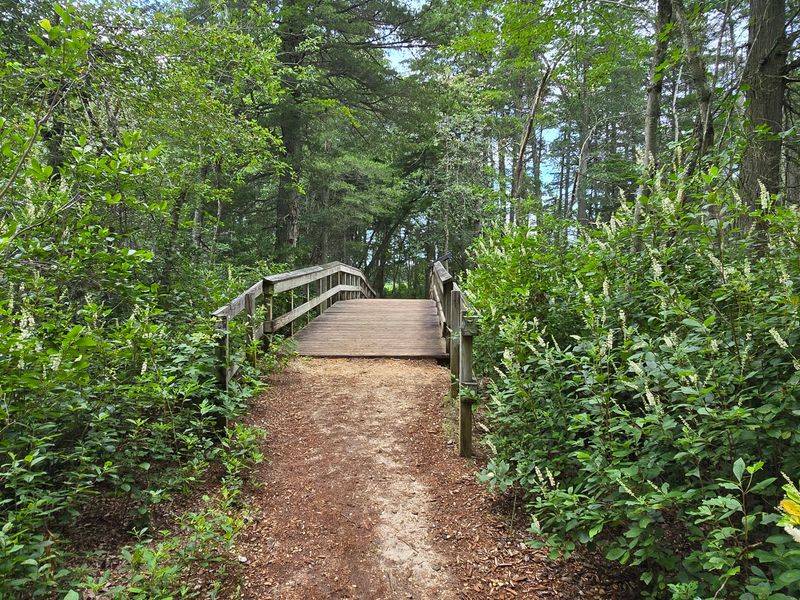
The sawmill and cranberry packing house at Double Trouble Village make a vivid introduction to this former Pine Barrens company town. Workers also had a school, store, and cottages here; the surrounding bogs and cedar swamps supplied the work that sustained the community.
From the village, the Nature Trail takes you into the landscape behind that history. The loop is roughly 1.5 miles, making it a comfortable addition to a self-guided look around the historic buildings.
Follow the marked route past water, woods, and former cranberry-growing areas. Some bogs remain recognizable, while others have changed as trees and other plants returned.
Seeing both helps explain why the village was built here and what happened after its busiest years ended. Start by looking at the buildings from the public paths, then walk the trail with those workplaces in mind.
The packing house and sawmill are generally accessible inside during guided tours, so check for one if you want a closer look; the village grounds themselves offer plenty to see on an ordinary visit. Keep clear of old structures and stay on the designated paths around the bogs.
Double Trouble is memorable because the industrial site and the Pine Barrens environment still make sense together. One gives the other its story.
11. Batsto Village Interpretive Trail – Hammonton
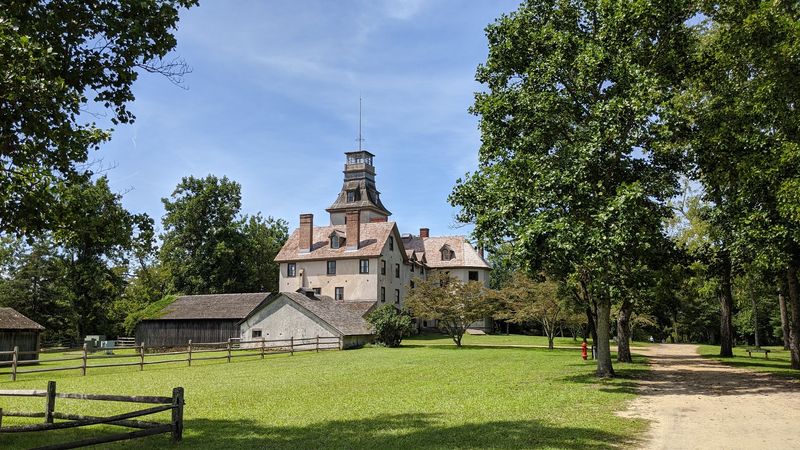
A working post office and a water-powered sawmill are unusual things to find amid the sandy roads and pitch pines of Wharton State Forest. At Batsto, they are part of a preserved village that grew from ironmaking into other industries.
The interpretive trail lets you explore the grounds at a walking pace, moving between buildings that once formed a busy Pine Barrens community. Pick up the village guide and follow the route rather than heading straight for the mansion.
The former industrial town makes more sense when you notice how its workplaces, homes, water, and roads relate to one another. The sawmill is a particularly useful stop for picturing the work done here, while the post office and other surviving buildings show that Batsto was a place where people carried on ordinary daily lives.
Batsto is more carefully preserved than the scattered ruins on some of these hikes, and that is its strength. You can see the shape of a former town without having to guess where every building stood.
Set aside enough time to walk the village and, if you want more miles afterward, explore a separate marked trail in the surrounding forest. It is tempting to hurry toward the next stretch of pines, but Batsto rewards a slow first lap.
12. Military Road Trail at Walpack Center – Walpack Township
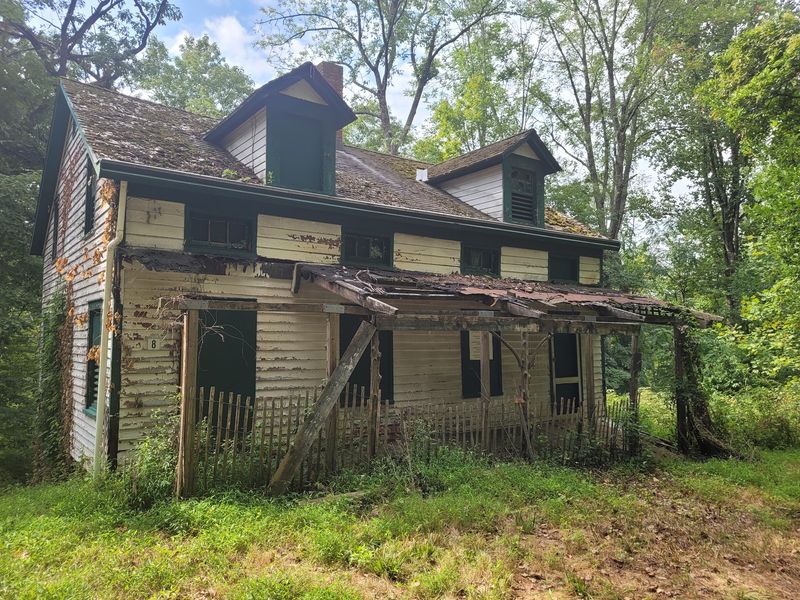
Walpack Center can feel startlingly still. Its surviving buildings recall a rural community that once had stores, homes, and regular traffic through the valley.
The Military Road Trail gives you a way to approach it on foot, connecting the historic village with the Van Campen Inn on the other side of Walpack Ridge. The trail is about a mile each way, but the short distance carries a considerable amount of history.
Soldiers used this route during the French and Indian War and the American Revolution. Along the walk are the former site of Fort Johns, remnants of old farmsteads, and a historic African American cemetery.
These are places to approach thoughtfully, following the marked route and allowing the surviving evidence to speak for itself. Begin at either Walpack Center or the Van Campen Inn and plan to return the same way.
A modest climb adds interest without turning the outing into an all-day hike. At Walpack, spend a little time among the buildings before or after your walk; at the inn, consider how a farmhouse became a stopping place for travelers.
This trail is at its best when you give equal attention to the road, the people who used it, and the communities at either end.
Share this story