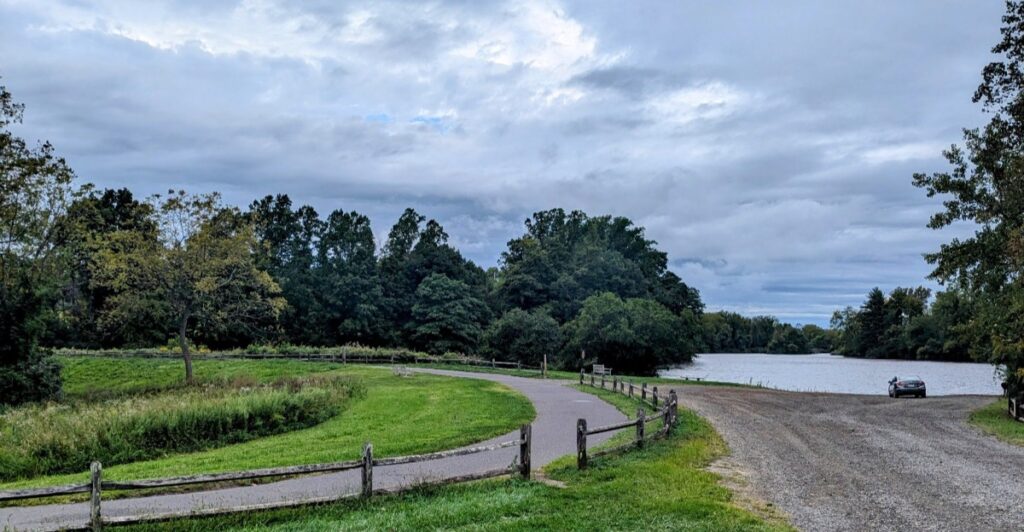
The horse stalls are still here. So is the old training route, although the people circling it today are more likely to be wearing running shoes than riding boots.
At Thompson Park in Lincroft, a casual afternoon walk comes with an unexpected connection to American racing history. This was once Brookdale Farm, a Thoroughbred breeding and training estate where Regret, the first filly to win the Kentucky Derby, prepared for greatness.
Today, the 667-acre property belongs to the public, with trails, open fields, a lake, historic buildings, and enough variety to keep several kinds of weekend plans happy. You can explore a restored racing stable, wander beneath trees, or find yourself near a former farm building that now hosts something considerably more artistic.
The pleasure is in how naturally those pieces fit together. The racing estate remains recognizable, while its grounds have become somewhere ordinary people can spend an extraordinary afternoon.
Thompson Park Began as One of New Jersey’s Premier Horse Estates
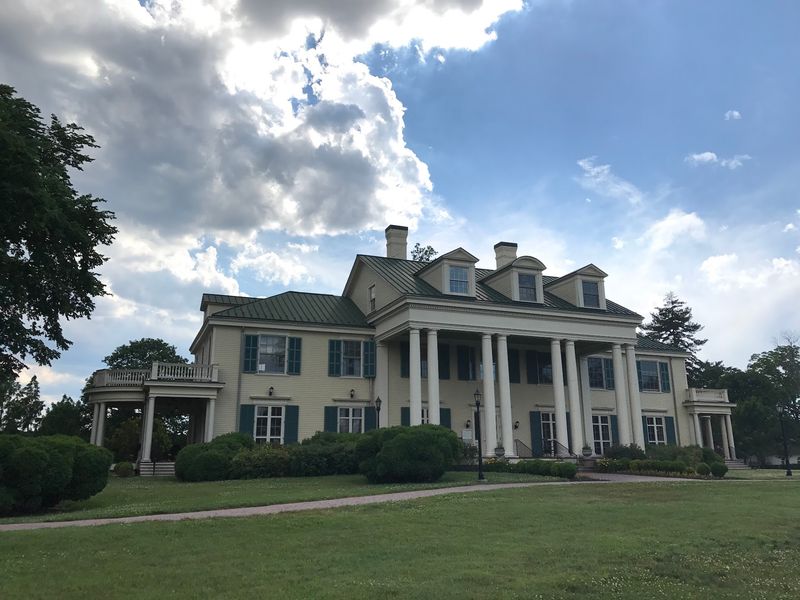
Before picnic blankets and trail maps entered the picture, this stretch of Lincroft helped produce some serious racing talent. David Dunham Withers established Brookdale Farm in the 1870s, bringing a nationally recognized horseman’s ambitions to Monmouth County.
He was also one of the early owners of Monmouth Park racetrack, so the farm’s location placed it within an established racing world. The surrounding land offered room for training and grazing, while access to other northeastern racing centers helped make the operation practical.
Horses were big business here, and Brookdale had the buildings and grounds to match. The Thompson family purchased the property in 1893, and prominent racing figures subsequently leased its facilities.
Among them was Harry Payne Whitney, whose association with Brookdale helped cement its reputation. Then there is Regret.
In 1915, she became the first filly to win the Kentucky Derby, giving this New Jersey farm a connection to one of the sport’s defining moments. Suddenly, a walk around the property feels a little different.
Those barns were workplaces where trainers, riders, and grooms prepared horses capable of making national headlines. Yet Brookdale’s story reaches back beyond Thoroughbreds.
The Lloyd family farmed here during the colonial period, and Thomas Lloyd built a house on the property in 1786. That earlier agricultural chapter helps explain why the park feels like a collection of different eras rather than a single preserved estate.
For a first visit, that is useful context to keep in mind. Look at how the buildings relate to the open ground around them.
The space between structures matters almost as much as the structures themselves. It takes very little imagination to understand why people once chose this landscape for raising and training horses, or why later generations wanted to preserve it.
Geraldine Thompson’s Gift Opened the Grounds to Everyone
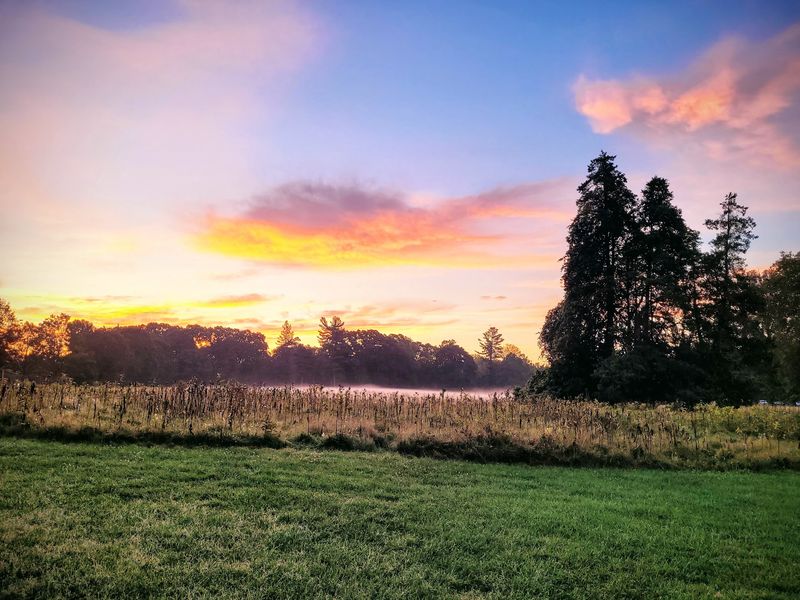
A conversation in 1961 helped shape the future of this property. Geraldine Livingston Thompson invited county official Joseph Irwin to discuss her interest in making Brookdale Farm a public park.
She had lived there since 1896 and had already welcomed children and families onto the grounds. Her vision was refreshingly straightforward.
She wanted people, particularly children, to experience the land, trees, birds, and animals for themselves. Preserving Brookdale meant keeping those experiences available beyond her lifetime.
Thompson’s public interests extended well beyond the estate gates. She supported prison reform, education, public health, and land conservation, and played a role in preserving Island Beach as a state park.
Eleanor Roosevelt, a longtime friend who shared several of her social welfare interests, visited Brookdale on multiple occasions. Knowing that background gives the park’s name some substance.
It honors a woman whose concern for public access belonged to a much broader record of civic work. Thompson Park was established in 1968 through a 215-acre gift from her estate.
Its present size came later. In 1985, the county acquired the 334-acre Marlu Farm and neighboring 118-acre Cheeca Farm, expanding the park to 667 acres while protecting land around the Swimming River Reservoir.
That distinction makes the transformation more interesting. One generous bequest created the foundation, and subsequent preservation decisions gave the park its larger reach.
The result is a place that accommodates both the historic estate and substantial breathing room beyond it. For visitors, the legacy is wonderfully tangible.
Nobody needs an invitation from the family to enjoy the grounds anymore. A child taking a first woodland walk, a couple spending an hour outdoors, or someone returning to the same familiar route is using the property much as Geraldine hoped future generations would.
The Historic Racing Stable Brings Brookdale Farm’s Past to Life
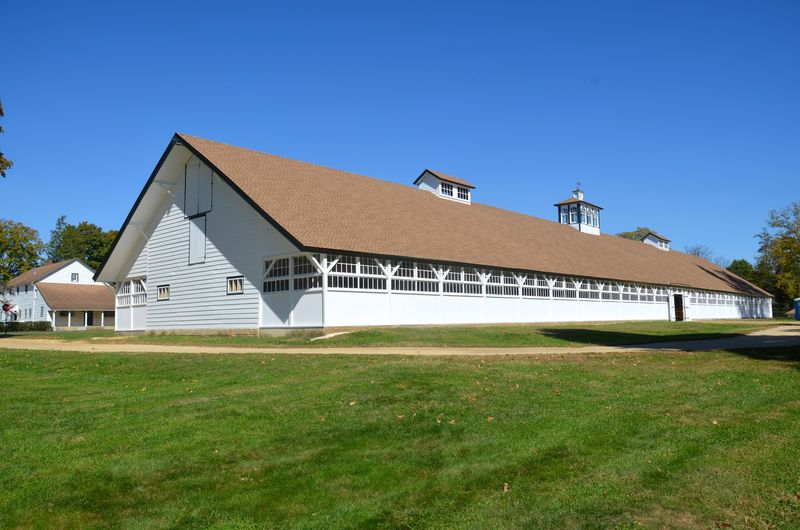
Step into the restored forty-stall Racing Stable and the scale of the old operation becomes easier to grasp. A farm associated with champion Thoroughbreds needed more than attractive pasture, and this nineteenth-century building puts the working side of Brookdale directly in front of you.
The Monmouth County Park System completed its rehabilitation in 2024, opening a structure that had previously been inaccessible to the public. Exhibitions are installed inside the horse stalls, allowing the building itself to provide the setting for its story.
Historic interpreters guide visitors and answer questions, so the experience can go beyond reading a few dates and moving along. Give yourself enough time to consider the people behind the famous horses.
Owners and champions naturally attract attention, but the stable’s interpretation also includes exercise riders, jockeys, and grooms. Their daily work made Brookdale’s reputation possible.
The wider racing story includes trainer James G. Rowe Sr. and Marshall Lilly, whose career at the farm has received renewed attention after being obscured by the effects of segregation.
Those individual histories make the estate feel more human. A champion’s name might bring you through the door, but the workers’ stories help explain how that champion reached the starting gate.
For the posted 2026 season, the stable welcomes visitors Friday through Sunday from 10 a.m. to 4 p.m., through October 18. Admission is free, reservations are unnecessary, and the building closes during inclement weather.
It is an easy stop to pair with a walk, especially if your group contains someone who would rather explore a historic building than count trail miles. There is also something satisfying about encountering this history in its original setting.
You leave with a clearer picture of the estate, then step outside into the very landscape that supported it.
Fourteen Miles of Trails Give You Plenty of Room to Wander
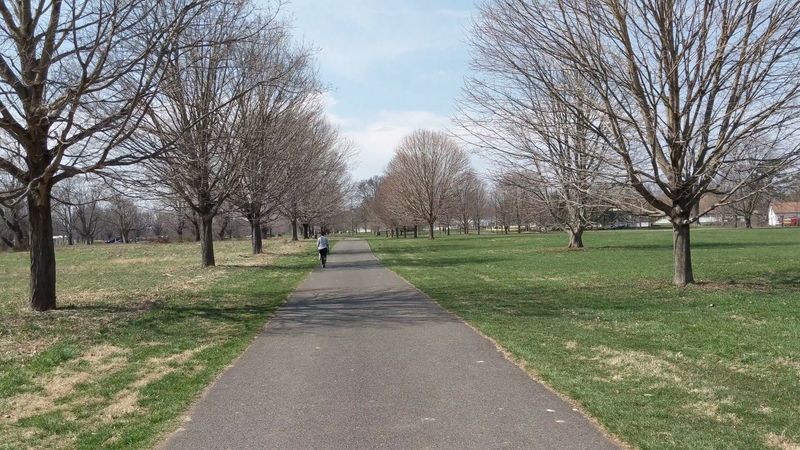
Your walk can be twenty minutes or the main event of the afternoon. With fourteen miles of multi-use trails, the park gives you room to choose a route that fits your energy, company, and available time.
The trail map is particularly useful here because several loops and connecting paths offer different ways through the grounds. For a manageable introduction, the accessible Inner Loop covers 1.2 miles between the playground and Marlu Lake, with a 0.8-mile shortcut available.
The lake gives the walk a destination, which can make a considerable difference when younger companions begin asking how much farther it is. A shorter woodland option is the 0.2-mile Marshy Walk, where boardwalks cross wetland areas.
The Track Loop adds the strongest connection to the park’s racing past. The current map lists it as a one-mile route beneath a canopy of trees, and the park identifies the former horse exercise track as a route enjoyed by walkers and runners.
It is a pleasant place to consider how the same ground can serve entirely different purposes over time. For a longer outing, the Reservoir Loop stretches 4.8 miles around the Swimming River Reservoir and Marlu Lake on grass and dirt surfaces.
That is a different proposition from a quick paved stroll, so shoes suited to uneven ground make sense. Choose the route before you start, then leave some flexibility in the schedule.
A longer distance does not automatically make a better visit. Walking slowly enough to notice the transition from estate grounds to woods or water can be more rewarding than completing another loop.
Carry water, keep the map handy, and allow time for pauses. On land with this much history, an unhurried mile has plenty to offer.
Old Farm Buildings Found New Life as Spaces for Art and Theater
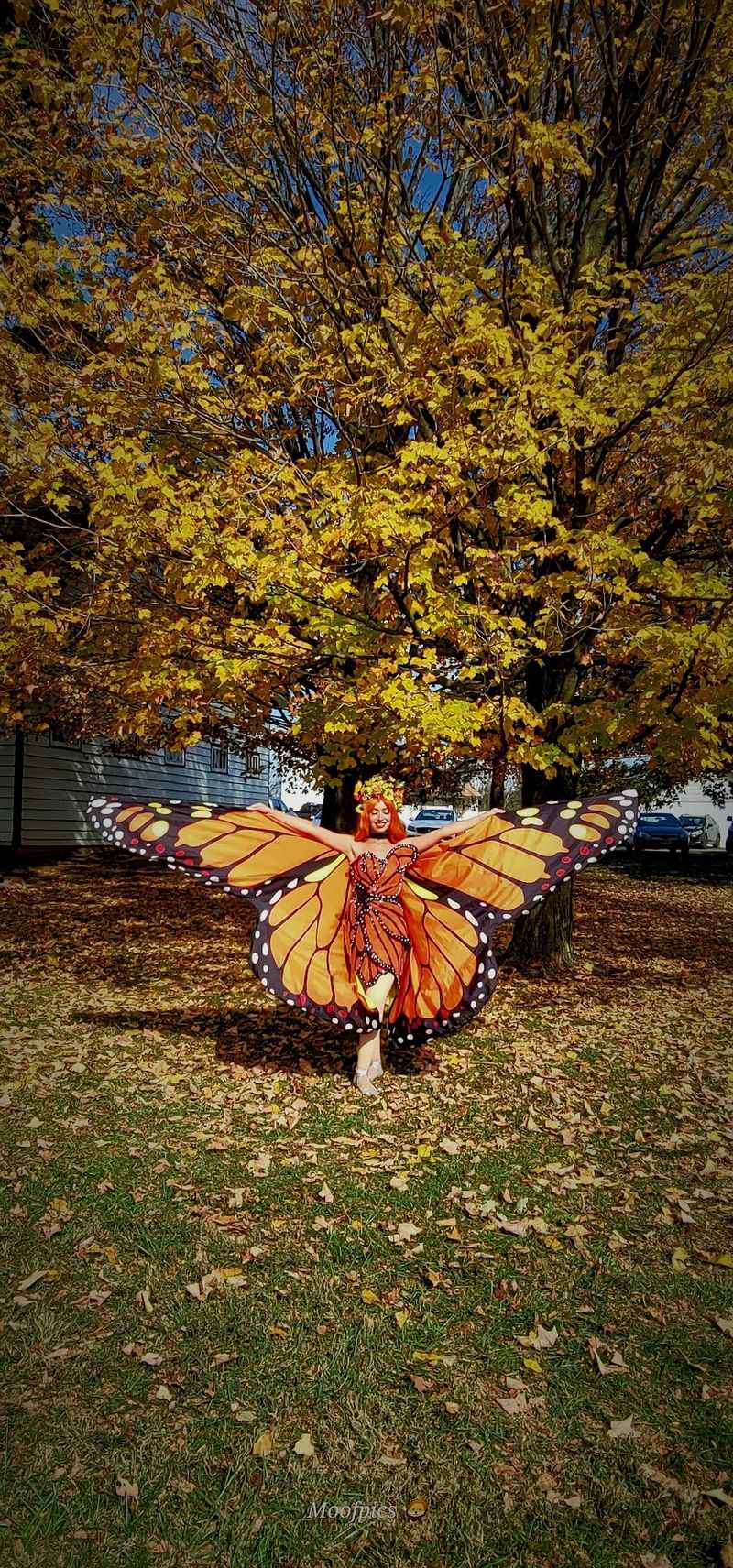
A yearling barn is an unusual place to find a stage, but it makes perfect sense once you understand how this park has evolved. Built in 1884, the building now known as the Theater Barn has been adapted with lighting, a sound system, and seating for approximately 200 people.
It hosts plays, concerts, spoken-word events, camps, and other park programs, primarily during the warmer months. The Three Barn area takes its name from two former horse barns and a cow barn, giving visitors a small geography lesson in the property’s working past.
Nearby, the Creative Arts Center supplies another reason to visit with something besides hiking on your mind. Pottery and ceramics occupy roughly two-thirds of its space, and offerings include beginner wheel pottery, handbuilding, and raku.
Other classes cover interests ranging from drawing and painting to knitting, crocheting, jewelry-making, and basket-making. Children have their own programs, including art activities and summer camps.
These are scheduled offerings, so a class takes a little more planning than an impromptu walk. Still, the range gives the park a role in everyday community life that extends well beyond good weather and scenic paths.
The Gallery at Thompson Park adds exhibitions of original work by local artists, creating another way to spend time among the estate’s repurposed buildings. Together, these spaces make preservation feel active.
A barn can retain its place in the landscape while welcoming a completely different kind of work inside. For a mixed-interest group, that is especially useful.
Someone can be excited about ceramics, someone else about a performance, and another person about the grounds themselves. The old farm buildings give those interests a shared address.
Brookdale’s structures have become places where people make things, learn things, and occasionally applaud things.
What to Know Before Exploring This 667-Acre Lincroft Park
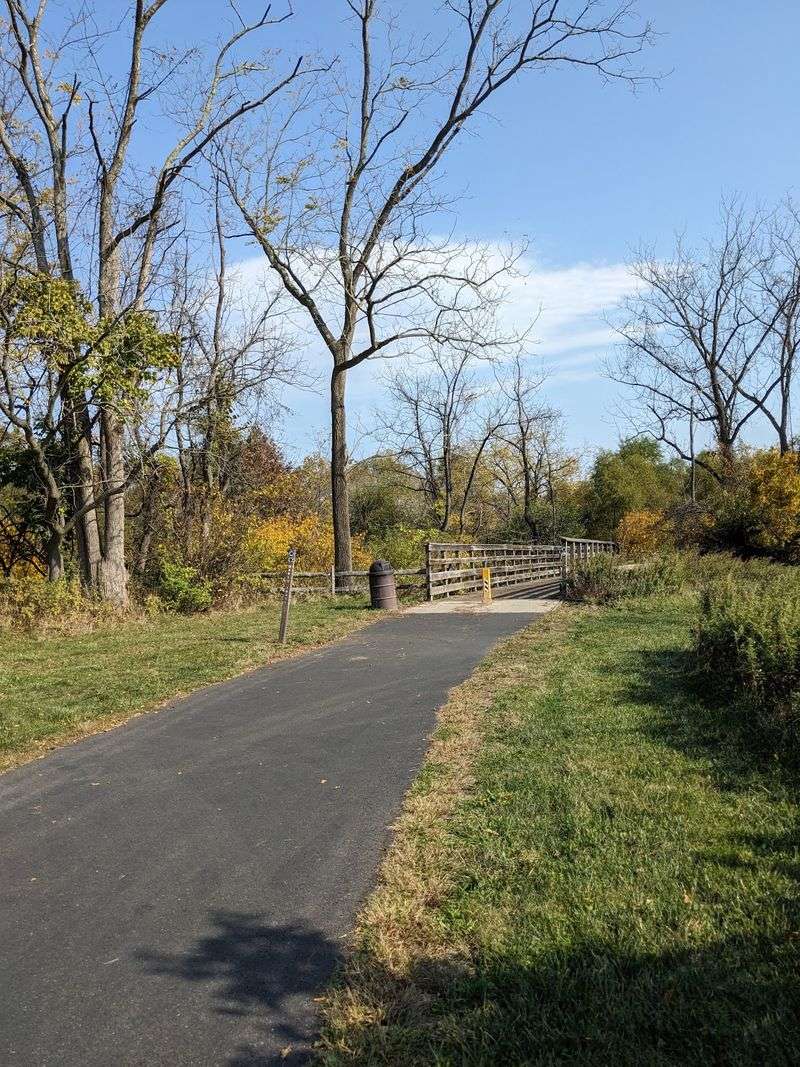
Put 805 Newman Springs Road, Lincroft, into your navigation rather than relying on the park name alone. New Jersey has more than one Thompson Park, and this is the Monmouth County property.
From Garden State Parkway Exit 109, the approach follows Route 520 west for about 2.2 miles, passing the Brookdale Community College entrance before reaching the park. General access begins at 7 a.m. daily, with earlier access at 6 a.m. for Marlu Lake fishing.
Closing times change seasonally, so the posted time matters more than how much daylight appears to remain. General park admission is free, which makes it easy to keep the day simple.
A walk and a picnic can be the whole plan. Classes, performances, and reserved facilities have their own arrangements, so free entry does not mean every organized activity is included.
Think about where you want to spend most of your time before choosing a parking area. The playground, estate buildings, arts facilities, and longer trails are different destinations within a substantial property.
A little orientation at the start prevents an afternoon of retracing steps. Pack lunch if you want a leisurely stay, bring shoes that suit your chosen route, and allow extra time if the stable is part of the itinerary.
Dogs belong on a leash outside the designated off-leash area, and trail users should follow posted directions and yield appropriately. The best schedule leaves room for an ordinary pause: sitting after a walk, watching the grounds settle into evening, or letting the conversation wander away from the day’s plans.
Once the history has sunk in, those small moments become part of the appeal. Land that once supported an ambitious racing enterprise now has room for an afternoon that requires very little ambition at all.
Share this story