A miniature locomotive is an innocent enough thing to browse. Then you notice the freight cars, start comparing buildings, and suddenly you’re mentally rearranging the spare room to accommodate a railroad.
That’s the particular danger of The Model Railroad Shop in Piscataway, where a quick look can turn into a surprisingly involved afternoon. This specialty shop has been in continuous business since 1933, serving people whose interests range from a train beneath the Christmas tree to carefully planned miniature transportation systems.
Its selection covers HO, N, and O scale trains, along with scenery, structures, tools, and enough railroad reading material to send you down another track entirely. You don’t need a basement empire or an encyclopedic knowledge of locomotives to appreciate the place.
Curiosity will do. The rest tends to follow once you realize that every little box represents another possible addition to a world you can build yourself at home.
The Model Railroad Shop Has Been Keeping Piscataway on Track Since 1933
January 2, 1933, is a remarkably early starting point for a business devoted to miniature railroads. Howell Day established the shop when the hobby was still developing, and its early operation relied heavily on mail orders.
Day also produced model kits under the H. Owen and Shop-Craft names, placing the business on both sides of the counter as a seller and a maker.
By 1934, it was among the first six advertisers in the inaugural issue of Model Railroader magazine. That’s a substantial connection to the hobby’s beginnings, rather than simply an old date attached to a storefront.
Ownership changed over the decades. Leonard Lippman bought the business in 1948 and hired Fred Deibert to manage it; Deibert took control in 1950 and remained the owner until 1981.
His interests reached well beyond selling locomotives. At home, he operated an HO railroad called the Raritan and South Shore, modeled after the real Raritan River Railroad, and later wrote the railroad history book Rails Up the Raritan.
Those details help explain why this shop’s history feels closely tied to the activity it supports. Model railroading can involve collecting, woodworking, painting, electrical work, historical research, and the satisfying business of making something run correctly.
A store with roots that deep has witnessed generations of hobbyists approach the same pastime from different directions. For a visitor, the appeal doesn’t require treating the place like a museum.
It remains a working shop where the past provides context for the project you’re planning now. A freight car for a new layout and a question about an older train both belong in that conversation.
Nearly a century after its opening, the basic attraction remains wonderfully understandable: people like trains, and some people like building a whole world around them.
HO, N, and O Scale Trains Give Collectors Plenty to Explore
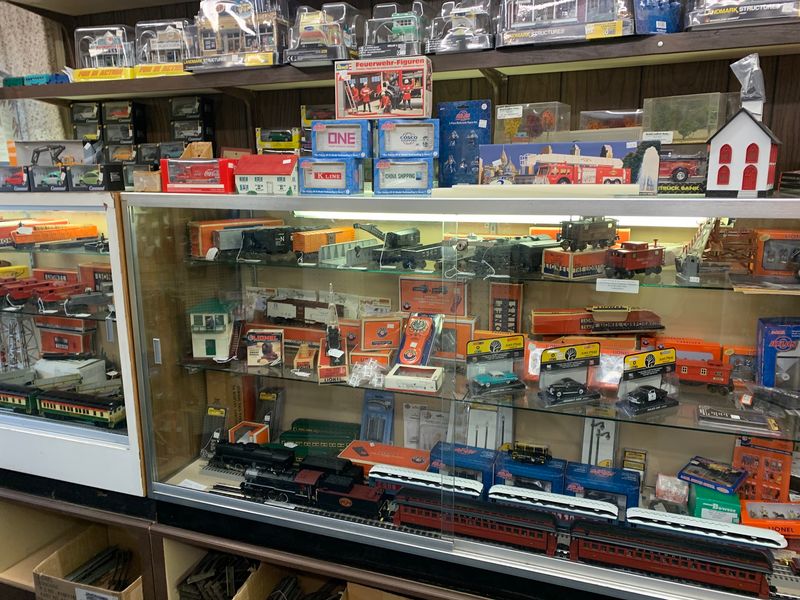
Before choosing a locomotive, there’s a surprisingly consequential question to answer: how much railroad can your home actually accommodate? The shop’s HO, N, and O scale selections give that question some physical perspective.
HO models are approximately one eighty-seventh the size of their full-size counterparts, while American N scale models generally use a one-to-160 ratio. Seeing the difference in person makes those numbers easier to understand.
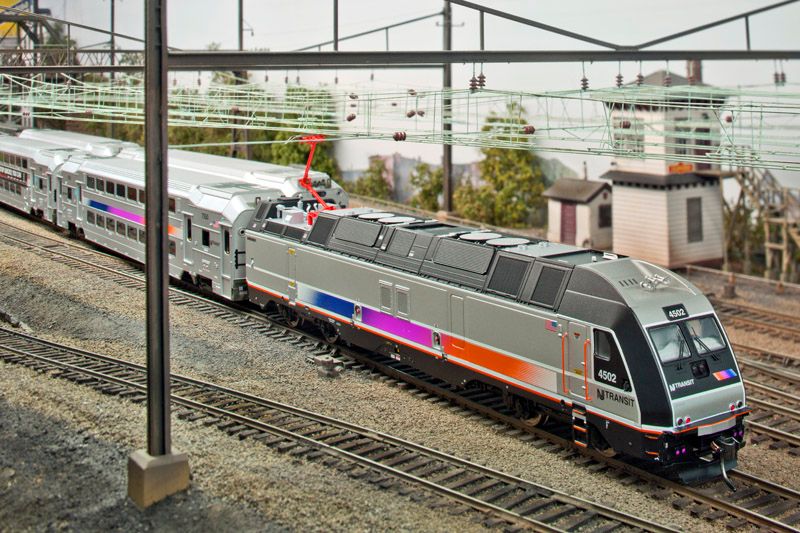
N scale offers possibilities for fitting more railroad into limited space, while HO provides a different balance between size and detail. The shop’s HO selection includes locomotives, cars, track, structures, detail parts, and decals.
It also has a particular interest in Eastern railroads, including the Central Railroad of New Jersey, Erie, Delaware, Lackawanna and Western, Reading, and Lehigh Valley. That regional emphasis gives New Jersey enthusiasts something more specific to browse than a generic assortment of engines.
In N scale, the listed product lines include Atlas, Kato, Micro-Trains, Bachmann, and Eastern Seaboard Models, with offerings spanning trains, track, buildings, and smaller components. For beginners, the useful part is comparing actual models before committing to a system.
A train can look enormous in a close-up photograph and surprisingly delicate when you’re standing beside it. Larger equipment brings its own appeal, but the curves and clearances it needs deserve consideration too.
Collectors can approach the shelves with a different mission, perhaps looking for equipment that fits a particular railroad or period. Either way, browsing becomes more interesting when you have one concrete idea in mind.
Maybe it’s a compact switching layout, a holiday train, or a freight line inspired by the Northeast. Once that decision starts taking shape, the individual boxes begin looking like pieces of a much larger plan.
Tiny Buildings and Scenery Help Bring Your Railroad to Life
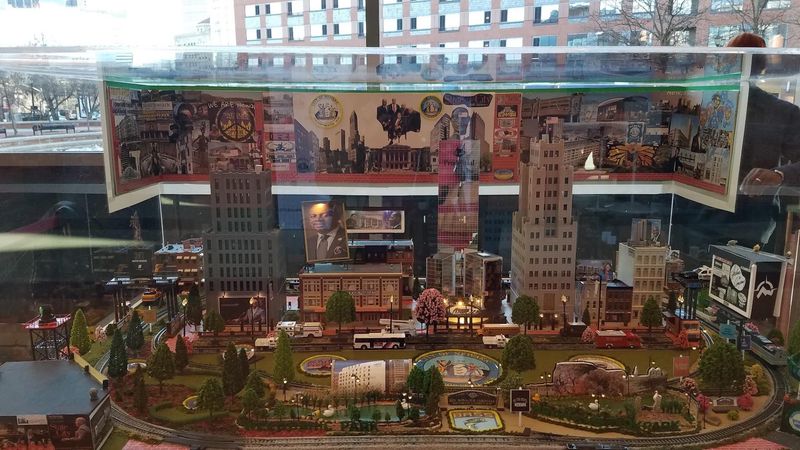
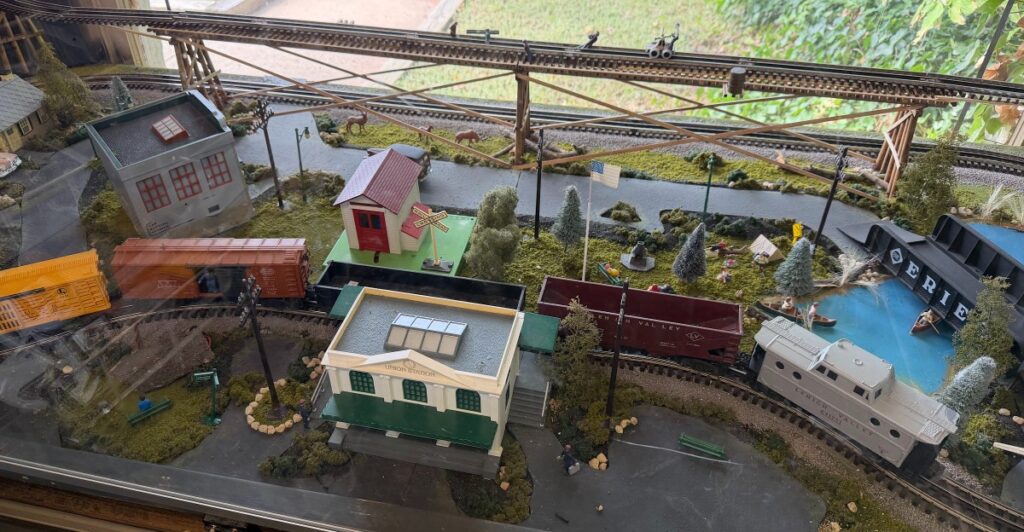
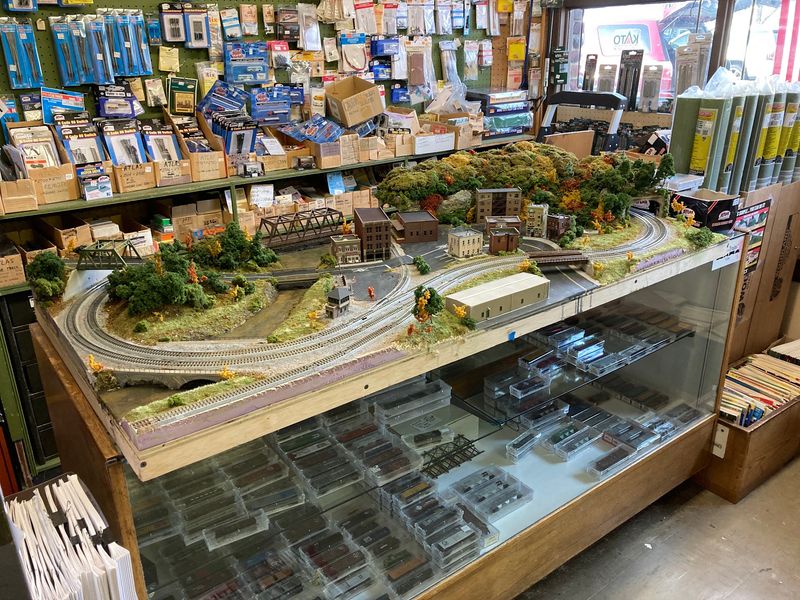
Picture a locomotive circling bare track, then imagine the same train passing a station, slipping behind a hillside, and emerging beside a small industrial building. The engine hasn’t changed, but the journey has acquired a setting.
That’s why the scenery department deserves its own share of the afternoon. The Model Railroad Shop’s selection includes ballast, trees, foliage, ground cover, retaining walls, scenic backdrops, rock molds, tunnel portals, and materials for creating water features.
Structure offerings include houses, stations, industrial facilities, and railroad support buildings, with both kits and assembled options represented. The listed manufacturers include Woodland Scenics, Walthers Cornerstone, and Heljan, among others.
There are also HO and N scale vehicles, including cars, trucks, and construction equipment. That combination allows a project to develop beyond the tracks themselves.
A station suggests passengers and a town nearby. An industrial building gives freight cars somewhere to go.
A retaining wall can make a change in elevation look intentional instead of awkward. Even someone who has little interest in operating trains might enjoy the model-making side, where painting a building or arranging a cluster of trees becomes the main event.
It’s also an approachable place to start improving an existing layout. You don’t have to rebuild everything to give one corner more character.
A small scene with a building, a vehicle, and a few thoughtfully placed details can create a focal point without requiring another room. Scale matters here just as much as it does with locomotives, so matching the scenery and structures to your trains is essential.
Beyond that, a little restraint helps. Leaving space between features gives the railroad room to look believable.
The temptation to squeeze in every appealing building is understandable, especially when a miniature town seems much easier to expand than your actual house.
Experienced Railroaders Help You Figure Out Your Next Project
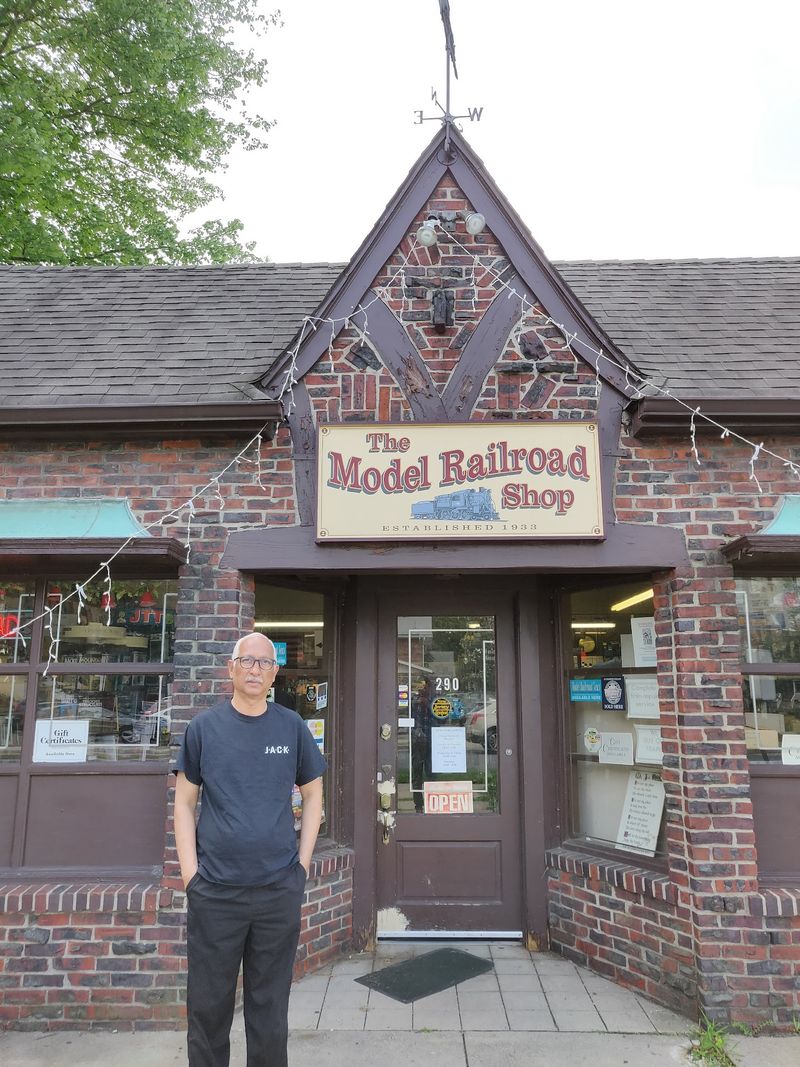
“What should I buy first?” is a perfectly reasonable question, especially when the answer involves track, power, scale, and equipment that needs to work together. The shop welcomes beginners and offers guidance on choosing a scale, planning a layout, basic electronics, and Digital Command Control, usually shortened to DCC.
Its starting advice is refreshingly practical: begin with something manageable instead of letting the possibilities overwhelm you. That approach makes sense in a hobby where an ambitious plan can grow faster than the space or budget available.
A small railroad that runs reliably gives you something to enjoy while you learn. An enormous unfinished one can become another household project staring back at you.
Arriving with a few measurements helps make the conversation useful. Explain whether you’re working with a tabletop, a shelf, or part of a basement, and whether your main interest is watching trains run, switching freight cars, or building scenery.
If you already own equipment, photographs and model numbers can help clarify what you’re trying to expand. Technical support also extends beyond introductory advice.
The shop lists DCC decoder installation for HO, N, and O scale locomotives and accessories, along with custom painting services. Availability, pricing, and the suitability of a particular model are worth discussing before handing over equipment.
For returning hobbyists, those conversations can bridge the gap between an older collection and newer possibilities. You might know exactly which railroad you love while needing help sorting out the control system.
Or you might enjoy assembling kits but prefer to leave specialized electrical work to someone experienced. There’s no requirement to master every part of model railroading at once.
The advantage of a specialty shop is being able to explain the project in ordinary language and work toward choices that fit it. Sometimes the most useful thing you leave with is a clearer idea of what comes next.
Railroad Books and Magazines Make Browsing Half the Fun
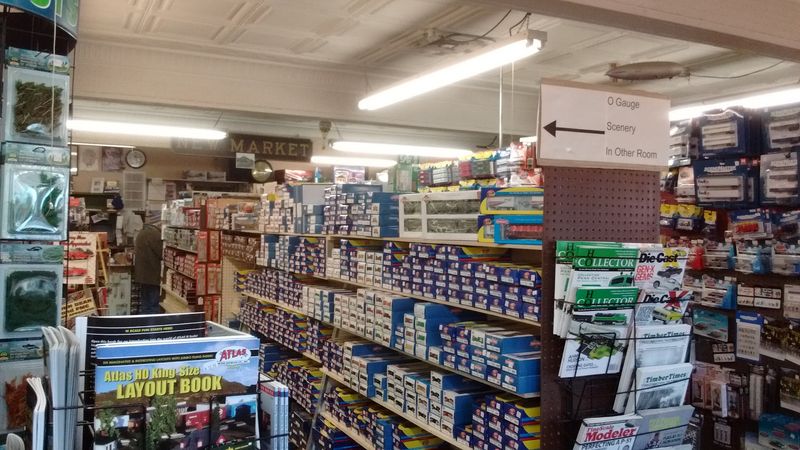
New Jersey’s railroad past provides plenty of material for a miniature layout, but the book selection can send your interests much farther afield. The shop carries hundreds of new and used titles covering model railroading and full-size railroads, along with transit, trolleys, locomotives, freight cars, and signal systems.
Its reading material also extends to subjects such as buses, trucks, construction equipment, and fire apparatus. Morning Sun’s vintage railroad photo books are among the listed offerings, while practical modeling books cover the building side of the hobby.
Magazines add another layer, including publications devoted to models, real railroads, and railroad historical societies. This is where a visit can take a pleasantly unexpected turn.
Perhaps you arrive interested in one locomotive and find yourself wondering what the stations along its route looked like. A photograph can reveal the spacing of buildings, the appearance of a freight yard, or the details around a track that make a scene convincing.
For someone modeling a particular period, those background elements matter as much as the train. A modern vehicle parked beside a carefully researched steam-era scene can spoil the effect faster than a slightly imperfect tree.
Books are useful for the practical questions too. A layout plan can help you think through where trains will travel, where track will branch, and how much access you’ll need for maintenance.
Printed references let you study a drawing without bouncing between screens or losing your place in a discussion thread. You can also enjoy this section without owning a single model.
Railroad history has its own appeal, particularly for anyone interested in how communities, industries, and transportation developed together. The reading shelves give the shop a second identity: a place to explore the large, complicated world that inspired all those small trains.
Buying a locomotive isn’t the only way to leave with a new fascination.
What to Know Before Visiting This Old-School Train Shop
A Sunday afternoon sounds ideal for leisurely train browsing, but this particular shop is closed on Sundays and Mondays. The address is 290 Vail Avenue in Piscataway, and the telephone number is 732-968-5696.
Regular opening time is 10:30 a.m. Tuesday through Saturday.
Tuesday and Thursday closing times are listed as 6 p.m., Wednesday as 8 p.m., and Saturday as 5 p.m. Friday’s closing time needs a quick phone check because the posted schedules differ.
Calling ahead is also sensible if your visit depends on finding one specific locomotive, book, replacement component, or service. A little preparation can make browsing more productive without turning it into homework.
If you’re shopping for an existing railroad, note its scale and the manufacturers of the equipment you already use. For a gift, those details are particularly helpful; a beautifully chosen train is less useful if it doesn’t fit the recipient’s collection.
Photographs can explain a layout or a problem more quickly than a description assembled from memory. Newcomers can keep things simpler.
Knowing roughly how much space you have and what you’d like the trains to do gives the conversation somewhere to begin. There’s no need to arrive speaking fluent railroad terminology.
It also helps to leave some breathing room in the schedule. Comparing models takes time, and the scenery and reading selections can easily become separate stops within the same visit.
This is a specialty retail shop, so the experience centers on browsing, questions, and the possibilities suggested by the stock. That’s plenty for the right visitor.
One person may spend the afternoon finding equipment for a carefully researched railroad; another may become absorbed in a building kit. Both can leave thinking about the same thing: the small stretch of track waiting at home, and what might belong beside it next.
Share this story