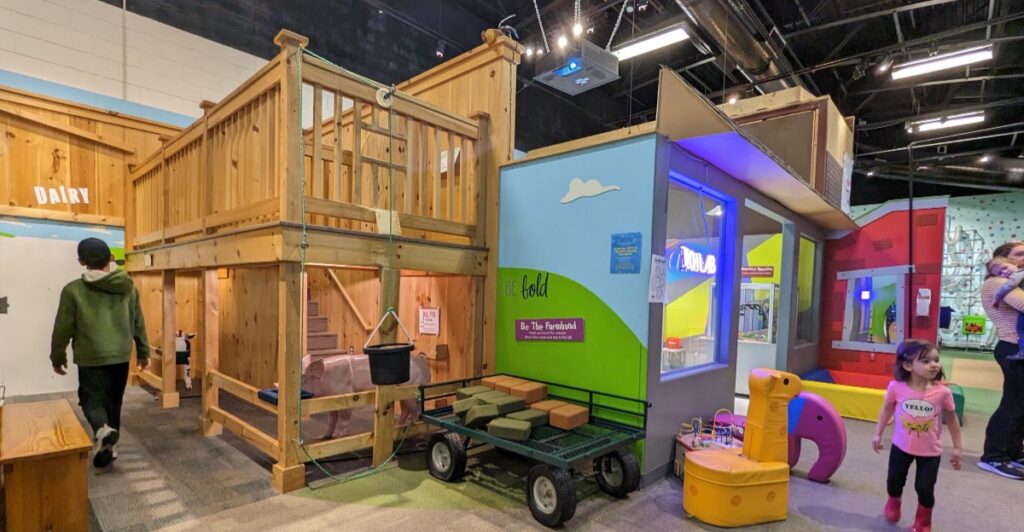
At Hands-on House in Lancaster, kids can run a little market, build with pretend bricks, and make art instead of simply standing behind ropes and looking at exhibits. The hands-on approach gives children plenty of chances to explore, create, and learn through play, while adults can join the fun, too, making a visit feel more like a shared adventure than a traditional museum trip.
The museum is designed mainly for children ages 2 to 10, but its colorful, playful spaces can bring out anyone’s imagination and make it easy for the whole family to get involved. With so many activities to explore, you can let the kids take the lead while still finding plenty to enjoy together. Here are nine ways to make the most of a visit.
1. Take a Job in the Village
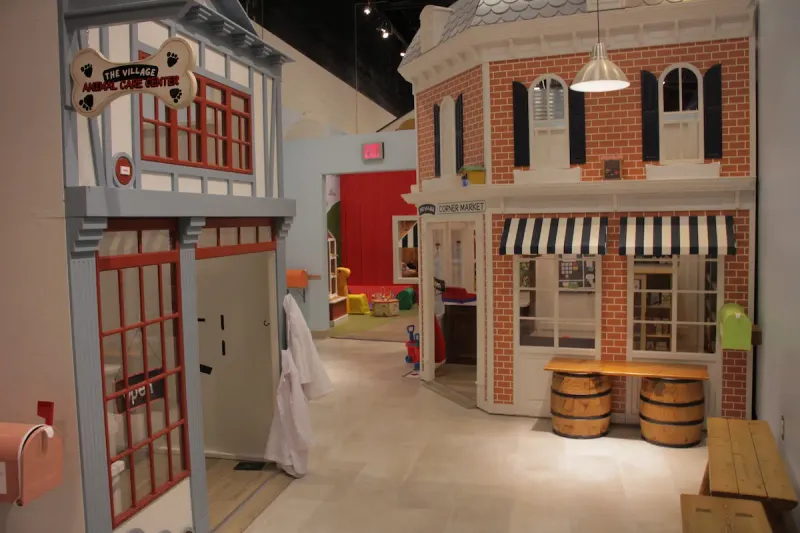
One minute you are buying pretend groceries; the next, your child is delivering the mail.
The Village at Hands-on House turns everyday places into a world built for small hands.
Visitors have described a corner market, post office, animal care center, cave, and treehouse, giving children plenty of ways to invent their own stories.
Adults can join without taking charge.
Ask your child to recommend a snack at the market, or let them explain how the post office works.
Switching roles keeps the game fresh and gives quieter children an easy reason to talk.
A trip from the shop to the animal care center can become an entire make-believe afternoon.
Try following your child’s lead rather than planning every stop.
Pretend play helps children practice sharing, solving small problems, and seeing another person’s point of view.
You may be surprised how quickly you start taking your very important pretend job seriously, too.
2. Make Farm Chores Feel Like a Game
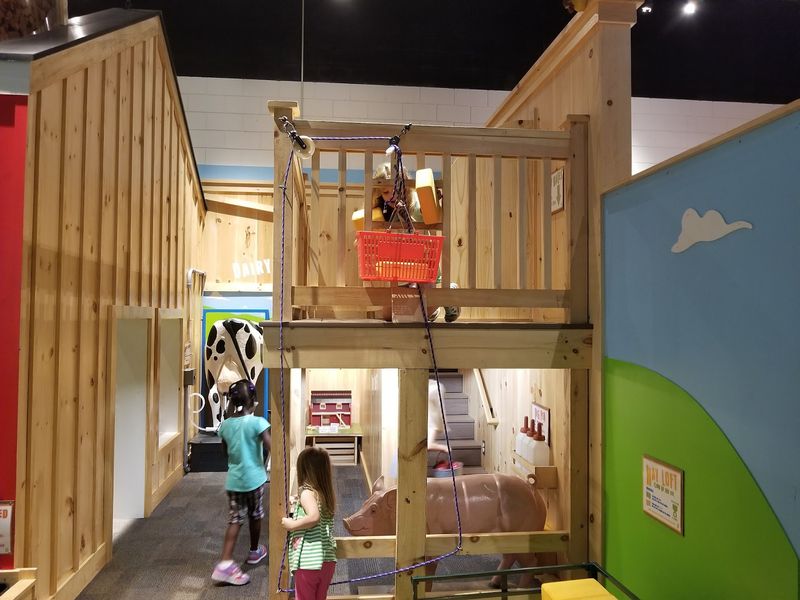
Farm work sounds a lot more exciting when the tractor is your size.
In the Village Farm, children can explore familiar Lancaster County themes through pretend animals, crops, and equipment.
Visitors have mentioned a barn pulley, a tractor, corn and apple picking, and an ice cream truck among the playful details.
Give your child a simple mission, such as gathering apples for a pretend customer or deciding what the animals need first.
Then let the plan change.
A younger child may spend ten happy minutes repeating one task, while an older child might turn the farm into a busy business.
This space gives adults an opening to talk about where food comes from without making the visit feel like a lesson.
Try naming the jobs you see and asking which one your child would choose.
If you end up ordering imaginary ice cream after helping on the farm, consider it a well-earned treat.
3. Build Big Ideas in the Construction Zone
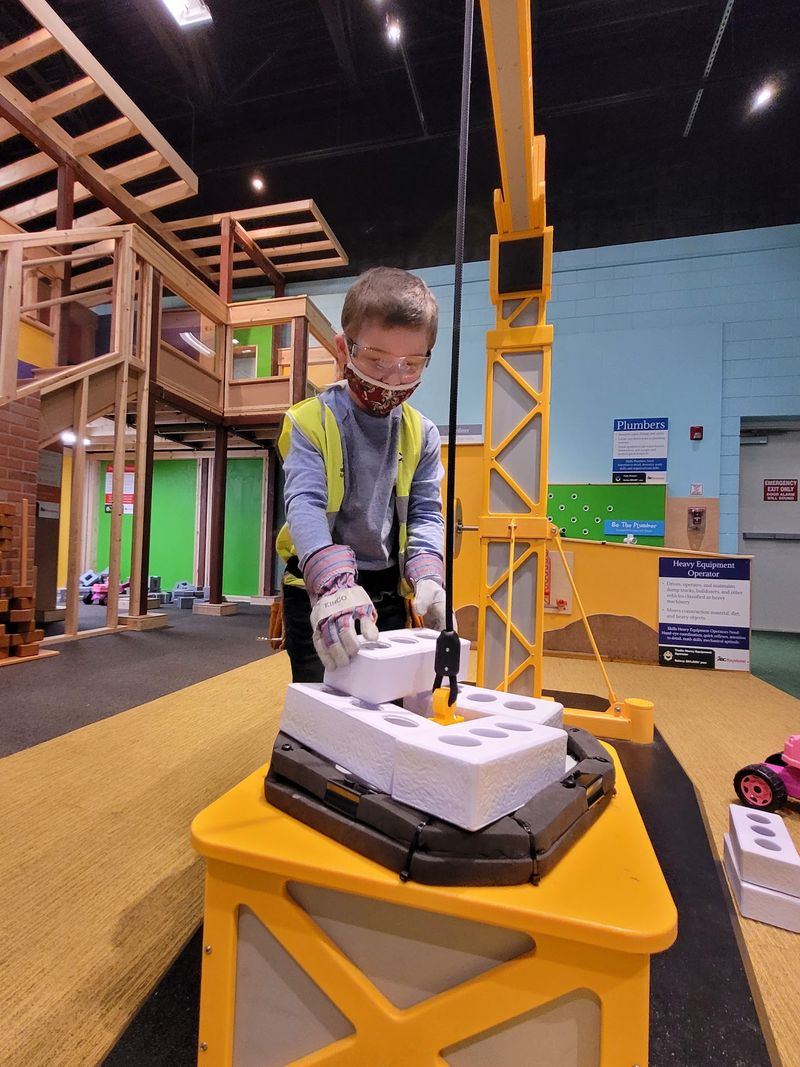
Hard hats and pretend bricks have a way of making grown-ups forget their to-do lists.
The ABC Construction Zone lets children try on building roles and explore a two-story structure with stations for tasks such as carpentry, painting, and masonry.
Visitors also describe lightweight blocks and tools that invite stacking, moving, and starting over.
Instead of aiming for a perfect building, work together on a small challenge.
Could you make a wall wide enough for a toy?
What happens if you move one block?
Those simple questions encourage children to test ideas rather than worry about getting something wrong.
Stay close to younger builders on the structure, especially when the area is busy.
Older children may enjoy explaining their design while adults play the part of helpful crew members.
When a tower falls, laugh and rebuild.
That tiny setback is part of the fun, and it gives everyone a reason to try a new plan.
4. Chase a Scarf Through the Airways
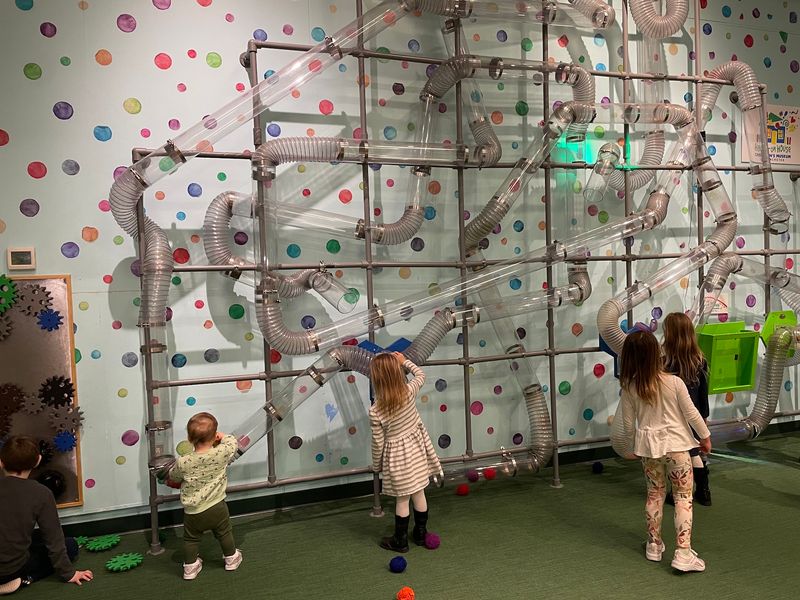
A bright scarf disappears into a tube, and suddenly everyone wants to know where it will pop out.
The airways wall is a visitor favorite because it turns a simple object into a moving puzzle.
Children can watch the scarf travel through the tubes and try different paths, while adults often get just as curious about the result.
Let your child make a guess before sending a scarf on its way.
Then watch together and see whether the route matches the prediction.
Younger visitors can focus on colors and movement; older ones may enjoy thinking about what pushes the scarf along.
There is no need for a long science talk.
If other families are waiting, treat each turn as a quick experiment and leave room for the next person.
The best part is that an unexpected exit is not a mistake.
It is an invitation to try again, cheer a little louder, and pick another path.
5. Follow the Music Into the Playhouse
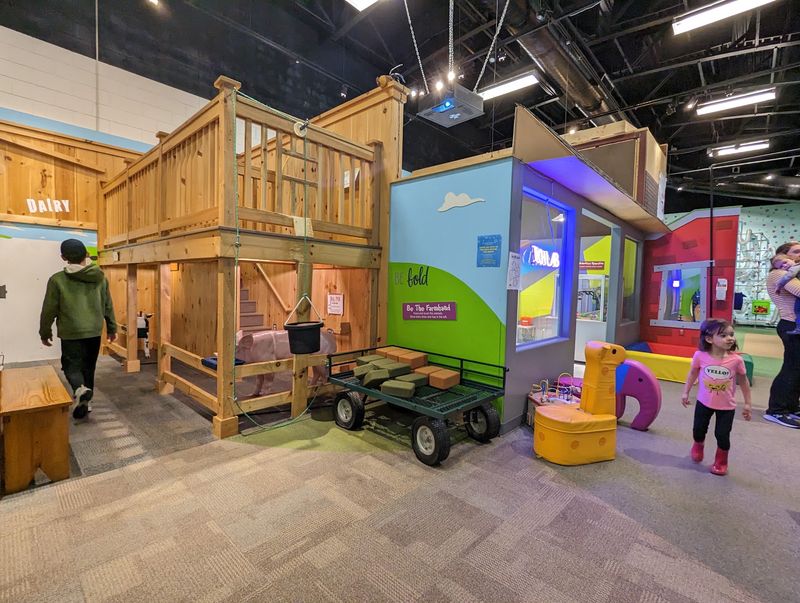
Step onto a giant piano and even a cautious adult may start hunting for a tune.
Visitors describe the Playhouse as a mix of interactive activities, including a piano, light displays, a robotic arm, and a floor game.
The choices make it a useful stop when your group has different interests.
Let each person pick one activity, then swap.
A child who loves movement might start at the floor game, while someone who prefers looking closely may settle at a light table.
If a feature is busy or unavailable, another station can keep the outing moving without turning a wait into a struggle.
You do not need musical skill or a clever plan to join in.
Make a silly pattern on the piano, notice how light changes what you see, or ask your child to teach you the rules they just invented.
Shared laughter matters more here than getting anything right on the first try.
6. Leave Room for a Messy Masterpiece
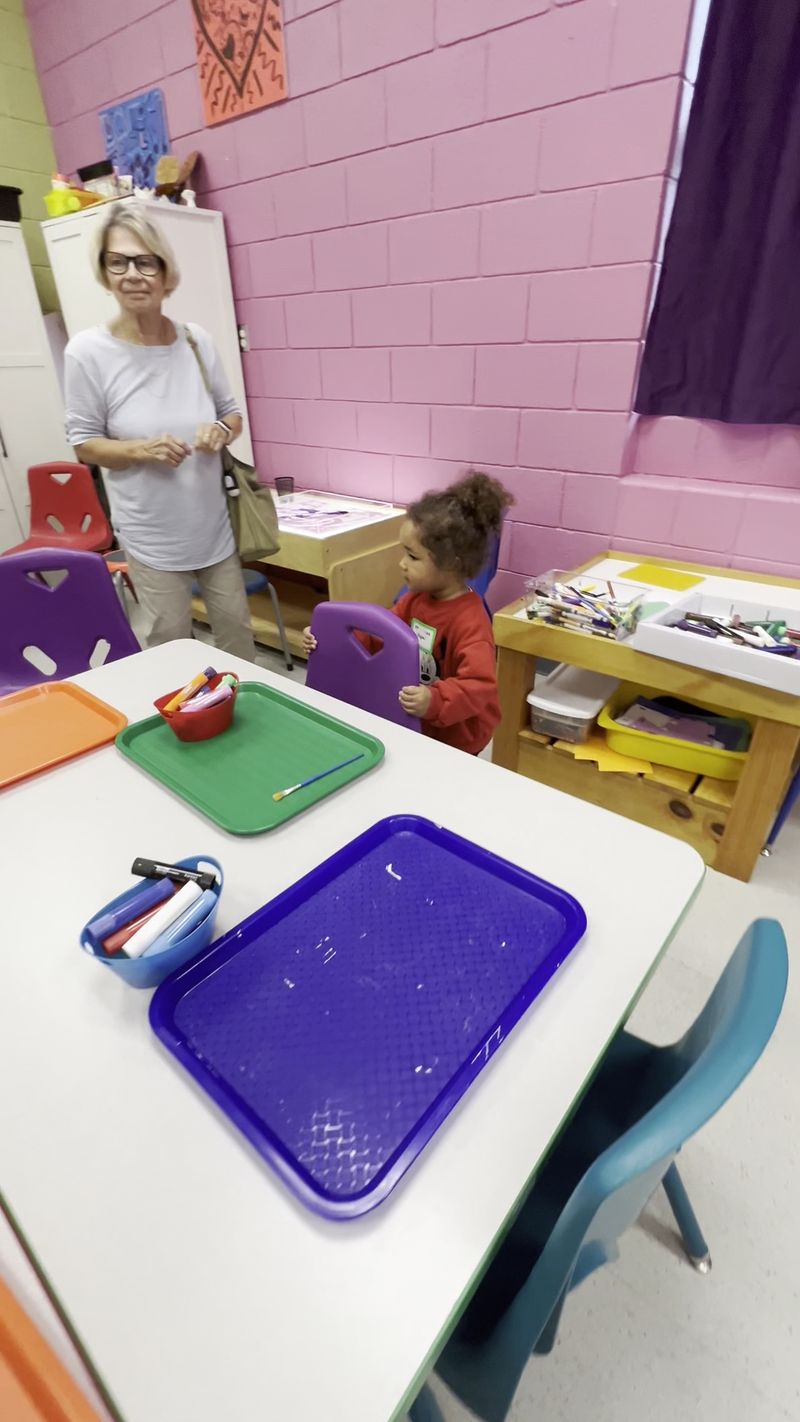
Some of the best museum souvenirs begin as a few marks on paper.
Hands-on House has an art room, and families have praised its drawing, coloring, crafts, and art classes.
After a spell of running between exhibits, sitting down to create can give everyone a welcome change of pace.
Invite your child to choose the colors or materials, even if the result looks nothing like what you pictured.
You could draw alongside them instead of correcting their work.
Ask what is happening in their picture, and you may hear a story more interesting than any grown-up plan.
Art activities and room access can vary, so check the museum’s current schedule if a class or craft is a big part of your visit.
Allow time to wash hands and gather belongings before moving on.
The finished piece might be small, but the chance to make something together can become a favorite memory.
7. Trade Indoor Walls for Outdoor Play
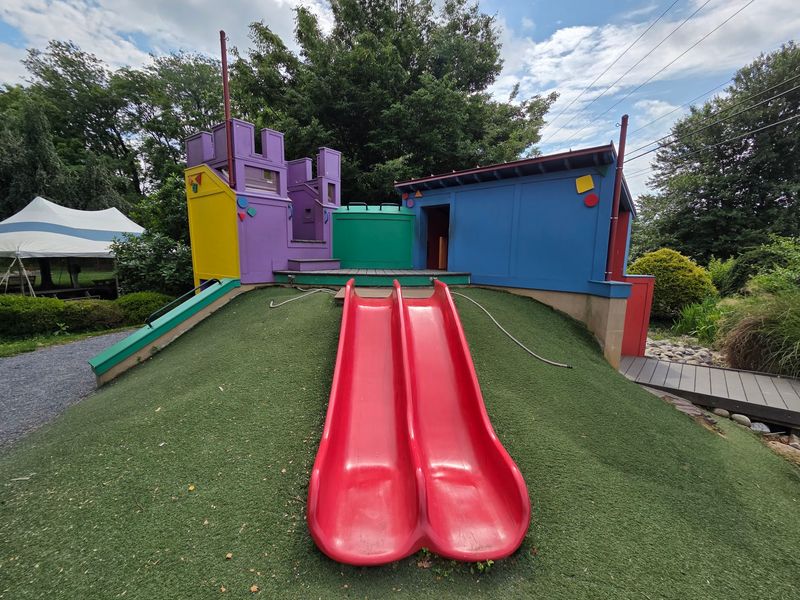
When little legs need more space, the outdoor area offers a change of scene without ending the museum visit.
Families have described a small slide, paths for riding, a maze, and places to explore.
It is a handy option when children want to move after concentrating on pretend play indoors.
Check the weather and ground conditions before promising outdoor time.
A recent rain can mean damp or muddy spots, so shoes that can handle a little dirt are a smart choice.
Keep younger children within sight as they move between play features, rather than assuming every part of the area is fully enclosed.
Outside does not have to be a race from one activity to the next.
Follow a path, pause to notice something in the garden, or let your child repeat the same slide trip several times.
Adults can enjoy the fresh air while children burn energy, and everyone returns indoors ready to discover something else.
8. Take a Breather Without Leaving the Fun
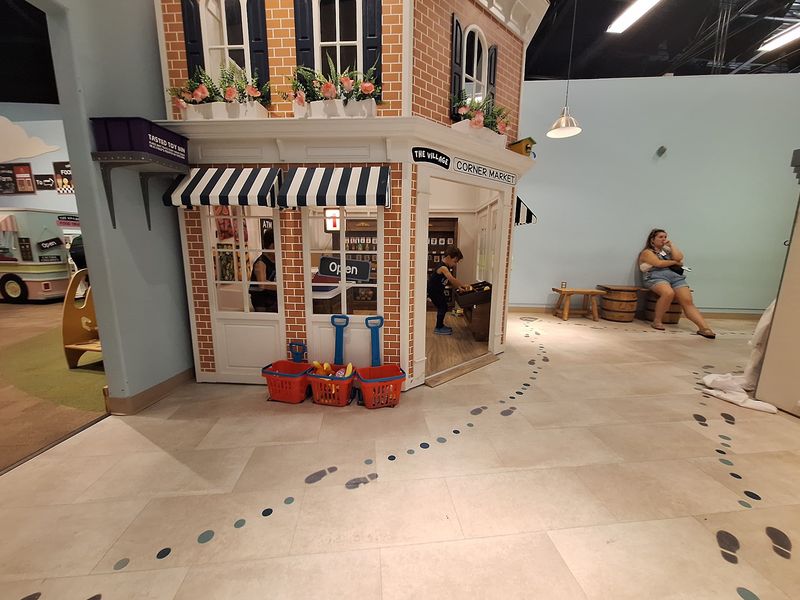
Even the happiest explorer can need a snack and a quiet minute.
Families report benches for adults, a designated place to eat, and a quieter room or sensory space at Hands-on House.
Visitors have also mentioned a nursing area and accessible bathrooms.
Those practical details can make a playful day feel easier for caregivers.
Plan a short break before anyone gets overwhelmed.
Pack a simple snack, check where eating is allowed, and let your child decide whether to sit or return to an exhibit afterward.
If your group includes different ages, a pause can help everyone agree on what to try next.
Keep your own comfort in mind, too.
Wear shoes that make it easy to follow a busy child, and choose a bench where you can still stay engaged.
A slower moment is not wasted time.
It gives children space to reset and lets adults enjoy the visit instead of rushing through it.
9. Plan a Visit That Fits Your Family
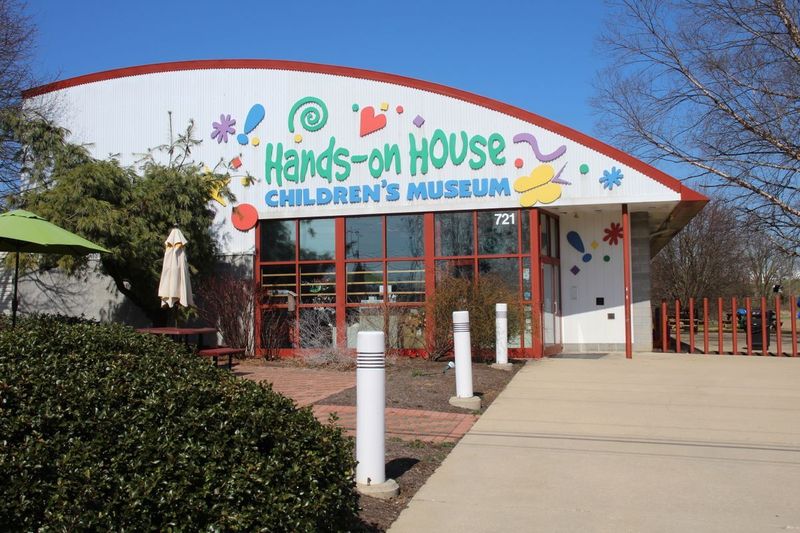
A little planning can buy you more time for play.
Hands-on House is at 721 Landis Valley Road in Lancaster and focuses on interactive experiences for children ages 2 to 10.
Its listed hours are 9 AM to 4 PM Tuesday through Sunday, with Monday closed, but check the museum website before leaving home.
Admission policies and activity schedules can change.
The museum has described a SNAP or EBT admission discount and free family passes available through Lancaster County libraries, so ask about current terms before counting on either option.
Classes, crafts, and storytimes may also depend on the day you visit.
Consider going when your child is rested and leaving enough time to explore both inside and outside.
If crowds are a concern, call ahead at 717-569-5437 to ask about group visits or programs.
Bring curiosity rather than a packed schedule.
Children often spend the longest time where adults least expect it.
Share this story