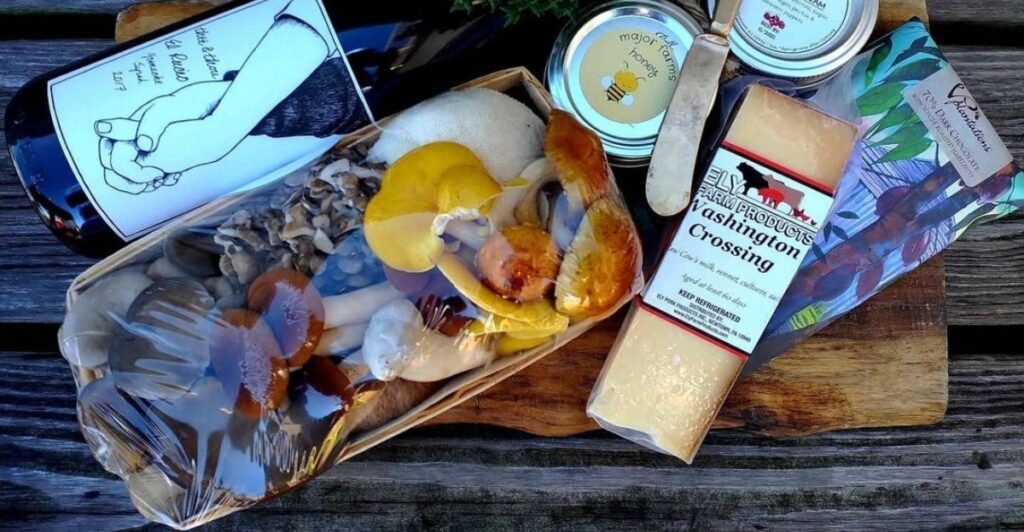
A fluffy white lion’s mane mushroom does not exactly look like something destined for a restaurant dinner plate. Fresh from the growing room, it resembles a shaggy pom-pom more than dinner.
Slice it thick, give it a hard sear, though, and suddenly chefs have something with enough texture to stand in for crab, lobster, or even a piece of meat. Those mushrooms may be showing up on more New Jersey menus than diners realize, and some of them begin their journey at Two River Gourmet Mushrooms in Millstone Township.
What started as founder KC Sullivan’s mushroom-growing hobby has developed into a USDA Certified Organic operation on 25 acres at Mighty Dare Farm, producing specialty varieties including lion’s mane, oyster, shiitake, maitake, chestnut, pioppino, nameko, and king trumpet.
The farm now sends fresh mushrooms into restaurant kitchens and grocery stores while also turning part of its harvest into a nationally distributed line of mushroom broths.
It is a surprisingly high-tech operation built around one very low-tech idea: grow exceptionally good mushrooms close to the people who cook them.
From a Backyard Hobby to a 25-Acre Mushroom Farm
KC Sullivan did not begin with 25 acres, commercial growing rooms, or trucks headed toward restaurant kitchens. Two River Gourmet Mushrooms traces its roots to a mushroom-growing hobby that became increasingly difficult to treat like a hobby.
By 2014, Sullivan had formally launched the business, and an early version of the operation occupied a retrofitted shipping container in Long Branch. Turning a steel box into a mushroom farm sounds slightly mad until you consider what mushrooms actually need.
Unlike corn or tomatoes, they do not require acres of sunlight. They need controlled temperature, humidity, airflow, sanitation, and someone willing to obsess over the details.
A shipping container could provide that controlled environment surprisingly well. Eventually, demand outgrew the container.
Two River moved to Mighty Dare Farm at 145 Stillhouse Road in Millstone Township, where the operation now sits on a 25-acre preserved farm property. The change in scale is dramatic, but the company has kept the specialty focus that made the original experiment interesting.
This is not a field filled with supermarket button mushrooms. Two River concentrates on gourmet varieties that chefs can treat as real ingredients rather than an afterthought scattered over pizza.
The farm is USDA Certified Organic, and its current team includes Sullivan along with partners Kurt Cavano, owner of Mighty Dare Farm, and Scott Szegeski, who handles fresh mushroom distribution.
That combination of cultivation, business, and logistics has helped turn a tiny New Jersey growing project into a supplier with customers well beyond Monmouth County.
Yet there is still something wonderfully local about the setup. Fresh mushrooms can be picked up directly at the Millstone farm Monday through Saturday from 10 a.m. to 4 p.m., meaning the same unusual varieties headed toward professional kitchens are available to anyone willing to cook with them.
How Two River Gourmet Mushrooms Grows Its Crop Year-Round
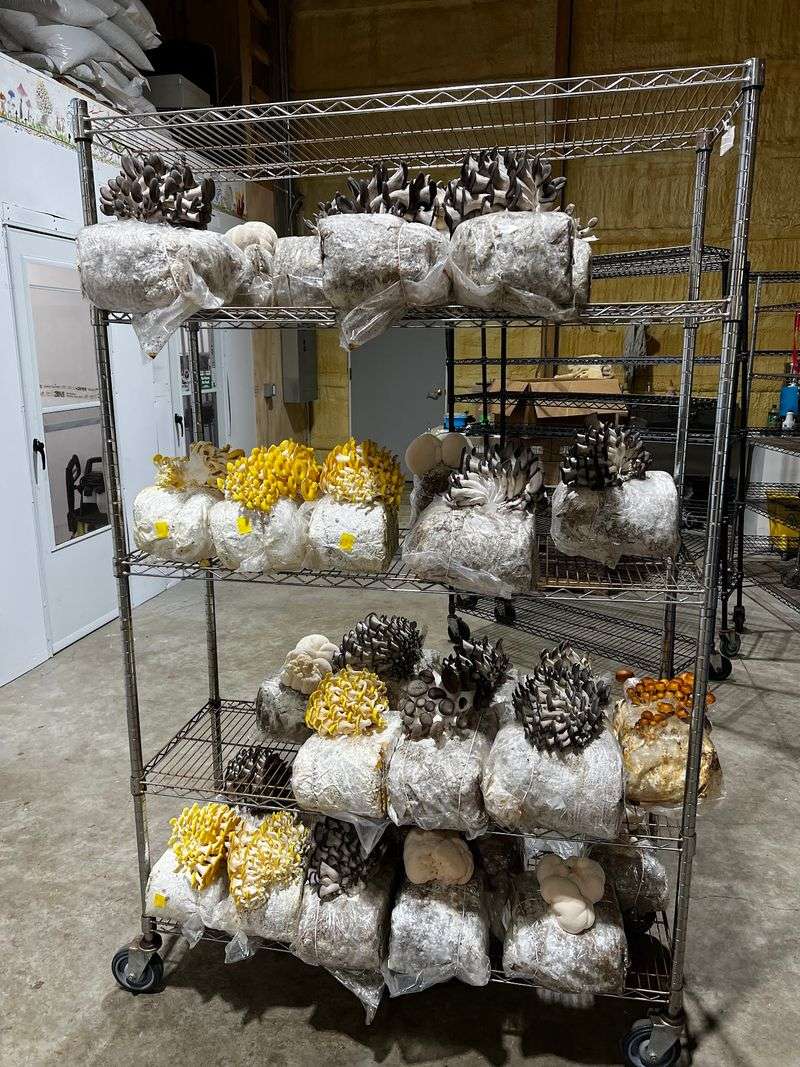
There is no dirt involved in the beginning of a Two River mushroom. Instead, production starts with bags of what growers call Master’s Mix, a carefully prepared substrate that gives the fungi everything they need to develop.
The farm uses a roughly 50-50 blend of non-GMO organic soy hulls and red oak sawdust, with the sawdust sourced from Maine. Water is added until the mixture reaches about 60 percent moisture, and the substrate is packed into filter bags that will eventually become compact growing blocks.
Before anything useful can grow, however, almost everything already living in that mixture has to go. The filled bags enter an insulated 20-foot shipping container repurposed as a large pasteurization chamber.
Steam pushes temperatures to around 210 degrees Fahrenheit for several hours, knocking out bacteria, competing fungi, and other organisms that could take over the substrate before the desired mushroom culture gets a chance. Once the blocks cool, the genuinely delicate work begins.
Inside a HEPA-filtered clean room kept under positive air pressure, workers introduce mushroom spawn beneath laminar flow hoods designed to minimize contamination. The spawn contains mycelium, the threadlike fungal network that eventually produces the mushrooms people recognize.
Over the following weeks, that mycelium spreads through the soy-and-sawdust mixture, steadily turning the block white as it consumes nutrients. Only after a block has been fully colonized does it move to the fruiting stage.
The process explains why consistently producing gourmet mushrooms is less like tending a backyard vegetable patch and more like running a tiny biological laboratory. A careless moment early in the cycle can ruin a block long before there is a mushroom to harvest.
When everything goes right, though, those plain plastic bags begin sprouting some of the strangest and most interesting ingredients grown anywhere in New Jersey.
Inside the Climate-Controlled Rooms Where the Mushrooms Come Alive
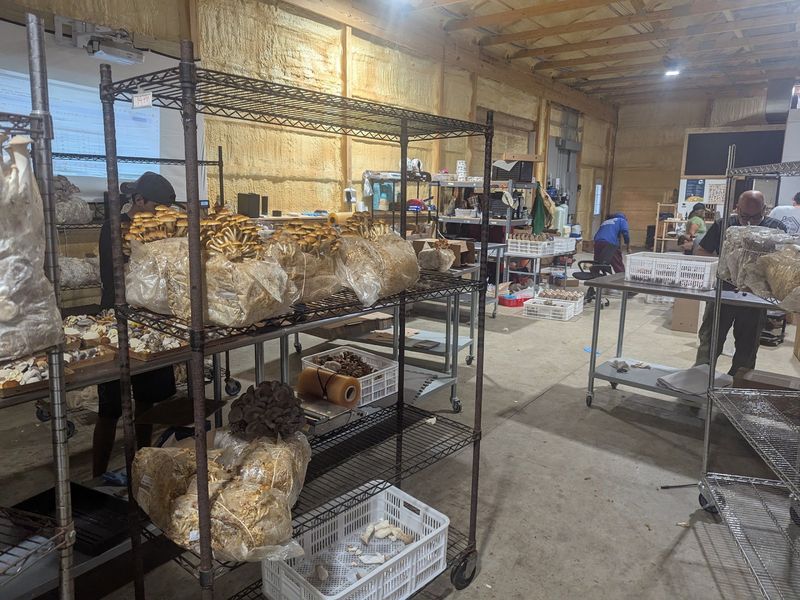
Walk into the fruiting side of a specialty mushroom farm and the first surprise is just how engineered the environment feels. Two River does not simply stack colonized blocks on shelves and hope mushrooms appear.
Different rooms are carefully managed for temperature, humidity, carbon dioxide, and fresh-air exchange, creating the environmental cues that tell the fungi it is finally time to fruit. That control matters because mushrooms behave differently from green plants.
They consume oxygen and give off carbon dioxide, so a room packed with actively growing fungi can build up CO2 unless fresh air is constantly introduced. Too much carbon dioxide can change the way some varieties grow, producing stretched stems or poorly developed caps.
Humidity presents another balancing act. Mushrooms are mostly water and need moist air, but soaking everything with standing water creates the sort of conditions that unwanted microorganisms love.
Two River uses fine misting systems to maintain high humidity while avoiding puddles around the growing blocks. This is where the farm begins to look almost theatrical.
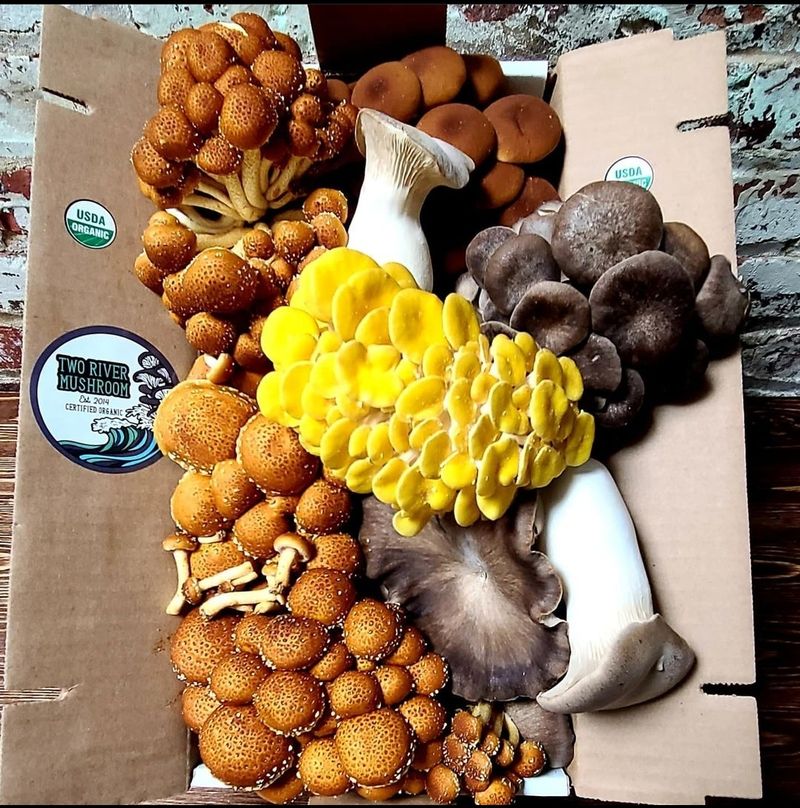
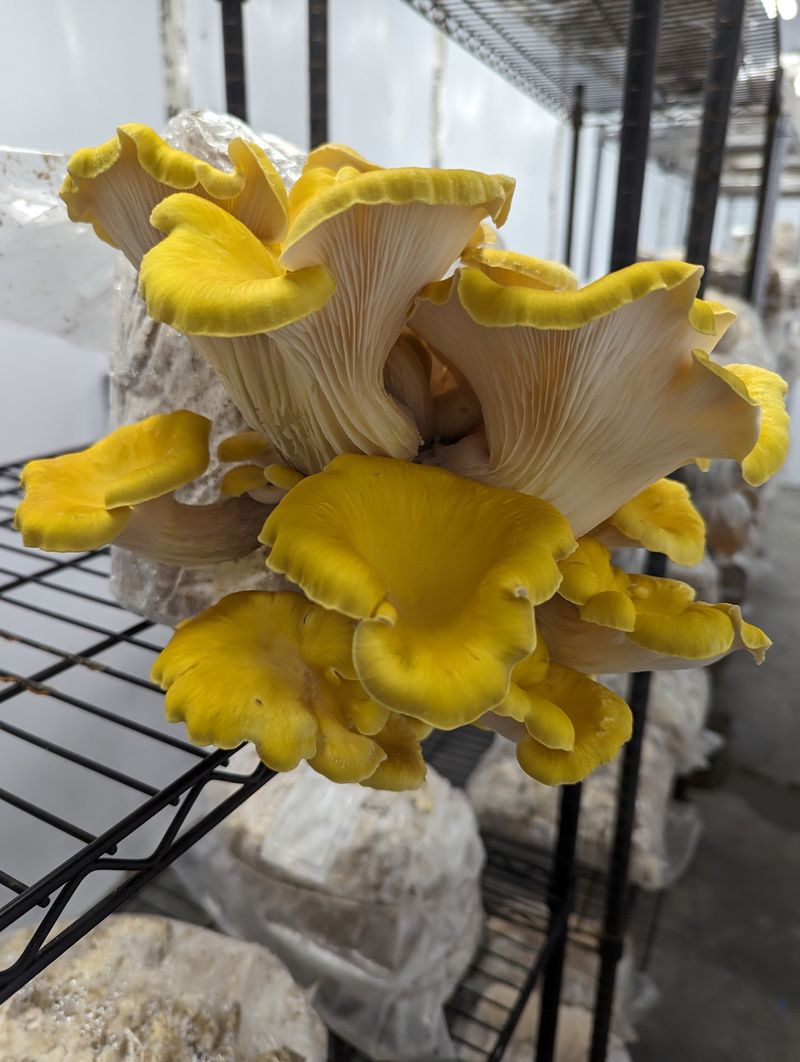
Lion’s mane pushes outward in white, cascading clumps covered in tiny toothlike spines. Oyster mushrooms form layered shelves in shades that can include blue-gray, yellow, and pink.
Maitake develops into ruffled clusters, while king trumpets produce thick, sturdy stems that chefs can slice into medallions. The growing rooms also make year-round production possible.
New Jersey weather can swing from humid 90-degree summer afternoons to freezing January nights, but mushrooms inside these controlled spaces experience something far more predictable. That consistency is especially valuable to restaurants.
A chef building a menu around lion’s mane or oyster mushrooms needs more than a great ingredient once or twice a year; the kitchen needs a supplier capable of delivering it repeatedly. Behind every neat cluster that reaches the plate is a growing room where air, water, temperature, and timing have been manipulated with remarkable precision.
Meet the Gourmet Mushroom Varieties New Jersey Chefs Love
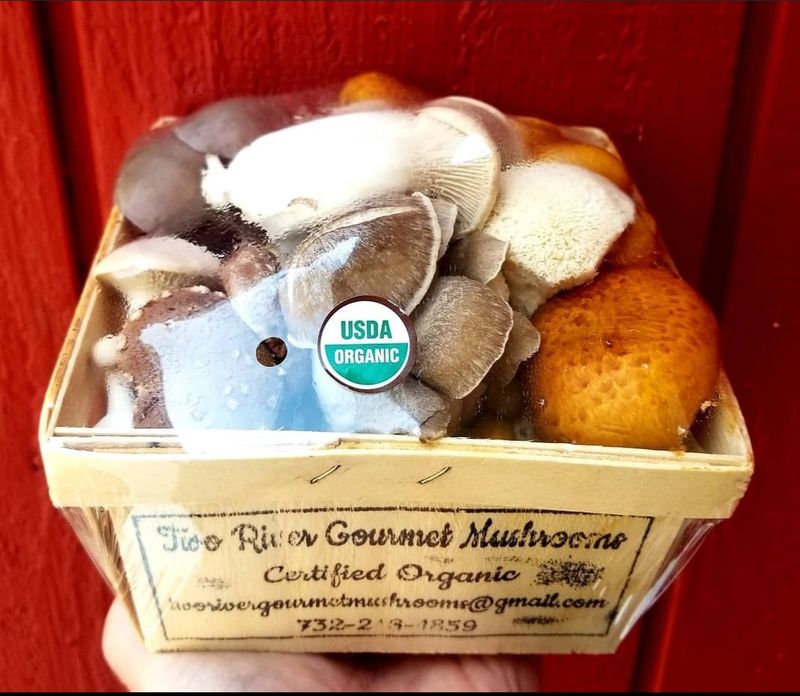
Lion’s mane may be the celebrity of the specialty mushroom world right now, but stopping there would miss much of what makes Two River interesting. Its lineup reads more like a chef’s ingredient wish list than the mushroom shelf at a typical supermarket.
Lion’s mane is easy to recognize because of its shaggy white appearance and dense, juicy texture. Tear it into chunks or slice it into steaks and it can take on a seafood-like quality, which is why lion’s mane “crab cakes” have become such a popular preparation.
Two River currently sells fresh lion’s mane at the farm for about $6 per half pound. Oyster mushrooms, around $5 per half pound, are thinner and more delicate, with a mild flavor that makes them useful in everything from quick stir-fries to pasta and soups.
Then there are chestnut mushrooms, small brown clusters with firm stems, an earthy flavor, and a slightly nutty edge. Unlike varieties where cooks often discard tough stems, much of a chestnut cluster can go straight into the pan.
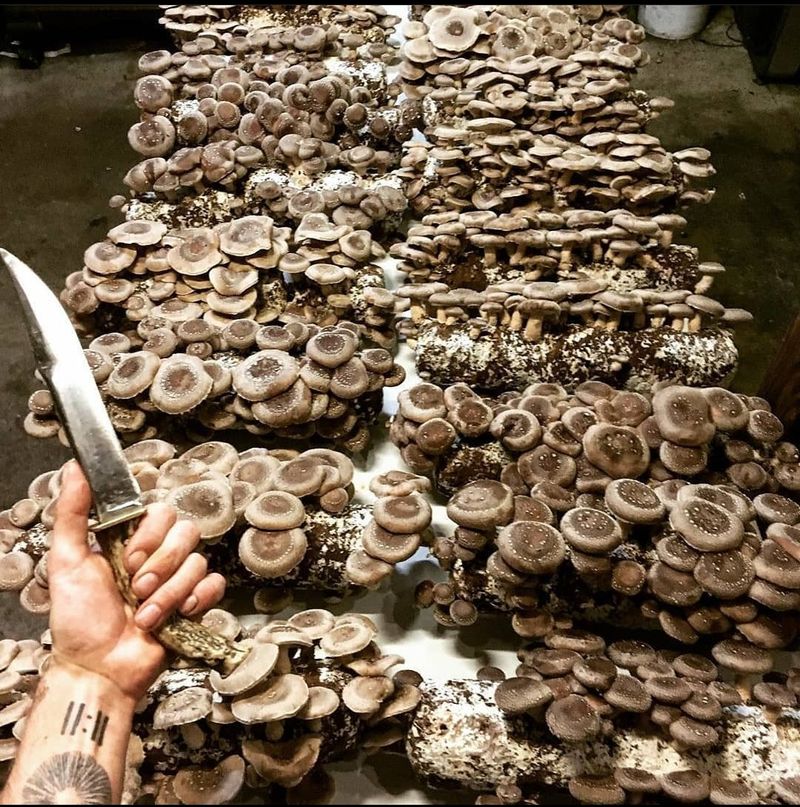
Shiitakes bring the deep savory flavor familiar from broths and Asian dishes, while pioppino mushrooms have slender stems, dark caps, and a firmer bite that works especially well with garlic, olive oil, and Italian preparations. Maitake, also known as hen of the woods, offers frilly edges that can become wonderfully crisp when roasted.
Nameko brings glossy amber caps and a silky texture suited to soups and noodle dishes. King trumpets may be the most fun for an ambitious home cook: their oversized stems can be sliced into thick rounds and seared until browned, producing something almost scallop-like in texture.
Having all those shapes and textures available from one New Jersey farm gives chefs room to treat mushrooms as the centerpiece rather than the garnish.
How These Local Mushrooms Make Their Way Into Restaurants and Markets
A diner ordering mushrooms at a New Jersey restaurant usually has no reason to wonder where they were grown. Two River has spent years making that invisible supply chain surprisingly local.
The farm has supplied specialty mushrooms to dozens of restaurants around the region, with customers that have included Anjelica’s in Sea Bright, Gabriella’s Italian Steakhouse in Middletown, Blu Grotto in Oceanport, Il Nido in Marlboro, and restaurants associated with chef David Burke. For chefs, proximity offers an obvious advantage.
Specialty mushrooms are delicate and highly perishable, so shortening the trip between growing room and kitchen can mean better texture, appearance, and shelf life when they reach the cutting board. Restaurants are only part of the route out of Millstone.
Two River mushrooms have also been sold through New Jersey grocers and specialty markets including Delicious Orchards, ShopRite locations, Green Life Market, and other independent retailers around the state. Seasonal farmers markets and CSA programs bring the farm even closer to home cooks, while direct pickup at Mighty Dare Farm skips the middleman entirely.
The farm does not ship its fresh mushrooms to individual online customers, which makes sense once you see how quickly these varieties are meant to move from harvest to cooking. Someone visiting the farm can currently find options such as lion’s mane, oyster, chestnut, golden oyster, maitake, and king trumpet depending on availability, generally sold in small quantities suited to home kitchens.
That accessibility is part of what makes the operation stand out. The same type of specialty ingredient a chef might build an entrée around can wind up in a home cook’s skillet later that evening.
For New Jersey diners, it also adds another layer to eating locally. The tomatoes or greens on the plate may come from a nearby farm, but there is a decent chance the mushrooms did too.
From Fresh Mushrooms to Award-Winning Broths
Fresh mushrooms have a stubborn limitation for a growing food business: they do not travel especially well. Two River found another way to get what it grows in Millstone onto shelves far beyond New Jersey.
The farm’s functional mushroom broth line takes specialty fungi and turns them into a shelf-stable product that can be sipped like bone broth or used anywhere a cook would normally reach for stock. Its Lion’s Mane and Shiitake Broth combines those mushrooms with vegetables, herbs, and aromatics to create a deeply savory base for ramen, risotto, soups, sauces, and vegetarian gravy.
Current four-packs sell for about $34, while a six-carton mixed pack featuring multiple flavors is about $49. The idea has earned attention outside the farm stand.
Two River’s mushroom broth received a sofi Gold Award from the Specialty Food Association in 2023, and the company has continued expanding the range with Maitake and Chaga versions. The Maitake broth takes the lineup in a more tropical direction with coconut milk and Thai-inspired flavors, while the Chaga version uses wild-harvested Canadian chaga rather than farm-grown chaga.
By 2026, the broth line had reached more than 2,000 retail locations nationwide, a striking leap for a company that once grew mushrooms inside one converted shipping container in Long Branch. Fresh mushrooms remain the clearest connection to the farm itself, but broth solved the geography problem.
A cluster of lion’s mane harvested in Millstone needs to reach its destination quickly; a carton built around those same mushroom flavors can sit on a pantry shelf hundreds of miles away. It is a neat evolution for a New Jersey business that began by figuring out how to make gourmet fungi thrive in a steel box.
The operation may be bigger now, but it is still fundamentally built around getting more flavor out of mushrooms than most people ever expected.
Share this story