Every October, Ohio puts on a show that rivals any place in the country. Maple, oak, hickory, and sassafras trees turn bright red, glowing orange, and buttery yellow, and the forests seem to catch fire overnight.
The best part is that you do not need to travel far to see it. From the sandstone gorges of the Hocking Hills to the mossy ledges near Cleveland, the Buckeye State is packed with trails that look their best when the leaves start to change.
Peak color usually arrives in northern Ohio in early to mid October and slides south toward the end of the month, so timing matters. Hiking during this short window is more than a pretty walk.
Cool air, crunchy leaves, and fewer bugs make autumn the most comfortable season to explore the woods. It is also a great chance to unplug, get some fresh air, and make memories with friends or family.
Some of the trails on this list are short and easy, while others climb over rocks, wind past waterfalls, and squeeze through narrow cracks in cliffs. Each one offers something special, whether it is a hidden cave, a rushing creek, or a lookout high above a sea of treetops.
Before you go, pack layers, sturdy shoes, water, and a snack, and check park websites for parking and trail updates. Weekends can get crowded, so an early start pays off.
Grab your camera and get ready to see Ohio wearing its brightest colors of the year.
1. Old Man’s Cave Trail, Hocking Hills State Park
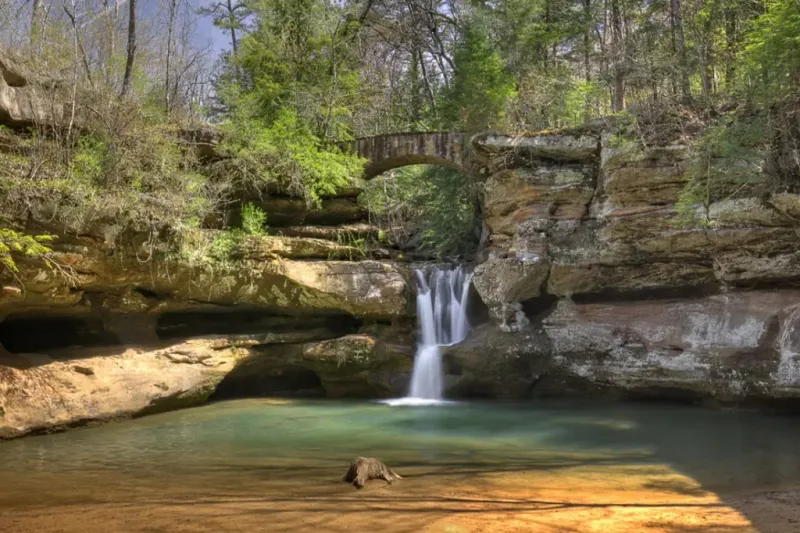
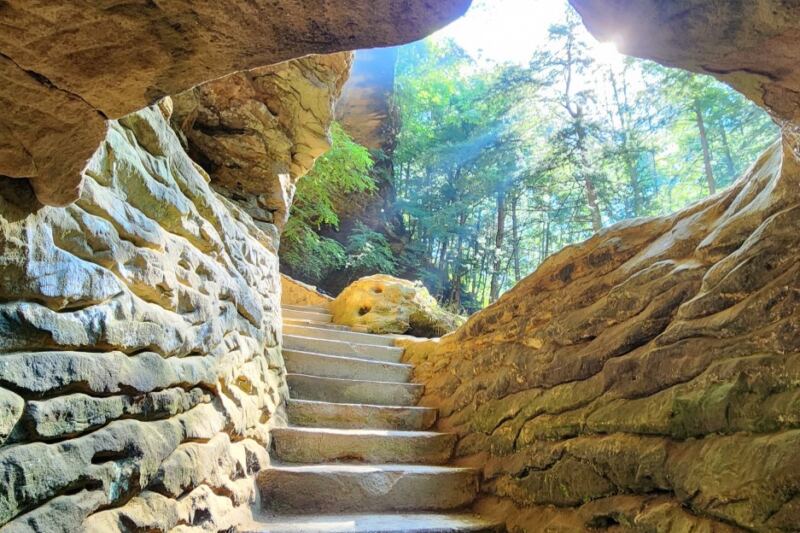
A hermit named Richard Rowe once lived inside a giant rock shelter here in the 1800s, and the place still carries his nickname. Picture a deep gorge carved by Old Man’s Creek, with waterfalls, stone bridges, and carved steps winding through it.
Add fiery autumn leaves, and you have one of the most famous fall hikes in the Midwest.
The main loop is about one mile, though you can stretch it longer by connecting to the Gorge Overlook or the Grandma Gatewood Trail. Along the way, you will pass the Upper Falls, the Devil’s Bathtub, the Lower Falls, and the huge cave where Rowe once slept.
Each spot looks different in October, as yellow tulip trees and red maples hang over the dark sandstone walls.
Expect plenty of stairs. The trail drops into the gorge and climbs back out, so it can feel tougher than its short length suggests.
Rocks get slippery when wet, and fallen leaves hide puddles, so wear shoes with good grip.
Crowds are the biggest challenge here. Hocking Hills is the most visited park in Ohio during fall, and the parking lot often fills before 10 a.m. on weekends.
Arrive at sunrise or plan a weekday trip to enjoy quieter paths and better photos.
Fun fact: the trail is part of the Buckeye Trail, a 1,400-mile route that loops around the whole state. You are walking on just a tiny piece of a much bigger adventure.
After your hike, stop by the visitor center for maps and snacks, or drive a few minutes to Cedar Falls and Ash Cave. Both are close and make a perfect add-on if you want to turn your trip into a full day of exploring the colorful hills of southern Ohio.
2. Ledges Trail, Cuyahoga Valley National Park
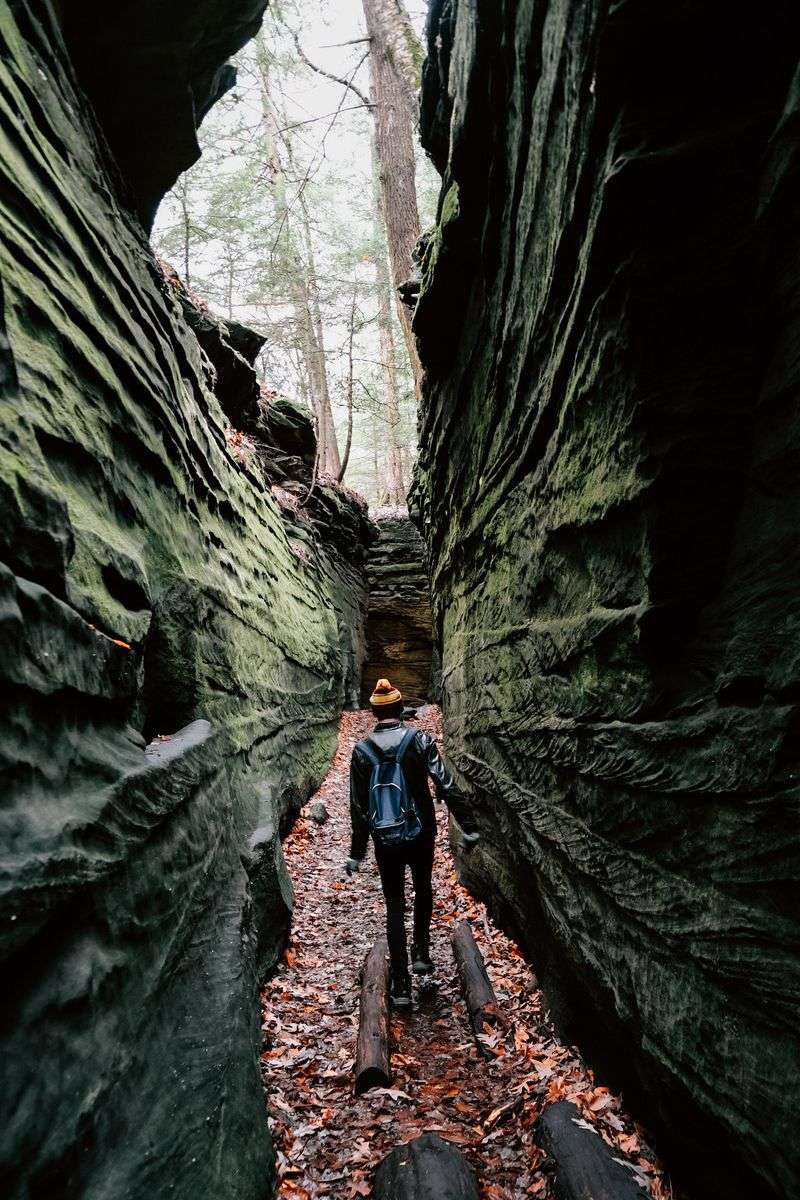
Imagine walking beside rock walls so tall they feel like the sides of a castle. That is what hikers find on this 2.2-mile loop in Ohio’s only national park.
The cliffs are made of Sharon Conglomerate, a rock packed with tiny white quartz pebbles that washed down from ancient mountains more than 300 million years ago.
In autumn, the scene turns magical. Hemlocks stay deep green, while beech and maple trees around them flash gold and crimson.
Moss and ferns cling to the cool rock, creating a mix of colors that photographers love.
The trail is mostly flat, with a few rocky steps and narrow passages. Kids enjoy squeezing through the cracks and spotting small caves like Ice Box Cave, which stays chilly even in summer.
It is currently closed to protect bats, but you can still peek at its entrance.
Do not skip the Ledges Overlook. This open spot faces west across the valley and becomes a favorite place to watch the sunset.
On a clear October evening, the treetops below glow like a painted quilt.
Parking is at the Ledges Trailhead off Truxell Road. The lot fills fast on sunny weekends, so plan to come early or late in the day.
Restrooms and a picnic shelter make it easy to bring a lunch.
Leaves often peak here around the middle of October. Wear layers, since the shaded rock areas can feel ten degrees cooler than the open fields.
A light jacket and a thermos of hot cocoa make the visit even better.
Pair this hike with a stop at nearby Brandywine Falls or a ride on the Cuyahoga Valley Scenic Railroad for a full day of fall fun in northeast Ohio.
3. Brandywine Gorge Trail, Cuyahoga Valley National Park
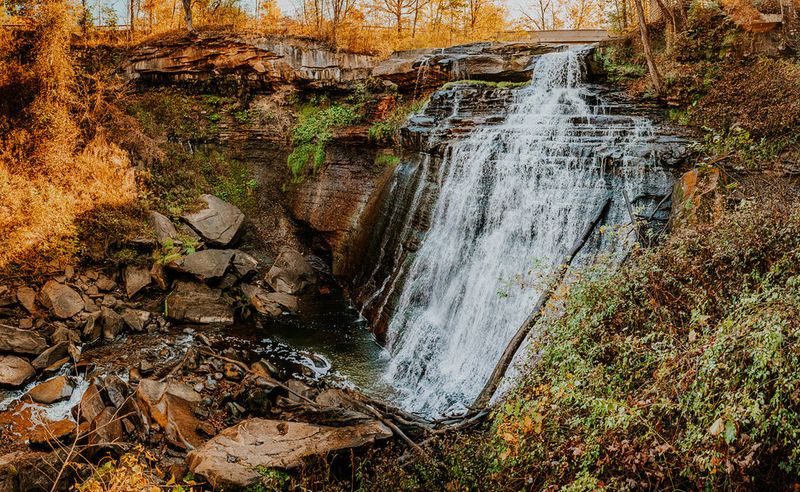
Sixty-five feet of tumbling white water greets you before you even reach the trailhead. Brandywine Falls is one of the most photographed spots in Ohio, and a wooden boardwalk lets you get close enough to feel the cool mist on your face.
Most visitors snap a picture and leave, but the real treat is the 1.5-mile Brandywine Gorge Trail. This loop follows the rim of the gorge, drops down to Brandywine Creek, and climbs back up through a forest full of maples, oaks, and hemlocks.
In fall, the creek reflects all those colors like a moving mirror.
Here is a little history. In the early 1800s, a man named George Wallace built a sawmill beside the falls, and a small village called Brandywine grew around it.
Today the mills are gone, but the Inn at Brandywine Falls, a historic home from 1848, still stands nearby.
The trail is moderate. There are some steep sections and a few stairs, plus creek-side areas that can be muddy after rain.
Trekking poles are helpful but not required.
Plan for about an hour if you take your time. Bring a camera with a wide lens, since the waterfall looks best when you can capture the whole veil of falling water along with the leafy frame around it.
Parking is limited and fills quickly in October. Try a weekday morning, or arrive in the late afternoon when golden light makes the colors pop.
Restrooms are open near the main lot.
For bonus fun, ride a bike on the nearby Towpath Trail, which follows the old Ohio and Erie Canal. It is flat, easy, and lined with trees that turn brilliant shades in autumn.
4. Lyons Falls Trail, Mohican State Park
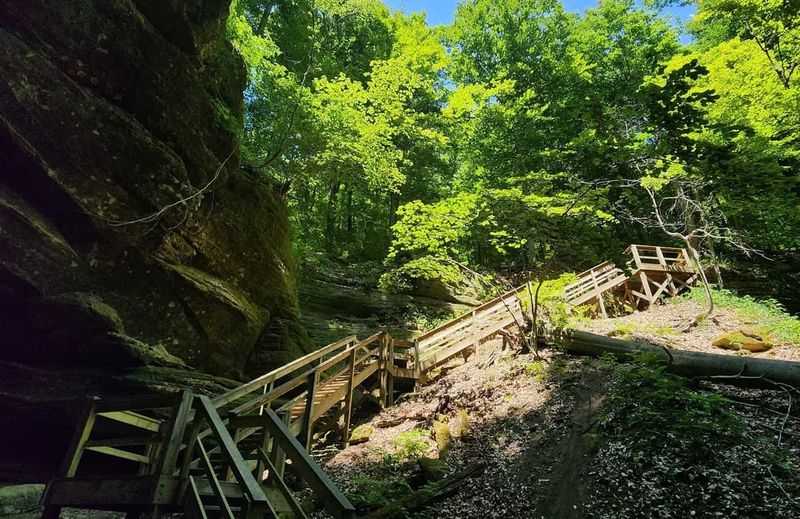
Legend says a man named Paul Lyons carved his name into the rock near this waterfall back in 1800. Whether or not the story is true, the falls still carry his name, and they are well worth the walk to see.
The Lyons Falls Trail is a two-mile loop in Mohican State Park, close to Loudonville in north-central Ohio. It starts near the covered bridge on the Clear Fork River and climbs into a forested gorge.
Along the way, you will find two waterfalls: Big Lyons Falls and Little Lyons Falls.
Big Lyons Falls pours over a giant sandstone overhang. You can walk behind the curtain of water into a shallow rock shelter, which feels like stepping into a secret room.
Little Lyons Falls is smaller but sits in a quiet, peaceful nook.
Fall turns this area into a postcard. The Clear Fork Gorge is lined with hemlocks, oaks, and sugar maples, so you get a mix of deep greens and bright reds.
The river below sparkles under the colorful canopy.
The trail has some steep hills, rocky spots, and stairs. Waterfalls may only trickle in dry autumns, so visit after a good rain for the best show.
Shoes with solid tread are a must.
Mohican is also known as the canoe capital of Ohio. Many outfitters stay open into early fall, so you could paddle the river in the morning and hike in the afternoon.
Before leaving, head to the Mohican fire tower in the nearby state forest. Climbing to the top offers a sweeping view over miles of autumn treetops, and on a clear day it might be the highlight of your whole trip.
5. Blue Trail, Nelson-Kennedy Ledges State Park
Ever wondered if you could fit through a gap called Fat Man’s Peril? On this short but wild trail, you will find out.
The Blue Trail at Nelson-Kennedy Ledges State Park is less than a mile long, yet it packs in more adventure than many hikes three times its size.
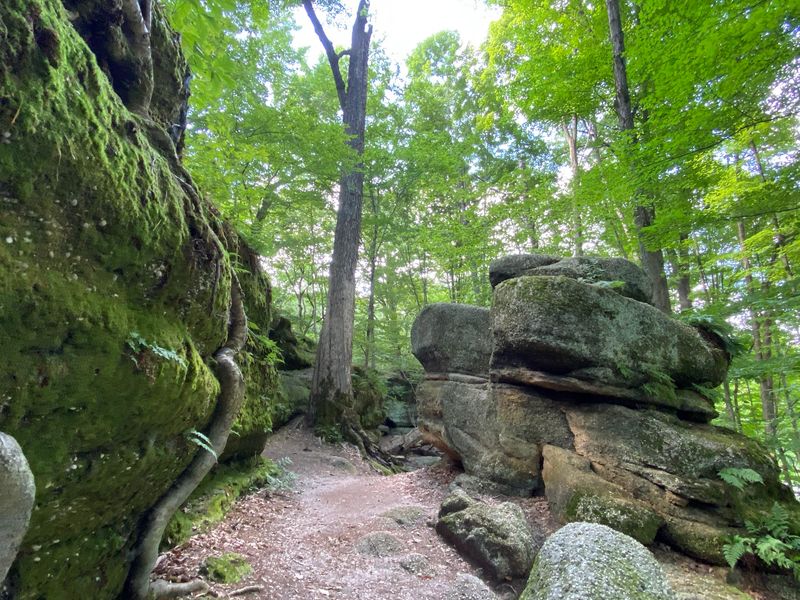
The park sits in Portage County in northeast Ohio. Giant blocks of conglomerate rock have split apart over thousands of years, creating deep cracks, small caves, and narrow passages.
The Blue Trail threads right through them.
Highlights include Gold Hunter’s Cave, where people once hunted for treasure, and the Devil’s Icebox, a cold, shadowy crevice where ice can linger well into spring. Cascade Falls drops over a rocky ledge, and in fall the water is framed by orange and yellow leaves.
Here is the honest truth: this trail is not for everyone. You will scramble over boulders, duck under ledges, and squeeze sideways through tight spots.
Leave the big backpack in the car, and skip it if you are nervous about close spaces.
Safety matters here. Stay on marked trails, since several people have been hurt after wandering off and falling from cliffs.
Watch the painted blazes on trees and rocks to keep your way.
The park also has White, Red, and Yellow trails. You can link them all in about an hour or two.
The Red Trail passes along the clifftops and gives a pleasant view of the colorful forest below.
Visit on a dry day, because wet rocks become slick. Leaves typically peak here around mid-October.
Bring a flashlight for peeking into caves, and you will feel like a real explorer by the end of your walk.
6. John L. Rich and North Rim Trails, Clifton Gorge State Nature Preserve
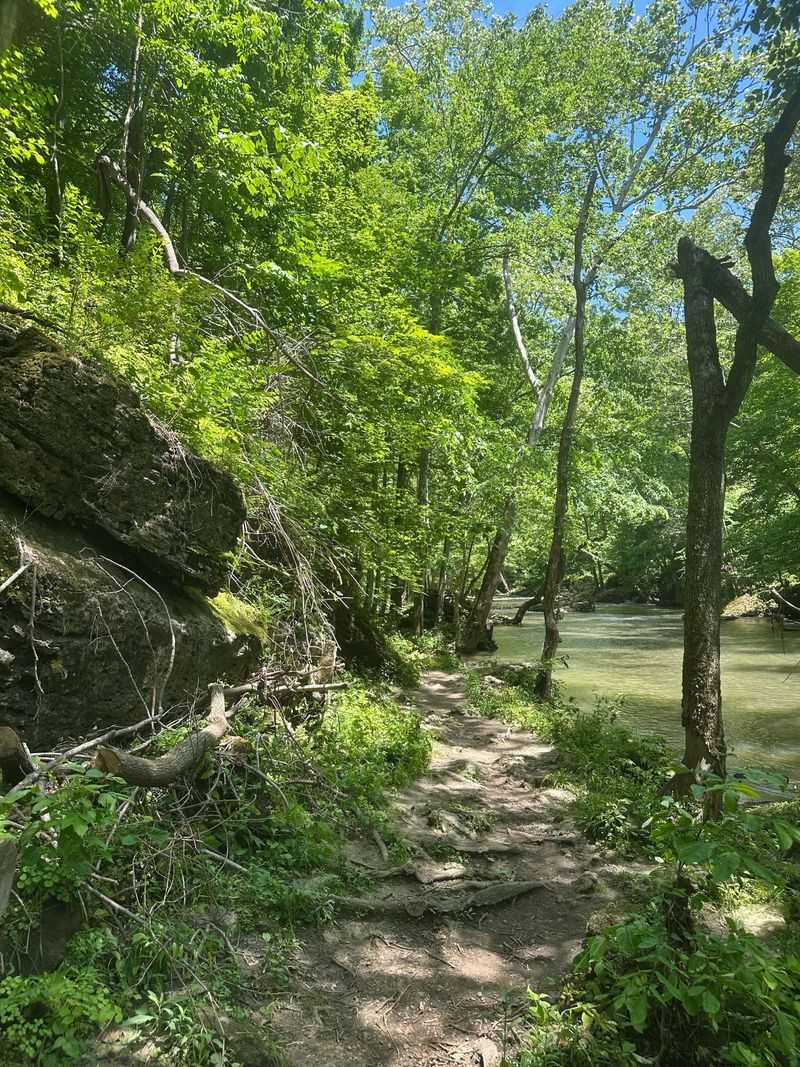
Thousands of years ago, melting glaciers sent huge floods racing through southwest Ohio. That rushing water carved a narrow limestone canyon now known as Clifton Gorge, and today it is one of the prettiest places in the state to watch leaves change.
Two trails work together to show off the gorge. The John L.
Rich Trail runs along the bottom, right beside the roaring Little Miami River. The North Rim Trail follows the top edge, giving you bird’s-eye views down into the canyon.
Combine them into a loop of about two and a half miles.
Down by the water, you will see giant slump blocks, chunks of rock that broke off the cliffs long ago. Rapids splash past them, and red cedars and white cedars cling to the walls.
Up top, overlooks reveal the river winding through a canyon painted in autumn shades.
Watch for the Steps of Daniel Boone sign. According to local legend, Boone leaped across the gorge here in 1778 while escaping capture.
Nobody knows if it really happened, but it makes for a great story during your hike.
The preserve protects rare plants, so pets, bikes, and picnics are not allowed inside. Stay on the trail and behind fences near cliffs.
Some steps are steep and uneven, especially on the lower path.
Parking is in the small village of Clifton, off Route 343. The trail also connects to John Bryan State Park and Glen Helen Nature Preserve if you want a longer day.
Leaves usually peak in late October here. Afterward, stop at the historic Clifton Mill, a working gristmill from 1802 that serves hearty pancakes and offers lovely views of the river.
7. Blackhand Trail, Blackhand Gorge State Nature Preserve
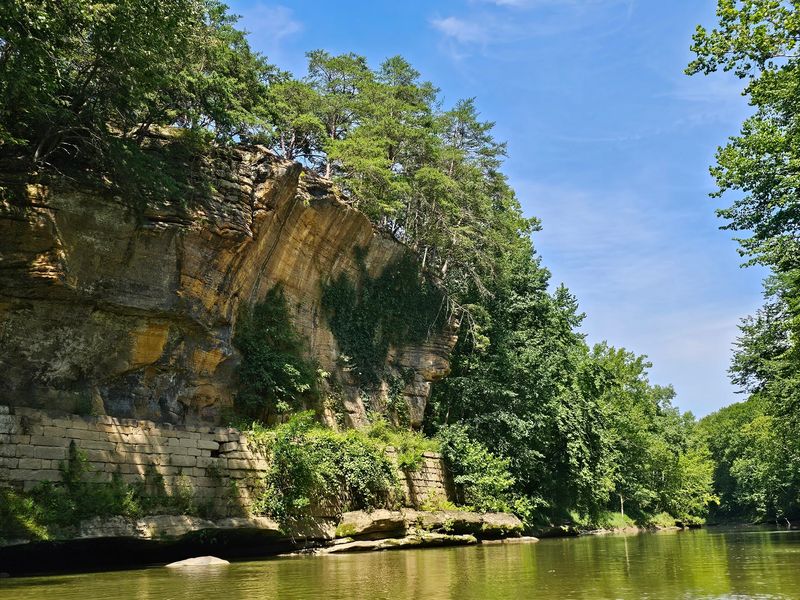
Long ago, a giant black handprint was painted on a sandstone cliff above the Licking River. Native Americans may have used it as a marker for a sacred area or a nearby flint quarry.
Sadly, the print was destroyed in 1828 when workers blasted the rock to build a canal towpath, but the name Blackhand stuck.
Today, Blackhand Gorge State Nature Preserve near Newark is a favorite fall hike for central Ohio families. The main Blackhand Trail is a paved path about four miles long, following an old railroad line along the river.
It is flat, smooth, and easy for strollers, wheelchairs, and bikes.
One of the coolest features is the Deep Cut, a spot where railroad builders sliced straight through solid rock. Towering walls rise on both sides of the trail.
Later, you will pass the remains of an old canal lock.
If you want more of a challenge, try the unpaved side trails. The Quarry Rim Trail climbs to a view over a flooded quarry, and the Chestnut Ridge Trail leads uphill through quiet woods with great fall color.
Autumn here feels peaceful. Sycamores turn pale yellow along the river, while oaks and maples on the hills glow orange and red.
The water often reflects the whole scene.
Remember that this is a nature preserve. Pets and picnicking are not permitted, and bikes are only allowed on the paved path.
Fun tip: bring binoculars. Bald eagles, herons, and kingfishers often hunt along the river.
Spotting a bird swooping over the colorful water is a reward that makes every step worth it.
8. Fern Trail, Clear Creek Metro Park
Crowds pack Hocking Hills every October, but just a few miles away lies a calmer secret. Clear Creek Metro Park is the largest park in the Columbus Metro Parks system, stretching over 5,000 acres of hills, creeks, and rock ledges.
It feels wild, quiet, and wonderfully uncrowded.
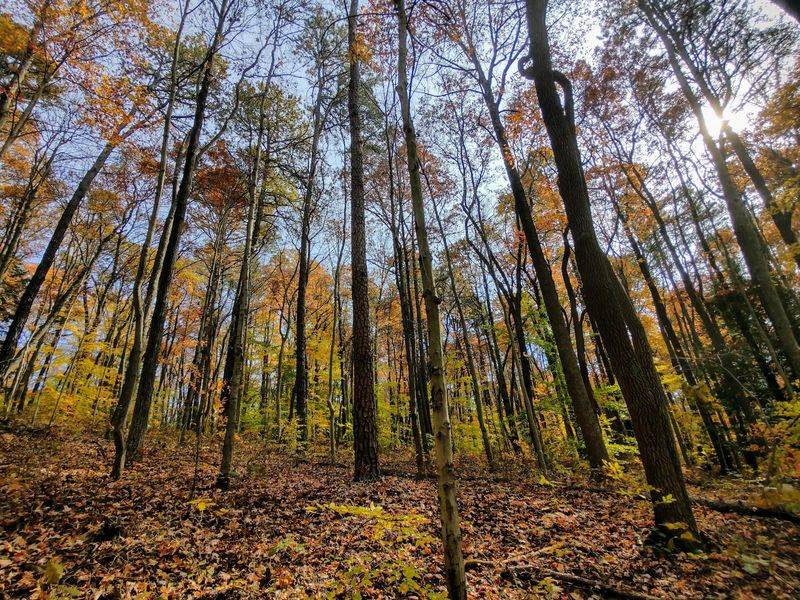
The Fern Trail is a short loop of about one mile, making it great for a relaxed stroll. As the name suggests, ferns cover the forest floor, along with mossy sandstone outcrops and tall hemlocks.
In fall, many ferns turn soft gold and bronze, blending with the yellow beech leaves overhead.
Why hike here instead of the busy spots? Peace and quiet.
You can hear birds, rustling leaves, and the gentle trickle of Clear Creek without bumping elbows with other hikers.
Did you know? The park protects more rare plants than almost anywhere else in Ohio.
Scientists have found more than 800 kinds of plants here, including some that usually grow much farther north.
The trail has a few small hills and rocky sections, but most people can handle it easily. Since it is short, you can combine it with nearby paths like the Hemlock Trail or the Cemetery Ridge Trail for a longer outing.
Pets are not allowed on most trails here, so check signs before you bring a dog. Cell service can be spotty in the valley, so download a map ahead of time.
Peak color usually arrives in the last two weeks of October. Pack a small notebook or sketchbook.
With so few distractions, this is a perfect place to sit on a log, take a deep breath, and draw the colors around you.
9. Dripping Rock Trail, Highbanks Metro Park
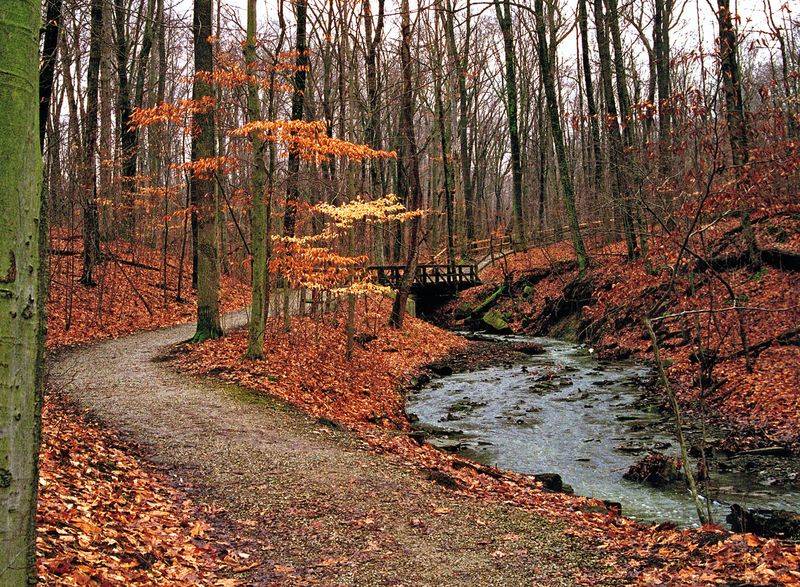
Standing on the overlook here, you might forget you are only minutes from busy Columbus. Below you, a 100-foot cliff of dark shale drops toward the Olentangy River, and the treetops stretch out in a blanket of orange, red, and gold.
Highbanks Metro Park gets its name from these tall shale bluffs. The Dripping Rock Trail is a loop of about 2.5 miles that leads to the best views.
It winds through mature woods, crosses wooden bridges, and passes ravines where water seeps out of the rock, giving the trail its name.
History lovers get a bonus. Along the way, you can spot ancient earthworks built by Native Americans, including two burial mounds created more than 1,000 years ago.
Signs explain their story, so take a moment to read them.
Families will appreciate how manageable the hike is. There are some gentle hills, but nothing too steep.
Benches along the way give little legs a chance to rest.
Keep your eyes open for fossils. The Ohio shale here formed in a sea about 380 million years ago, and the river below sometimes reveals odd round rocks called concretions.
You might see one bigger than a beach ball.
The park also has a nature center with live animals and big windows for bird watching. It is a cozy place to warm up after your walk.
Leaves often peak here around the third or fourth week of October. Weekday afternoons are quiet, and sunset from the overlook is especially lovely.
For an easy, close-to-home dose of fall beauty, few places in central Ohio beat this one.
10. Ridge Trail and Homesite Trail, Chestnut Ridge Metro Park
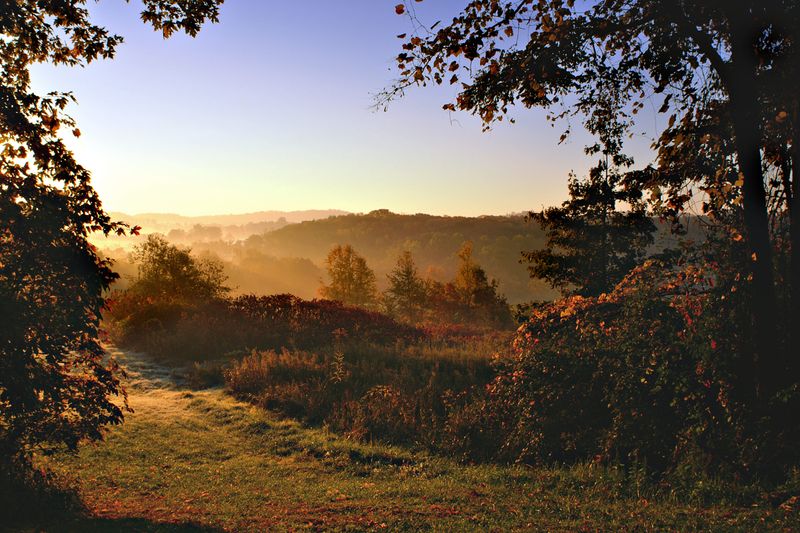
On a clear fall day, you can see the Columbus skyline from the top of this ridge, almost 20 miles away. That view alone makes the climb worth it, but Chestnut Ridge Metro Park offers so much more.
The park sits near Carroll in Fairfield County, right where the flat farmland of central Ohio meets the rolling Appalachian foothills. The Ridge Trail is a loop of about two miles that climbs steadily through oak and hickory forest.
A long boardwalk leads to an overlook where the countryside spreads out in every color of autumn.
Nearby, the Homesite Trail adds about half a mile of history. It passes the old site of a family farm from the 1800s, where you can still find a stone foundation and an orchard area.
It is easy to imagine kids playing here more than a century ago.
The name comes from the American chestnut trees that once covered the hills. A deadly blight wiped out most of them in the early 1900s, but the park has worked to plant new, disease-resistant chestnuts.
Be ready for a workout. The Ridge Trail includes a lot of stairs, and the climb can leave you a little breathless.
Take breaks and enjoy the scenery.
Fall is the best time to visit, thanks to the hickories, which turn a bright golden yellow, and the sassafras trees, which flash orange and red. Colors usually peak in mid to late October.
Bring water and snacks, since there are no stores close by. A picnic area with restrooms near the parking lot makes this an easy spot for a family lunch.
11. Green and Red Trails, Quail Hollow Park
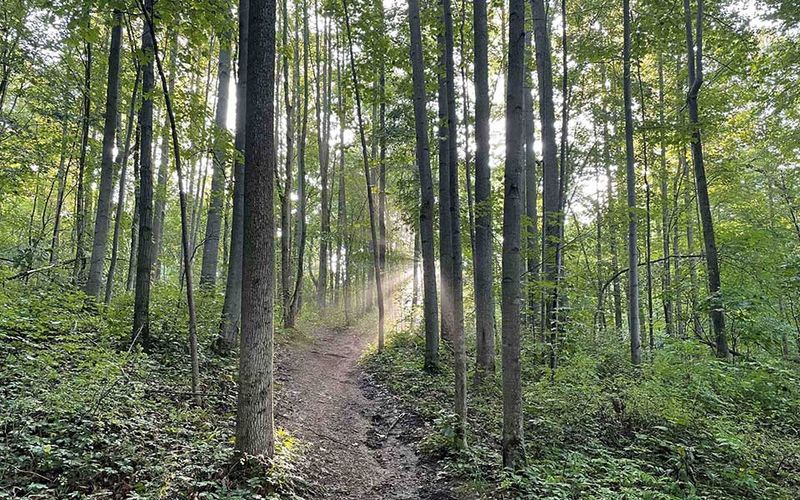
A grand old mansion, a peaceful pond, and miles of leaf-covered paths all wait at this hidden gem in Stark County. Quail Hollow Park, near the town of Hartville, was once the country estate of the Stewart family.
Today, it belongs to everyone who loves a good walk in the woods.
The Green Trail and Red Trail work great together. The Green Trail, about 2 miles, loops through mature forest, open meadows, and the edge of a quiet marsh.
The Red Trail, a bit shorter, follows rolling ground through woods filled with tall maples and oaks.
What makes these trails fun in fall is the variety. One minute, you are surrounded by fiery red maples.
The next, you step into a golden meadow buzzing with the last crickets of the season.
The trails are mostly flat with gentle hills, so they work well for beginners and older hikers. Some spots get muddy after rain, so waterproof boots help.
Trail maps are posted at intersections.
Do not miss the 40-room Manor House, built in the early 1900s and expanded over time. The grounds include formal gardens and a herb garden that look lovely with autumn mums.
The house sometimes hosts events and tours, so check the schedule.
Wildlife sightings are common. Deer, wild turkeys, and many songbirds live here, and the park was named for the quail that once called the fields home.
Plan your visit for mid-October, when the maples are usually at their brightest. Stop for treats at the nearby Hartville Marketplace afterward for a warm, cozy finish to a crisp autumn day.
12. Peninsula Trail, Lake Hope State Park
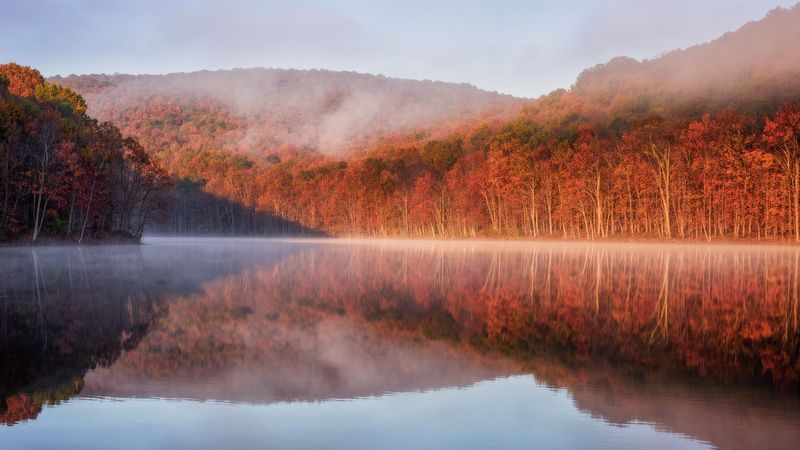
Mirror-calm water doubles every color here. When the sun rises over Lake Hope and the hills blaze red and orange, it looks like two forests, one on land and one in the lake.
Lake Hope State Park sits inside Zaleski State Forest in Vinton County, one of the most heavily wooded parts of Ohio. The Peninsula Trail is a loop of about 3 miles that follows a narrow finger of land jutting out into the 120-acre lake.
With water on almost every side, you get great views at nearly every turn.
The path rolls gently, with a few short climbs and some roots and rocks to step over. It is quiet and shaded, perfect for those who like a hike that feels far from everything.
Here is a cool piece of history. This area was once a busy iron-making region, and the Hope Furnace, built in 1854, still stands near the park entrance.
Workers burned huge amounts of wood to make charcoal for the furnace, which cleared much of the forest. The woods you see now have grown back over the last 100 years.
Wildlife is plentiful. Look for beavers, herons, and even the occasional bald eagle.
The park is also famous for its many kinds of moths and butterflies in warmer months.
Leaves often peak in late October in this southern part of the state. Book a cabin or campsite if you want to stay overnight and catch the morning fog drifting across the lake.
Afterward, rent a kayak if available, or simply sit by the water with a warm drink and watch the falling leaves float by.
13. Conkle’s Hollow Rim Trail, Conkle’s Hollow State Nature Preserve
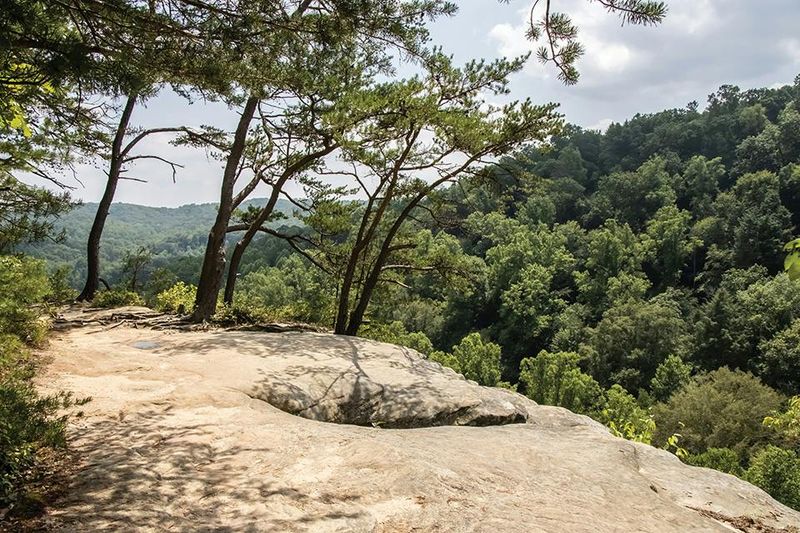
Some call it the deepest gorge in Ohio, and peering over the edge, you will believe it. Cliffs here rise around 200 feet above the valley floor, and from the top, the forest below looks like a giant bowl of autumn confetti.
Conkle’s Hollow State Nature Preserve sits in the Hocking Hills, not far from Old Man’s Cave. The Rim Trail is a 2.5-mile loop that follows the very top of the gorge.
You climb a series of stairs at the start, and then the trail levels out along the clifftop.
The views are breathtaking, especially in October. Hemlocks, oaks, and maples fill the hollow with deep green, scarlet, and gold.
Hawks sometimes ride the wind currents right at eye level.
A word of caution: there are no railings along most of the rim. The drop is steep and dangerous, so stay on the trail, keep children close, and avoid hiking in icy or wet conditions.
Pets are not allowed in the preserve.
If heights make you nervous, try the Gorge Trail instead. It is a paved, flat path of about one mile that leads deep into the hollow, ending near a small waterfall.
Many hikers do both trails for a complete experience.
Fun fact: the name comes from W.J. Conkle, who carved his name and the year 1797 into the west wall.
Historians are still curious about who he was.
Arrive early, as parking is small and fills fast in fall. End your Hocking Hills trip here, and you will leave with one last unforgettable view of Ohio at its most colorful.
Share this story