A white-steepled church, a millpond reflecting old houses, and a Main Street that still follows a route traveled before the American Revolution can make Central Jersey feel surprisingly far removed from the Turnpike. Some of the region’s most rewarding small towns have managed to keep layers of their early history right in the middle of everyday life.
Colonial-era roads became shopping streets. Former stagecoach stops sit beside cafés and boutiques.
Revolutionary War stories are tied to buildings you can still walk past today. Not every structure dates to the 1700s—many historic districts grew substantially during the 19th century—but these seven towns all preserve the scale, streetscapes, and landmarks that give old Central New Jersey its character.
From Cranbury’s unusually intact village center to Princeton’s Revolutionary landmarks and Basking Ridge’s historic churchyard, these are places where a casual afternoon walk can turn into a surprisingly deep dive into New Jersey history.
1. Cranbury: Main Street With a Long Memory

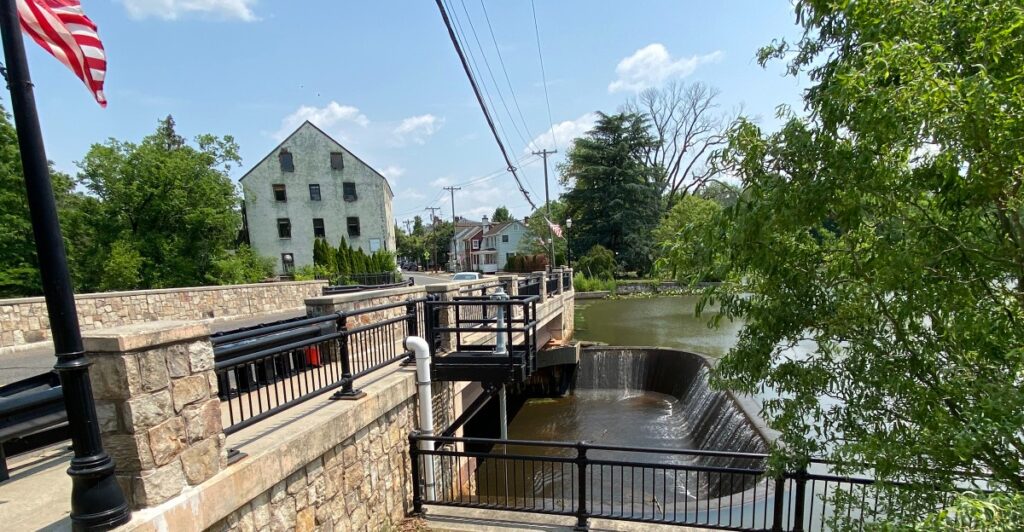
Few places make the transition from modern New Jersey to historic village quite as quickly as Cranbury. Main Street runs through a remarkably intact collection of older houses, churches, civic buildings, and storefronts, with Brainerd Lake adding a postcard-worthy pause near the center.
The village traces its origins to the late 17th century and grew along an important route between New York and Philadelphia, when travelers needed places to change horses, eat, and sleep midway through the journey. Cranbury later became closely tied to milling and the surrounding farm economy, and that agricultural setting still matters to the way the town feels today.
The historic district contains buildings from several eras, including surviving late-18th-century structures and a large concentration from the 19th century.
Revolutionary War history is especially strong here: George Washington established headquarters in Cranbury in June 1778 while moving his army toward what became the Battle of Monmouth, and both Alexander Hamilton and the Marquis de Lafayette passed through during the campaign.
For a visit, the best approach is wonderfully uncomplicated. Park near the center and walk Main Street slowly, detouring toward the lake and the historic residential blocks rather than treating downtown as a quick shopping stop.
Cranbury works because history is not isolated behind a fence; it is woven directly into a quiet, walkable town that still functions like one.
2. Princeton: Revolutionary History Beyond the Campus Gates
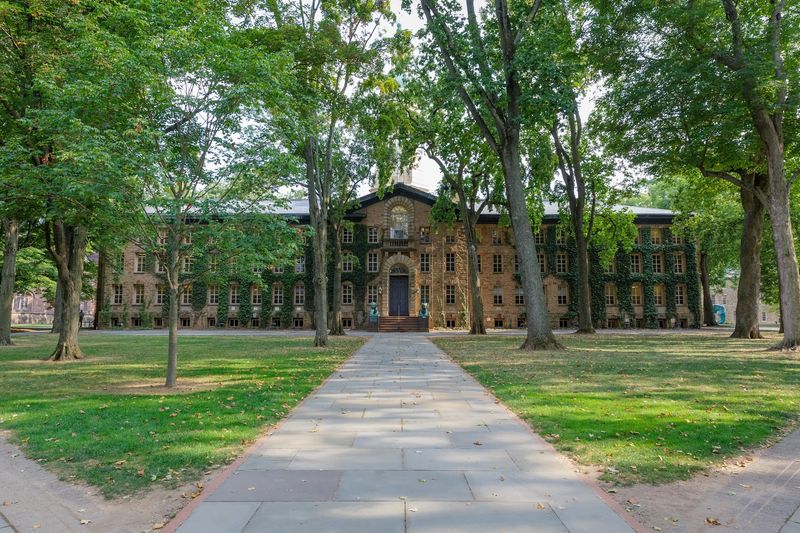
Start on Nassau Street and it does not take long for Princeton’s colonial past to announce itself. Nassau Hall, completed in 1756 for what was then the College of New Jersey, anchors a streetscape where university history, Revolutionary War history, old homes, shops, and restaurants overlap within a few blocks.
The town began developing along the King’s Highway, an important colonial route, and by the mid-18th century it had become a significant stop between New York and Philadelphia. Its role became much bigger during the Revolution.
The Battle of Princeton was fought nearby in January 1777, and the Continental Congress later met at Nassau Hall in 1783, briefly making Princeton one of the young nation’s political centers. A good history-focused afternoon should extend beyond the university gates.
Walk west toward Mercer Street, where older homes and historic properties change the feel almost immediately, then continue toward Princeton Battlefield if you have a car or do not mind a longer walk. Back downtown, the pleasure is in mixing serious history with an ordinary Saturday: browse bookstores, stop for coffee, and wander side streets rather than sticking entirely to Nassau Street.
Princeton is busier and more polished than the other towns on this list, but that does not dilute its historic appeal. Instead, centuries of architecture and everyday activity are layered together, making it one of Central Jersey’s easiest places to experience colonial history without spending the day inside a museum.
3. Allentown: Millpond Views and Village Details
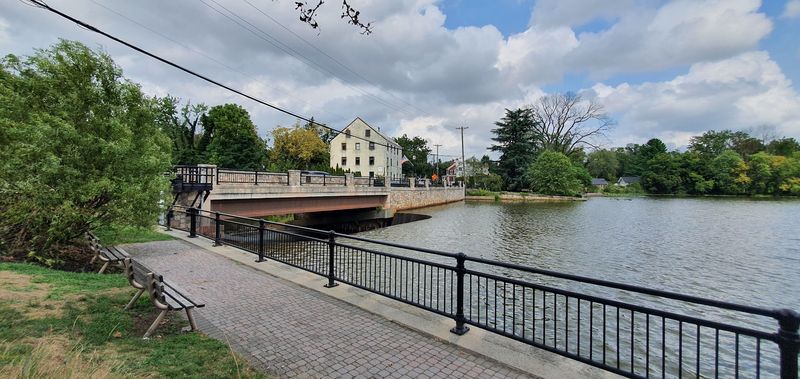
The Old York Road once carried travelers between New York and Philadelphia, and in Allentown that transportation history still helps explain the shape of the town. Founded in the early 1700s, the community developed around a crossroads, a mill, and the traffic moving through this part of New Jersey.
Today, its compact center rewards the same kind of slow exploration. Historic homes sit close to the street, small shops fill older buildings, and the Old Mill remains one of the town’s defining landmarks.
A gristmill operated at the site for roughly 250 years, while the surviving 1855 mill replaced an earlier structure and is now listed on the National Register of Historic Places. Revolutionary history is threaded through the area as well.
Old York Road served as an important route during the war, and gravestones in the old burial ground reach back to that period. One of the standout historic buildings is the large Georgian-style mansion built in 1790 for John Imlay, a reminder that Allentown was more than a tiny rural stop by the end of the 18th century.
Plan to walk rather than drive between every point of interest; the scale is part of the appeal. Browse the shops around Main Street, look for the older architecture instead of rushing from one destination to another, and save time for the mill area.
It is the kind of town where the historic details reveal themselves gradually rather than through one blockbuster attraction.
4. Hopewell: A Quiet Borough With Deep Roots
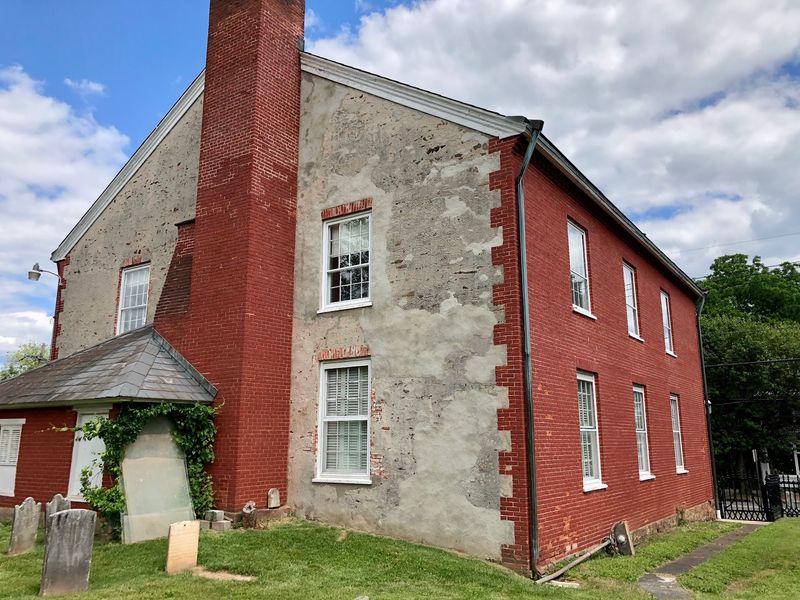
Broad Street gives Hopewell away immediately. Instead of a downtown dominated by oversized redevelopment, the borough still presents rows of older storefronts, houses, churches, and civic buildings at a scale that feels comfortably walkable.
The town’s surviving historic district is large enough that the experience is less about visiting a single landmark and more about noticing how much traditional streetscape remains intact. That makes Hopewell especially good for people who like architecture with their history.
Walk Broad Street, turn onto the residential side roads, and you will encounter everything from modest vernacular homes to more elaborate 19th-century buildings, all packed into a borough small enough to explore without a plan. Hopewell’s preserved railroad station adds another layer to the story.
The building has undergone historic restoration work, including repairs to its masonry, roofing, windows, and trim, and remains a visible reminder of the era when rail connections reshaped small New Jersey towns. The smartest way to visit is to treat Hopewell as a wandering town rather than an attraction checklist.
Get coffee or lunch around Broad Street, browse the independent shops, then make a loop through the nearby residential blocks where architectural details become easier to notice. Although much of the visible downtown reflects growth after the colonial period, the narrow streets, preserved building stock, and deliberately protected historic character give Hopewell the intimate, old-Central-Jersey feeling that fits this list perfectly.
5. Clinton: A Riverfront Scene With Layers of History
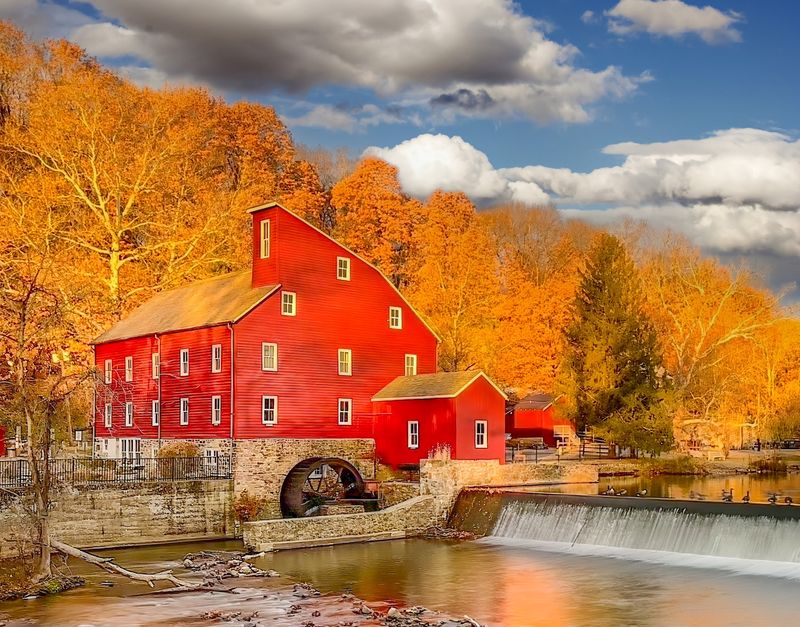
The first glimpse of the Red Mill beside the South Branch of the Raritan River can make Clinton look almost too carefully composed to be real. Yet the town’s historic center grew from practical beginnings: water power, mills, quarries, shops, and a location that made it useful to surrounding farms.
Settlement in the area reaches back to the colonial period, while the village expanded dramatically during the early 19th century into the commercial center visitors recognize today. The Red Mill is the obvious landmark, but do not make the mistake of photographing it and leaving.
Cross the old iron truss bridge and explore Main Street, where historic storefronts, former taverns, houses, and commercial buildings form a remarkably cohesive district. Clinton’s history is visible in the details, including former mill structures, the Clinton House, and buildings connected to trades that once supported the town.
A major fire devastated Main Street in the 1890s, which explains why parts of the business district feature later brick and stucco construction rather than an uninterrupted colonial streetscape. That mix actually makes the town more interesting: you can read different eras of growth within a few blocks.
Park once and walk if possible, especially on a weekend when Main Street can get busy. The riverfront, bridge, museum grounds, and downtown shops are close enough together that driving between them only gets in the way.
6. Flemington: Follow the Clues Along Main Street
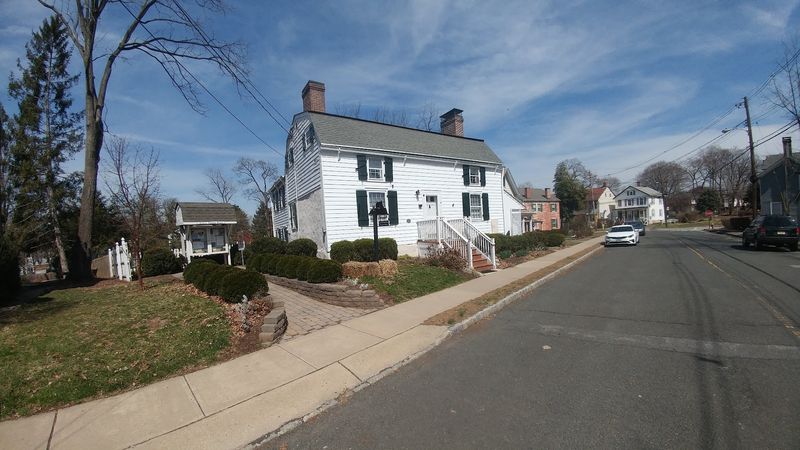
History in Flemington does not arrive in one neat century. Main Street contains buildings ranging from early settlement-era sites to Greek Revival, Victorian, and later architecture, creating one of Central Jersey’s most layered historic downtowns.
The Flemington Historic District covers a substantial portion of the borough and was recognized for both its architecture and its role in politics and government. Among its key landmarks is the Hunterdon County Courthouse, built in 1828 and later made nationally famous by the 1935 trial connected to the Lindbergh kidnapping.
Across the street, the Union Hotel occupies a site associated with a stagecoach stop dating to the early 19th century, while the Samuel Fleming House—often called Fleming Castle—connects the town to an even earlier chapter. That variety is exactly why Flemington belongs on a colonial-charm itinerary even though much of what visitors see today comes from later periods.
The town shows how an early New Jersey settlement evolved rather than freezing itself at a single date. Walk Main Street and Court Street first, keeping an eye above the storefronts where original rooflines, brickwork, porches, and decorative details are easiest to spot.
Then branch onto nearby residential streets within the historic district. Flemington is best approached without expecting a perfectly preserved 1700s village.
What you get instead is a dense concentration of historic buildings that tells a much longer story, from early settlement through the courthouse era and beyond.
7. Basking Ridge: Churchyard Stories and Village Calm
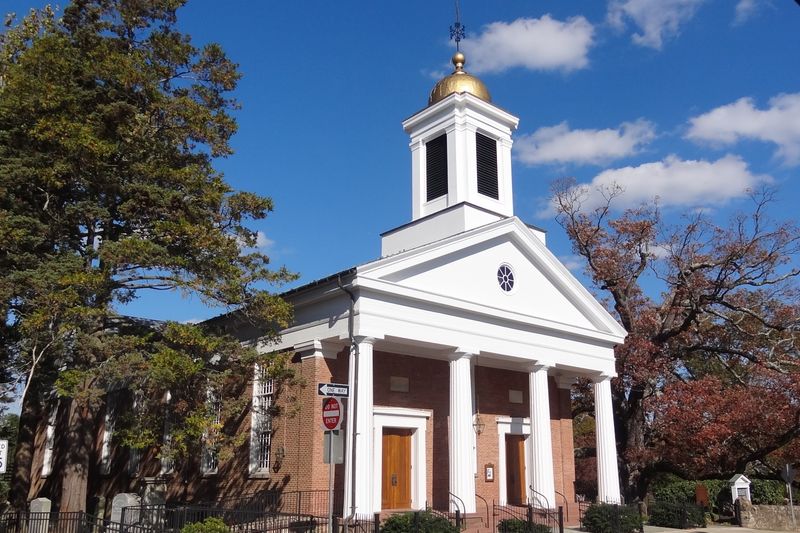
A churchyard in the middle of town tells you almost everything you need to know about Basking Ridge’s relationship with history. The Basking Ridge Presbyterian Church dates to 1839, but the cemetery beside it reaches much further back and contains the graves of 35 Revolutionary War veterans.
For generations, the site was also shaded by an enormous white oak estimated to have been more than 600 years old before it was removed in 2017. Even without the famous tree, the churchyard remains one of the most evocative historic spaces in the area.
The surrounding village center builds on that feeling with older homes, traditional storefronts, and streets that still encourage a walk rather than a drive-through. Elsewhere in Bernards Township, surviving colonial-era buildings deepen the connection.
The Alward House, built around 1740, is one of the township’s few remaining colonial farmhouses, while nearby historic districts preserve additional evidence of the farming and milling communities that developed here in the 18th century. Visitors do not need an elaborate itinerary.
Begin around South Finley Avenue and the church, wander through the center, and then use a car if you want to seek out historic sites beyond downtown. Basking Ridge feels less like a purpose-built heritage destination than a town that simply kept important pieces of its past.
That understatement is part of the appeal—and a fitting final stop for anyone looking for Central Jersey history without crowds or theatrics.
Share this story