A bowl piled with yellowtail, salmon roe, scallops and sea urchin is not exactly what most people expect from a fast-casual counter in downtown Ridgewood. Neither is pork jowl fried in panko, lobster-tail tempura or ramen built around a bright yuzu-salt broth.
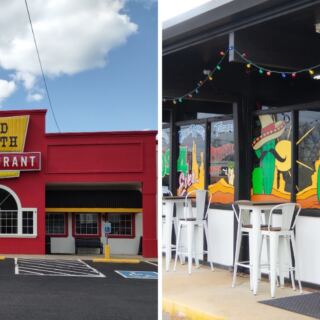
But that mismatch between format and food is pretty much the point at Gomen, a new Japanese spot at 39 Godwin Avenue that calls itself a “Japanese Kitchen Lab.”
Instead of building the menu around familiar sushi rolls, Gomen dives into the broader world of Japanese comfort food, with rice bowls, noodles, katsu, tempura and raw seafood sharing the spotlight. The restaurant soft-opened in September 2026, bringing a deliberately detail-heavy concept to one of Bergen County’s busiest dining towns.
The name itself combines “gohan,” or rice, with “men,” meaning noodles, which tells you where the priorities are before you even see the menu. This is Japanese food viewed through a slightly more experimental lens.
Ridgewood Gets a Japanese Comfort Food Spot With a Different Game Plan
Plenty of Japanese restaurants make their first impression with a sushi counter. Gomen goes in another direction.
Its menu reads more like a compact tour through dishes you might crave for completely different reasons: a hot bowl of ramen on a cold afternoon, crispy tempura over rice, panko-coated meat with a citrusy sauce, or a seafood bowl that lets the fish do most of the talking. That broader approach makes the “Kitchen Lab” description feel less like a gimmick and more like a clue about how the place thinks.
The restaurant soft-opened at 39 Godwin Avenue in downtown Ridgewood in September 2026, with a concept centered on Japanese comfort food rather than a long parade of specialty rolls. Its kitchen covers kaisen, tempura, katsu, ramen and udon, while the chef behind the operation brings more than 15 years of experience working with traditional tendon and ramen.
There is a useful bit of wordplay in the name, too. “Gomen” blends “gohan,” the Japanese word for rice, with “men,” meaning noodles, two ingredients that anchor much of the menu. It also happens to sound like the Japanese expression for “sorry,” giving the name a little personality without turning the restaurant into a theme park.
Ridgewood is already the kind of downtown where diners can bounce between Italian, Indian, bakeries, cafés and plenty of other choices within a few blocks, so simply serving Japanese food would not be enough to stand out. Gomen’s answer is specificity.
Instead of trying to cover every familiar category, it puts most of its energy into bowls and noodles where differences in broth, rice, frying technique and toppings actually matter. That makes it feel less like another sushi option and more like a place built around a particular point of view.
Why Gomen Calls Itself a Japanese Kitchen Lab
The “lab” part starts making sense when you look at how many small variables show up on the menu. A basic seafood bowl could have been salmon and tuna over rice.
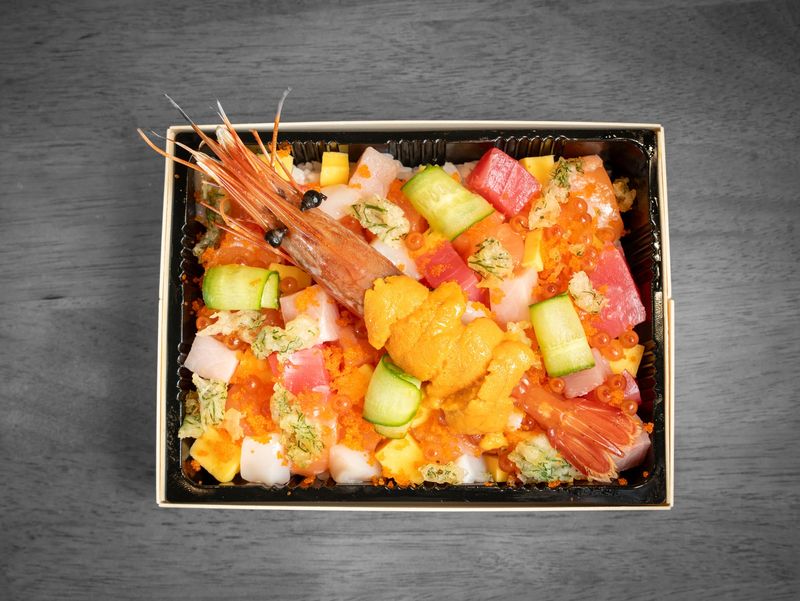
Instead, Gomen’s signature version combines salmon, tuna, hamachi, ikura, scallop, sushi shrimp, tobiko, tamago, cucumber and even dill tempura. The premium version pushes things further with Hokkaido uni and botan ebi.
Meanwhile, one yellowtail bowl uses mikan hamachi, a specialty fish raised on feed infused with Japanese mandarin peel and oil so the citrus character develops naturally in the fish’s fat rather than being added afterward. That is exactly the kind of detail that earns the place permission to use the word “lab.” The experimentation is not about turning dinner into a chemistry demonstration.
It is about taking familiar building blocks and adjusting them in small, intentional ways. Yuzu shows up in both a salt-forward ramen broth and a house miso sauce for katsu.
Fresh dill turns up alongside fried meats and seafood. A vegetarian ramen swaps the usual pork-heavy profile for spinach-infused noodles, tomato broth, zucchini, eggplant, kabocha squash, okra and optional Parmesan.
Those combinations move just far enough away from the standard script to keep the menu interesting without losing the comfort-food core. There is still something recognizably straightforward underneath everything: rice, noodles, broth, fried seafood and crunchy cutlets.
That balance matters. A restaurant can call itself experimental and still serve food you actually want to eat for lunch.
Gomen seems to understand that the best experiments are often small ones — one different ingredient, one unexpected garnish or one more precise way of building a bowl — rather than a plate designed mainly to look clever on a phone screen.
Rice and Noodles Are the Real Stars of the Menu
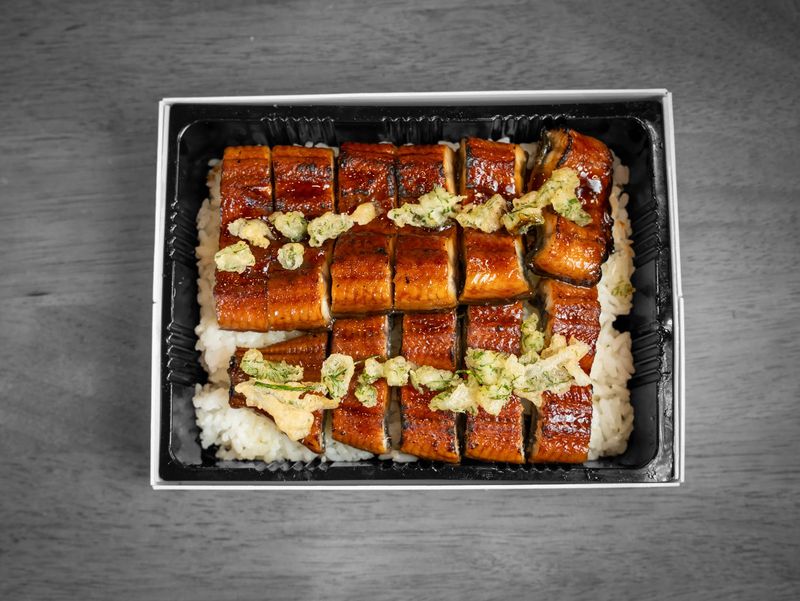
There is a reason the restaurant’s name essentially combines rice and noodles. Almost everything at Gomen eventually comes back to one of those two foundations.
On the noodle side, the Yuzu Shio Ramen keeps things relatively clean with wavy noodles, yuzu-salt broth, chicken chashu, ajitama egg, menma, maitake mushrooms and scallions. It is a smart counterpoint to the heavier bowls people often associate with ramen.
The Veg Tomato Ramen goes even further off the expected path, using spinach-infused noodles with vegan tomato broth and a lineup of vegetables that includes zucchini, eggplant, kabocha, carrot, okra and spinach. Parmesan is optional, which gives the dish an almost Japanese-meets-Italian wink without turning it into a mash-up for the sake of one.
Udon gets a more traditional treatment. Gomen’s Tempura Udon comes in homemade dashi with two shrimp tempura, an onsen tamago and green onion, the kind of combination that relies on texture as much as flavor.
Then there is the rice side, which runs through nearly every other part of the menu. Kaisen bowls use rice as the quiet backdrop for raw seafood.
Tempura bowls turn it into a landing pad for crisp batter and house tare. Katsu bowls pile panko-crusted meats on top and bring in yuzu miso for brightness.
Even that division says something about the restaurant. Gomen is not trying to make rice and noodles invisible supporting players.
They are the structure holding the whole concept together. That may also explain why the menu feels unusually cohesive despite jumping from raw uni to pork jowl to tomato ramen.
Different proteins come and go, but rice and noodles keep pulling everything back into the same Japanese comfort-food vocabulary.
The Kaisen Bowls Put Fresh Seafood Front and Center
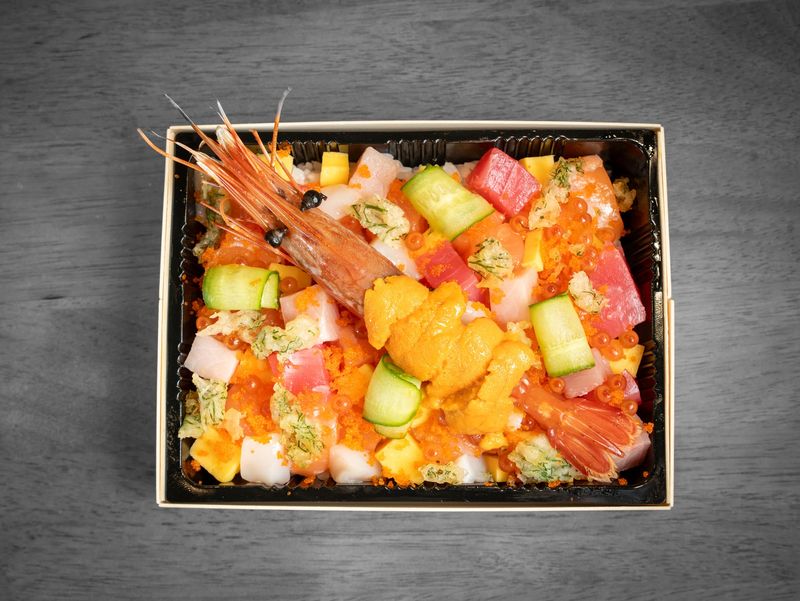
If you normally measure a Japanese restaurant by its sushi rolls, the kaisen section is where Gomen asks you to change the measuring stick. There are no elaborate roll names hiding the fish under spicy mayo and crunchy toppings.
The seafood is right there on top of the rice, and the better the ingredients are, the less there is to disguise. The Gomen Signature Kaisen Bowl, priced around $29 on the current delivery menu, layers salmon, tuna, hamachi, ikura, scallop, sushi shrimp, tobiko and tamago with cucumber and dill tempura.
It is a lot of seafood in one bowl, but the format still keeps each ingredient recognizable. The Salmon Lovers Bowl narrows the focus with salmon, ikura and tobiko, while the Unagi Stamina Box uses a whole grilled eel as the centerpiece.
Then things get decidedly more luxurious. The Premium Gomen Kaisen Bowl runs around $45 and adds Hokkaido uni and botan ebi to an already busy lineup of salmon, tuna, yellowtail, roe and scallop.
The most unusual choice may be the Yuzu and Mikan Hamachi Bliss Bowl. Its mikan hamachi comes from yellowtail raised on feed containing Japanese mandarin peel and oil, producing a subtle citrus aroma in the fish itself.
Gomen pairs that with yuzu tobiko, thin slices of lime, snap peas and colorful miniature peppers. Even the garnish system is more considered than expected for a casual operation, with orders accompanied by carrot râpées and seasonal kale.
These are bowls that make sense for someone who loves sashimi but does not necessarily want the ceremony or pacing of a traditional sushi meal. You get the raw seafood, rice, roe and Japanese flavors in a format that is direct, portable and built around abundance rather than tiny individual pieces.
Tempura and Katsu Get Some Clever Upgrades
A whole lobster tail sticking out of a tempura bowl is the sort of thing that gets your attention before you have even figured out what else is underneath it. Gomen’s Lobster Tail Tempura Bowl is one of the menu’s biggest splurges at roughly $45, combining the lobster with two shrimp, maitake mushroom, shishito pepper, an onsen tamago and homemade tare.
The restaurant even leaves the shell in the presentation, although it is there strictly for looks rather than eating. If that feels like too much for an ordinary lunch, the signature tempura bowl is considerably easier to tackle.
It brings together two shrimp, white fish, squid, scallop, maitake, carrot, shishito, okra and a soft egg over rice with tare. Katsu gets an equally broad interpretation.
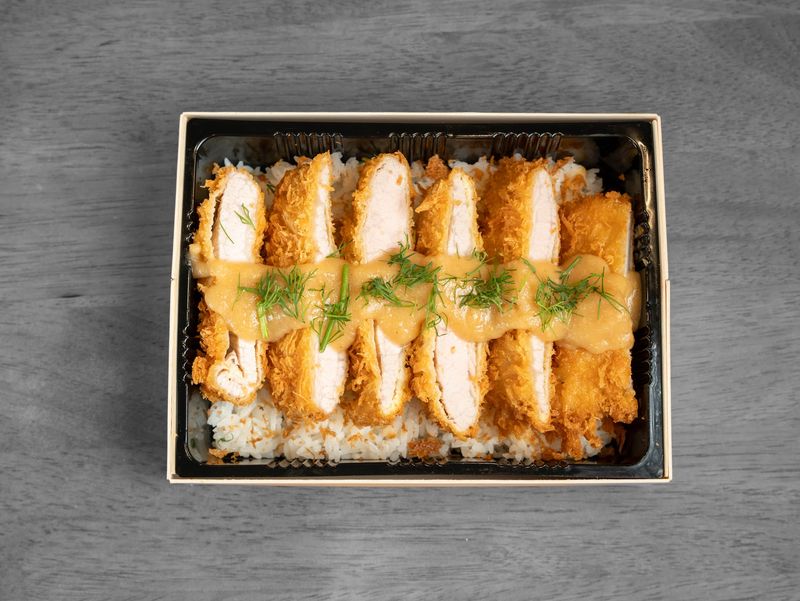
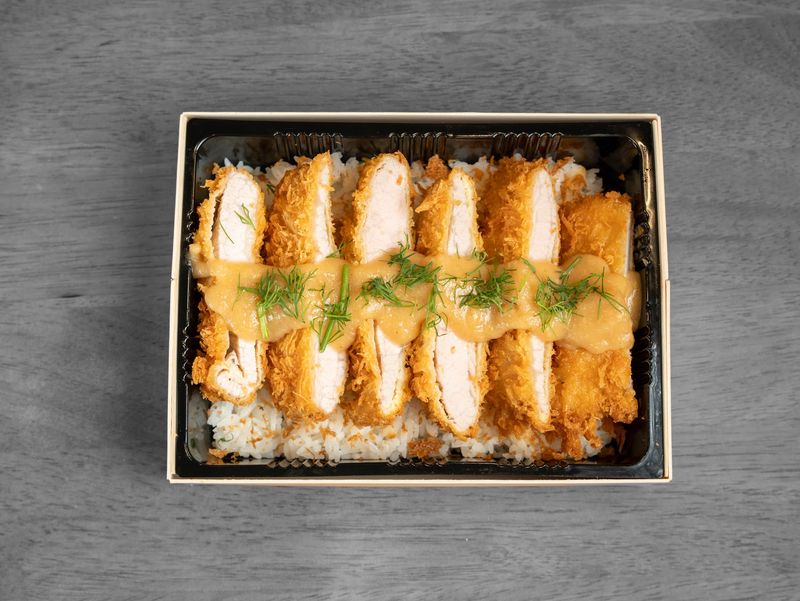
Instead of limiting the category to the usual pork loin cutlet, Gomen works with cuts including beef rib finger, boneless short rib and pork jowl. The Pork Jowl Katsu Bowl is especially telling.
Pork jowl is naturally rich and fatty, so putting a crisp panko crust around it already creates a strong contrast; Gomen then adds fresh dill and a house yuzu-miso sauce to cut through the richness. The beef versions follow the same general idea, turning cuts more commonly associated with slow cooking or grilling into crunchy rice-bowl toppings.
That is where Gomen’s experimental streak works best. Nothing here requires a decoder ring.
Tempura is still tempura and katsu is still katsu. The restaurant simply changes the ingredient inside the crust, adds an unexpected sauce or swaps the usual vegetable lineup for maitake, okra and shishito.
The result feels inventive without making dinner feel like homework.
Even the Takeout Packaging Is Designed Like an Experiment
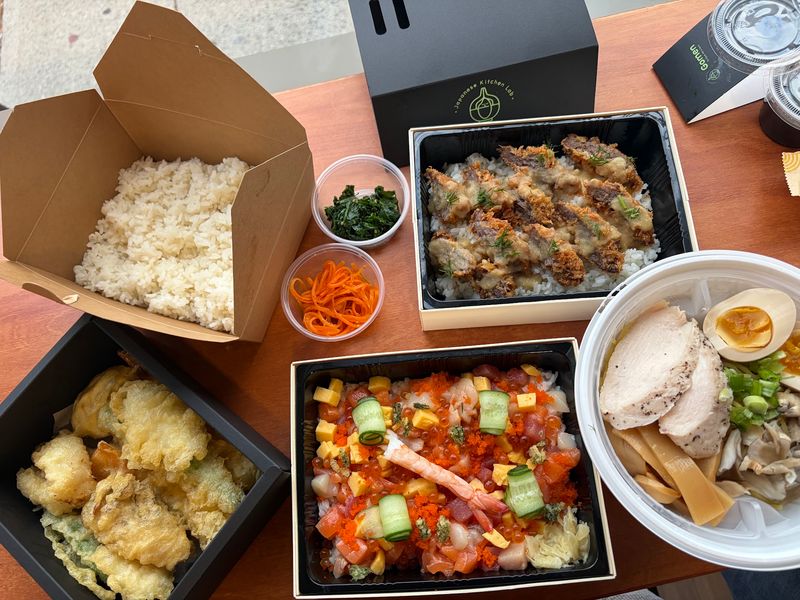
The most revealing thing about Gomen may not be one particular bowl at all. It is the way the restaurant has been built around a fast-casual, takeout-friendly model while serving food that requires careful assembly.
The front counter uses self-ordering kiosks, and the operation is structured so staff can spend most of their time preparing food, checking orders and handling pickup rather than standing behind a traditional register. That might sound like a small operational detail, but it fits the “Kitchen Lab” idea better than a room full of test tubes ever could.
Consistency matters when a bowl has ten seafood components, or when tempura has to arrive crisp enough to justify ordering it away from the kitchen. Gomen’s current setup emphasizes verifying and packaging takeout orders carefully, which makes sense for a menu containing delicate ingredients like uni, roe, onsen eggs, fried seafood and noodle soups.
The food itself is also arranged in a modular way that travels naturally. Kaisen is served as bowls and boxes.
Katsu and tempura sit over rice. Ramen and udon are built around defined sets of toppings.
Extras can be added individually, including salmon, tuna, yellowtail, scallop, ikura, uni, shrimp tempura and vegetables. In other words, the menu behaves almost like a collection of components that can be assembled with precision.
That is what ultimately separates Gomen from the image of the neighborhood sushi restaurant with pages of rolls and combination platters. This is a narrower, more engineered operation built around rice, noodles, seafood, frying and repeatable combinations.
At 39 Godwin Avenue, the experiment is not about making Japanese food unrecognizable. It is about seeing how much personality you can squeeze into familiar comfort food while keeping the whole thing fast enough for a weekday lunch in downtown Ridgewood.
Share this story