A deep elk bugle echoing across the landscape or a massive bison grazing beneath the autumn sky can make an ordinary Illinois outing feel surprisingly wild. From restored prairies and wildlife preserves to accessible parks, the state offers opportunities to observe these impressive animals and learn about their place in the natural world.
Cooler weather and changing fall colors add another reason to explore, although sightings and animal activity can vary by location. Some destinations are ideal for a relaxed family visit, while others reward patient wildlife watchers. Grab your binoculars and discover a wilder side of Illinois this fall.
1. Phillips Park Zoo (Aurora)
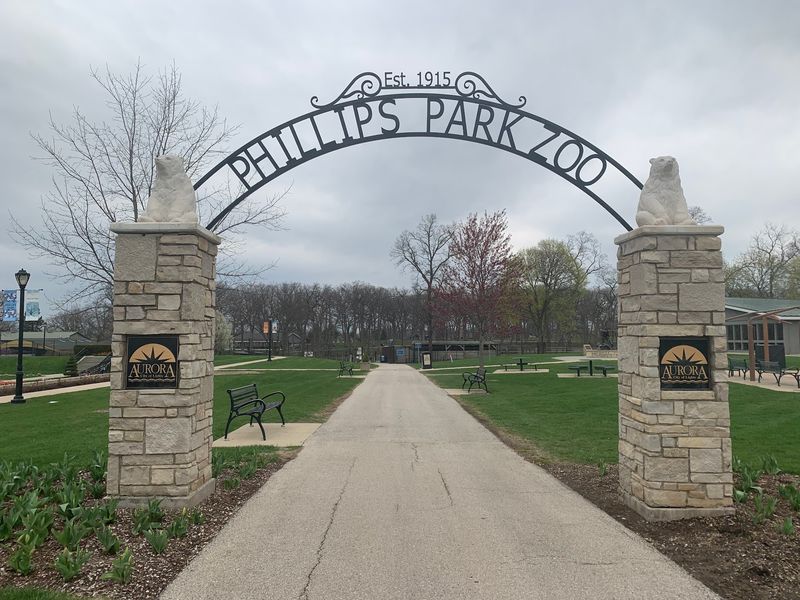
Free admission takes some pressure off a family wildlife outing. Phillips Park Zoo in Aurora offers an elk viewing stop that can fit into an afternoon without requiring the budget or scale of a major zoo day.
The zoo sits within the larger Phillips Park setting, giving the visit a neighborhood park context. Trees and nearby recreation space help connect the animal habitats with the rest of an ordinary fall excursion.
Elk are the relevant species for this list. Their long legs, broad ears, and alert posture offer plenty to study, while the zoo’s female elk provide a fascinating look at these impressive North American animals.
The elk habitat is especially interesting for visitors who enjoy watching animal behavior. A quiet moment might reveal how the animals interact, move around their enclosure, or respond to activity in their surroundings.
Viewing a managed habitat also changes the nature of the outing. The goal is to observe animals receiving zoo care, not to claim a sighting of a wild Illinois elk herd.
The smaller scale can encourage close attention. Instead of rushing between distant attractions, visitors can spend time noticing how an elk feeds, turns its head, or chooses a place to rest.
Other animal exhibits broaden the experience when elk activity is limited. The zoo’s current animal roster and opening schedule are the best guides to what a particular visit will include.
Fall scenery adds color around the wildlife rather than replacing it. Fallen leaves and bare branches can reveal details of a habitat that looked more enclosed during the thick green months of summer.
For an affordable outing, the strength here is simplicity. A walk through the zoo, time at the elk habitat, and a little space to explore the surrounding park make a clear plan without promising constant action from the animals on display.
2. Midewin National Tallgrass Prairie (Wilmington)
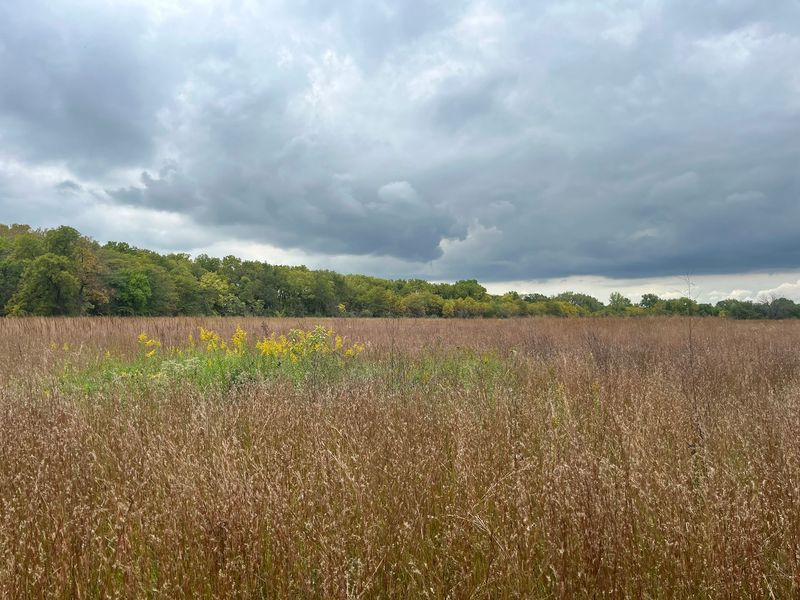
A dark shape in the grass can turn an ordinary prairie walk into a much slower outing. At Midewin, the resident bison herd gives visitors a reason to scan the horizon instead of watching only the trail beneath their shoes.
The setting is broad and open, with restored grasslands stretching across land once used by the Joliet Army Ammunition Plant. That change matters: today’s prairie is part of a larger effort to bring native plants and wildlife habitat back to northeastern Illinois.
Bison are one piece of that work, not a guaranteed roadside attraction. Their grazing area is large, and animals can settle beyond easy viewing range or blend into the rolling texture of tall grass.
Fall adds useful contrast to the scene. Golden stems, darker seed heads, and the animals’ heavy brown coats create a landscape that rewards a patient look, especially when a whole group begins moving together.
Walking here also shows why prairie is more than empty space between towns. Wind moves through several layers of vegetation, birds cross the open sky, and small changes in ground level can hide surprisingly large animals.
Bring binoculars and check the official visitor information before choosing a route. Trail access, viewing guidance, and current conditions are more useful than following an old social media pin to a fence.
Keep expectations centered on bison rather than elk. Midewin belongs on this list for its prairie herd; hearing an elk bugle is not part of the usual experience here.
Even a distant sighting can be interesting. Watch how the animals spread out while feeding, pause in place, or follow one another through the grass, all without crossing barriers or trying to draw them closer. The reward is a view of living prairie, with wildlife setting the pace rather than a scheduled show for visitors.
3. Fermilab (Batavia)
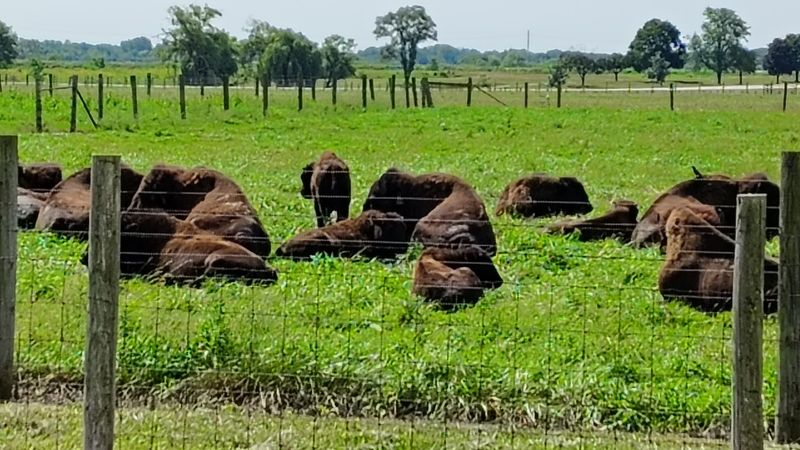
Particle physics and prairie animals are an unusual pairing, which is exactly why Fermilab catches people off guard. The research campus in Batavia is known for science, but its resident bison provide a very different reason to look around.
The herd has been part of the site’s identity for decades. Against a landscape of grass and open sky, the animals offer a reminder that a research property can also include space devoted to nature.
There is no need to invent a scientific job for the bison. They are a campus tradition and a distinctive wildlife presence, not animals conducting experiments or a guaranteed lesson in particle research.
Fall suits the contrast particularly well. Dry grasses surround dark coats, cool light softens the pasture, and nearby campus features place the scene firmly outside the usual zoo or wilderness setting.
Observation happens from authorized areas, subject to current site access rules. Fermilab is an active federal research facility, so older accounts of casual visits may not reflect the requirements in place for a particular date.
Check official access information before traveling, including identification requirements, permitted entrances, and whether the bison viewing area is available. A wildlife outing should not begin with a surprise at a security checkpoint.
Once access is sorted, the appeal is refreshingly simple. A bison lowering its head to graze needs no explanation, and the whole group can hold attention without doing anything especially dramatic.
The setting also invites a broader thought about land use. Large properties can contain several stories at once, with research buildings, habitat work, and animal care sharing the same campus.
Elk bugling is not the attraction here. Fermilab earns its place through bison viewing and the unexpected backdrop, giving this list a stop where the conversation can shift from prairie wildlife to big questions about the universe over the same afternoon.
4. Buffalo Rock State Park (Ottawa)
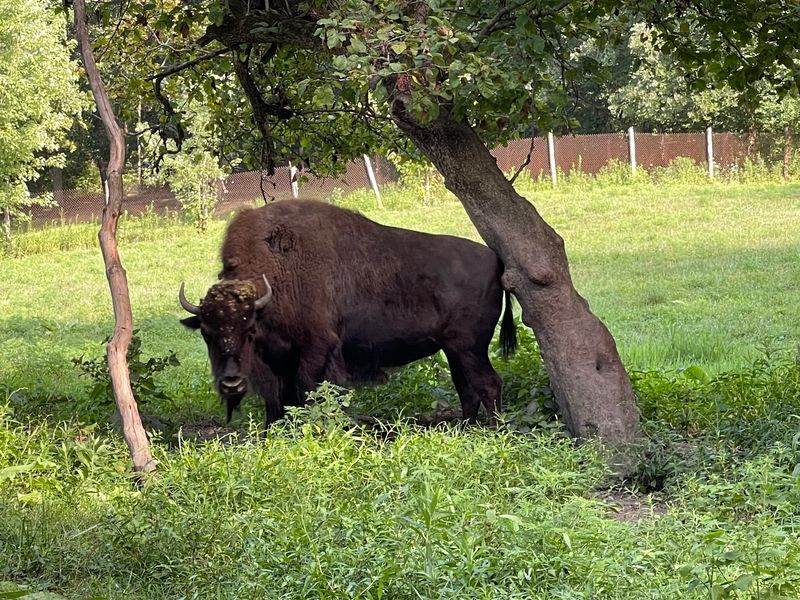
River overlooks and bison belong to the same outing at Buffalo Rock. Near Ottawa, this state park pairs an enclosed animal pasture with views above the Illinois River, so the visit has more than one clear focal point.
The bison are residents in a managed enclosure rather than a herd roaming across an unrestricted prairie. That distinction helps set expectations: this is a park stop with wildlife viewing, not an expedition across miles of grassland.
Descriptions often mention two resident animals, but the current number should be confirmed through park information. Animal populations can change, and a precise head count is less useful than knowing whether viewing is available.
Autumn gives the surrounding trees a chance to compete for attention. Yellow and rust colored leaves frame parts of the landscape, while the river adds a long, open view beyond the wooded ground.
The pasture offers a closer look at the bison’s unmistakable build. A high shoulder hump, short horns, and a large head make even a resting animal easy to distinguish from ordinary cattle.
Walking routes spread the visit beyond the enclosure. The shift from watching an animal to looking across the water gives families a natural change of pace without turning the afternoon into a packed itinerary.
Buffalo Rock is not an elk destination, so there is no reason to build the day around bugling. Its role in this collection is straightforward: resident bison, river scenery, and an accessible state park setting.
There is also a difference between visibility and activity. An animal may be plainly in sight yet spend much of the visit feeding slowly or standing still, which is normal rather than a disappointing performance.
The strongest fall outing here combines those ordinary moments. Watch the pasture, wander through the trees, and give the river overlook its own share of time before heading elsewhere.
5. Lords Park (Elgin)
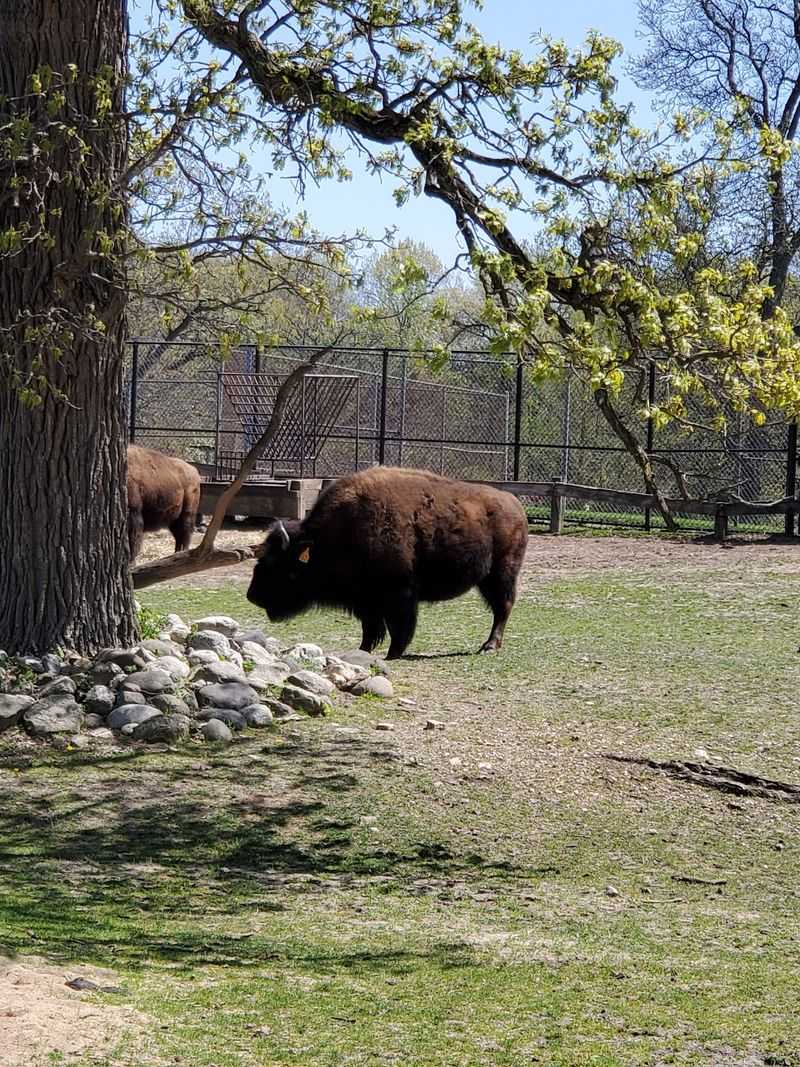
A city park can deliver a surprisingly big animal encounter between ordinary afternoon plans. In Elgin, Lords Park puts bison, elk, and deer viewing within a landscape of mature trees, walking paths, and familiar neighborhood recreation.
The animals live in outdoor enclosures, not loose among the lawns. That arrangement makes the park’s wildlife area a distinct stop within the larger grounds, where a short walk can connect animal watching with pond views.
Fall brings layers rather than endless horizons. Leaves collect beneath trees, branches break up the sky, and enclosure fences place the animals against a backdrop that is clearly an urban park.
Having both bison and elk here gives visitors a useful comparison. One animal carries its weight heavily toward the shoulders; the other has a longer legged shape that looks especially striking when an antlered male turns sideways.
An elk bugle may be possible during the breeding season, but it should not be advertised as a scheduled feature. Whether visitors hear one depends on the animals, timing, and conditions during that particular visit.
The park’s broader setting keeps the outing flexible. Someone interested mainly in the wildlife can linger near the enclosures, while companions have paths, trees, and water to enjoy without needing a separate destination.
It is worth separating the permanent outdoor animal area from any seasonal attractions or programming. A description of summer activities does not necessarily tell visitors what operates during a cool October afternoon.
Lords Park’s appeal is its everyday scale. There is no sweeping wilderness claim to make, only the unusual chance to see substantial prairie animals within a long established city green space.
That contrast gives the stop its personality. Beyond the enclosure, people continue their park routines while a bison grazes or an elk watches nearby, bringing two very different versions of an afternoon into the same view.
6. Brookfield Zoo Chicago (Brookfield)
There is something impressive about standing just a short drive from Chicago and watching an American bison move across its habitat. At Brookfield Zoo Chicago, these massive animals bring a piece of the Great Plains into one of Illinois’ best-known wildlife attractions.
The zoo’s Great Bear Wilderness area is home to American bison, giving visitors a chance to observe animals that once roamed across much of North America. Their shaggy coats, muscular shoulders, and unmistakable humps make them fascinating to watch.
Unlike the large prairie preserves elsewhere on this list, Brookfield offers a managed zoo environment. Visitors can admire the animals from designated viewing areas without searching miles of grassland for a distant herd.
Fall adds another layer to the experience. Cooler temperatures make walking around the zoo more comfortable, while changing leaves create a beautiful seasonal backdrop.
The bison themselves are worth watching closely. They may spend long stretches grazing quietly, occasionally lifting their heads or moving together across their habitat.
The zoo also offers educational opportunities that help explain the importance of bison conservation. These animals once numbered in the millions across North America, making their survival and recovery an important wildlife story.
Families can easily turn the visit into a full afternoon. Other animal habitats, walking paths, and seasonal attractions provide plenty to explore beyond the bison exhibit.
This is not a place to listen for elk bugling, and the bison are not roaming an unrestricted prairie. The appeal comes from seeing these remarkable animals in a carefully managed setting.
For anyone hoping to enjoy an Illinois wildlife outing without traveling deep into the countryside, Brookfield Zoo Chicago offers a memorable way to end the list.
7. Nachusa Grasslands (Franklin Grove)
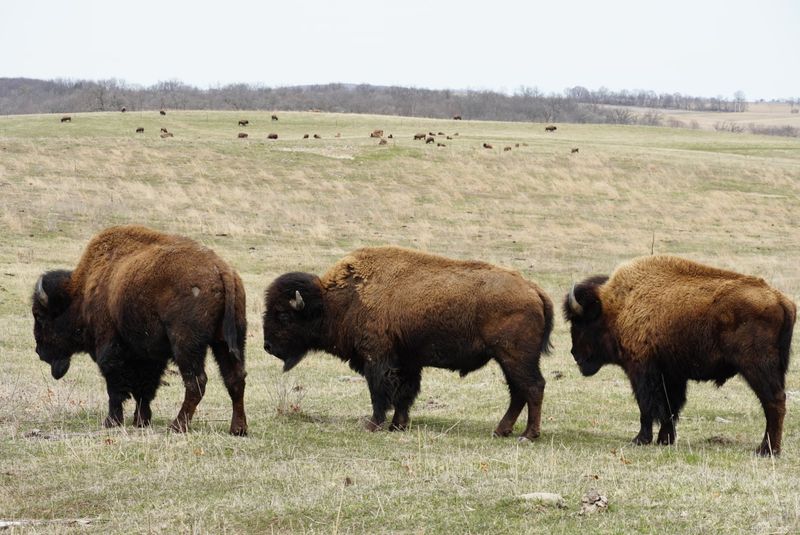
Gold is the main color at Nachusa in autumn, but the bison supply the boldest shapes. A broad back rising above the grass or a group crossing a hillside can change the whole view in seconds.
Near Franklin Grove, this preserve protects and restores native prairie under the care of The Nature Conservancy. Its rolling ground gives the landscape a different character from the flatter grasslands many drivers picture when they think of Illinois.
The herd lives within a fenced bison unit, where grazing helps shape the habitat. Visitors do not walk freely among the animals, and a visit should never be treated as permission to enter their enclosure.
Those boundaries leave plenty to notice from allowed areas. Bison may feed with their heads low, stand nearly still, or move across a slope in a loose line that briefly becomes easier to see.
By fall, many summer flowers have turned into seed heads. The scene is still rich with detail: stiff stems, copper leaves, and pale grasses catch the light while the hills add depth behind them.
There is a useful lesson tucked into that view. Restoring prairie means caring for a whole community of plants and animals, not simply placing a few impressive mammals in a field.
Bison sightings depend on where the herd happens to be. A wide photograph of the grasslands may tell the story better than a close portrait, particularly when the animals remain far from public viewing locations.
Nachusa is a bison destination, not an elk listening stop. Its fall appeal comes from open country, changing plant colors, and the chance to see grazing animals within a working restoration landscape.
The quiet stretches are part of the visit, too. Between herd movements, the eye starts finding smaller things: a bird on a stem, a shifting shadow, or another ridge beyond the first.
8. Busse Forest Elk Pasture (Elk Grove Village)
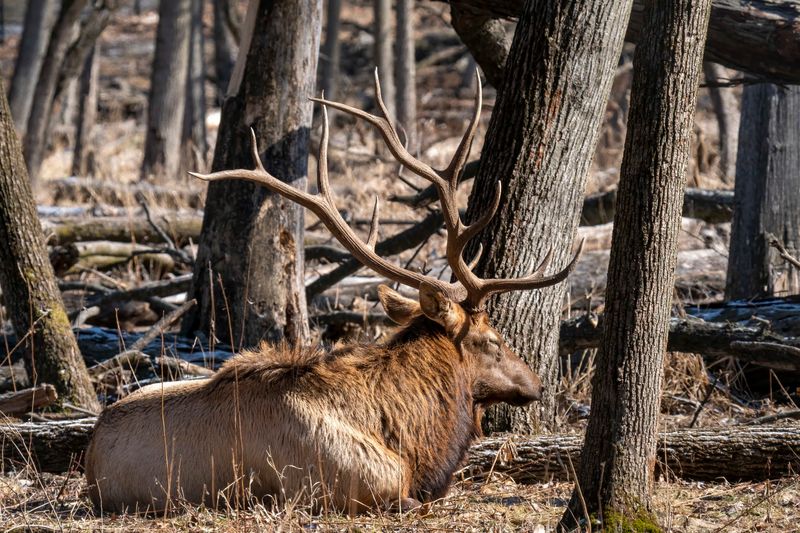
Listen closely, and a familiar suburban forest preserve may offer an unfamiliar sound. At Busse Forest’s elk pasture, the possibility of a fall bugle gives a routine walk a reason to pause beside the enclosure.
The resident herd is a long standing part of the Elk Grove Village area. Unlike Illinois prairie stops focused on bison, this destination belongs on the list specifically for elk and their seasonal behavior.
Male elk may bugle during the rut, when breeding activity changes how they interact. The sound can carry beyond the immediate animal, but a quiet visit is entirely possible even during the right season.
The pasture is fenced, and the herd is managed. Visitors observe from outside the enclosure rather than following animals through the woods, which keeps the encounter clearly separate from searching for wild elk.
Autumn trees supply a fitting backdrop without needing any extra drama. An antlered head against yellow leaves is already a strong image, and the animals’ movements can be interesting even when no call follows.
Watch the ears as well as the antlers. Small shifts in attention often happen before a larger movement, giving patient observers more to notice than a quick glance at the biggest male.
Busse Woods also serves a busy suburban recreation area. The elk pasture is one feature of that larger landscape, so a wildlife visit may share its surroundings with walkers, cyclists, traffic sounds, and other everyday activity.
That mix is part of the location’s character. A striking animal encounter does not require a remote road or a full weekend away; sometimes it happens near places people already pass.
Bison are not the reason to come here. The focus stays on the resident elk, the wooded setting, and the uncertain but memorable chance that a bull will add its voice to the ordinary sounds of a fall afternoon.
9. Wildlife Prairie Park (Hanna City)
An elk’s bugle is not the tidy little whistle its name might suggest. The call can rise sharply, hang in the air, and turn a wooded park visit into a moment everyone suddenly stops talking through.
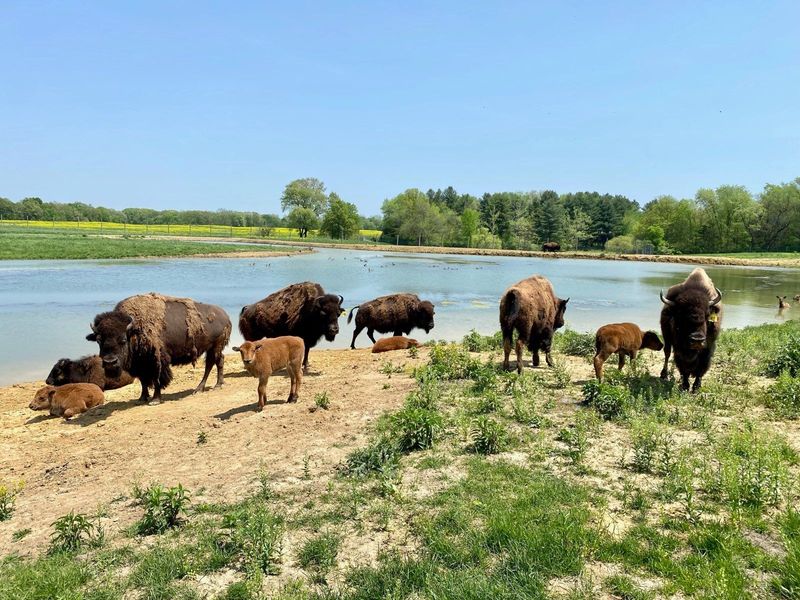
Wildlife Prairie Park, near Peoria in Hanna City, offers a chance to see both elk and bison. Its managed animal habitats make it a different outing from searching a huge prairie for a distant herd.
During the fall breeding season, male elk may become more vocal. Bugling helps them communicate during the rut, but no visitor should expect a call on demand or assume every autumn afternoon will be noisy.
The park also features other North American wildlife, including animals such as wolves and bears. That variety gives families more to explore when the elk are quiet or the bison are resting rather than moving.
Wooded paths bring a different kind of fall scenery than an open grassland. Leaves collect along the route, branches frame the habitats, and the next animal stop breaks the walk into manageable pieces.
Seeing elk and bison during the same visit also makes their differences clear. Elk carry a lighter outline and, in males, branching antlers, while bison have a heavy front end, shoulder hump, and shaggy head.
These are managed encounters, not sightings of free roaming wild herds. Barriers and designated viewing spaces protect the animals and visitors, while staff care supports the park’s wildlife education role.
For children, the most interesting moment may be a small one: an ear turning toward a sound, an elk lifting its head, or a bison slowly getting to its feet.
A fall visit works best without treating bugling as the only prize. The full attraction is the chance to compare animals, follow the wooded routes, and see how much activity happens between the louder moments throughout the day.
10. Burlington Prairie Forest Preserve (Sycamore)
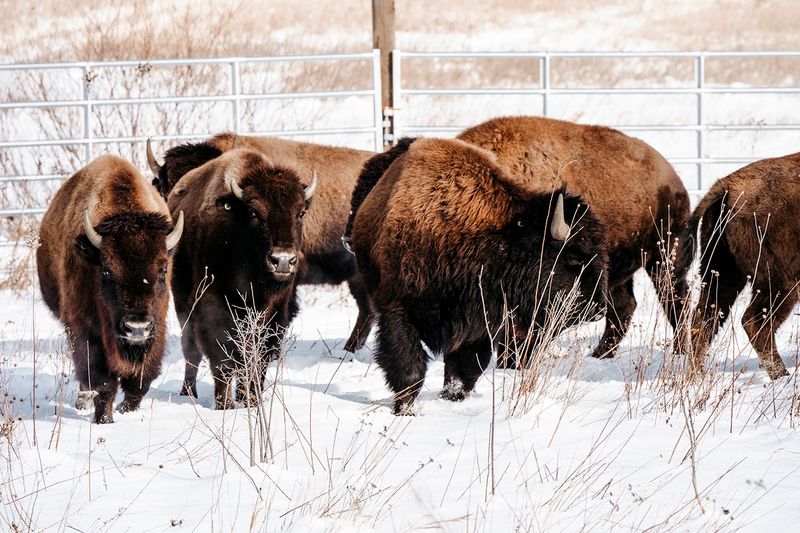
A herd of bison grazing across an Illinois prairie might sound like a scene from centuries ago, but Burlington Prairie Forest Preserve has brought that remarkable sight back to Kane County. The animals arrived in December 2025, and public viewing officially began in May 2026.
The preserve sits near the Kane and DeKalb county line, surrounded by the kind of open countryside that makes northern Illinois so beautiful in autumn. Golden grasses stretch across the landscape, creating a striking backdrop for the massive animals.
This restoration project is especially meaningful because bison had not lived on Kane County’s native prairie for more than 200 years. Their return represents an important step in reconnecting the landscape with its natural history.
Bison do more than create memorable photographs. Their grazing patterns and movements help maintain prairie habitats, supporting the plants and wildlife that depend on these grasslands.
Visitors can observe the herd from designated public viewing areas, although the animals may sometimes wander farther from sight. Bringing binoculars makes it easier to appreciate the scene without disturbing the herd.
Autumn is a wonderful season to explore the preserve. Native grasses turn shades of gold and copper, and the wide-open sky gives the landscape a peaceful, almost timeless appearance.
The bison enclosure has also been expanded as part of the ongoing restoration project, giving the animals additional space to roam within their managed habitat.
Families interested in wildlife conservation will find plenty to appreciate here. Watching these animals graze offers a memorable introduction to the role bison once played in Illinois’ prairie ecosystems.
With its newly established herd, beautiful fall scenery, and fascinating conservation story, Burlington Prairie Forest Preserve has quickly become one of Illinois’ most interesting places to see bison.
Share this story