A spinach-loving sailor might seem like an unlikely hometown hero, but in Chester, Illinois, Popeye is practically everywhere. Overlooking the Mississippi River, this charming community proudly celebrates its connection to cartoonist E. C. Segar, who was born here and later created one of America’s most recognizable comic-strip characters.
Colorful statues, themed displays, and an annual festival keep that legacy alive, turning an ordinary walk through town into a playful scavenger hunt. Visitors can discover familiar faces from the Popeye universe while exploring Chester’s riverfront scenery and local history. For cartoon fans and curious travelers alike, this little Illinois town offers a wonderfully unexpected adventure.
A Bronze Sailor Above the Mississippi
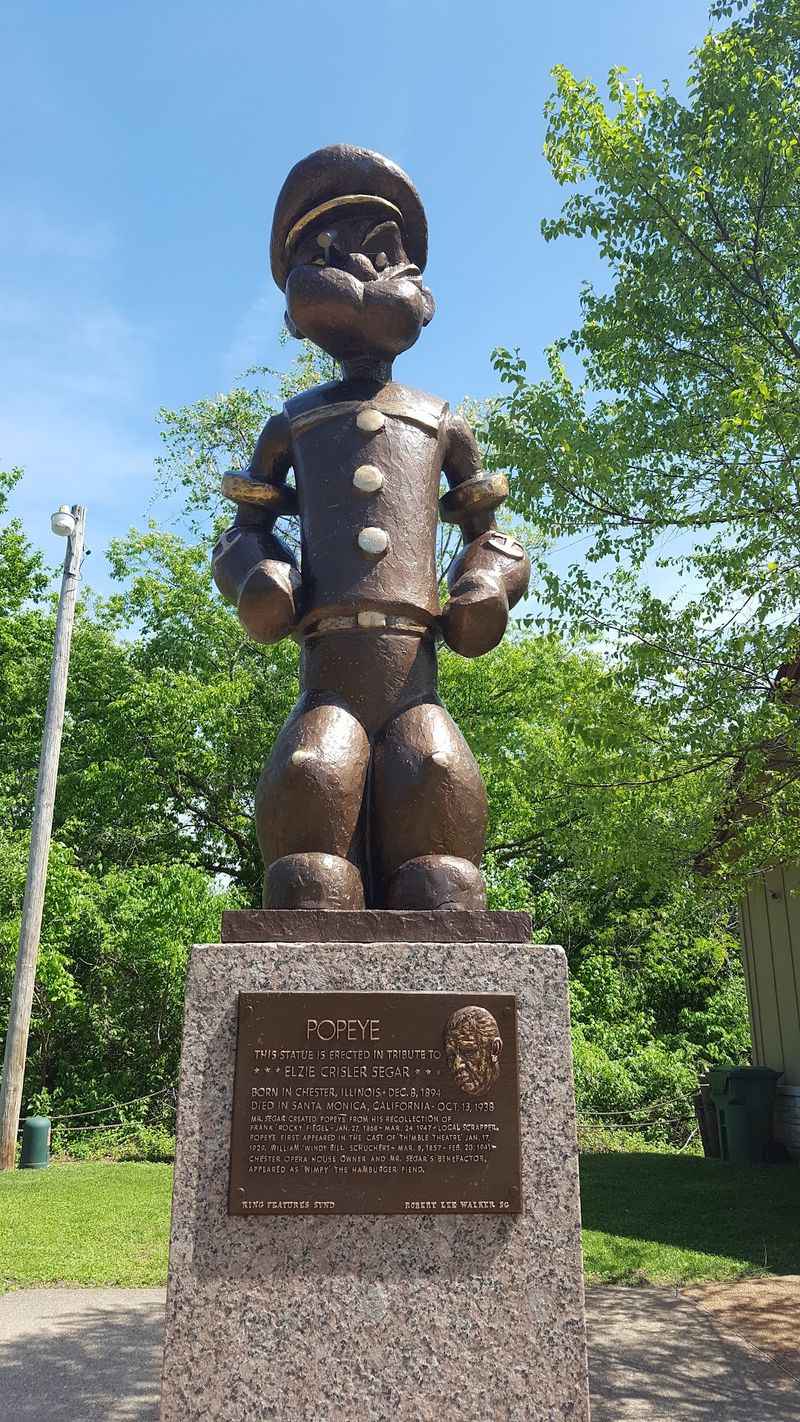
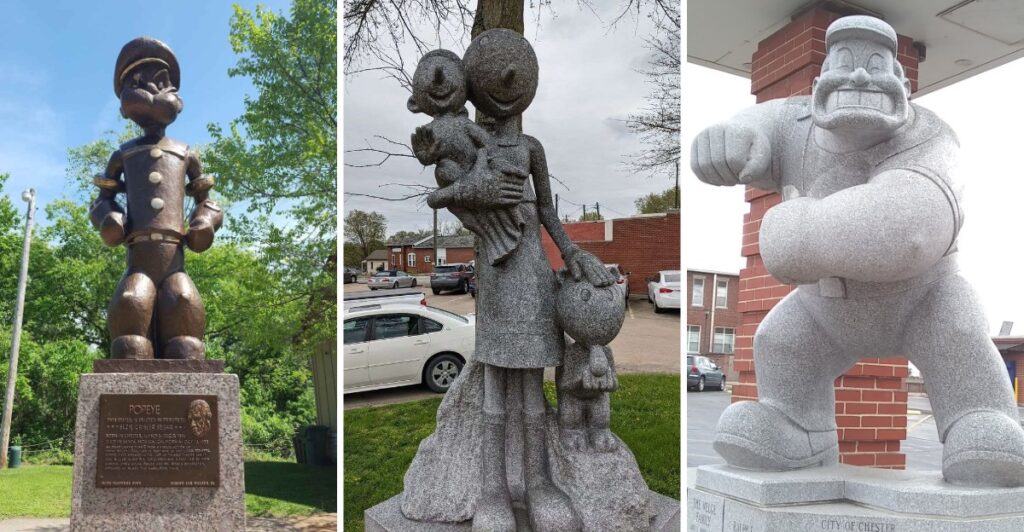
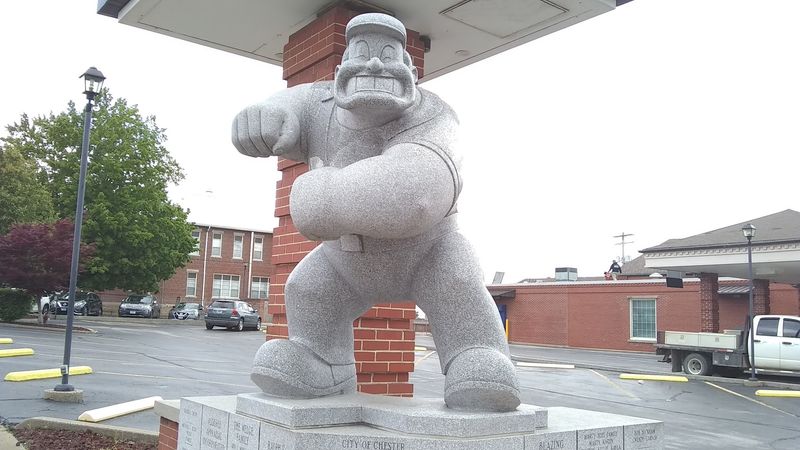
A sailor with enormous forearms makes an unlikely welcome committee for a Mississippi River town. Yet Chester’s bronze Popeye statue gives visitors a clear introduction: this community takes its cartoon connection seriously, without losing its sense of humor.
Dedicated in 1977, the monument stands in Segar Memorial Park near the Illinois approach to the Chester Bridge. Its location brings two defining parts of Chester together, the river below the bluff and the character linked to the city’s most famous artist.
Start here before searching for the other figures around town. Popeye’s familiar shape gives even visitors who have never read an old comic strip an easy way into the story, while the monument’s setting makes it more than a quick roadside photograph.
Look closely at the sculpture before stepping back for a wider view. The broad arms, sailor clothing, and determined expression carry the character’s personality without requiring a caption, and the pedestal separates him from the everyday movement of vehicles nearby.
For photographs, try both a close view of the figure and a wider frame showing the park. River visibility and background details depend on where you stand, so move around the public viewing area rather than assuming one angle captures everything.
Keep children close near streets and the bridge approach, and use designated parking rather than stopping wherever the statue first appears. A few extra minutes on foot will give you a safer look and a cleaner photograph. The monument also provides a useful starting point for understanding the title’s promise.
Popeye is not literally standing on every corner, but his presence spreads well beyond a single landmark, and this bronze sailor is the anchor that makes the rest of Chester’s character trail easier to follow. Before leaving, read any interpretive information available at the site, then choose your next character stop.
The Illinois Hometown Behind Popeye’s Punch
Before Popeye could throw a punch, a young artist from Chester had to put him on paper. Elzie Crisler Segar, known professionally as E. C. Segar, was born here in 1894, giving the town a direct connection to the sailor’s creation.
Segar’s comic strip Thimble Theatre began in 1919. Popeye arrived in that strip on January 17, 1929, a full decade later, and eventually became its breakout character rather than simply remaining another figure in the cast.
That timeline clears up a common misunderstanding about Chester’s claim. The town is the birthplace of Popeye’s creator, not the setting of a documented birth for a real sailor, and the character made his public debut through a newspaper comic.
Knowing that difference makes the local celebration more interesting. Chester honors an artist whose work traveled far beyond his hometown, reaching readers who might never have heard of this bluffside community along the Mississippi.
Local tradition also links some of Segar’s characters to people he knew in Chester. Frank Fiegel is widely associated with Popeye’s inspiration, while Dora Paskel is associated with Olive Oyl; treat those connections as accounts of artistic influence, not exact character biographies.
A cartoon can borrow a face, a manner, or a memorable personality and still become something entirely new. Segar’s achievement was turning recognizable human traits into a world of stubborn sailors, comic trouble, and wonderfully odd companions.
When you encounter historical displays around Chester, look for dates and names rather than only familiar cartoon images. Those small details help separate the creator’s life from the later cartoons, films, and merchandise that expanded Popeye’s fame.
Families can turn the history into a simple conversation: who creates the characters everyone recognizes, and where do those ideas begin? In Chester, the answer starts with a local artist, not with a can of spinach.
Follow the Cast Beyond the Famous Forearms
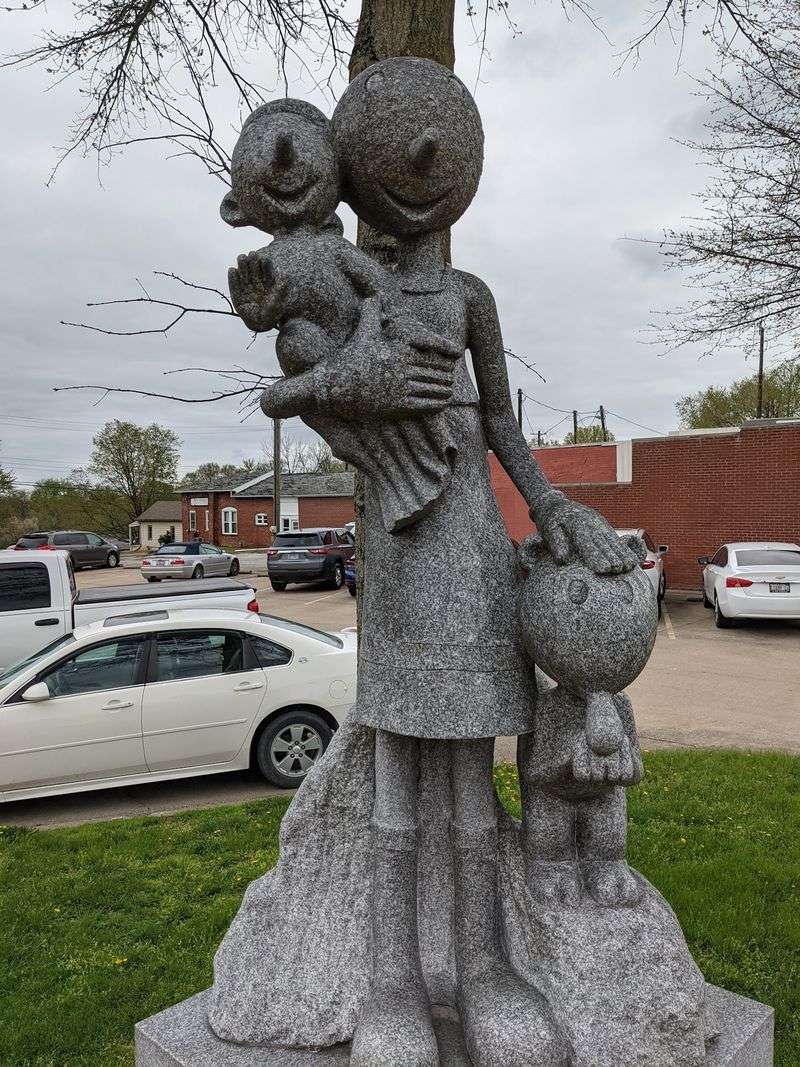
Olive Oyl deserves some camera time, too. Once you leave the main Popeye monument, Chester’s Popeye and Friends Character Trail broadens the visit from one famous sailor to the oddball company that helped make his comic world so lively.
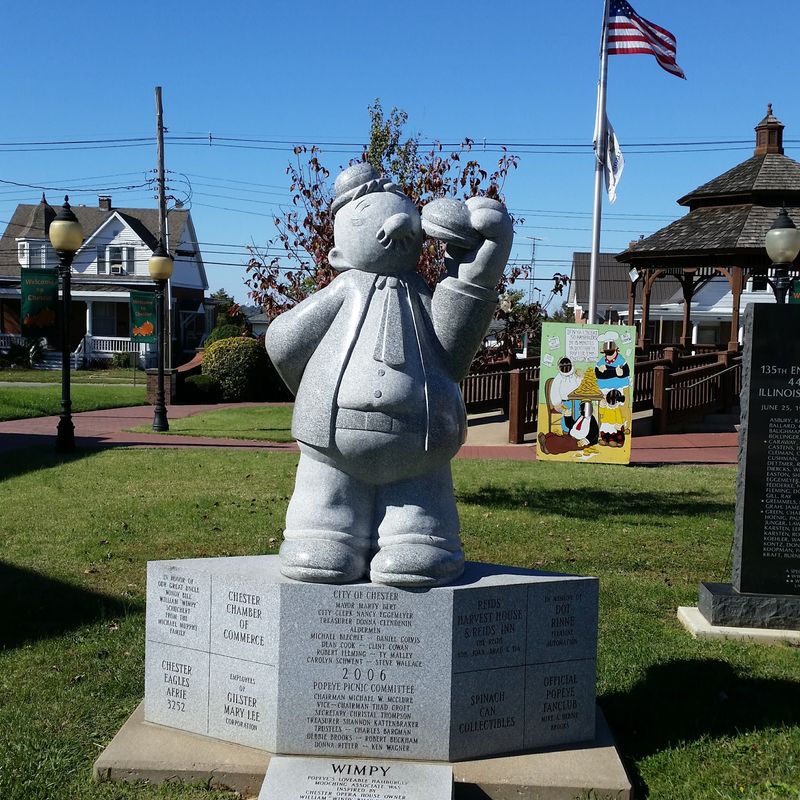
The trail began in 2006 and places character sculptures at different locations around Chester. Unlike a single sculpture garden, it sends visitors through the town, turning the search for familiar faces into a way of noticing streets, businesses, and public spaces.
Among the characters represented are Wimpy, Olive Oyl, Swee’Pea, and other figures from the Popeye universe. Some names will be obvious to casual fans, while others make more sense after a glance at the information accompanying a stop.
Let each sculpture set the pace rather than rushing to collect photographs. Look at the character’s pose, the grouping of figures, and the way a flat comic personality has been translated into a solid object you can walk around.
Children can compare shapes and expressions even if they do not know the names. Adults who grew up watching Popeye may discover that the newspaper strip’s cast is larger than the handful of characters they remember from television.
Because the sculptures are spread out, use a current trail map instead of assuming every stop sits within one compact walking loop. Locations and the number of installations can change as the project develops, making older travel lists less useful for planning.
Respect the surroundings at each stop, especially where a sculpture stands beside an operating business or active roadway. Park legally, avoid blocking entrances, and keep photographs within safe public areas.
You do not need to finish the entire trail to enjoy it. Pick several characters that interest your group, connect nearby stops, and leave room for an unexpected favorite, perhaps a supporting player who nearly steals Popeye’s show altogether.
Small Treasures at Spinach Can Collectibles
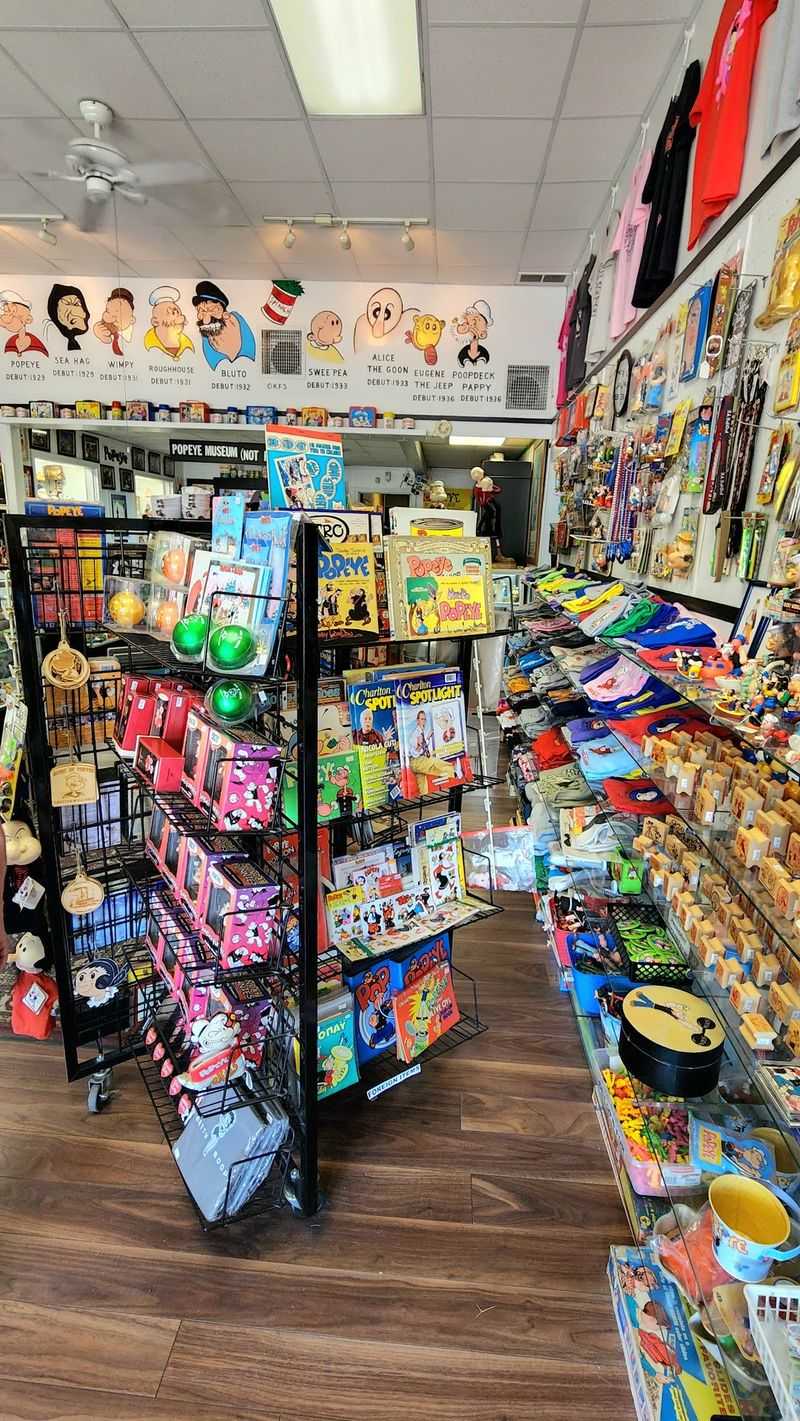
A tiny Popeye toy can tell a different story than a towering outdoor statue. At Spinach Can Collectibles, Chester’s connection to the sailor moves indoors, where memorabilia and souvenirs show how a newspaper character became part of everyday popular culture.
The shop is known for its Popeye focus and associated museum displays. It offers a useful change of scale after the monuments: instead of studying one large figure, you can examine smaller objects made for shelves, pockets, playrooms, and collections.
Merchandise and displays may change, so approach the visit with curiosity rather than a fixed shopping list. Vintage pieces, character images, and collectible objects can reveal different versions of Popeye, depending on when they were produced and who made them.
Notice how the sailor’s face and clothing shift across objects. A comic drawing, a toy, and a souvenir do not always use identical proportions, yet the broad forearms and unmistakable expression usually make the character easy to recognize.
For younger visitors, this is a chance to see entertainment before everything lived on a screen. Physical objects show how fans carried a favorite character into ordinary life, whether through a plaything, printed picture, or item kept on display.
Collectors should ask about condition, age, and availability rather than guessing from appearance alone. If you are simply browsing, give yourself time to look carefully, and ask before photographing indoor displays or handling anything that appears fragile.
Check current opening hours before building your day around this stop. A small specialty business may not keep the same schedule as a large attraction, and an outdoor sculpture visit does not depend on the shop being open.
If you choose a souvenir, look for something that connects your visit to Chester rather than only to Popeye in general. A modest keepsake can carry the town’s story home without requiring a serious collector’s budget.
When the Popeye Picnic Takes Over
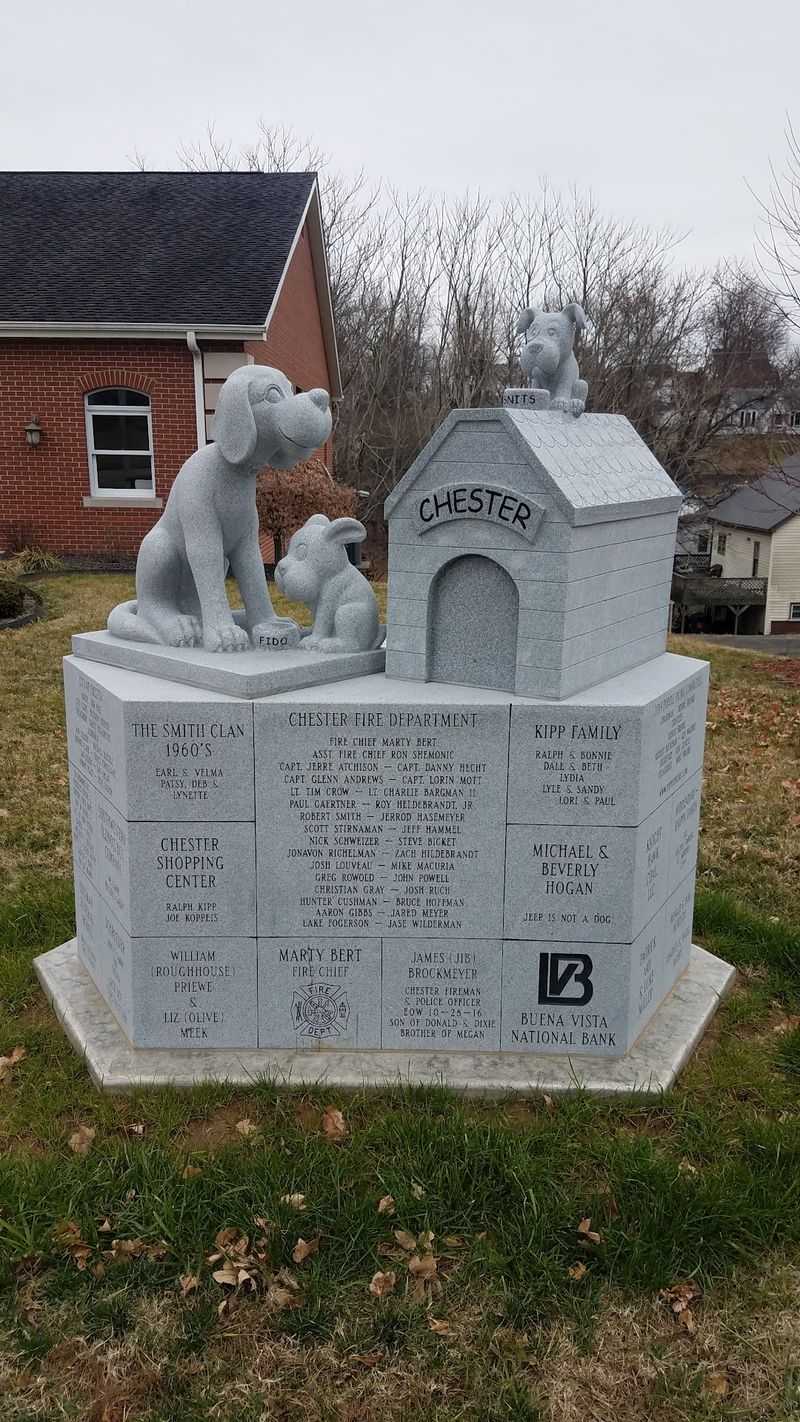
On festival days, Chester’s cartoon connection steps off its pedestals. The Popeye Picnic brings the character into a community gathering, adding the movement, noise, and shared activity that a quiet weekday statue tour cannot provide.
The celebration is traditionally associated with September, but confirm the current year’s dates before making travel plans. Event schedules, locations, and individual activities can change, so an old festival announcement should never serve as your final itinerary.
Past celebrations have included entertainment, a parade, and activities built around the Popeye theme. Think of those as examples of the event’s character rather than promises about what will happen during the year you attend.
A festival visit serves a different purpose from a careful history stop. You get to see how residents use the sailor as a shared symbol, one that can appear in decorations, costumes, and public celebrations without needing a lengthy explanation.
Plan your day around the current program if there is one activity you especially want to catch. Arriving after a parade has passed or before entertainment begins can change the experience considerably, even when you have chosen the correct date.
Expect more demand for convenient parking during busy periods. Wear shoes suitable for standing and walking, bring water, and prepare for changing weather rather than assuming a September afternoon will remain comfortably cool.
Families should choose an easy meeting point before separating, especially when crowds gather near activities. Keep enough flexibility in the schedule for food, restrooms, and a break from noise, because children may enjoy the characters more than a packed program.
If crowds are not your preference, visit Chester outside the celebration and enjoy the outdoor monuments at a calmer pace. The festival is an added layer, not the only opportunity to explore the town’s Popeye connection; the statues continue doing their cheerful work on ordinary days as well.
Build a Route That Works With the Bluff
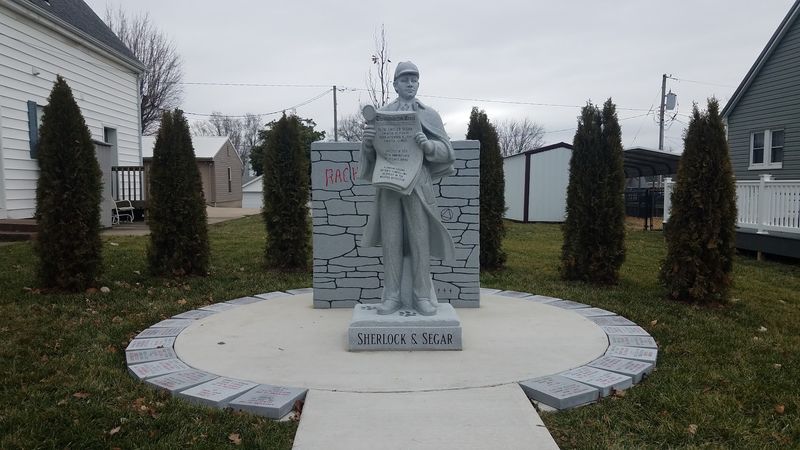
Comfortable shoes will do more for this outing than a giant supply of spinach. Chester sits on a bluff above the Mississippi River, and its scattered character stops reward a little route planning before you begin moving around.
The city is roughly 61 miles south of St. Louis, making it possible to consider as a day trip, depending on your starting point. Once you arrive, however, the useful question is not simply distance, but how much walking your group wants.
Begin with the main Popeye monument, then consult a current character trail map. Group nearby sculptures together rather than crossing town repeatedly, and use a vehicle between clusters when distances, slopes, or weather make walking less comfortable.
Do not assume every stretch between attractions has the same sidewalk conditions or an easy crossing. Check the immediate surroundings before setting off, especially with a stroller, a wheelchair, or children who are eager to race toward the next statue.
Outdoor monuments are convenient for flexible sightseeing, but indoor stops require more attention to hours. Place any shop or display you hope to enter earlier in your plan, then fit additional outdoor character visits around that confirmed opening window.
Summer heat can make exposed stops tiring, while rain can turn a pleasant photo walk into a hurried dash. Carry drinking water, use sun protection, and keep a light weather layer available instead of leaving all your supplies in the car.
Allow time for an ordinary meal or rest break in Chester rather than treating the town as a checklist. Check business hours before relying on a particular food stop, especially if you are visiting early, late, or on a holiday.
A successful route does not require seeing every sculpture. Choose a manageable number, leave space for the Segar story, and finish while everyone still has enough energy to enjoy the last stop.
A Working Town With a Cartoon Thread
Between character stops, regular town life continues. Cars pass, businesses open, and residents go about their day, which is precisely why Chester’s Popeye celebration stands apart from an attraction built entirely around a fictional world.
Chester is the county seat of Randolph County, not a cartoon theme park. Its monuments share space with the practical places a community needs, allowing visitors to discover the sailor’s legacy while moving through a functioning Illinois town.
That setting changes how the artwork reads. A familiar comic face beside an ordinary street offers a quick visual surprise, while several characters spread across town suggest a long commitment rather than a single sign installed for passing motorists.
The variety also keeps the story from depending entirely on nostalgia. Someone who knows Popeye only as the spinach sailor can enjoy the sculptures, then learn about Segar, early newspaper comics, and the supporting characters through the surrounding stops.
For a thoughtful final look, compare the original Popeye monument with one of the later trail sculptures. Consider their materials, their settings, and the different ways they present a drawn character as a public object occupying real space.
There is no need to force every sight into the Popeye story. The bluff, river setting, and everyday streets give Chester its physical identity, while Segar’s legacy supplies a distinctive cultural thread that runs through those surroundings.
Visitors can support that connection in simple ways: respect the monuments, follow parking rules, and spend time in local businesses when their hours fit your trip. Treat the town as a community hosting you, not as a backdrop that exists only for photographs.
The title’s every corner is a playful exaggeration, but the larger point holds. Chester has given its famous sailor more than one place to stand, and following him reveals the hometown of the artist who first sent him into print.
Share this story