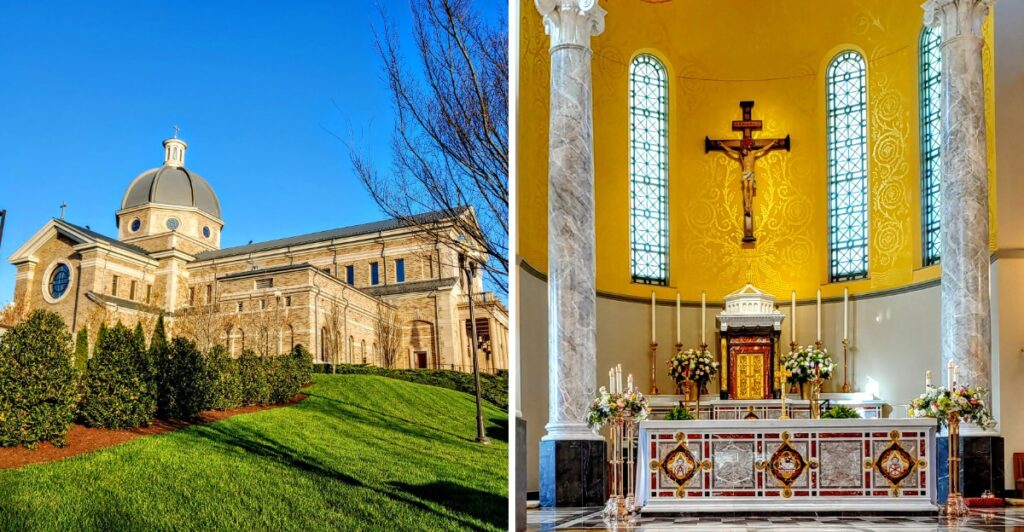
The altar is carved from marble quarried in the Italian region where Michelangelo selected stone for his sculptures. That alone made me stop and reread the sentence. Then I learned there are 17 kinds of marble inside.
The dome rises 144 feet from the floor. Its design takes direct inspiration from Brunelleschi’s famous dome in Florence. Yes, that Florence.
I can’t imagine a better plot twist for a building in Tennessee.
The floors borrow from an old Roman mosaic tradition. A shimmering pattern behind the sanctuary echoes a basilica in Rome. Even the bricks outside follow an ancient Italian shape.
I like how every detail feels chosen on purpose, from the ground up. So how did a slice of Renaissance Italy land in the middle of East Tennessee, and what does it look like up close?
Florence Called, And It Wants Its Dome Back
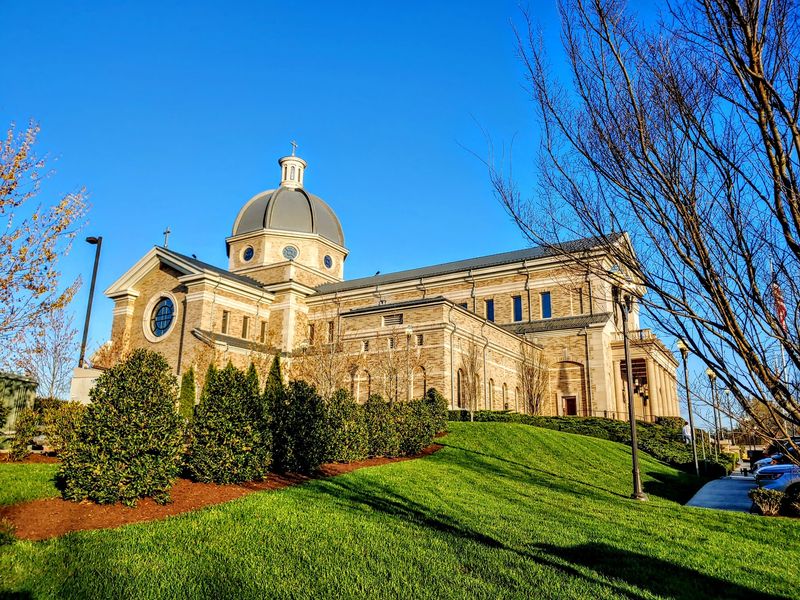
The Cathedral of the Most Sacred Heart of Jesus serves as the seat of the Catholic Diocese of Knoxville. Its showstopper sits right on top, and you can spot it from the road.
The central dome climbs 144 feet from the cathedral floor to its very tip. Designers drew direct inspiration from Filippo Brunelleschi’s dome at the Cathedral of Saint Mary of the Flower in Florence.
That Italian dome is one of the most famous in the world. Borrowing its look in Tennessee feels bold, and honestly, a little delightful.
The building follows a Renaissance Revival style. It also pulls from Baroque and Romanesque traditions, blending classic sacred design into one cohesive whole.
The project was led by McCrery Architects of Washington, D.C. BarberMcMurry Architects of Knoxville served as the architect of record.
Ground broke on April 19, 2015, and the cathedral was dedicated on March 3, 2018. So this Old World look is actually brand new, which makes the craftsmanship even more impressive.
My tip? Take a moment outside before heading in. The dome sets the tone for everything waiting beneath it, and it deserves a long, appreciative look first.
Look Up And Find An Entire Gathering Painted Overhead
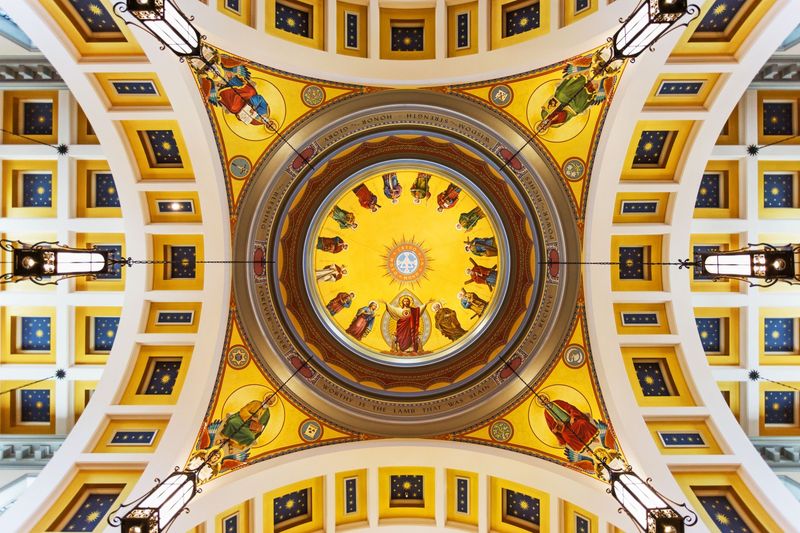
Neck stretches are recommended here. The cupola soars 90 feet high, and its painted surface is packed with meaning.
Monumental murals show the Most Sacred Heart of Jesus at the center. Mary, Joseph, and the Twelve Apostles surround Him in a grand circle of figures.
It’s the kind of artwork you usually associate with old Italian churches. Seeing it in a building dedicated in 2018 shows how seriously the designers took their inspiration.
The murals belong to a new liturgical artistry program created just for this cathedral. Nothing was copied from a catalog, which gives the space a personal touch.
Lower down, sixteen saints appear in what the program calls a renewed Eden. Decorative veil and jewel motifs add texture between the larger scenes.
Scripture passages and ornamented borders frame the artwork too. They guide your eyes from one section to the next, almost like chapters in a picture book.
Here’s a practical idea. Sit near the center and give yourself a few quiet minutes. Spotting each apostle becomes a fun little challenge, and the details reward patience far more than a quick glance ever could.
Seventeen Kinds Of Marble Walk Into A Cathedral
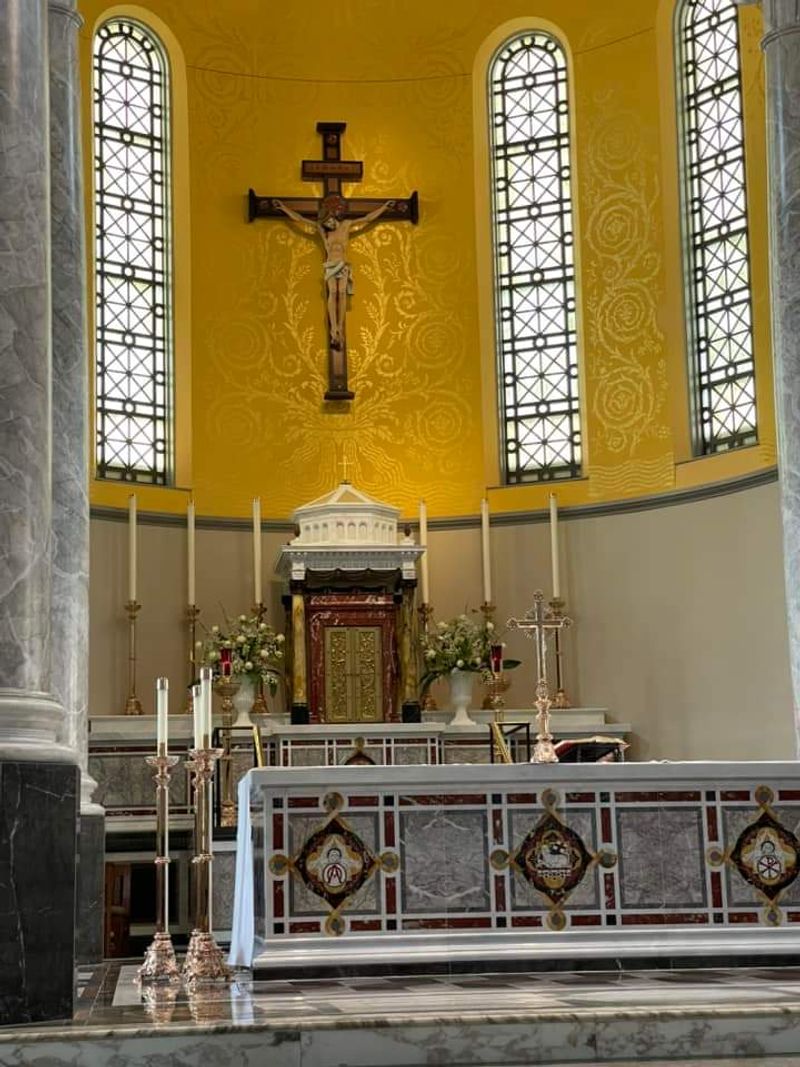
Most buildings pick one marble and call it a day. This cathedral went with 17 different types, which feels gloriously excessive in the best way.
More than 12 of those types come from Italy. The list reads like a fancy dessert menu, minus the calories.
Bianco Carrara brings classic bright white. Calacatta Borghini adds dramatic veining, while Giallo Siena Brocatello offers warm golden tones.
Rosso Francia Languedoc contributes deep red color. Statuario Michelangelo, named for the famous sculptor, rounds out the star lineup with polished elegance.
Mixing all these stones creates a rich, layered look. Each surface catches light a little differently, so the room never feels flat or repetitive.
The stone isn’t just decoration either. It forms columns, the altar, the canopy, and the floors, tying the whole interior together like one long Italian sentence.
If you love design, bring curiosity and maybe a phone for close-up photos, when appropriate. Comparing the colors side by side is surprisingly fun. You might even leave with a new favorite marble, which is not a sentence most people expect to say after visiting East Tennessee.
An Altar Carved From Michelangelo’s Favorite Neighborhood
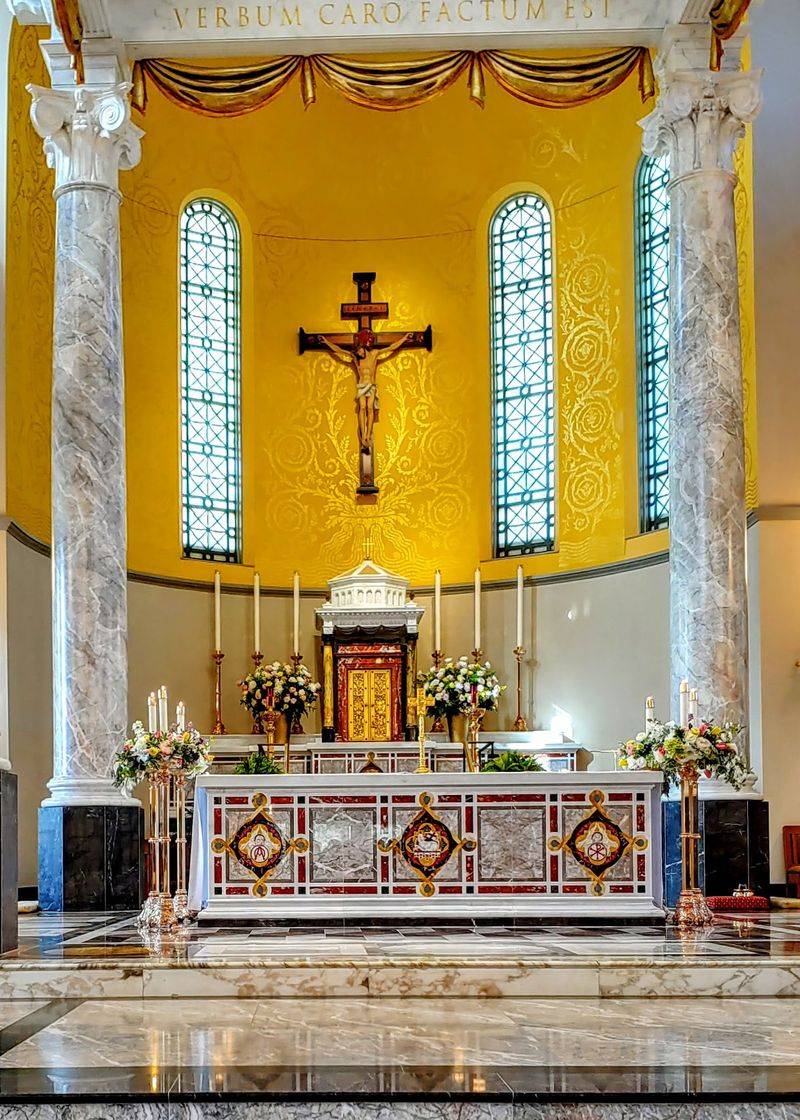
Michelangelo shopped for stone in Carrara, Italy. The altar here comes from that very same region, carved from Statuario Michelangelo marble.
That connection gives the 10-foot altar real bragging rights. It links this Knoxville sanctuary to centuries of Italian sculpture history.
Above it rises a 45-foot baldachino, which is a towering canopy. It draws your eye upward and marks the altar as the heart of the room.
Two columns of Giallo Siena marble from Italy hold the canopy up. Their golden color glows against the paler stone around them.
Baldachinos are a classic feature in grand Italian churches. Including one here was a smart move because it adds height, focus, and a dose of drama.
The sanctuary around it is richly detailed too. Every element seems arranged to guide attention forward without feeling cluttered or busy.
A friendly suggestion: notice how the canopy frames the altar from different seats. The view shifts as you move through the nave, and each angle shows off the marble in a fresh way. It’s a subtle design trick worth catching.
Old Netherlands Craftsmanship Hides In Plain Sight
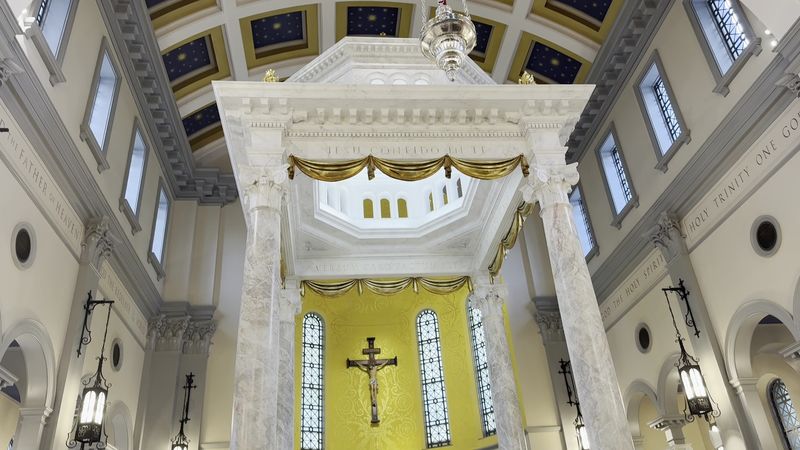
Not everything inside is new. The tabernacle was crafted from bronze and marble more than 100 years ago in the Netherlands.
That’s a lovely surprise in a cathedral finished in 2018. It adds a sense of age and continuity that brand-new pieces simply can’t fake.
A marble ciborium covers the tabernacle. Think of it as a smaller, elegant canopy designed to honor what sits beneath.
Giallo Siena marble columns from Italy support the ciborium. Those warm golden columns match the larger canopy over the altar, creating a pleasing visual echo.
Pairing an antique Dutch piece with Italian stone works beautifully. It proves that Old World style can travel across countries and still feel right at home.
The Catholic Church places great importance on the tabernacle. So its careful setting here reflects both artistry and reverence, not just good taste.
When you visit, look closely at the bronze work. Century-old metal has a depth and character all its own. It’s a quiet detail, but it tells a story of craftsmanship that reached Tennessee from far away.
Your Shoes Will Be Standing On Roman Tradition
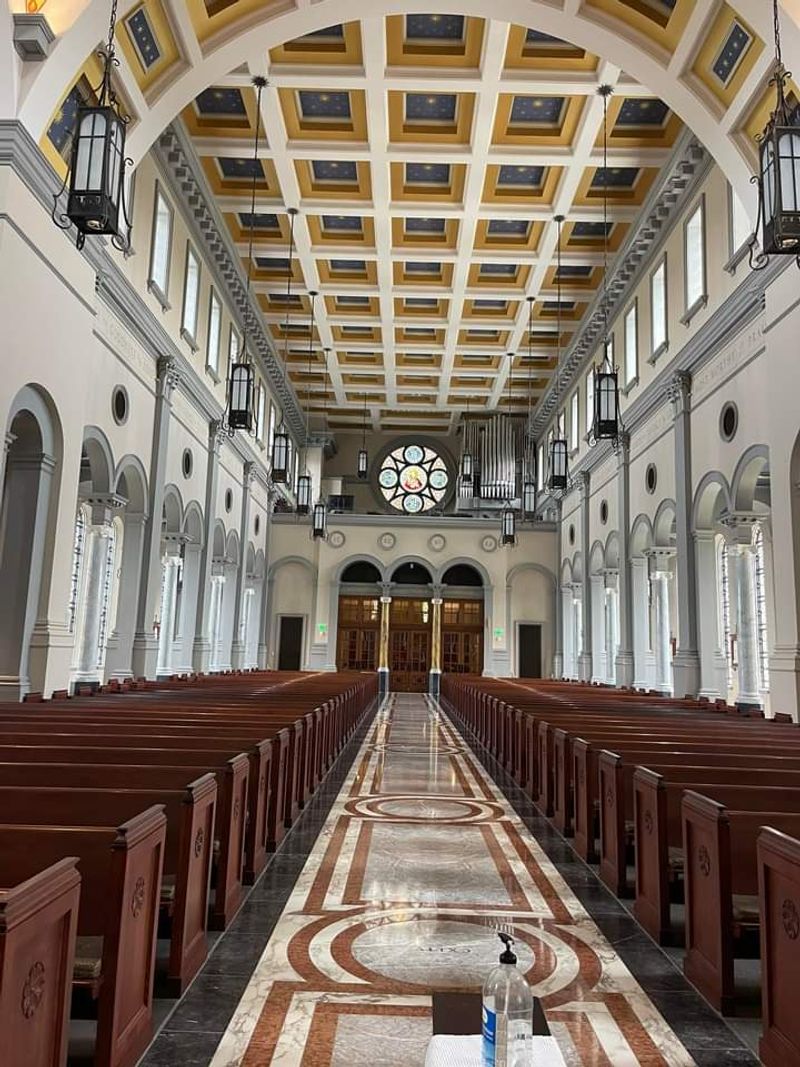
Floors rarely steal the show, but these might. The cathedral features 10,500 square meters of marble laid in geometric patterns.
The designs take inspiration from the Cosmati family mosaic tradition of Rome. Those medieval artisans were famous for intricate stone floors full of circles and interlocking shapes.
Seeing that style in Tennessee is a real treat. It connects your everyday footsteps to a craft that once decorated famous Roman churches.
Geometric floors also serve a purpose. They help guide movement through the space and give the huge room a sense of order.
Behind the sanctuary, another Roman nod appears. A shimmering pattern evokes the Tree of Jesse mosaic found in the Basilica of San Clemente in Rome.
Between the floors and that glowing backdrop, Rome feels surprisingly close. It’s a fun reminder that the Italian influence goes well beyond the dome.
Here’s my advice. Glance down every few steps as you walk the aisle. The patterns change and repeat in clever ways, and noticing them makes the experience richer.
Just maybe don’t stop mid-aisle during a procession, for obvious reasons.
Twenty Massive Columns Line Up Like Stone Giants
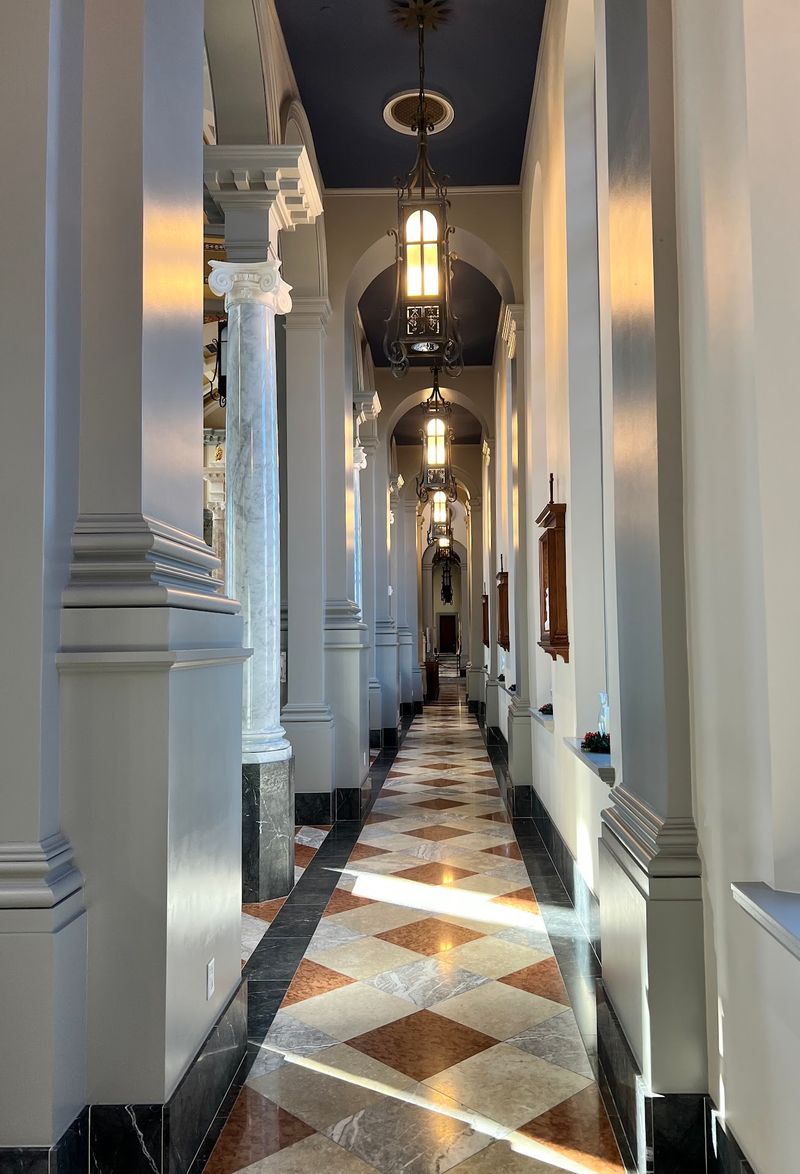
Count them if you dare. There are 20 massive marble columns throughout the interior of the Cathedral of the Most Sacred Heart of Jesus.
The nave is lined with giant-order Corinthian pilasters. Those are flat columns attached to the walls, topped with leafy carved details.
Marble Ionic columns join them, with their signature scroll-shaped tops. Mixing both classical styles gives the space a layered, textbook Renaissance feel.
These ancient orders trace back to Greek and Roman design. Italian Renaissance architects revived them, and this cathedral continues that tradition beautifully.
The columns also help the nave feel tall and grand. Your eyes naturally follow their lines upward toward the high ceiling and painted details.
The room needs that strength of presence. Worship space jumped from about 7,500 square feet in the old building to 28,000 square feet here.
A fun tip for curious kids or adults: try telling Ionic from Corinthian. Scrolls mean Ionic, while leaves mean Corinthian. It turns a visit into a mini architecture lesson, and suddenly everyone feels a little smarter heading home.
Bricks That Pretend To Be Limestone From A Distance
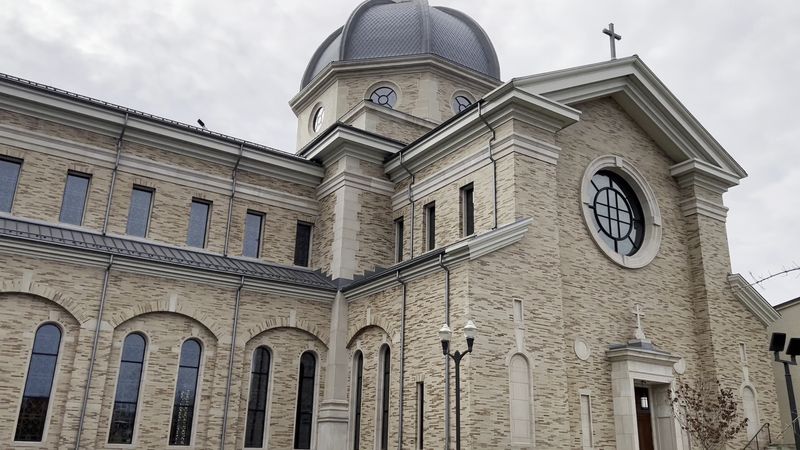
Sneaky bricks deserve some credit. The exterior uses Roman-style bricks from Ohio alongside Indiana limestone.
Roman bricks are longer and thinner than typical American bricks. That shape harks back to ancient Italian building methods.
Their stretched-out form creates a sleek look. From far away, the walls can actually give the impression of limestone, which is a clever bit of visual magic.
The building follows a cruciform plan, shaped like a cross. It’s a classic layout for cathedrals and helps organize the interior around the altar and dome.
You’ll find this impressive structure at 711 S. Northshore Drive, Knoxville, TN 37919. It sits in the Bearden community of West Knoxville.
The newer building replaced a 1956 church that now serves as the parish fellowship hall. So the old and new sit side by side, sharing one campus and one long story.
When you arrive, walk close enough to touch the wall with your eyes. Noticing the brick proportions makes the Italian connection click. It’s proof that thoughtful details start before you ever open the front doors.
Plan Your Visit Around Mass For The Full Effect
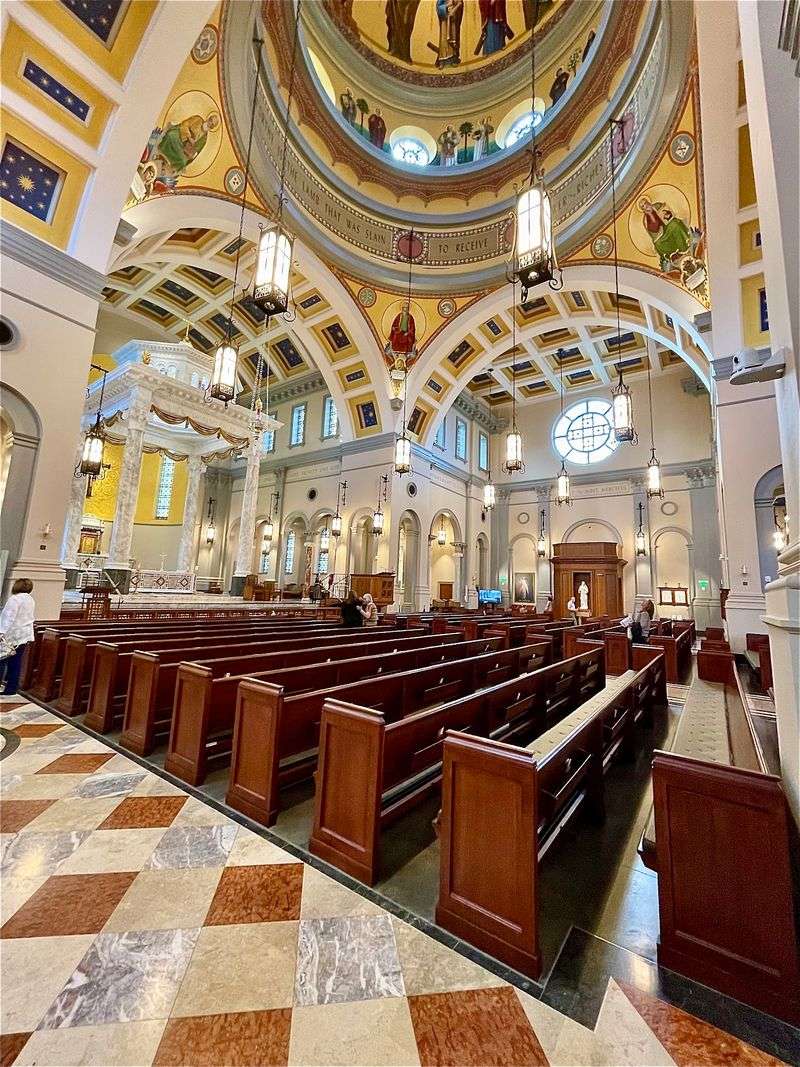
Beautiful buildings shine brightest when they’re doing their job. The Cathedral of the Most Sacred Heart of Jesus remains a busy, active parish in Tennessee.
Masses happen throughout the week and on weekends. Some are offered in Spanish, Polish, Filipino Tagalog, and Korean on certain days.
That variety reflects a diverse community. It’s a warm reminder that the grand space serves real people every single week.
The cathedral can seat 1,358 people, more than double the old church’s 580. Confession and adoration are offered too, and the building hosts weddings.
Families will appreciate that childcare is available during Sunday Masses. The main office keeps weekday hours, so check ahead for current schedules before you go.
A little history adds meaning to the visit. Sacred Heart Parish began on January 1, 1956, and became a cathedral when the Diocese of Knoxville formed in 1988.
My suggestion is simple. Arrive early, find a seat, and soak in the dome, marble, and murals before things begin. A slice of Italy waits in East Tennessee, no passport required.
Share this story