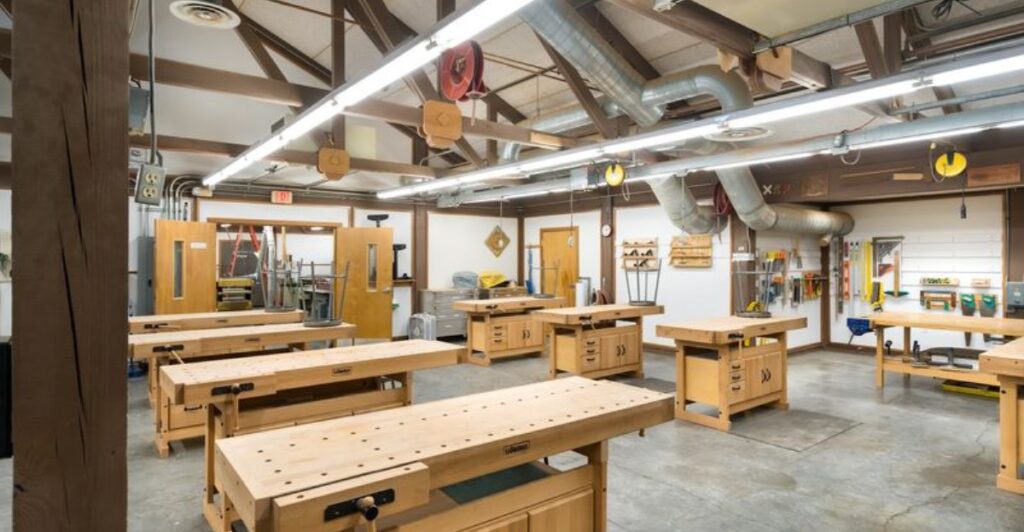
One craft school in Tennessee sits on a campus that holds the oldest buildings in its whole town. People still go there to learn weaving, woodworking, and metalwork, more than a century after it started teaching.
That detail hooked me fast. Then I learned another spot brings together dozens of resident artists in a creative campus dedicated to clay. A woodworking school in the mountains caps classes at six students, so you get real one-on-one help.
I love that beginners are welcome at many of them. No experience with a pottery wheel or a blacksmith hammer? That’s fine at plenty of these spots, and some even run classes for kids, families, and homeschoolers.
So what would you make first? A wobbly bowl, a hand-cut dovetail joint, or a silver ring you shaped yourself? I can’t think of a better excuse to get your hands a little messy this year.
1. Appalachian Center for Craft, Smithville
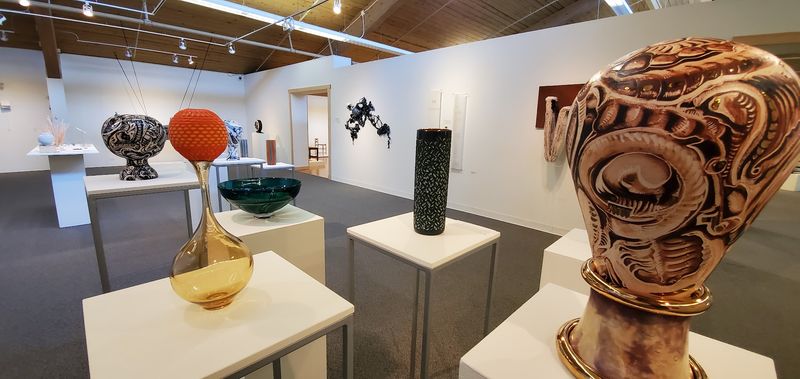
Few campuses let you choose between a forge, a glass studio, and a woodshop in one trip. The Appalachian Center for Craft in Smithville offers workshops in blacksmithing, clay, fibers, glass, metals, and wood.
It’s known as the largest craft institution in Tennessee. That’s a big title, and the center earns national attention for hands-on learning and gallery exhibitions.
The center is part of Tennessee Tech University’s College of Fine Arts. So yes, some folks here are working toward actual degrees in craft.
Don’t let that scare you off, though. Workshops come in different skill levels, so a beginner can learn alongside people with years of practice.
The mix of old and new keeps things interesting. Traditional Appalachian craft sits right beside modern art and design ideas.
Younger makers get some love here too. The Family Craft Studio and high school programs give kids a chance to try real materials.
Teachers can find educator programs as well. That’s handy if you want to bring fresh project ideas back to your classroom.
An Artist-in-Residence program brings working artists to campus. Their presence adds serious creative energy to the studios.
Before you head home, swing by the retail gallery. It’s a smart place to find handmade gifts or study how skilled makers finish their pieces.
Here’s a friendly dare: pick the material that makes you a little nervous. Glass and hot metal feel much less intimidating with an instructor right beside you.
Smithville is a small town, so plan your trip with some breathing room. A weekend workshop can easily turn into a relaxing mini getaway.
2. Arrowmont School of Arts and Crafts, Gatlinburg
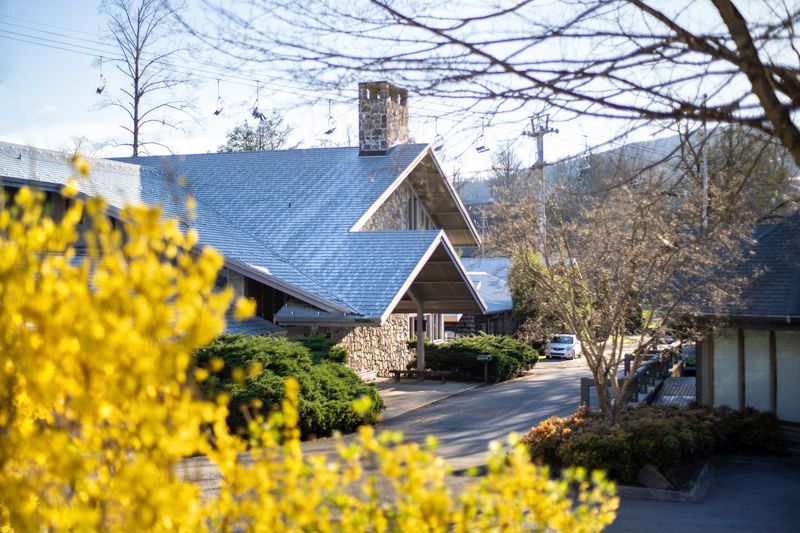
Some of Gatlinburg’s historic buildings stand on the campus of Arrowmont School of Arts and Crafts, which is listed on the National Register of Historic Places.
Arrowmont has offered arts programming in Appalachia for more than a century. That makes it the oldest craft school in Tennessee.
The menu of options is huge. You’ll find over 200 creative experiences each year, so picking just one might be the hardest part.
Workshops cover painting, woodworking, drawing, glass, and photography. Basket weaving, ceramics, fiber arts, book arts, and metalworking round out the list.
Got a friend who can’t decide between hobbies? Bring them here and let them sample something brand new.
The setting helps too. Gatlinburg sits right at the edge of the Smoky Mountains, so creative breaks come with a pretty serious view.
Arrowmont also runs an 11-month Artists-in-Residence program for emerging artists. It’s a big chance for newer makers to grow their skills and their careers.
For visitors, that means the campus stays busy with fresh ideas. You’re learning in a place where art is happening year-round.
A smart move is to check the workshop calendar early. With so many choices, popular classes can fill before you finish daydreaming about them.
Pair your class with a stroll down the Parkway afterward. Few things beat showing off a handmade basket while everyone else carries souvenir T-shirts.
Honestly, a hundred-plus years of teaching says a lot. This school knows how to turn curious beginners into confident makers.
3. Appalachian Arts Craft Center, Clinton
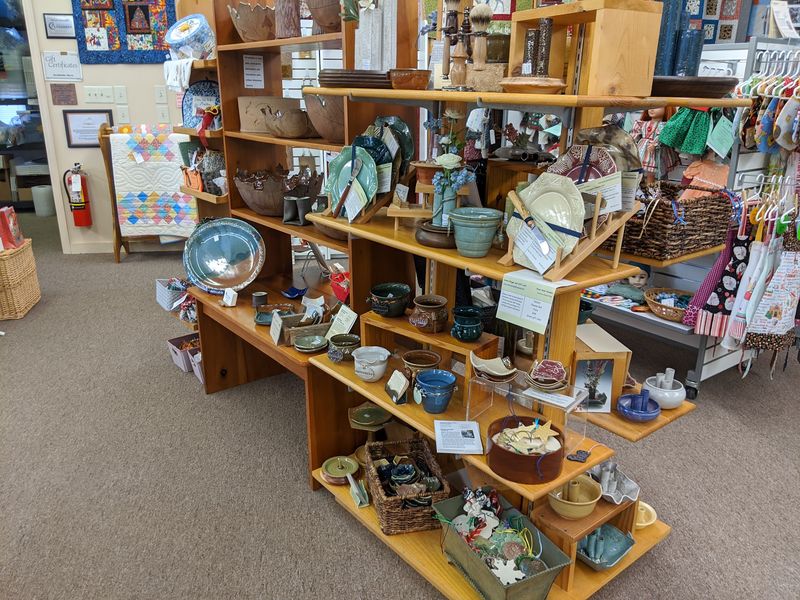
Eight pottery wheels, two electric kilns, and a weaving studio make a pretty strong first impression. The Appalachian Arts Craft Center in Clinton has been a hub for traditional Appalachian craft since 1970.
This nonprofit focuses on teaching, mentoring, and giving makers room to work. It also runs a retail market for artists and a gallery for regional art.
Classes happen year-round, so you won’t wait months for your chance. Blacksmithing, pottery, weaving, and woodworking are on the schedule for kids and adults.
The pottery studio is well stocked for learners. Along with those wheels, you’ll find a slab roller and a handbuilding table.
Not a wheel person? Handbuilding lets you shape mugs and bowls without the spinning chaos.
The weaving studio is another big draw. Learning on a loom feels a bit like solving a puzzle you get to wear later.
Homeschool families should look at the Homeschool Art Club. It’s a fun way to mix art lessons into a regular learning routine.
The Craft in the Community program brings creativity beyond the building. That outreach shows how much the center cares about its neighbors.
After class, browse the retail market. Buying from local artists is a sweet way to support the folks keeping these traditions going.
Clinton is an easy drive from Knoxville, which makes this a handy weekend plan. Grab a friend and split the gas money for a day of making.
4. Watkins Community Education at Belmont University, Nashville
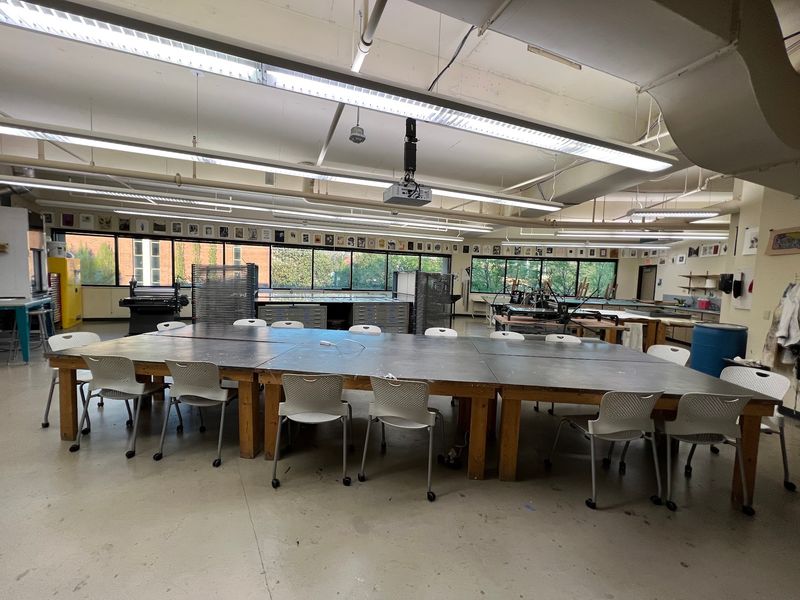
College art studios usually feel off-limits to regular folks. Watkins Community Education at Belmont University flips that idea and opens its classes to the public.
Courses meet at the Leu Center for Visual Arts on the Belmont campus in Nashville. You get to learn in a real university setting without writing a single admissions essay.
The roots run deep. Watkins College of Art merged with Belmont in Fall 2020, bringing traditions that date back to the 1880s.
Practicing artists teach the classes. That means you’re learning from people who actually make and sell their own work.
Subjects cover a wide range. Ceramics, drawing, painting, printmaking, book arts, fiber arts, photography, and graphic design are on the list.
Graphic design is a sneaky good pick. Those skills can help with school projects, small businesses, or even a killer party flyer.
Kids and adults can both join in. Camps and workshops make it easy to find something that fits your age and skill level.
Here’s a fun bonus: learning on a university campus means you’re surrounded by galleries and exhibitions that can inspire your own work. Imagine telling your family your drawing hung on a gallery wall.
Teachers get special attention through the Teacher Workshop Series. It’s built for K-12 educators who want fresh ideas for their classrooms.
Nashville is famous for music, but visual arts thrive here too. These classes are a great way to see that creative side of the city.
Check the class schedule a few times a year. New sessions pop up regularly, so your next favorite hobby might be one click away.
5. Arts Center of Cannon County, Woodbury
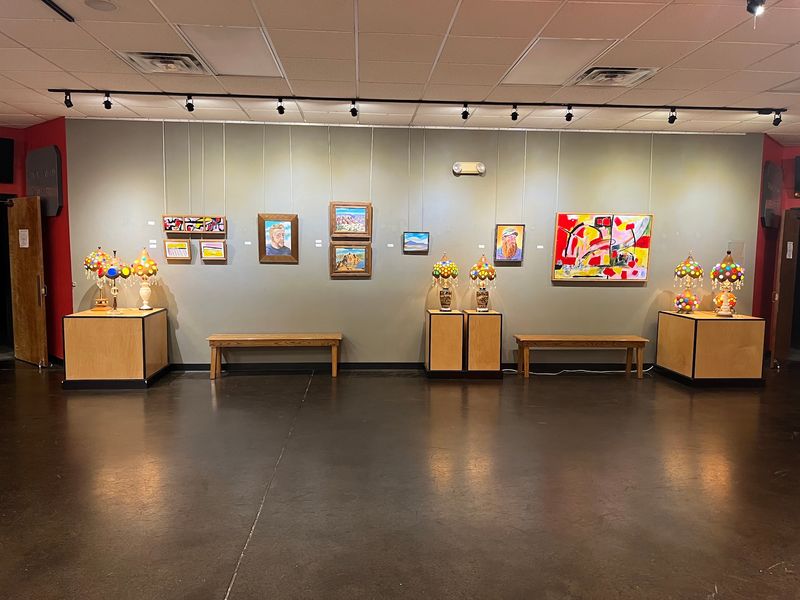
White oak baskets are kind of a big deal in Cannon County. The Arts Center of Cannon County even named its gift shop and craft fair after them.
This award-winning nonprofit in Woodbury has been around since 1980. Its goal is to preserve traditions and help people express themselves creatively.
Year-round classes keep the place busy. You can try quilting, painting, or basket weaving with local instructors.
Basket weaving might sound old-fashioned. Then you finish your first one and suddenly want to hold your snacks in it forever.
Quilting is another classic worth trying. It teaches patience, color planning, and how to fix mistakes without giving up.
The center does far more than crafts. It also has galleries, a theatre, and spaces for dance.
That mix makes it a true community hub. You could take a class in the afternoon and catch a show another night.
The White Oak Gift Shop features work by local artisans. It’s a smart stop for birthday gifts that nobody else will have.
Mark your calendar for the annual White Oak Craft Fair. Fairs like this let you meet makers and see traditional skills up close.
Small towns often protect old traditions best. This center proves that point with every quilt square and basket weave it keeps alive.
6. Bennett’s Fine Woodworking, Jonesborough
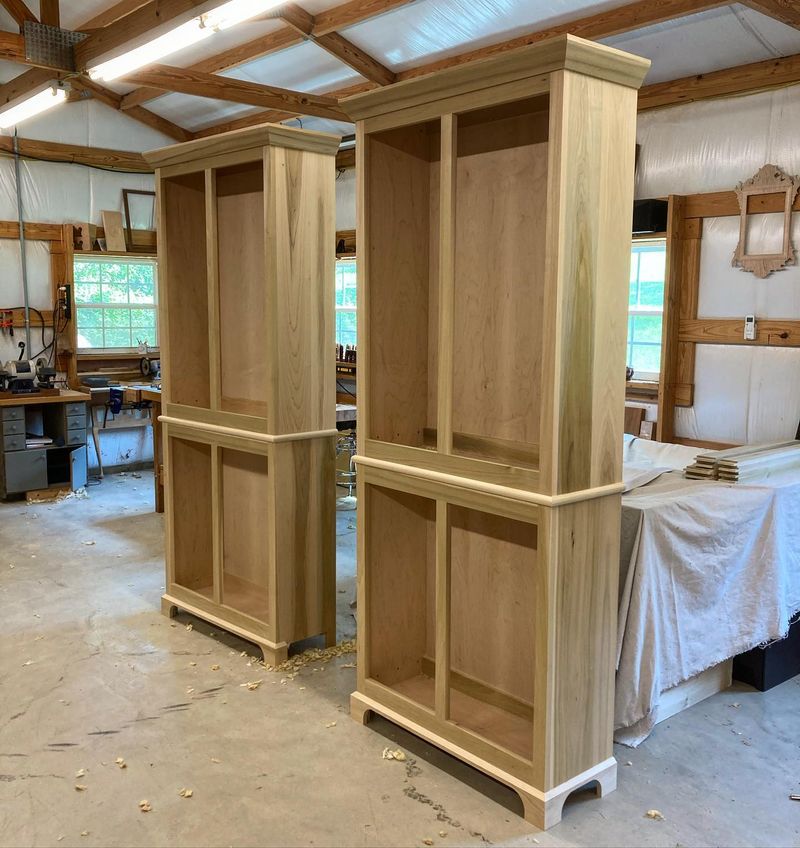
Six students per class is about as small as a group gets. At Bennett’s Fine Woodworking in Jonesborough, that tiny size means real one-on-one teaching.
Jason Bennett began teaching woodworking in 2001. He later took over the school after the retirement of Lonnie Bird.
Hand tools get the spotlight here. Instead of loud machines doing the work, you’ll learn how planes, saws, and chisels shape wood.
That approach builds real understanding. When you cut a joint by hand, you learn exactly how wood behaves.
Classes welcome different skill levels. Beginners can start with basics, while experienced woodworkers can push into tougher projects.
Projects cover a lot of ground. Tables, carving, chairs, chests, and case pieces all show up in the lineup.
Traditional joinery is a big focus. You’ll practice mortise and tenon joints and dovetails, the same methods used in heirloom furniture.
Dovetails look like interlocking puzzle pieces. Nailing your first one might make you want to frame it.
Jonesborough is a charming historic town in Northeast Tennessee. It’s a lovely spot to stroll after a long day at the bench.
Bring comfy shoes and a patient mindset. Hand tool work rewards slow, careful steps more than speed.
Picture saying you built a chest yourself. With a teacher right at your elbow, that goal feels much more doable.
7. The Clay Lady’s Campus, Nashville
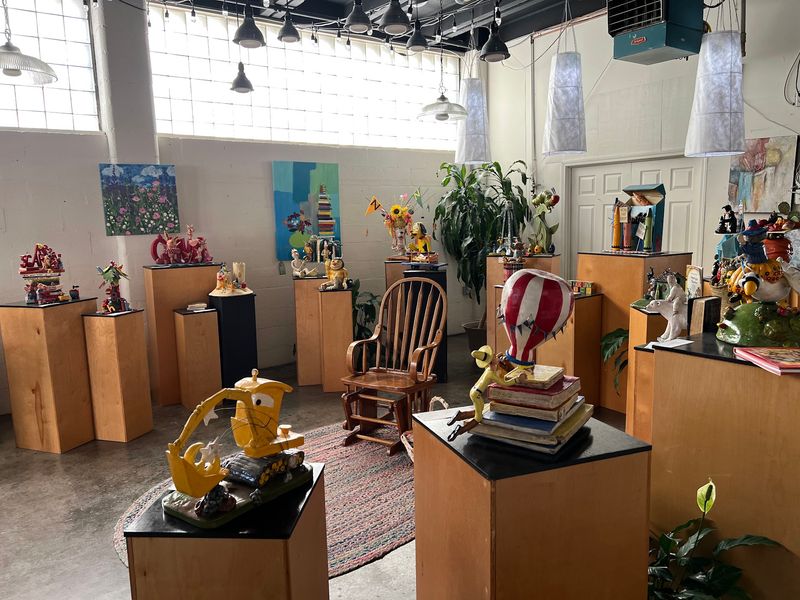
Dozens of resident artists working across one creative campus sounds like a lot of clay under fingernails. The Clay Lady’s Campus in Nashville calls itself a creative crossroads for clay artists and art fans.
Ceramic artist Danielle McDaniel founded the campus. Her vision grew into a place that blends teaching, selling, and making.
The campus spans multiple buildings and includes The CLC Gallery, The Clay Lady’s Education Center, and Mid-South Ceramics.
Mid-South Ceramics is a supply store. So if you fall hard for pottery, you can grab clay and tools without leaving.
Classes include pottery wheel and hand-building. Beginners and experienced potters can both find a good fit.
The wheel takes practice, so expect some floppy first tries. Laughing at your wobbly cylinder is basically part of the lesson.
Want something unusual? Focus Study classes, like screen printing for ceramics, teach creative ways to decorate your work.
Private group workshops are also available. They make a fun idea for birthdays, team outings, or a creative night with friends.
The gallery is worth a slow walk. Seeing finished work by skilled artists can spark ideas for your own projects.
With so many resident artists around, the campus stays full of creative energy. You’re learning in a real working clay community.
Nashville has plenty of famous stages. This campus offers a different kind of spotlight, one shaped by your own two hands.
8. Shakerag Workshops, Sewanee
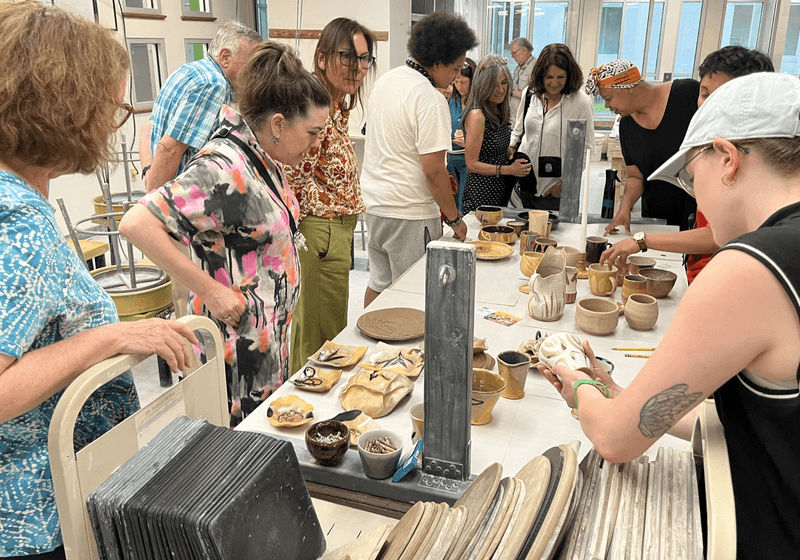
Summer camp for grown-ups is real, and it comes with art supplies. Shakerag Workshops runs residential art workshops for adults in Sewanee.
The program meets on the campus of St. Andrew’s-Sewanee School. Its setting on the Cumberland Plateau gives it a peaceful, tucked-away feel.
Residential means you stay on site. Accommodations and meals are part of the experience, so you can focus on making.
That setup feels like a true creative retreat. No grocery runs, no cooking, just you and your project.
Workshops cover a fun range of subjects. Digital arts, clay, felt, book arts, and paper making are on the list.
Fiber fans have plenty to love too. Knitting, stitch, and other fiber arts make regular appearances.
Paper making is a sneaky favorite. Turning pulp into your own sheets of paper feels a bit like kitchen magic.
Expert instructors lead the sessions. Their guidance helps you stretch your skills without feeling lost.
The program is often called a magical oasis in the hills. It’s easy to see why artists and teachers keep it on their radar.
With workshops offered in summer and fall, plan ahead. Spots at residential programs can go quickly once registration opens.
Pack a notebook along with your supplies. Ideas tend to pile up fast when you spend whole days surrounded by other creative people.
9. Scenic City Clay Arts, Chattanooga
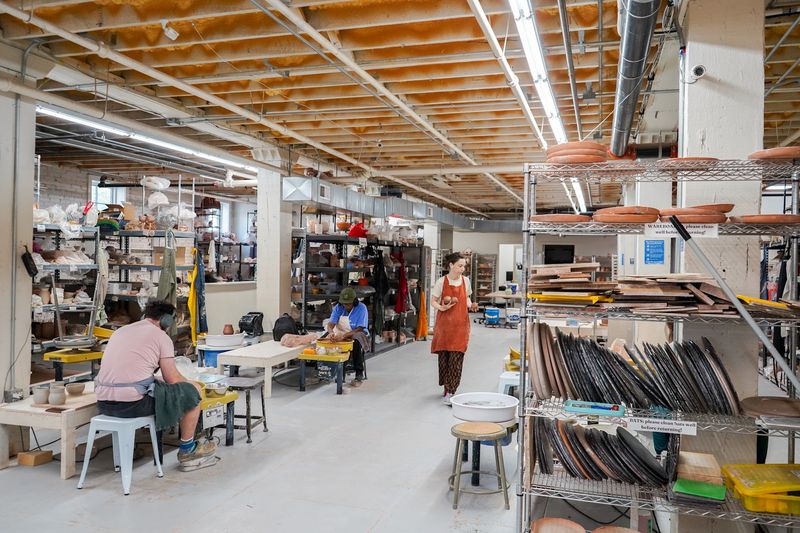
Some of Chattanooga’s best creative work happens underground. Scenic City Clay Arts runs its main studio in the basement of the ArtsBuild building.
Demand grew so much that the group added an auxiliary classroom on Market Street. That’s a pretty good sign people love getting muddy here.
Pottery classes welcome kids and adults at different skill levels. Youth and family workshops make it easy to bring the whole crew.
A family pottery day beats another movie night. Everyone leaves with something to show off, even if it’s a little crooked.
Studio memberships are available for regular potters. There’s a waitlist, plus a studio orientation for new members.
That orientation is a smart touch. It helps newcomers learn the space and the rules before diving into projects.
Already making pottery at home? Public firing and kiln rentals can help you finish your pieces.
Public glazing services offer 16 in-house glaze options. Picking colors might take longer than actually making the bowl.
Community outreach is part of the mission too. The group focuses on giving more people access to clay through shared learning.
Chattanooga is a great Tennessee city for a creative weekend. Pair a class with a walk by the river for a full day out.
Join the membership waitlist early if you’re serious. Good things come to potters who plan ahead, and to their very patient kilns.
10. Oak Ridge Art Center, Oak Ridge
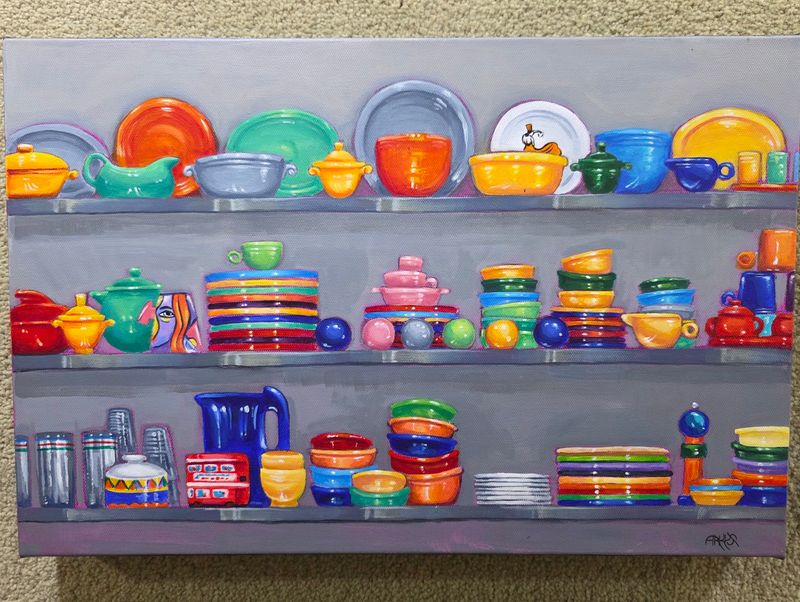
A permanent collection spanning 2,000 years is a lot to find in one art center. The Oak Ridge Art Center pulls off double duty as a fine art museum and a school.
It has been part of the Oak Ridge community since 1952. That’s more than seven decades of art lessons and gallery shows.
Classes run in four sessions of eight weeks each. Eight weeks is enough time to actually build skills, not just dip a toe in.
Subjects include clay, mixed media painting, watercolor, and oil painting. Weaving and metalsmithing round out the options.
Short on time? One and two-day workshops pop up throughout the year.
The center has three galleries that host several shows each year. One of them is an Open Show, which gives local artists a chance to shine.
Here’s a nice perk: gallery admission is free. You can wander, get inspired, and keep your wallet happy. Studio tours are offered too.
Peeking into the workspaces helps you decide which class to try first.
Watercolor is a friendly starting point for many beginners. Metalsmithing is great if you want something bolder.
Oak Ridge has a fascinating history in East Tennessee. Mixing a museum visit with a class makes for a well-rounded day.
Bring a friend who claims they can’t draw. A few weeks here might quietly prove them wrong.
Share this story