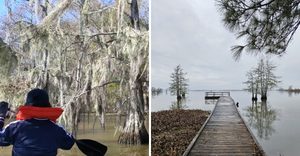
A lake in western Tennessee exists because a string of earthquakes made the Mississippi River flow backward. Those quakes struck in the winter of 1811 and 1812, and cypress trees still rise straight out of the water.
I love a fact like that. Another park on this list has a rock shelter where tiny glow-worms give off a blue light. A third hides a crack in a cliff that looks like a giant stone door left open.
The Great Smoky Mountains get most of the fame, and I understand why. Still, I can’t help thinking the rest of the state deserves a closer look. Its parks hold roaring waterfalls, ancient earthworks, and winter skies full of bald eagles.
So lace up your hiking shoes and fill a big water bottle.
1. Fall Creek Falls State Park
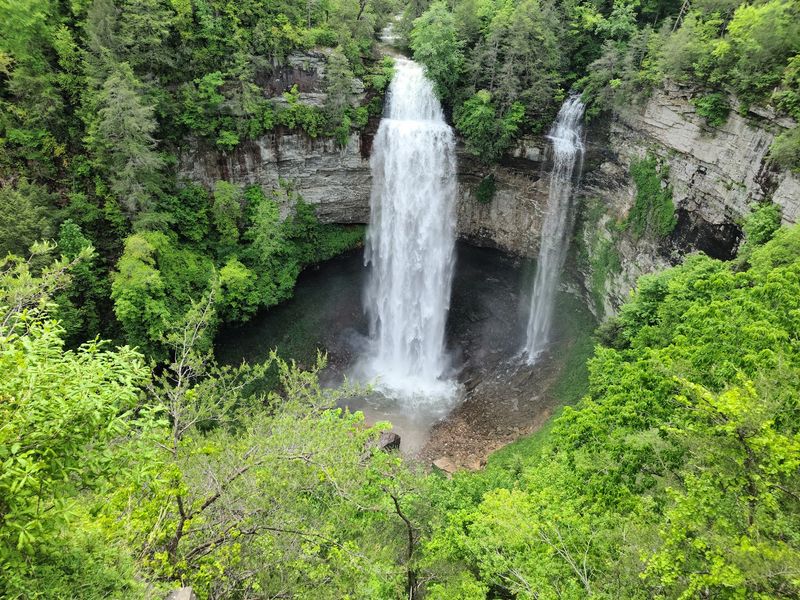
Water drops 256 feet here, which makes this one of the tallest waterfalls in the eastern United States. That’s taller than plenty of city skyscrapers, so bring a camera that can handle a big, tall view.
The park covers nearly 29,800 acres on the Cumberland Plateau. You’ll have room to roam, with more than 56 miles of trails to choose from.
The big plunge gets the headlines, but it has company. Cane Creek Falls, Cane Creek Cascades, Rockhouse Falls, and Hemlock Falls also spill through the park.
One fun way to see Cane Creek Falls is from a suspension bridge. It sways just enough to make your stomach do a tiny flip.
Plan ahead before you lace up, though. A tornado in August 2023 caused closures affecting the Piney Falls Trail and the entire Millikan’s Overlook Trail, although Millikan’s Overlook itself remains open.
Kids and curious grown-ups can stop at the Betty Dunn Nature Center for exhibits and programs. After that, the canopy challenge course waits for anyone who wants to test their nerves up in the trees.
Not a hiker? You can rent a paddleboat, go boating, or play a round on the 18-hole golf course with its driving range and practice green.
Staying the night is easy here, which is a real treat. Choose from 30 cabins, an 85-room lodge, or over 200 campsites spread across five areas.
Backpackers have options as well, since the park offers backcountry camping. Grab maps at the visitor center first, which is open daily from 8 a.m. to 4:30 p.m.
Timing matters too. Day-use areas close at sunset, and the road to the falls gets locked after dark.
2. Burgess Falls State Natural Area
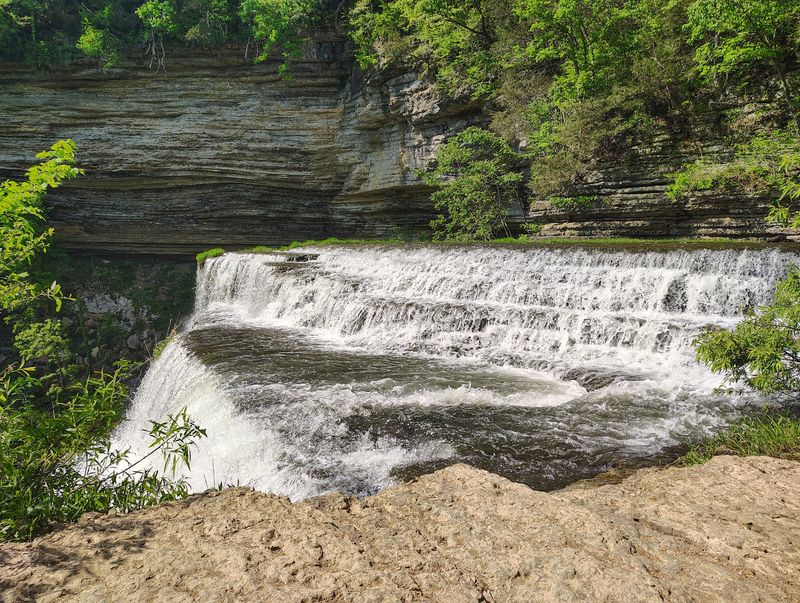
A river named Falling Water sounds like a spoiler, and honestly, it is. Along this stretch near Sparta, the river tumbles over four waterfalls that drop more than 250 feet in total elevation.
Four falls in one visit is a pretty sweet deal. The walk feels like a show with four acts, each one louder than you’d guess from the trailhead.
Hiking trails follow the water, giving you views of the river as it carves its way downstream. Wear shoes with good grip, since rocky paths near waterfalls can get slick.
Know one rule before you go. You can’t reach the base of Burgess Falls from inside the park.
Want to see it from below anyway? Paddlers can reach the base from public access points like Cane Hollow Recreation Area.
Birders, pack your binoculars. Herons and songbirds are among the species people come hoping to spot here.
Your four-legged buddy can tag along too, as long as they stay on a leash. Bring enough water for both of you.
The park opens at 8 a.m. Central Time and closes 30 minutes before sunset. That means no sunset strolls here, so start your hike with plenty of daylight left.
Weather can change your plans in a hurry. The park may close when the Falling Water River runs high or when snow covers the area.
Got questions? The park office is open weekdays from 8 a.m. to 4 p.m., and weekend visitors should check updates online before driving out.
After the trail, grab a spot in the picnic area and refuel. It’s a relaxed way to wrap up a morning in one of Tennessee’s most dramatic river settings.
3. Radnor Lake State Park
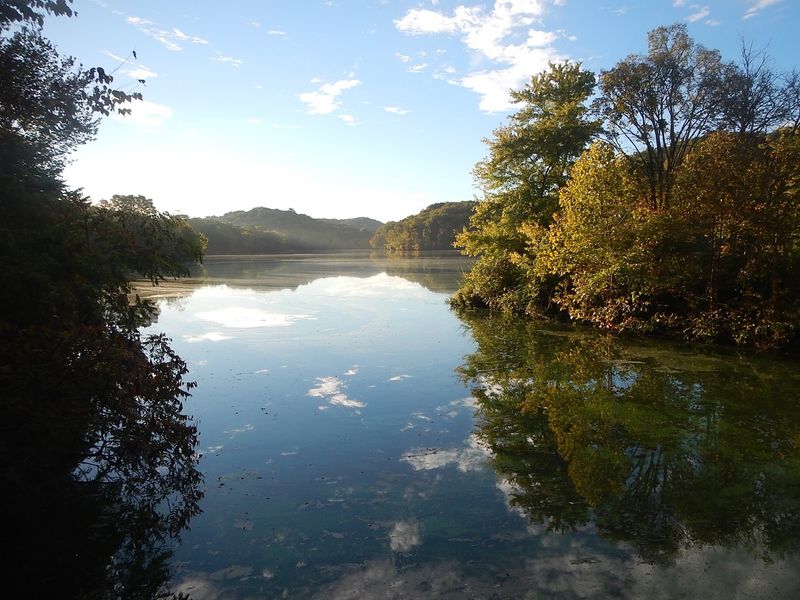
Steam trains needed a drink, and that’s how this lake got started. The Louisville and Nashville Railroad created it in the early 1900s as a reservoir for its engines.
By 1923, the area had been declared a wildlife sanctuary. Tennessee bought the property in 1973 and made it a State Natural Area.
Today, this 1,389-acre spot sits right in Nashville, yet it feels miles from downtown. Wooded ridges circle a calm lake full of life.
Wildlife is the real headliner. Visitors often spot white-tailed deer, wild turkeys, barred owls, otters, beavers, mink, herons, and nesting bald eagles.
You’ll find 7.75 miles of trails to explore. The Lake Trail has observation decks, while the Ganier Ridge Trail brings a steep climb for anyone craving a workout.
Need an easier route? The Spillway Trail is ADA-accessible, and the paved Otter Creek Road works for joggers, bikes, and leashed pets.
History fans should look for the Historic Valve House Trail, which opened in 2012. It tells the story of the park’s railroad roots.
Don’t skip the Barbara J. Mapp Aviary Education Center, reached by a 550-foot boardwalk. It houses birds of prey, snakes, and turtles that can’t return to the wild.
That center opens Wednesdays and Saturdays from 10 a.m. to 1 p.m. The Walter Criley Visitor Center, with exhibits on history and ecology, is open Thursday through Monday.
Know the rules before you pack a cooler. Radnor is day-use only, and camping, hunting, and picnicking aren’t allowed.
Photographers, this one’s for you. Between the still water and the busy wildlife, your camera roll may fill up faster than your step counter.
Gates open at 6 a.m. and close 20 minutes after sunset. Early risers get the whole morning to look for owls and otters.
4. Pickett CCC Memorial State Park
Tiny glow-worms light up a cave here with a soft blue shine. They’re the larvae of a rare insect, and Hazard Cave is the place to look, especially in early June.
That’s just the start of the night show. In 2015, the park and nearby Pogue Creek Canyon State Natural Area became a Silver-tier International Dark Sky Park, the first state park in the Southeast with that honor.
The stars here look unreal. Bring a blanket and give your eyes time to adjust.
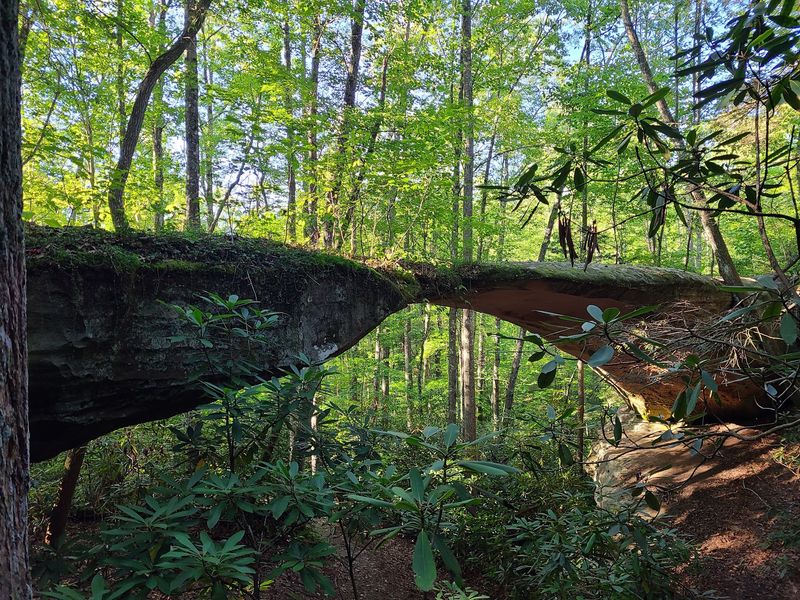
Daylight brings its own surprises. Sandstone arches, rock shelters like Indian Rockhouse, and unusual rock formations can be found along the park’s scenic hiking trails.
One natural arch even stretches over Arch Lake. The 12-acre lake gets stocked with trout in spring and summer, and you can rent a canoe or boat.
Prefer to splash? A sandy beach area makes swimming easy on a hot afternoon.
The backstory is pretty cool too. The Stearns Coal and Lumber Company donated the land in 1933, and the Civilian Conservation Corps built the park between 1934 and 1942.
Workers used local sandstone and chestnut timber for roads, trails, cabins, and the lake itself. World War I hero Alvin C. York spoke at the dedication in May 1941.
A CCC Museum shares that story, along with artifacts, some dating back 12,500 years. Many original buildings are now on the National Register of Historic Places.
Want to sleep among that history? Choose from 40 campsites or 20 cabins, including five original rustic stone cottages.
The park sits on the Cumberland Plateau in Pickett State Forest, bordering the Big South Fork National River and Recreation Area. In other words, Tennessee’s wild side keeps going well past the park line.
5. Rock Island State Park
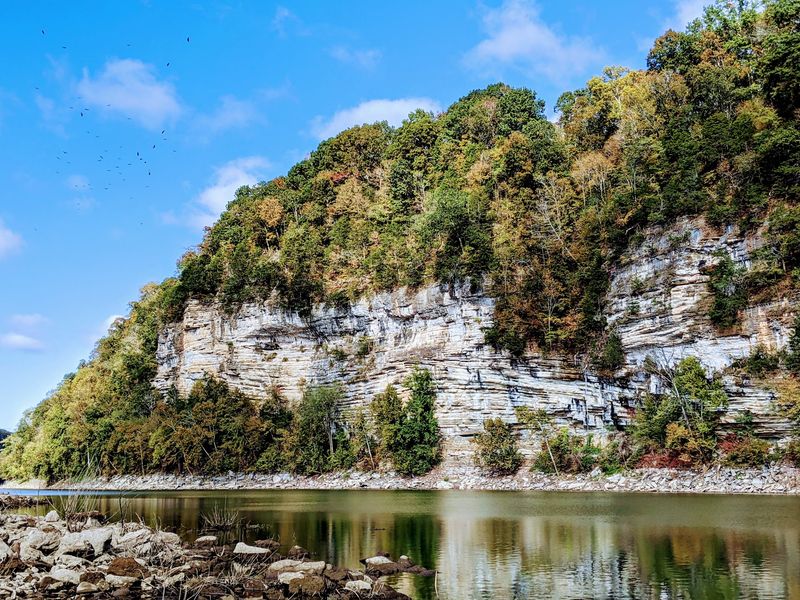
Three rivers meet here, and they don’t do it quietly. The Caney Fork, Collins, and Rocky Rivers come together at the headwaters of Center Hill Lake, carving gorges and limestone cliffs.
Great Falls is the star, a 30-foot horseshoe waterfall near a historic cotton mill. Then there’s Twin Falls, which pours out of a cavern straight into the river.
Yes, a waterfall that comes out of a cave. Nature clearly wanted to show off.
The past here is loud too. Back in the 1800s, water powered gristmills, sawmills, and textile work, and a textile mill ran on the park’s namesake island in the 1890s.
A dam built in 1917 for the Great Falls Hydroelectric Plant created a lake. The state park arrived in 1969.
Kayakers know this place well. A popular playboating hole below Great Falls Dam draws kayakers, and Rock Island has hosted major freestyle kayaking competitions, including U.S. National Championships and an ICF Freestyle World Cup event.
Safety comes first, though. Gorge areas below the TVA Dam can close when water is spilling, and swimming or wading below the Powerhouse is never allowed.
Check TVA’s water release schedule before you go. For calmer fun, head to the natural sand beach on Center Hill Lake.
Eight hiking trails run from half a mile to three miles. They’re known for wildflowers and wildlife, so keep your eyes open.
Overnight options include ten cabins, a 50-site main campground, and a 10-site tent campground. The tent area closes from November 2 through March 15.
The park opens daily from 7 a.m. to 10 p.m. Some areas close earlier, so watch the posted signs.
6. Cummins Falls State Park
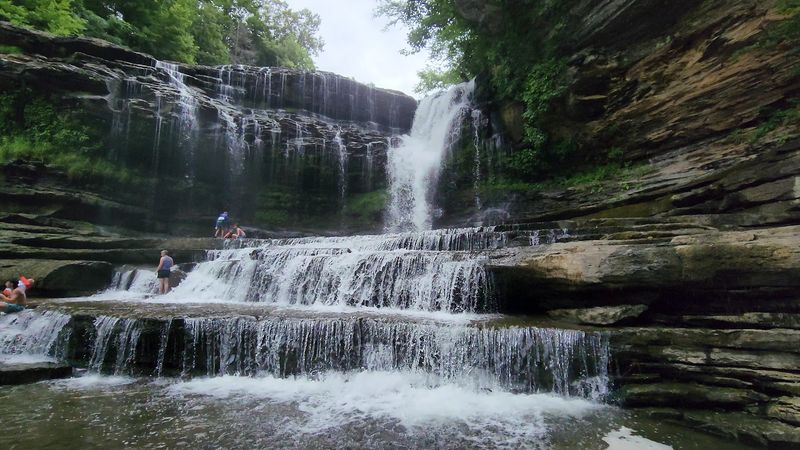
Back in 2010, Travel + Leisure named this waterfall’s pool one of the ten best swimming holes in the United States. That’s a big shout-out for a spot in Jackson County, Tennessee.
Cummins Falls drops 75 feet on the Blackburn Fork State Scenic River. It ranks as the 8th largest waterfall in Tennessee by water volume.
Getting to the bottom takes work. The gorge trail means slippery rocks and wading through water, and you’ll need a Gorge Access Permit, which you can purchase online or at the park’s visitor center.The gorge route isn’t recommended for kids 5 and under. Children 12 and under must wear life vests.
Flash floods are a real risk here. Access to the base can close suddenly, so check the park’s Facebook page before you head out.
Prefer dry feet? The 0.4-mile Waterfall Overlook Trail works for all-terrain wheelchairs, and the 3-mile Delia Bell Meadow Trail offers a longer stroll.
Good news for budgets: the overlooks and land trails are free. Picnic areas and restrooms are available too.
The story behind the name goes way back. Native Americans once hunted bison here, and Revolutionary War veteran Benjamin Blackburn received the land in the 1790s.
John Cummins bought the property around 1825 and built water-powered mills. The great flood of 1928 swept them away, but his family kept the land for over 180 years.
In 2011, public and private donors helped turn it into a state park. The visitor center honors State Naturalist Mack S. Prichard.
Watch the clock while you play. The gorge closes at 5 p.m. in season and 3:30 p.m. off-season, and visitors at the base must start heading out by then.
7. Roan Mountain State Park
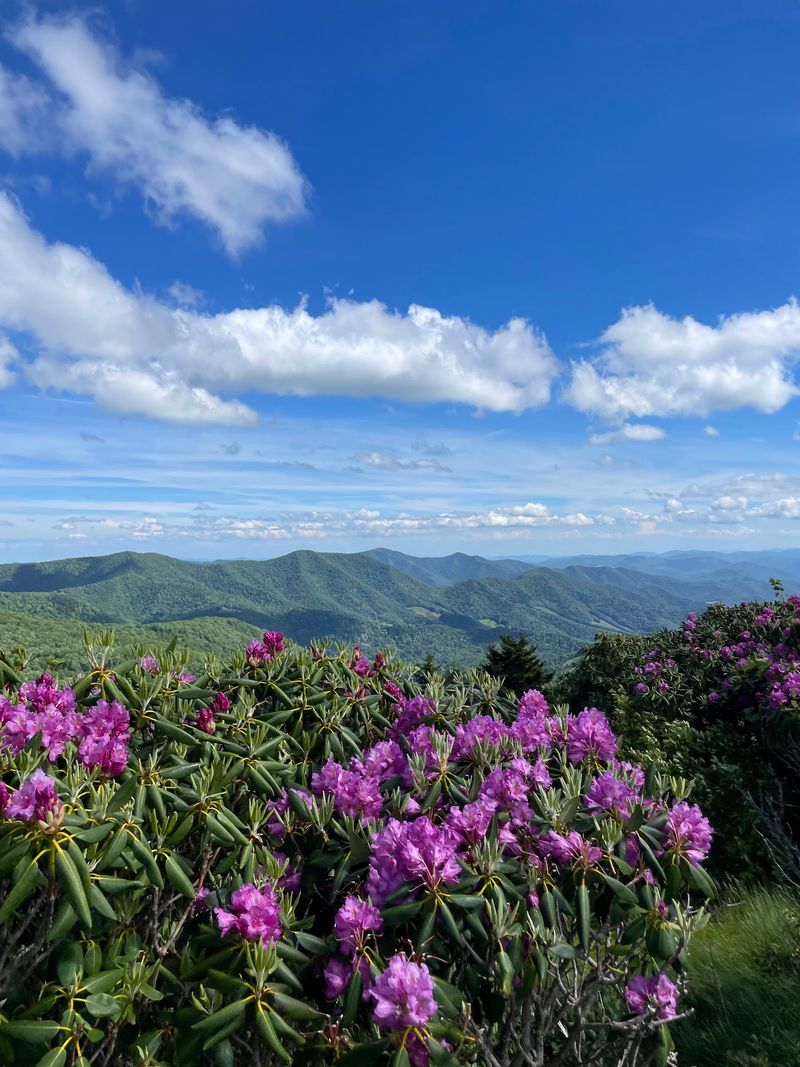
A grand hotel called Cloudland once welcomed guests near here in the late 1800s and early 1900s. Today, the views that drew those travelers are still the main attraction.
The park spans 2,156 acres at the base of the Roan Mountain massif. Appalachian cove forests and the Doe River give it a classic mountain feel.
Anglers, the Doe River is known for trout fishing. Bring your gear and a little patience.
About 12 miles of hiking trails wind through the park, with routes for different skill levels. Some are great for spotting wildflowers in season.
Before you plan a route, check current conditions. Damage from Hurricane Helene in September 2024 still has the Upper Campground and Bear Wallow Trail closed, along with the Birchfield Trail in Hampton Creek Cove Natural Area.
Curious how mountain families lived? The Miller Farmstead, listed on the National Register of Historic Places, works as a living history museum.
History runs deep here. The Overmountain Men, soldiers of the American Revolution, passed through Roan Mountain in September 1780.
Want a bigger thrill? Drive about 8 miles to the Rhododendron Gardens at Carver’s Gap, where blooms put on a show in late June.
The park also hosts the Roan Mountain Rhododendron Festival each year. It’s a fun excuse to plan a summer trip.
Bikers get 2.25 miles of mountain biking trails, and hikers can reach the Appalachian Trail. Keep watch for deer and black bears along the way.
The office and visitor center are open daily from 8 a.m. to 4:30 p.m. Stop in first for maps and the latest trail updates.
8. Reelfoot Lake State Park
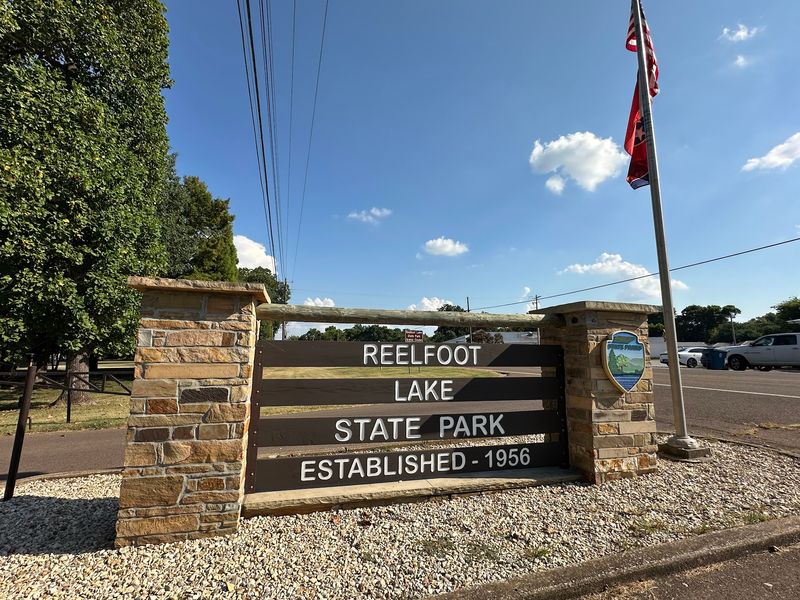
Tennessee’s only large natural lake was born from chaos. The New Madrid earthquakes of 1811 and 1812 made the land sink and the Mississippi River run backward to fill it.
What’s left is a flooded forest. Bald cypress trees rise right out of 15,000 acres of water, with another 5,000 acres of marshes and wetlands around them.
Bird lovers, mark your calendar. More than 200 bird species show up here each year, and up to 200 bald eagles spend the winter.
The Eagle Festival happens in February, and the Pelican Festival follows in October. Either one makes a great reason to visit.
Exploring the water is the best part. Guided pontoon cruises and deep swamp kayak trips slip through old-growth cypress forest.
Rather paddle on your own? Kayak rentals are available, along with fishing and boating.
On land, the half-mile Visitor Center Boardwalk winds among cypress trees for wildlife viewing. Other easy trails include Black Bayou, Keystone, and Airpark.
The visitor center has exhibits and live raptor displays. It’s a smart first stop before heading out.
The lake’s name comes from a legend about a Chickasaw chief named Reelfoot. Davy Crockett even hunted bears in this land of the shakes in the early 1830s.
Later, the Keystone area became a popular gathering spot for the African American community from the 1940s to the mid-1960s. In 1966, Reelfoot Lake was named a National Natural Landmark.
Accessibility is strong here too. Campgrounds, bathrooms, the boardwalk, fishing piers, and picnic areas are wheelchair accessible, and two campgrounds welcome overnight guests.
The park stays open seven days a week, year-round. Winter brings the eagles, so don’t let chilly weather keep you home.
9. Old Stone Fort State Archaeological Park
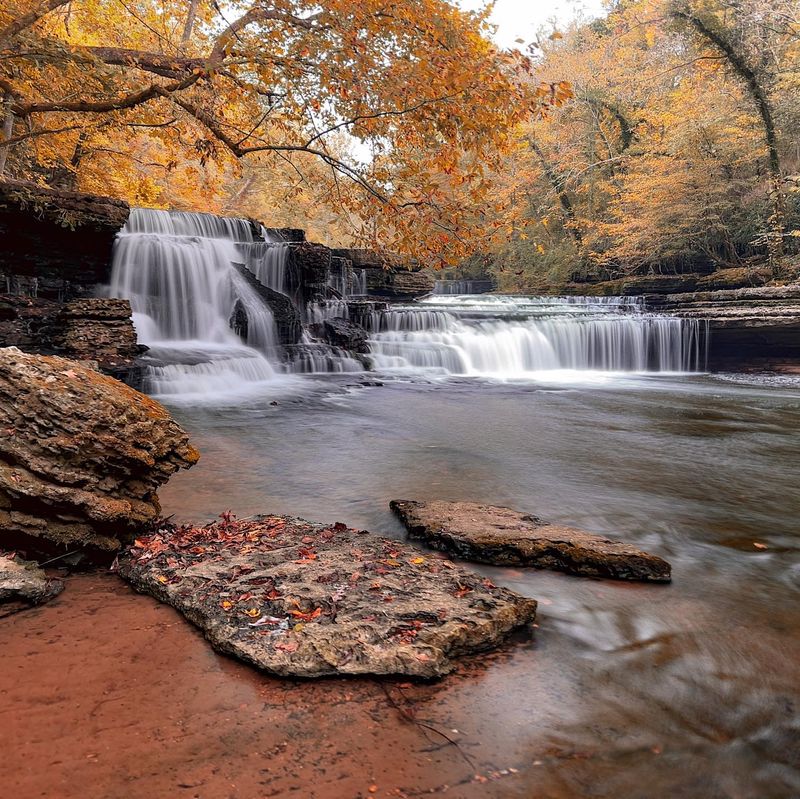
Early settlers took one look at these ancient walls and decided they’d found a fort. They guessed wrong.
The earthwork enclosure dates to the Middle Woodland period, around 100 BCE to 500 CE. Experts believe it was a ceremonial gathering place, used for about 500 years.
The best detail? The entrance lines up with the sunrise on the summer solstice.
The enclosure sits on a bluff above the meeting point of the Duck and Little Duck Rivers. People lived in this area as far back as 6000 BCE.
You can walk the Enclosure Trail right along the old earthworks. Interpretive panels explain the history and geography as you go.
Waterfalls add extra fun. Big Falls is the most visited, while Little Falls, also called Step Falls, is popular for fishing and swimming.
The park covers 782 acres with more than 10 miles of trails. The Backbone Trail offers ridge views, and the Moat, Garrison Road, and Nature trails round things out.
Inside the enclosure, a 50-acre grassy hilltop is great for spotting grassland birds. Bring binoculars and take it slow.
Later history left marks too. The site held a mill town in the late 1800s and made gunpowder for the Confederacy during the Civil War, and remnants can still be found.
Tennessee bought 466 acres in April 1966 to protect the site. A museum helps you piece the whole story together.
Leashed dogs are welcome on the trails. The picnic area also has a playground and a reservable pavilion for family gatherings.
Campers can grab one of 50 sites in a heavily wooded campground. Heads up: the park bridge is closed for construction, so use the campground route via Country Club Drive off US Highway 41.
The park is open daily from sunrise to sunset. Morning light on those old walls makes an early start worth it.
10. Savage Gulf State Park
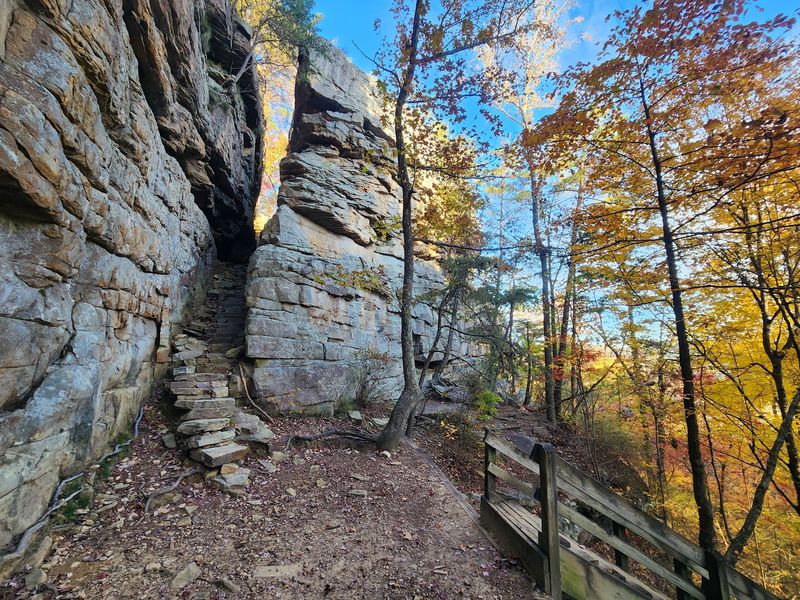
A crack in the cliff, 10 feet wide and 100 feet deep, looks like a door someone forgot to shut. It’s called the Great Stone Door, and it leads you down into the gorge.
Savage Gulf became its own state park in 2022 after years as part of South Cumberland State Park. It’s the youngest park on this list, though the landscape is anything but new.
The park stretches across about 19,000 acres on the western edge of the Cumberland Plateau. Sheer sandstone cliffs, rugged canyons, and old-growth forest fill the view.
It earned National Natural Landmark status back in 1971. One look from Stone Door Overlook or Laurel Gulf Overlook shows why.
Waterfall hunters can stay busy for days. Greeter Falls has upper and lower sections, and Savage Falls, Boardtree Falls, Suter Falls, Horsepound Falls, and Laurel Falls are out there too.
The trail network covers 56 miles, from easy strolls to tough backcountry treks. Choose wisely, because those canyon climbs can be steep.
Want to sleep under the trees? Nine backcountry campgrounds, including Stone Door, Hobbs, and Savage Falls, can be reserved online.
The name comes from Samuel Savage, an early settler. An archaeological survey in 1983 found 18 rock shelters with cultural material, including Woodland pottery.
Cell service is limited or missing in most of the park. Download maps before you leave and tell someone your plans.
Start at the Stone Door Ranger Station, where you’ll find a gift shop and an ADA-accessible shelter with picnic tables and a grill. Other trailheads sit in Palmer, Altamont, and Gruetli-Laager.
Big plans are on the way too, including a future visitor center and RV campground. For now, the wild feel is the whole point.
Share this story