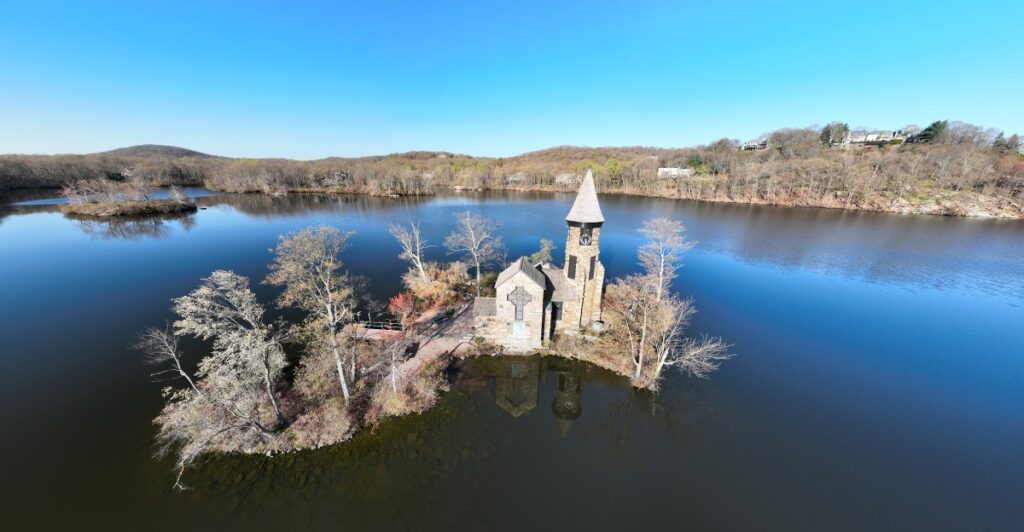
A medieval-looking chapel occupies its own island in a Morris County lake. A gingerbread-trimmed church near Cape May has been picked up and moved repeatedly to escape the Atlantic.
Elsewhere, old stone meetinghouses, Carpenter Gothic sanctuaries, and a military chapel quietly preserve stories that span nearly three centuries. New Jersey’s smallest houses of worship rarely command a skyline, but that is part of their appeal.
Their beauty emerges at closer range—in hand-cut fieldstone, weathered clapboards, narrow lancet windows, carved rafters, and graveyards where the oldest markers lean slightly with age. Some remain active congregations, while others survive as museums or carefully protected historic sites.
A few require advance arrangements before visitors can step inside, but their exteriors alone can stop an architecture lover in their tracks. From the Highlands of Navesink to the edge of Delaware Bay, these 13 churches and chapels prove that a building does not need cathedral-sized proportions to leave a lasting impression.
1. Saint Hubert’s Chapel – Kinnelon
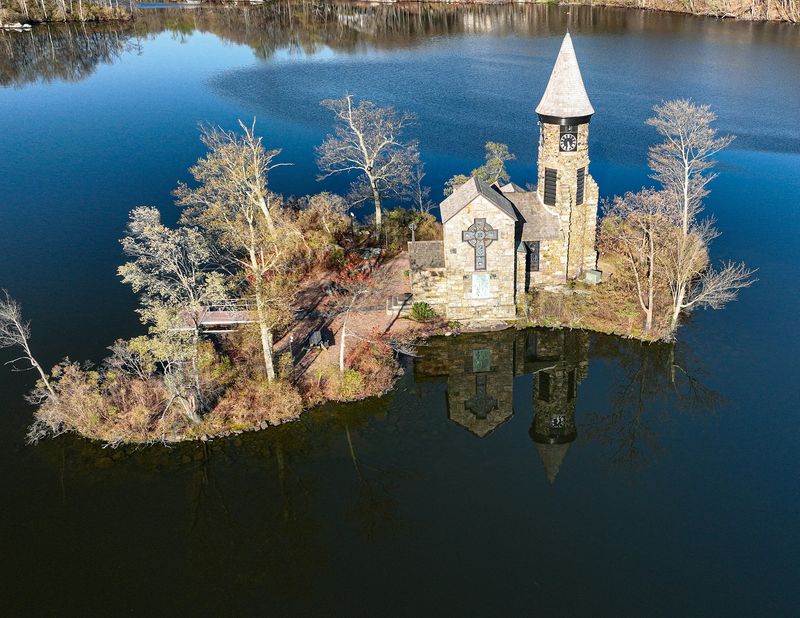
Reaching this miniature medieval sanctuary involves something most New Jersey church visits do not: a boat ride. Saint Hubert’s stands on a small island in Lake Kinnelon, its stone walls, arched entrance, and compact clock tower rising above the water like the centerpiece of a private storybook kingdom.
Tobacco magnate Francis S. Kinney commissioned the chapel in the late 1880s as part of his enormous country estate, and it was completed in 1891.
Its greatest artistic connection is Louis Comfort Tiffany, who designed the interior and created details including a stained-glass Celtic cross. Rich woodwork, colored glass, an intimate altar, and a marble angel sculpture give the small room an almost jewel-box quality.
The island setting makes the architecture even more theatrical, especially when fall foliage surrounds the lake or morning mist softens the shoreline. After years of neglect and vandalism, the chapel underwent a painstaking restoration that preserved what remained and recreated missing elements.
Today it belongs to the private Smoke Rise community, so this is not a place where visitors can simply arrive and start exploring. Occasional guided tours must be arranged in advance, and access is carefully controlled.
That limited availability only heightens the sense that Saint Hubert’s is one of New Jersey’s rarest architectural experiences: a Gilded Age fantasy hidden behind gates, trees, and a stretch of open water.
2. All Saints’ Memorial Church – Navesink
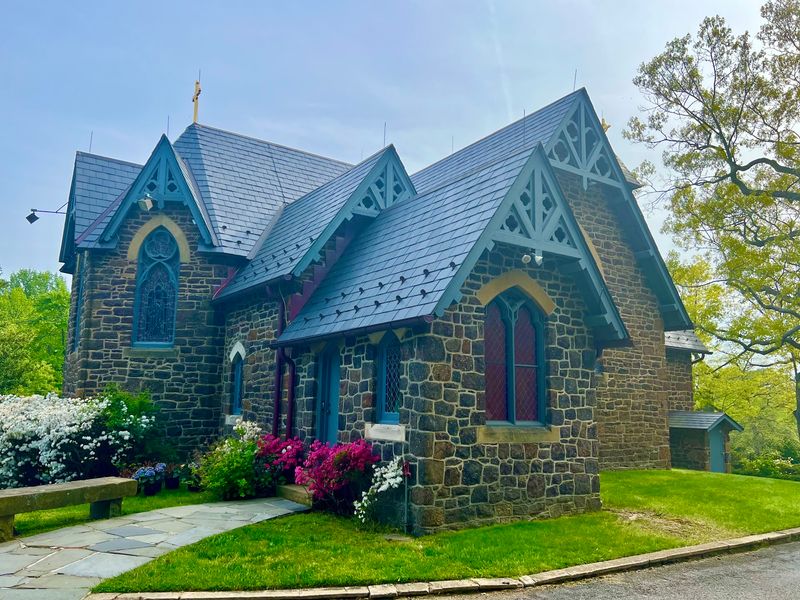
Rough local fieldstone gives this little Gothic Revival church the look of something discovered on an English hillside rather than constructed in Monmouth County. Completed in 1864, All Saints’ Memorial Church was designed by Richard M.
Upjohn, the son of celebrated architect Richard Upjohn, as the centerpiece of an Episcopal mission complex. Its steep slate roof, pointed windows, short wooden spire, red sandstone trim, and wonderfully irregular masonry create an impressive silhouette without making the building feel imposing.
The stone came from the surrounding region, which helps the chapel settle naturally into the Navesink landscape. Inside, the scale remains intimate, with oak pews, carved woodwork, a polygonal chancel, and stained-glass windows depicting biblical scenes and symbolic figures.
The three windows above the altar represent faith, hope, and charity. What makes the property especially valuable is how much of its original setting survives.
A parish house, rectory, barn, carriage sheds, cemetery, and landscaped grounds form one of the country’s best-preserved English-style mission church complexes. The tiered cemetery adds another layer of visual interest, with old monuments and mausoleums arranged along the hillside.
All Saints’ remains an active parish and occasionally hosts concerts, theatrical productions, and community gatherings. Visitors should respect service times and private events, but even a quiet look from the grounds reveals why this modest “Stone Church” earned National Historic Landmark status.
3. Church of the Presidents – Long Branch
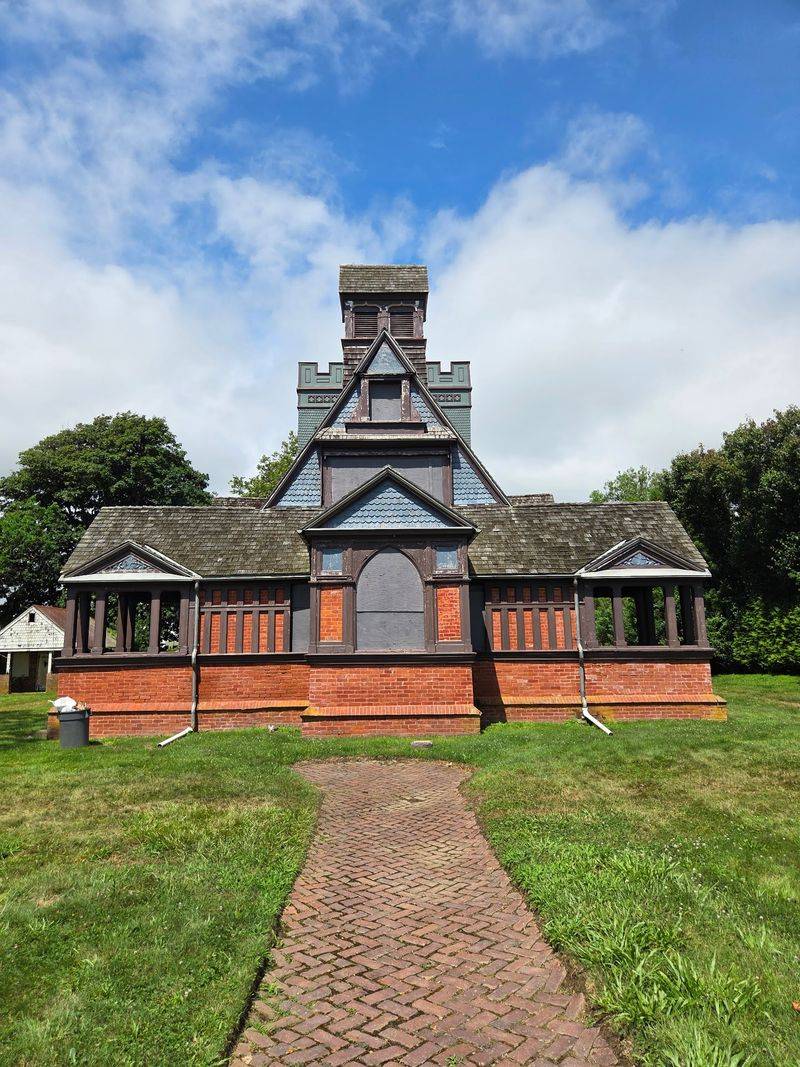
Seven American presidents attended services inside this wooden seaside chapel, yet the building itself feels surprisingly modest for a place with such powerful names attached to it. Constructed in 1879 as St. James Episcopal Chapel, it served wealthy vacationers who spent their summers in Long Branch when the city ranked among the country’s most fashionable resorts.
Ulysses S. Grant, Rutherford B. Hayes, James A. Garfield, Chester A. Arthur, Benjamin Harrison, William McKinley, and Woodrow Wilson all worshipped here, inspiring its enduring nickname. The architecture is pure Carpenter Gothic, with steep rooflines, decorative wooden trim, pointed openings, and a crenellated tower added during the 1890s.
Quatrefoil details and rare stained-glass windows bring refinement to the otherwise compact structure. Nearby, the tiny Garfield Tea House was made from railroad ties once used to carry the mortally wounded President Garfield from the Elberon station to the cottage where he died.
The chapel later became a historical museum, but age and structural problems eventually forced it to close. A major restoration is now underway to stabilize the building, repair its interior and exterior, and preserve its surviving architectural details, with completion expected in 2027.
Until it reopens, visitors must admire it from outside and avoid the work area. Even behind restoration fencing, it remains a fascinating survivor from the era when presidents, railroad magnates, and socialites turned the Jersey Shore into their summer playground.
4. St. Peter’s-by-the-Sea Episcopal Church – Cape May Point
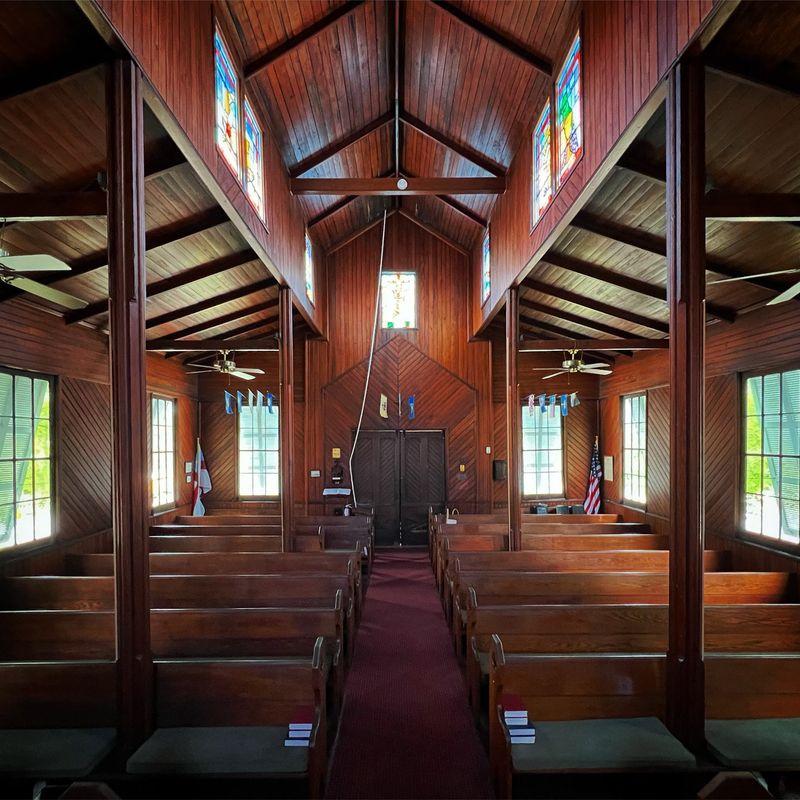
Few churches can claim to have survived multiple relocations, a devastating fire nearby, and the relentless advance of the Atlantic Ocean. This blue-gray chapel with crisp white trim began not as a church but as a temporary exhibition building created for Philadelphia’s 1876 Centennial Exposition.
Its yellow-pine frame was purchased, shipped to Cape May Point, and reassembled as a house of worship in 1879. The Stick-Eastlake design explains its playful geometry: exposed decorative framing, strong vertical lines, a raised central clerestory, and a dainty bell tower that helped inspire the nickname “the Gingerbread Church.”
The congregation moved the structure several times, first to catch better ocean breezes and later to protect it as the shoreline retreated.
One former location is now several blocks out at sea. Inside, warm pine walls, exposed rafters, traditional pews, and windows that can be opened for ventilation preserve the building’s original summer-chapel character.
The bell arrived in 1882, with its tower following the next year. Despite its delicate appearance, the church endured the great March storm of 1962 while buildings around it were battered or washed away.
St. Peter’s remains an active seasonal church, with services generally concentrated in summer. Its triangular site near Cape May Point State Park makes it easy to admire from the street, but anyone hoping to see the interior should check the current worship or event schedule before visiting.
5. St. John’s Chapel – Cape May
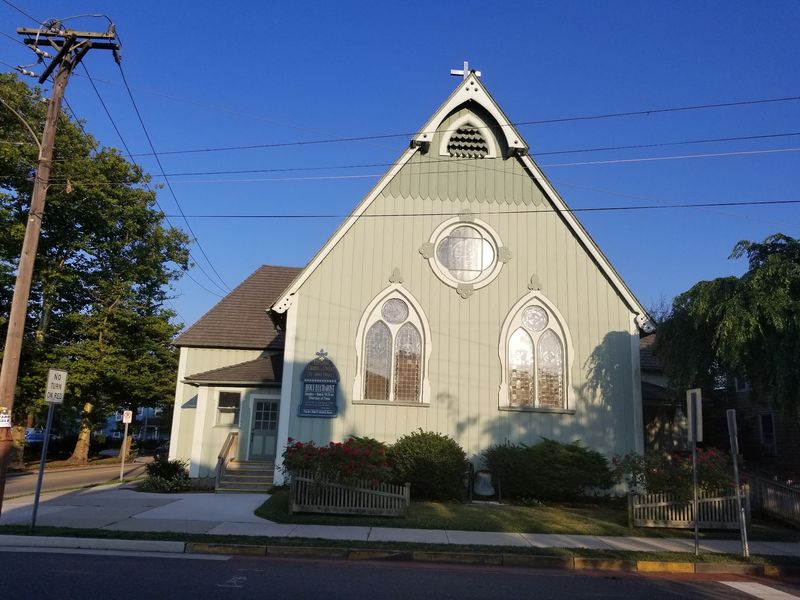
Board-and-batten siding, lancet windows, and a rose window distinguish this sanctuary from the elaborate Victorian houses surrounding it. St. John’s began as a summer chapel in the 1860s, when Cape May’s growing resort trade brought seasonal residents who wanted an Episcopal church of their own.
Architect Henry Augustus Sims designed the building in the Carpenter Gothic style, translating the pointed arches and steep rooflines of medieval stone churches into a structure made from wood. Construction began in 1865, and the chapel was dedicated around the end of that decade before being formally consecrated in 1871.
Its relatively restrained exterior rewards a closer look: the vertical siding emphasizes height, dark trim sharpens the roofline, and the absence of a conventional front bell tower gives the façade an unusual profile. A separate year-round congregation, the Church of the Advent, was established in 1899.
The two congregations eventually merged, and the combined parish moved permanently into the historic St. John’s building during the 1950s. Music has become an important part of the church’s identity, helped by excellent acoustics and a well-regarded pipe organ that draws performers for concerts.
The chapel remains an active parish at Franklin and Washington streets, within easy walking distance of Cape May’s central historic district. Visitors are welcome at services and scheduled musical events, while architecture fans can appreciate the exterior without straying onto private areas around the adjoining parish buildings.
6. Sea Breeze Methodist Episcopal Church – Fairfield Township
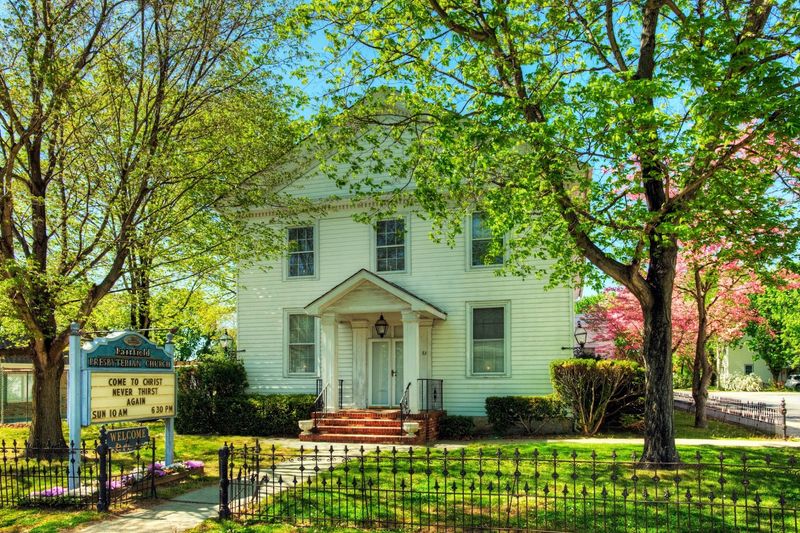
Near the Delaware Bay, simplicity was not an aesthetic trend but a practical necessity. The small Methodist church associated with Sea Breeze served a remote waterfront community where fishermen, seasonal visitors, and local families lived with marshland on one side and the unpredictable bay on the other.
Its straightforward vernacular form reflected the kind of rural religious architecture once common across Cumberland County: a compact rectangular sanctuary, wooden construction, tall windows, and little ornament beyond the proportions of the façade.
Buildings like this were meant to be raised economically, heated without elaborate systems, and maintained by congregations with limited resources.
That plainness also gave them a distinctive beauty, particularly against the open sky and low coastal landscape.
Sea Breeze itself developed as a nineteenth-century excursion destination, reached by steamboats carrying day-trippers from Philadelphia, but storms, fires, changing transportation, and repeated flooding gradually stripped the community of its hotels, taverns, houses, and other landmarks.
The church’s story belongs to that fragile history rather than to a polished visitor attraction. Travelers exploring the Sea Breeze area today should not expect regular interior access or a conventional historic site with staffed hours.
Much of the surrounding land is managed for wildlife, and surviving property must be viewed respectfully from public routes. What remains most compelling is the relationship between modest architecture and a shoreline settlement that nature has steadily reclaimed.
7. Head of the River Church – Estell Manor
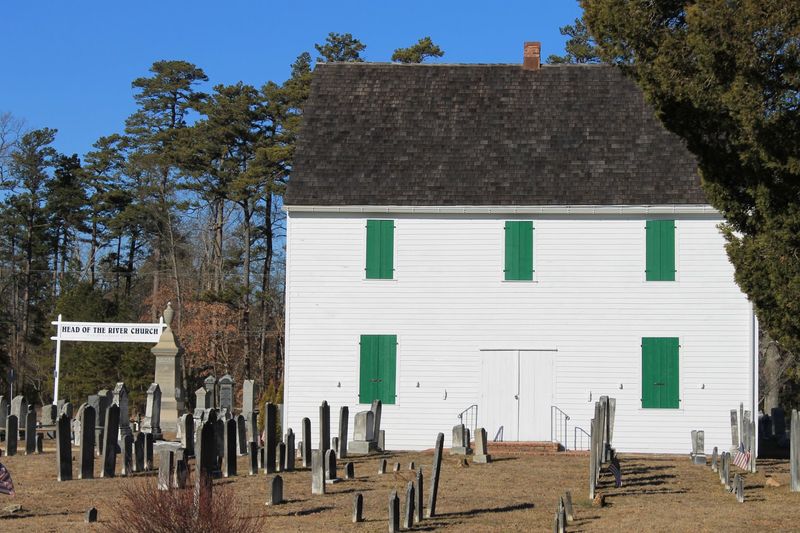
A bend in Route 49 reveals one of South Jersey’s most quietly impressive early churches. Built in 1792, Head of the River Church is a compact wooden Methodist meetinghouse surrounded by a historic cemetery and acres of wooded land.
Its design comes from an era before rural congregations invested in tall steeples, elaborate stained glass, or grand entrance towers. The symmetrical front, clapboard exterior, simple sash windows, and restrained proportions place the focus on solid craftsmanship rather than decoration.
That austerity suits the building’s origins. Methodist worshippers had gathered in the region for years before constructing the church, making it an important survivor from the denomination’s early expansion through southern New Jersey.
Inside, the arrangement retains the direct, communal feeling of an old meetinghouse, where the pulpit and congregation occupied a single uncomplicated room. The surrounding burial ground strengthens the sense of continuity, with weathered markers recording generations of Atlantic County families.
Although the mailing location is generally given as Estell Manor, the church stands close to the boundaries of Corbin City and Upper Township, in a landscape that still feels remarkably rural. It is listed on both the state and national registers of historic places.
Regular public hours are limited, so visitors should treat it as a historic exterior stop unless a service, open house, or special program has been announced. Pull completely off the highway where permitted and take care around the cemetery’s older stones.
8. Old School Baptist Meeting House – Hopewell
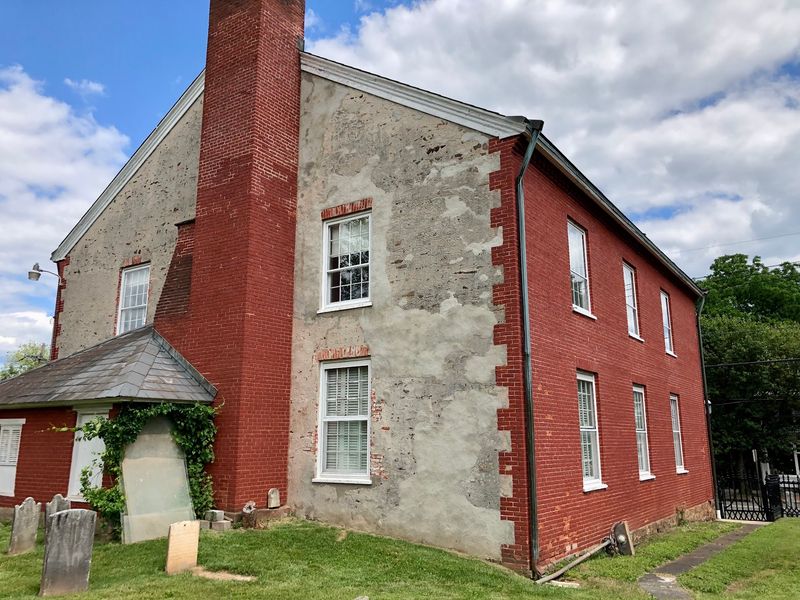
The red-brick façade on West Broad Street looks almost too orderly to have survived two centuries with so few changes. Built in 1822, the Old School Baptist Meeting House replaced an earlier stone church erected on the same property in 1747.
Its Federal-style architecture favors balance over spectacle: evenly spaced windows, a centered entrance, a shallow roof, and crisp brickwork made from locally fired materials.
The restrained design reflects the congregation’s preference for unembellished worship, while the remarkably intact interior preserves the building’s original meetinghouse character.
The congregation itself dates to 1715, making it one of the oldest Baptist groups in the region. John Hart, a signer of the Declaration of Independence, donated the land for the first church and cemetery and was later buried on the property.
The graveyard is nearly as compelling as the building, with markers dating to the mid-1700s, an iron fence from the nineteenth century, and graves connected to prominent local families as well as African American residents. Worship ended in 1974 after the congregation dwindled, but preservationists now maintain the meetinghouse as a museum and community landmark.
Tours, lectures, and occasional events provide the best chance to see inside; it is not kept open as a drop-in attraction every day. The location in walkable Hopewell Borough makes it easy to pair with the town’s historic homes and small downtown, though the burial ground deserves the same care and quiet one would give an active cemetery.
9. St. Luke’s Episcopal Church – Hope
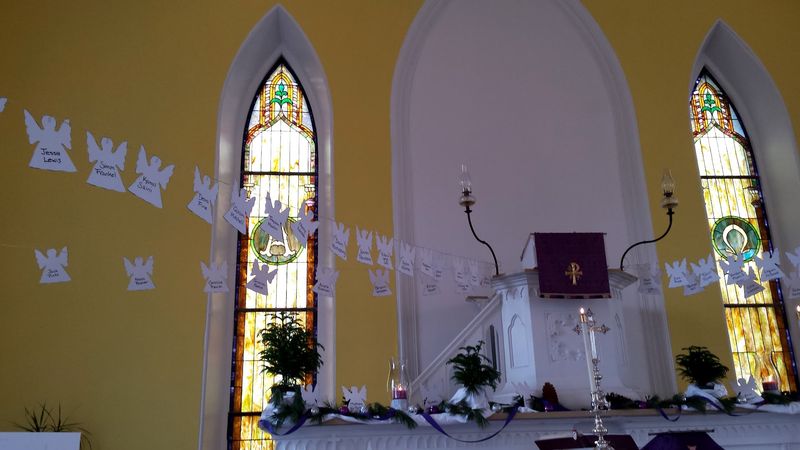
Pale limestone walls and narrow Gothic windows make this small country church feel older than its nineteenth-century construction date. Work on St. Luke’s began in 1832, and the completed sanctuary was consecrated in 1839.
Architect William Bulgin used the early Gothic Revival style at a time when American churches were only beginning to look back toward medieval forms for inspiration. The result is compact but serious: roughly dressed local stone, pointed-arch openings, a steep roof, and a square entrance tower that anchors the façade without overwhelming it.
Unlike later Gothic churches packed with sculptural decoration, St. Luke’s depends on proportion, masonry, and shadow for its effect. That restraint helps it fit neatly into Hope, a village originally established by Moravian settlers and filled with stone and stucco buildings arranged along rolling Warren County roads.
The church became part of the Hope Historic District before receiving its own listing on the National Register of Historic Places for architectural and religious significance. It now shares ministry with St. Mary’s in nearby Belvidere, so services and access may vary.
Visitors hoping to enter should consult the congregation’s current schedule rather than assuming the doors will be open. The exterior is easy to appreciate from High Street, where the church, mature trees, and neighboring historic buildings form one of the prettiest architectural groupings in northwestern New Jersey.
Early morning and late afternoon light bring out the varied color and texture of the limestone particularly well.
10. St. Barnabas Episcopal Church – Monmouth Junction
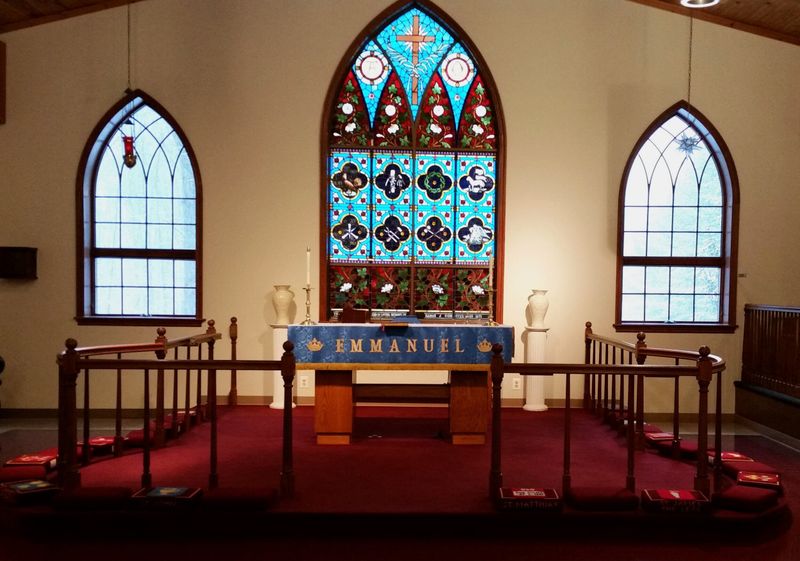
A stained-glass window provides the strongest link between this modern sanctuary and a country church that no longer stands. St. Barnabas traces its history to 1872, when the cornerstone of a small Episcopal mission was laid in an area then known as Sand Hills.
That original chapel survived periods of closure and sparse attendance, but the congregation eventually outgrew it and moved to a larger property. The old building later burned, yet parishioners managed to save a memorial window dedicated to Sarah J.
Conover. It was installed behind the altar in the next church and incorporated again when the present sanctuary was completed in 2001.
That rescued glass gives the building a visual and emotional center, connecting contemporary worship with generations who gathered in the tiny nineteenth-century chapel.
The current structure takes a cleaner, more modern approach than the other churches on this list, using a bright, open interior, exposed structural lines, natural light, and warm wood rather than historical ornament.
Its human scale keeps the room intimate despite the congregation’s growth, while the window introduces the saturated color and handmade detail associated with older Episcopal architecture. This is an active church rather than a museum, so the best opportunity to experience the space is during a service, concert, or community program.
Visitors should check the parish calendar before driving to the Monmouth Junction section of South Brunswick. The architecture tells an appealing preservation story: sometimes a beloved church survives not as an entire building, but through one carefully carried piece.
11. Christ Church – Shrewsbury
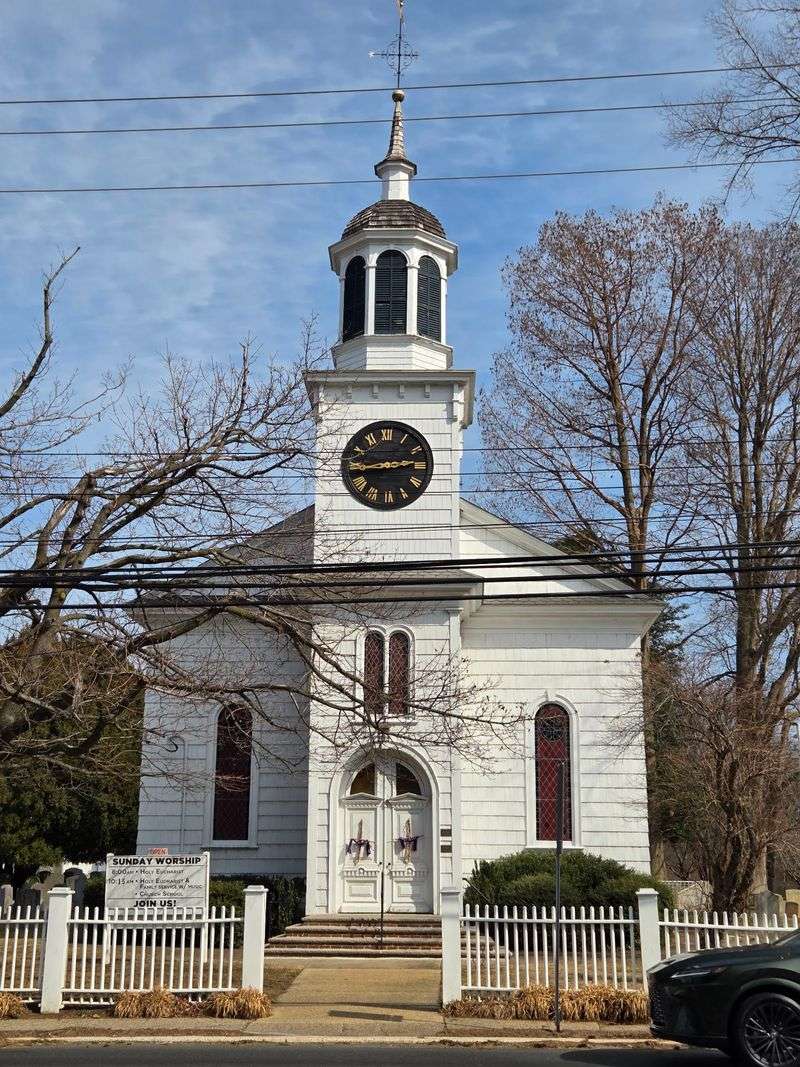
A musket ball still embedded in the woodwork offers a startling reminder that this graceful colonial church did not pass through the American Revolution untouched. The Christ Church congregation was founded in 1702, while the present building was constructed between 1769 and 1774 from plans by noted colonial architect Robert Smith.
Its design is dignified rather than grand, with a balanced façade, tall windows, white clapboards, and a tower added in the nineteenth century. During the Revolution, Patriot soldiers used the church as barracks and fired at symbols of the British Crown, damaging the pulpit and the orb that once topped the building.
Both the battered orb and the musket ball remain part of the church’s story. Inside, box pews, dark woodwork, historic fittings, and an impressive collection of religious objects turn the sanctuary into a working archive.
Treasures include a 1717 “Vinegar Bible,” named for a famous printing error, a royal charter issued by King George II, and silver communion pieces associated with Queen Anne. Outside, the old graveyard creates a leafy buffer from busy Broad Street, with markers connected to early Monmouth County families.
The parish remains active, holding weekly services in the same building used before the nation gained independence. Visitors interested in the artifacts or interior should inquire about tours or attend a scheduled program.
The clock in the tower is still wound by hand, a wonderfully practical ritual that keeps this small landmark tied to its past.
12. Old Stone Church – Upper Saddle River
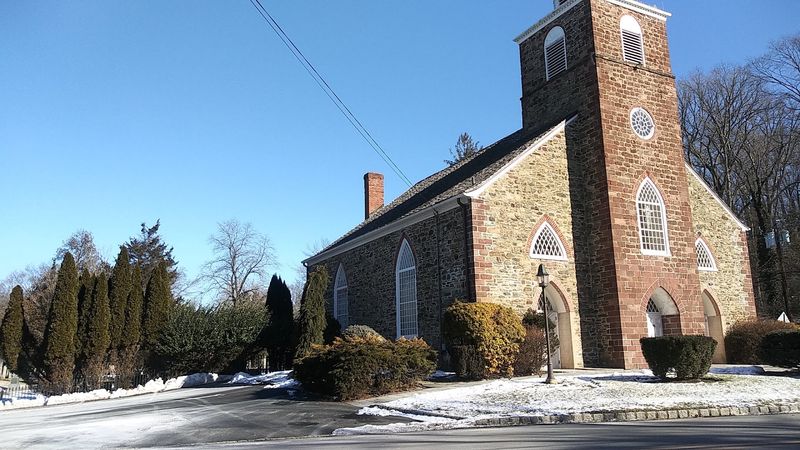
Fieldstone walls, a red sandstone tower, and a tall white spire give this Bergen County church a silhouette far more dramatic than its modest footprint suggests. Founded as the New North Reformed Low Dutch Church, the congregation began in 1784, and the present building is generally dated to 1789 based on the keystone above its main entrance.
Its broad rectangular plan reflects the practical meetinghouse tradition of early Dutch Reformed worship, while the centered tower adds an almost formal symmetry to the façade. The walls use irregular local fieldstone framed by carefully cut corner blocks, creating a surface full of color and texture.
Inside, the layout recalls an early rural church, with high-backed pews, a prominent wineglass-style pulpit, elders’ benches, and a surviving gallery once used by enslaved people and later by the Sunday school.
Some interior elements were recreated during a major restoration in the early 1970s, when later partitions and alterations were removed to recover the building’s historical character.
The surrounding churchyard contains worn gravestones belonging to early Saddle River Valley settlers and several Revolutionary War veterans. The property remains associated with an active congregation, and the church continues to serve religious and community functions rather than operating solely as a museum.
Visitors can admire the exterior and grounds from the appropriate public areas, but interior access depends on services or organized events. Even amid suburban Bergen County, the stonework and old burial ground preserve the feeling of an eighteenth-century country crossroads.
13. Fort Hancock Memorial Chapel – Sandy Hook
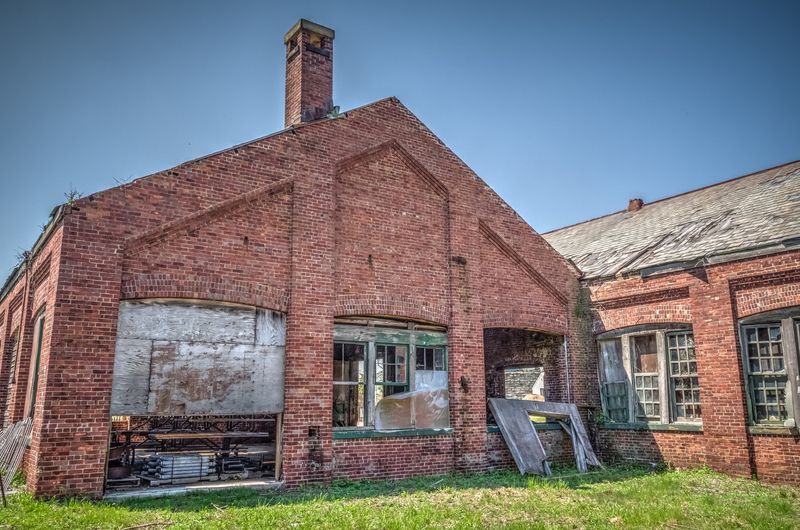
Salt air, parade grounds, and rows of former Army buildings create an unusual setting for this quiet chapel at the northern end of the Jersey Shore. The Fort Hancock Post Chapel was built to serve military personnel and their families stationed on Sandy Hook, where soldiers protected the entrance to New York Harbor.
Its architecture is understated and welcoming, with a compact nave, traditional windows, a modest steeple, and restrained detailing suited to a military post rather than an elaborate civilian parish. Against the fort’s yellow-brick barracks, officers’ homes, gun batteries, and utilitarian structures, the chapel provides a softer visual note.
It also reflects the way Fort Hancock functioned as a complete community, particularly during World War II, when thousands of service members lived and worked on the peninsula. Weddings, memorials, and worship services gave the building a role far removed from the heavy coastal weapons positioned nearby.
The Army decommissioned Fort Hancock in 1974, and most of Sandy Hook became part of Gateway National Recreation Area. Today the chapel is best appreciated as one piece of the broader historic post, where visitors can walk past Officers Row, see the Sandy Hook Lighthouse, and explore surviving defense structures.
Interior access is generally tied to ceremonies, rentals, or scheduled programs rather than daily public hours. Parking and seasonal entry conditions can change, especially during busy beach months, so check current park information before visiting.
The contrast of military history, weathered architecture, and wide-open coastal scenery makes this little chapel especially memorable.
Share this story