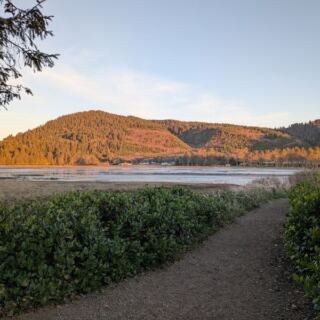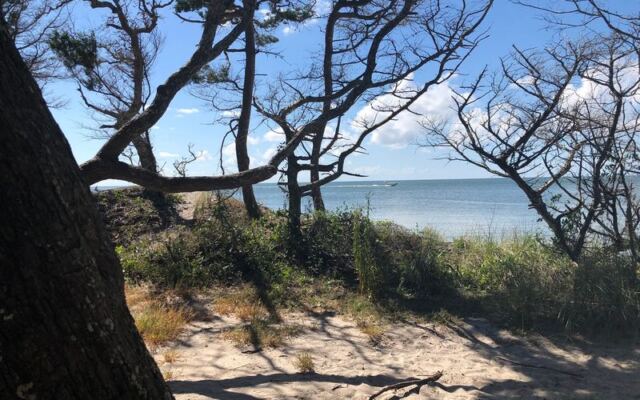
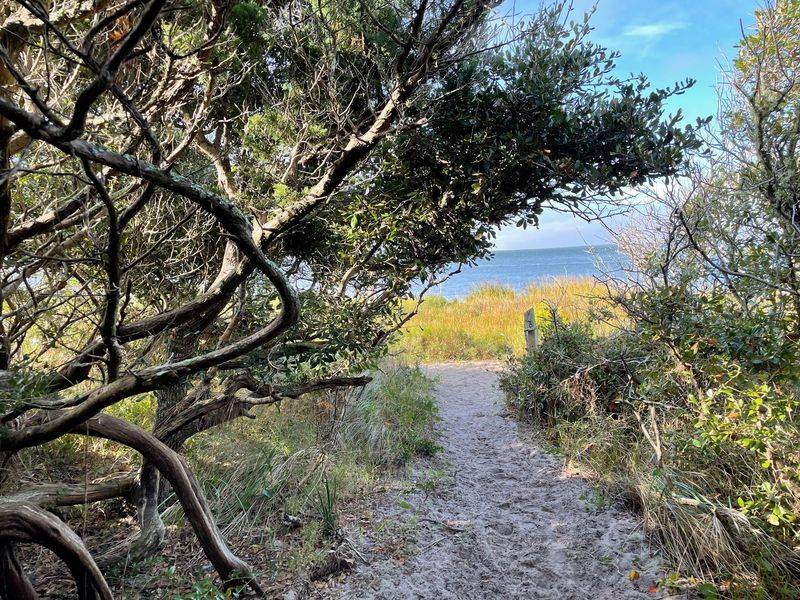
On Ocracoke Island, the best beach in town does not come with a parking lot. You have to earn it on foot, following a sandy path under twisted live oaks until the trees open up onto the Pamlico Sound.
The walk is short, flat, and packed with island history, including a famous pirate story tied to the water just offshore. Here is everything a North Carolinian needs to know before heading out to this quiet stretch of shoreline.
A Preserve Tucked Behind Ocracoke Village
Some of the best places in North Carolina hide in plain sight, and this one sits just beyond the lighthouse neighborhood on the Outer Banks.
Springer’s Point Preserve is found at 104 Loop Rd, Ocracoke, NC 27960, on the sound side of Ocracoke Island. The land is protected by the North Carolina Coastal Land Trust, which keeps it open to the public as a nature preserve.
The setup is simple. A nature trail of less than a mile winds through a maritime forest and ends at a beach facing the Pamlico Sound rather than the open Atlantic.
Google lists it as a hiking area, and that label fits. There are no snack stands, no rental umbrellas, and no boardwalk shops along the way.
What you get instead is a woodland stroll, a scattering of historic sites, and a sandy shoreline that often feels like it belongs only to the people who bothered to walk there.
For island regulars, it has become a ritual stop on every trip. For first-timers, it tends to become the moment they talk about long after the ferry ride home, and the reasons start unfolding the moment the trail begins.
Blackbeard’s Final Stand Offshore
Pirate history is not just a souvenir shop theme on Ocracoke. It is part of the shoreline at this preserve.
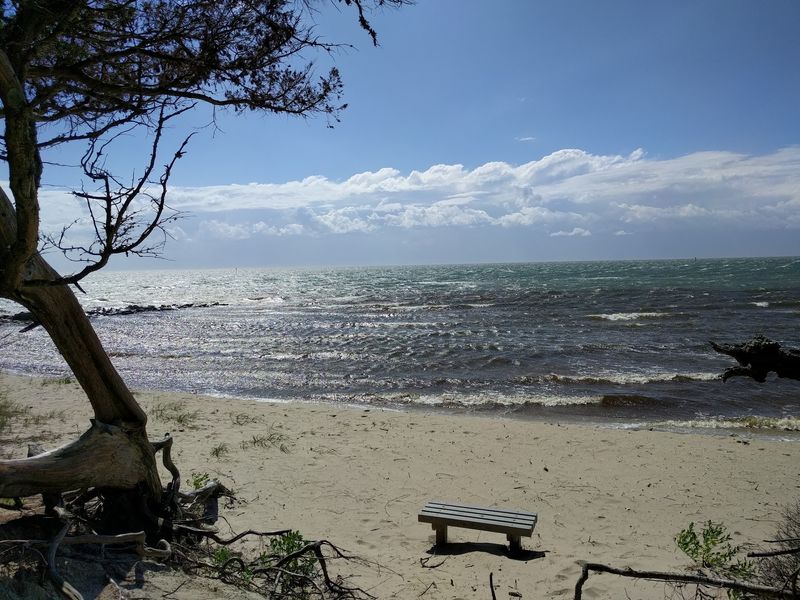
The waters just off the point are known as Teach’s Hole. That name comes from Edward Teach, better known as Blackbeard, and this channel is where his last stand is said to have taken place in 1718.
Locals sometimes call the sandy stretch here Blackbeard’s Beach, which gives you a clue about how much the story still matters on the island.
Standing on the sand and looking across the sound, it is easy to see why the legend sticks. The view has no high-rises or crowded piers to break the spell.
Many who walk the trail say they can almost see the pirate ships out on the water. It is a fun thought for kids and grown-up history fans alike.
The preserve does not dress the history up with displays or costumes, which keeps things refreshingly low-key.
Instead, the story simply hangs over the place, ready for anyone who wants to read up beforehand and arrive knowing exactly what happened in those waters three centuries ago.
The Live Oak Forest Itself
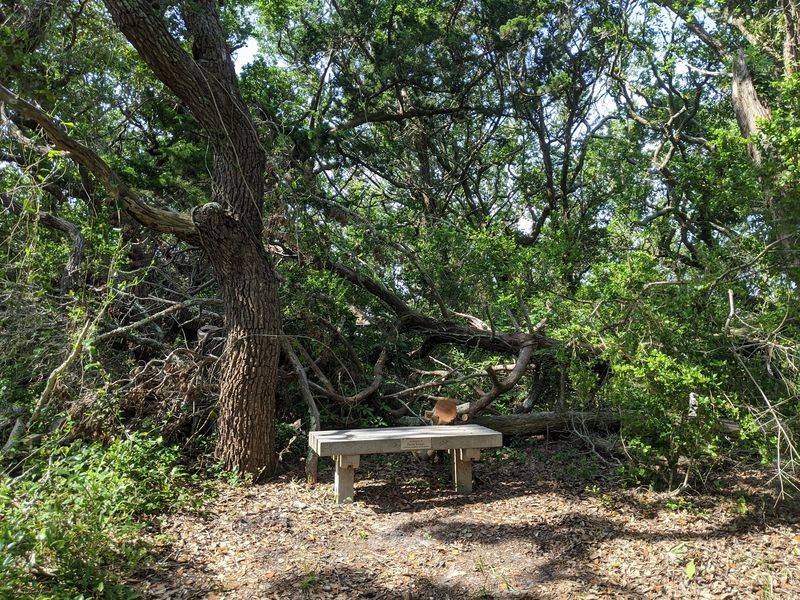
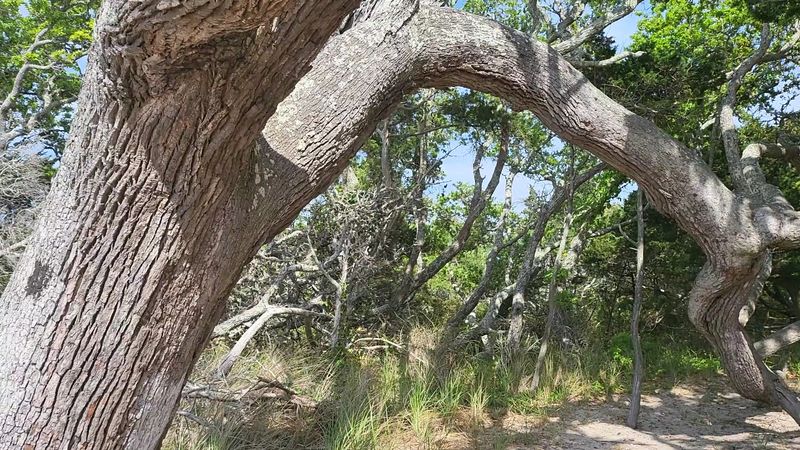
Forget straight pine rows. The trees along this trail look like they spent a century arguing with the coastal wind, and in a way they did.
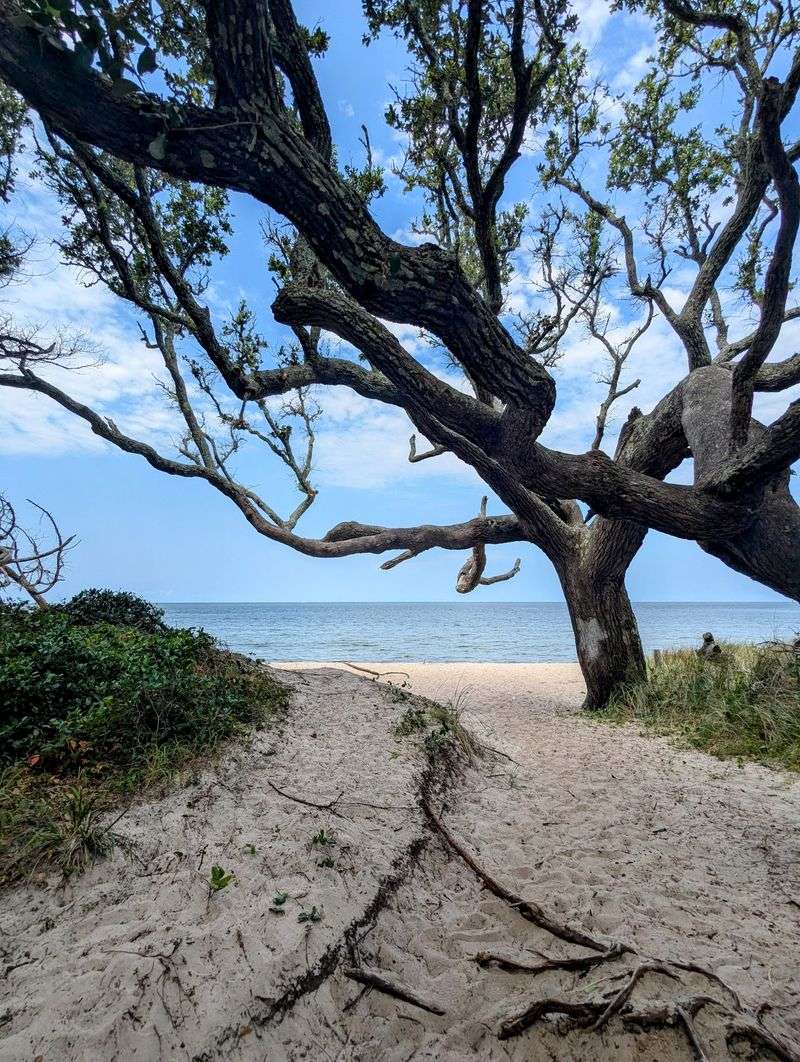
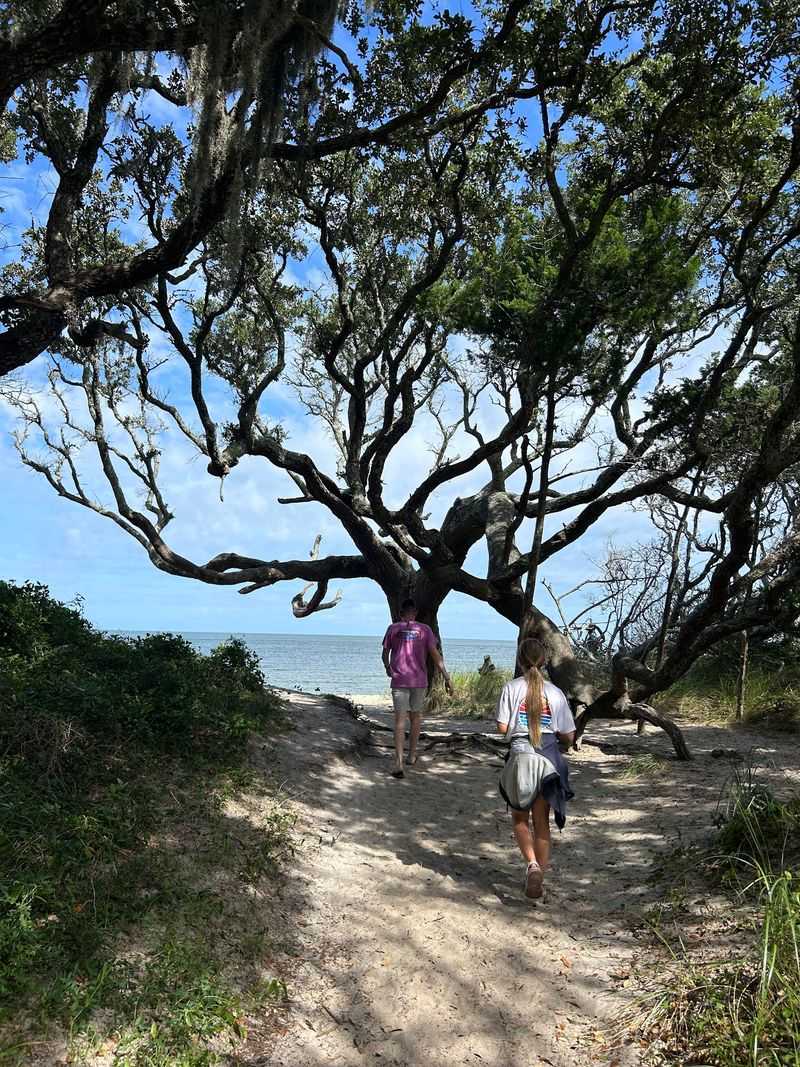
The walk passes through a maritime forest filled with live oaks whose limbs bend, curve, and twist in every direction. Their shapes are often called gnarly or mangled, and both words fit.
These oaks form a thick canopy over much of the path. That means there is little open sun on the trail itself until the woods give way to the beach.
Maritime forests like this one are uncommon along the North Carolina coast. Much of the barrier island landscape is open dune and grass, so a stand of old oaks this dense is a special thing to protect.
The forest also includes salt marsh edges, which add to the variety of habitat along the route.
Plenty of people come for the beach and leave talking about the trees instead. It is worth slowing down here.
Bring a camera, because those curving branches tend to steal the spotlight from even the prettiest sunset photo at the end of the trail.
Two Colored Paths and Helpful Markers
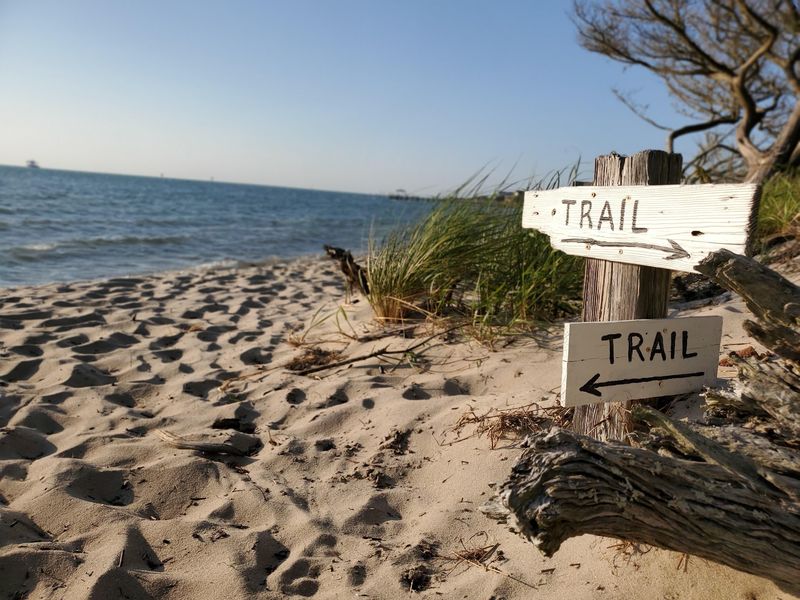
Getting lost here would take real effort. The trail system is flat, clearly marked, and short enough that nobody needs a map app glued to their hand.
There are two main routes, a green path and a blue path. Both lead to the beach or to other parts of the preserve, so either choice works.
Along the way, small markers point out plants and wildlife of the area. One identifies the live oak, and another helpfully flags poison ivy, which is a sign worth heeding.
Those little labels turn a simple walk into a casual nature lesson. Kids can hunt for the next marker while adults learn what is actually growing beside the path.
The footing is mostly sand and dirt. It is described as an easy, out-and-back route with lots to look at along the way.
Since the trail is under a mile, most people can reach the water without much strain.
Even so, the variety of what you pass makes it feel longer in the best way, as if someone packed a much bigger hike into a pocket-sized loop.
Benches, Breathers, and an Easy Pace
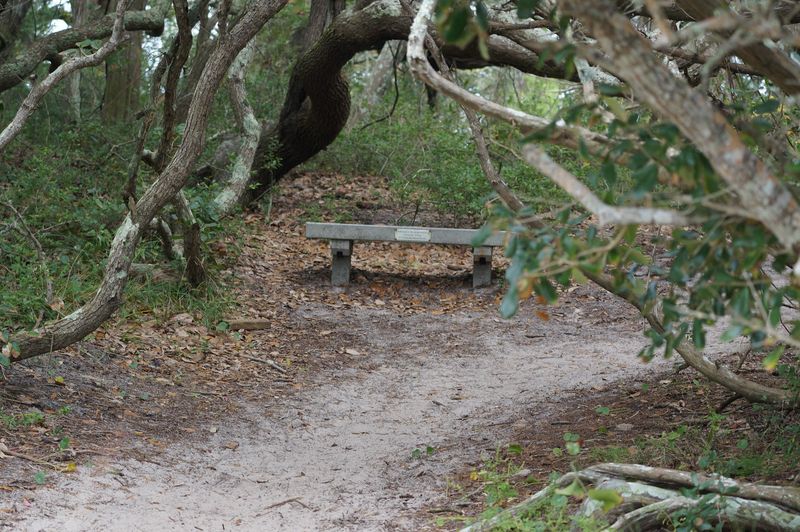
Nobody hands out medals for speed on this trail, and that is exactly the point.
Benches are placed along the route, giving walkers a spot to sit and rest. For anyone who prefers to take things slowly, those seats are a welcome detail.
The terrain is fairly flat and sandy throughout. That makes it one of the gentler outings on the Outer Banks for families with younger children.
A few honest notes help set expectations, though. The trail is not suited for wheelchairs, and the overall walk from parking can feel like a lot for older folks.
Some groups handle this by dropping relatives at the start of the trail, then parking and walking back. It is a practical workaround that keeps everyone happy.
The shade from the oaks helps on warm days, but the beach at the end is fully exposed.
Packing water is a smart move, especially in summer. A short hike can still leave you thirsty once you settle onto open sand, and there are no places nearby to buy a drink when the bottle runs dry.
Graves and Ghosts of Island Families
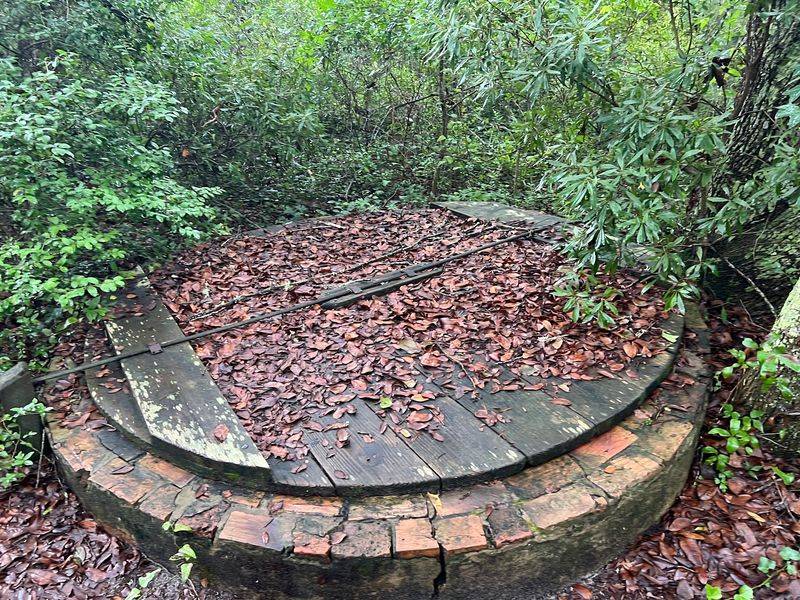
Ocracoke keeps its past close, sometimes right in the backyard. Small family cemeteries are scattered all over the island, and the preserve has one of its own.
In the middle of the woods sits a cemetery that adds a quiet, reflective stop to the walk.
One of the best-known sites here is the grave of Sam Jones. He was a notable figure tied to this land, and his resting place draws curious walkers who know the island’s stories.
History buffs often list his grave right alongside the oaks and the Blackbeard connection as reasons the preserve stands out.
Please treat these sites with care. They are part of the island’s heritage, and staying on the path keeps them protected for the next generation of walkers.
This mix of natural and human history is what makes the place feel layered. It is not just a pretty forest.
It is a record of who lived on this point and how they shaped it.
Reading up on the Coastal Land Trust website before the trip can add plenty of background to make these stops even more meaningful.
Toads, Cats, and Sea Oxeye Blooms
Small residents run the show along this trail, and some of them hop.
Little toads are common on the path, sometimes in large numbers. If toads are not your favorite company, consider this a friendly heads-up.
Plant fans will find something to enjoy too. Flowers called sea oxeye grow near the trail, adding pops of color between the oaks and marsh.
Stray cats have also been known to wander through the preserve. They seem perfectly at home among the trees, as if they hold honorary membership in the land trust.
Dogs are welcome, which makes this an easy outing for families traveling with a pet. Just keep an eye on the poison ivy markers and the local wildlife.
The salt marsh areas also support their own mix of creatures. Slowing down near the edges can reveal more life than a quick march to the beach would.
Early mornings tend to be the calmest time to notice these details. With fewer people on the trail, it is easier to share the path with the wildlife instead of startling it away.
The Sound-Side Beach Payoff
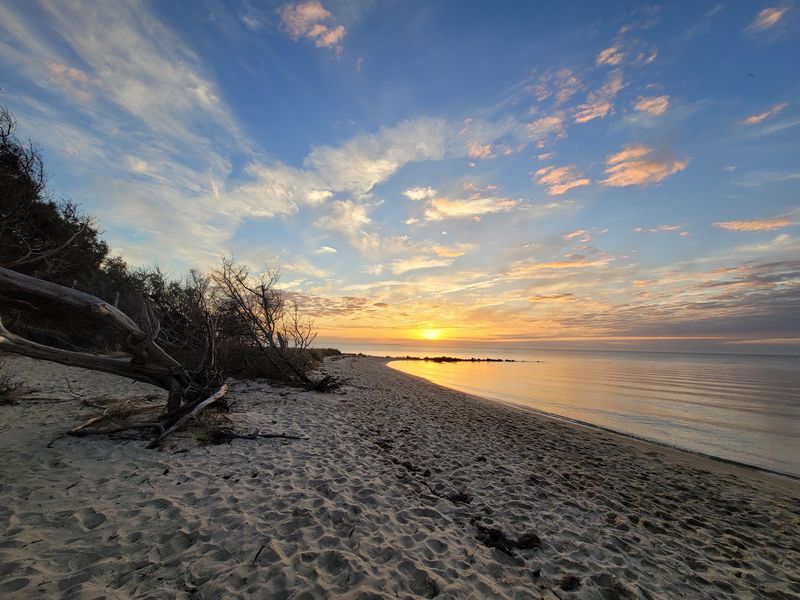
Then the trees part, and suddenly the effort makes sense.
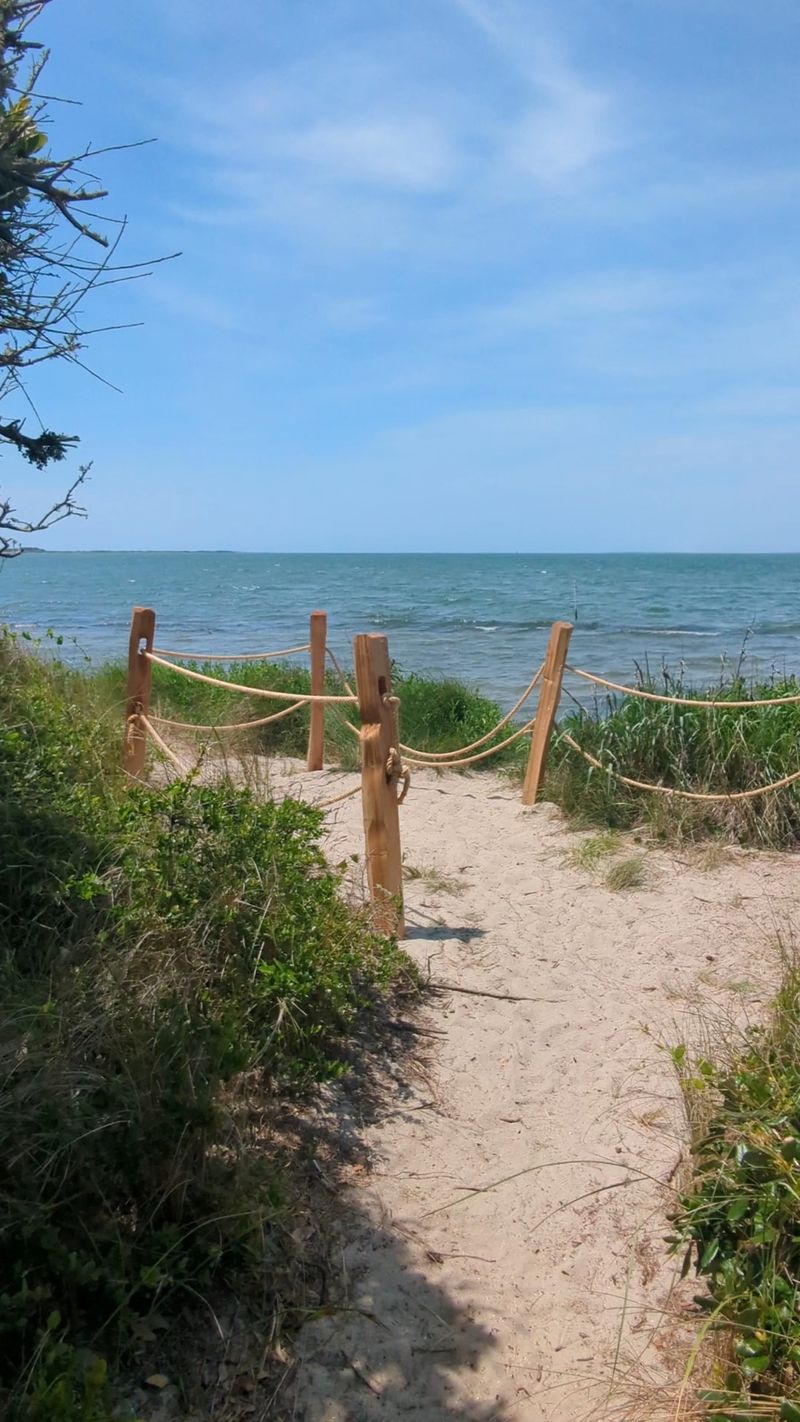
The trail ends on a sandy beach with dunes, facing the Pamlico Sound. Because it sits on the sound side, the water is typically calmer than the ocean beaches across the island.
Many describe it as feeling like a private beach. Without a parking lot right behind it, crowds simply do not build up the way they do at easier access points.
The shoreline works well for a range of plans. Some people swim, some fish, and others just sit and enjoy a quiet stretch of North Carolina coastline.
Families note that the beach is appropriate for little kids, making it a solid pick for a relaxed afternoon with young ones.
Keep in mind there are no bathrooms or food options nearby. Pack what you need and carry everything back out to keep the beach looking the way you found it.
That small trade-off is a big part of why the spot stays so peaceful. Less convenience tends to mean more elbow room, and on the Outer Banks that is a rare luxury.
Sunset Over the Pamlico Sound
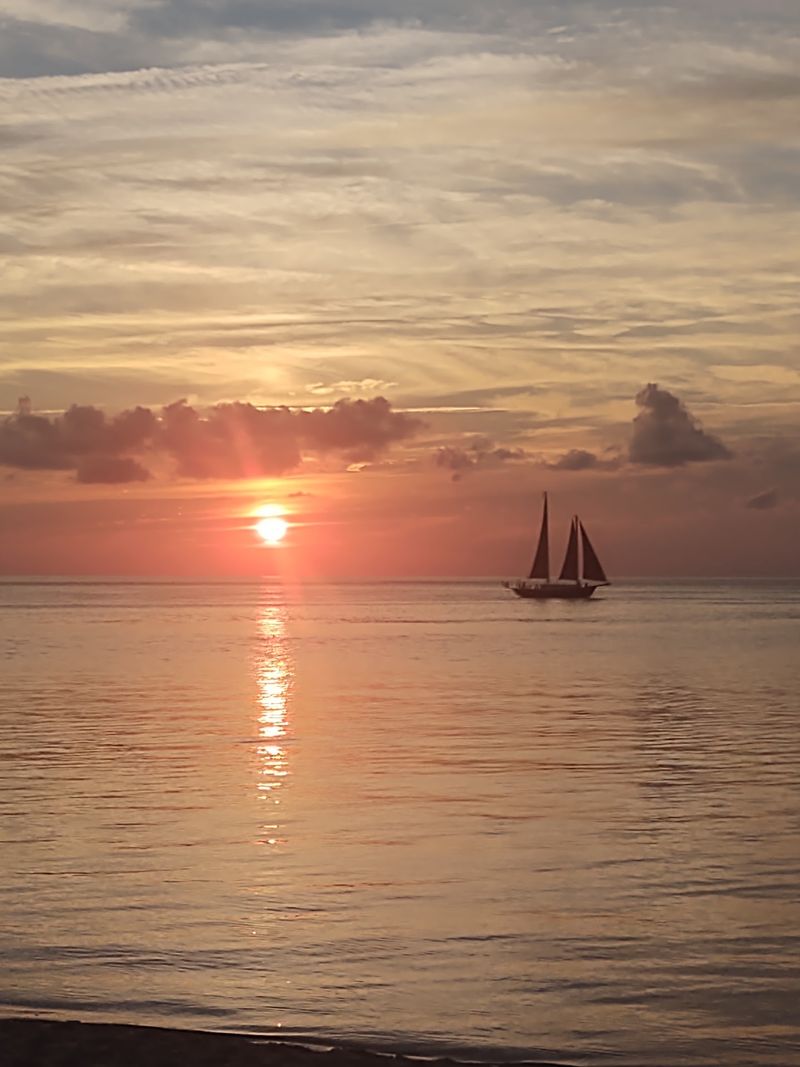
Timing is everything, and late in the day this preserve shows off.
Since the beach faces west across the sound, it is a favorite place to watch the sun go down. Sunset views come up again and again when people talk about this spot.
Some call the evening scene the true treasure at the end of the trail. Given the pirate history offshore, that is a fitting way to put it.
The preserve is open until 8 PM on days it operates. Plan ahead so you can enjoy the light and still make it back through the forest before the gate closes.
Bug protection matters more at this hour. Mosquitoes can get bad later in the day, so bringing repellent is a smart call.
A flashlight or phone light is handy for the walk back if the trees start getting dim under the canopy.
For couples, photographers, or anyone who loves a quiet end to a beach day, this is one of the more memorable evening outings on Ocracoke. It turns a simple trail into the highlight of the whole trip.
Bug Spray Is Not Optional
Every paradise has a catch, and on this trail it buzzes.
Mosquitoes and biting flies can be a real nuisance here. Greenhead flies in particular earn plenty of complaints during warmer months.
Strong repellent is the most common advice from those who know the preserve well. Many specifically suggest a DEET product, since the bugs can be fierce.
The shaded, damp forest is part of what makes the trail so pretty. It is also what gives insects a comfortable home, especially later in the day.
The path can also turn muddy at times. Sturdy shoes that can handle concrete, dirt, and sand are a better choice than flimsy flip-flops for the walk in.
Watch for poison ivy along the edges too. The trail markers point it out, so keep little hands and curious dogs on the path.
None of this should scare anyone off. A little preparation goes a long way, and once you are sprayed, shod, and hydrated, the bugs become a minor footnote to an otherwise wonderful outing on the island.
Parking, Hours, and Getting There
Here is the part that trips people up: there is no parking at the trailhead.
Most people leave their cars at the public lot by the Ocracoke Lighthouse or at the church near the lighthouse. From there, the walk to the preserve takes roughly five minutes.
Depending on where you park, the total walk to the beach can run around 20 minutes. Plan on crossing concrete, dirt, and sand along the way.
The preserve is open from 8 AM to 8 PM on Tuesday through Sunday. It is closed on Mondays, and a gate locks the path outside of open hours.
There is no fee to enter, which makes it one of the best free outings on the island.
Remember that services are limited. No restrooms or food are close to the trail, so handle those needs in the village before heading out.
During peak season, the preserve can get busy. Arriving first thing in the morning is a popular strategy for enjoying the trail with fewer people and a calmer start to the day.
Why This Walk Stays With You
Some outings fill an afternoon. Others quietly become a tradition.
Springer’s Point tends to land in the second group. Plenty of families walk the trail every single time they return to Ocracoke, and newcomers often call it the high point of their trip.
The appeal is easy to understand. In under a mile, you get ancient-looking oaks, salt marsh, a historic cemetery, a pirate legend, and a calm beach with a wide sound view.
It also feels like a reminder of what conservation can do. Thanks to the Coastal Land Trust, this corner of the island remains open and wild instead of built over.
Respect goes a long way in keeping it that way. Stay on the trails, pack out what you bring, and be mindful of the island residents who share this special place.
For North Carolinians looking for a nearby adventure with real character, this walk delivers without needing a big budget or a full day.
Grab the bug spray, catch the ferry, and let the live oaks lead the way to one of the most peaceful beaches in the state.
Share this story