Most people driving through Lakeview have no idea a geyser sits just off the highway. It does not live in a national park, it has no ticket booth, and it was never supposed to exist at all. A well drilled for a hot springs resort hit something nobody planned for, and Oregon gained a geyser that still shoots water into the high desert air.
Stick around to learn how it started, when it erupts best, how to find it, and why patience pays off here.
A Roadside Surprise on US-395
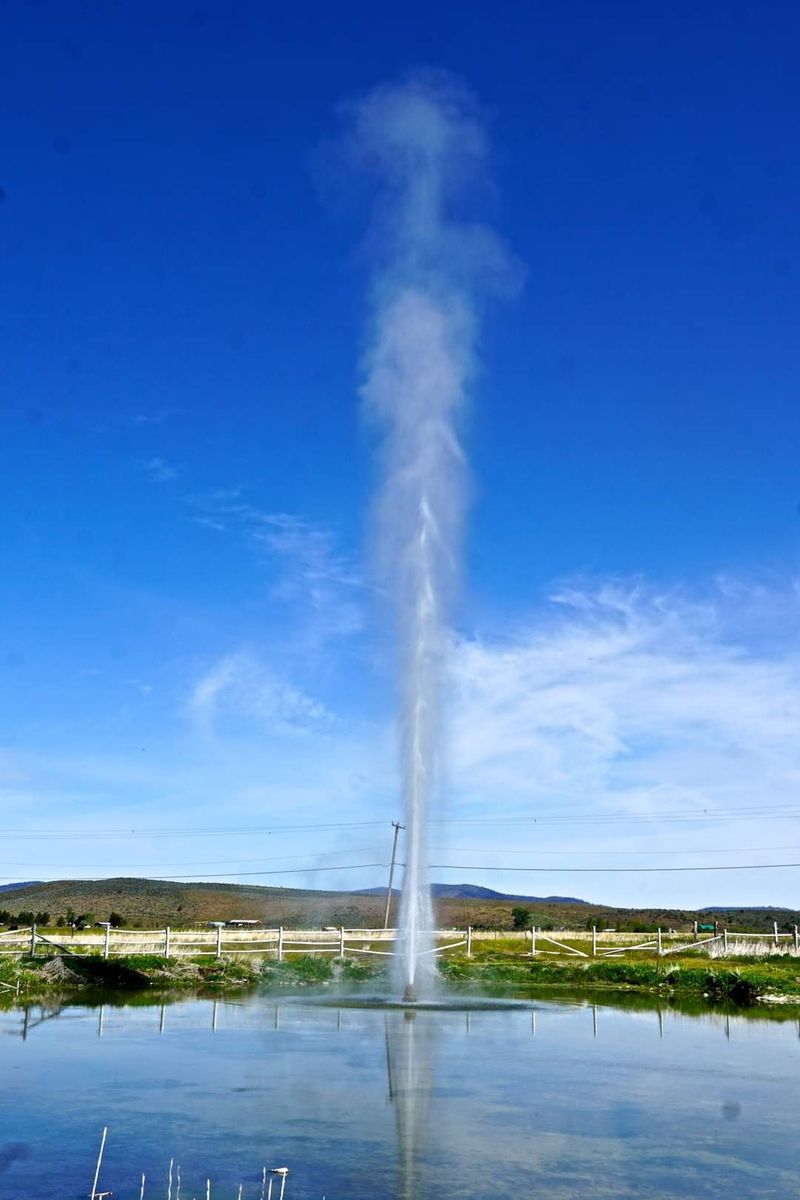
Plenty of travelers have rolled through town several times without noticing anything unusual. Then one day a column of water shoots up beside the road, and the detour begins.
Old Perpetual sits at 18088 US-395, Lakeview, OR 97630, in the high desert of south-central Oregon, United States. It is listed as a tourist attraction, and it is technically open 24 hours a day, every day of the week.
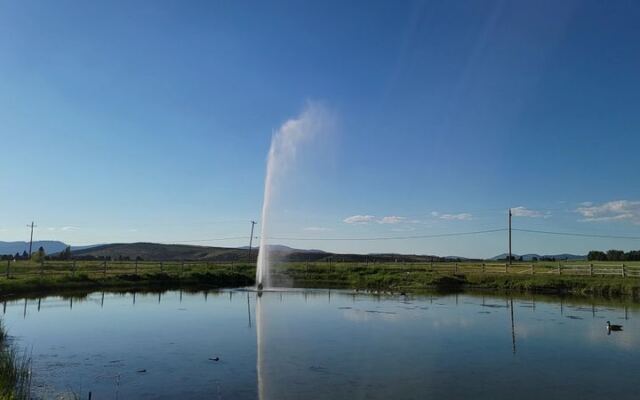
The geyser rises from a pond on the grounds of the Hunter’s Hot Springs property. Several ponds fed by hot springs dot the area, and this is the one that does the fireworks.
No tickets are needed, and there is no admission charge to worry about. That makes it a rare kind of Oregon attraction, a free stop that rewards anyone curious enough to pull over.
It also counts as a genuinely unique area for the region. The surrounding ground has a geothermal look to it, with steaming holes and warm ponds hinting at the heat just below the surface.
Small, odd, and a little stubborn, this geyser has quietly become one of the more unexpected landmarks in Lake County.
The Well That Went Rogue
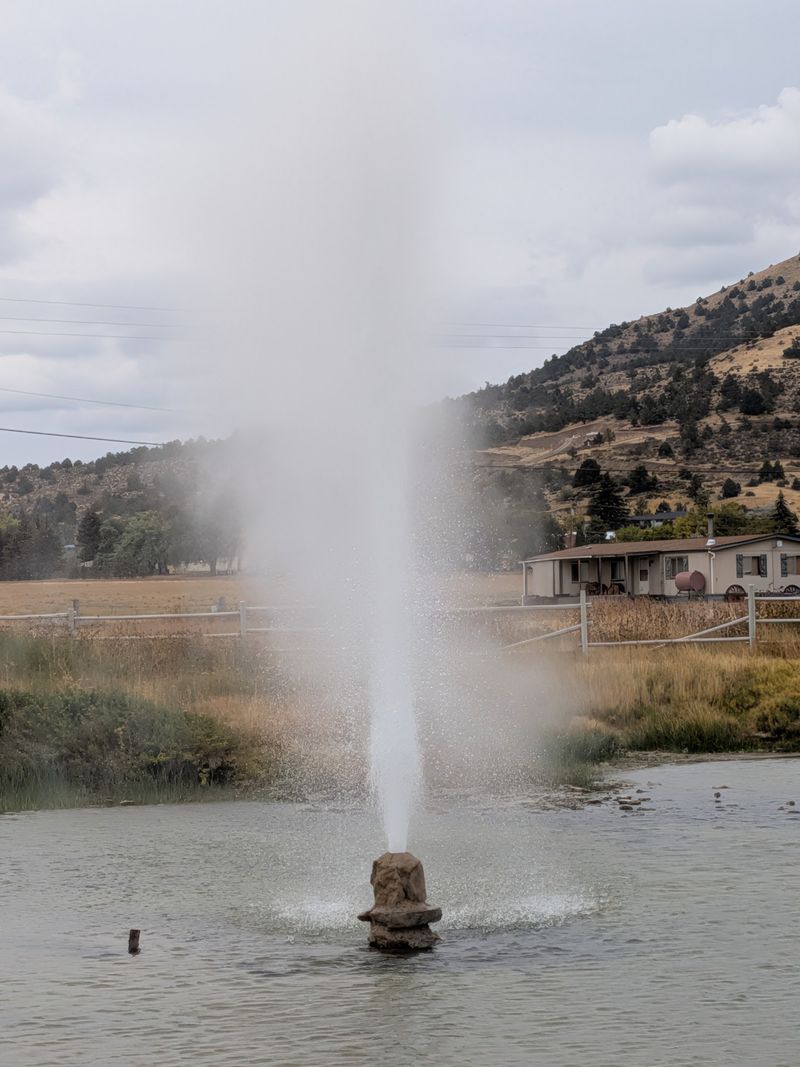
Yellowstone’s famous geysers were shaped by nature over countless years. Oregon’s version came from a landowner with a shovel-sized ambition and a drill.
The owner of the land wanted to build a resort around healing, therapeutic hot water. To reach more of that water, a well was drilled, and it began spouting water up to 60 feet into the air.
Just like that, Oregon had a geyser. The name Old Perpetual is a playful nod to its far more famous cousin in Wyoming.
The story has a few chapters, too. Around 2009 and 2010, the geyser stopped erupting, and locals feared it was gone for good.
Then the owner recased the well, and the water came back. Fans of the little spout were thrilled to see it return.
It was once one of three geysers in the area, and it is the only one still active. A neighboring geyser called Crump Geyser, a few miles away, also came from drilling a well and reportedly sent water around 200 feet high before vandals plugged it with rocks.
That history makes Old Perpetual feel like a survivor, a familiar Oregon oddity worth looking after.
How Often the Water Flies
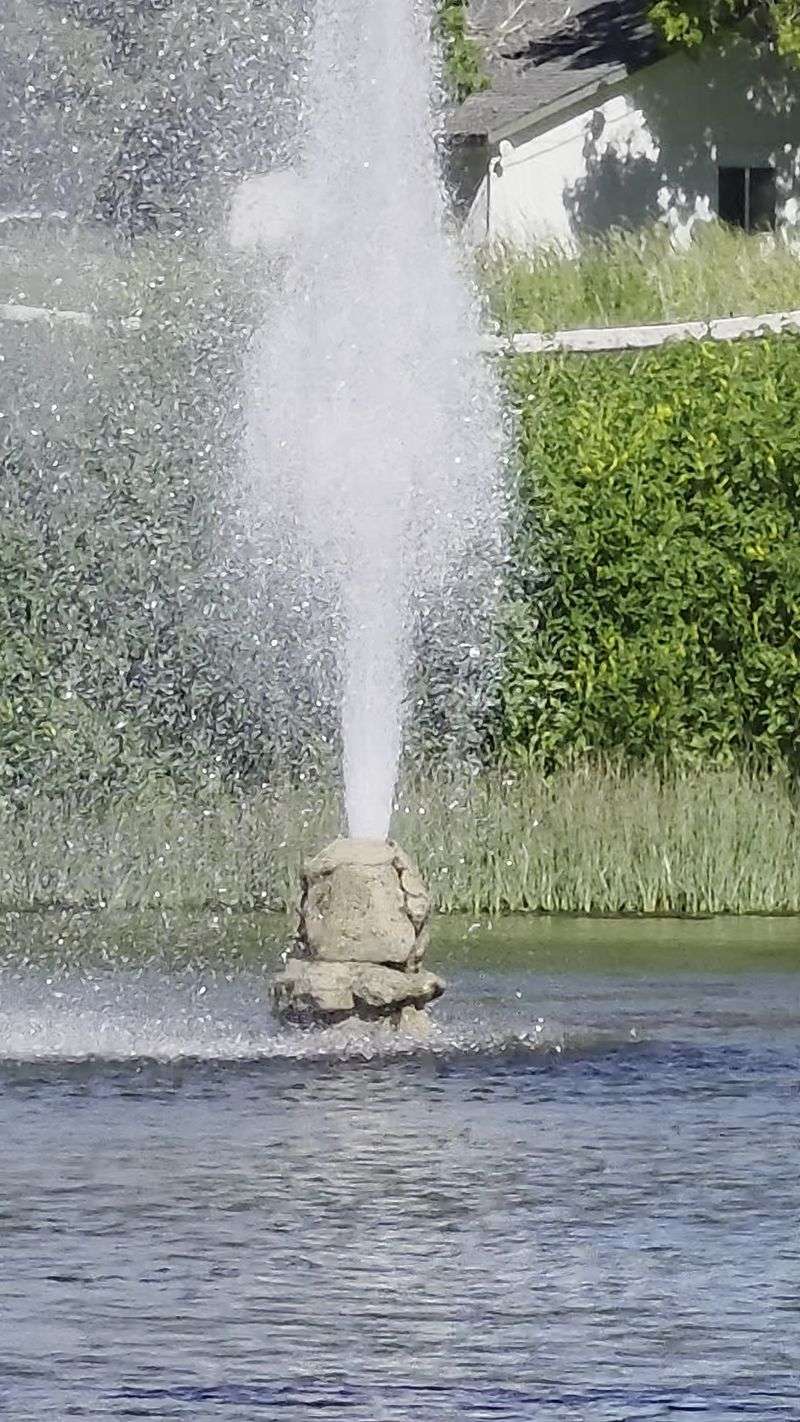
Here is the honest truth about the schedule: there isn’t a reliable one. The geyser once kept a steady rhythm, but heavy use of underground water has made it less predictable.
Older descriptions promise eruptions every 90 seconds, especially in winter and spring. Recent trips paint a more varied picture.
Some people catch it going off every 30 to 40 seconds. Others watch it erupt every few minutes, while a late November stop saw activity every 5 to 10 minutes.
One summer trip in July 2022 recorded blasts roughly every 3 minutes, each lasting 9 or 10 seconds. A more recent visit counted just two eruptions in 40 minutes, about 10 seconds apparently each.
Show length varies, too. Expect anywhere from about 5 to 15 seconds of action per burst.
So the wait time can range from barely a minute to ten or more. The water keeps its own calendar, and nobody has managed to hand it a watch.
Seasons, Farms, and Dry Spells
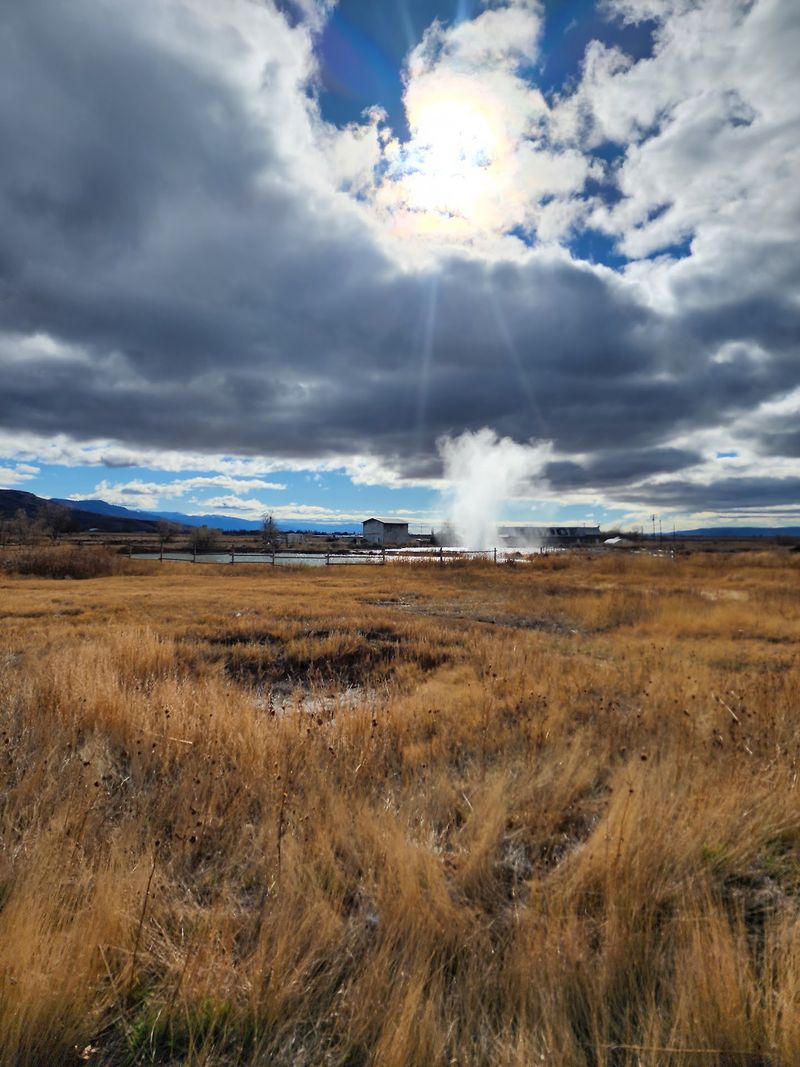
Timing a trip here matters more than at most roadside stops. Show up in the wrong month, and the star of the show might be taking a nap.
Winter and spring are generally the strongest seasons. During summer, the geyser may stop entirely, and that has happened in several recent years.
One explanation passed along by hotel staff is that it slows down through summer until October or November, when farmers stop watering their crops. The geyser shares an aquifer with the surrounding landscape, so demand on that water affects it.
Dry weather seems to play a part, as well. A September 2024 trip found no eruptions, and people nearby said it tends to go dormant when rain has been scarce.
An August 2021 trip also found the basin completely dry. Only the opening where the water normally emerges was visible.
Still, summer is not a guaranteed miss. An August 13, 2025 stop caught a solid 7-second spout after about a 10-minute wait.
Planning for cooler months gives the best odds, but a little luck can work any time of year.
Finding the Right Path In
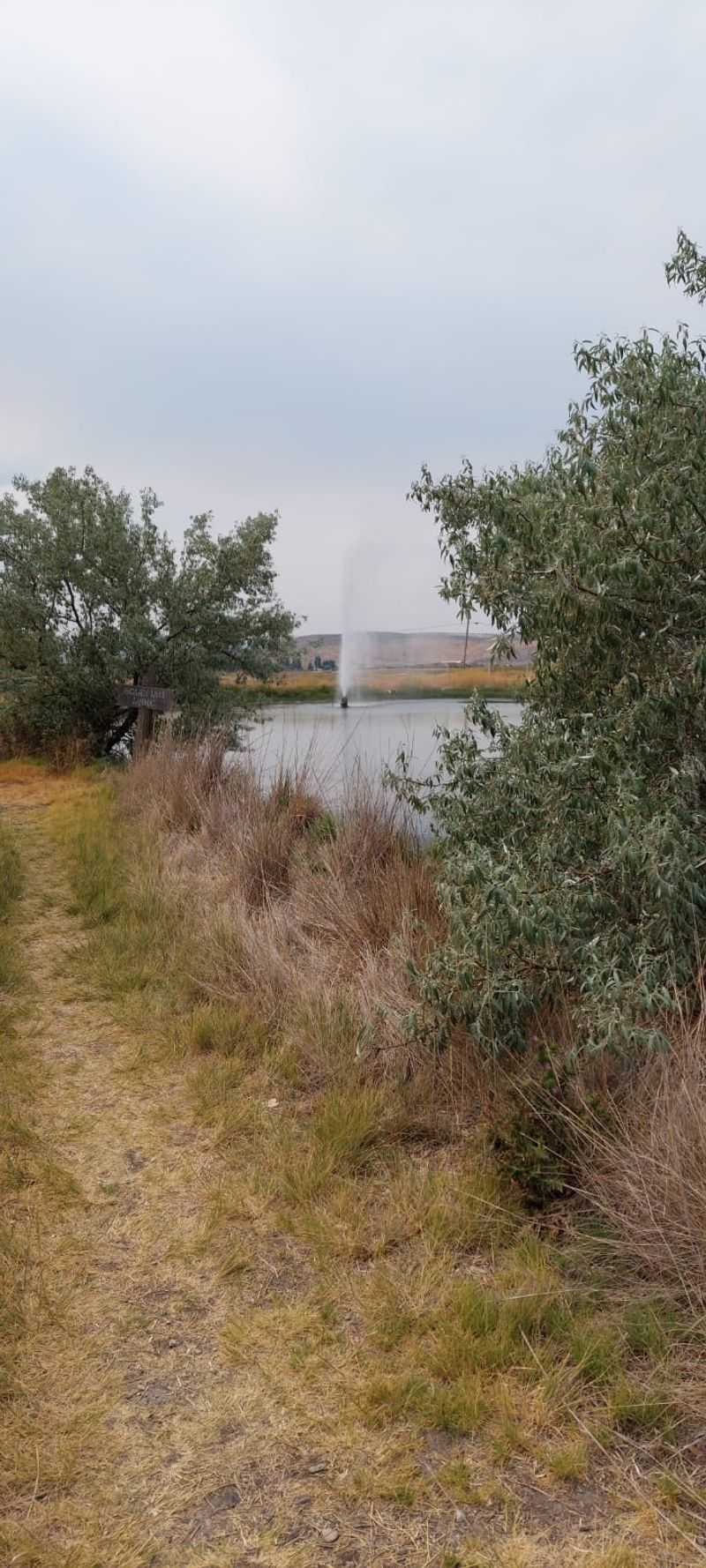
Getting there is half the puzzle. Signage is scarce, and more than a few travelers have circled around wondering where to park.
The main access comes through the driveway for Hunter’s Hot Springs Lodge off US-395. From the parking area, it is possible to walk right to the pond holding the geyser.
An older route description mentions heading north from the resort lot, past some old vehicles and assorted clutter, to an unmaintained trail. That path runs about 1,000 feet, crosses a bridge, and ends at an interpretive sign facing the small basin.
An old fiberglass bench sits to the left of that sign. A little more trail continues to the right.
Good shoes are smart, since part of the walk follows a dirt trail through tall grass. One morning walker even met a large, harmless bull snake sunning itself across the path.
Mapping apps sometimes send drivers to Geyser View Road on the back side of the property instead. Small ponds on the left mark the spot, and the geyser can sometimes be seen from there too.
Patience with directions pays off well before patience with the eruptions even begins.
Ponds, Waterfowl, and a Painted Barn

The geyser gets top billing, but the supporting cast deserves a nod. Several warm ponds spread across the property, each fed by the hot springs below.
Ducks and geese often hang around these waters. They give people something to watch between eruptions, which helps when the geyser is feeling shy.
A cool painting on a barn also catches attention. Even on a trip when the geyser stayed quiet, that artwork earned a mention as a bright spot.
Along Geyser View Road, a geothermal hole sits right beside the roadway. It adds to the sense that the whole patch of ground is restless underneath.
The setting is not polished. Parts of the property look worn, and the back side includes a fence, a no trespassing sign, and stretches of brown knee-high grass.
That rough edge is part of the character. Nobody has dressed this place up for postcards, and it shows in an honest, slightly scrappy way that some travelers find charming.
Who Will Love This Quirky Stop
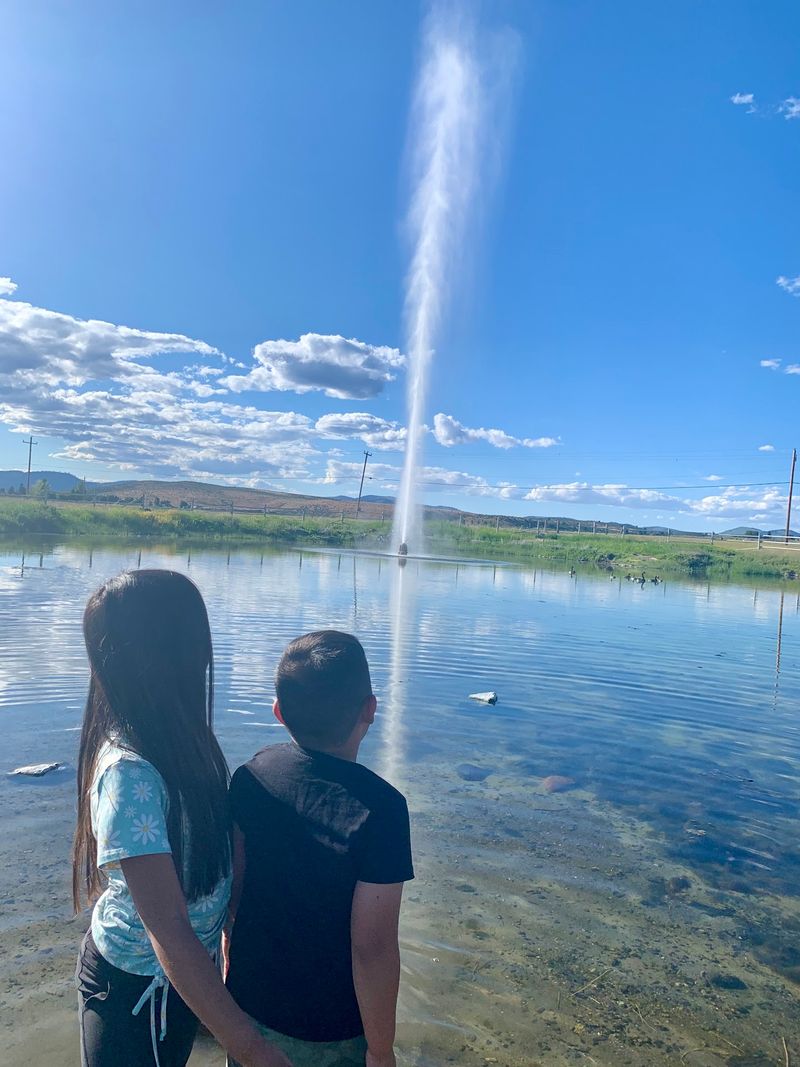
Expectations make all the difference here. Anyone hoping for Old Faithful will leave a bit underwhelmed, since this is a smaller, shorter show.
Road trippers on a long haul through southeast Oregon tend to enjoy it most. It works well as a place to stop, stretch, and see something genuinely unusual.
One couple who caught a 5-second burst while turning around nicknamed it Little Yellowstone. They recommended it partly for the sheer silliness of the moment.
Some find the steady water flow so regular that it almost seems staged. Others call it a neat surprise in the middle of nowhere.
The general advice from travelers is simple. It is worth stopping when already nearby, though perhaps not worth a long special detour, especially for people who have seen bigger geysers before.
The overall score sits at 3.4 stars from 58 opinions, which fits a place that delights some and puzzles others.
Families, photographers with quick reflexes, and anyone who enjoys a good oddball attraction will likely walk away grinning.
A Small Geyser Worth Protecting
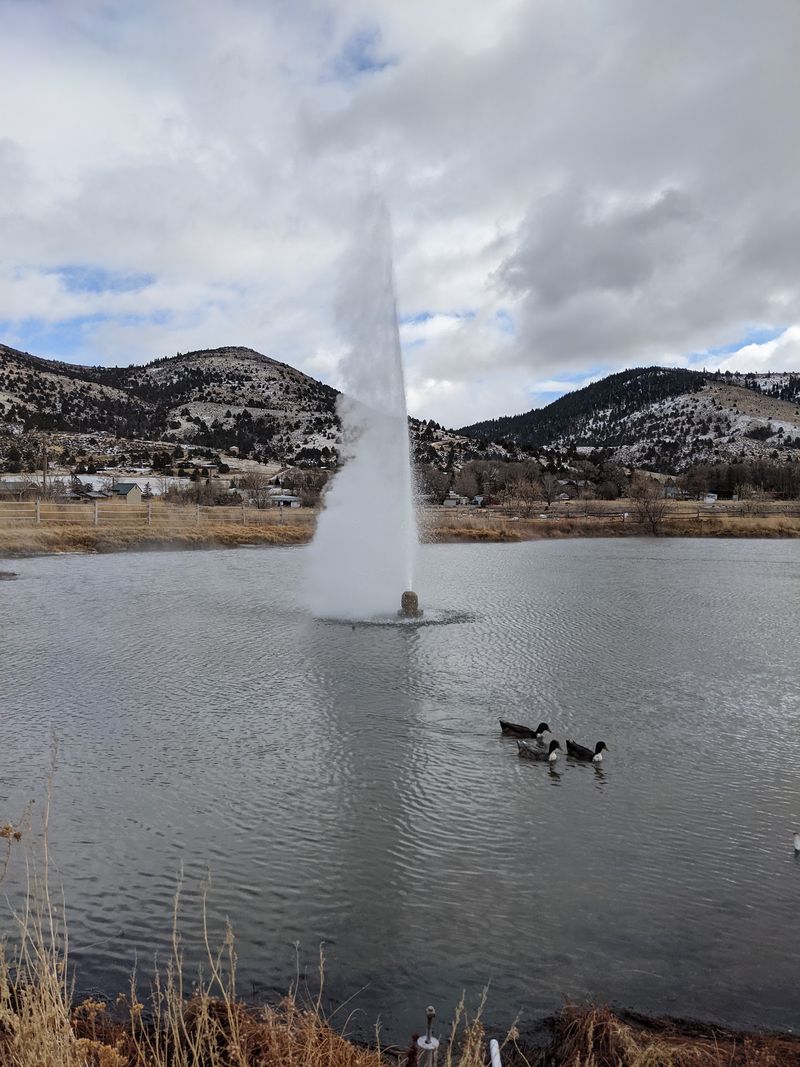
Change is coming to the grounds around the geyser. The hotel on the property is undergoing a major remodel, with an expected reopening around September 2026.
Earlier hints suggested the owner planned to restore a nearby motel, and that work now appears to be moving ahead. The soaking pool was open during a recent stop and looked inviting.
For Oregonians who value familiar places sticking around, that is welcome news. A free, offbeat landmark like this does not survive on its own.
The loss of Crump Geyser to vandalism is a reminder of how fragile these spots can be. Respecting the pond and the casing helps keep Old Perpetual going.
Bring patience, bring good shoes, and keep a camera ready, since the bursts end fast. Leave the area better than it was found.
Oregon’s accidental geyser may be modest, but it is the only active one the state has. That alone makes the short walk worth it.
Share this story