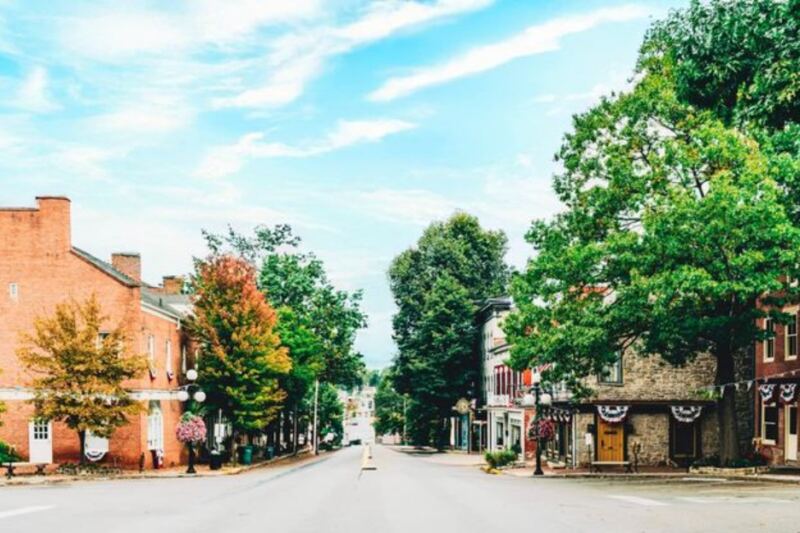
One Pennsylvania town keeps its gas street lamps lit around the clock. They dim during the day, but nobody turns them off.
I love that kind of stubborn charm. Another town on this list has a jail cell with a handprint on the wall that reportedly refuses to come off. A third hosts what it calls the oldest authentic outdoor German Christmas market in the country. Yes, a whole holiday tradition started small and stayed magical.
These are the details that make a trip feel like a movie scene. You stroll a little slower. You notice the trains, the creeks, and the castle made of concrete. Ice cream parlors, rail trails, and a mansion with gilded mirrors fill in the rest.
I can’t think of a better excuse for a weekend drive. Pack comfy shoes and a little curiosity. These are the kinds of places that make you want to take the long way home.
1. Lititz
A town built on pretzels and chocolate sounds like a dream someone made up.
Lititz is real, though, and it leans into its sweet side with pride.
Start at the Julius Sturgis Pretzel Bakery, known as America’s first commercial pretzel bakery.
The building dates to 1784 and sits on the National Register of Historic Places.
Inside, you’ll see original brick ovens from 1861.
Guided tours explain pretzel history, and you even get to twist your own.
Tours run by appointment, so book before you go.
Showing up and hoping for the best is a bold plan you don’t need here.
Next, swing by The Wilbur Chocolate Store on North Broad Street.
Production at the old factory ended in 2016, but the store and its Candy Americana Museum are still open.
You can grab a free sample of Wilbur Buds, the brand’s famous little chocolates.
The museum shows off antique chocolate molds, old tins, boxes, and fancy porcelain chocolate pots.
Then head across to Lititz Springs Park, which dates back to 1741.
The Lititz Moravian Congregation maintains it, and the public is welcome from dawn to dusk.
Ducks paddle in the spring, and paved paths wind past pavilions and a band shell.
From mid-May to October, the park also hosts the Lititz Farmers Market.
Don’t skip the Welcome Center at the park.
It sits inside a replica of an 1884 Victorian Gothic train station, which feels straight out of a storybook.
Still craving sugar?
Candy*ology on East Main Street stocks retro candies and more than 120 kinds of soda.
Over on South Broad Street, Olio Olive Oils and Balsamics offers tastings.
It’s one of the largest stores of its kind in the nation.
Main Street and Broad Street make the rest easy to explore on foot.
Art, apparel, jewelry, and gourmet treats line the way.
Tree-lined streets frame the historic district beautifully.
Walk slowly and let the soundtrack in your head do its thing.
Lititz often gets called America’s Coolest Small Town.
After a pretzel, a chocolate, and a duck sighting, you might agree.
2. Jim Thorpe
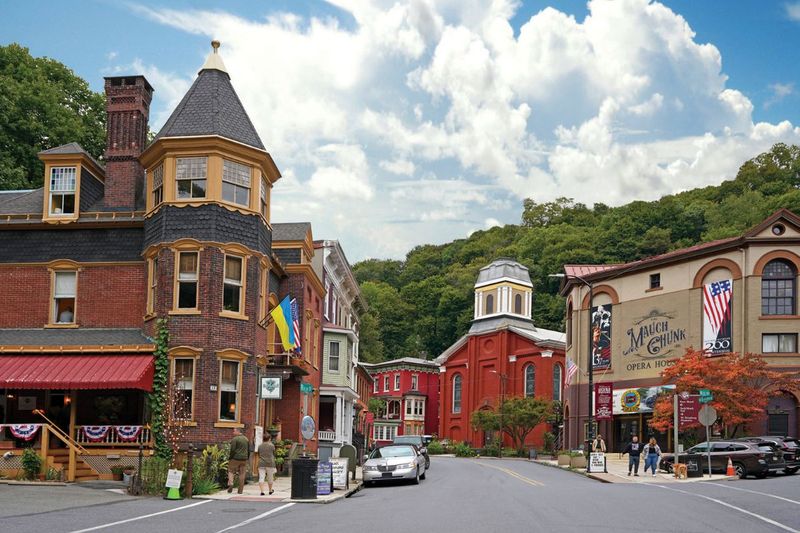
Few towns get nicknamed after an entire country.
Jim Thorpe earned the title Switzerland of America, thanks to steep mountains hugging a narrow valley along the Lehigh River.
The name has a story too.
The town was once called Mauch Chunk, then renamed in 1953 to honor Olympic medalist James Francis Thorpe.
Your first main character move should happen on a train.
The Lehigh Gorge Scenic Railway leaves from the historic Jim Thorpe Station right downtown.
Rides last about 70 minutes and cover 16 miles round trip through Lehigh Gorge State Park.
Many of the passenger coaches were built as early as 1917.
Steam locomotive No. 425 sometimes takes the lead, so keep an eye out.
Bike Trains are another fun option for riders who like a little workout.
On those trips, you bring your bike one way to White Haven.
Then you pedal back on the Lehigh Gorge Trail with the river beside you.
Prefer a spooky plot twist?
The Old Jail Museum on West Broadway was built in 1870 and worked as a jail until 1995.
Guided tours share the story of the Molly Maguires.
They also show off the mysterious handprint in Cell 17, said to resist removal attempts.
Basement cells once used for solitary confinement add even more chills.
The museum opens from mid-April through late October, with weekend hours from noon to 4 PM.
For something fancier, climb up to the Asa Packer Mansion Museum.
This National Historic Landmark was built in 1861 for the industrialist who founded Lehigh University.
The Italianate villa keeps its original furnishings across 18 rooms.
Look for marble fireplaces, gilded mirrors, carved woodwork, and gasoliers on the one-hour guided tour.
The mansion is open daily from Memorial Day to October 31.
Plan your trip in that window if you want the full Gilded Age treatment.
Afterward, wander downtown among stone buildings and handsome storefronts.
Independent shops and restaurants sit right below that dramatic mountain backdrop.
3. New Hope
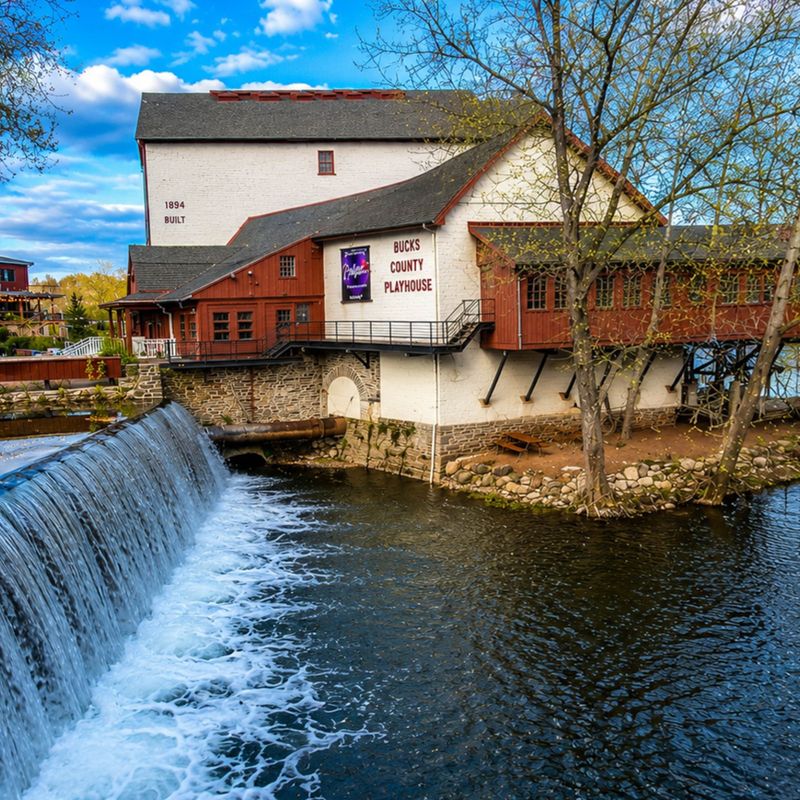
A theater inside an old grist mill on the river is a pretty great opening scene.
New Hope delivers that and plenty more along the Delaware River in Bucks County.
The Bucks County Playhouse has been around since 1939.
It sits in a restored 18th-century grist mill with riverside views.
This nonprofit theater runs shows year-round.
Expect professional plays, musicals, concerts, and comedy nights.
Better yet, it’s an easy walk to Main Street’s galleries and restaurants.
Dinner and a show without moving your car?
Yes, please.
Trains are your next chapter.
The New Hope and Ivyland Railroad departs from a station built in 1891, nicknamed the Witch’s Hat Train Station.
The round trip lasts about 45 minutes through the hills and valleys of Bucks County.
Restored passenger cars ride behind steam locomotives or vintage diesels.
Holiday fans can hop on Santa’s Premium Train Ride.
The railroad also offers rail bike experiences if you’d rather pedal along the tracks.
Need a slower pace?
The Delaware Canal State Park towpath runs about 60 miles beside the river.
The trail is flat and shady, so walking, jogging, and cycling feel easy.
Along the way, you can spot wildlife, stone bridges, and picnic spots.
Winter gives the towpath a new role.
People head out for ice skating and cross-country skiing when conditions allow.
History buffs should peek inside the Locktender’s House on South Main Street.
It holds exhibits about the canal’s past.
Back downtown, Main Street and Bridge Street are packed with independent boutiques and art galleries.
Many eateries offer sidewalk or porch seating for prime people watching.
New Hope Ferry Market is a food hall on South Main Street.
The Salt House serves gastropub fare inside a historic stone building on East Ferry Street.
Maddy Rose at The Landing adds river views to its upscale American menu.
Grab a window seat and let the credits roll slowly.
4. Bellefonte
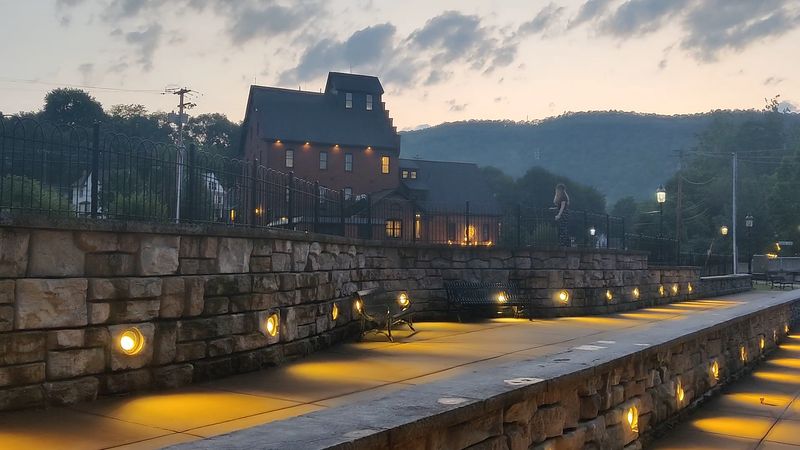
Seven Pennsylvania governors have called Bellefonte home.
That’s a lot of political power for one small town in the center of the state.
Its nickname is Central Pennsylvania’s Victorian Secret, and it fits.
The town was established in 1795 and still shows off its Gilded Age look.
Start with the Victorian Historic District.
Ornate homes, decorative ironwork, and preserved architecture fill the streets.
A self-guided walking tour is the easiest way to soak it in.
Be sure to admire the Bellefonte Victorian Courthouse along the way.
Some homes built between 1850 and 1900 now run as bed and breakfasts.
Staying in one is a great way to play the lead in your own period drama.
Antique shops and boutiques fill many historic storefronts.
Browsing here feels a bit like flipping through a scrapbook.
Next, stroll over to Talleyrand Park along Spring Creek.
It was created in the mid-1970s and named after French statesman Charles Maurice de Talleyrand.
Footbridges, walking paths, sculptures, and flower gardens make it lovely for a slow afternoon.
A gazebo placed in 1976 gives you a perfect photo spot.
Ducks and geese hang around the water like they own the place.
You’ll also find picnic tables, a playground, and the Bellefonte Governors’ Memorial.
Now for a quirky surprise.
The American Philatelic Society, the world’s largest nonprofit group for stamp collectors, is headquartered here.
It sits inside the historic Pennsylvania Match Factory complex.
The oldest buildings there date to 1899.
Visitors can tour the center and peek at the American Philatelic Research Library.
It holds one of the largest collections of stamp literature anywhere.
Stamp displays and U.S. Postal Service memorabilia round out the museum section.
Even non-collectors might leave with a new respect for tiny paper art.
Bellefonte is walkable, scenic, and full of small surprises.
Bring a camera and a little patience for those ducks.
5. Bedford
Ten U.S. presidents have visited a single resort just outside Bedford.
James Buchanan even used it as his summer White House.
That place is the Omni Bedford Springs Resort and Spa, established in 1806.
It was built around seven mineral springs once famous for their healing reputation.
The resort has a 216-room hotel, a spa, and a golf course from 1895.
That course ranks among the first in the nation.
Don’t miss the indoor pool built in 1905.
It’s fed by mineral spring water, which feels delightfully old-school.
The restored Stone House keeps original stone walls and beams from 1806.
It’s a fun peek at colonial style without needing a time machine.
Ready for more time travel?
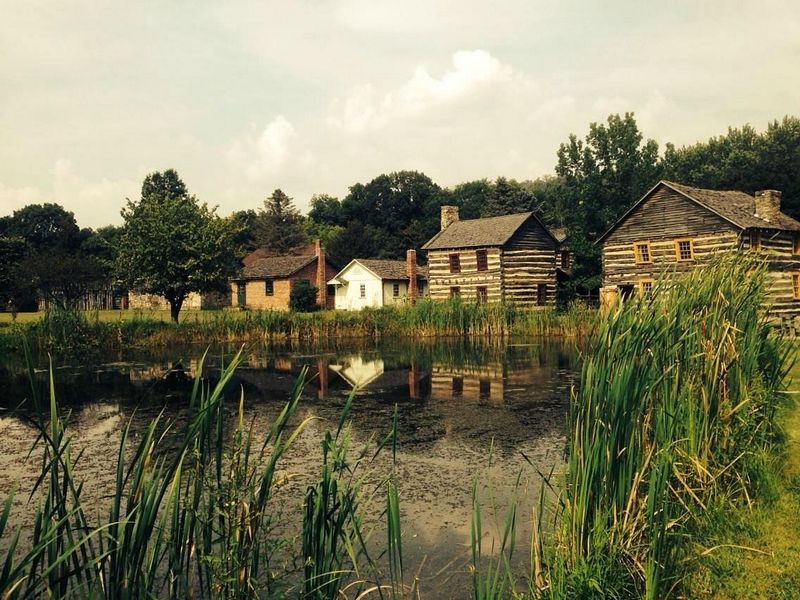
Old Bedford Village opened in 1976 to celebrate America’s bicentennial.
This living history museum has about 40 historic structures.
Many were moved from elsewhere in the county to tell stories of mountain life in the 1700s and 1800s.
Costumed interpreters demonstrate historic trades and crafts.
You can wander on a self-guided tour at your own pace.
The village opens Thursday through Sunday from Memorial Day Weekend through October 31.
Plan around those days so you don’t arrive to locked doors.
Downtown Bedford has its own charm.
Four grassy squares anchor the streets and host yearly traditions.
Watch for the Holiday Open House, Hot Summer Nights concerts, and the Fall Foliage Festival.
The Bedford County Courthouse, built in 1828, stands as a proud landmark.
Shops sell gifts and antiques, and dining ranges from casual to fine.
It’s easy to fill an afternoon here.
A short drive brings you to the Jean Bonnet Tavern on the Historic Lincoln Highway.
This landmark dates to the 1760s and offers fine dining plus bed and breakfast rooms.
Outside, you’ll find porch and patio dining in the milder months.
There’s also an herb garden, a goat paddock, and the Cabin Shoppe.
6. Wellsboro
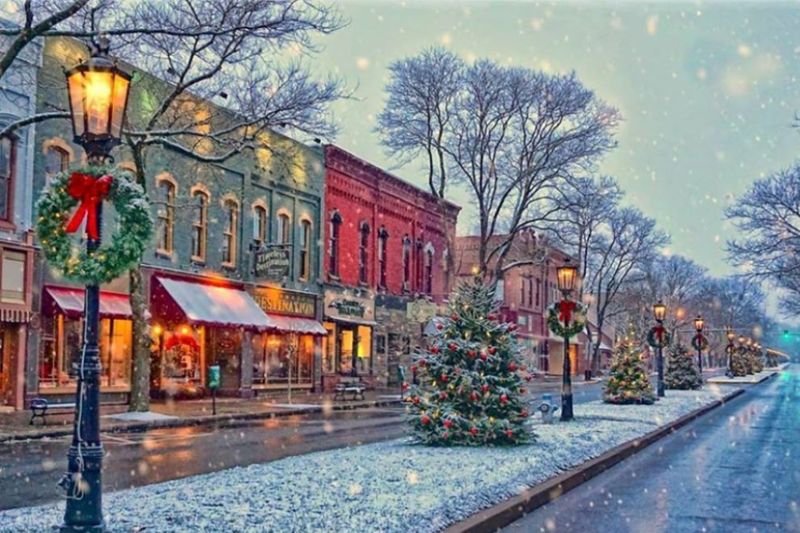
Gas lamps that never go out sound like something from a fairy tale.
In Wellsboro, they line Main Street and Central Avenue and keep glowing day and night.
The lamps dim during the day but are never turned off.
Some were installed between 1967 and 1971, and dusk is when they shine brightest.
That golden glow makes an evening stroll feel cinematic.
Bring someone you like, or just bring your best walking playlist.
Downtown is easy to explore on foot.
Boutiques, antique shops, bookstores, and family-run restaurants line the streets.
The Penn Wells Hotel is a Main Street landmark dating to 1869.
It’s a fine anchor for your photos.
Hungry?
The Wellsboro Diner is a classic stainless-steel railcar diner at 19 Main Street.
It’s known for its pies and American-style meals.
The diner has been a local tradition for nearly 90 years.
The Roost on Main Street serves elevated comfort food inspired by the Pennsylvania Wilds.
Its craft burgers use local Hillstone Farms beef.
Now for the big scene.
Wellsboro is the gateway to Pine Creek Gorge, better known as the Grand Canyon of Pennsylvania.
The gorge stretches about 50 miles and reaches depths of up to 1,000 feet.
It’s managed as a Natural Area within the Tioga State Forest.
Leonard Harrison State Park on the east rim offers viewing platforms and hiking trails.
Colton Point State Park sits on the west rim with its own views.
Feeling brave?
The Turkey Path is a challenging trail that heads down into the gorge.
For a gentler option, try the Pine Creek Rail Trail along the canyon floor.
Its easy grade works well for biking, hiking, and running.
Kayaking and fishing in Pine Creek are also on the menu.
Then head back to town as the lamps start to glow.
7. Mifflinburg
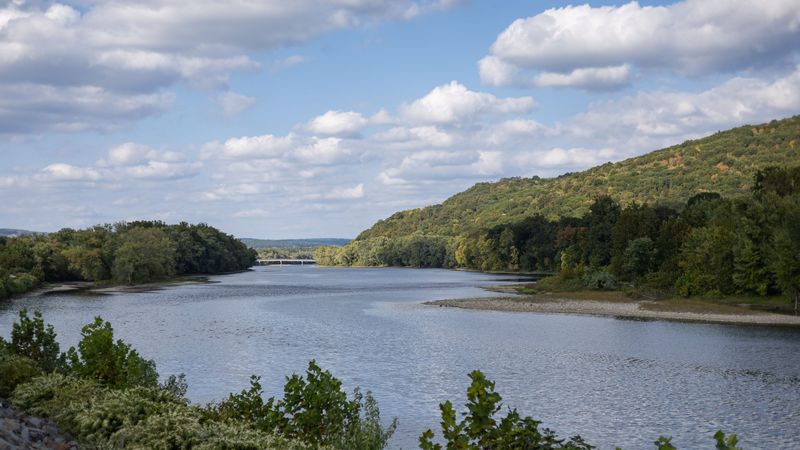
Buggy Town is not a nickname you hear every day.
Mifflinburg wears it proudly, and the history behind it is surprisingly charming.
This Union County community celebrates its Pennsylvania German roots.
It promises the unspoiled charm of a 19th-century Pennsylvania town, and it delivers.
Head first to the Mifflinburg Buggy Museum.
It preserves the only intact 19th-century carriage factory complex in the United States.
The site includes the home, factory, and showroom of William A. Heiss.
He built buggies here from 1883 to 1920.
A modern visitor center plays an intro video and shares exhibits.
Guided tours explain the craftsmanship behind the town’s Buggytown USA era.
Timing matters, so check your calendar.
The museum opens Saturday and Sunday afternoons from May through the last Sunday in October.
Winter brings the town’s showstopper.
The Mifflinburg Christkindl Market started in 1989 and is known as the oldest authentic outdoor German Christmas market in the country.
The three-day event takes over Market and Fifth streets.
In 2026, it runs from December 10 to 12.
Vendor huts sell handcrafted goods, and German food fills the air.
Live music adds to the holiday mood.
Look for the 15-foot rotating wooden Christmas pyramid with a nativity carving.
Admission is free, which makes the magic even sweeter.
Visiting in another season?
Downtown still has plenty to love.
Artisan’s Corner on Chestnut Street offers juried handmade pottery, jewelry, and folk art.
Gable House Bakery and 45W pairs fresh pastries and coffee with an artist gift shop.
The Carriage Corner Restaurant serves homestyle comfort food in an 1850s setting.
Amy’s Frosty Freeze is a popular stop for ice cream.
Mifflinburg moves at a gentle pace.
That’s exactly why it’s so easy to feel like the star here.
8. Strasburg
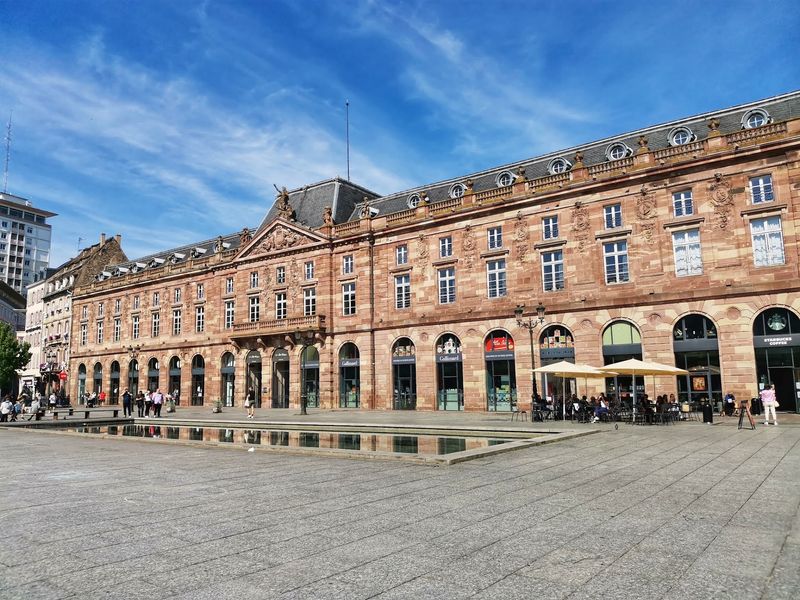
Steam whistles and farm fields make a pretty perfect soundtrack.
Strasburg, in Lancaster County’s Pennsylvania Dutch Country, is basically a love letter to trains.
The Strasburg Rail Road was chartered in 1832.
It’s the oldest continuously operating standard-gauge railroad in the Western Hemisphere.
It’s also the most-visited heritage railroad in the continental U.S.
Those are big titles for a small town.
Rides last about 45 minutes and roll through Lancaster County farmland.
You can choose open-air cars or first-class parlor cars.
Seasonal events include Day Out With Thomas and Christmas Trains.
Kids and grown-up train fans will both grin.
Across the road, the Choo Choo Barn shrinks Lancaster County into a 1,700-square-foot model display.
It runs 22 operating trains and more than 150 hand-built animated figures and vehicles.
Spot a mini Dutch Wonderland, a baseball game, and a circus.
A fire scene even squirts real water.
The lighting shifts between day and night as you watch.
It’s open daily from mid-March through December.
Still not enough trains?
The National Toy Train Museum holds one of the world’s largest public collections of toy trains.
The Train Collectors Association has run it since 1977.
The pieces range from the 1800s to today.
Seven interactive operating layouts keep things lively, including a Civil War diorama.
The building itself looks like a Victorian-era train station.
Main Street offers a break from the rails.
Historic 18th- and 19th-century buildings hold restaurants, shops, and places to stay.
The Strasburg Creamery in the Historic Square is an old-fashioned ice cream parlor, general store, and cafe.
Its homemade ice cream makes a sweet reward after all that sightseeing.
Speckled Hen Coffee serves craft coffee and locally sourced breakfast and sandwiches.
Grab a cup and plan your next ride.
9. Ohiopyle
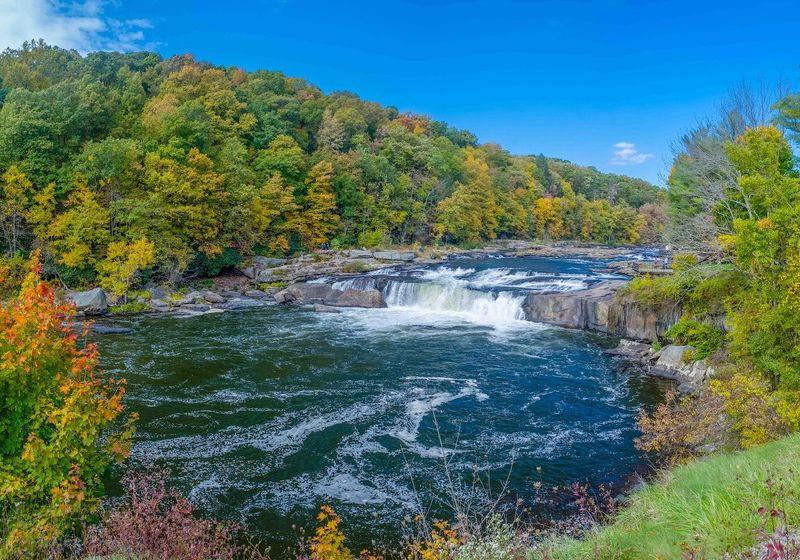
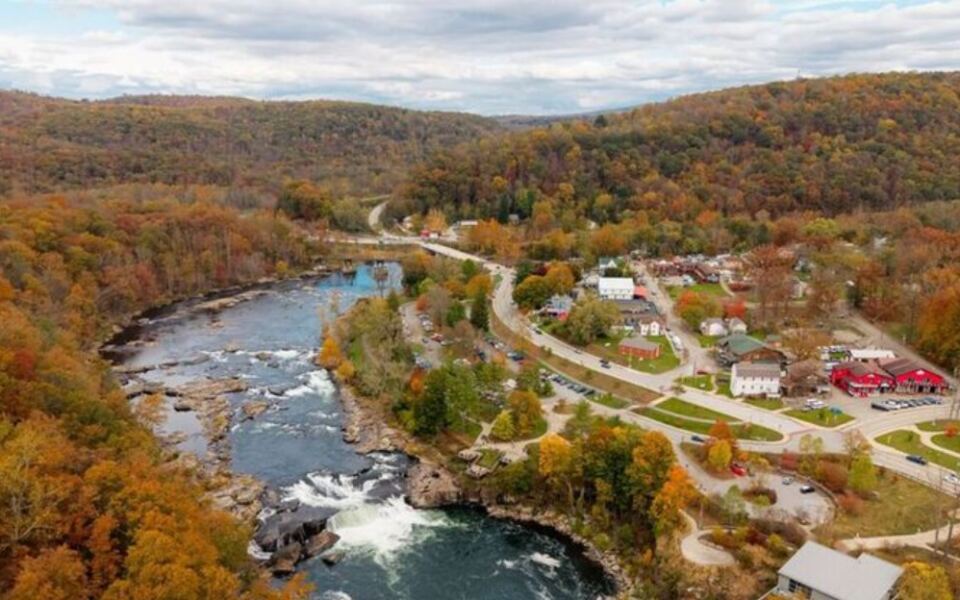
Some towns have a fountain downtown, but Ohiopyle has a full waterfall.
The Youghiogheny River tumbles right past this tiny Laurel Highlands town.
Ohiopyle Falls drops about 20 feet.
Several viewing platforms, including accessible walkways, give you different angles.
The falls look extra dramatic in autumn or after heavy rain.
Educational displays nearby explain the area’s geology.
The town sits inside Ohiopyle State Park, which covers roughly 20,500 acres.
It’s open year-round from sunrise to sunset.
The Youghiogheny River Gorge offers some of the best whitewater boating in the eastern U.S.
If you’ve ever wanted a splashy adventure scene, here’s your chance.
Calmer thrills await too.
Cucumber Falls and the Meadow Run Natural Waterslides are park favorites.
Hikers get 79 miles of trails, including part of the Laurel Highlands Hiking Trail.
Mountain biking, fishing, camping, and rock climbing fill out the options.
The visitor center on Main Street has exhibits, a gift shop, and falls viewing platforms.
It’s ADA accessible, with seasonal hours.
Cyclists, listen up.
The Great Allegheny Passage runs 150 miles from Pittsburgh to Cumberland, Maryland.
The Ohiopyle section to Confluence was the first piece finished, back in 1985.
Cliffs, forests, and river views keep the ride interesting.
Watch for the High Bridge, a converted railroad bridge.
It’s a great spot for a dramatic pause.
Architecture lovers have a bonus nearby.
Fallingwater, designed by Frank Lloyd Wright, famously sits over a waterfall on Bear Run.
It’s a UNESCO World Heritage Site, and tours must be booked ahead.
Wright’s Kentuck Knob, a 1956 Usonian house, also offers guided tours and a sculpture-lined Woodland Walk.
Ohiopyle proves Pennsylvania’s wild side can be just as magical as its main streets.
Pack snacks and a dry change of clothes.
10. Doylestown
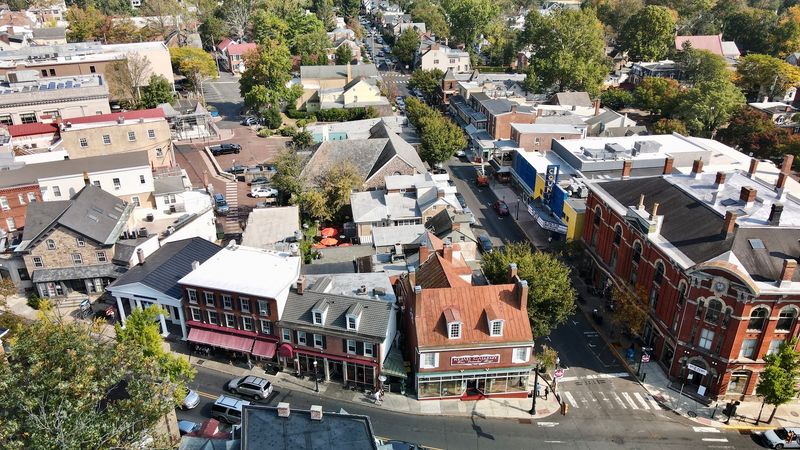
Concrete castles are not something you expect in a county seat.
Doylestown has more than one, thanks to a very creative archaeologist.
Henry Chapman Mercer built Fonthill Castle between 1908 and 1912.
It spans about 19,000 square feet of reinforced concrete.
The house has 44 rooms, more than 200 windows, 18 fireplaces, and 32 staircases.
Getting lost here would honestly be part of the fun.
Mercer’s handcrafted ceramic tiles cover the space in a mix of Gothic, Medieval, and Byzantine styles.
Early conveniences like dumbwaiters and an elevator add surprising touches.
Guided tours run Tuesday through Sunday.
Booking ahead is a smart move.
Mercer had another castle in him.
The Mercer Museum, completed in 1916, rises six stories in concrete.
This Smithsonian affiliate holds more than 40,000 pre-industrial tools and artifacts.
Many hang dramatically in the Central Court, which feels like a giant puzzle box.
Right next door, the James A. Michener Art Museum opened in 1988.
It stands on the site of a 19th-century county prison, with the original stone walls at its core.
The museum is named for Doylestown native James A. Michener.
Its collection of Pennsylvania Impressionist paintings is a major draw.
Look for the Nakashima Reading Room and a Daniel Garber mural.
The outdoor sculpture garden is free and open to the public.
Downtown, the streets are made for wandering.
Victorian homes and Art Deco buildings line the way.
East State Street is known as Doylestown’s Restaurant Row.
The Hattery Stove and Still serves modern American comfort food inside the historic Doylestown Inn.
Book lovers can browse The Doylestown Bookshop.
Music fans should flip through records at Siren Records, a long-running independent shop.
It’s no wonder the town has been praised for its small-town cultural scene.
Castles, art, and good food make one tidy plot.
Share this story