A small mountain town keeps its gas streetlamps glowing day and night, and they never get fully switched off. Those lamps have lined its Main Street since the late 1960s. I love that a whole downtown basically refuses to go dark.
That’s only one of the quirks waiting across Pennsylvania. One village took its name from a word meaning ‘they fly,’ inspired by ducks. Another town’s old movie theater starred in a 1958 monster movie about a creeping blob.
None of these places draw the giant crowds of the big cities. You get old mills turned into shops, river trails, quiet squares, and museums with oddly specific stories. Each one rewards a slow wander more than a fast checklist.
Sometimes the most memorable road trips lead to places you never knew you were looking for.
1. Wellsboro
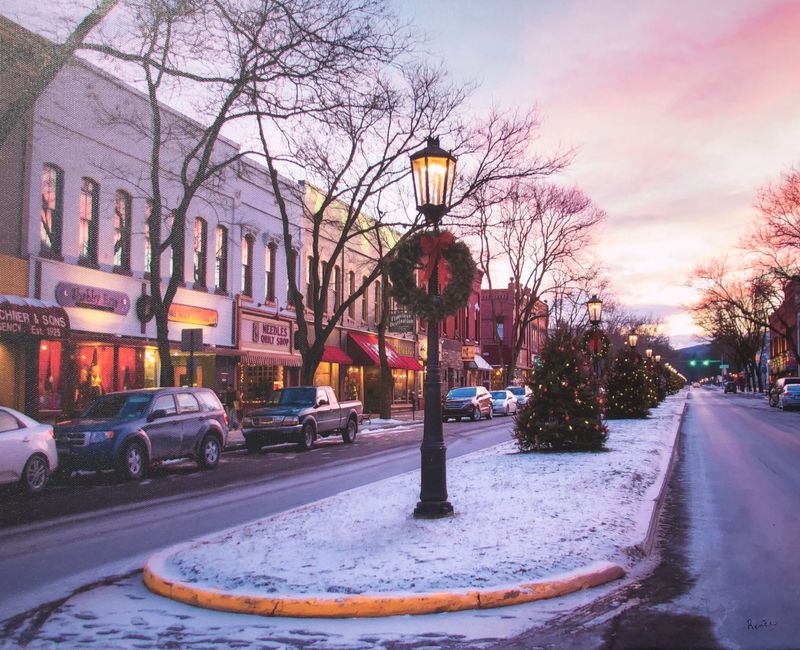
Streetlights here run on gas, and they never get turned off completely.
The lamps went up between 1967 and 1971, and they still glow along Main Street and Central Avenue.
They get dimmed during the day, but they stay lit.
That small detail sets the mood for the whole visit.
Wellsboro sits close to one of the most dramatic sights in the state.
Pine Creek Gorge, often called the Pennsylvania Grand Canyon, stretches around 45 to 47 miles.
In spots, it drops nearly 1,500 feet deep.
That’s a lot of canyon for a state better known for farms and cities.
You can see it from two sides.
Leonard Harrison State Park on the East Rim has a visitor center, modern facilities, and accessible walkways.
Want a workout instead?
The Turkey Path Trail heads down toward Pine Creek, and it’s known as a challenging hike.
Colton Point State Park on the West Rim feels more rugged.
Its pavilions and overlooks reflect the Civilian Conservation Corps work of the 1930s.
Down at the bottom, the Pine Creek Rail Trail follows an old railroad bed for 62 miles.
Bikers, walkers, and horseback riders share the route.
Back in town, the Penn Wells Hotel has stood on Main Street since 1869.
Inside, you’ll find mahogany woodwork and a large wood-burning fireplace.
Hungry?
The Wellsboro Diner is a 1939 Sterling dining car, so your breakfast comes with a side of history.
Shopping has its own old-school star.
Dunham’s Department Store has been family-owned and open since 1905.
Then there’s the Arcadia Theatre, a restored movie house from around the 1930s.
Its art deco touches make a night at the movies feel a little fancier.
Timing your trip can add even more fun.
The Pennsylvania State Laurel Festival has filled a week each June since 1938.
Prefer holiday cheer?
Dickens of a Christmas lands on the first full weekend of December, and those gas lamps fit the theme perfectly.
Start at the hotel, stroll to The Green, and let the evening glow guide your walk.
Just don’t expect the lights to call it a night before you do.
2. Jim Thorpe
A town that changed its whole name in the 1950s has some explaining to do.
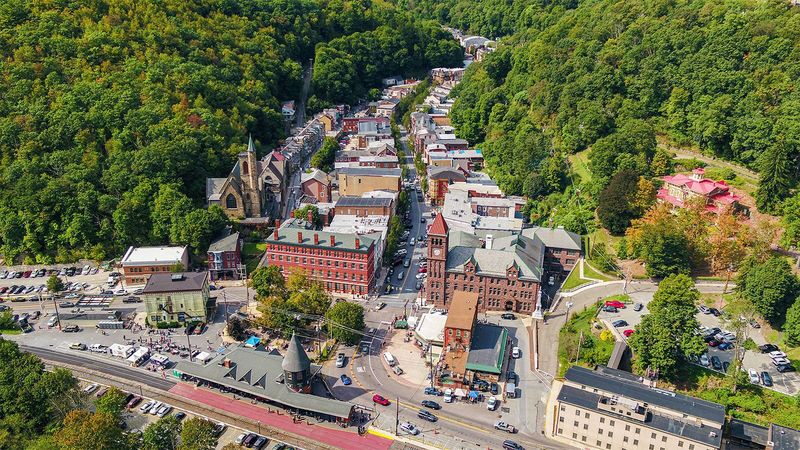
Founded as Mauch Chunk in 1818, it was renamed Jim Thorpe in the 1950s.
People often call it Pennsylvania’s Little Switzerland.
One look at the mountains crowding around the narrow streets, and you’ll get it.
Downtown is packed with Victorian buildings, stone fronts, and iron balconies.
It’s small and easy to explore on foot.
Curious about the past?
The Mauch Chunk Museum and Cultural Center sits inside the former St. Paul’s Methodist Church, built in 1843.
Its showpiece is a 30-foot working model of the Switchback Gravity Railroad.
You can take a guided tour or wander through on your own.
Plan ahead, though, because it closes from January through March.
It reopens the first weekend of April.
For something a bit spookier, head to The Old Jail Museum.
Built in 1871, it stayed in use until 1995.
Guided tours run about 30 to 35 minutes.
You’ll hear about the Molly Maguires and see Cell 17, known for a mysterious handprint.
Basement solitary cells are part of the tour too.
Bring your curiosity and maybe a friend to hold onto.
Up on the hill, the Asa Packer Mansion Museum tells a richer story.
The railroad tycoon built this 18-room Italianate villa in 1861.
It still holds its original contents.
New for 2026, extended tours include the third floor.
Nearby, the Harry Packer Mansion Inn looks like something from a fairy tale.
It’s known as a model for Disney’s Haunted Mansion.
Ready for fresh air?
The Lehigh Gorge Scenic Railway offers narrated rides along the Lehigh River, past cliffs and forests.
Regular rides last 70 minutes round-trip, and dogs are welcome aboard.
Lehigh Gorge State Park adds biking, hiking, and whitewater rafting.
One note for hikers: the Glen Onoko Falls Trail has been closed for rehabilitation since 2019.
The Glen Onoko Overlook Trail and the D&L Trail remain open.
3. Volant
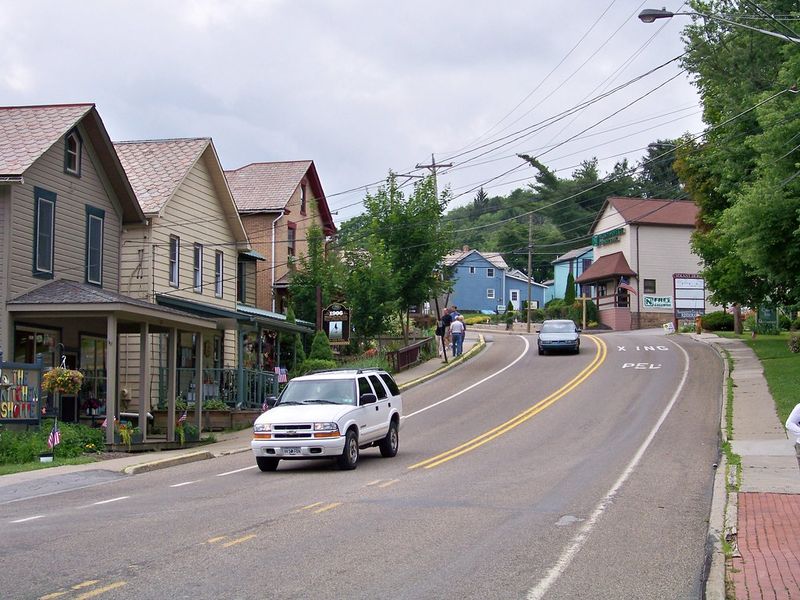
Ducks get the credit for this village’s name.
Back in 1874, Volant was named after a word meaning ‘they fly,’ inspired by the local birds.
Today, the village in Mercer County still moves at a gentle pace.
Main Street runs only about an eighth of a mile.
Short doesn’t mean empty, though.
More than 25 shops and restaurants line that little stretch.
You’ll often spot Amish buggies rolling down the street.
The local Amish community connects closely to the shops, with handmade goods, fresh foods, and traditional crafts.
Plan your visit for a weekday or Saturday.
Amish businesses generally close on Sundays.
The heart of town is Volant Mills, a grist mill built in 1812.
Now artisans and shops fill the old building.
Inside, you can browse Amish furniture, antiques, toys, candy, jewelry, and gourmet foods.
It’s a great spot to find a gift you can’t grab at the mall.
Here’s a fun bonus.
Work is ongoing to restore the mill’s grinding process so visitors can learn how it worked.
Got a sweet tooth?
The Amish Donut Barn serves fresh homemade donuts every other Saturday and on event days.
That schedule matters, so check before you go.
Showing up on the wrong Saturday would be a sad, donut-free day.
Neshannock Creek flows right past town, and anglers love it.
It’s a Keystone Select Water stocked with larger brown and rainbow trout.
Fishing is open year-round, with special rules.
The creek also has a waterfall worth a look.
New to fly fishing?
The Neshannock Creek Fly Shop has been around for over 30 years and offers lessons and camps.
Prefer dry land?
The Neshannock Creek Trail is an easy loop of about 6.7 kilometers.
For home shoppers, Weaver’s Amish House of Furniture sells solid hardwood pieces made by Amish craftsmen.
Just measure your car before you fall in love with a dresser.
4. Ligonier
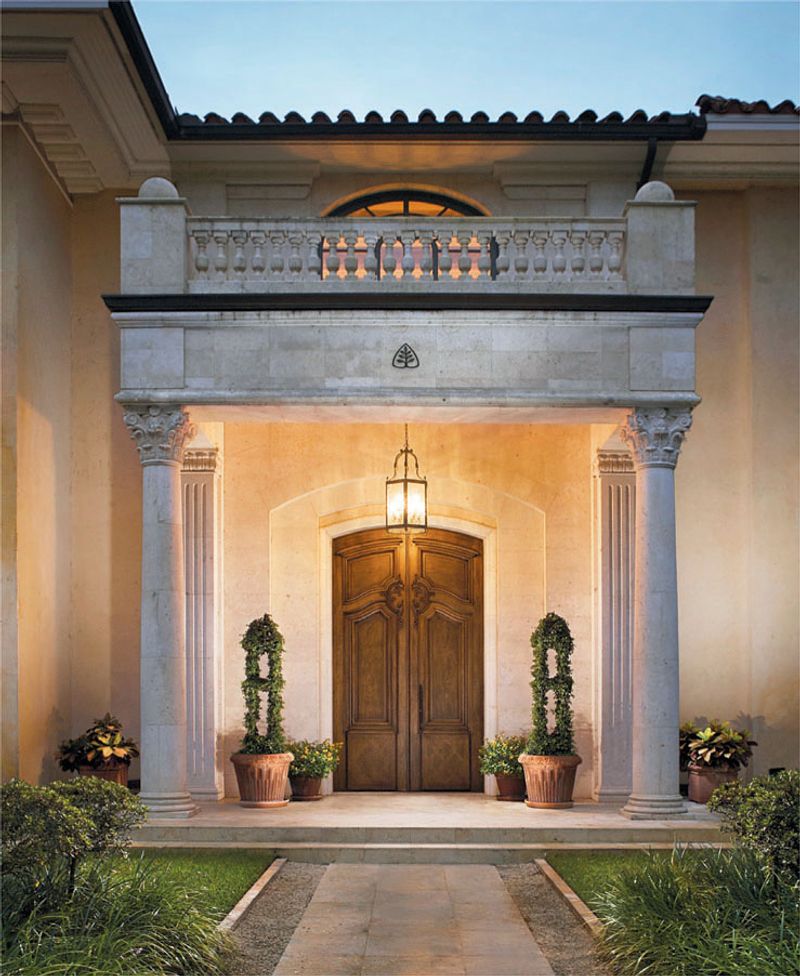
George Washington’s handwritten memoirs are on display in this small mountain town.
You’ll find them inside the museum at Fort Ligonier.
The fort itself is a careful reconstruction of a 1758 British fortification.
It dates back to the French and Indian War.
Walk the grounds and you’ll see barracks, a commissary, and a sawmill.
New exhibits for 2026 use a reverse timeline, which is a clever way to tell the story.
Timing matters here.
The fort and museum open daily except Wednesday from early April through Thanksgiving weekend.
In winter, the museum opens on weekends, but the fort stays closed.
So pack your history buff energy for the warmer months.
Right in the middle of town sits The Diamond, Ligonier’s square.
It became a public park back in 1894.
Look for four Civil War-era cannons, set up in 1897.
A fancy drinking fountain joined them in 1921.
The bandstand still hosts summer band concerts.
After a major renovation in 2018, the square looks sharp.
Art fans get a treat at the Southern Alleghenies Museum of Art at Ligonier Valley.
Admission is free, and the collection holds more than 7,500 pieces.
You’ll spot work by Andy Warhol and Norman Rockwell.
There’s also a permanent paperweight collection, which is way more fun than it sounds.
Hungry?
The Kitchen on Main serves scratch-made breakfast, lunch, and dinner with seasonal, local ingredients.
Grab a seat on the street-side patio if the weather cooperates.
Next door, The Kitchen Pantry sells gourmet grab-and-go goodies.
Saturday mornings from mid-May to October bring the Ligonier Country Market.
More than 130 vendors show up, making it one of the biggest in Western Pennsylvania.
Need more?
The Compass Inn Museum offers guided tours of a restored stagecoach stop with costumed guides.
Fall brings Fort Ligonier Days, a three-day festival with crafts, a parade, and battle reenactments.
Downtown’s 60-plus shops and galleries give you plenty to explore between events.
5. New Hope
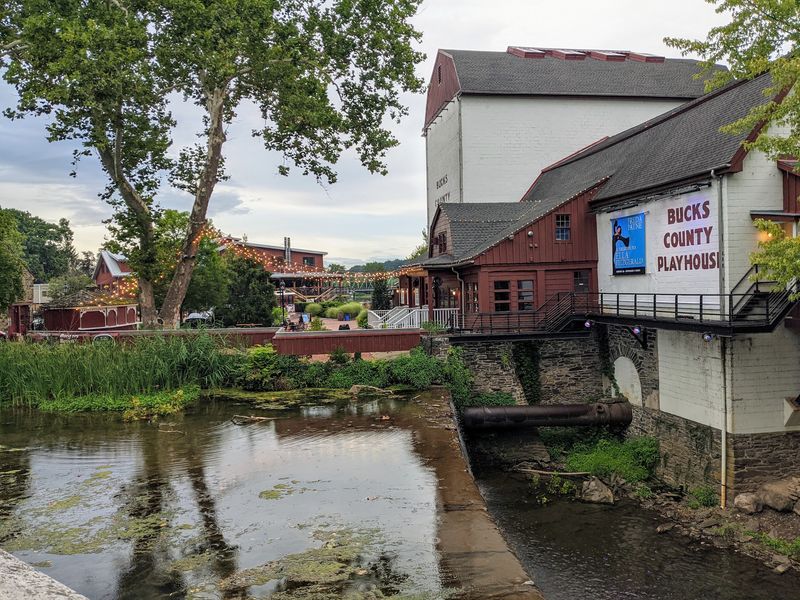
Broadway-style shows play inside an old grist mill here.
The Bucks County Playhouse fills a restored mill building that was rebuilt in 1790.
That same mill helped give the town its name.
Before 1790, the place was called Coryell’s Ferry.
Today, the playhouse offers live shows year-round.
Musicals, concerts, plays, and comedy nights all share the stage, with river views as a bonus.
Travel + Leisure named New Hope America’s Best Small Arts and Culture Town in 2024.
Walk Main and Bridge Streets, and you’ll see why.
Galleries pop up around nearly every corner.
Red Tulip Gallery is an artist-run cooperative, while Arete Gallery focuses on contemporary art.
New Hope Arts on Stockton Avenue keeps the creative energy going.
It hosts exhibits, workshops, and free guided walking tours of its public art program.
Love vintage finds?
Ditto Vintage carries clothing and housewares from the 1960s through the 2000s.
Love Saves the Day mixes vintage clothes with toys and collectibles.
Your inner kid might leave with a shopping bag.
History has a home here too.
The Parry Mansion, built in 1784 by Benjamin Parry, shows how generations of one family lived.
The New Hope Historical Society runs it and offers walking tours.
It’s a smart way to get your bearings.
Speaking of bearings, the visitors’ center sits in an 1839 building.
It once served as the town hall, school, and jail all at once.
Talk about multitasking.
It also has public restrooms, which every road-tripper appreciates.
Outdoors, Delaware Canal State Park follows a historic 60-mile towpath along the river.
You can hike, bike, fish, or watch for wildlife.
In warm months, tubing, kayaking, and canoeing on the Delaware River draw crowds.
The New Hope and Ivyland Railroad offers a 45-minute round-trip ride, too.
Woodworking fans can visit the George Nakashima Woodworkers complex nearby.
Few towns this size pack so much art into one weekend.
6. Doylestown
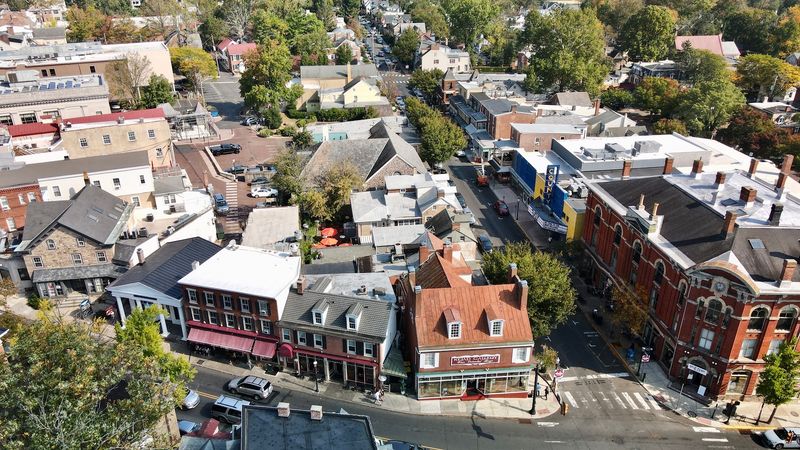
One man built three concrete wonders in this Bucks County town.
Henry Chapman Mercer left behind a trio now called the Mercer Mile.
Start with the Mercer Museum, a six-story concrete castle finished in 1916.
It holds more than 40,000 tools and artifacts from before the Industrial era.
The coolest part?
Many objects hang suspended in the Central Court, so you look up at history.
Next stop is Fonthill Castle, Mercer’s own home.
He built it between 1908 and 1912 as an early example of reinforced concrete design.
The house has 44 rooms, more than 200 windows, and 18 fireplaces.
Handmade ceramic tiles cover the interior.
Guided tours last about an hour, and the last tour starts at 4 PM.
Just note it closes November 9 through 13, 2026, for holiday setup.
The third stop is the Moravian Pottery and Tile Works.
It has been making ceramic art tile since 1898.
Visitors can watch tiles being made and buy a few to take home.
Some tours even let you play with clay.
All three sites close on Mondays.
Plan a Tuesday through Sunday trip to see them all.
Art lovers shouldn’t skip the James A. Michener Art Museum.
It lives in the old Bucks County Jail, built in 1884.
Inside, Pennsylvania Impressionist paintings are the stars.
There’s also a sculpture garden and a Nakashima Reading Room.
Want to save a little?
The museum offers free admission on the second Sunday of each month.
USA Today once named Doylestown America’s Best Small-Town Cultural Scene.
Downtown proves it with indie shops like Siren Records and The Doylestown Bookshop.
Film fans can catch independent and foreign films at the County Theater, an art deco movie house.
Families can let kids loose at Kids Castle, a free playground.
For dinner, East State Street has a stretch called Restaurant Row.
You’ll find Italian, Indian, bistros, and farm-to-table spots all within strolling distance.
7. Marietta
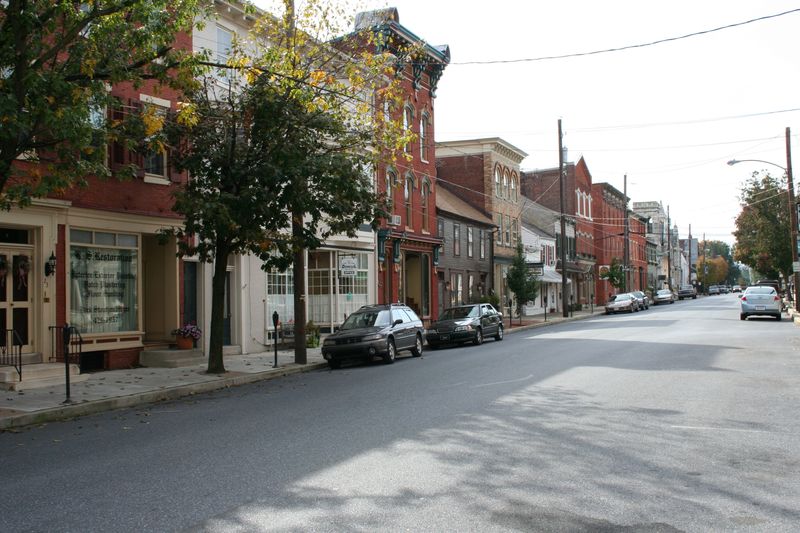
Marietta’s first fire engine dates to 1840, and you can still see it.
It sits in the Old Town Hall Museum, inside a building from 1847.
The museum opens on the first Sunday of each month from 11 AM to 2 PM.
You can also call ahead to set up a tour.
Beyond the engine, you’ll find local furniture, early photos, and Civil War records.
It’s small, but it packs in plenty of stories.
This Lancaster County borough sits right on the Susquehanna River.
It joined the National Register of Historic Places in 1978.
Much of its look comes from the mid-1800s.
Canal traffic, lumber, and iron furnaces shaped the town’s early days.
Want to see that history up close?
The Northwest Lancaster County River Trail runs about 14 miles along the river.
It follows the old Pennsylvania Main Line Canal.
Along the way, you’ll pass old canal locks, iron furnace ruins, and historic markers.
Walkers, joggers, and bikers share the path.
In winter, some folks even cross-country ski it.
Chickies Rock County Park adds a dramatic view.
Chickies Rock is a 100-foot quartzite cliff that looks over Marietta and York County.
Back in town, the Railroad House Inn lives in a building from 1823.
Its menu includes saffron-pea risotto and pan-seared salmon.
Craving a burger instead?
The inn’s rustic Perry Street Cellar has you covered, though it’s closed Mondays and Tuesdays.
Iron Born Bistro serves slow-smoked barbecue and comfort food.
Its theme nods to the town’s iron past, which is a fun touch.
Antique hunters can browse Marietta Marketplace, a co-op.
Traditional Treasures, a family-owned shop, opened in 2022.
Visit on the fourth Friday of the month, and shops and restaurants stay open late.
December brings the Marietta Candlelight House Tour.
River lovers can rent kayaks from local outfitters too.
It’s an easy way to see this old river town from the water it grew up beside.
8. Phoenixville
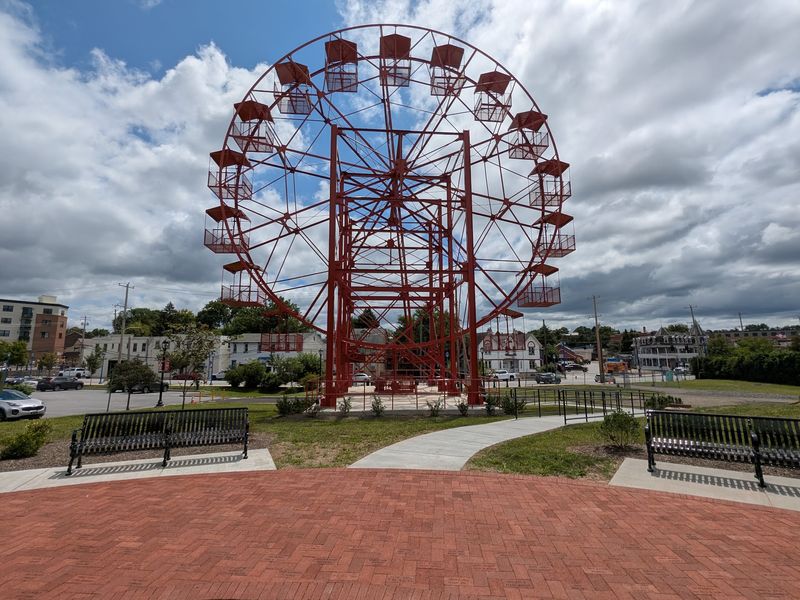
A gooey movie monster made this town’s theater famous.
The 1958 cult classic ‘The Blob’ filmed scenes at the Colonial Theatre.
Fans still celebrate it every summer at Blobfest.
The festival includes a street fair, film screenings, and a reenactment of the famous scene.
The theater has even more history, though.
It opened in 1903, and Harry Houdini performed an escape there in 1917.
Today, the three-screen Colonial Theatre shows independent and classic films.
It also hosts concerts, comedy, and live theater.
Upcoming shows include ‘Rock of Ages,’ Judy Collins, and The Wood Brothers.
Later in 2026, The Phoenixville Christmas Spectacular takes the stage.
The town’s comeback story is pretty impressive.
After the Phoenix Iron Works closed in 1987, Phoenixville rebuilt itself as an arts and food town.
Now Bridge Street is lined with restored buildings, shops, and restaurants.
On weekends from spring to fall, main streets close to cars for events.
Need fuel?
Steel City Coffeehouse serves organic coffee, teas, hot chocolate, and milkshakes.
Its menu covers all-day breakfast, sandwiches, salads, and mac and cheese.
On Thursdays, it hosts an open mic with a very bold name.
Bookworms can browse Reads and Company.
Crafty folks will love Here and Now Crafts.
Dining choices span the globe.
Try Greek food at Avlós, Italian at Il Granaio, or Korean fried chicken at Soko Bag.
Outdoor fans have easy options too.
The Schuylkill River Trail runs right through town and links to Valley Forge National Historical Park.
Valley Forge is only about a 10-minute drive away.
It covers 3,600 acres where Washington’s army camped in the winter of 1777 to 1778.
December brings the Firebird Festival, where a wooden phoenix goes up in flames.
It’s a fiery nod to the town’s name.
Collectors should circle the last Sunday of the month.
That’s when the Phoenixville Punk Rock Flea Market shows up with its quirky finds.
9. Mercersburg
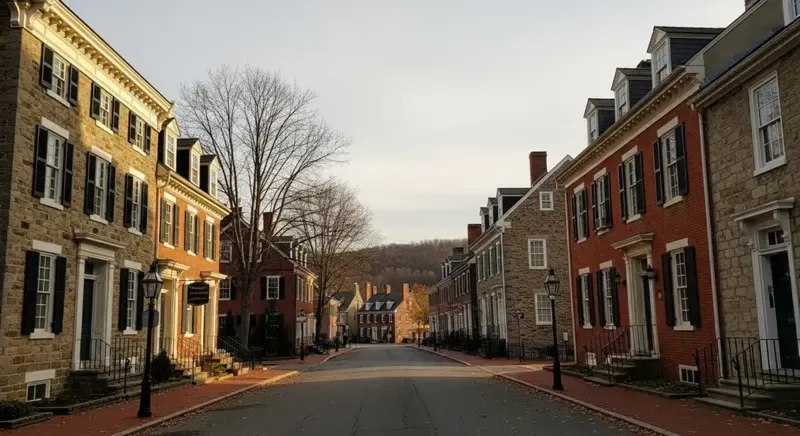
A future president’s log cabin now sits on a high school campus here.
James Buchanan was born in 1791 in a cabin at Cove Gap.
Later, the cabin moved to the campus of Mercersburg Academy.
The original birth site became Buchanan’s Birthplace State Park.
That park covers 18.5 acres with picnic pavilions and restrooms.
You can also fish in Buck Run.
Mercersburg Academy itself is worth a peek.
Founded in 1893, the school counts James Stewart and Benicio del Toro among its graduates.
Its chapel holds a 43-bell carillon.
If you hear bells ringing across town, now you know where they’re coming from.
The town was settled in 1730 by James Black.
Back then, people called it Black’s Town.
Later, it was renamed for Hugh Mercer, a Revolutionary War general.
Today, folks call it The Jewelbox of Franklin County.
Its history covers colonial days, the Underground Railroad, and the Civil War.
A historic walking tour helps you spot the early American buildings.
Planning to stay overnight?
The Mercersburg Inn is a Georgian mansion built in 1909 and renovated in 2021.
It has 17 rooms with private baths and original mahogany and chestnut paneling.
Guests can borrow free bicycles and play in a game room.
Byron’s Dining Room serves dinner Thursday through Sunday.
Guests also get a complimentary breakfast.
Downtown, Mercer Mercantile opens daily from 7 AM to 7 PM.
Its menu includes bacon-wrapped hot dogs and a mac and cheese flatbread.
Sweet tooth?
The Moo Ice Cream Shop and One North Coffee and Bake Shop are both nearby.
Winter visitors have another reason to come.
Whitetail Ski Resort sits about seven miles south for skiing and snowboarding.
Antique markets and boutiques round out the downtown.
Few towns in south-central Pennsylvania pack this much presidential trivia into such a small space.
10. Bellefonte
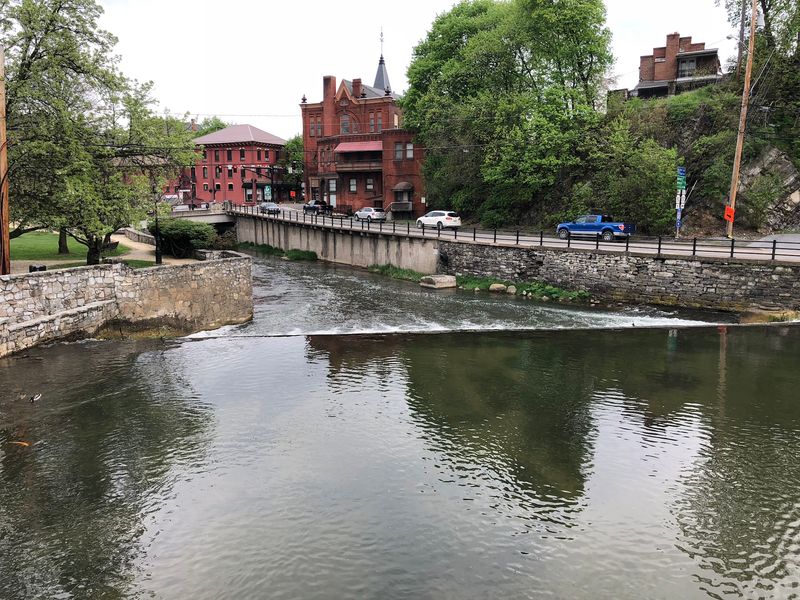
About 11 million gallons of water bubble up here every day.
That’s the Big Spring, and it gave the town its name.
Legend says someone shouted ‘La belle fonte!’ meaning beautiful fountain.
The name stuck, and so did the charm.
Bellefonte is often called Central Pennsylvania’s Victorian Secret.
That’s a cheeky nickname, but the old homes back it up.
Its historic district features Queen Anne, Italianate, Gothic Revival, and Second Empire styles.
A slow walk turns into an architecture lesson without the homework.
The town’s centerpiece is Talleyrand Park along Spring Creek.
Footbridges, walking paths, and a fountain make it easy to linger.
You’ll also find a large gazebo from 1976, flower gardens, and a sculpture garden.
Look for the bust of Abraham Lincoln.
In summer, the gazebo hosts Summer Sounds from the Gazebo concerts.
Spring Creek is also popular with fly fishers.
Right in the park stands the old railroad station, built in 1889.
It now serves as the visitor center.
It’s also the starting point for seasonal fall foliage and Christmas train rides.
Those trips book up for good reason.
Art lovers should head to the Bellefonte Art Museum for Centre County.
It sits in the Linn House from 1810, once home to Governor James Beaver.
Admission is free, and five galleries rotate their shows.
A permanent exhibit called A Journey to Freedom tells Underground Railroad stories.
The museum opens Friday through Sunday afternoons.
Plan your weekend around that window.
Don’t miss the Centre County Courthouse, built in 1805.
Its eight 26-foot columns give it serious presence.
For dinner, Gamble Mill offers fine dining in town.
Brothers NY Style Pizza and My Café Buzz keep things casual.
May brings the Big Spring Festival, and December means a Victorian Christmas celebration.
Either way, you’ll leave knowing exactly where the name came from.
11. Ohiopyle
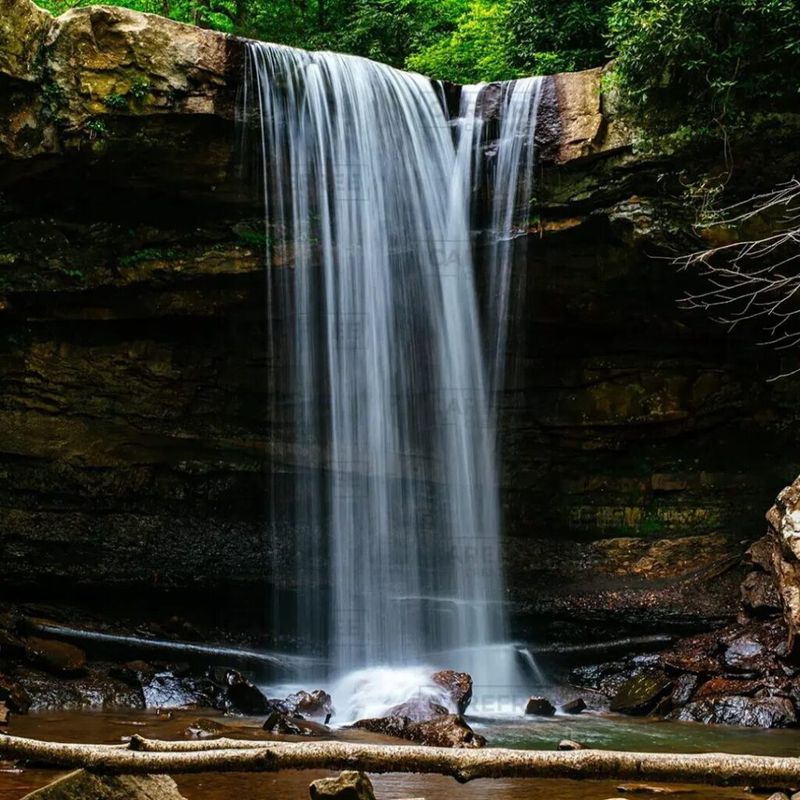
Some towns have a fountain in the middle.
Ohiopyle has a roaring waterfall instead.
Ohiopyle Falls pours right through the borough, with an observation deck for great views.
It’s a dramatic welcome to the Laurel Highlands.
The town sits inside Ohiopyle State Park, which covers more than 20,000 acres.
It also holds the deepest gorge in Pennsylvania, carved by the Youghiogheny River.
That river is famous for whitewater rafting.
Rapids range from Class I to Class IV, so beginners and thrill-seekers can both find a fit.
Guided trips are available if you’d rather leave the steering to a pro.
Smart move if your paddling skills are mostly theoretical.
Want a splashier, sillier adventure?
Meadow Run Natural Waterslides let you ride the water down smooth rock channels.
Cucumber Falls is another must-see.
This 36-foot waterfall is easy to reach, so you don’t need a long hike.
Hikers still get plenty of choices.
The park offers over 79 miles of hiking trails and about 25 miles of mountain bike trails.
The Great Allegheny Passage, a 150-mile trail, also passes through town.
One section is closed due to a rockslide, so check before you ride.
The visitor center lives in a former train station.
Stop in for maps and tips before you head out.
Hungry after all that?
Ohiopyle Bakery and Sandwich Shoppe offers breakfast, lighter meals, and inventive donuts.
Falls Market Restaurant is half restaurant and half convenience store.
You can grab subs, burgers, or fries any time of year.
For dessert, Kickstand Ice Cream Shop scoops Hershey’s ice cream.
Rapid Java Coffee Cart serves espresso and smoothies.
Architecture fans are close to two Frank Lloyd Wright homes.
Fallingwater was designed in 1935 and sits partly over a waterfall.
Kentuck Knob, built between 1953 and 1956, overlooks the river gorge.
Book tours ahead, especially for Fallingwater, where reservations are essential.
12. Hawley
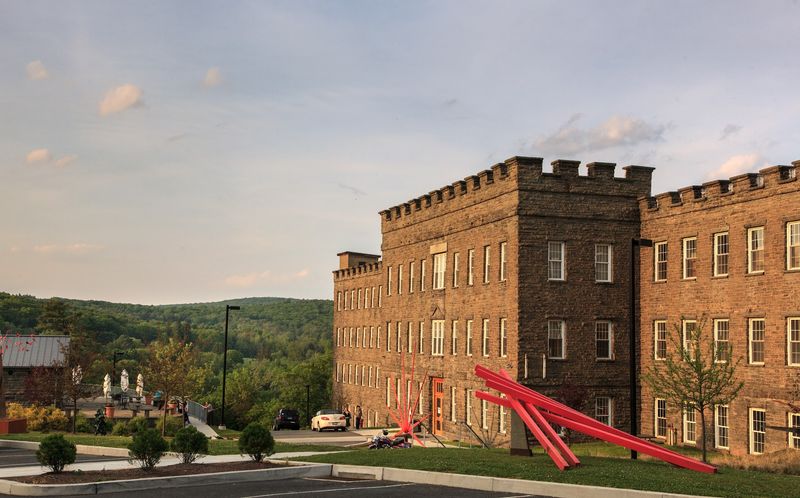
The walls of Hawley’s old silk mill are two feet thick.
They’re made of bluestone, and they’ve stood since the building went up in 1880.
After a rebuild in 1894, the mill once employed 500 workers.
Today, the Hawley Silk Mill has a brand-new purpose.
Since 2009, it’s been a lifestyle center with shops, offices, and art galleries.
You’ll find Art on the Edge gallery and a Lackawanna College campus inside.
Look up and down while you’re there.
Heavy wood timbers and solid maple floors show off the building’s past.
Need coffee?
Cocoon Coffeehouse and Bakery sits in a smaller bluestone building out front.
It serves locally roasted coffee, pastries, quiches, soups, and panini.
It’s an easy first stop before exploring.
Hawley started as a coal transport hub.
The Delaware and Hudson Canal opened in 1828, and a gravity railroad helped move coal too.
Now the town’s big draw is water of a different kind.
Lake Wallenpaupack covers about 5,700 acres and was created in 1920.
It ranks as Pennsylvania’s third-largest artificial lake.
Boating, fishing, swimming, paddleboarding, and kayaking keep it busy in summer.
Prefer to relax?
Wallenpaupack Scenic Boat Tours let someone else do the driving.
Back on Main Avenue, The Settlers Inn serves farm-to-table meals.
Breakfast, weekend brunch, and dinner are all on the schedule.
Shoppers can browse boutiques, bakeries, and the Hawley Antique Exchange.
Church’s Hardware has been around since 1857.
Got kids along?
Costa’s Family Fun Park offers go-karts, mini golf, laser tag, and bumper boats.
It opens weekends in May and daily from mid-June through Labor Day.
Bingham Park downtown also has a band shell for outdoor shows.
Winter doesn’t slow things down much.
Ice skating, ice fishing, and snowshoeing join Winterfest in December, plus bald eagle watching nearby.
Share this story