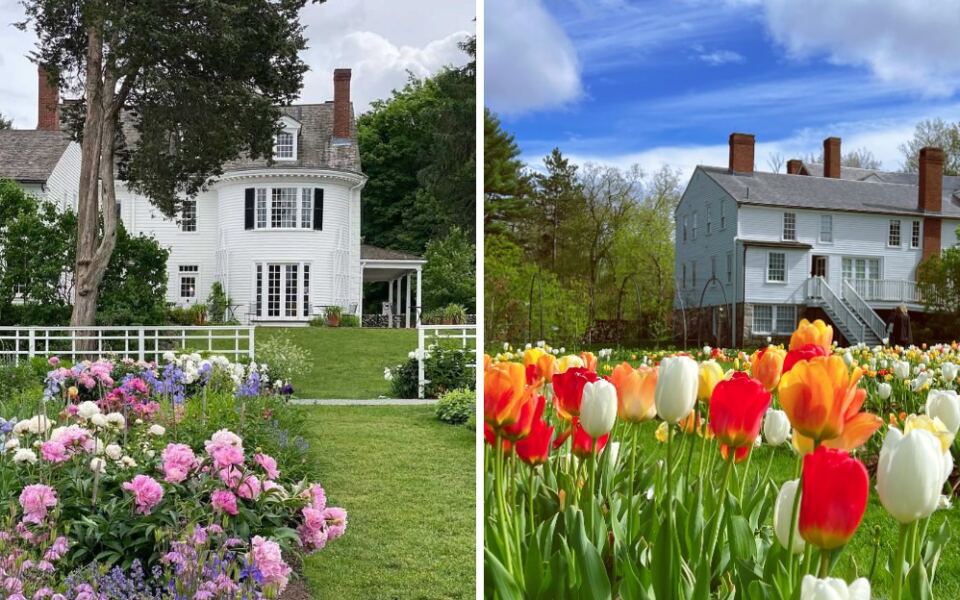
A brick wall that ripples through the garden like a ribbon is the first sign that this Massachusetts estate does things a little differently.
Beyond it, formal parterre gardens, long perennial borders, and an arch of black beech trees give the grounds the polished feel of a European country estate. I love how each section seems to reveal another detail, from carefully clipped patterns to softer stretches of flowers and shade.
The property once belonged to a diplomat who spent years overseas, and that worldly influence still feels woven into the landscape. Spring brings thousands of tulips, while colder months add workshops and seasonal celebrations that give you reasons to return.
That may be the hardest part about planning a visit. Do you come for the spring color, the summer gardens, or wait to see how the estate changes with the season?
A Diplomat Brought Europe Home, And You Can Still See It
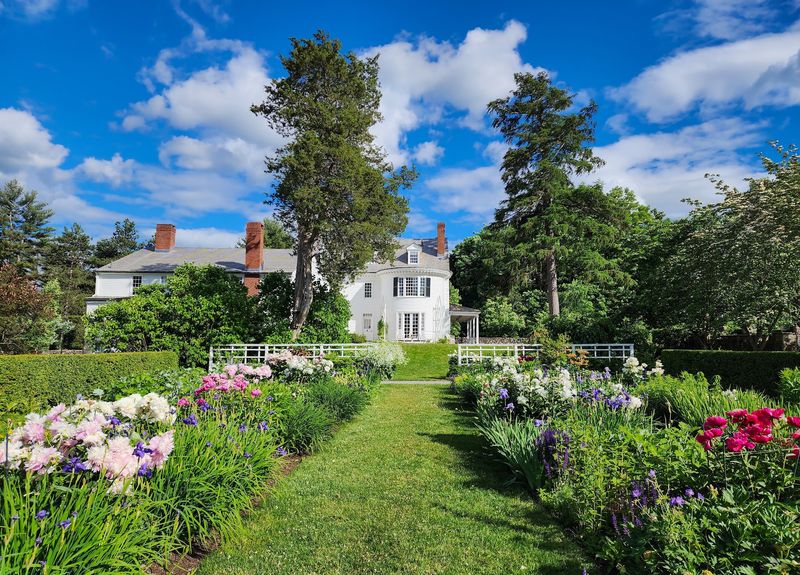
Stevens-Coolidge House & Gardens started as a country retreat for John Gardner Coolidge and his wife, Helen Stevens Coolidge. John was a U.S. diplomat whose career sent him to posts across the world.
His travels shaped the house and the grounds in ways you can still spot today. The couple wanted a summer home that felt refined, cultured, and a little worldly.
Helen’s family had farmed this land in North Andover for generations. The Coolidges transformed the old farm into an elegant Colonial Revival estate in the early 1900s.
Noted architect Joseph Everett Chandler helped remodel the house. The result mixes New England roots with grand European ideas about style and gardens.
After Helen passed in 1962, the property went to The Trustees, a Massachusetts nonprofit. That group still cares for the estate and keeps it open to the public.
So when the grounds feel oddly French, that’s no accident. They reflect a couple who loved Europe but never stopped loving home.
Knowing the backstory makes every path feel more personal. You’re strolling through someone’s dream of the wider world, planted right here in New England.
That Wavy Brick Wall Deserves A Slow Walk
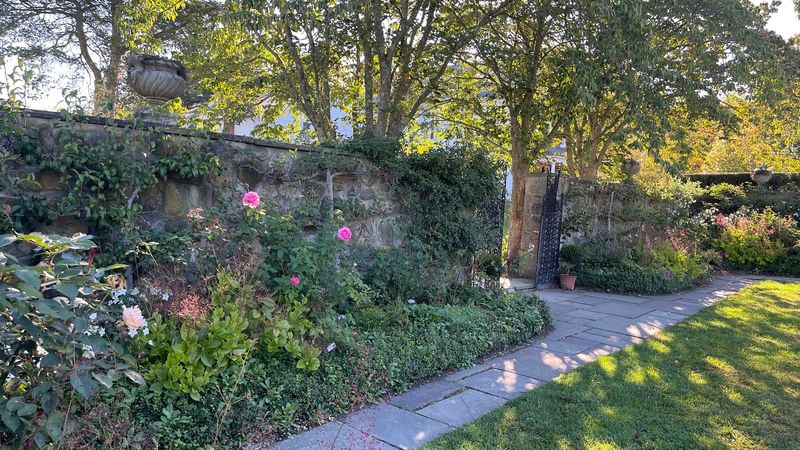
Straight walls are fine, but they’re a little boring. The serpentine wall here bends back and forth like a gentle snake made of brick.
It ranks among the estate’s most famous features, and for good reason. The curves catch light and shadow differently all day long.
Serpentine walls are an old European garden trick with a practical side. The curving shape helps a single layer of brick stand strong without extra support.
Thomas Jefferson famously used the same idea at the University of Virginia. So this design comes with some impressive company behind it.
Here, the wall frames part of the garden and gives the space a cozy, enclosed feeling. Plants grow along its base, softening the brick with color and texture.
Bring your camera and walk the full length. The angles change with every step, so each photo looks a little different.
Kids may enjoy tracing the curves with their eyes or counting the bends. Grown-ups might just enjoy how calm the whole scene feels.
Either way, plan to linger. It’s the kind of detail you notice more the longer you look.
The Parterre Garden Feels Straight Out Of A French Chateau
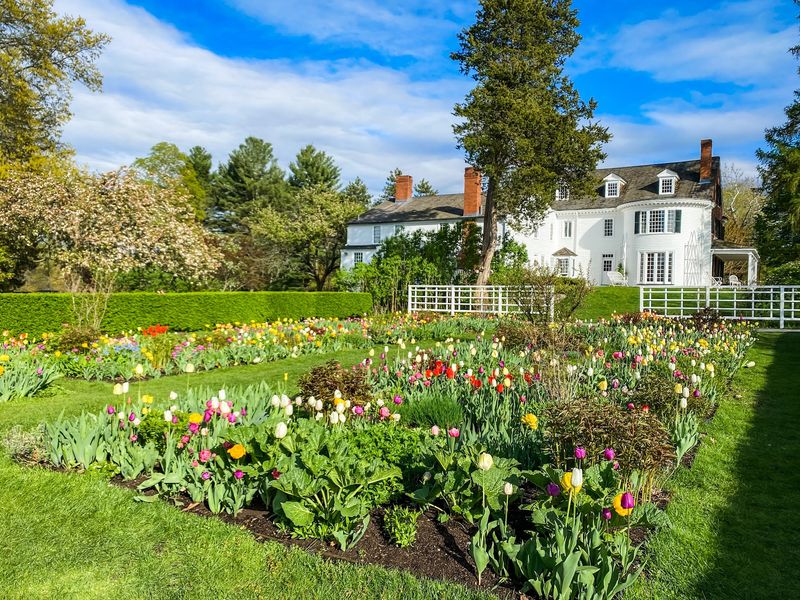
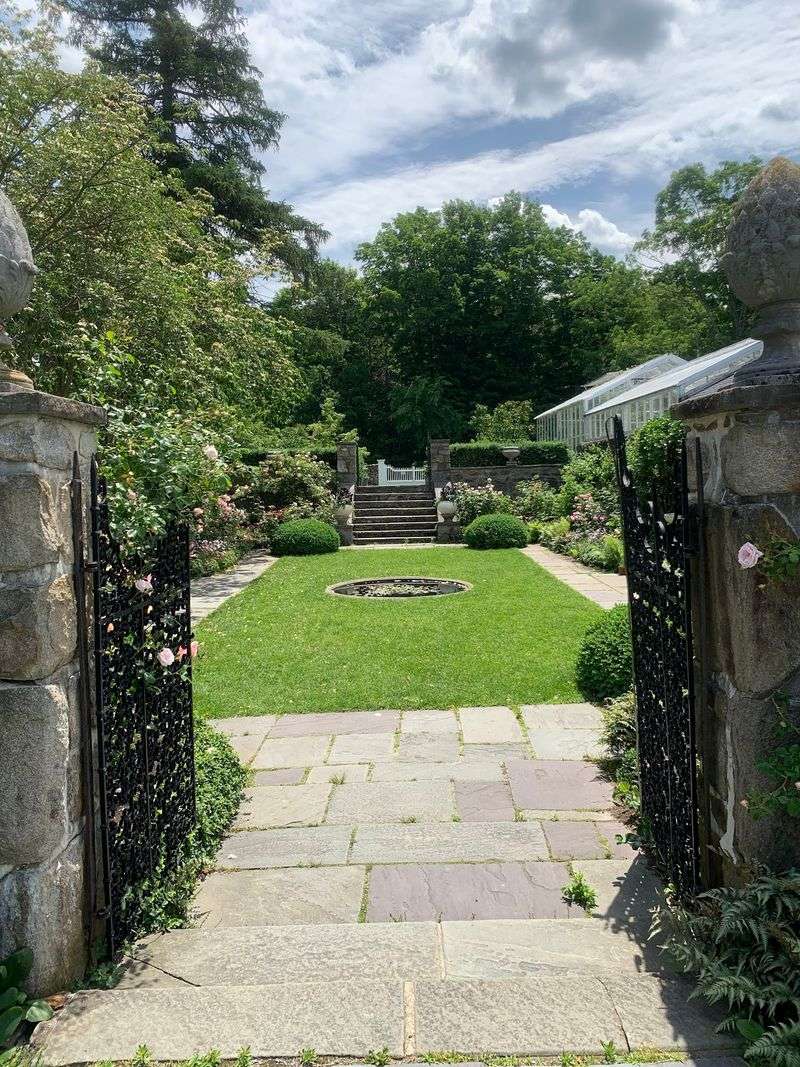
Geometry never looked so pretty. The parterre garden is laid out in tidy shapes, with beds arranged in careful patterns.
Parterres became famous in French formal gardens centuries ago. Royal palaces used them to show off order, balance, and plenty of style.
This version is smaller and friendlier, but it carries the same spirit. The symmetry pulls your eyes along the paths and makes the whole space feel planned.
It’s the spot that most strongly sells the trip-to-France feeling. Stand at one end, and you might briefly forget you’re in Massachusetts.
Flowers fill the beds as the seasons change. That means the garden can look quite different from one visit to the next.
A good tip is to view the parterre from a few angles. Close up, you see individual blooms, while farther back the full pattern comes together.
Chairs are often set out around the grounds, which makes resting easy. Sit for a bit and let the neat lines do their calming work.
No passport, no jet lag, no long flight. Just a short stroll into something that feels wonderfully far away.
Tulip Season Turns The Grounds Into Pure Color
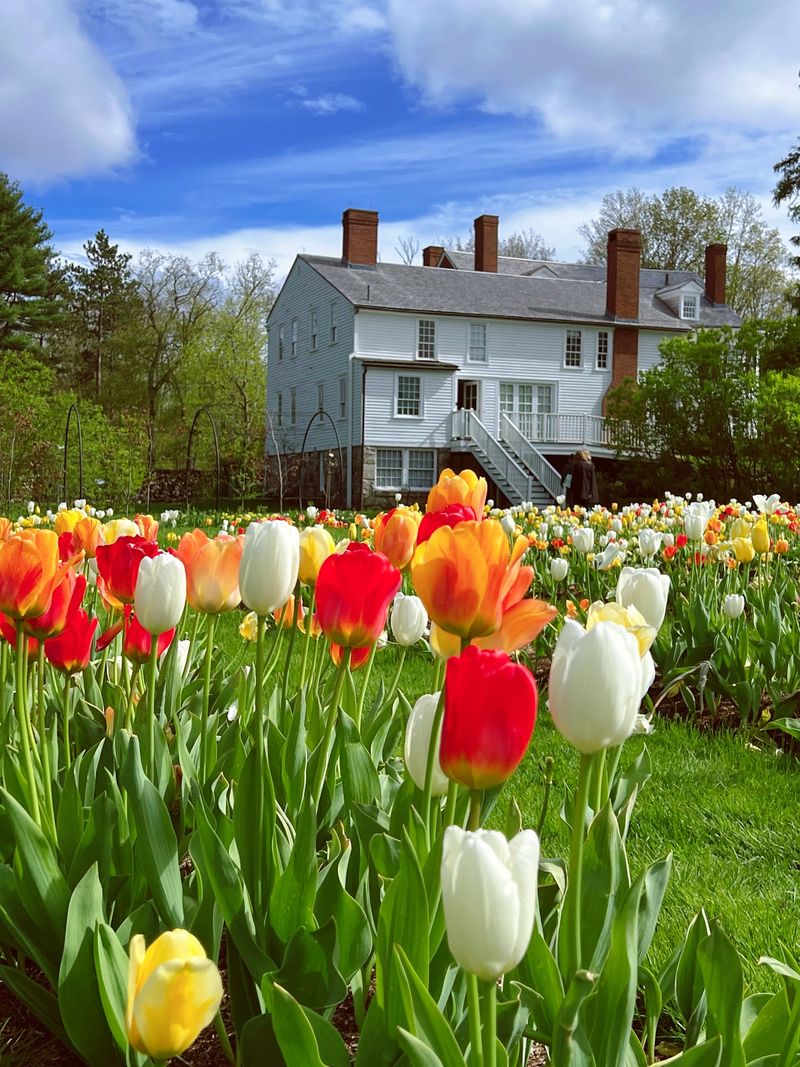
Spring here is basically a tulip party. Each year, the estate hosts a spring bloom celebration when the beds burst with color.
Thousands of bulbs come up in shades that range from soft pastels to bold reds. It’s a big reason many folks circle this property on their calendars.
Timing matters, since tulips don’t wait around. Bloom usually peaks in late April and into May, depending on the weather.
Other spring flowers join the show too. Crabapples, lilacs, and plenty of blue blooms add even more variety as the weeks roll on.
Check The Trustees ahead of your trip for event dates and ticket details. Popular spring days can call for advance reservations.
Go early in the day if you want softer light for photos. Morning sun makes petals glow without that harsh midday glare.
Also, wear comfortable shoes. You’ll want to wander every bed, and some paths are grass or gravel rather than pavement.
One fair warning applies here. You may leave with a strong urge to plant a hundred bulbs in your own yard this fall.
Walk Under A Living Arch Of Black Beech Trees
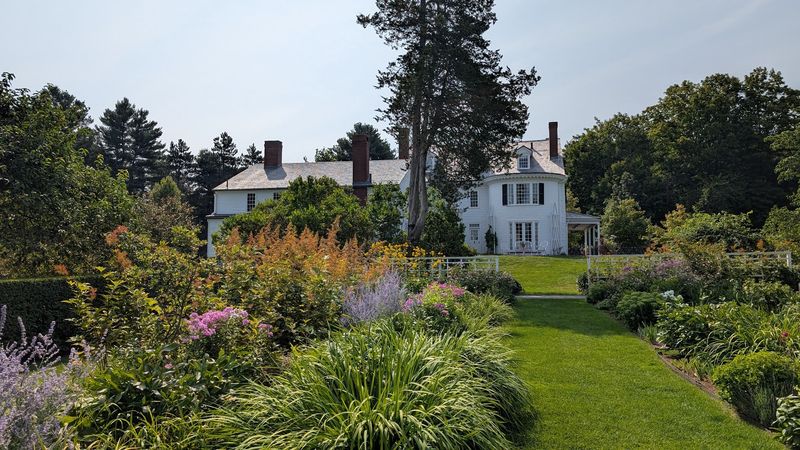
Trees usually grow up and out. At this estate, a row of beech trees is being trained to curve overhead into a leafy arch.
It’s a slow project, the kind that rewards patience over many years. Every season, the branches knit a little closer together.
Walking through it feels like stepping into a green hallway. Light filters through the leaves and makes the path feel shady and cool.
Nearby, the double perennial border lines the way with layers of flowers. Plants of different heights stack up on both sides, creating a rich wall of color.
Native and pollinator-friendly plants are part of the garden mix too. Keep an eye out for bees and butterflies doing their busy work.
Here’s a simple game for kids. Ask them to spot the tallest plant, the smallest bloom, and the brightest color in the border.
Adults can play along, honestly. It’s a nice way to slow down and actually notice the details.
Come back in a few years, and the arch will look fuller. Few garden features let you watch them grow up quite like this one.
Peek Inside A House Filled With Worldly Treasures
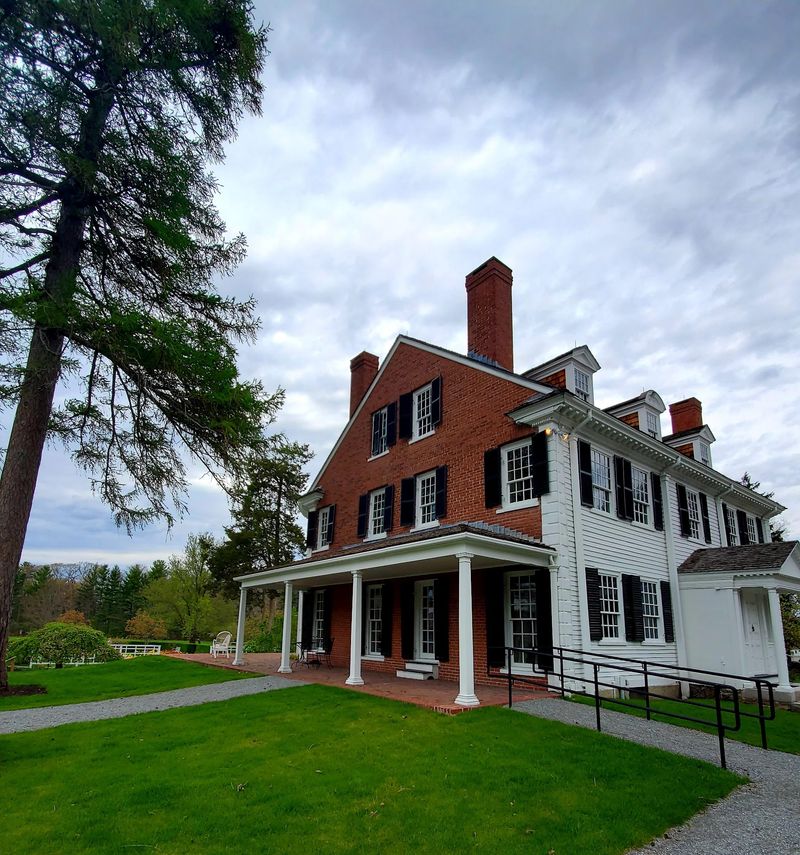
Gardens get most of the attention, but the house has stories too. The Coolidges filled their home with pieces gathered during years abroad.
Their collection includes Asian porcelain, along with furniture and art reflecting their travels. It’s a peek into how a well-traveled couple chose to live.
Access to the house can vary by season and event. Some days offer self-guided looks, while other times feature special tours.
It’s smart to check The Trustees before you go. That way you’ll know which rooms are open and when.
Inside, notice how the Colonial Revival style blends with souvenirs from far away. The mix feels both homey and a little glamorous.
Think of the house as the quieter partner to the gardens. It adds context to everything you see outside.
Families can make it a mini scavenger hunt. Try spotting objects that clearly came from another country.
A quick visit inside also gives your feet a break between garden loops. Then head back out with fresh eyes and a better sense of who shaped this place.
Holiday Workshops Bring A Little Garden Magic Indoors

Who says the fun has to end when the flowers disappear? At Stevens-Coolidge House & Gardens, the colder months bring a different kind of creativity.
Instead of simply admiring beautiful plants, visitors can learn how to turn them into something worth taking home.
The estate hosts seasonal workshops where natural materials become holiday decorations. Think evergreen branches, dried flowers, berries, and pinecones arranged into something surprisingly lovely.
One workshop focuses on making festive wreaths. Participants work with greenery, including materials gathered from the estate’s own gardens.
Add dried orange slices, cinnamon sticks, and a colorful ribbon, and suddenly you’ve got a decoration that feels much more personal than anything from a store.
I love that idea. It’s a little piece of the garden coming home with you.
Other workshops explore handmade gifts using herbs, flowers, and seeds. Botanical sachets, natural decorations, and garden-inspired treats give creative visitors plenty to try.
You don’t need to be an expert gardener to enjoy the experience. These activities are designed to help participants learn new skills while having fun.
The estate’s 2026 calendar includes a holiday wreath workshop on December 3 and a natural gift-making workshop on December 13.
Space is limited, and advance registration is required. Check The Trustees’ event calendar for available dates and prices before making plans.
There’s something charming about visiting a historic estate to make something with your own hands.
And honestly, bringing home a wreath you made yourself might feel even better than carrying another bag of holiday shopping.
Pack A Blanket Because Lingering Is Encouraged
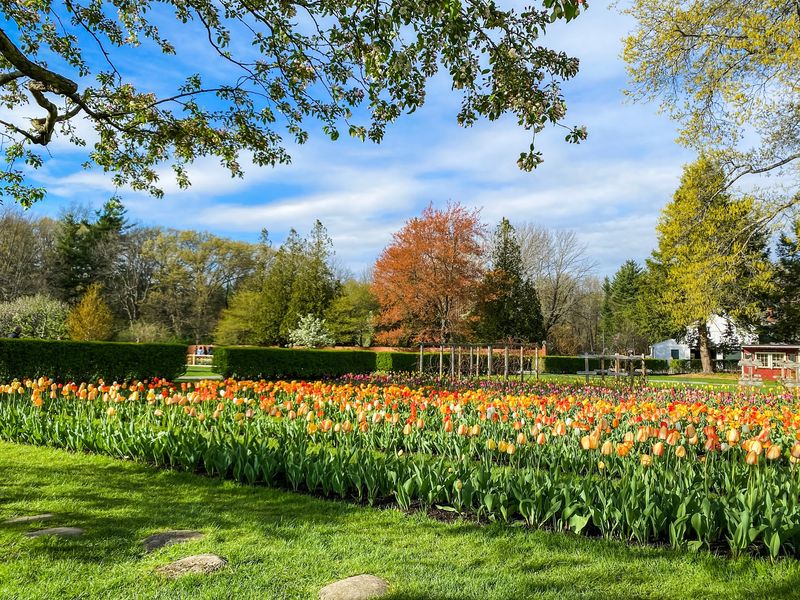
Rushing through these gardens would be a waste. The grounds are small enough to explore in about an hour, which leaves plenty of time to relax.
Picnic tables and open lawns make it easy to stay a while. Bring lunch, a blanket, and maybe a good book.
Chairs are scattered around the gardens too. They invite you to sit, breathe, and simply enjoy the view.
Artistic sculptures also pop up around the property. They add playful surprises and make fun photo backdrops for kids and grown-ups alike.
The visitor center sits near the parking area. It includes a shop with locally made goods, like soaps and candles.
Restrooms and free parking make the visit easy. Small details like these matter a lot when you’re traveling with little ones.
Members of The Trustees often get discounted or free admission. If you visit Trustees properties often, membership can pay off quickly.
So slow down and settle on the grass. Let the afternoon stretch out a bit, since this estate is made for unhurried hours.
Getting There Is Easier Than Booking A Flight To Paris
France requires a passport and a long flight. This estate just requires a car and a good playlist.
You’ll find Stevens-Coolidge House & Gardens at 153 Chickering Rd, North Andover, MA 01845. It sits in the Merrimack Valley, north of Boston.
That makes it a handy day trip for much of eastern Massachusetts. Folks from southern New Hampshire can reach it fairly easily too.
Hours and seasons can change, so look up The Trustees before heading out. Special events like spring blooms and Winterlights may need advance tickets.
Pair your visit with a stroll around North Andover’s historic town center. The area has classic New England charm worth a quick look.
Fall is another lovely time to stop by. The Trustees sometimes host seasonal programs, including family-friendly autumn activities.
Each season brings a fresh reason to return. Tulips in spring, lush borders in summer, color in fall, and lights in winter.
Honestly, that might be the best part of all. You get a little slice of Europe without ever leaving New England, with changing gardens and special events giving you reasons to return.
Share this story