Some Tulsa landmarks wait politely for you to notice them. This one shoots a tower roughly 15 stories into the downtown skyline and practically dares you to keep driving.
Built in the late 1920s during Oklahoma’s oil boom, it is often called one of the finest examples of Art Deco church design in the entire country. The best part for families on a budget is simple: the tour costs nothing.
A free guided walk runs on Sundays, and a self-guided booklet lets you explore on weekdays at your own pace. Keep reading to learn who designed it, what details to hunt for inside, when the doors open, and where to park without spending a dime.
1. A Skyline Landmark on South Boston Avenue
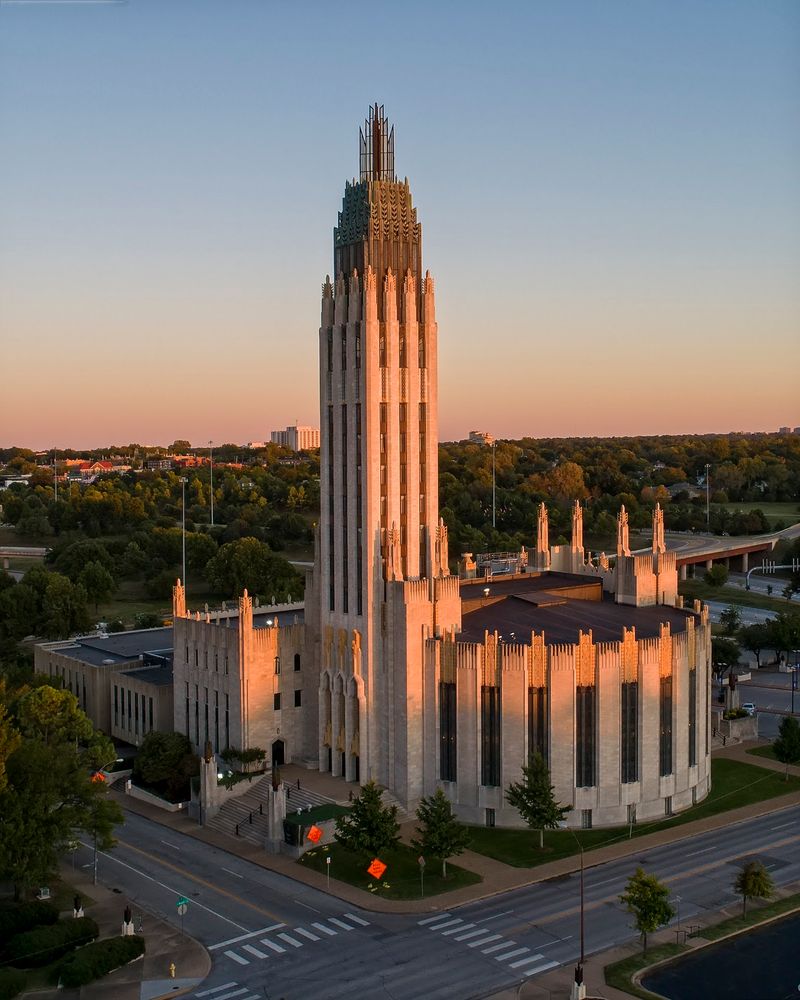
Tulsa has plenty of Art Deco buildings, but only one of them comes with a steeple that seems to reach for the clouds. The church sits at 1301 S Boston Ave, Tulsa, OK 74119, just south of the downtown core in Oklahoma.
Its official name is Boston Avenue United Methodist Church. It is an active United Methodist congregation, not a museum, which makes the welcome it offers to curious guests even more notable.
The building is widely recognized as a true Tulsa landmark. It also holds National Historic Landmark status from the U.S.
Department of the Interior, a designation reserved for places of national importance.
That status matters to day-trippers for a practical reason. Tourists, architecture fans, and art classes all come here to study a structure that shaped how people think about Oklahoma design.
The church stands on a busy downtown street, so spotting it is easy. The tower does the job of a road sign all by itself.
Once the location is clear, the next question tends to be how a building this bold ended up in Tulsa in the first place.
2. An Oil Boom Dream in Stone
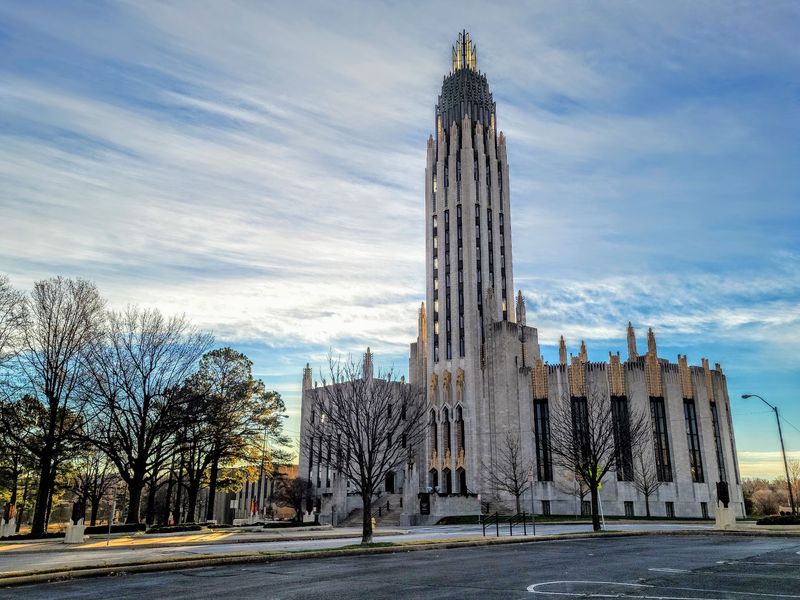
The late 1920s were a wild time in Tulsa. Oil money was flowing, and the city wanted buildings that looked toward the future rather than copying old Europe.
Construction on the main building dates to around 1927, and the church is described as a circa-1929 landmark. That timing puts it right in the golden age of American Art Deco.
Instead of the pointed arches and Gothic spires that most churches used then, this congregation chose sharp vertical lines and geometric forms. It was a daring move for a house of worship.
The building even comes with a controversial history, the kind architecture students are encouraged to study closely. A modern church design in that era sparked plenty of debate.
Today, that early boldness reads as pure Oklahoma confidence. The state was young, ambitious, and willing to try something new.
For families who like history with a twist, the story here is a reminder that Tulsa once set trends instead of following them. The people behind the plans deserve their own spotlight next.
3. Two Creative Minds, One Bold Design
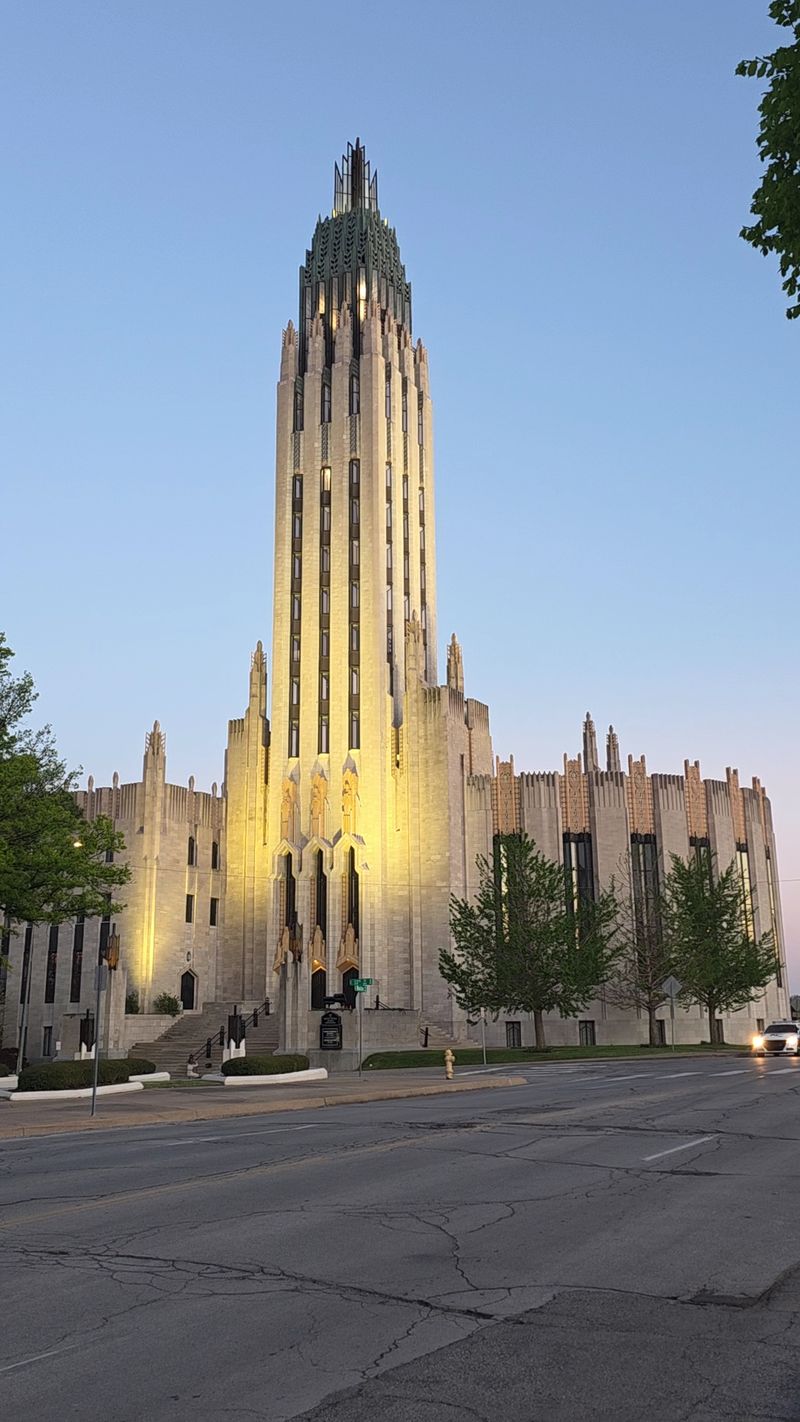
Two names come up again and again when people talk about this church: Bruce Goff and Adah Robinson. Their partnership produced one of the most talked-about buildings in Oklahoma.
Goff later became famous for unusual, highly original architecture across the state. Some travelers even plan entire road trips around his work, and this church is a natural stop on a Bruce Goff and Art Deco tour of Oklahoma.
Robinson brought an artist’s eye to the project. Together, the pair created a design where structure and decoration work as one idea.
That teamwork shows up in the details. Symbolism runs through the building, and the vision behind its creation is a big part of what the walking tour explains.
Design buffs who arrive knowing these names tend to get more out of the visit. Spotting a signature style in person beats reading about it in a textbook.
Not bad for a project that started as a church needing a new home. The most famous result of their work stands tall above the street.
4. The Tower That Stole the Show
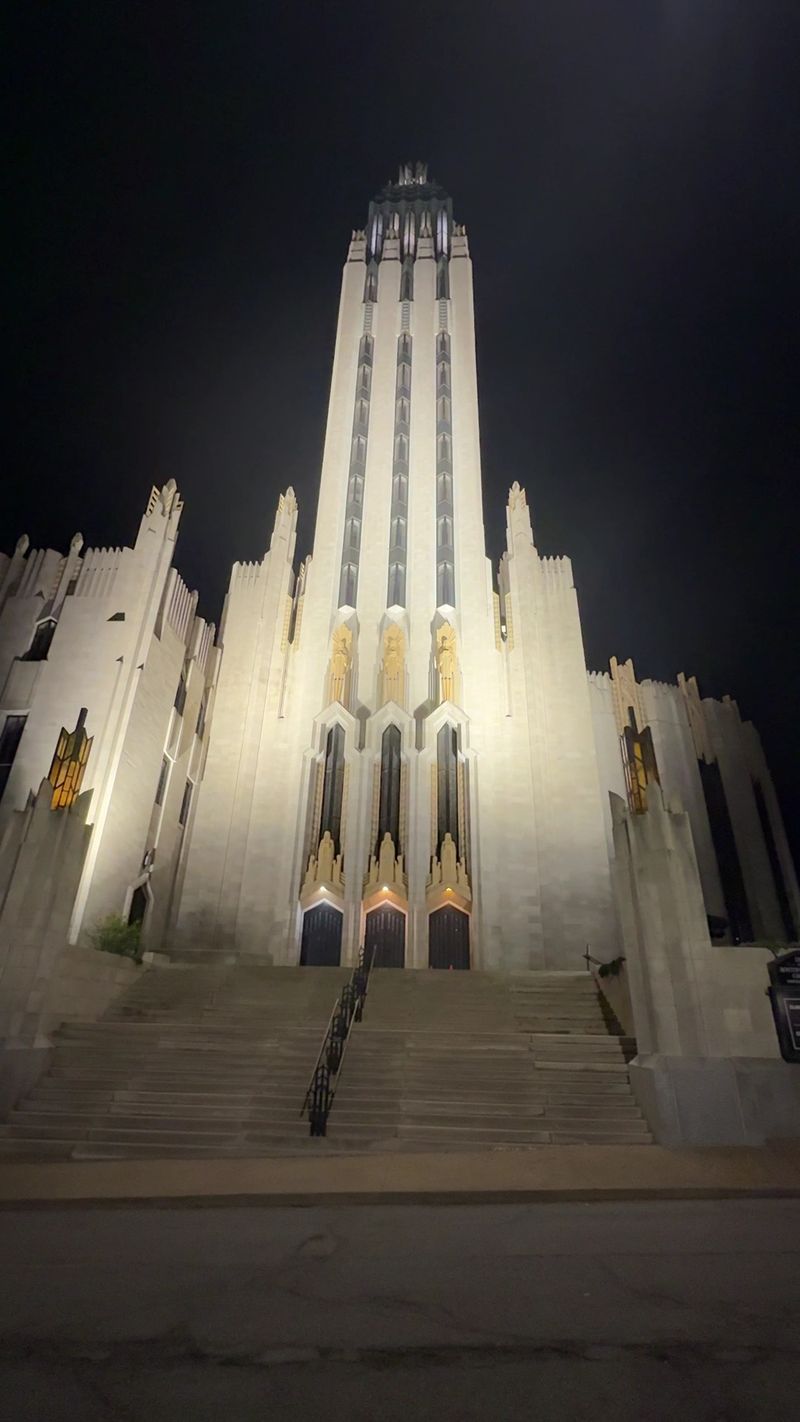
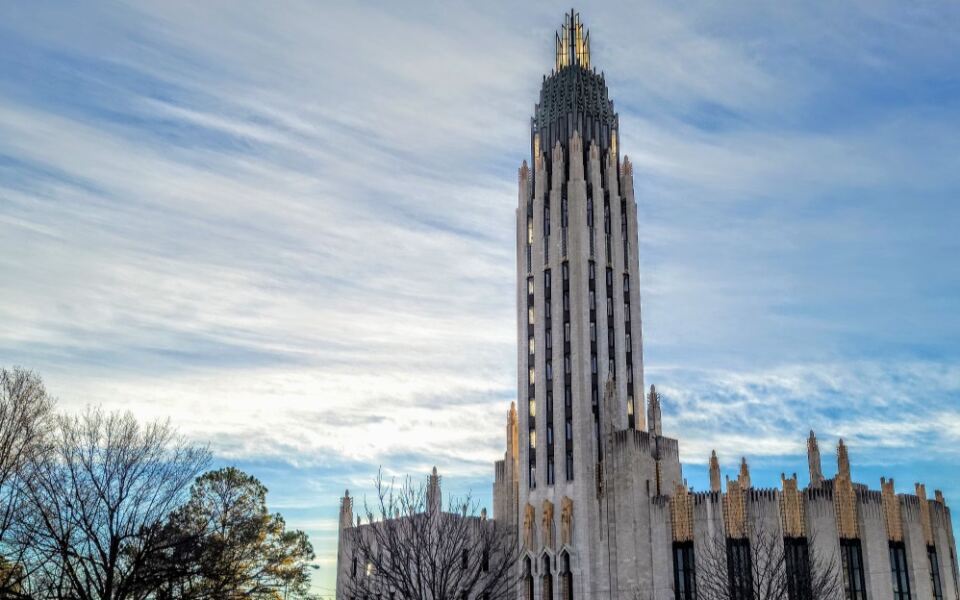
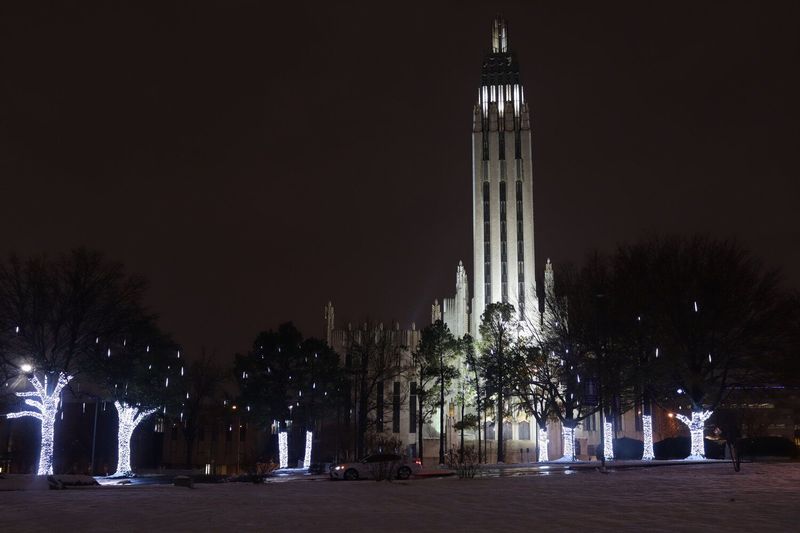
At roughly 255 feet, about 15 stories, the tower is the feature everyone comes to see. It turns a church into a skyline marker for all of downtown Tulsa.
Soaring vertical lines run up its sides, pulling the eye upward from street level. The dramatic shape makes it unlike any other church in the region.
Carved details, including praying hands, are worked into the design. Getting close enough to really study them is a big reason the guided tour is so popular.
Bring binoculars or a phone with good zoom. The higher sections reward patient looking, and kids enjoy turning it into a treasure hunt.
The tower also changes character after dark. It is striking during the day and arguably even more impressive when lit up at night.
That makes it worth a second pass if you are in town for dinner or a show nearby. Sometimes a landmark deserves two looks in one day.
5. Terracotta Details Worth a Second Look
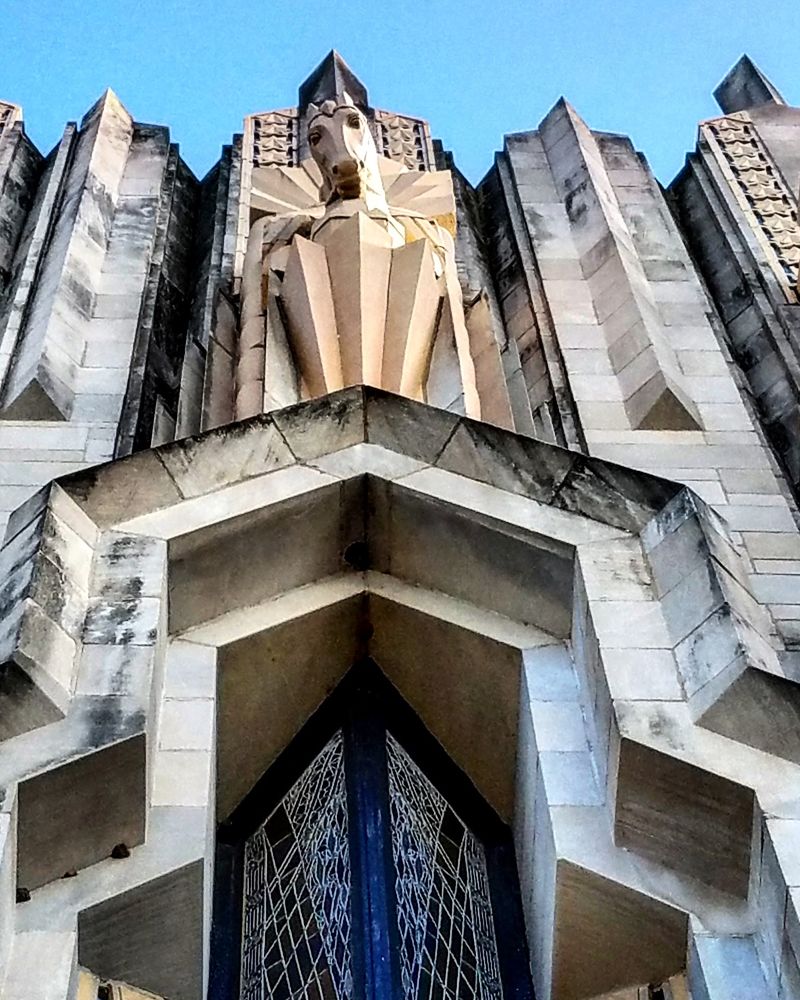
Even folks who never make it inside leave impressed. The exterior alone is packed with enough detail to fill a short visit.
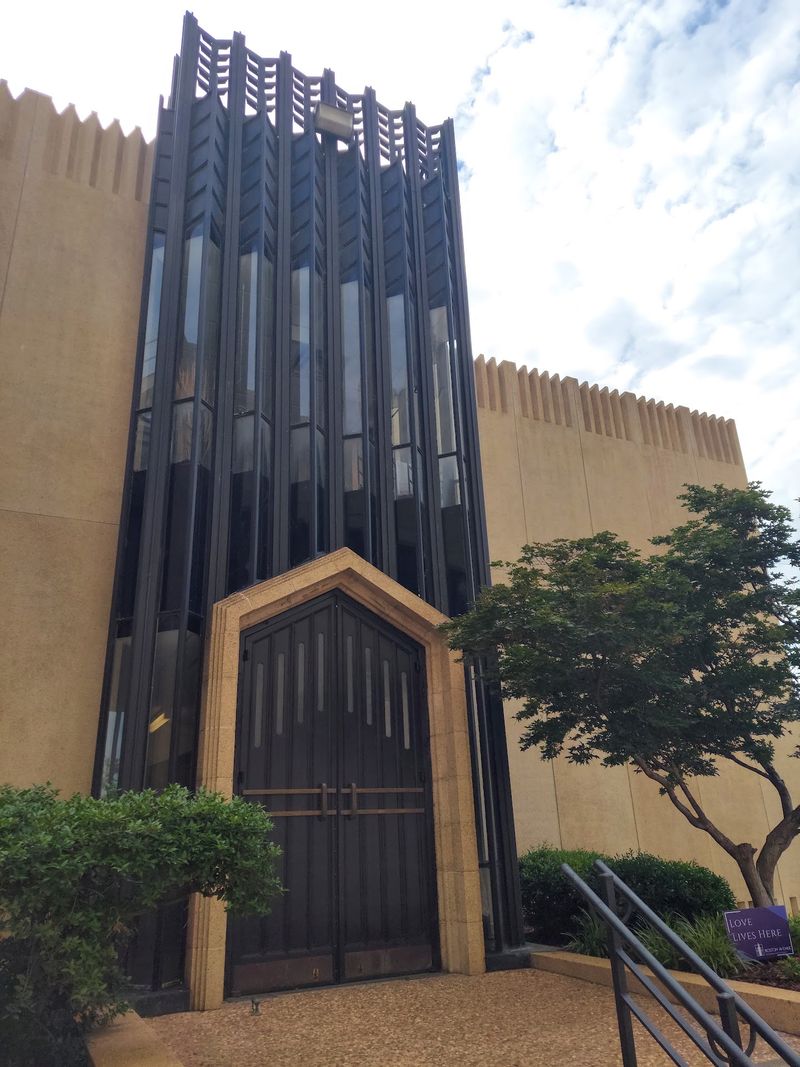
Numerous terracotta sculptures decorate the outside walls. They add layers of artwork that reveal more the longer you stand there.
Weekend travelers who arrive when the doors are closed often say the outside was well worth the trip anyway. The Art Deco details hold up to close inspection from the sidewalk.
Some people describe the look as something out of a fantasy realm. It is easy to see why, with the bold geometric shapes and dramatic proportions.
Art classes have even come here to sketch the building. A notebook and pencil make a great free activity for older kids.
A slow walk around the full exterior is the smart move before heading in. Each side tells part of the story, and the inside picks up where the outside leaves off.
6. Inside the Round Sanctuary
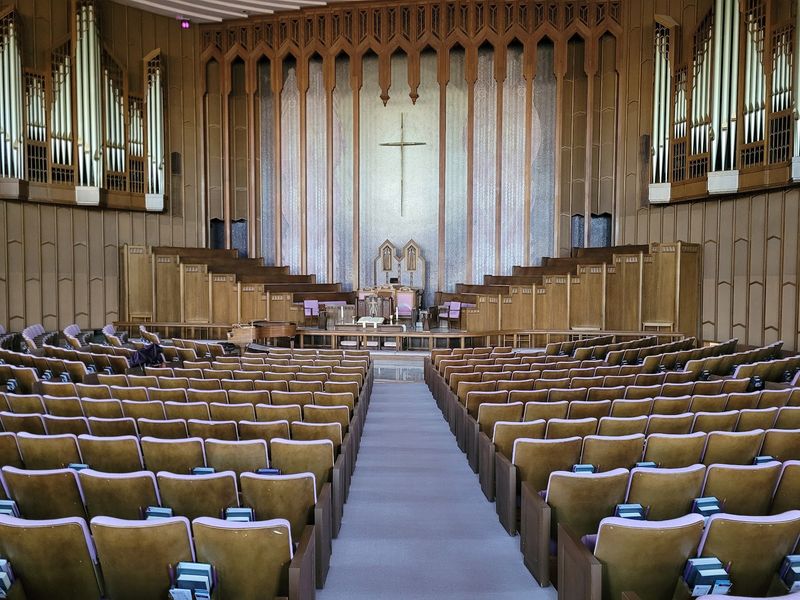
Most churches line up their pews in long rows. Here, the sanctuary is circular, which instantly sets the room apart.
The exposed pipes of a pipe organ form a major part of the design. Rather than hiding the instrument, the architects made it a showpiece.
Above, a dome ceiling features stained glass at its center. It is a natural spot to pause and take in the overall plan of the room.
The acoustics are another highlight. Singing voices and instruments carry throughout most of the main building, which helps explain the strong music program here.
Remember that this is a working sanctuary. A respectful pace and a quiet voice go a long way, especially if anything is happening during your stop.
Families with young kids can make a game of finding repeated shapes and patterns. The room offers plenty to count.
7. Sunday Tours That Cost Nothing
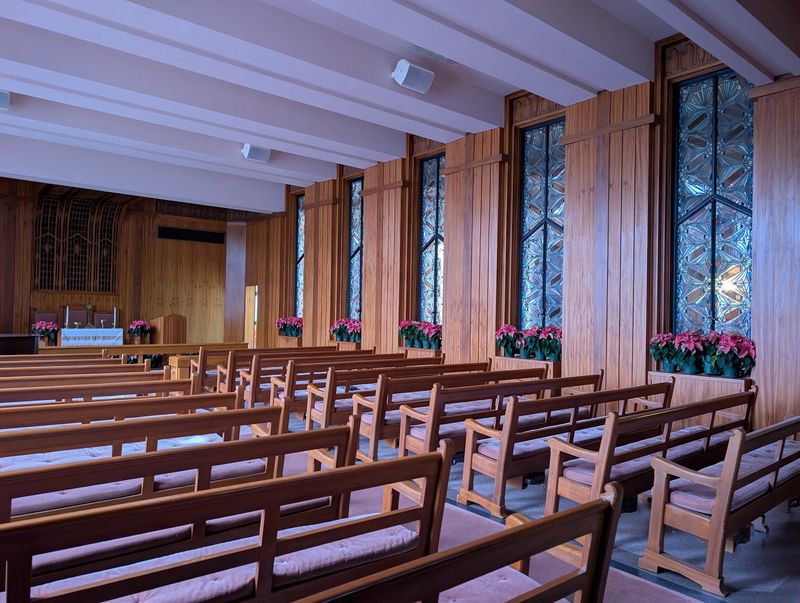
Here is the deal budget-minded families love: the guided architectural tour is free. It runs on Sundays after the last service.
The tour is commonly listed at 12:15 pm, following worship services at 9 and 11 am. Some sources simply describe it as starting around noon, so arriving a little early is wise.
Guides offer an in-depth look at the building. Expect background on the design, symbolism, and the vision behind the church that a quick walk-through might miss.
Large groups can call ahead to request an appointment. Schools, clubs, and family reunions may find that option handy.
The church has also appeared on downtown church tours sponsored by the Tulsa Foundation for Architecture. Those events can add context about nearby buildings too.
Tour times may change, so checking the church website before driving in is a good habit. Free is great, but showing up at the right hour is even better.
8. A Booklet for Weekday Explorers
Can’t swing a Sunday visit? Weekdays offer another route in, and it fits neatly into a lunch break or a road trip stop.
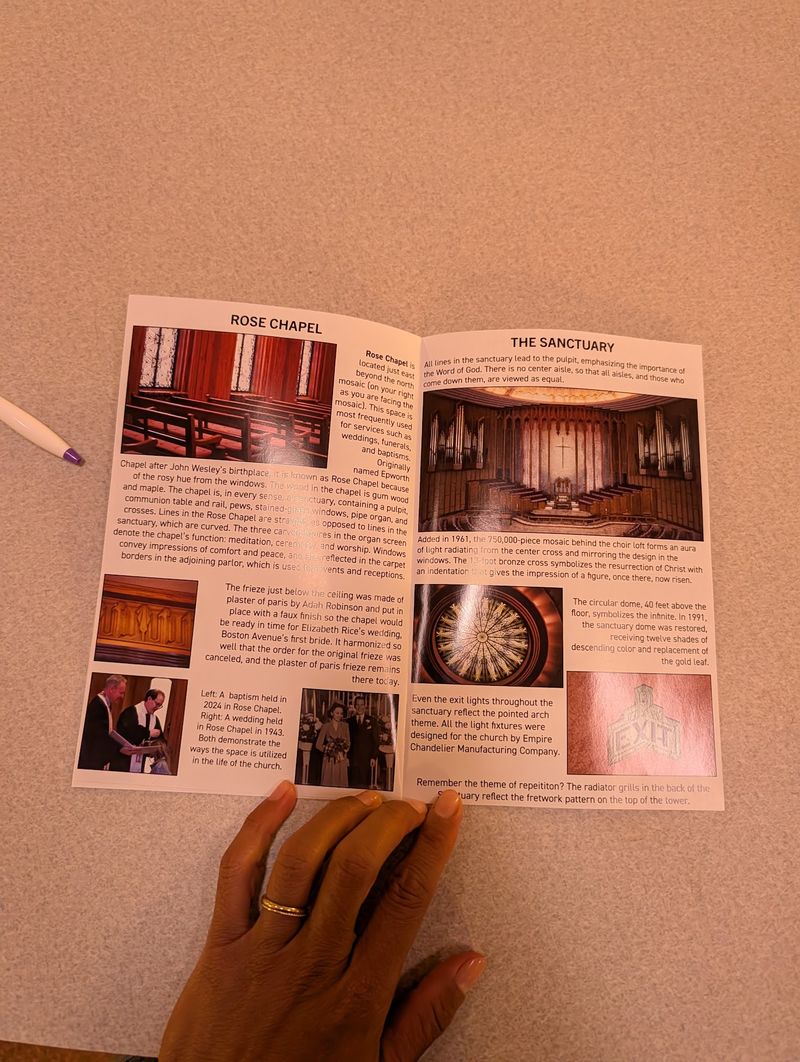
Self-guided walking tours are available Monday through Friday during office hours. Start at the welcome desk, where staff hand out a Walking Tour Guide booklet.
The booklet is filled with details about the design and its meaning. It turns a casual stroll into a journey of discovery at your own pace.
Weekday mornings tend to be calm. Some people have had the building nearly to themselves, which suits photographers and sketchers.
Staff are known for letting guests roam and admire the space. That kind of openness is part of what makes the visit feel easy.
Keep the booklet handy as a souvenir, since it helps when explaining the trip to friends later. A free keepsake never hurts.
9. A Congregation Full of Music and Outreach
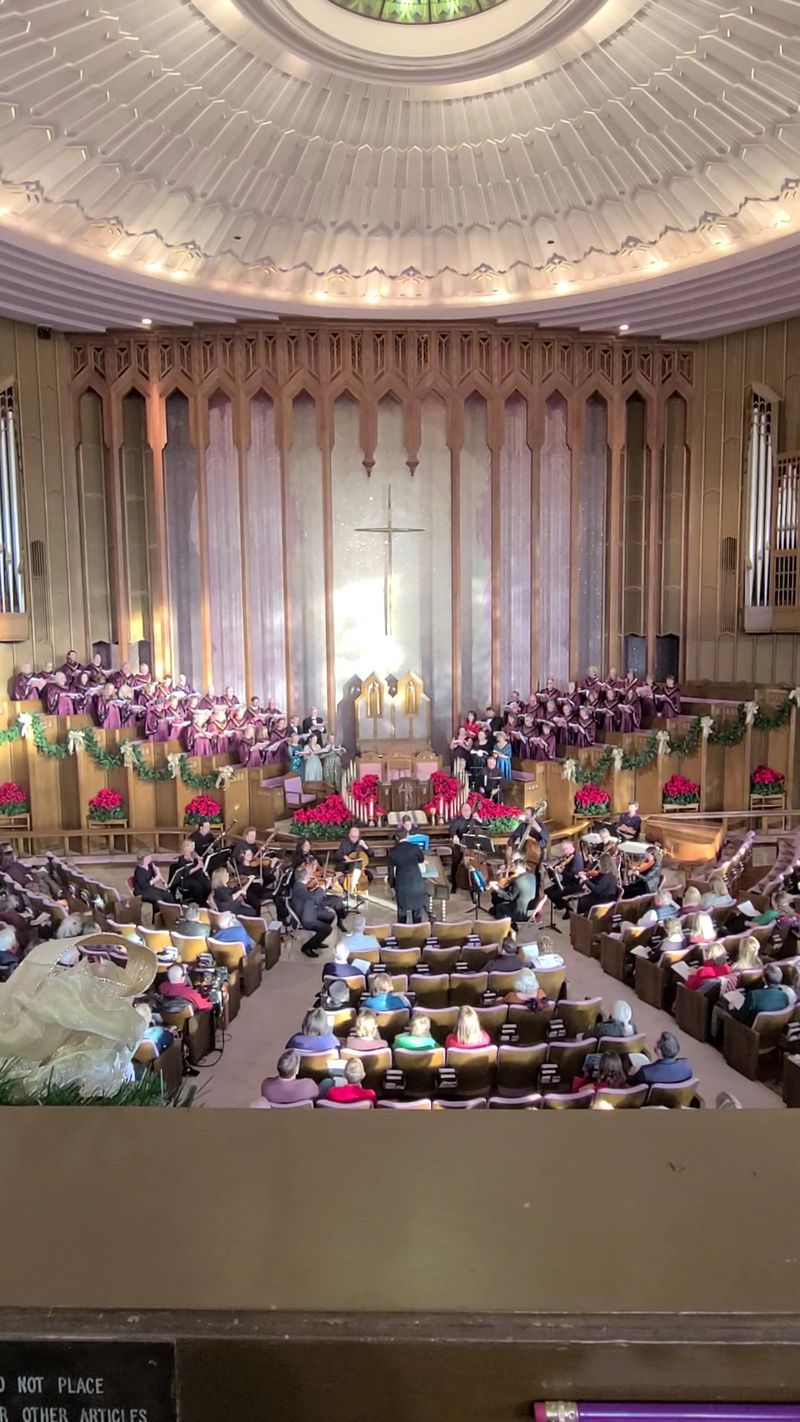
The architecture draws the crowds, but the people keep the building busy. The congregation is often described as warm and welcoming, members or not.
Music plays a big role. There are five bell choirs, choirs for kids ages 5 to 18, and an adult Chancel Choir.
The church also connects with Tulsa Theater Works, a free theater program, and Tulsa Sistema, a citywide youth orchestra for third through twelfth graders. Liturgical dance and orchestra add even more variety.
Outreach is a major focus. A free dental clinic called Smiles of Faith operates in partnership with several Tulsa congregations, and a Blessing Box is restocked about three times a week.
A large missions program supports groups such as Family Promise and Rise Against Hunger. Special offerings happen at Advent and Easter.
All of that energy helps explain why the place feels lived-in rather than frozen in time.
10. Hours, Parking, and Timing Tips
Good planning saves a wasted trip. The building keeps office-style hours most of the week.
Doors are typically open Monday through Friday from 8:30 am to 5 pm. On Sunday, hours run from 8 am to 1 pm, and the building is closed on Saturdays.
That Saturday closure catches many weekend travelers by surprise. Plan on Sunday for the guided tour or a weekday for the booklet route.
Parking is one of the easiest parts of the visit. The church offers ample free parking, a welcome perk downtown.
Entry and tours are free, which keeps the outing friendly for families. Hours and tour schedules may change, so check bostonavenue.org before heading out.
An evening drive-by is a bonus option when the tower is lit. It costs nothing and takes just a few minutes.
11. Why the Tower Earns a Spot on Your List
Oklahoma pride sometimes needs proof, and this church delivers it in limestone and terracotta. Few states can claim a church design this influential.
The visit suits architecture lovers, history fans, art students, and families hunting for a free outing. It also works for anyone passing through downtown Tulsa with an hour to spare.
The peaceful atmosphere makes it a calm break from city errands. Combined with free parking and free tours, the barrier to entry is about as low as it gets.
Pair it with other downtown Art Deco stops for a full day of design spotting. Tulsa rewards anyone willing to look up.
Bring curiosity, check the hours, and leave room in the schedule for a slow walk around the outside. Those carved details are not going anywhere.
For a state too often written off as flat prairie, this tower stands as a tall, quiet answer.
Share this story