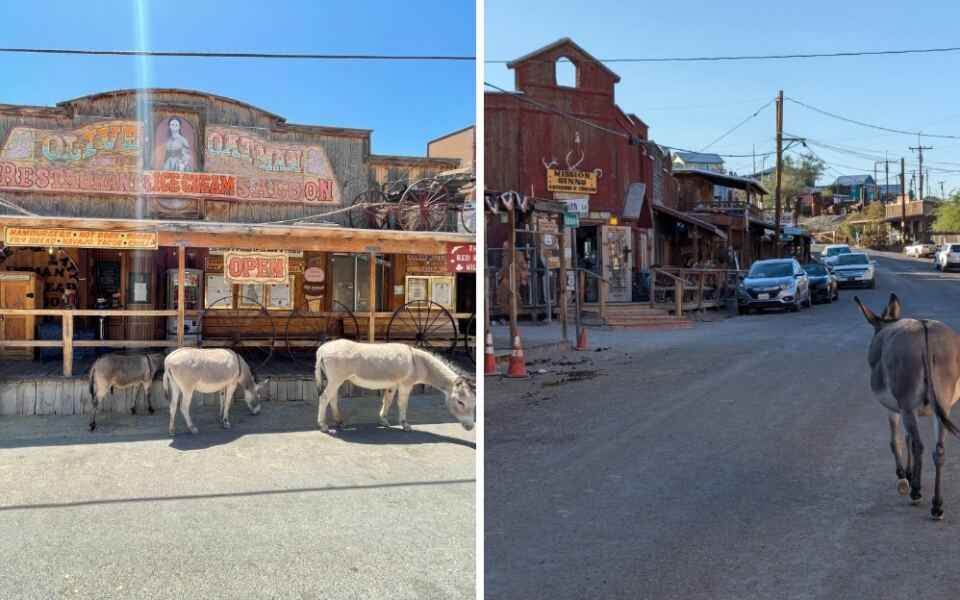
Somewhere in western Arizona, the traffic jams are caused by donkeys. They stroll down the middle of the road, park themselves beside your car door, and wait for you to hand over a snack. Their ancestors hauled ore and supplies for miners more than a century ago, and the town they worked in never quite moved on.
Today it is a tiny hillside settlement with wooden storefronts, a famous stretch of old highway, and a four-legged welcome committee that takes its job very seriously. For Phoenix and Tucson folks, it makes a weekend road trip with a story attached. Keep reading to learn where this burro-run town sits, how a 1915 gold strike built it, what the animals actually eat, and the practical details you need before you point your car west toward the Black Mountains.
1. A Mining Camp Perched in the Black Mountains
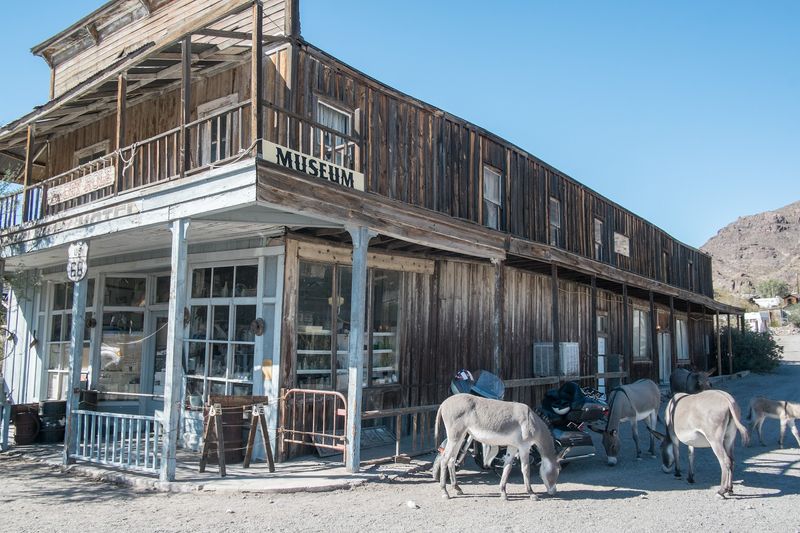
Hidden in the rocky folds of western Arizona, a town of wooden porches and tin roofs clings to a mountainside like it forgot to leave. That town is Oatman, Arizona, USA, a census-designated place in Mohave County.
It sits in the Black Mountains at an elevation of 2,710 feet. That height puts it above the river valleys to the west, though it is still desert country through and through.
The town stretches along a single main road. Most of what draws people here lines that street, so there is no complicated map to learn.
Oatman lies between Kingman to the northeast and the Colorado River communities to the west, including Bullhead City. That position makes it a natural stop on a western Arizona loop.
Officially, it is not even an incorporated town. Census-designated places are counted for statistics but do not have a city government of their own, which suits a spot where donkeys seem to run the show anyway.
For Valley residents, the drive is long but doable in a day, though many choose to pair it with an overnight in Kingman or along the river. The payoff is a place that looks almost untouched by the decades that passed it by.
Small on paper, big on personality, it is a destination that earns the miles.
2. The $10 Million Strike of 1915
Two prospectors, one lucky dig, and a fortune worth $10 million in gold. That is how Oatman went from quiet hillside to booming mining camp in 1915.
The area was not empty before the strike. People had already been settled in the vicinity for several years, working claims and hoping for a break.
The 1915 discovery was the break everyone wanted. News of that much gold traveled fast, and a small camp suddenly had reason to grow.
Gold rush towns in the West often rose quickly and faded just as fast. Oatman followed a familiar arc, with mining activity eventually slowing as the easy gold ran out.
What makes this place different is what stayed behind. Old buildings still stand along the main road, and the descendants of the working animals never left.
Fun fact for your next road trip conversation: the town’s identity today still traces straight back to that single strike. Without the gold, there would be no camp, and without the camp, there would be no burros strolling the street.
History here is not locked behind glass. It wanders right up to your window and asks for a treat.
3. Meet the Four-Legged Mayors
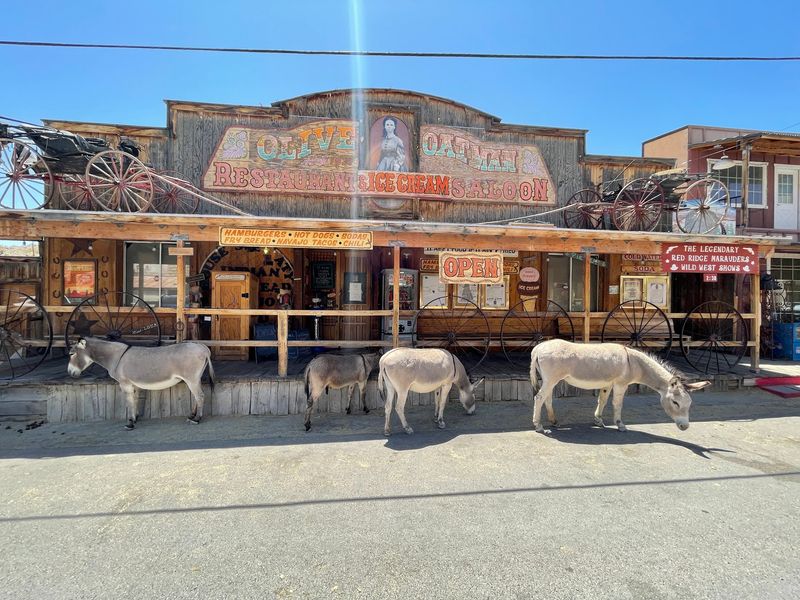
Forget the welcome sign. In Oatman, the greeting comes from a burro standing squarely in the road.
The animals are descendants of the burros that miners relied on during the gold rush years. They carried tools, ore, and supplies across rough mountain terrain.
When mining slowed, many of the animals were turned loose in the hills. Their offspring adapted to life in the desert and kept coming back to town.
Today the burros are wild, not pets. They roam the surrounding Black Mountains and wander into the main street during the day, often staying until shops close.
Some arrive with foals in tow. Young burros tend to draw a crowd, and the mothers can be protective, so giving them extra room is a smart move.
The animals have learned that people mean snacks. That lesson explains why they nudge, follow, and sometimes block a doorway until someone pays the toll.
Watching them work the street is half the reason people make the trip. They are the town’s longest-serving residents, and they clearly know it.
4. The Right Way to Feed a Burro
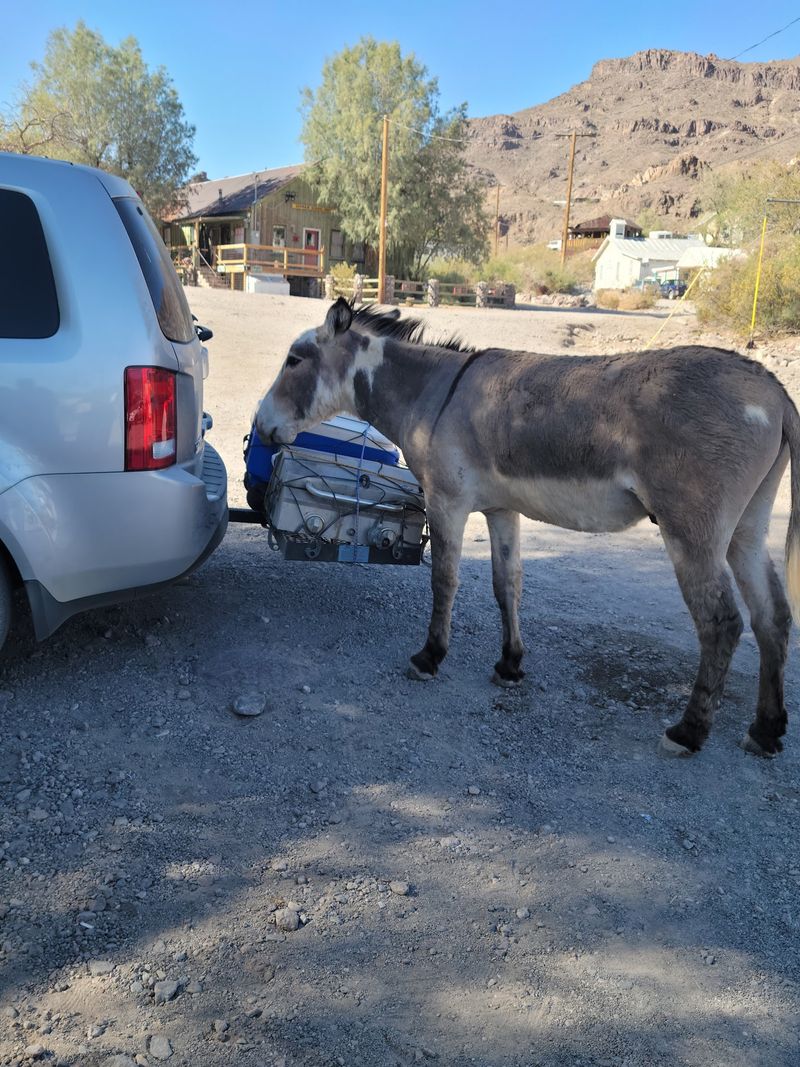
Here is the snack rule that matters most: skip the chips and carrots from your car. Local shops sell bags of hay cubes made for the burros, and that is the food they should get.
Human snacks can upset the animals’ digestion. Sticking to the hay cubes keeps the herd healthy and keeps the experience going for everyone.
The cubes are inexpensive, often just a few dollars per bag. Prices can change, so bring a little cash just in case.
Offer a cube on a flat, open hand. That keeps fingers out of the way of eager teeth.
Burros with signs or notes on them are sometimes ones that should not be fed. Watch for those markers and respect them.
Kids love this part, but an adult should stay close. Burros are wild animals, and a hungry one can push or nip.
Once your bag is empty, show the burros your empty hands. Many will quickly move on to the next likely sponsor, which is both funny and a little humbling.
5. Route 66 Runs Right Through It
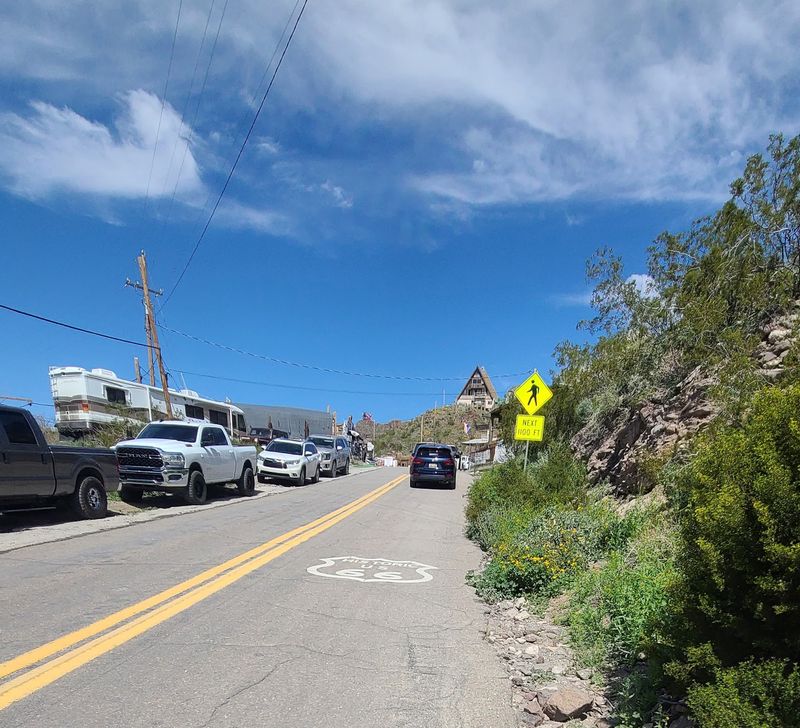
Most towns got bypassed by the interstate and slowly disappeared. Oatman got bypassed and somehow kept its main street busy.
The road through town is a section of historic Route 66. Before the freeway era, travelers heading west crossed these mountains on this very route.
When the highway was rerouted, through traffic dropped off. The town shrank, yet the old road remained, and so did its pull on road trip fans.
Today, Route 66 travelers seek out this stretch on purpose. Cars with license plates from far and wide park along the street beside Arizona locals out for a weekend drive.
The buildings lining the road give the corridor its classic look. Signs, porches, and storefronts keep the vintage highway feel intact.
For Arizona drivers, it is a chance to experience the Mother Road without leaving the state. The town is one of the more memorable stops anywhere along the Arizona portion of the route.
Bring your camera and expect to slow down. On this piece of Route 66, the speed limit is set by whoever has four legs and the right of way.
6. Switchbacks Over Sitgreaves Pass
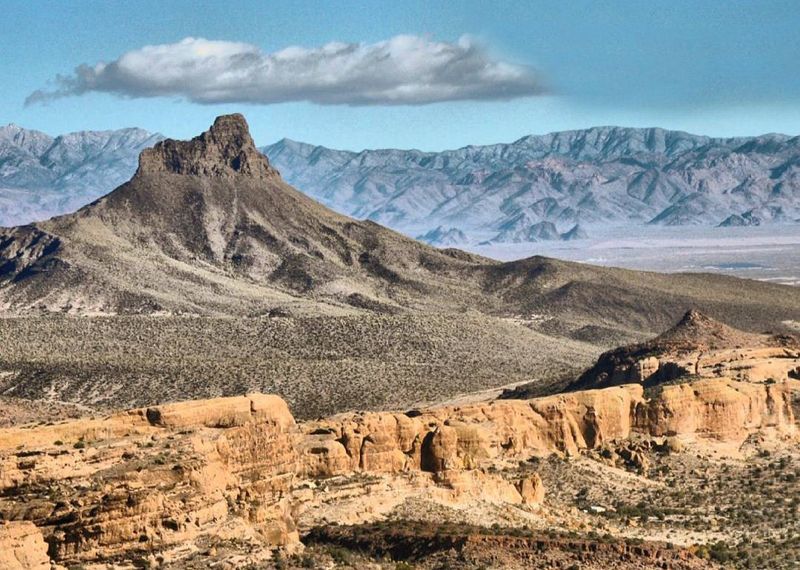
Getting there is part of the adventure, and a sharp part at that. The drive from Kingman follows old Route 66 over Sitgreaves Pass, a twisting mountain crossing.
The road narrows and curves through tight switchbacks. Guardrails are limited in places, so steady hands and patience help.
Large RVs and trailers may find the route challenging. Drivers of big rigs often choose the approach from the Bullhead City side instead.
Take it slow and use pullouts when it is safe. The scenery of the Black Mountains is dramatic, and stopping lets the driver enjoy it too.
From the Phoenix area, the trip usually takes several hours each way. Many travelers head up through Kingman and then cross the pass.
Tucson drivers face an even longer haul. Planning an overnight nearby turns the trip into a relaxed weekend instead of a marathon.
Check your gas before leaving Kingman or Bullhead City. Services along the pass are scarce, and the burros do not run a fuel stop.
7. Storefronts With Old West Bones
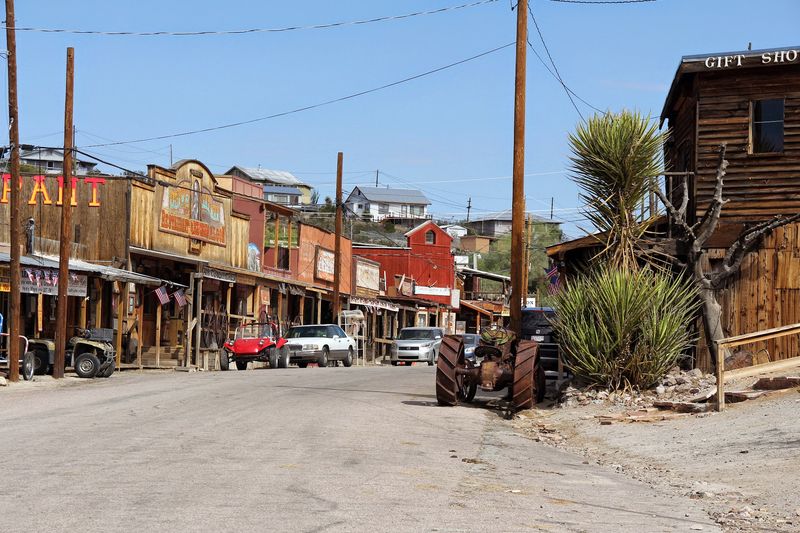
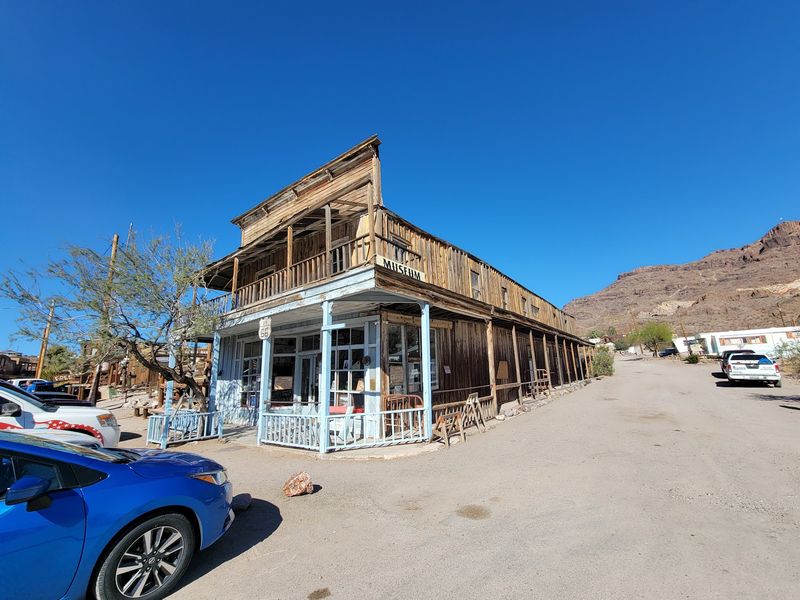
Wooden boardwalks, weathered facades, and hand-painted signs make the main street feel like a movie set. The difference is that these buildings earned their character the hard way.
Many structures date back to the mining era or carry that look. Shops now fill the old spaces along the road.
Browsing is the main activity between burro encounters. Souvenir stores, small gift shops, and Route 66 memorabilia line the strip.
The shops are a convenient place to buy hay cubes too. That makes shopping and burro feeding a natural combo.
Prices and offerings vary from store to store. Some sellers may be cash only, so carrying some bills is wise.
The compact layout means everything is walkable. Park once, then explore the street on foot at your own pace.
Do not be surprised if a burro follows you inside the doorway or waits outside like a patient shopping companion. Here, even retail therapy comes with a sidekick.
8. A Hollywood Honeymoon Footnote
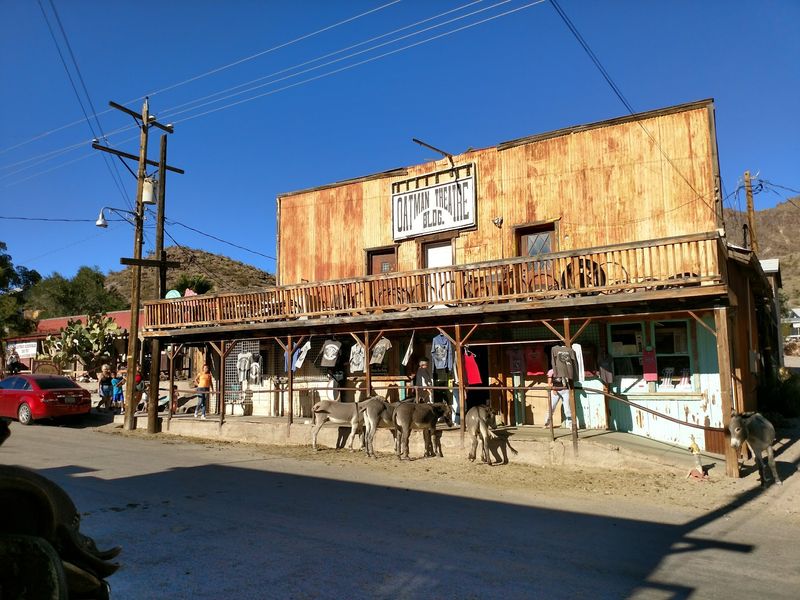
Hollywood royalty once found their way to this mountain town. The historic Oatman Hotel is known as the place where Clark Gable and Carole Lombard stayed after their 1939 wedding in Kingman.
That bit of star power still gives the building bragging rights. It is one of the best-known landmarks along the main street.
The hotel has become a favorite stop for history buffs and Route 66 fans. People come to see the building that hosted one of the famous couples of its era.
Its story adds another layer to a town already full of characters. Gold miners, highway travelers, movie stars, and burros all share the same short street.
Hours and access to the building can change. Checking ahead before the drive is a good idea for anyone set on seeing the inside.
Did you know? The couple married in Kingman, which makes this whole western Arizona corridor part of their love story.
Even with a famous guest list, the hotel still shares the sidewalk with the burros. In Oatman, nobody gets a red carpet, not even legends.
9. Wild West Street Shows
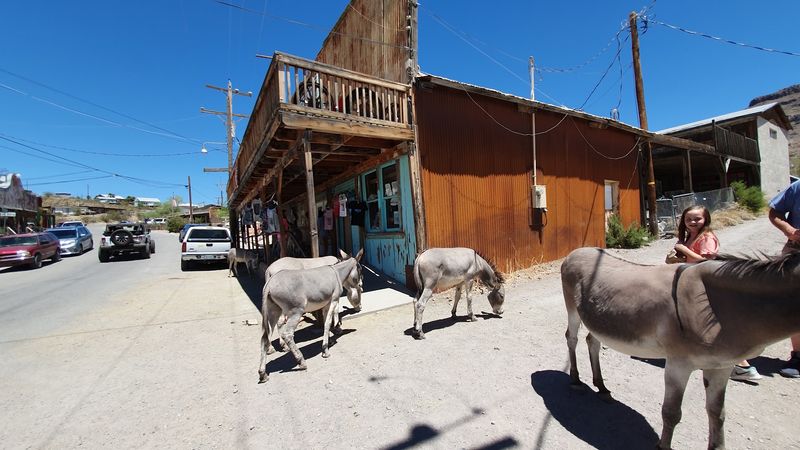
Some weekends, the burros are not the only performers on the street. Costumed actors often stage Old West shows right on the main road.
The skits lean into frontier humor and theater. They add a playful layer to an already unusual day out.
Show schedules can vary by season and day. Weekends tend to be the most reliable time to catch one.
Performances usually draw a crowd along the boardwalks. Arriving a little early helps you find a decent spot.
Families with kids often treat the show as a highlight. It pairs well with burro feeding and shop browsing for a full afternoon.
The performers sometimes pass a hat or ask for donations. Having a few small bills ready makes that easy.
Between acts, the burros may wander through the scene as uninvited extras. They never learned their lines, but they always steal the spotlight.
10. Who Will Love This Place Most
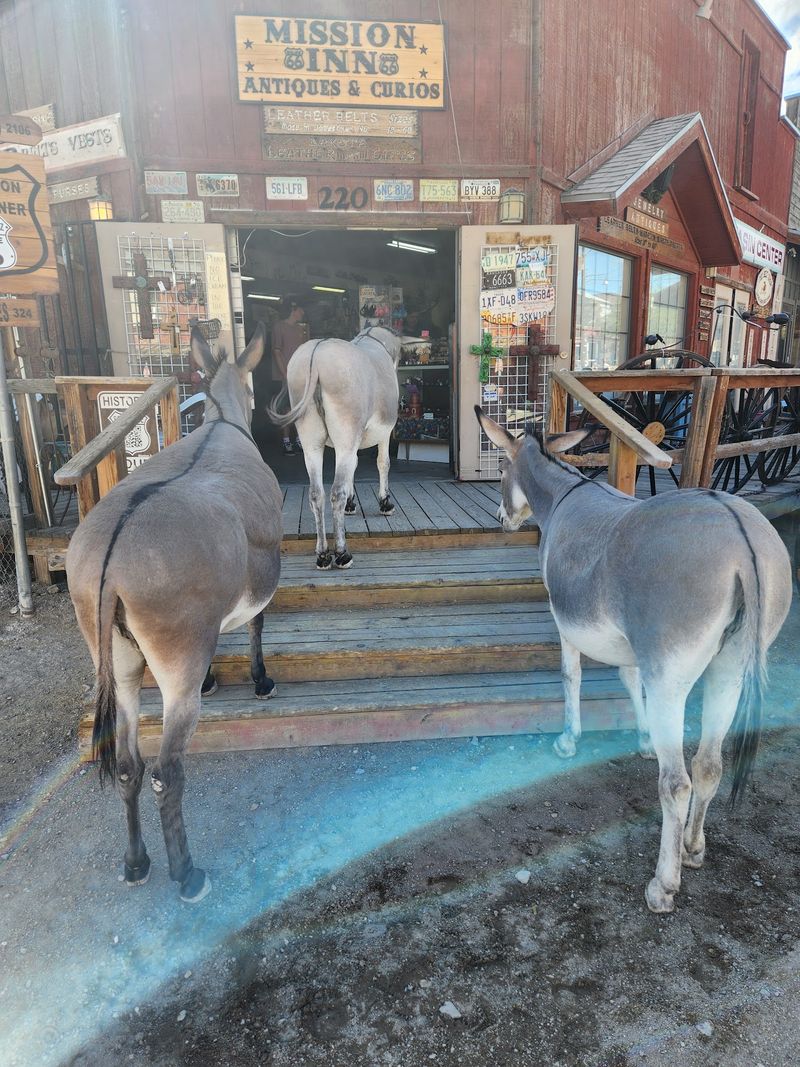
Animal lovers, road trippers, and history fans all find something here. The crowd is a cheerful mix of families, motorcyclists, and classic car drivers.
Kids tend to go wild for the burros. Few places let them get this close to wild animals in an everyday setting.
Route 66 fans get a rare, lived-in stretch of the old road. Photographers get endless shots of burros posing beside vintage storefronts.
The vibe is relaxed and a bit quirky. Nobody is in a hurry, and the animals make sure of that.
Travelers seeking polished attractions may find it rustic. The charm lies in its rough edges and small size.
Plan for a few hours on the street. That is usually enough time to feed burros, browse shops, and catch a show if one is running.
For Arizona locals, it is a trip with real bragging rights. Few weekend stories top the one about the donkey that tried to climb into your back seat.
11. Timing, Cash, and Burro Etiquette
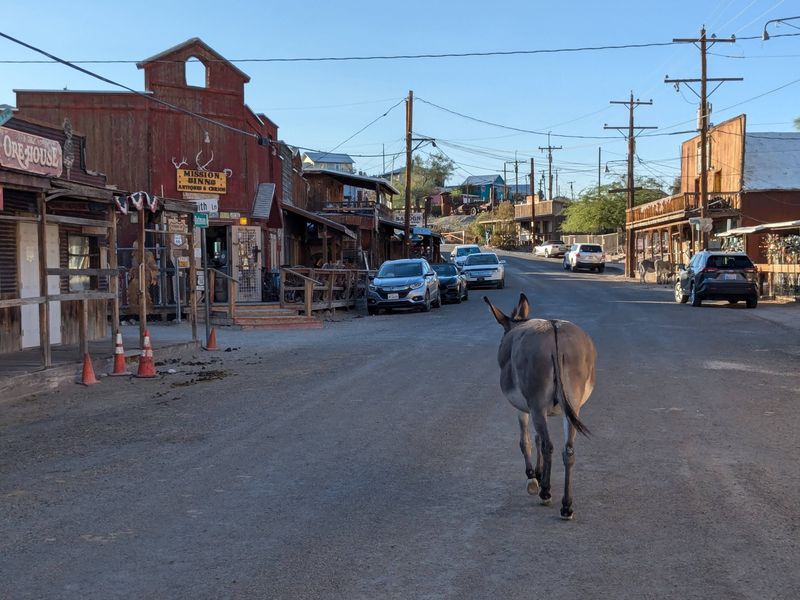
A little planning makes this trip much smoother. Season, timing, and a few dollars in your pocket all matter.
Fall, winter, and spring are the most comfortable seasons for a visit. Summer in western Arizona can bring intense heat, even at 2,710 feet.
Daytime is when the burros are most active in town. Shops also tend to close by late afternoon, so earlier arrivals usually get more out of the day.
Bring cash for hay cubes, small shop purchases, and tips for performers. Not every business may accept cards.
Parking fills up on busy weekends. Arriving earlier gives you a better shot at a spot close to the action.
Watch where you step on the street. The burros roam freely, and they leave reminders behind.
Never feed human snacks, and do not pull on or chase the animals. Respect keeps them wild, healthy, and welcome in town for years to come.
Follow those simple rules, and the burros will happily do the rest.
12. Why the Burros Are Worth the Drive
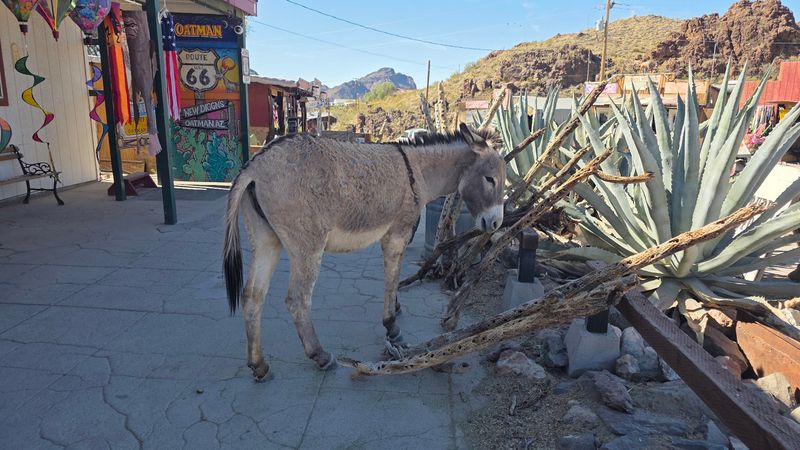
A gold strike built this town, and the animals that served the miners quietly kept it alive. More than a century later, their descendants still show up for work every day.
The trip takes effort. Long highway miles and a twisting mountain pass stand between the Valley and this little street.
What waits at the end is unlike anywhere else in the state. A wild burro asking for a hay cube on Route 66 is the kind of moment that sticks.
Costs stay low for a day out. A bag of hay cubes, a souvenir, and some gas money cover most of the experience.
History buffs get the mining story and the Hollywood footnote. Families get hands-on animal time, and road trippers get one of the most famous stretches of the Mother Road.
It is small, scruffy, and proudly stuck in its own era. That is exactly the appeal.
Pack some cash, fill the tank, and head for the Black Mountains. The burros are already waiting at the curb, and they have been expecting you.
Share this story