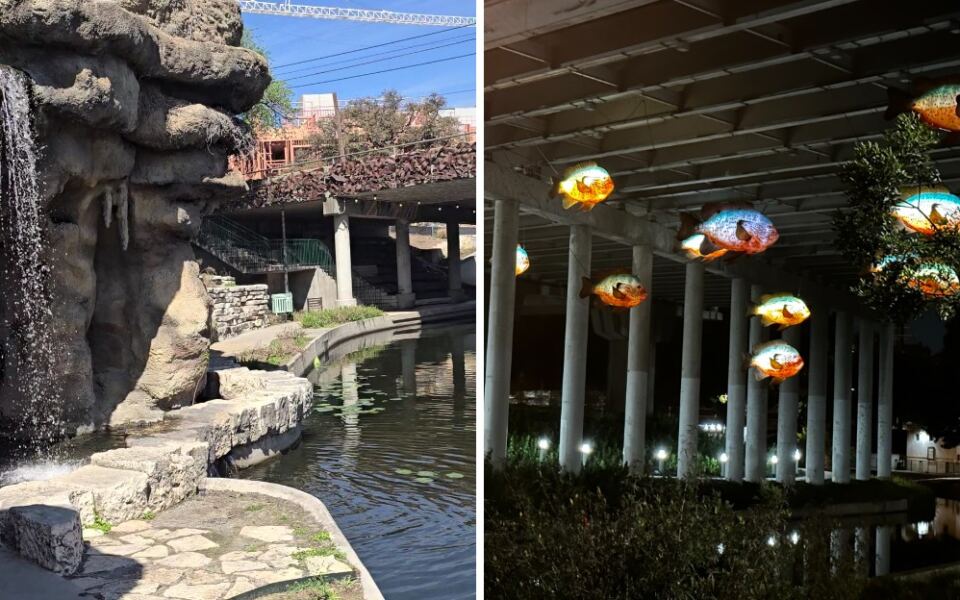
A three-story cave rises from the edge of a river, and nobody dug it out of a hillside. Every craggy face, dripping stalactite, and splashing waterfall was shaped by hand from concrete.
The artist behind it comes from a family that has worked in faux bois, or false wood, for three generations. That background shows in every twisted, rock-like curve. I like how the whole thing feels part sculpture, part dream, part secret.
This Texas oddity sits along a quiet stretch of riverbank most visitors never reach. There are no tickets, no gates, and no closing time. You just stroll up and let the strange faces stare back.
I believe the best surprises are the ones you almost miss. So how many people have walked right by without knowing it was there?
A Cave That Was Built, Not Found
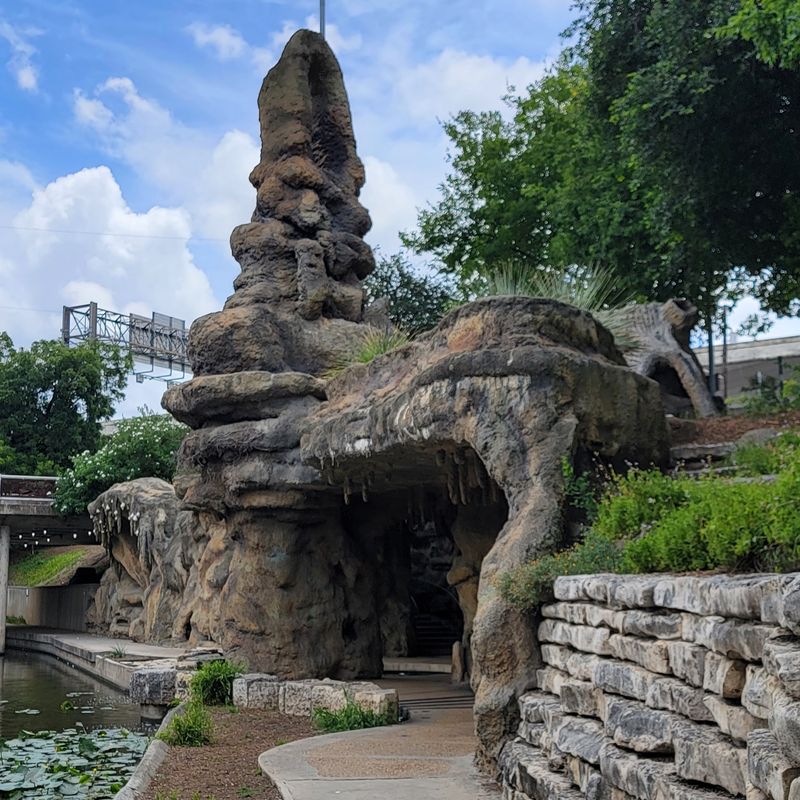
Nature didn’t make this cave, and that’s exactly the fun part. The Grotto is a sculpted concrete structure designed by artist Carlos Cortés and completed in 2009.
It stands about three stories tall along a bend in the San Antonio River. The design mimics a real cavern, with rough walls, rocky ledges, and hanging formations.
Here’s what makes it clever. The entire thing is reinforced concrete, yet it looks weathered and ancient. Your brain keeps insisting it must be natural stone.
The San Antonio River Foundation made the project happen through private donations. The finished artwork was then donated to the City of San Antonio for everyone to enjoy.
That means it belongs to the public in a very real way. Nobody charges admission, and there’s no ticket booth to slow you down.
It also helps explain the relaxed feel of the place. You aren’t visiting a ride or a staged show. You’re standing beside a piece of public art that happens to look like the entrance to another world.
Give it a few minutes, and the details start to pile up. That’s when the real magic shows up.
The Artist Comes From A Family Of Concrete Wizards
Carlos Cortés is a third-generation faux bois artist. Faux bois is French for false wood, and it describes concrete shaped to look like trees, branches, and natural forms.
The craft runs deep in his family. His great-uncle, Dionicio Rodriguez, became famous for faux bois work across the United States, including pieces in San Antonio.
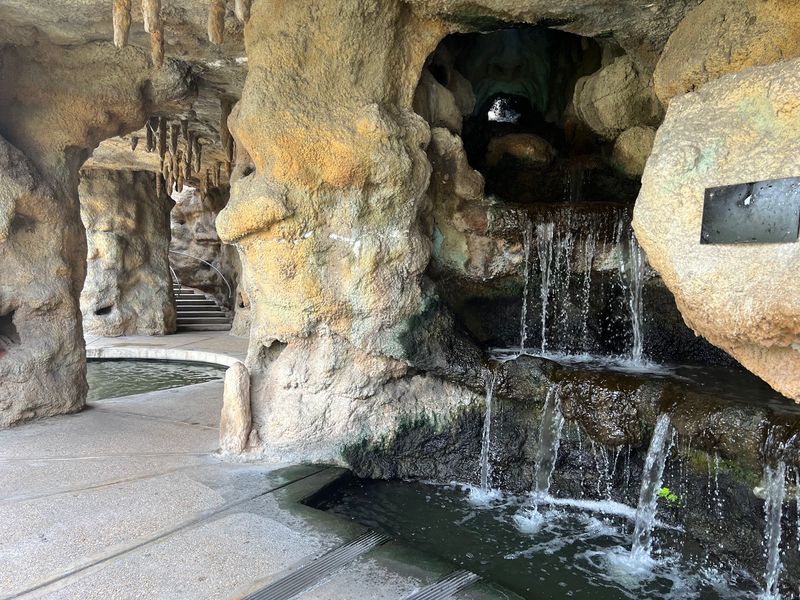
That legacy matters when you look at The Grotto. Every crack and ridge was carved and textured by hand while the concrete was still workable.
It’s slow, patient work. Artists in this tradition build up layers and sculpt fine details before the material sets. There’s no quick fix once it hardens.
Knowing this changes how you see the walls. Those rough surfaces aren’t accidents or random bumps. They’re choices made by someone trained in a rare and very old craft.
Cortés has created other faux bois pieces along the San Antonio River too. So The Grotto fits into a larger story of art shaping the riverbanks in Texas.
Next time a branch or stone looks a little too perfect, look closer. It might be concrete pretending very hard.
Those Faces In The Walls Are Watching You
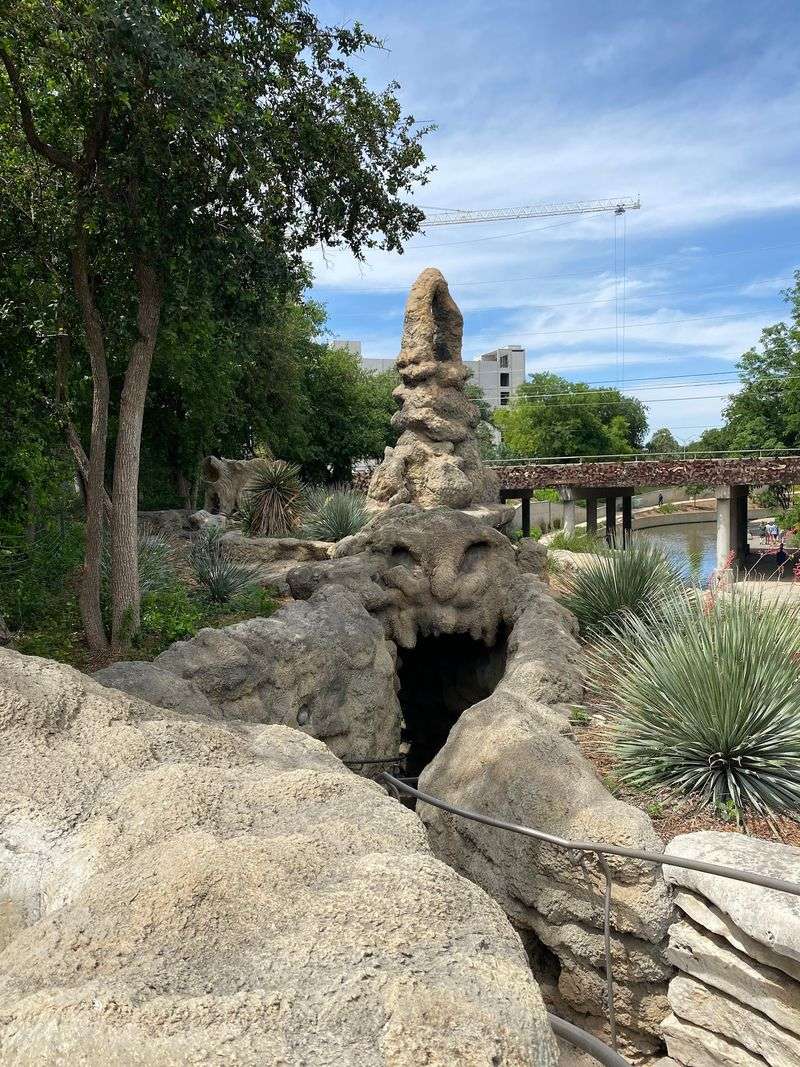
Faces peek out from the cave walls almost everywhere you turn. Some look calm, some look a little grumpy, and a few seem like they know a secret.
These craggy faces are carved right into the rocky surfaces. They blend into the stone so well that you might miss them on a quick glance.
That’s half the fun. Spotting them feels like a game of hide-and-seek with the artwork. Kids especially tend to turn it into a challenge.
One of the big features is a jaguar. Its open mouth works like a gateway, so you walk through it as you enter the space.
Honestly, how often do you get to stroll through a giant cat’s jaws? It’s playful and slightly eerie at the same time.
The mix of creatures and faces gives The Grotto a mythical feel. It seems inspired by legends and old stories rather than a simple cave design.
Bring your camera and move slowly. Different angles reveal new expressions, and a face you missed going in might greet you on the way out.
Stalactites, Stalagmites, And A Splash Of Waterfall
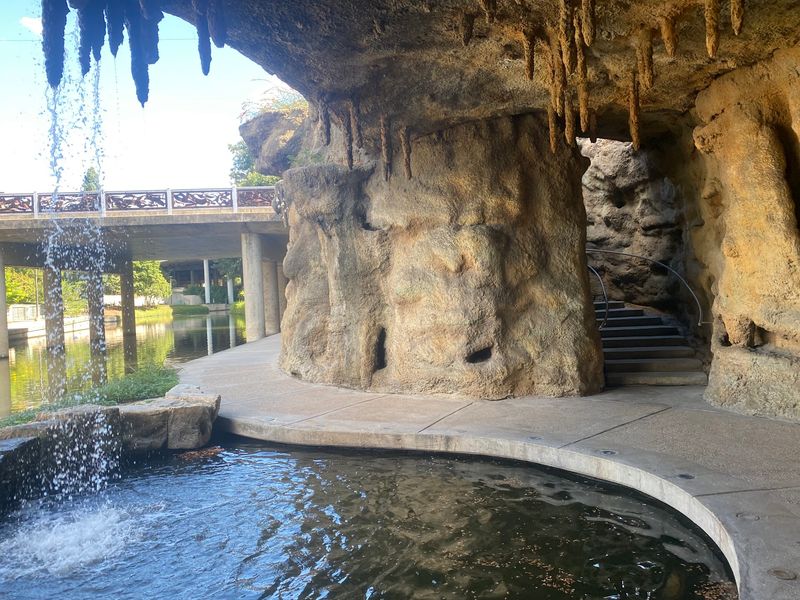
Pointy formations hang from the ceiling like frozen drips. Others rise up from below, making the space feel like a true underground cavern.
Quick science refresher. Stalactites hang down from above, and stalagmites grow up from the ground. The Grotto has both, all sculpted from concrete.
They look surprisingly real. The textures copy the slow, bumpy growth you’d see inside actual Texas caverns.
Then there’s the water. Waterfalls spill over the rocky edges, adding sound and movement to the scene.
The splashing gives the whole spot a calmer mood. It’s the kind of background noise that makes you want to linger a little longer.
One honest tip. The water features aren’t always running, so timing can affect what you see. It’s still worth the visit when they’re off, but the falls do add extra charm.
The curved, overhanging shapes also create some shade along the path. On a hot San Antonio afternoon, that’s not a small perk.
Stand under the ledges for a moment and look up. It’s easy to forget you’re steps away from city streets.
Look Closely And You Will Spot Ancient Seashells
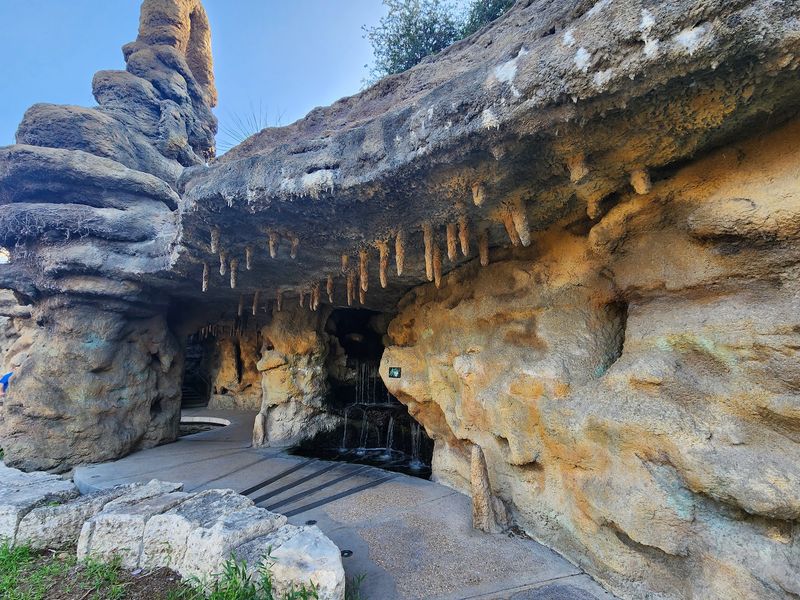
Seashells in a river cave? It sounds odd until you remember what Texas used to be.
Millions of years ago, much of the state sat under a shallow sea. The limestone across Central Texas formed from that ancient ocean floor.
The Grotto nods to that history. Shell shapes appear in the design, a small but clever reminder of the region’s watery past.
This is one of those details that rewards slow walkers. If you rush through, the shells blend right into the rocky texture.
It’s a great teaching moment for curious kids. You can turn a quick stroll into a mini geology lesson without anyone noticing they’re learning.
I love art that connects to the ground it stands on. These shells tie the sculpture to the real rock beneath San Antonio.
Take a few minutes to hunt for them along the walls. Point them out to whoever you’re with and watch the cave suddenly make more sense.
It’s proof that good public art can be both pretty and smart. Not bad for a pile of concrete.
Finding It Takes A Little Know-How
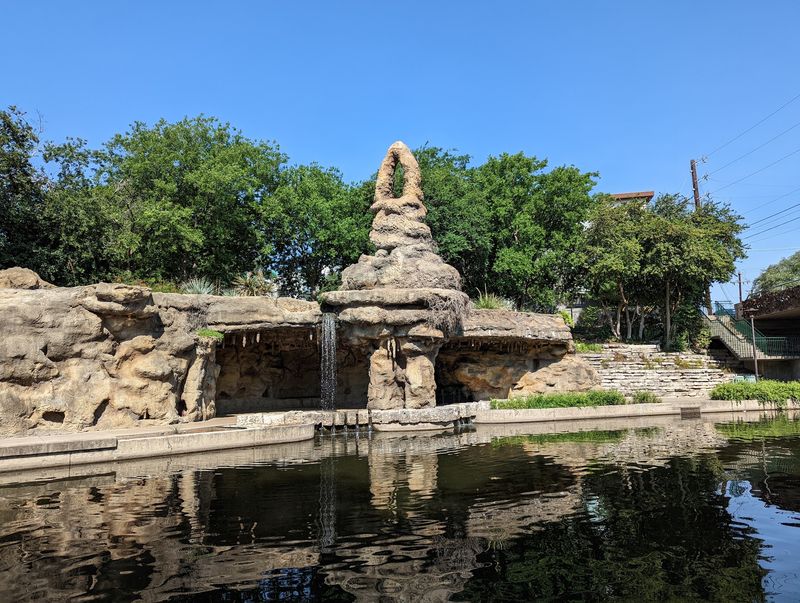
Drive past on the street, and you could easily miss the whole thing. The Grotto sits down along the river, out of sight from most passing traffic.
The official address is N River Walk, San Antonio, TX 78215. It’s tucked in a river bend between the Camden Street and Newell Avenue bridges.
This stretch belongs to the Museum Reach section of the River Walk. It’s quieter than the busy downtown loop crowded with restaurants and boats.
The Pearl district sits just to the north. Many people walk down from there, since the distance is short and the path is paved.
Parking options exist in the area, including spots near the interstate overpass close to Camden Street. Rules and fees can change, so check signs before you leave the car.
The best approach is simple. Come down to the river and follow the walkway until the rocky walls appear.
Once you know where it is, it feels almost unfair how close it sits to busy roads. A little effort gets you a lot of wonder here in Texas.
Free, Open Around The Clock, And Never Rushed
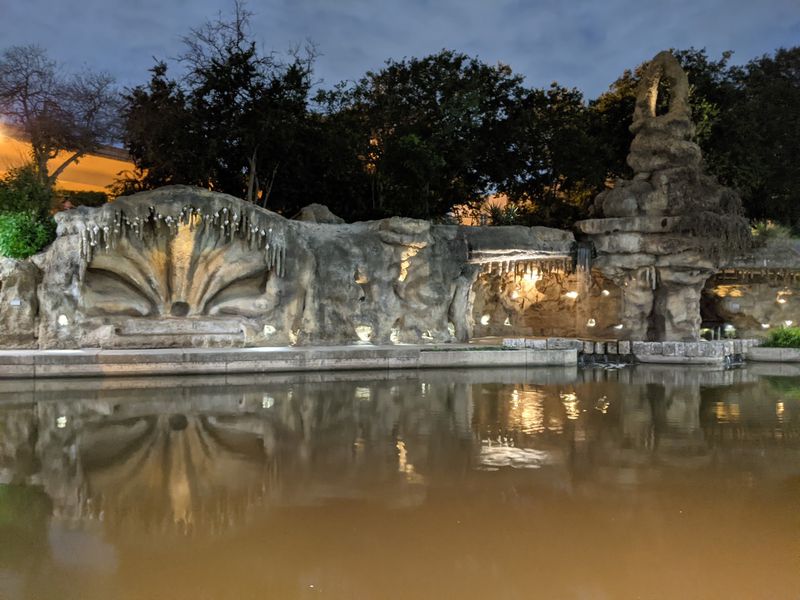
No tickets, no lines, no closing time. The Grotto is listed as open 24 hours, which makes it one of the easiest attractions in San Antonio to fit into your day.
That flexibility opens up lots of options. You can stop by on a morning jog or swing through after dinner.
A visit doesn’t need to take long either. Many people spend around 10 to 15 minutes exploring the main structure.
Of course, you can stay longer. The riverside path invites slow walking, quiet sitting, and plenty of photo breaks.
Lighting changes the mood a lot. Morning and late evening offer softer light for pictures, while midday sun brings stronger shadows across the carved surfaces.
After dark, the cave feels a bit more mysterious. Lights brighten parts of the area, giving the faces and formations a whole new personality.
Since it costs nothing, there’s no pressure to make it worth the money. Just wander, look around, and leave whenever you like.
Honestly, a free piece of art that never closes is a rare thing. I can’t imagine skipping it when it’s this easy.
Keep Your Eyes On The Water And The Sky

Wildlife adds a bonus layer to this stop. Ducks often paddle along this stretch of the San Antonio River, and fish swim through the water nearby.
Catfish are among the fish you might spot. Watching them glide around makes a nice break between photo sessions.
The bigger show happens near sunset. Bats live under the Interstate 35 overpass close by, and they fly out to feed as evening falls.
It’s a classic Texas sight. Mexican free-tailed bats are famous across the state, and this spot gives you a chance to see some in action.
Timing matters if you want to catch them. Arrive a little before sunset and find a comfortable place to watch.
Bat flights depend on season and weather, so nothing is guaranteed. Still, the wait is pleasant with the river beside you.
Pair the bats with the cave, and you get a strangely perfect evening. Concrete creatures by the wall, real ones in the sky.
Bring patience and maybe a light snack. Nature runs on its own schedule, not yours.
Make It Part Of A Bigger River Walk Adventure
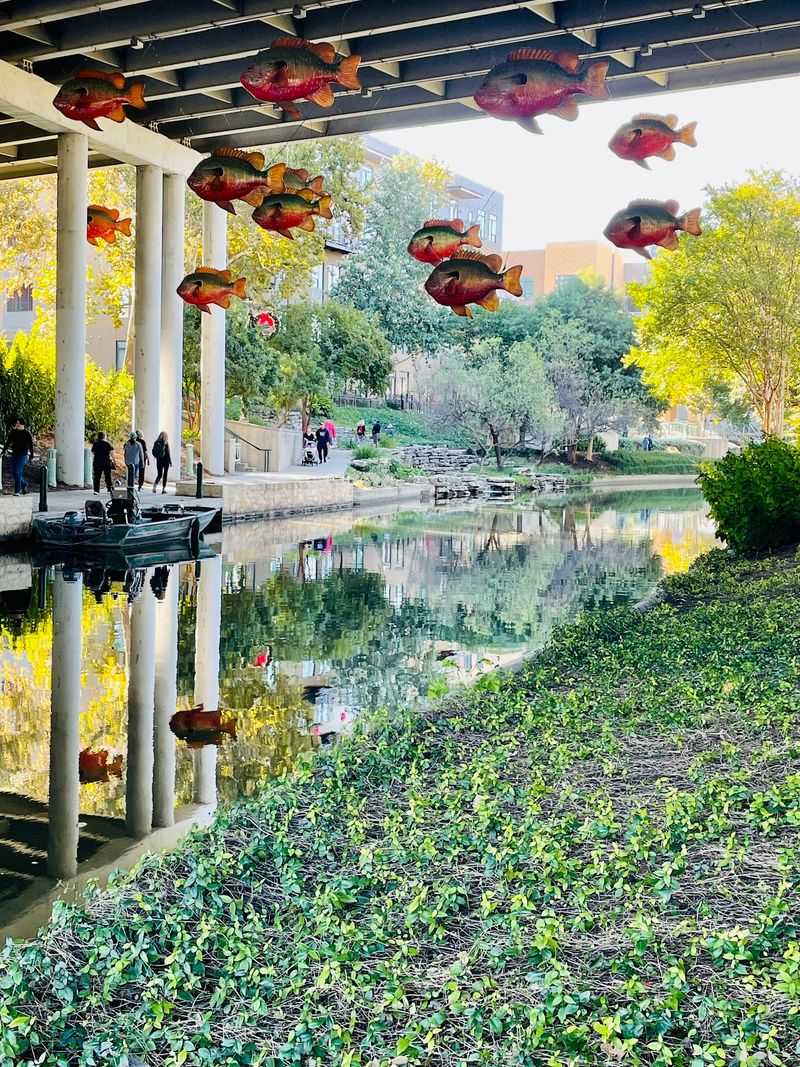
Short visits pair beautifully with longer plans. The Grotto works best as one stop on a fuller stroll along the Museum Reach.
The Pearl sits just north and makes an easy starting point. It’s known for restaurants, shops, and a weekend farmers market.
Head south instead, and the path eventually leads toward downtown. Along the way, you’ll pass other public art and landscaped riverbanks.
The San Antonio Museum of Art also sits along this reach. Adding it turns a quick walk into a full culture day.
Comfortable shoes are your best friend here. The paved path is friendly for walkers, joggers, and families with strollers.
Many people bring their dogs too. Just keep pets leashed and stay mindful of others sharing the walkway.
Water is smart to carry, especially in summer. Texas heat doesn’t care about your sightseeing plans.
Once you finish, you’ll understand why this spot deserves more attention. It’s quirky, free, and full of surprises.
So next time you’re on the River Walk, keep going a little farther. The jaguar is waiting with its mouth wide open.
Share this story