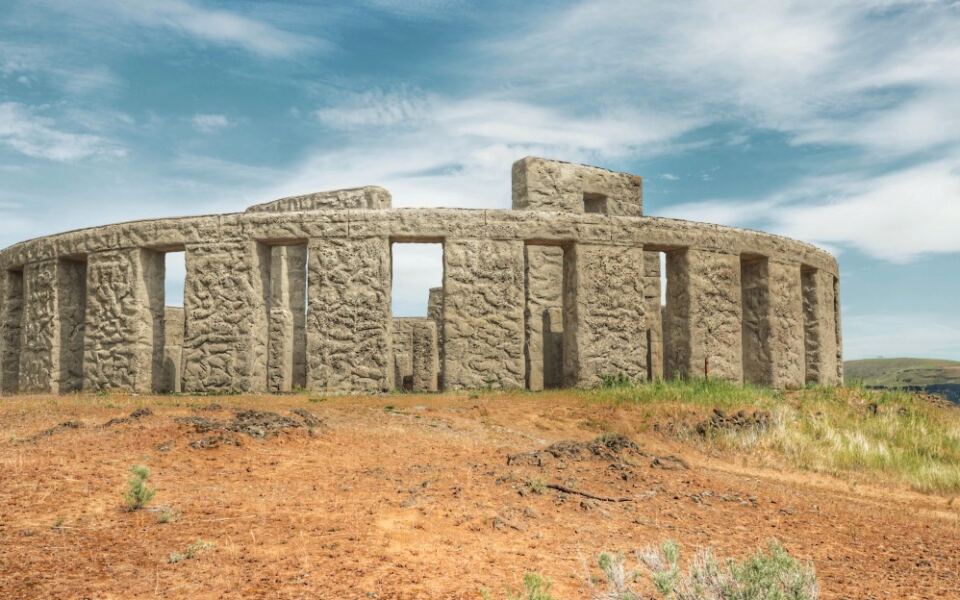
The stones are concrete, the circle is complete, and the river lies far below. This full-size Stonehenge replica makes an unusual sight on a windy bluff, especially once you learn why someone built it.
A wealthy road builder conceived it as a memorial to local soldiers who died in World War I. Construction took more than a decade.
Its intact arrangement reflects how the builders believed the English monument once looked, before time left its familiar gaps.
I’m drawn to that combination of an unexpected idea and a deeply personal purpose. You could arrive curious about the enormous stone circle, then find yourself spending longer with the names it commemorates.
Around it, dry hills and open sky give the monument plenty of room. The setting catches your attention, but the story of the man behind it gives you a reason to look closer.
A Stone Circle That Looks Finished, Not Fallen
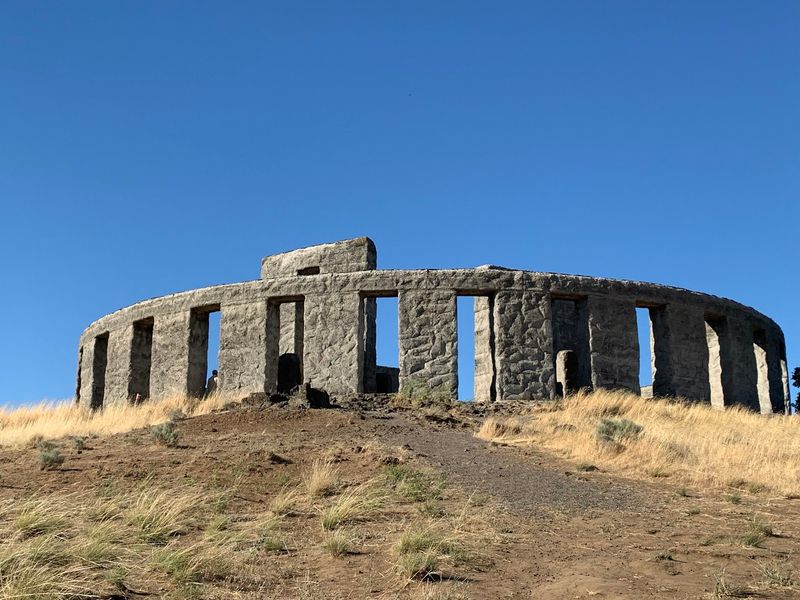
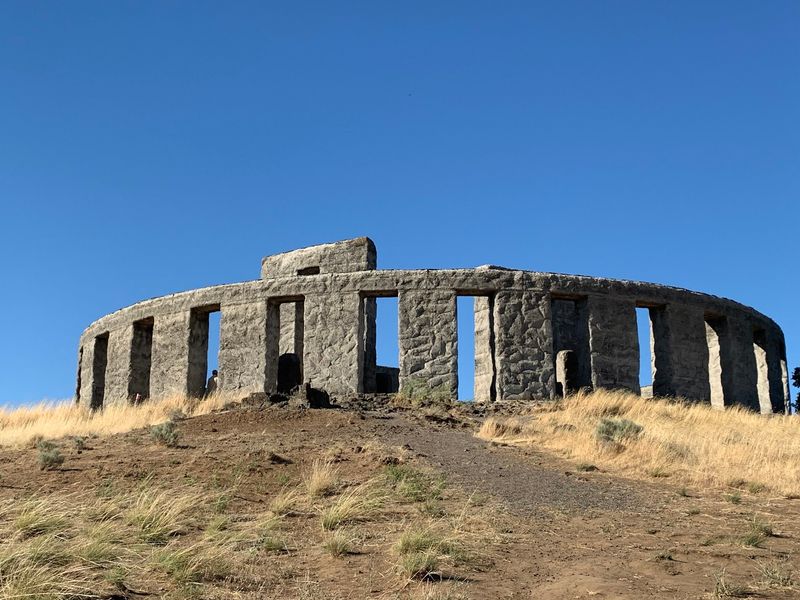
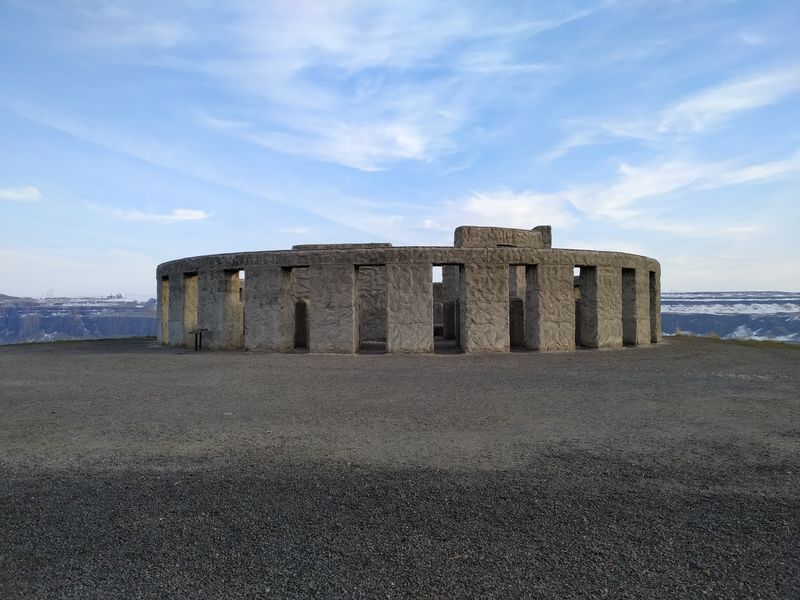
England’s Stonehenge is famous for its toppled, broken stones. The Stonehenge Memorial in Maryhill, Washington, shows the circle standing tall and complete.
Builders made it from concrete instead of quarried rock. The goal was to show how the ancient monument may have looked when it was new.
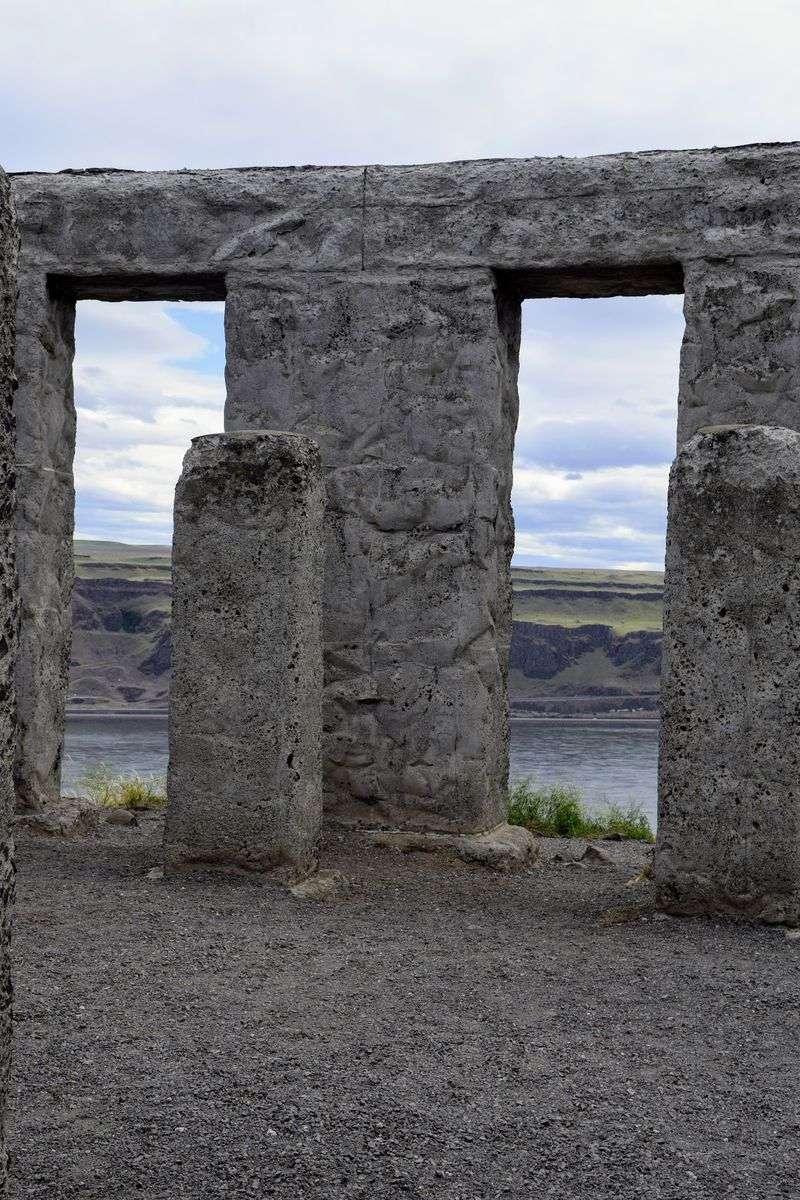
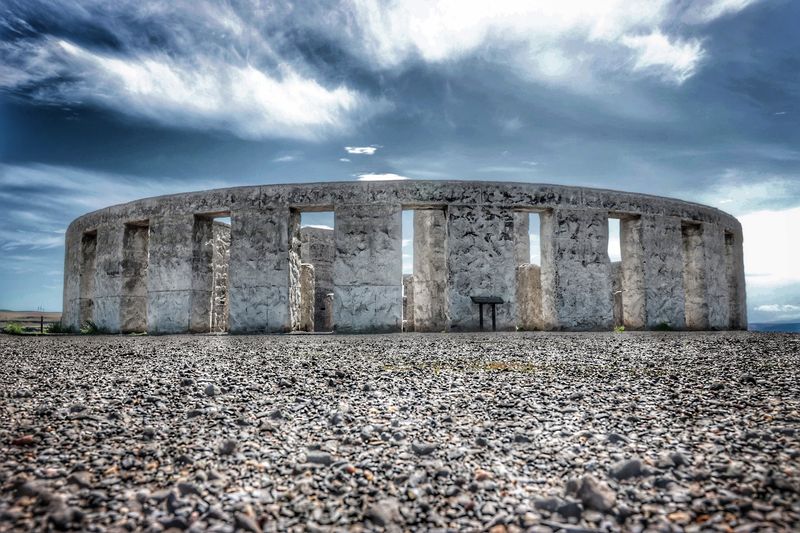
That changes the whole experience. You get massive pillars topped with heavy lintels, all forming a tidy ring you can actually walk inside.
Back in England, visitors usually stay behind ropes. Here, you can stand right beside the stones and feel how huge they are.
The inner horseshoe of taller stones adds even more drama. Each pair looks like a giant doorway built for someone twice your height.
Look closely at the surfaces too. The concrete was shaped to look rough and rocky, so the stones don’t feel smooth or fake.
It’s a little bit history lesson and a little bit time machine. Kids tend to see it as the world’s coolest maze.
Bring a jacket, though. The open bluff catches plenty of wind, and those stones block only some of it.
The Big Dreamer Behind This Odd Masterpiece
Sam Hill was a businessman with very big ideas. He helped push for good roads in the Pacific Northwest, including the famous Columbia River Highway.
He also bought land along this part of the river. His plan was to build a Quaker farming community called Maryhill.
The farm town never really took off. His Stonehenge idea, however, stuck around and became one of the region’s most unusual landmarks.
Hill had visited England’s Stonehenge in person. He was told it had been a place of human sacrifice, a theory unsupported by archaeological evidence.
That story shaped his thinking. He wanted his copy to remind people how much humans still suffer from violence in modern times.
Honestly, few people would turn a bad history tip into a giant monument. Hill did, and the result still draws travelers a century later.
He was the same man behind the nearby Maryhill Museum of Art. Clearly, he never met a dusty hillside he couldn’t fill with something remarkable.
Knowing his story makes the stones feel more personal. They reflect one stubborn dreamer and his hopes for peace.
A Monument With a Very Human Heart
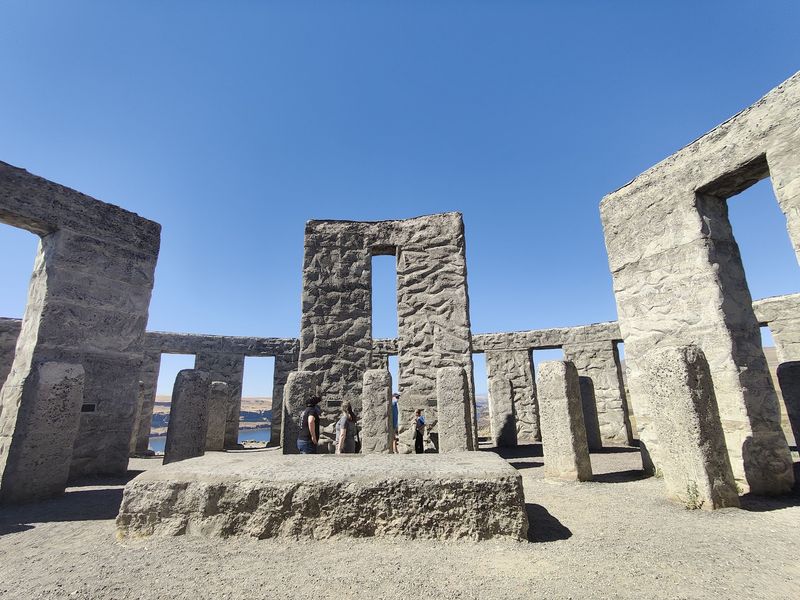
Fourteen names sit at the center of this place. They belong to young men from Klickitat County who lost their lives serving in WWI.
Sam Hill built the memorial to honor them. Plaques with their names and short details are attached to the stones.
Reading them slows you down fast. Some were barely adults, and seeing their names makes the huge structure suddenly feel small and personal.
The altar stone was dedicated on July 4, 1918. The full memorial was finished and dedicated in 1929.
That long timeline shows real commitment. Building something this big on a remote bluff was no weekend project.
Over the years, other memorials were added on the grounds. They honor local veterans from later conflicts, so the site keeps growing with the community.
Please treat the area with care while you explore. Climbing on stones or leaving trash takes away from its purpose.
A quiet minute at the plaques is worth it. It’s the part of the visit that tends to stay with people long after the drive home.
You Will Want Your Camera Ready for This Gorge View
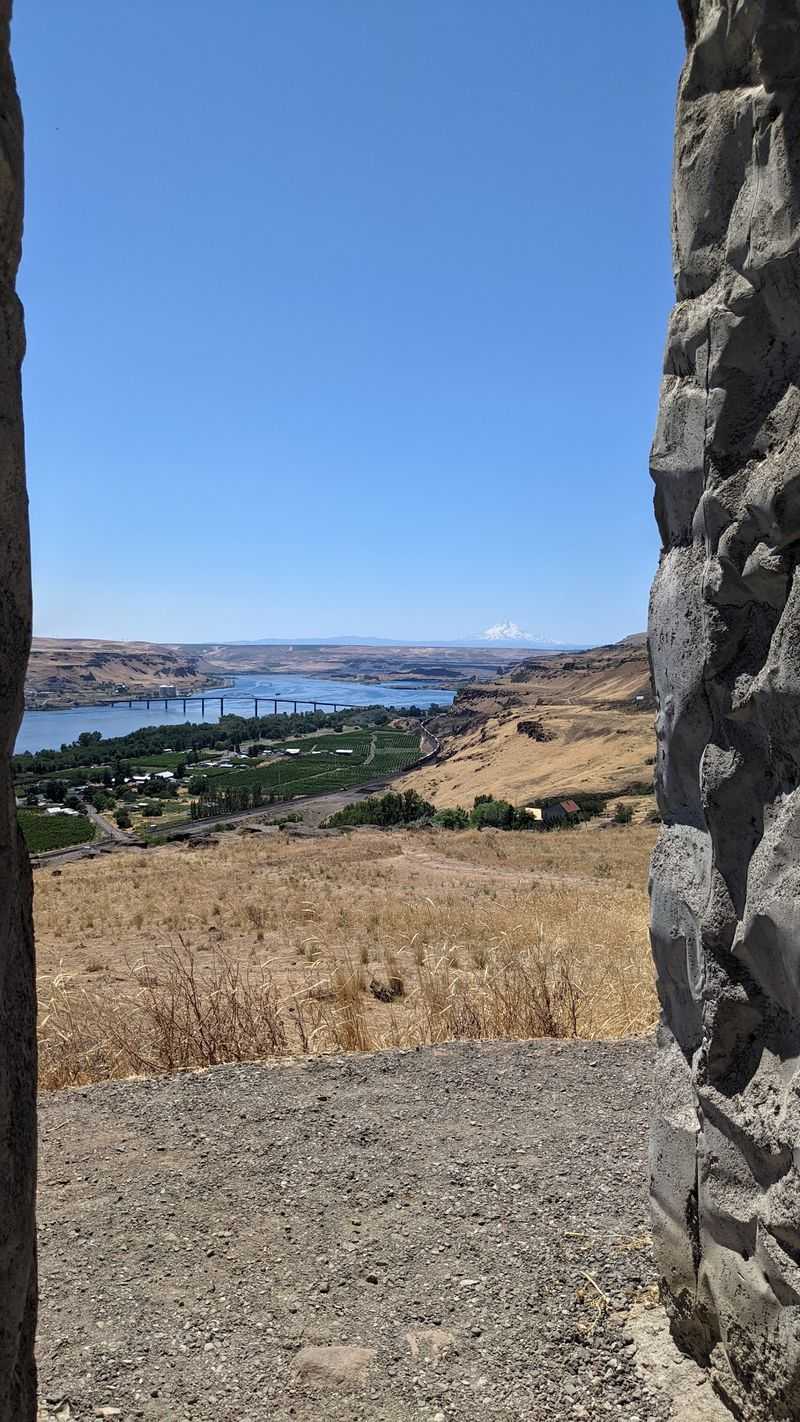
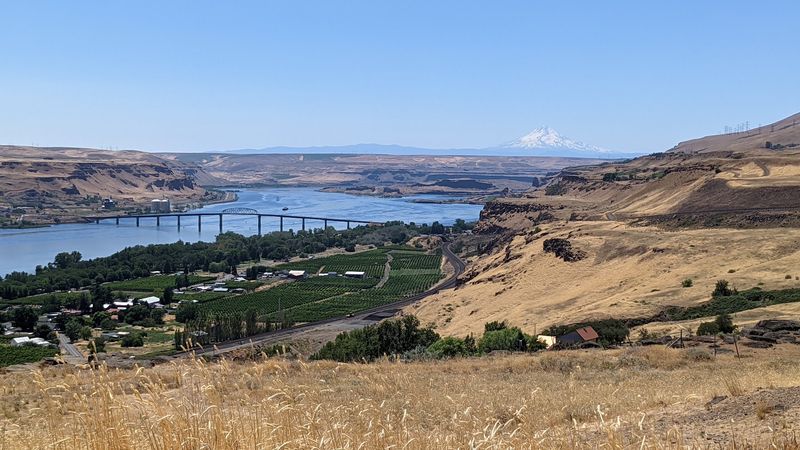
Few monuments get a backdrop this dramatic. The circle sits high above the Columbia River Gorge, with wide views in nearly every direction.
Below, the river cuts a deep blue line through tan hills. Across the water, you can look toward Oregon.
The landscape here is dry and open. Instead of thick forests, you get rolling slopes, big skies, and long shadows.
That emptiness is exactly why the setting feels haunting. The stones stand alone against the horizon, almost like they’ve been waiting for someone.
Photographers love framing the river through gaps between pillars. Try crouching low to make the stones look even taller against the sky.
Cloudy days work well too. Gray skies make the concrete look older and moodier, which suits the place perfectly.
On clear days, Mount Hood may appear in the distance. It’s a lovely bonus when the weather cooperates.
Plan a little extra time just to look around. Rushing back to the car would mean missing half of what makes this spot special.
Solstice Sunrise Is the Main Event Here
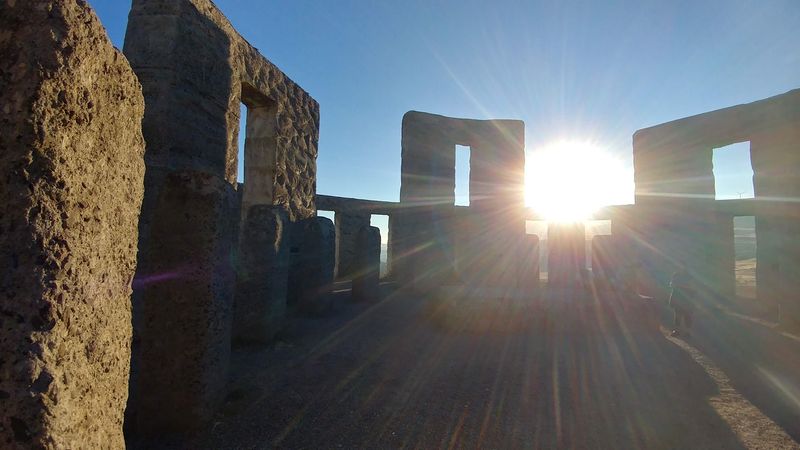
Ancient Stonehenge is linked to the sun’s yearly path. Sam Hill’s version was designed with the summer solstice sunrise in mind too.
The altar stone’s alignment uses the astronomical horizon, so it does not precisely match the visible summer solstice sunrise. It’s a neat nod to the original monument’s mysterious purpose.
Solstice mornings often bring people out early to watch. Equinoxes and the winter solstice draw sky watchers as well.
Getting there means an alarm clock before dawn in June. It’s a small price for watching light spill across the stones.
Arrive early so you’re not scrambling in the dark. A flashlight helps on the walk from the parking area.
Layers are smart even in summer. Early mornings on an open bluff can feel surprisingly cool.
Sunset is a gentler option for sleepyheads. Golden evening light makes the concrete glow and the hills turn warm shades of orange.
Either way, timing your trip with the sun adds real magic. You’re seeing the stones do what their famous ancestor was built to do.
A Quiet Resting Place Just Down the Slope
Sam Hill didn’t just build here. He chose this land as his final resting place too.
His crypt sits on the slope below the memorial, facing the river. A short path leads down from the stone circle area.
It’s a simple spot compared with the giant monument above. That contrast makes it feel calm and fitting.
Many people skip it because they don’t know it exists. Now you do, so you get the bonus stop.
The walk can be steep and uneven in places. Wear shoes with good grip, especially after rain.
Standing there, you see what Hill must have loved. The river, the hills, and his beloved monument all fit into one view.
Respect is the rule here, just like at the plaques. Keep voices low and leave everything as you found it.
It rounds out the story nicely. You start with the dreamer’s big creation and end with the man himself, still keeping watch over the gorge.
Getting There Is Easier Than You Might Expect
Good news for road trippers. The site sits just off State Route 14, close to where U.S.
Highway 97 crosses the river.
The official address is Stonehenge Dr, Goldendale, WA 98620. It’s in the tiny Maryhill area of Klickitat County, Washington.
A small parking area sits right near the stones. From there, it’s just a short stroll to the circle.
Visiting is free, which is always nice. The grounds are generally open daily from morning until dusk.
Services are limited right at the monument. Bring water, snacks, and sunscreen, because summer days in this area can get hot.
Shade is also scarce on the bluff. A hat will make you much happier on a sunny afternoon.
The drive from Portland takes around two hours. That makes it an easy day trip with plenty of scenery along the way.
Check road conditions in winter before heading out. Wind and occasional snow can make the gorge less friendly in colder months.
Pair It With an Art Museum in a Castle-Like Mansion
Sam Hill’s other big project sits just a few miles west. The Maryhill Museum of Art fills a grand mansion overlooking the same river.
It was originally meant to be his home. Friends, including Queen Marie of Romania, helped shape it into a museum instead.
Inside, you’ll find a surprising mix of collections. Highlights include works by sculptor Auguste Rodin and Native American art.
The grounds are a treat as well. Outdoor sculptures and wide lawns give you more gorge views to enjoy.
The museum is typically open seasonally, from spring through fall. Check hours before you go so you don’t arrive to locked doors.
Visiting both places tells the full Sam Hill story. One shows his love of art, and the other shows his hopes for peace.
Together they make a really satisfying day. You get culture, history, and scenery without long drives in between.
Plus, saying you saw Rodin and Stonehenge in one afternoon is a fun brag. Few Washington day trips can match that combo.
Stretch the Trip Into a Full Gorge Adventure
Why rush home after seeing the stones? This corner of the gorge has more to offer than one monument.
Maryhill State Park sits along the river below the bluff. It offers camping, picnic spots, and easy water access.
That makes it a great place to cool off after the windy hilltop. Families can spread out a blanket and relax by the water.
The area is also known for windsurfing and kiteboarding. All that wind finally has a job.
Up the road, you can spot the Maryhill Loops Road. Sam Hill built it as a test for paved roads, and its curves look amazing from above.
Goldendale is a short drive north too. It’s home to Goldendale Observatory State Park, a fun spot for stargazing.
Linking these stops turns a quick photo break into a mini vacation. Each one adds a new side to the same fascinating area.
So pack the car, charge your camera, and give yourself time. Washington’s own Stonehenge deserves more than a drive-by glance.
Share this story