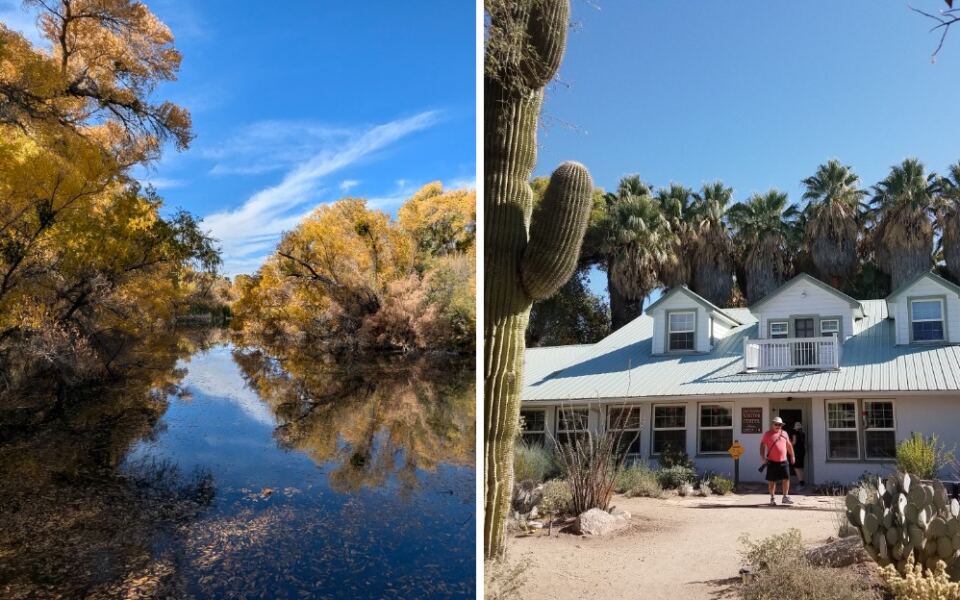
Most of the Hassayampa River spends its life underground, out of sight beneath the desert near Wickenburg. Along one short stretch, it finally comes up for air, and the landscape changes completely. Towering cottonwoods, willows, palms, and a spring-fed lake turn the Sonoran scrub into a shaded green corridor that more than 280 bird species use for nesting, living, or resting on migration.
Hummingbirds work the flowers by the visitor center, hawks patrol overhead, and turtles share the water with waterfowl. The best part for Valley locals is the cost: kids get in free, adults pay a few dollars, and a county park pass can cover entry entirely. It sits about 25 minutes past the Loop 303 and US 60 junction, yet plenty of Phoenix residents have driven right past it for years.
Here is everything worth knowing before the next weekend drive northwest.
1. A River That Finally Shows Its Face
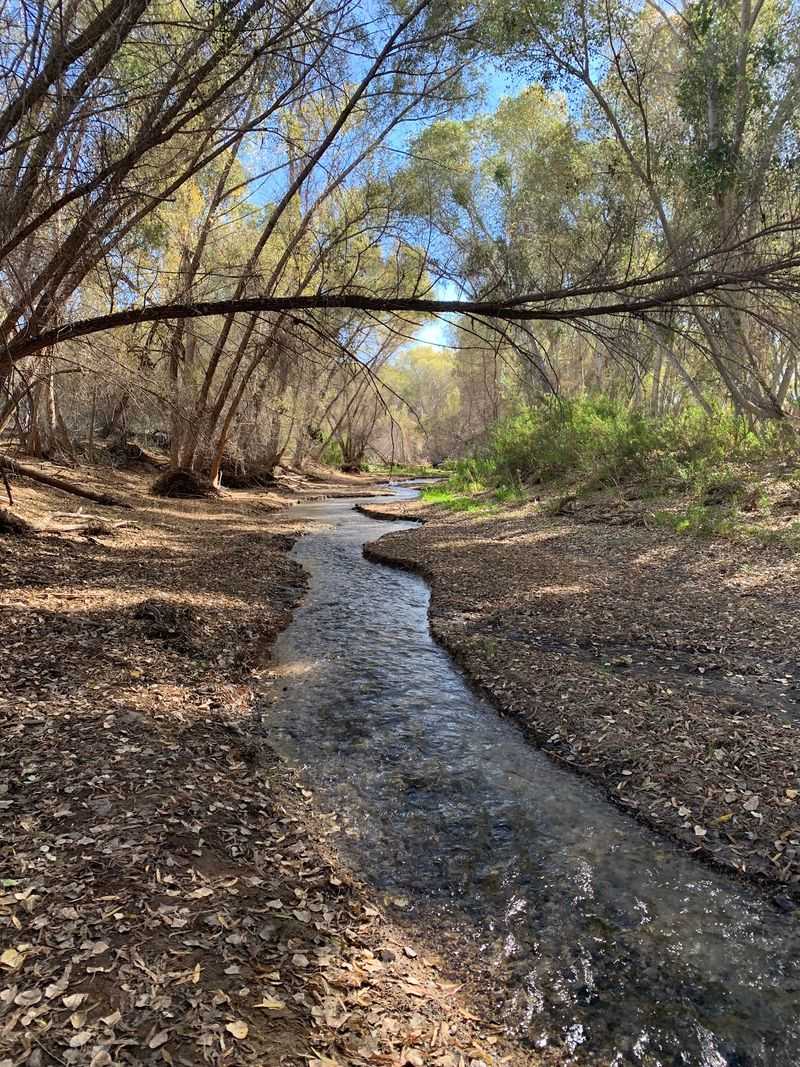
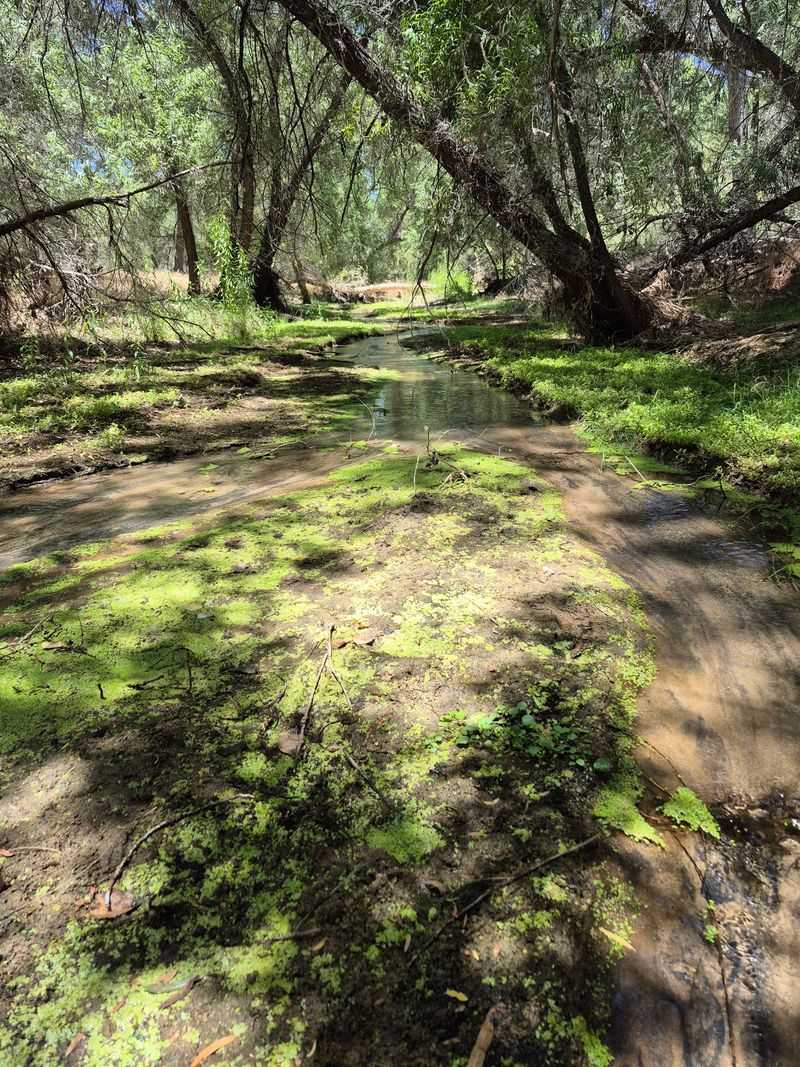
Some rivers make a grand entrance, but the Hassayampa prefers a quiet cameo. Of the roughly 100 miles it travels, most of the flow stays underground, and this preserve protects one of the rare places where the water runs freely at the surface.
The spot is Hassayampa River Preserve, at 49614 U.S. Hwy 60 89, Wickenburg, AZ 85390, in the United States. It is run through Maricopa County Parks and covers about 770 acres of riparian habitat on the edge of town.
That surfacing water is the whole reason the preserve exists. Where the river appears, trees grow tall, marshes form, and wildlife follows.
The result is a green ribbon in a brown landscape. It is the kind of place people call an oasis without exaggerating much, and the word comes up again and again in descriptions of the property.
Water levels do shift with the seasons. Winter and early spring tend to bring more flow, while drier months can leave the riverbed lower than expected.
A late January trip, for example, is a solid bet for catching the river actually behaving like a river. Timing a visit around that window may reward the effort with moving water and full creek crossings.
So what grows when a desert river refuses to stay buried? Quite a lot, as the trails soon prove.
2. The House That Became a Visitor Center
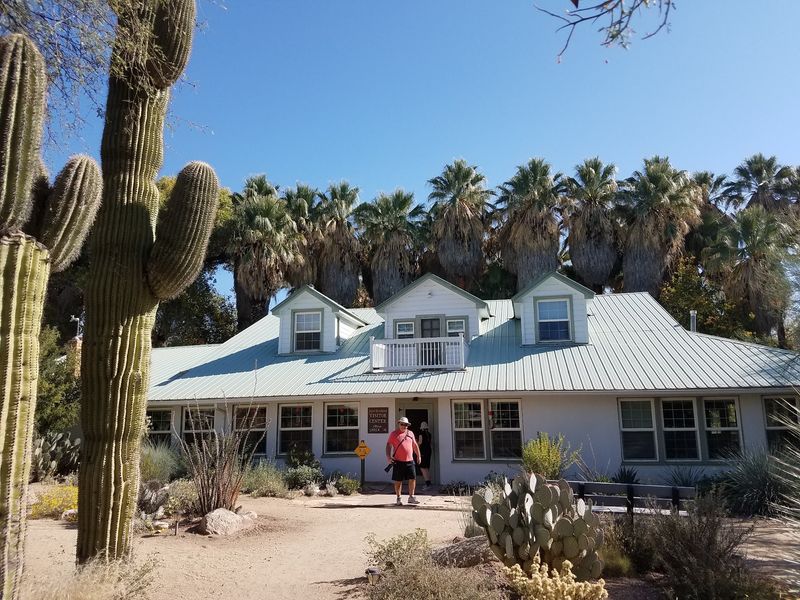
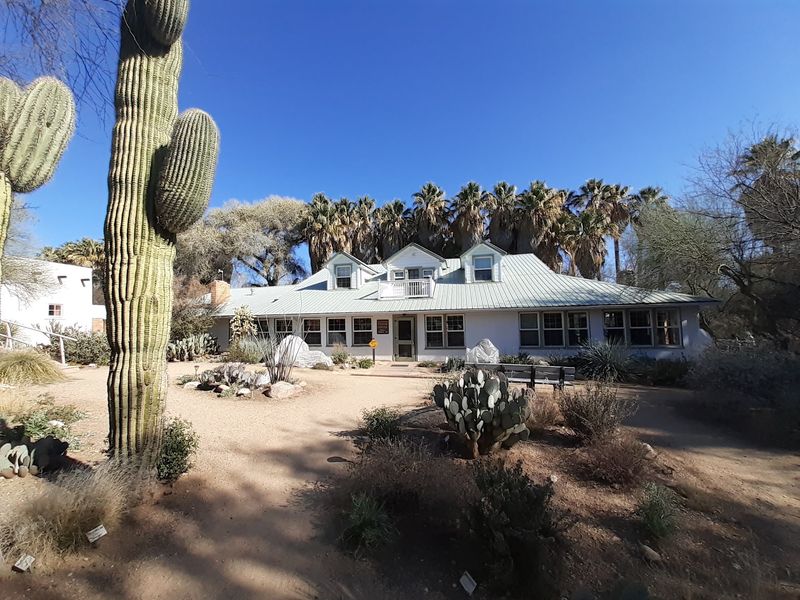
Every trail here begins at the same front door. The visitor center is housed in an older home with its own backstory, and the history of the building is often singled out as a surprisingly interesting part of the trip.
Inside, the exhibits lean hands-on. Kids can touch items on display, which makes the center a favorite with homeschool groups and young naturalists who struggle with the look-but-do-not-touch rule.
Educational materials fill the space. There is a scavenger hunt for children, and finding every item on the list keeps small hikers busy before they even reach the dirt paths.
Staff and volunteer hosts get frequent praise for being welcoming and full of information about the preserve. A quick chat at the desk can point out recent bird sightings or which trails have water nearby.
Outside, a desert garden and a dedicated bird watching area sit right next to the building. Those spots alone can fill a slow half hour.
The center also doubles as the official gateway. All entry and exit to the trails goes through it, which matters for planning, since the doors and the hours are tied together.
Annual Regional Park Passes can be purchased on site as well. For frequent county park users, that single stop can pay off over a year of weekend outings.
3. Hummingbirds, Hawks and 280 Species
Birders have a word for places like this: productive. More than 280 species of birds live, nest, or migrate through the preserve, which explains why bird watching is the single most talked-about activity on the property.
Hummingbirds are a regular highlight. They tend to show up around the visitor center garden, making the start of the walk just as rewarding as the far end of the loops.
Hawks frequent the area too, though they do not always cooperate with a schedule. Missing them on one trip is common enough to treat any sighting as a bonus.
Migration season is when the preserve really earns its reputation. Repeat birders come back again and again during those windows, since the river corridor acts as a rest stop for travelers heading north or south.
Waterfowl, both local and migrating, use the ponds and marshes. Among the trees, a wide variety of songbirds can often be heard even when they stay hidden in the canopy.
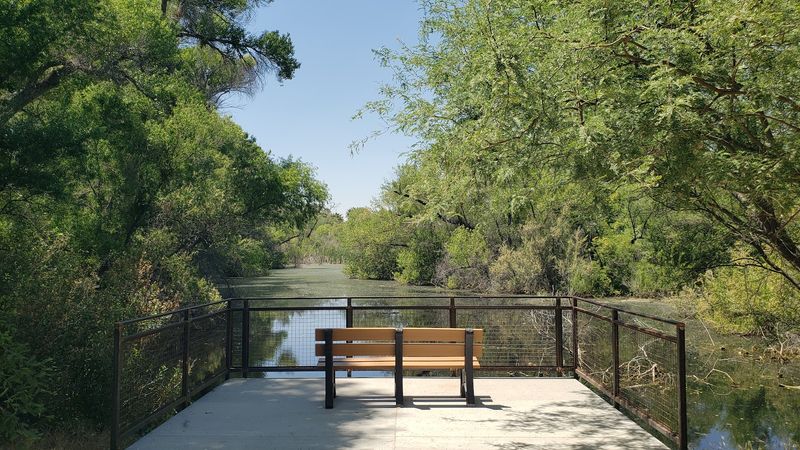
Benches along nearly every trail make patient birding easy. Sitting still for ten minutes can turn up far more than walking briskly ever will.
Rainy days tend to quiet things down. Clear mornings are usually the better bet for a full checklist, so bring binoculars and plan an early start.
4. Palm Lake and Its Shaggy Residents
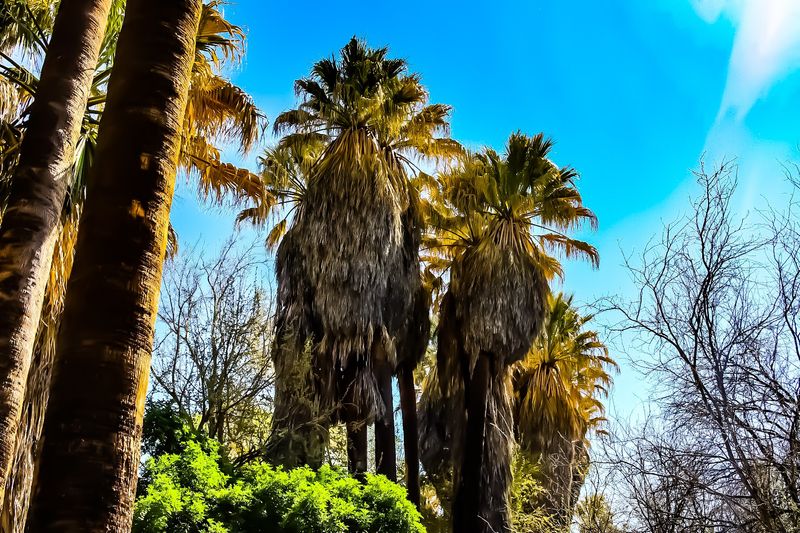
Desert fan palms with untrimmed fronds give Palm Lake a slightly unkempt, prehistoric look. Their shaggy skirts have earned comparisons to Cousin Itt from The Addams Family, which is about the most fitting description anyone has come up with.
Date palms grow here too, adding height and variety to the shoreline. Together, the palms form a small forest that feels very different from the cottonwood stretches elsewhere on the property.
The pond itself draws turtles, and spotting several on a single walk is common. Waterfowl also use the lake, so it is a smart place to pause with binoculars.
Marsh areas around the lake support mesquites and willows. The mix of habitats in a small space is part of why the bird list runs so long.
The Lake Loop circles this section. Some people skip it in favor of the lookout climb, but anyone interested in turtles or palms will want to put it on the itinerary.
Benches near the water give tired legs a reason to linger. A short rest here can easily turn into a long one once the turtles start surfacing.
5. Cottonwood Giants and Willow Shade
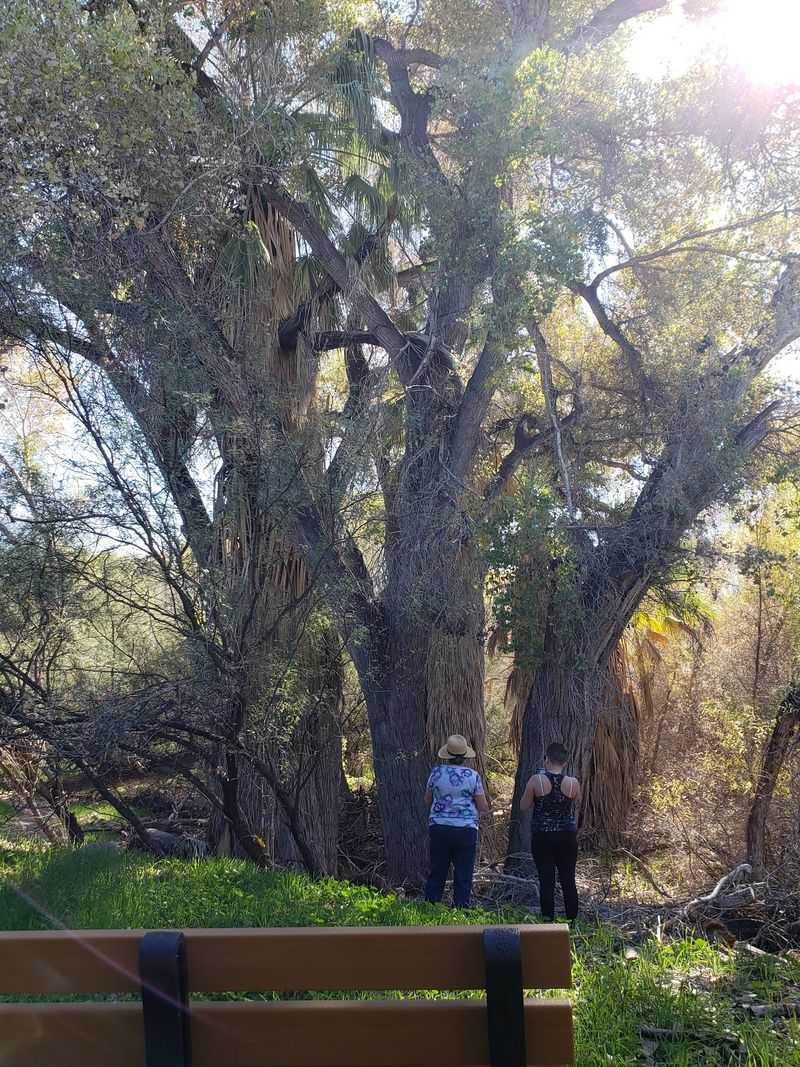
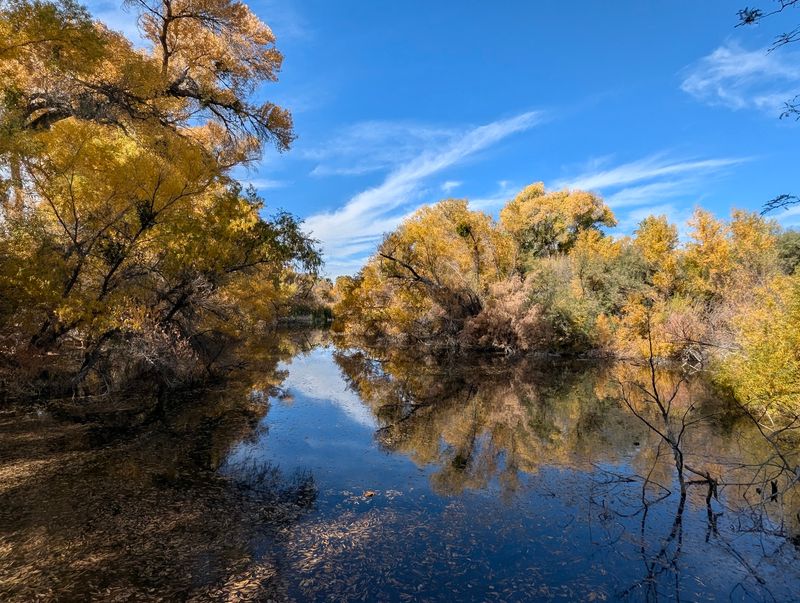
Shade is a currency in Arizona, and this preserve is rich. Massive cottonwoods tower over many of the trails, and their height regularly surprises first-timers who expect stunted desert scrub.
Willows fill in along the waterways. Between the two, much of the trail network stays covered, which is a big part of why the walking feels manageable even on warm days.
In late spring, the cottonwoods release their fluffy seeds. Parts of the trail can look like a light snowfall has passed through, a strange sight for anyone used to Phoenix weather.
Autumn brings its own show. Turning leaves give photographers a rare chance at fall color without a drive to the high country.
Mesquites round out the canopy in drier sections. The variety means the scenery keeps shifting from one loop to the next.
Some areas do carry a fair amount of fallen wood and older trees affected by termites. That debris is part of a natural riparian system, though it can make certain stretches look less tidy than a manicured park.
For most, the trade is easy. Tall trees, cool cover, and room to wander make up for a few messy corners along the way.
6. Seven Trails, Mostly Easygoing
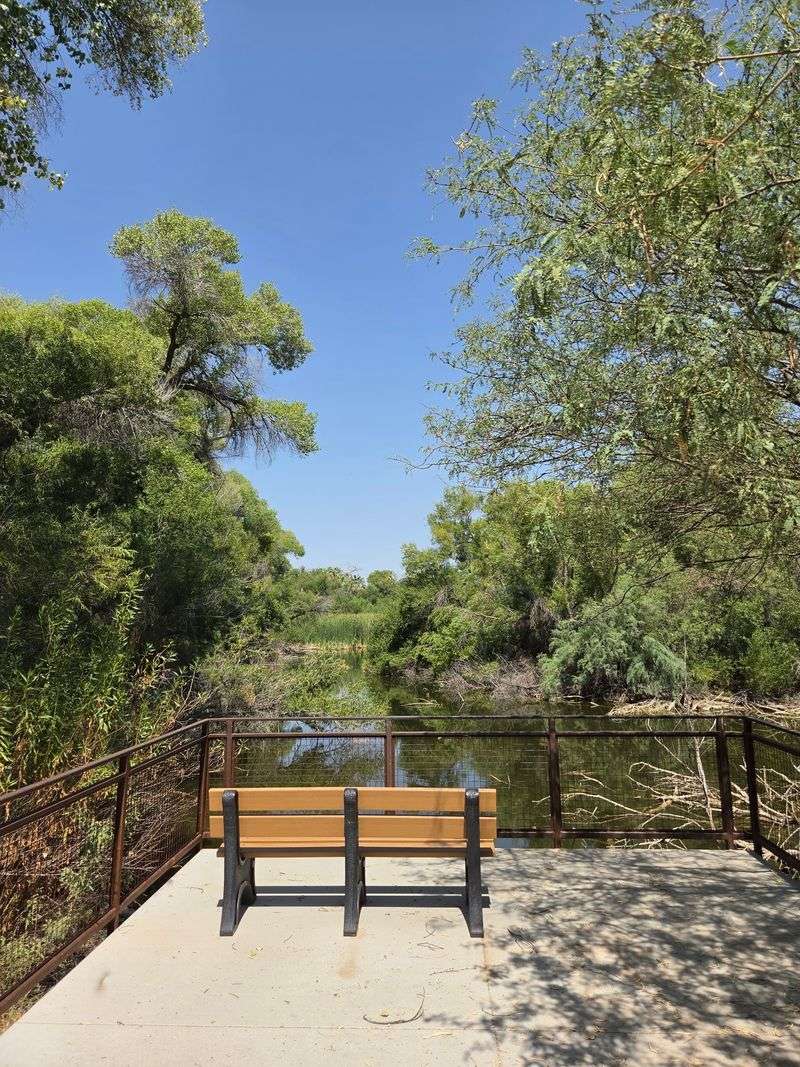
Short loops are the specialty here. The preserve has seven trails, and most run a little under a mile, so nobody needs serious hiking credentials to explore.
Doing all of them back to back adds up to a real workout. Families can also pick and choose, sampling one or two before lunch.
The terrain is mostly level dirt. Novice hikers, kids, and older walkers handle the main paths comfortably, and many describe the experience as more of a walk than a hike.
Paths are well maintained and clearly laid out. Some loops cross over each other, which can make the layout feel a little repetitive for anyone hoping for a long point-to-point route.
Benches appear throughout the network. They work well for reading, meditating, birding, or simply catching a breather between loops.
Willow Walk and the Lion’s Trail are among the named routes. The Lion’s Trail includes a small footbridge over shallow waterways, a fun crossing for younger explorers.
Stroller use is a mixed bag. Some families roll through easily, while others find narrow, winding, sandy stretches that make wheels a hassle, so a carrier may be the safer choice for toddlers.
7. Lykes Lookout and the Thirsty Cactus
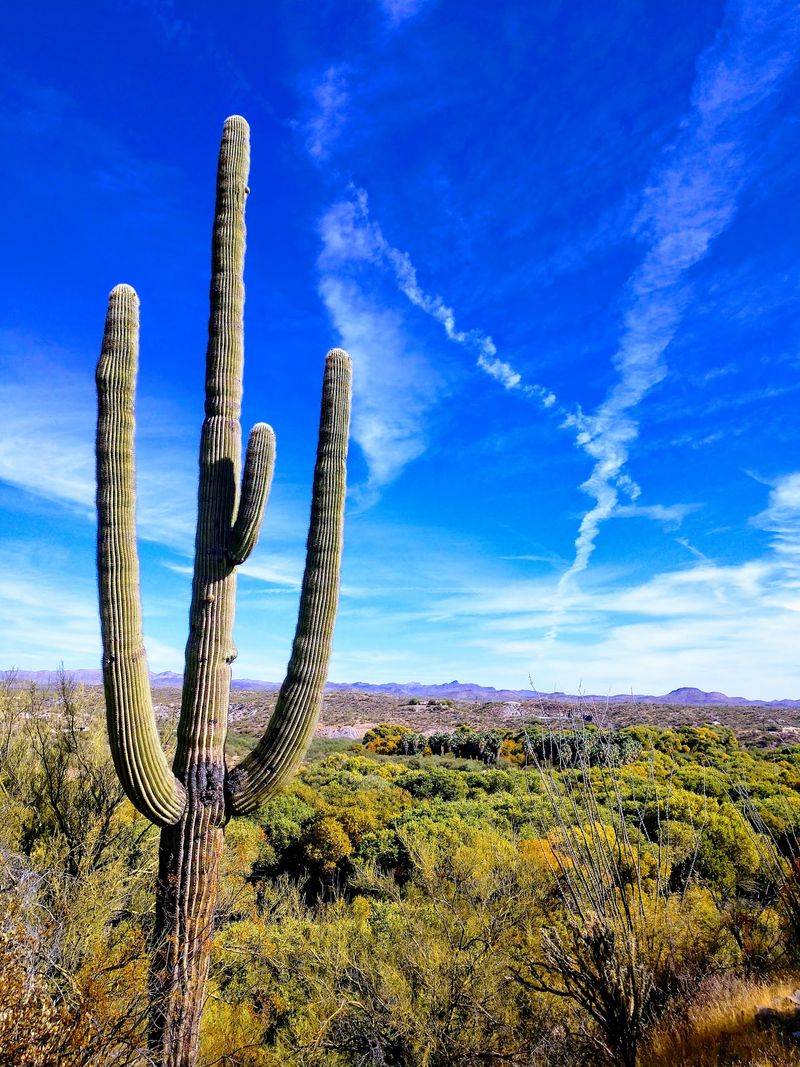
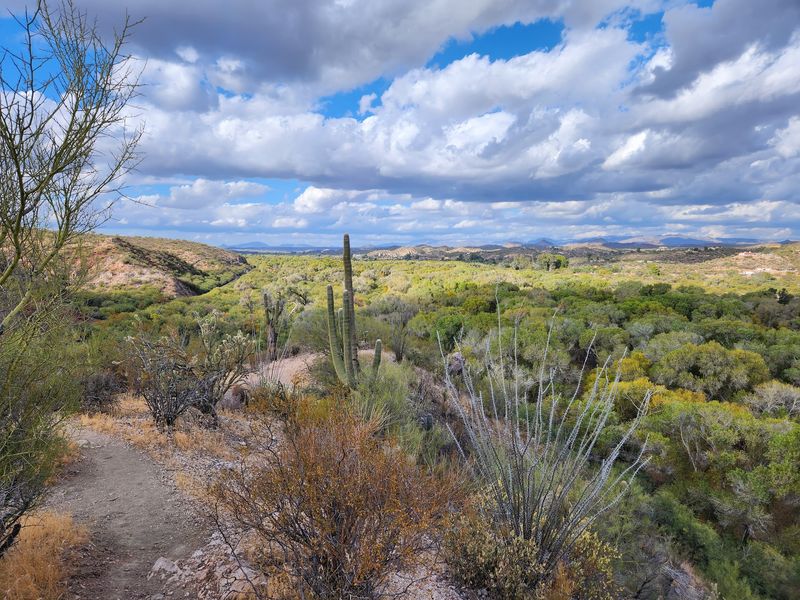
One trail breaks the flat-and-easy pattern. Lykes Lookout climbs a hill above the preserve, and the payoff is a view over the entire green corridor.
The round trip takes about 20 minutes. It is short, but the path is narrow and gets fairly steep near the top, so sturdy shoes help.
From the summit, the contrast becomes obvious. A line of tall trees traces the water while open desert stretches out on every side.
A cactus at the top has become a bit of a mascot. Some call it the thirsty cactus, and it makes a good photo stop before heading back down.
Strollers will not work on this route. Parents usually split up or carry little ones for the climb.
Wildlife can share the trail near the start. Rattlesnakes have been spotted crossing slowly by the trailhead, and waiting patiently for one to move along is the only reasonable option.
For anyone short on time, the lookout delivers the most scenery per minute on the property. Pair it with one shaded loop below, and a morning is nicely filled.
8. An Old Phone Along Willow Walk
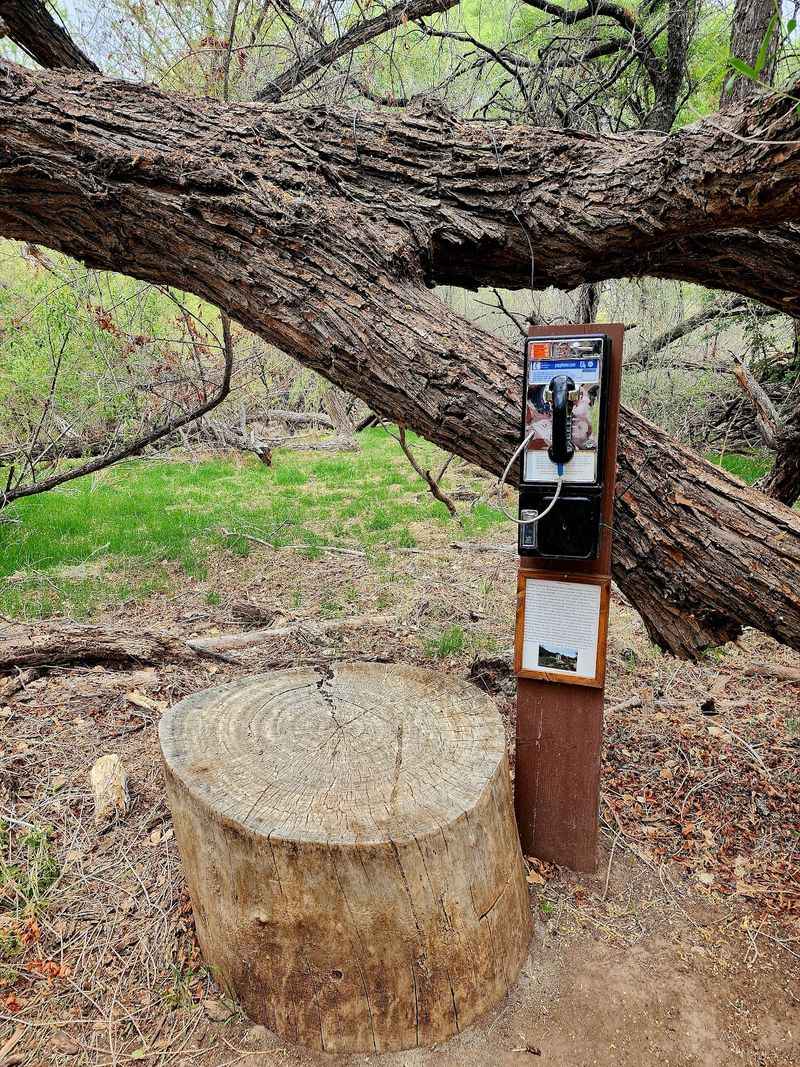
Not every trail feature is a tree or a bird. Along Willow Walk, closer to the water, stands an old payphone that is no longer connected to anything.
It is called a wind phone. The concept originated in Japan, where disconnected phones were placed in nature as a quiet spot for remembrance.
People pick up the receiver to say words they never got the chance to say to someone dear. There is no dial tone and no one on the other end, which is exactly the point.
The placement feels deliberate. Shade, water, and a little distance from the busier loops give it a calm setting.
Kids often spot it first and ask questions. It can open a thoughtful conversation during an otherwise lighthearted family walk.
Many people pass by without realizing what it is. Now that the secret is out, it is worth keeping an eye out for it on the Willow Walk route.
Small details like this give the preserve personality beyond its scenery. A few minutes here may end up being the most memorable part of the day.
9. Turtles, Snakes and a Surprise Bull
Birds get top billing, but the supporting cast is worth noticing. Turtles turn up in the pond, and spotting several on a single outing is a common pleasure.
Other wildlife moves through the corridor too. A river in the desert pulls in animals from miles around, so the trails can surprise anyone who keeps looking.
Rattlesnakes are part of the neighborhood. Watching the ground near trailheads, especially in warmer months, is simple good sense.
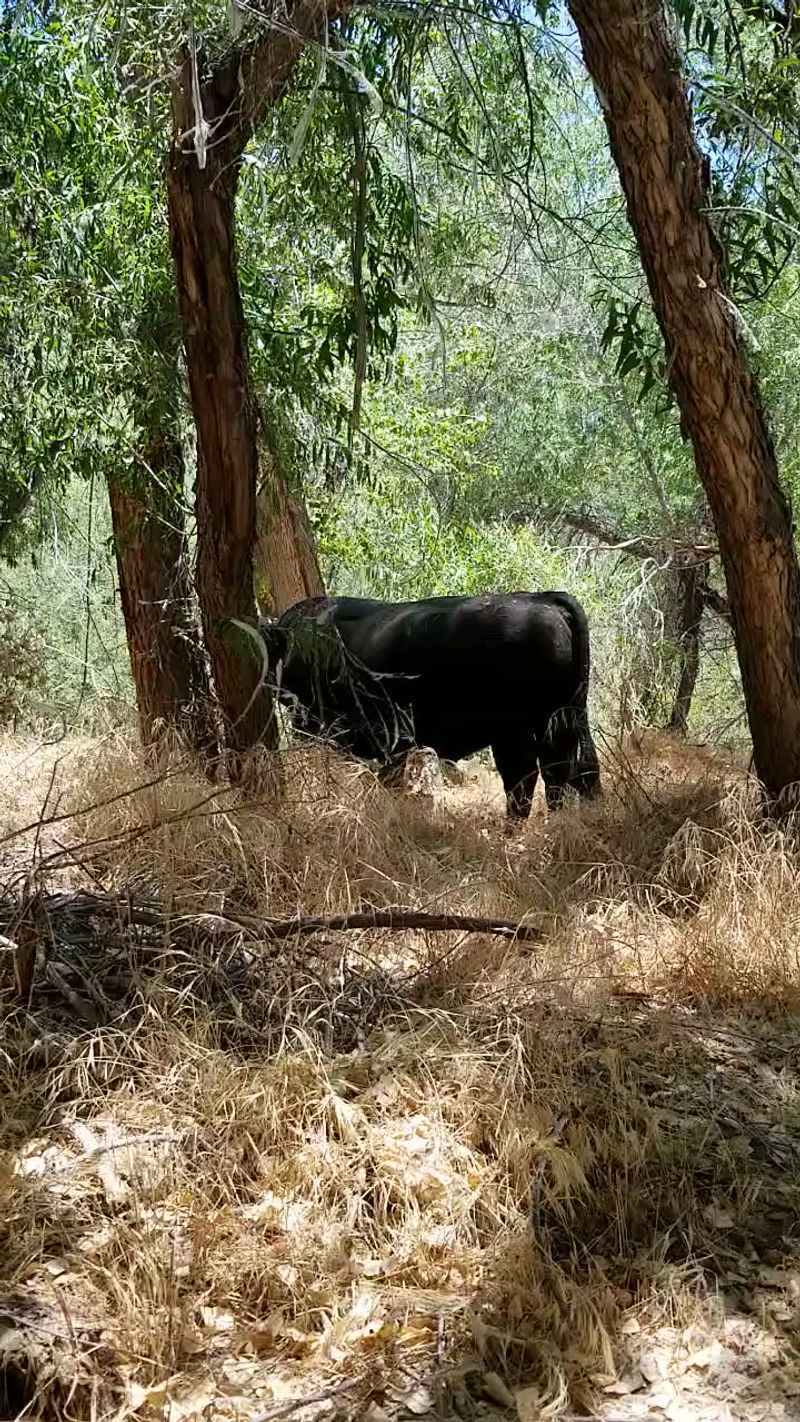
Then there is the occasional unexpected guest. A homeschool group once came across a bull just standing on one of the trails, a story that probably got retold at dinner for weeks.
The preserve asks everyone to stay on the paths. Admiring from a distance protects both the habitat and the people walking through it.
That rule makes older kids, around 13 and up, especially good company here. Younger children do fine too, with a little coaching about looking rather than grabbing.
Wildlife sightings are never guaranteed. Slow walking and frequent bench stops tend to improve the odds noticeably.
10. Who Gets the Most From a Visit
Families with young kids are a natural fit. Children ages 4 to 8 tend to love the short paths, the river access, and the scavenger hunt inside the visitor center.
Birders are an obvious audience as well. Migration season brings repeat trips from people who have visited many times and still find new species.
Seniors and casual walkers appreciate the flat, shaded routes. Main trails may even work for wheelchairs, though conditions can vary with sand and season.
Photographers find plenty to shoot. Fall foliage, palm groves, and the overlook all make strong subjects.
The preserve also suits anyone who wants to slow down. Regulars come just to sit on a bench and quiet a busy mind, calling the entry fee money well spent.
It may disappoint people hunting for long or rugged hikes. The loops are short, some cross each other, and the scenery rewards attention rather than mileage.
Homeschool and school groups get a lot from the educational side. Between the exhibits and the living classroom outside, it is an easy field trip to justify.
11. Hours, Fees and the Free Loophole
Timing matters more here than at a typical trailhead. The preserve is open Wednesday through Sunday from 8 AM to 5 PM and closed on Mondays and Tuesdays.
Since the only way onto and off the trails is through the visitor center, those hours are firm. Checking the Maricopa County Parks website before driving out is wise, because hours can fluctuate.
Now for the money. Children get in free, and the adult fee has been listed at $5 per person, though at least one account mentions paying $10, so confirming the current rate online makes sense.
Here is the insider move. A Maricopa County park pass gets holders in with no fee, which makes the preserve effectively free for pass owners.
Some state or national pass holders have also had fees waived. That is worth asking about at the desk rather than assuming.
The Regional Park Pass can be bought right at the visitor center. For anyone who already hits county parks around the Valley, adding this preserve to the rotation stretches that pass even further.
12. Parking, Picnics and Packing Out
Getting there is the easy part. From the Loop 303 and US 60 junction, it is roughly a 25 minute drive northwest, putting it within comfortable morning range of most of the West Valley.
Despite sitting near the highway, the trails stay surprisingly calm. Traffic noise fades once the trees take over.
Parking is on the small side. On busy days, carpooling with friends saves a lot of circling.
Restrooms are located out in the parking lot rather than inside the visitor center. They are kept clean, but a stop before checking in avoids a backtrack later.
Picnic tables are available both inside and outside the preserve. Packing a lunch turns a short walk into a relaxed half day.
There are no garbage cans on site. Everything brought in must be carried back out, so a spare bag is handy.
Dogs are not allowed, which helps protect the wildlife. Leave pets at home for this one.
Water is a must, even on mild days. Temperatures can top 90 degrees in the warmer months, and shade only goes so far.
13. Worth the Drive Past Wickenburg
A river that hides for nearly 100 miles deserves a little attention when it finally appears. This preserve makes the most of that brief appearance with shade, water, and a long list of feathered guests.
It is not a rugged adventure. The trails are short, a few corners are cluttered with fallen wood, and the water can run low in drier months.
What it offers instead is easy access to a habitat that barely exists elsewhere in the region. Tall cottonwoods, Palm Lake, and the view from Lykes Lookout pack a lot into one compact property.
The math works out nicely too. Kids enter free, adults pay a small fee, and a county park pass can wipe that cost out entirely.
Cooler months are prime time. Fall color, winter river flow, and spring migration all line up during the season when Phoenix and Tucson locals want to be outside anyway.
Plan a Wednesday through Sunday morning, pack water and a lunch, and leave room for bench time. The hummingbirds will handle the rest of the entertainment.
Share this story