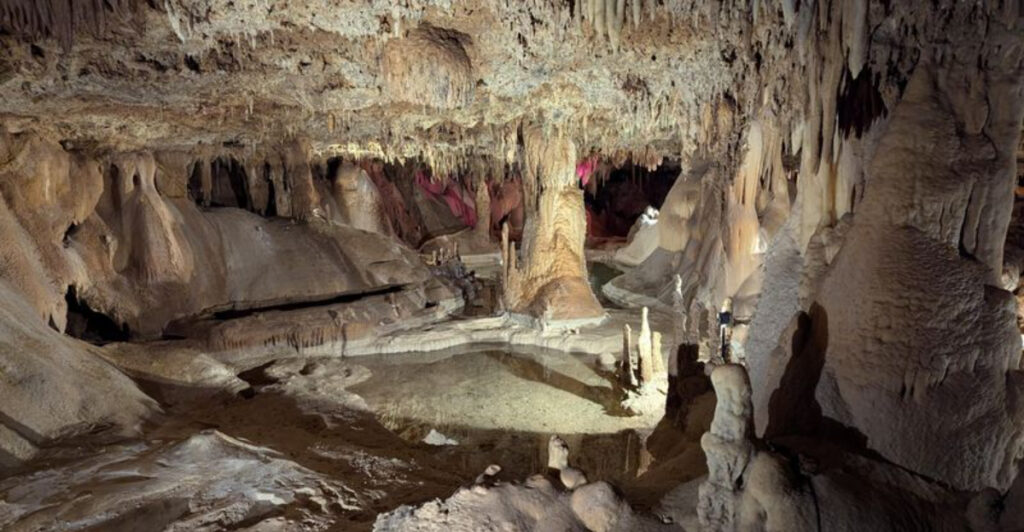
When Texas heat climbs past 100 degrees or winter winds start biting, most folks head to the mall for climate-controlled comfort. But underground across the Lone Star State, nature’s been running its own air conditioning system for thousands of years. These eight caves maintain a steady 70 degrees no matter what’s happening on the surface, offering something way more interesting than food courts and outlet stores—stunning rock formations, fascinating history, and the kind of adventure you’ll actually remember.
1. Cave Without a Name (Boerne)
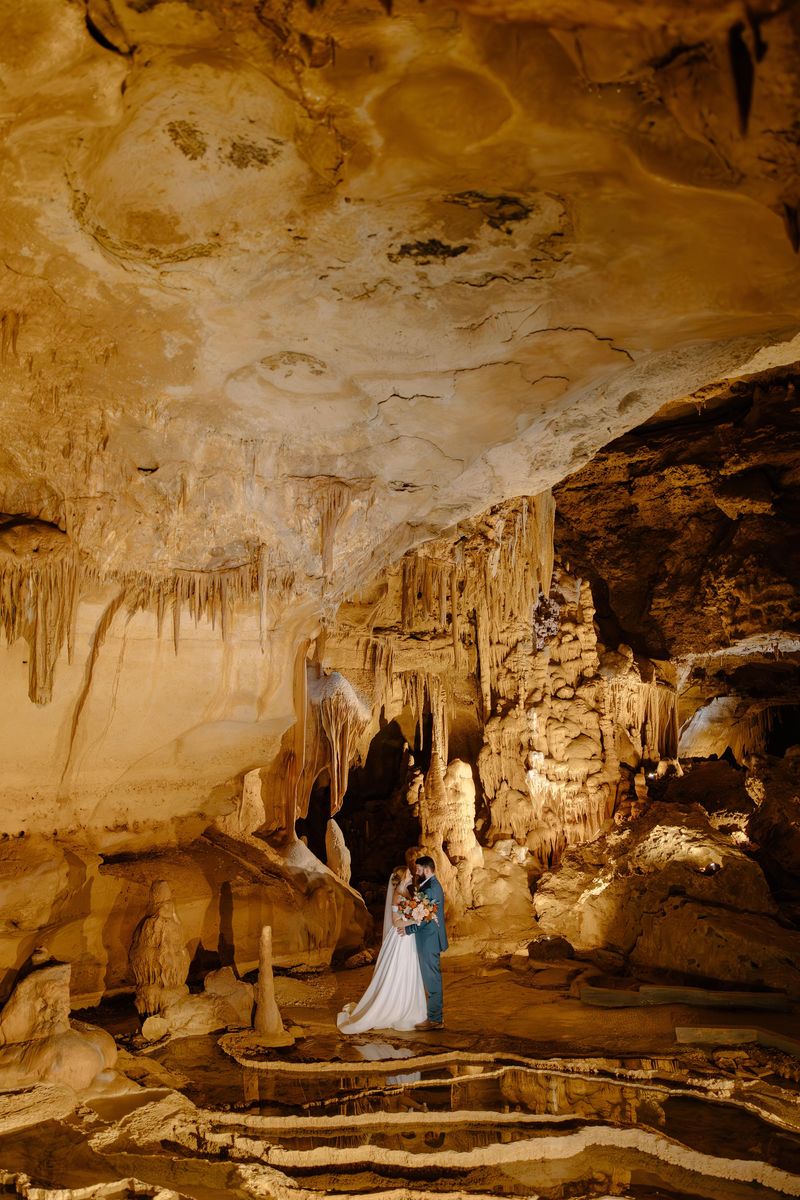
Back in 1939, a local boy chasing his dog discovered this hidden wonder, and when it came time to name it, contest judges decided no name could do it justice. That’s the kind of magic waiting underground here. The formations inside are so intricate and beautiful that words genuinely fall short—flowstones cascade down walls like frozen waterfalls, and delicate soda straws hang from ceilings like nature’s chandeliers.
The cave stretches six stories deep into the earth, maintaining that perfect 70-degree temperature while the Hill Country above swelters or shivers. Tours wind through chambers filled with formations that took millions of years to create, each one more impressive than the last. The acoustics are so pristine that the cave occasionally hosts concerts, turning geology into a natural amphitheater.
What sets this spot apart is how the guides share stories without making you feel like you’re back in school. They point out formations that look like everything from fried eggs to wedding cakes, keeping kids engaged while adults marvel at the science behind it all. The lighting system highlights the cave’s best features without overwhelming the natural beauty.
Located just outside Boerne, it’s an easy drive from San Antonio or Austin. The tours last about an hour, giving you plenty of time to explore without feeling rushed. Stairs and walkways are well-maintained, though you’ll want to wear shoes with good grip since cave floors can be slick.
Photography is allowed, so bring your camera—though fair warning, capturing the true scale and beauty of these formations is tougher than it looks. The temperature stays consistent year-round, making it the perfect escape whether you’re dodging summer heat or winter cold. No crowds pushing past you with shopping bags, just the quiet drip of water slowly building the next generation of formations.
2. Caverns of Sonora (Sonora)
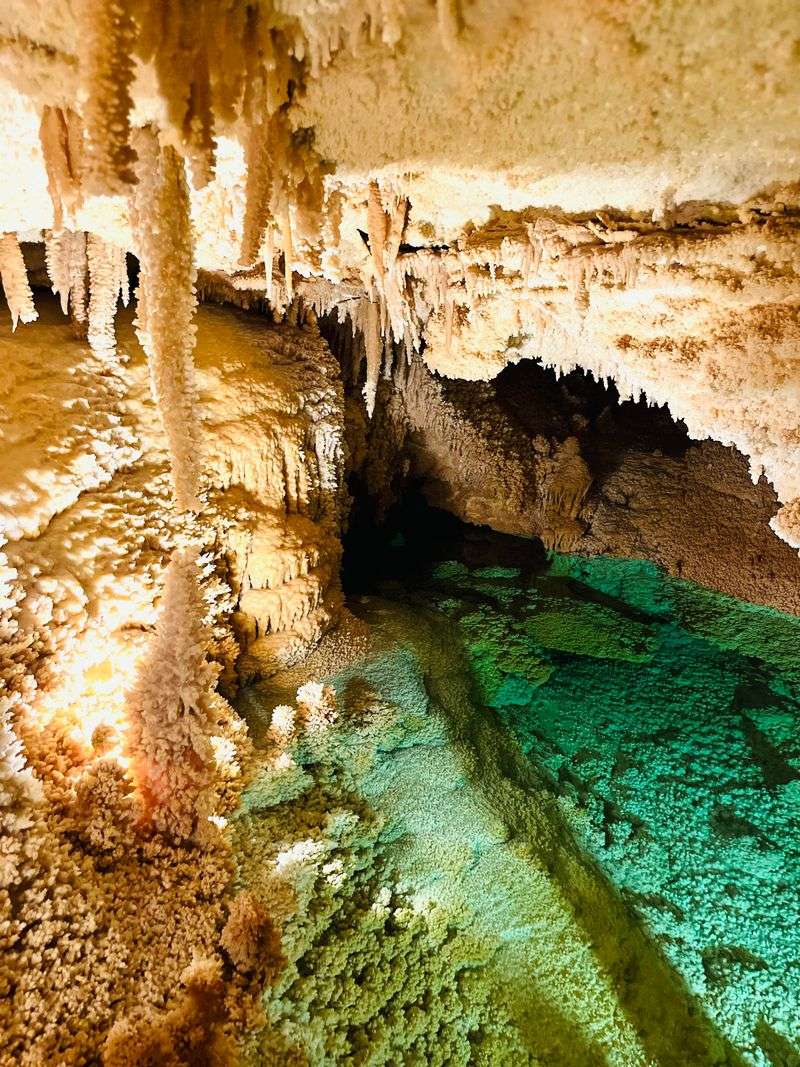
National Geographic once called this the most beautiful cave in the world, and once you see the butterfly-shaped helictites defying gravity on the ceiling, you’ll understand why they weren’t exaggerating. These formations twist and curve in ways that seem physically impossible, growing in all directions instead of just hanging straight down. Scientists still debate exactly how they form, which makes staring at them even more fascinating.
The cavern sits in West Texas ranch country, about two hours from San Angelo. Tours take you through nearly two miles of passages, though you’re walking on well-lit concrete paths rather than scrambling over rocks. The 70-degree temperature feels especially welcome out here, where summer days regularly crack 100 and winter nights can dip below freezing.
What makes Sonora special isn’t just the helictites—though those alone are worth the drive. The entire cave system is what geologists call a “living cave,” meaning formations are still actively growing. You can see water droplets hanging on the tips of stalactites, each one depositing microscopic layers of minerals.
In a few thousand years, those drops will have created entirely new formations.
The standard tour lasts about two hours and covers plenty of ground, so wear comfortable shoes. Guides share the cave’s history, from its discovery by a dog falling through a sinkhole to its development as a show cave. They’ll point out formations that look like fried eggs, soda straws, and popcorn—cave popcorn, that is, which clusters on walls like someone threw handfuls of white kernels that stuck.
Photography is welcome, and the lighting here is set up to showcase the cave’s best features. Unlike mall shopping, where everything starts looking the same after an hour, each chamber here reveals something completely different. The cave stays the same perfect temperature whether it’s scorching outside or freezing, making it genuinely better than any climate-controlled shopping center.
3. Longhorn Cavern (Burnet)
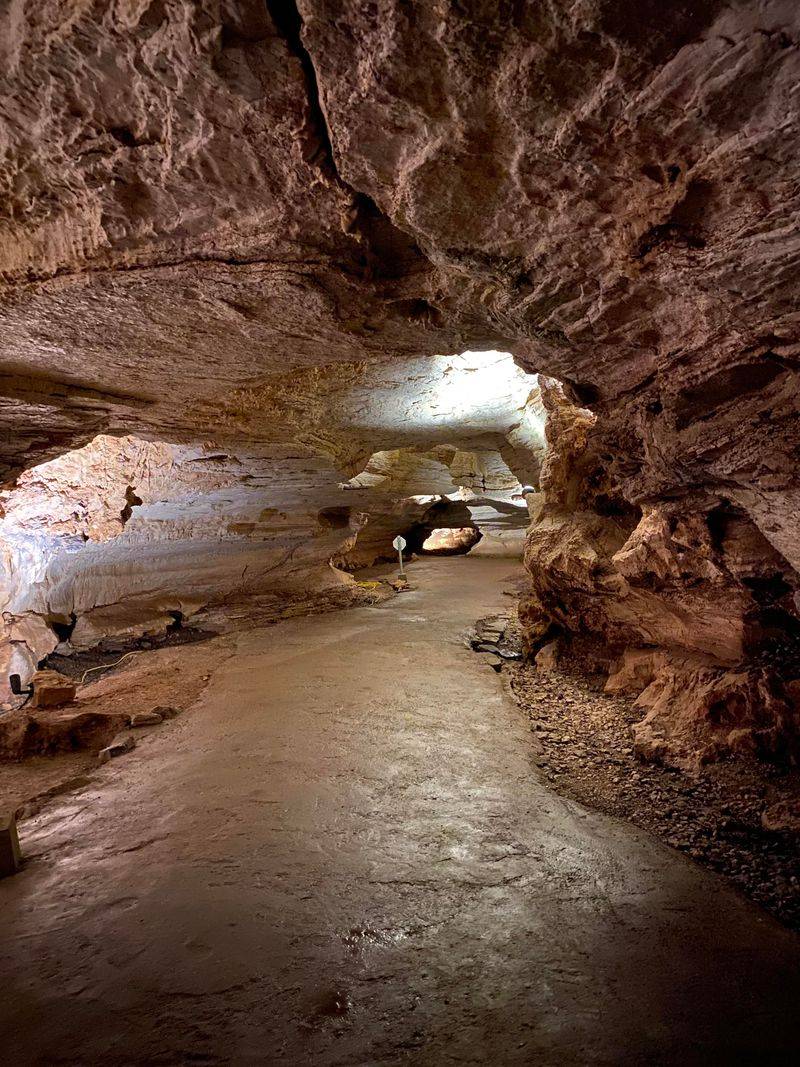
During Prohibition, this cave allegedly served as a speakeasy and dance hall, with folks descending underground to drink and party away from the law’s watchful eyes. Whether that story’s entirely true or slightly embellished doesn’t really matter—standing in the massive chambers carved by an ancient underground river, you can absolutely picture it. The main room is big enough that the acoustics would have made it perfect for live music, and the constant 70 degrees would have beaten any saloon on a sweltering Texas night.
The cavern formed differently than most Texas caves. Instead of acidic water slowly dissolving limestone, a powerful underground river carved these passages, creating smooth walls and rounded chambers. You can still see the water marks on the walls, showing where the river once flowed.
It’s like reading the cave’s autobiography written in stone.
Tours here focus as much on human history as geological history. Confederate soldiers supposedly mined bat guano here for gunpowder during the Civil War. Comanche Indians used the cave for shelter.
In the 1930s, the Civilian Conservation Corps built the trails and infrastructure that visitors still use today. Each era left its mark, turning the cave into a time capsule.
The walking tour covers about a mile and a half, taking you through multiple chambers with names like the Crystal Room and the Indian Council Room. The paths are paved and well-lit, though there are stairs and some low ceilings in places. Kids love the stories about outlaws and hidden treasure, while adults appreciate the geology lessons that don’t feel like lectures.
Located in Longhorn Cavern State Park near Burnet, it’s an easy addition to a Hill Country road trip. The park offers hiking trails and picnic areas above ground, but honestly, the cave is the main attraction. That steady underground temperature makes it the perfect refuge from whatever weather’s happening outside, and unlike a mall, you’re surrounded by millions of years of natural history instead of chain stores.
4. Natural Bridge Caverns (San Antonio)
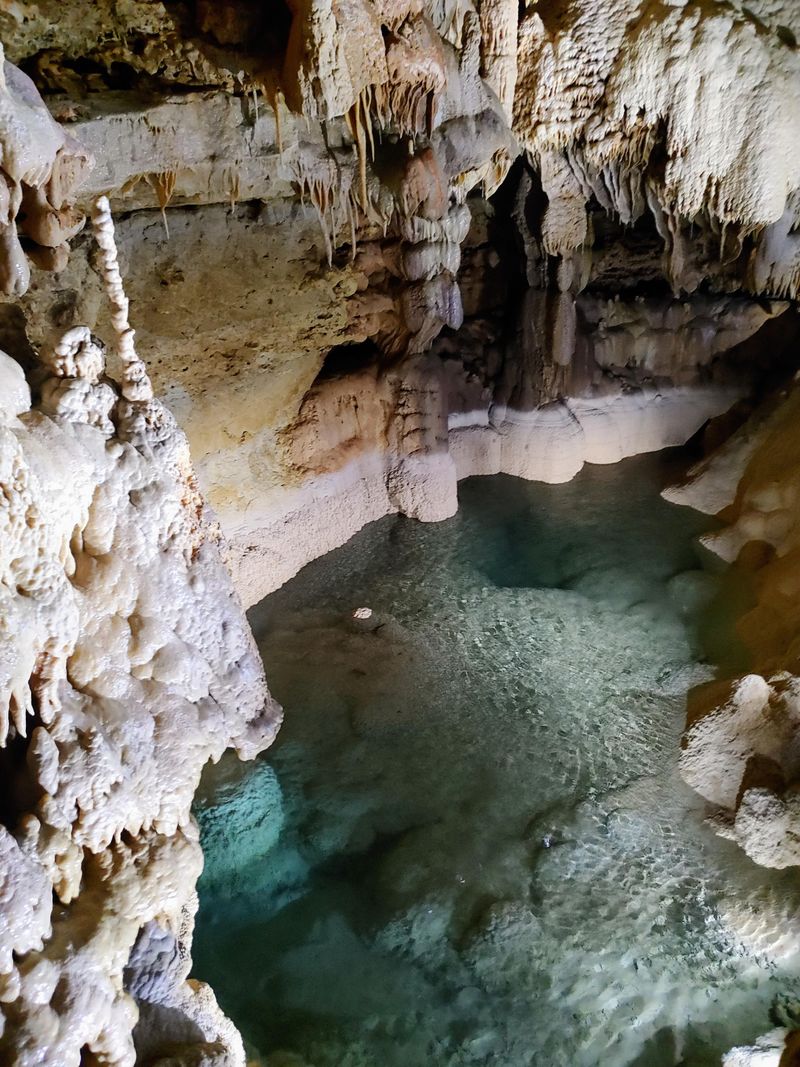
A 60-foot natural limestone bridge spans the entrance to this cave system, giving it both its name and one heck of a first impression. Discovered in 1960 by four college students exploring the area, the caverns have since become one of the most visited underground attractions in Texas. The formations inside are massive—some columns stretch from floor to ceiling like ancient pillars holding up a cathedral carved by water and time.
The cave maintains that perfect 70-degree temperature year-round, but what really sets it apart is the sheer variety of formations packed into one system. Stalactites, stalagmites, flowstones, chandeliers, and rare formations called cave bacon (which honestly does look like strips of bacon hanging from the ceiling) fill chamber after chamber. The lighting system highlights these features beautifully without feeling artificial or overdone.
Multiple tour options let you choose your adventure level. The standard Discovery Tour covers the main chambers and takes about an hour. For folks wanting more, the Hidden Passages Tour ventures into undeveloped sections where you’ll see formations up close without barriers.
The Adventure Tour requires crawling and climbing, getting you properly dirty while exploring areas most visitors never see.
Above ground, the property has expanded to include zip lines, a rope course, and a maze—though the cave remains the star attraction. Located just outside San Antonio, it’s close enough to the city for an easy day trip but far enough to feel like you’ve escaped urban sprawl. The facility is professionally run with good amenities, including a gift shop and snack bar that are actually useful rather than just tourist traps.
Photography is allowed on most tours, and you’ll want your camera. The scale of some formations is difficult to capture, but trying is half the fun. Unlike wandering a mall where every store starts blending together, each cave chamber here reveals something genuinely different.
The temperature stays constant whether you’re escaping July heat or January cold, making it a reliable refuge any time of year.
5. Inner Space Cavern (Georgetown)
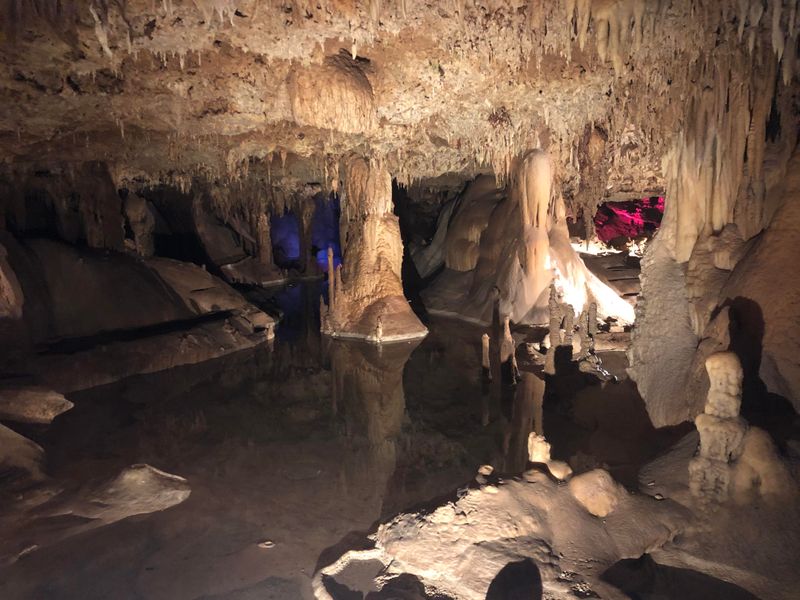
Highway workers drilling test holes for Interstate 35 in 1963 accidentally punched through the roof of this cave, discovering a hidden world that had been sealed for thousands of years. The bit dropped 40 feet before hitting bottom, and when they lowered a worker down to investigate, he found pristine formations and pools of crystal-clear water. Sometimes the best discoveries happen completely by accident.
The cave had been naturally sealed, which means formations inside developed without human interference for millennia. Ice Age animal bones were found in some chambers, including remains of mammoth, saber-toothed cats, and giant sloths. Standing in those passages knowing extinct animals once wandered the same space adds an extra layer of wonder to the already impressive geology.
Tours descend by cable car—the same shaft those highway workers accidentally created now serves as the entrance. It’s a fun way to start the adventure, dropping you straight into the 70-degree underground climate. The main tour winds through large chambers filled with formations in various stages of growth, from tiny soda straws just beginning to form to massive columns thousands of years old.
What makes Inner Space particularly interesting is how guides explain the ongoing scientific research happening here. The cave isn’t just a tourist attraction—it’s an active research site where scientists study everything from formation growth rates to the unique ecosystems that develop in sealed environments. You’re not just looking at pretty rocks; you’re seeing an active laboratory.
Located right off I-35 in Georgetown, it’s probably the most conveniently located cave on this list. You can literally see the interstate from the parking lot. Tours last about an hour and are suitable for most fitness levels, with paved walkways and good lighting throughout.
The temperature stays constant regardless of what’s happening outside, making it a perfect escape from Central Texas weather extremes.
Kids enjoy the adventure tour option, which includes crawling through tight passages and getting properly muddy. Adults appreciate the standard tour’s balance of information and exploration. Either way, it beats circling a mall parking lot looking for a space.
6. Devil’s Sinkhole (Rocksprings)
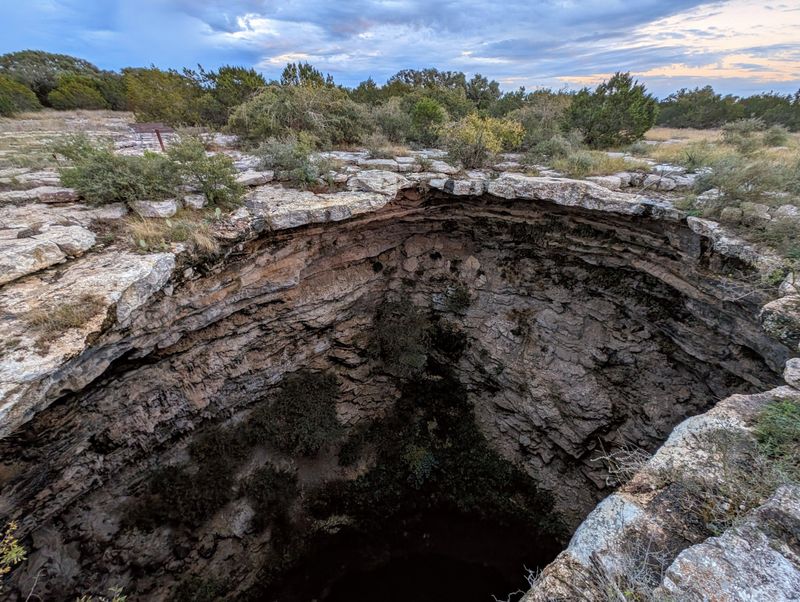
Every summer evening at dusk, millions of Mexican free-tailed bats spiral out of this 400-foot vertical cavern in a tornado-shaped cloud that darkens the sky. Watching it happen feels like witnessing something ancient and wild, a natural phenomenon that’s been occurring for thousands of years. The bats roost in the cave during the day, emerging at sunset to hunt insects across the Hill Country—eating tons of bugs every single night.
The sinkhole itself is a massive vertical shaft dropping straight down into the earth. At the bottom, the cave system branches out in multiple directions, though those passages are only accessible to experienced cavers with permits. For most visitors, the experience centers on the bat flight observation area, which offers a safe vantage point to watch the evening exodus.
The temperature down in that shaft stays around 70 degrees, creating the perfect roosting conditions for the bat colony.
Access requires a reservation and guided tour—this isn’t a place you can just wander up to on your own. The Nature Conservancy manages the property, protecting both the bat colony and the fragile cave ecosystem. Tours are educational, covering bat biology, cave ecology, and the importance of protecting these habitats.
Guides answer questions and help spot individual bats in the swirling cloud.
Located near Rocksprings in some of the most remote parts of the Hill Country, getting here is part of the adventure. The drive takes you through ranch country where cell service is spotty and towns are few and far between. Bring water, sunscreen, and bug spray—you’re watching bats hunt insects, which means insects are definitely present.
The bat flights happen from May through October when the colony is in residence. During winter months, the bats migrate to Mexico. Peak viewing times are June through August when the colony is largest.
Unlike standing in a crowded mall, you’re watching a genuine natural spectacle in near-wilderness. The experience is weather-dependent—bats won’t fly in heavy rain—but when conditions align, it’s absolutely worth the drive. No shopping bags required, just binoculars and a sense of wonder.
7. Kickapoo Cavern State Park (Brackettville)
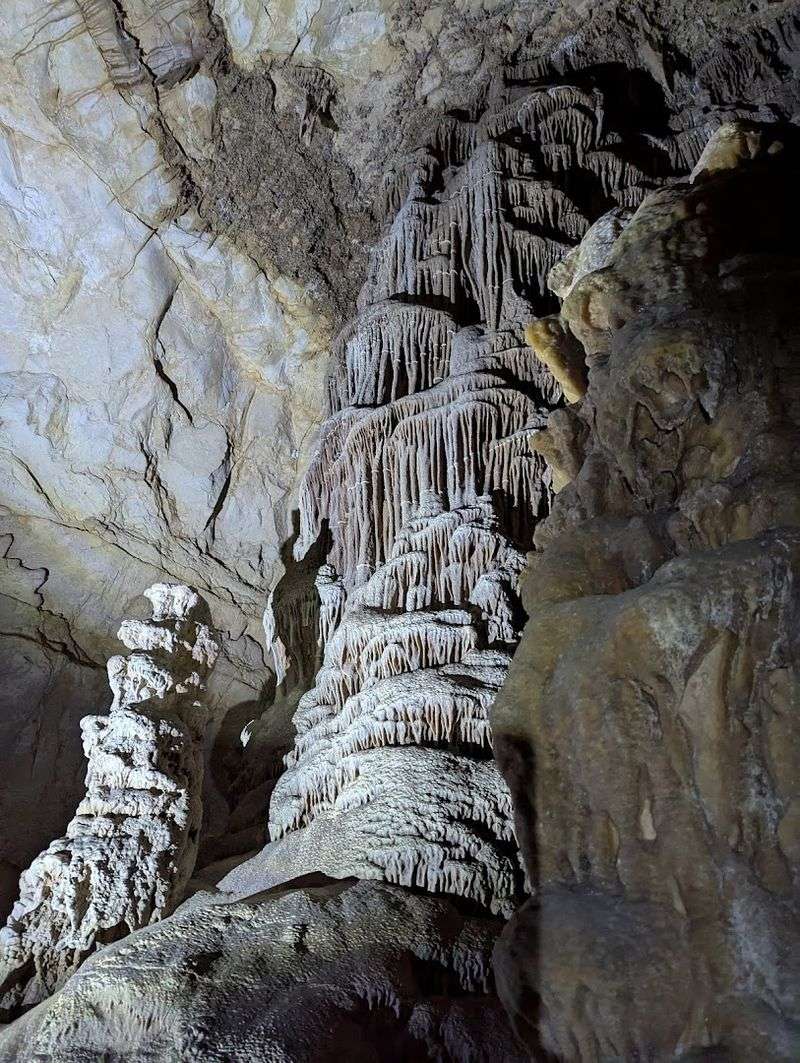
This is cave exploring for people who want the real deal—no paved paths, no handrails, no gift shops. Kickapoo Cavern State Park protects 20 caves across 6,400 acres of Chihuahuan Desert landscape, and visiting requires reservations, guided tours, and a willingness to get dirty. The main cavern maintains that steady 70-degree temperature, but you’ll earn your access by hiking through rugged terrain to reach the entrance.
The park sits in one of the most remote corners of Texas, about 20 miles north of Brackettville. Cell service is nonexistent, paved roads are scarce, and the nearest town barely qualifies as a town. This isolation has kept the caves pristine and the bat colonies healthy.
Mexican free-tailed bats roost here in numbers that rival Devil’s Sinkhole, creating impressive evening flights during summer months.
Cave tours are limited and must be booked well in advance. Rangers lead small groups into the main cavern, where formations remain largely undisturbed by human traffic. You’ll wear helmets and headlamps, watch your footing on uneven floors, and duck under low ceilings.
It’s genuine caving rather than a sanitized tourist experience—which is exactly what makes it special.
Above ground, the park offers primitive camping and hiking trails that wind through landscapes dominated by sotol, lechuguilla, and prickly pear. Wildlife includes javelinas, deer, and numerous bird species. The combination of caves and desert creates unique ecological conditions that support species found nowhere else.
Bring all your own water and supplies—there are no facilities beyond basic restrooms.
This isn’t the place for young kids or anyone with mobility limitations. The terrain is challenging, the caves are undeveloped, and the remoteness means help is far away if something goes wrong. But for adventurous visitors wanting an authentic Texas cave experience without crowds or commercialization, Kickapoo delivers.
The 70-degree cave temperature offers relief from the desert heat, but you’ll appreciate it more knowing you hiked through that heat to get there. No mall can offer this kind of genuine wilderness experience, and that’s precisely the point.
8. Cascade Caverns (Boerne)
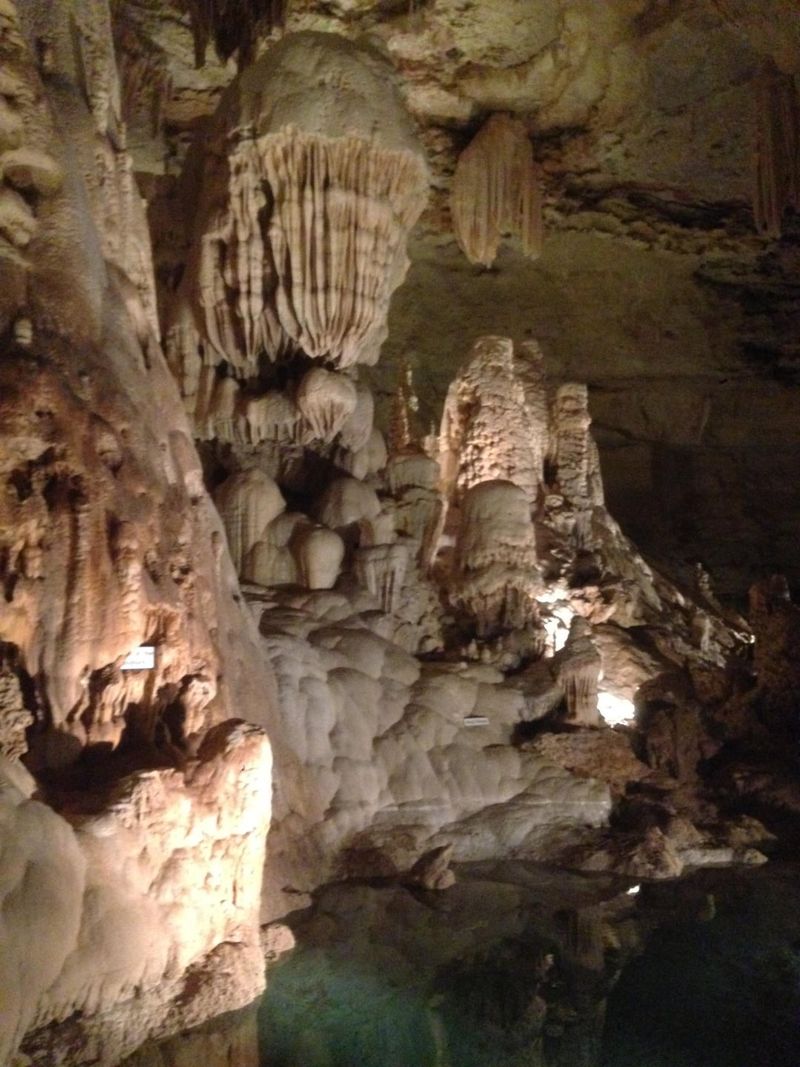
An actual underground waterfall flows inside this cave—not a trickle or seep, but a legitimate 90-foot cascade tumbling over rocks in the depths. The sound of rushing water echoes through the chambers, creating an atmosphere completely different from the silent, still caves most people imagine. That waterfall has been flowing for thousands of years, carving and shaping the limestone while depositing minerals that build new formations.
The cave maintains its 70-degree temperature year-round, but the presence of flowing water adds humidity that makes the air feel different than in dry caves. Formations glisten with moisture, and the constant water flow means the cave is actively growing and changing. You’re not looking at a static museum piece—this is a living, evolving system where geological processes continue in real time.
Tours follow a paved trail that winds down into the earth, passing through chambers with names like the Bridal Veil and the Cathedral Room. The lighting highlights formations without overwhelming them, and the path is accessible enough for most visitors. The waterfall is the obvious star attraction, but the cave also features impressive stalactites, flowstones, and other formations worth examining closely.
Located near Boerne in the Hill Country, the cavern is close to other attractions if you’re planning a day of exploring. The property above ground includes picnic areas and a small nature trail, though honestly, the cave is why you’re here. Tours last about an hour, giving you enough time to appreciate the formations without feeling rushed or exhausted.
The waterfall’s flow varies depending on rainfall—after wet periods it rushes more dramatically, while during droughts it slows to a steadier flow. Either way, seeing water actively shaping rock drives home the timescales involved in cave formation. What looks permanent and unchanging is actually fluid and dynamic, just operating on a geological timeline rather than a human one.
Photography is allowed, though capturing the waterfall in the low light can be tricky. The cave stays the same comfortable temperature whether you’re escaping summer heat or winter cold, making it a reliable refuge any season. Unlike a mall where the only water feature is a fountain full of pennies, this is the real thing—nature’s plumbing system on full display.
Share this story