Texas is famous for its big cities, barbecue joints, and cowboy culture, but the state holds countless secrets that even longtime residents haven’t discovered. Scattered across its vast landscape are natural wonders, historic sites, and quirky attractions that rarely make it onto typical tourist maps. These hidden gems offer authentic Texas experiences that go beyond the usual highlights, revealing a side of the Lone Star State that might just redefine what you thought you knew about this diverse place.
1. Caddo Lake State Park (Karnack)
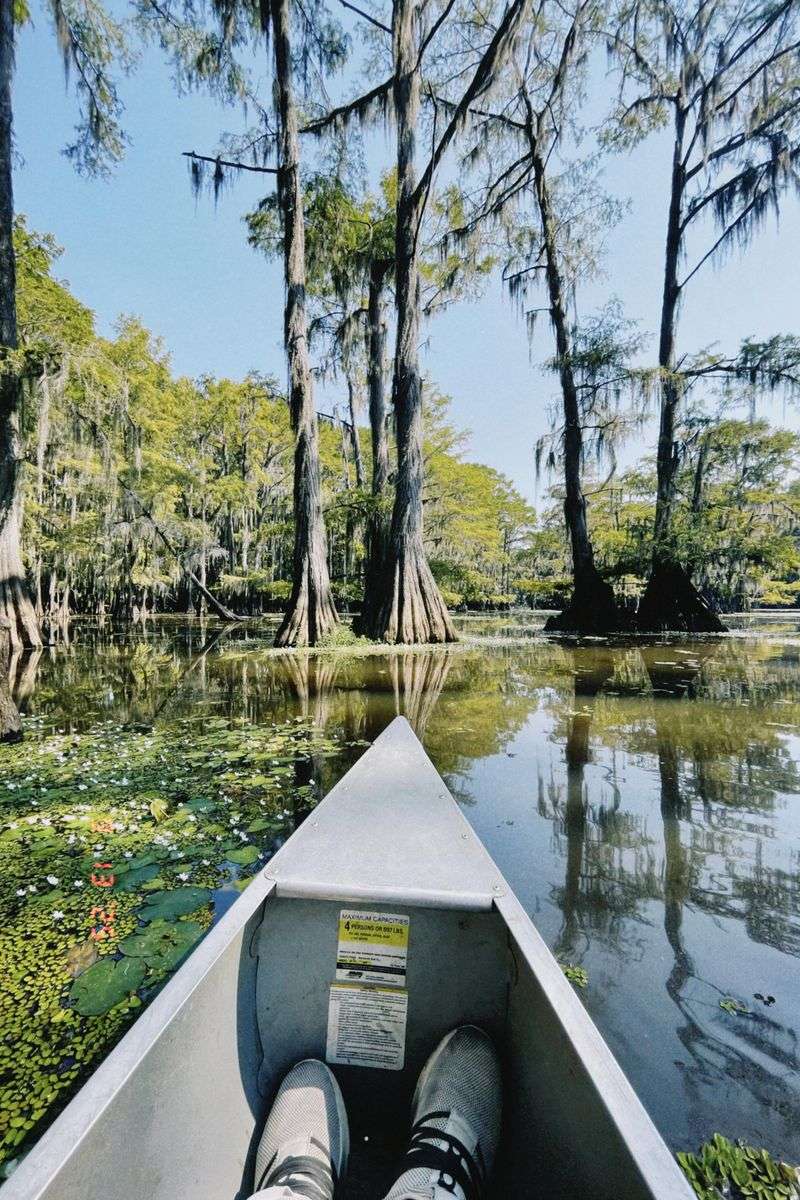
Cypress trees rise from dark water like ancient sentinels, their knobby knees breaking the surface while Spanish moss drapes from every branch. Caddo Lake feels more like Louisiana than Texas, and that’s exactly what makes it so remarkable. This 25,400-acre labyrinth of bayous, sloughs, and ponds creates the only natural lake in Texas, formed by a massive logjam on the Red River centuries ago.
Paddling through these waterways feels like entering another world entirely. The channels twist and turn beneath a canopy so thick that sunlight filters through in golden shafts. You’ll navigate past bald cypress trees that have stood for hundreds of years, some measuring over 20 feet around at their base.
Wildlife thrives here in ways you won’t see elsewhere in Texas, with alligators sunning on logs, great blue herons stalking fish in the shallows, and prothonotary warblers flashing their brilliant yellow plumage.
The park offers canoe and kayak rentals if you don’t have your own watercraft. Rangers recommend bringing a GPS or downloading offline maps since it’s genuinely easy to get turned around in the maze of waterways. Early morning paddlers often encounter mist rising from the water, creating an almost supernatural atmosphere that photographers absolutely love.
Fishing enthusiasts target largemouth bass, crappie, and catfish throughout the lake’s waters. The park maintains several fishing piers and a boat ramp for those who prefer motorized exploration. Campsites nestle among the pines, offering both screened shelters and traditional tent spots.
Spring and fall provide the most comfortable temperatures for exploring, though each season brings its own character. Summer means thick humidity and active wildlife, while winter transforms the cypress trees into stark silhouettes against gray skies. Whatever season you choose, Caddo Lake delivers an experience that feels nothing like the Texas most people imagine.
2. The Chinati Foundation (Marfa)
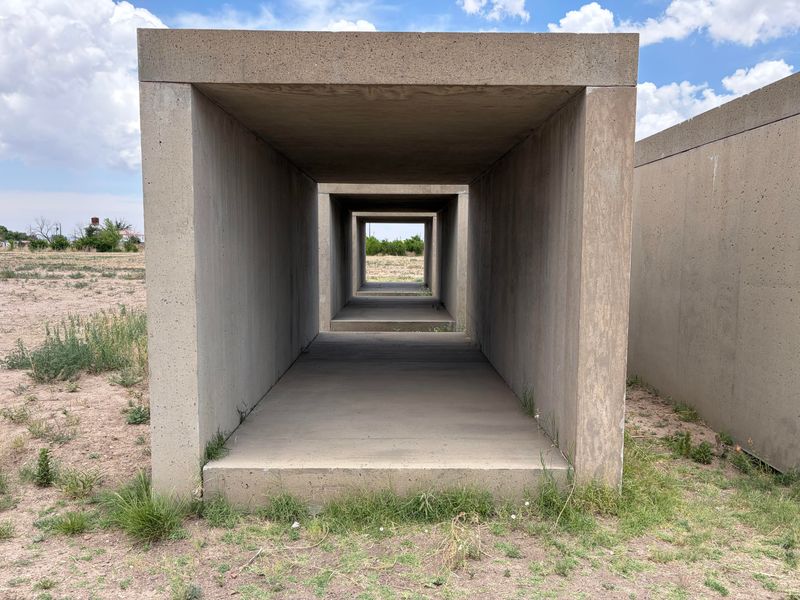
Out in the high desert where the landscape stretches endlessly toward distant mountains, artist Donald Judd created something extraordinary. The Chinati Foundation occupies a former Army fort, transforming military structures into galleries for permanent large-scale installations. This isn’t your typical museum where you spend five minutes with each piece before moving on.
These artworks demand space, time, and contemplation in ways that fundamentally challenge what art can be.
Judd purchased Fort D.A. Russell in the 1970s, envisioning a place where art could exist exactly as artists intended, without compromise. The foundation now houses works by Judd himself along with pieces by John Chamberlain, Dan Flavin, and others.
Judd’s 100 aluminum boxes occupy two converted artillery sheds, each piece reflecting light and shadow differently as the sun moves across the sky. You’ll need to visit on a guided tour, which runs several hours and covers multiple buildings spread across the property.
Chamberlain’s crushed car sculptures fill another building, their twisted metal forms creating unexpected beauty from automotive destruction. Flavin’s fluorescent light installations transform concrete spaces into glowing environments that shift your perception of architecture itself. Each artist’s work occupies dedicated buildings where the pieces can breathe and interact with their surroundings.
The foundation sits just outside Marfa, a town that has become an unlikely art destination in far West Texas. Tours typically run Wednesday through Sunday and require advance reservations. Wear comfortable shoes since you’ll walk between buildings across the former military grounds.
The high desert climate means intense sun and dramatic temperature swings between day and night.
This experience asks more of visitors than most museums. You’ll spend hours with relatively few artworks, but that’s precisely the point. The space and isolation allow these pieces to exist on their own terms, creating encounters with art that simply aren’t possible in conventional galleries.
3. Krause Springs (Spicewood)
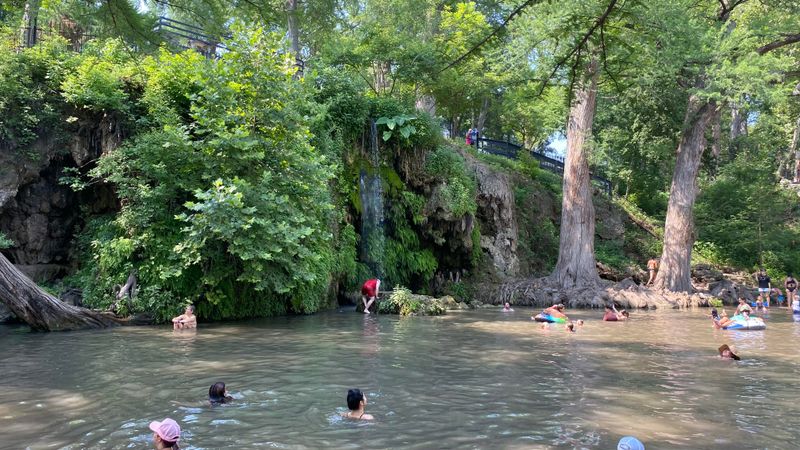
Clear water bubbles up from underground at a rate of 11,000 gallons per minute, creating a series of terraced pools that cascade down a hillside. Krause Springs operates on private property that the Krause family has welcomed visitors to since the 1950s. Twenty-six natural springs feed these pools, maintaining a constant 68-degree temperature year-round that feels refreshing in summer and surprisingly warm during cooler months.
The upper pools catch your eye first, with water spilling over limestone ledges into shallow swimming areas perfect for younger visitors. Cypress trees provide shade around the edges, their roots creating natural benches and hiding spots. Follow the path downhill and you’ll reach the main pool, deeper and more popular with swimmers looking to cool off completely.
The water clarity lets you see straight to the bottom, where small fish dart between submerged rocks.
Beyond the main swimming area, a trail leads to a butterfly garden and additional springs. The property includes camping areas if you want to extend your visit overnight. Tent sites nestle among the trees, some with water views.
The family maintains the grounds personally, and their presence gives the place a welcoming atmosphere that feels more like visiting someone’s backyard than a commercial attraction.
Weekends bring crowds, especially during summer when temperatures soar and everyone seeks water relief. Arrive early on Saturday or Sunday mornings to claim a good spot. Weekdays offer a more peaceful experience with fewer visitors competing for pool space.
The small entrance fee helps maintain the property and keeps the springs accessible.
Pack a cooler since no food is sold onsite, but alcohol isn’t permitted. The property includes picnic tables and grassy areas for spreading out blankets. Bring water shoes since the limestone can be slippery, and the rocky bottom isn’t always comfortable for bare feet.
This Hill Country gem provides a genuine Texas swimming hole experience without the commercial polish of more developed attractions.
4. Seminole Canyon State Park & Historic Site (Comstock)
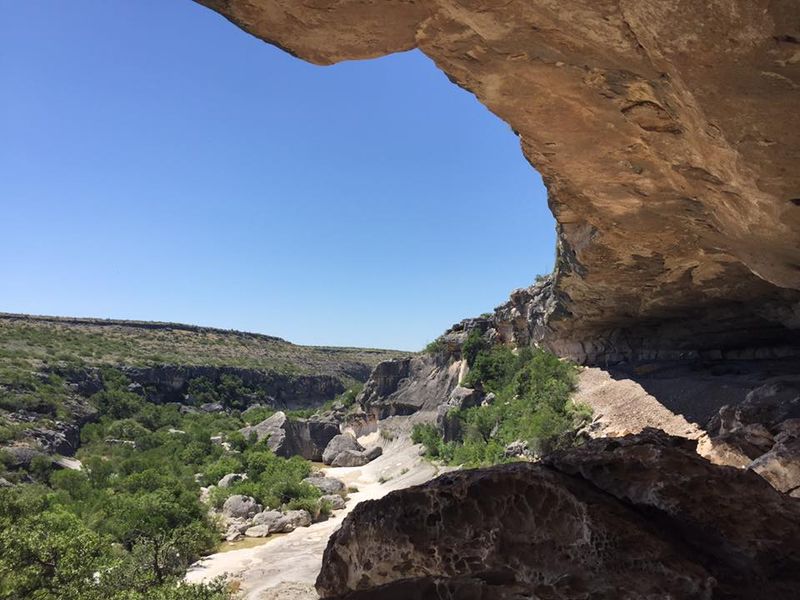
Prehistoric people painted stories on canyon walls here thousands of years ago, creating some of the oldest and most intricate rock art in North America. Seminole Canyon preserves these ancient pictographs in a remote corner of Southwest Texas where the Pecos River cuts through limestone. The images depict shamanic figures, animals, and geometric patterns in earth-tone pigments that have somehow survived millennia of exposure.
The Fate Bell Shelter houses the most impressive collection of pictographs, accessible only through guided tours led by park rangers. These tours involve a moderately challenging hike down into the canyon, descending about 200 feet over rocky terrain. The effort pays off when you stand beneath the rock overhang and see paintings that were already ancient when Europeans first arrived in the Americas.
Some figures stretch over 10 feet tall, their elongated forms and elaborate headdresses suggesting ceremonial or spiritual significance.
Archaeologists believe these paintings date back roughly 4,000 years, created by hunter-gatherers who inhabited these canyons seasonally. The dry climate and protective rock overhangs have preserved the pigments remarkably well. Rangers explain the various theories about what these images might represent, though their true meaning remains mysterious.
No one alive today can say with certainty what stories these artists intended to tell.
The park offers additional hiking trails for those who want to explore beyond the guided tour. A rim trail provides canyon views without the steep descent, suitable for visitors who can’t manage the rougher path to Fate Bell. The landscape feels harsh and unforgiving, with prickly pear, lechuguilla, and creosote bush dominating the vegetation.
Summer temperatures regularly exceed 100 degrees, making spring and fall far more comfortable for visiting.
Camping facilities include sites with water and electricity, though the remote location means you’ll want to arrive well-supplied. The nearest town offers limited services. This isolation enhances the experience, helping visitors imagine what life might have been like for the people who created these remarkable artworks in a landscape that has changed surprisingly little over thousands of years.
5. Hamilton Pool Preserve (Dripping Springs)
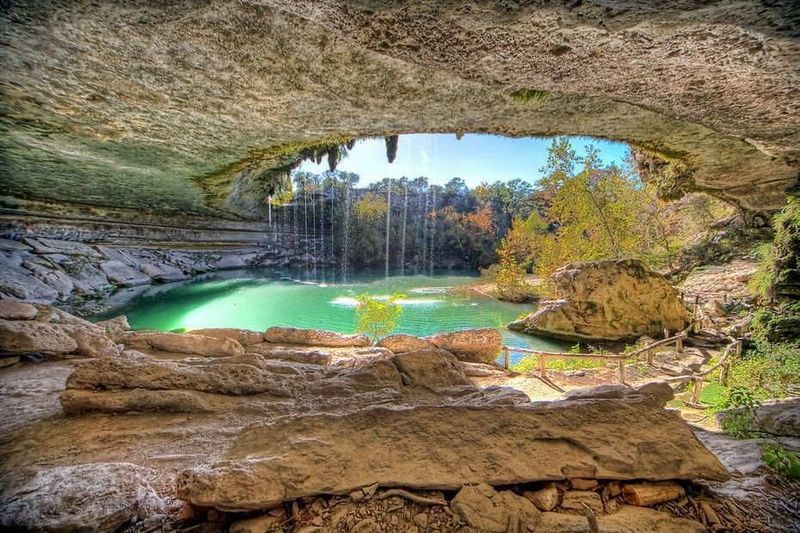
A dome of limestone collapsed thousands of years ago, creating a natural grotto where a 50-foot waterfall spills into an emerald pool. Hamilton Pool has become one of the Hill Country’s most photographed natural features, and for good reason. The horseshoe-shaped canyon walls rise dramatically around the swimming hole, draped with maidenhair ferns and moss that thrive in the constant moisture.
Stalactites hang from the grotto ceiling like nature’s chandelier.
The preserve requires reservations now due to its popularity and environmental sensitivity. Travis County Parks manages the site carefully to protect the fragile ecosystem while still allowing public access. The pool itself isn’t always open for swimming, depending on bacteria levels that fluctuate with rainfall and runoff.
Even when swimming is prohibited, visitors can still hike to the viewing areas and admire the waterfall.
A quarter-mile trail from the parking area descends to the pool, involving stairs and uneven terrain. The path can be slippery, especially near the water where spray from the falls keeps rocks perpetually damp. Once you reach the grotto, the temperature drops noticeably as you enter the shaded overhang.
The water stays cool year-round, fed by underground springs that maintain a consistent temperature.
Photography enthusiasts arrive early to catch the best light filtering through the grotto opening. Midday sun creates dramatic contrasts between the bright pool and shadowed alcoves. The preserve limits daily visitors to protect the site, so advance planning is essential.
Reservations typically open several months ahead and fill quickly, especially for weekends during warm weather.
Beyond the main attraction, the preserve includes additional hiking trails through typical Hill Country terrain. Live oaks and juniper cover the uplands, while the canyon bottom supports more diverse vegetation thanks to reliable water. Bird watchers spot golden-cheeked warblers and black-capped vireos during migration seasons.
The preserve charges a modest entrance fee, and parking can fill up even with the reservation system. This natural wonder demonstrates both the beauty and fragility of Hill Country ecosystems, requiring careful management to remain accessible for future generations.
6. Caprock Canyons State Park & Trailway (Quitaque)
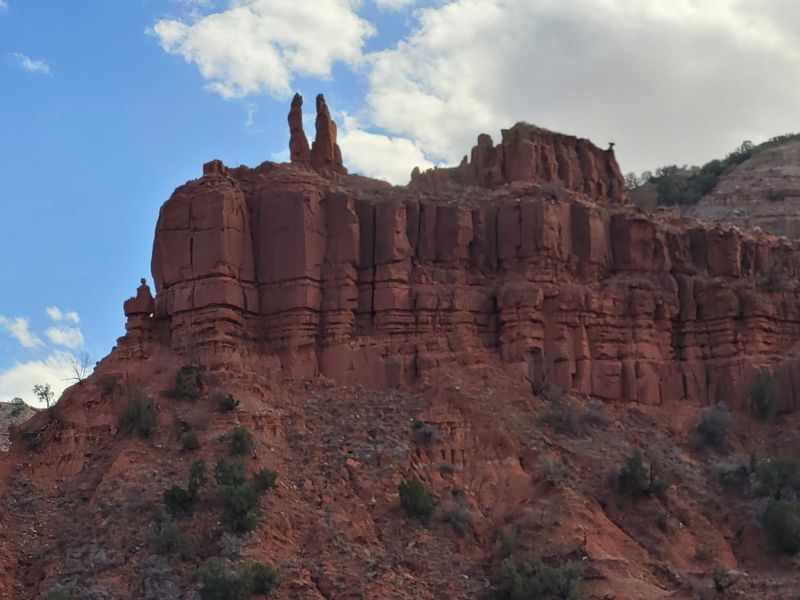
Red rock cliffs rise abruptly from the High Plains, creating a landscape that surprises anyone expecting flat Texas Panhandle terrain. Caprock Canyons cuts through the eastern edge of the Llano Estacado, exposing layers of geological history in bands of crimson, orange, and cream-colored stone. The park also hosts the official Texas State Bison Herd, descendants of the Southern Plains bison that once numbered in the millions.
Hiking trails wind through the canyons, ranging from easy walks to challenging scrambles. The Upper Canyon Trail follows the canyon floor for several miles, passing beneath towering walls streaked with desert varnish. Rock formations take on fantastic shapes where erosion has carved the softer layers, creating hoodoos and balanced rocks that seem to defy gravity.
Spring wildflowers carpet the canyon bottoms when conditions are right, adding splashes of color to the red rock backdrop.
The bison herd roams freely across roughly 1,300 acres of the park. Spotting them requires patience and sometimes luck, though they often graze near the main road in early morning or late afternoon. These aren’t tame animals, and the park strictly enforces distance requirements.
Bull bison can weigh over 2,000 pounds and move surprisingly fast when agitated. Watching them from a safe distance as they graze or wallow in dust provides a glimpse of what the Great Plains looked like before settlement.
Mountain bikers and equestrians share the 64-mile Caprock Canyons Trailway, which follows an old railroad bed from the park north to Estelline. The trail provides a unique way to experience the transition from canyon country to open plains. Primitive campsites along the trailway let riders break up the journey into manageable segments.
The park’s developed campground offers both tent and RV sites with varying amenities. Summer brings intense heat and occasional thunderstorms that can turn dry washes into rushing torrents within minutes. Fall and spring offer more moderate temperatures and clearer skies.
The remoteness means light pollution is minimal, making this an excellent spot for stargazing. The Milky Way stretches across the sky in a brilliant arc on moonless nights.
7. Nativity of the Blessed Virgin Mary Catholic Church (Schulenburg)
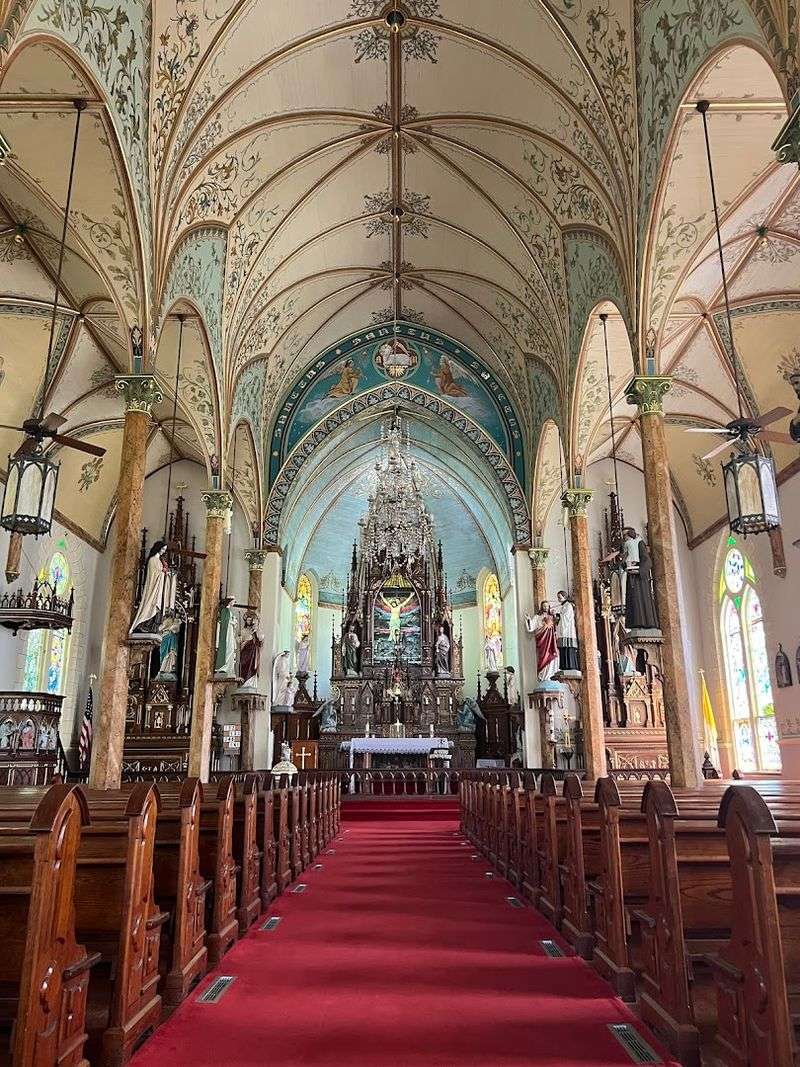
Step inside this modest white building and you’ll find yourself surrounded by an explosion of color and detail that seems impossible for such a small country church. Every surface blooms with hand-painted decorations in the Czech and German folk art traditions brought by immigrants who settled this region in the 1800s. The ceiling alone contains dozens of stenciled patterns, religious symbols, and scriptural scenes that draw the eye upward in wonder.
Artist Leo Dielmann painted these interior murals and decorations in the early 1900s, transforming the simple structure into what locals call a “painted church.” His work combines religious iconography with folk art traditions, creating a unique style that reflects the cultural heritage of the congregation. Intricate stenciling covers the walls in repeating patterns of flowers, vines, and geometric designs. Larger paintings depict biblical scenes and saints important to the community.
The church remains an active parish, serving the small community of Schulenburg. Visitors are welcome during posted hours, though religious services take priority. The building’s exterior gives little hint of the artistic treasures inside, making the contrast even more striking when you enter.
Natural light streams through stained glass windows, illuminating the painted surfaces and creating a warm, jewel-toned glow.
This is one of several painted churches in the region, part of a broader tradition among Czech and German Catholic communities in Central Texas. Each church features its own artistic interpretation, but this one stands out for the completeness and preservation of its decorations. The congregation has maintained the paintings carefully over the decades, touching up areas as needed while respecting the original artist’s vision.
Photography is generally permitted when services aren’t in session, though visitors should be respectful of the sacred space. The church sits just off the main highway through Schulenburg, making it an easy stop for travelers. No admission fee is charged, though donations help with ongoing maintenance.
Plan for about 30 minutes to properly appreciate the artwork and read the informational materials available inside. This hidden gem demonstrates how immigrant communities preserved their cultural traditions while building new lives in Texas, creating something beautiful that continues to inspire visitors more than a century later.
8. Caverns of Sonora (Sonora)
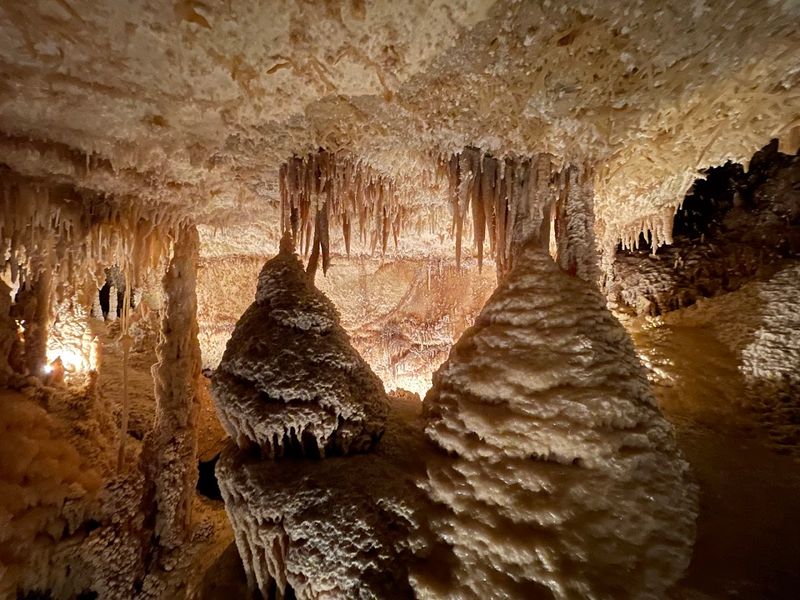
Underground chambers contain some of the most delicate and diverse cave formations found anywhere in the world. The Caverns of Sonora don’t have the size of Carlsbad Caverns or the name recognition of Mammoth Cave, but spelunkers and geologists consistently rank them among the most beautiful show caves in existence. What makes them special is the incredible variety and pristine condition of their formations, particularly the delicate helictites that seem to defy gravity as they twist in impossible directions.
Guided tours lead visitors along paved pathways through rooms with names like the Butterfly and the Hall of the White Giants. Soda straw stalactites hang from ceilings in dense clusters, some barely thicker than pencils but stretching several feet long. Flowstone cascades down walls in frozen waterfalls of calcite.
The cave stays at a constant 70 degrees year-round, with humidity levels that help preserve the formations but can make the air feel thick.
The helictites deserve special mention because they’re relatively rare in caves worldwide. These formations grow in curved or angular patterns that seem to ignore gravity, created by capillary action and crystallization rather than simple dripping water. The Caverns of Sonora contain an exceptional concentration of them in various sizes and forms.
Some resemble butterflies or flowers, while others twist into spirals or branch like coral.
Tours last about 90 minutes and cover nearly two miles of walking, including some stairs. The pathways are well-maintained, but the route isn’t wheelchair accessible due to the natural cave environment. Guides explain the geology behind the formations and point out particularly notable features that casual observers might miss.
The cave maintains strict protocols to protect formations, and touching anything is absolutely prohibited since oils from skin can damage or discolor the calcite.
The caverns sit in remote West Texas ranch country, about eight miles west of Sonora. The isolation has helped protect them from the heavy traffic that can damage more accessible caves. Discovery Tours offering a more adventurous experience are available for those who want to explore undeveloped sections, though these require advance reservations and more physical capability.
This underground wonderland proves that Texas holds surprises well beyond its famous surface landscapes.
9. Fort Lancaster State Historic Site (Sheffield)
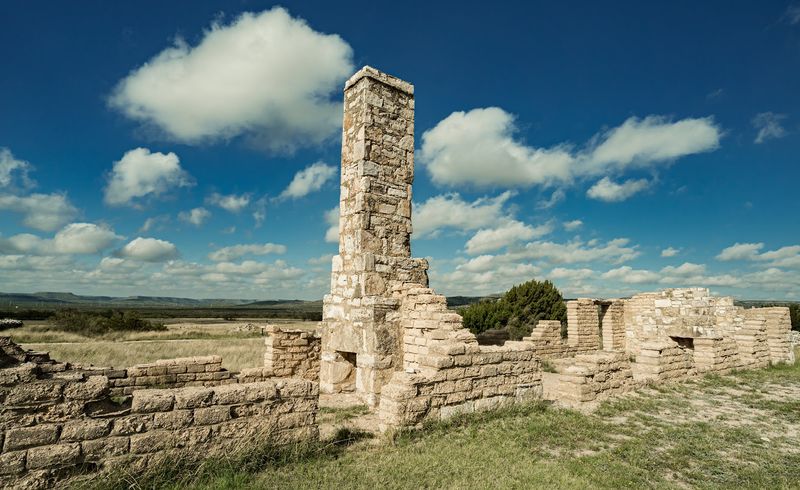
Stone ruins mark where soldiers once guarded the western frontier, enduring harsh conditions in one of Texas’s most unforgiving environments. Fort Lancaster operated from 1855 to 1861, protecting travelers and mail routes along the San Antonio-El Paso Road. The remote outpost never saw major battles, but daily life here tested troops in ways that combat rarely did.
Summer temperatures exceeded 100 degrees regularly, water sources were unreliable, and supplies arrived irregularly over hundreds of miles of difficult terrain.
Today, the site preserves the fort’s remains on a windswept hill overlooking Live Oak Creek. Stone walls still stand from several buildings, including officers’ quarters, barracks, and the hospital. Interpretive signs explain what each structure was and how it functioned within the fort’s layout.
Walking among the ruins, you can imagine the isolation soldiers felt stationed here, far from civilization with little to occupy their time between patrols.
The visitor center houses artifacts recovered from the site along with exhibits about military life on the frontier. Original items include buttons, buckles, pottery fragments, and other everyday objects that help bring the past to life. Period photographs show what the fort looked like when fully operational, helping visitors mentally reconstruct the buildings from their remaining walls.
A trail system lets you explore beyond the main fort area. The landscape looks much as it did in the 1850s, dominated by creosote bush, lechuguilla, and prickly pear. The creek that provided the fort’s water still flows intermittently.
Wildlife includes roadrunners, jackrabbits, and various lizard species adapted to the arid environment. Birds of prey hunt from the sky, taking advantage of the open terrain.
The site sees relatively few visitors due to its remote location roughly 70 miles west of Sonora. This isolation actually enhances the experience, helping you appreciate what frontier soldiers endured. No entrance fee is charged, and the grounds are open daily during daylight hours.
The visitor center maintains more limited hours. Bring water and sun protection since shade is minimal and the West Texas sun is relentless. This forgotten outpost offers a window into Texas history that goes beyond the famous battles and heroes, showing the unglamorous reality of frontier military service.
10. Monahans Sandhills State Park (Monahans)
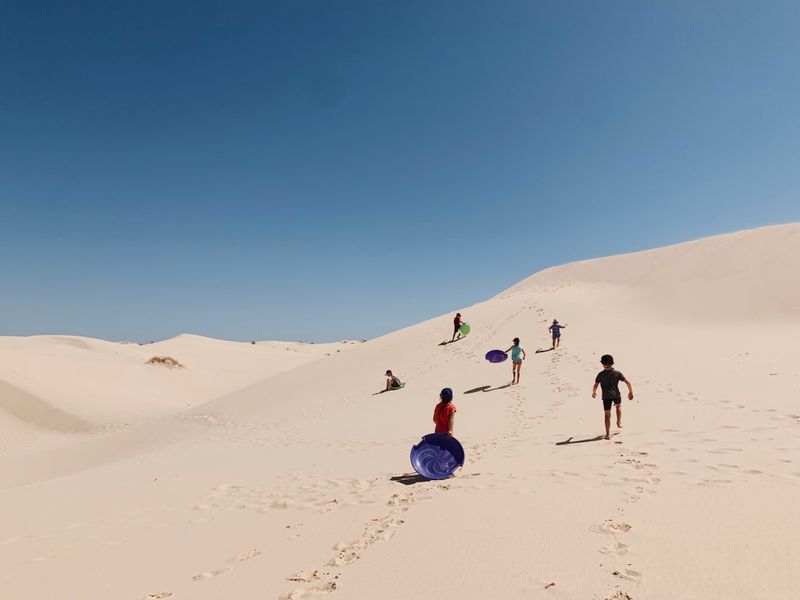
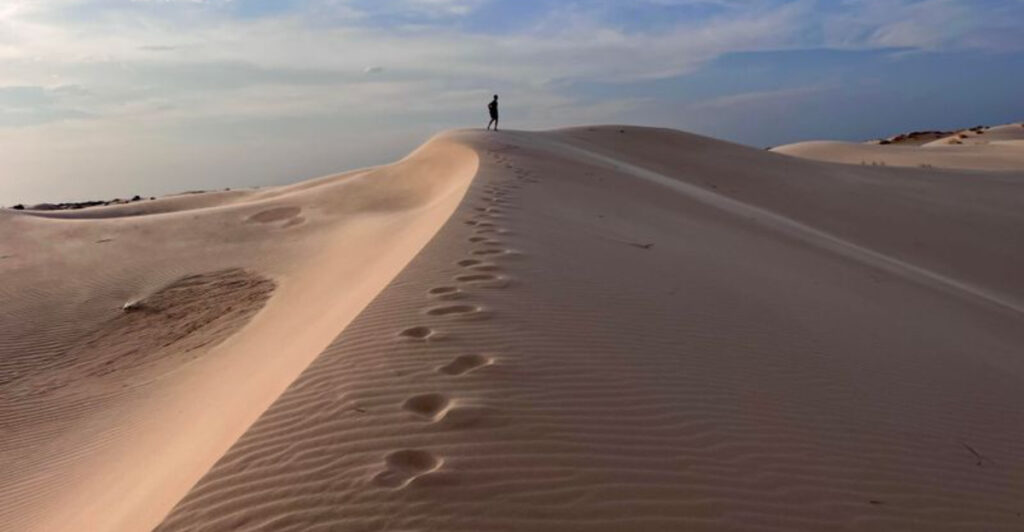
Wind-sculpted sand dunes rise up to 70 feet high, creating a landscape that looks more like the Sahara than Texas. Monahans Sandhills covers nearly 4,000 acres of active dunes that shift and change with every windstorm. The sand originated from ancient deposits left behind when this region was covered by a shallow sea millions of years ago.
Today, persistent winds keep the dunes mobile, constantly reshaping their contours and erasing any tracks within hours.
The park encourages an activity you won’t find at most state parks: sand surfing. Visitors can rent plastic discs at the headquarters to slide down the dune faces. It’s harder than it looks because the sand provides both cushioning and resistance, requiring speed and technique to get a good ride.
Kids and adults alike spend hours climbing dunes and sliding back down, usually ending up covered in fine white sand that gets into everything.
Despite the harsh environment, life persists here in surprising ways. Havard shin oaks grow throughout the dunes, their root systems extending up to 90 feet deep to reach water. These trees rarely grow more than three feet tall because wind and blowing sand prune them constantly.
During rare wet periods, wildflowers bloom between the dunes in explosions of color that contrast dramatically with the white sand.
The best times to visit are early morning or late afternoon when temperatures moderate and the low-angle sun creates dramatic shadows on the rippled sand surfaces. Summer midday heat can be dangerous, with surface temperatures exceeding 150 degrees. The sand reflects sunlight intensely, so sunglasses and sunscreen are essential regardless of season.
Wind frequently kicks up, sometimes creating minor sandstorms that sting exposed skin.
Camping facilities include both primitive sites among the dunes and developed spots with amenities. Spending the night lets you experience the dunes at sunset and sunrise when the changing light transforms the landscape. The park sits just north of Monahans along Interstate 20, making it accessible to travelers crossing West Texas.
This unusual environment demonstrates nature’s ability to create beauty in unexpected places, offering a genuinely unique Texas experience that surprises first-time visitors expecting only oil derricks and scrubland.
11. Jacob’s Well Natural Area (Wimberley)
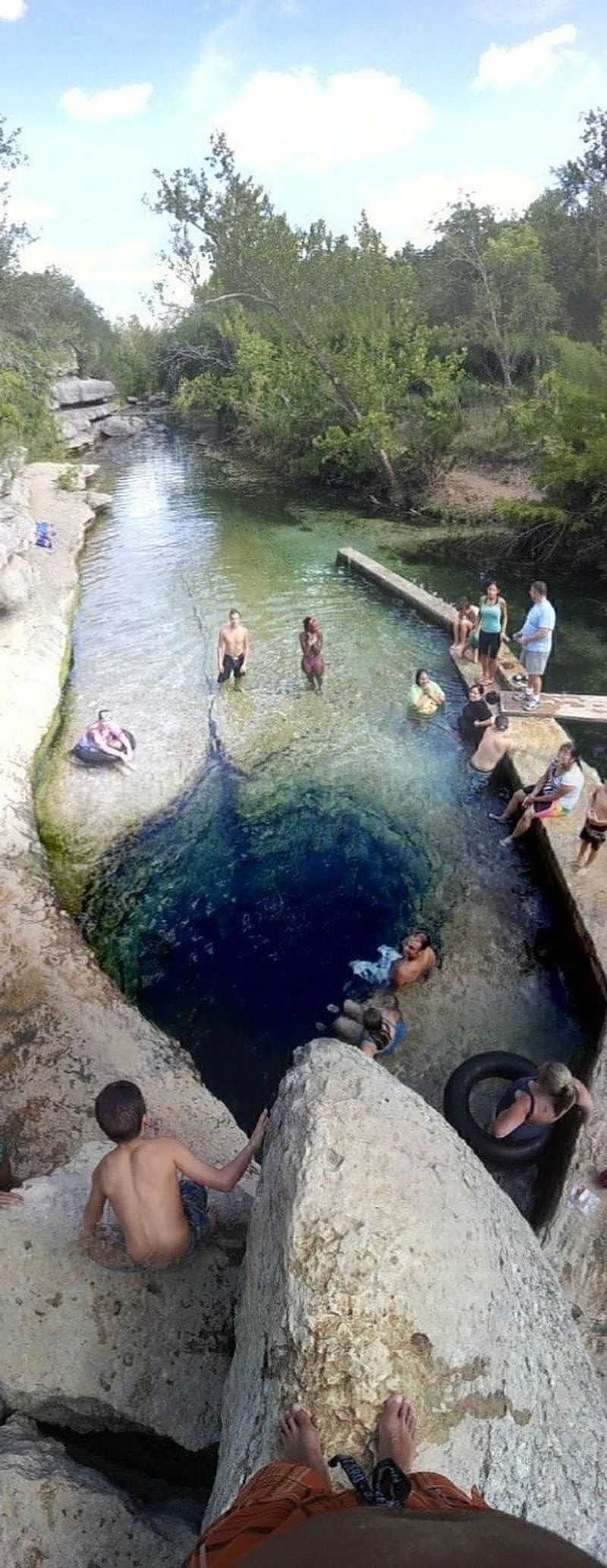
An artesian spring opens like a portal in the limestone, its water so clear you can see straight down into the underground cave system below. Jacob’s Well has fascinated and intimidated visitors for generations, serving as both a popular swimming hole and one of the most dangerous dive sites in Texas. The spring feeds Cypress Creek, producing thousands of gallons of water daily from an underground aquifer.
The main opening measures only about 12 feet in diameter, but it drops straight down over 130 feet before branching into a complex cave system.
Swimming is now restricted to preserve the fragile ecosystem and ensure visitor safety. Hays County operates the natural area through a reservation system that limits daily visitors. The spring and surrounding property nearly became a private development before conservation efforts saved it for public access.
When swimming is permitted, the experience is unforgettable. The water maintains a constant temperature in the low 70s, feeling refreshing in summer and surprisingly warm during cooler months.
The well has claimed several lives over the years, all involving cave divers who became disoriented or ran out of air in the underwater passages. The cave system includes narrow restrictions, silt that reduces visibility to zero when disturbed, and multiple chambers that require technical diving skills to navigate safely. Warning signs now make the dangers clear, and diving is strictly prohibited without proper permits and qualifications.
The natural area includes hiking trails through typical Hill Country habitat. Cypress trees line the creek downstream from the spring, their roots creating pools and quiet spots where you might see fish or turtles. The property hosts several endangered species, including the fountain darter and Texas wild rice, both dependent on the consistent flow from the spring.
Conservation efforts focus on protecting both the spring’s water quality and the species that depend on it.
Reservations are required year-round and can be made online through the county parks system. The site often fills up weeks in advance for weekends during warm weather. Parking is limited, and visitors must arrive during their designated time slot.
This restriction helps protect the area while maintaining public access. The well demonstrates the Hill Country’s geological complexity, where underground water flows through limestone caves before emerging in springs that have supported life for thousands of years.
12. Cypress Valley (Spicewood)
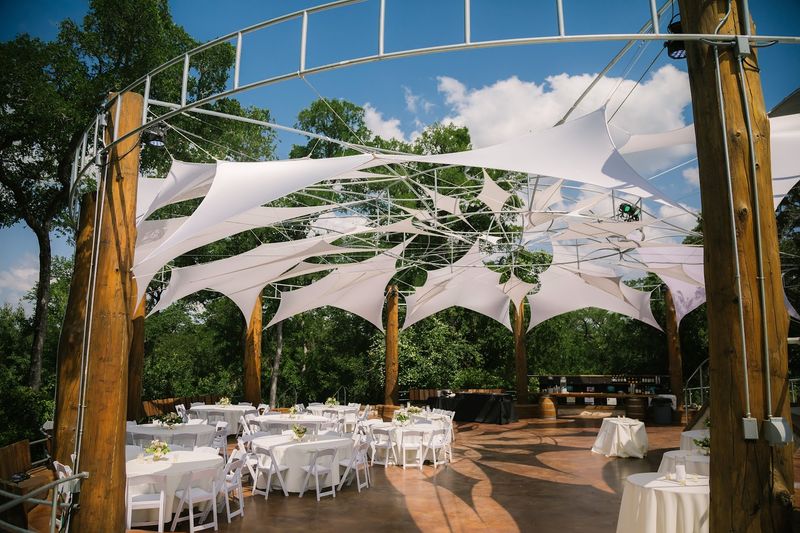
Treehouses perch high in the cypress canopy above a spring-fed lake, connected by suspension bridges that sway gently as you walk between platforms. Cypress Valley takes the childhood fantasy of a treehouse and transforms it into sophisticated overnight accommodations that blend seamlessly with the forest. Three main treehouses rise 30 to 40 feet off the ground, built around massive tree trunks that serve as central supports.
Each structure includes real beds, electricity, and amenities that make them comfortable while maintaining their connection to nature.
The property specializes in what they call “canopy living,” encouraging guests to slow down and experience the forest from a perspective usually reserved for birds and squirrels. Suspension bridges link the treehouses to ground level, requiring a bit of nerve for those uncomfortable with heights. The bridges bounce and sway with each step, though they’re completely safe and regularly inspected.
Once you adjust to the movement, walking among the treetops becomes an adventure in itself.
Beyond the overnight treehouses, Cypress Valley offers zip line tours that let you fly through the forest canopy. Multiple lines connect platforms built high in the trees, some stretching over the lake. The courses range from beginner-friendly to more challenging, accommodating different comfort levels with heights and speed.
Guides handle all the technical aspects, so no previous experience is necessary. The sensation of gliding between trees with the forest floor far below creates an exhilarating rush.
The lake itself provides another activity option, with kayaks and paddleboards available for guests. Cypress trees grow right to the water’s edge, their knees poking above the surface and creating a maze-like environment for paddling. The water stays clear enough to see fish swimming below, and birds nest in the surrounding trees.
Early morning on the lake offers peaceful moments before the day’s activities begin in earnest.
Reservations are essential since the number of treehouses is limited and they book far in advance, especially for weekends. The property sits in the Hill Country west of Austin, accessible enough for a weekend getaway but remote enough to feel like an escape. This unusual lodging option appeals to couples seeking romantic getaways and families wanting memorable adventures.
Cypress Valley proves that Texas hospitality extends even to the treetops, creating experiences that blur the line between accommodation and attraction.
13. Gorman Falls (Bend)
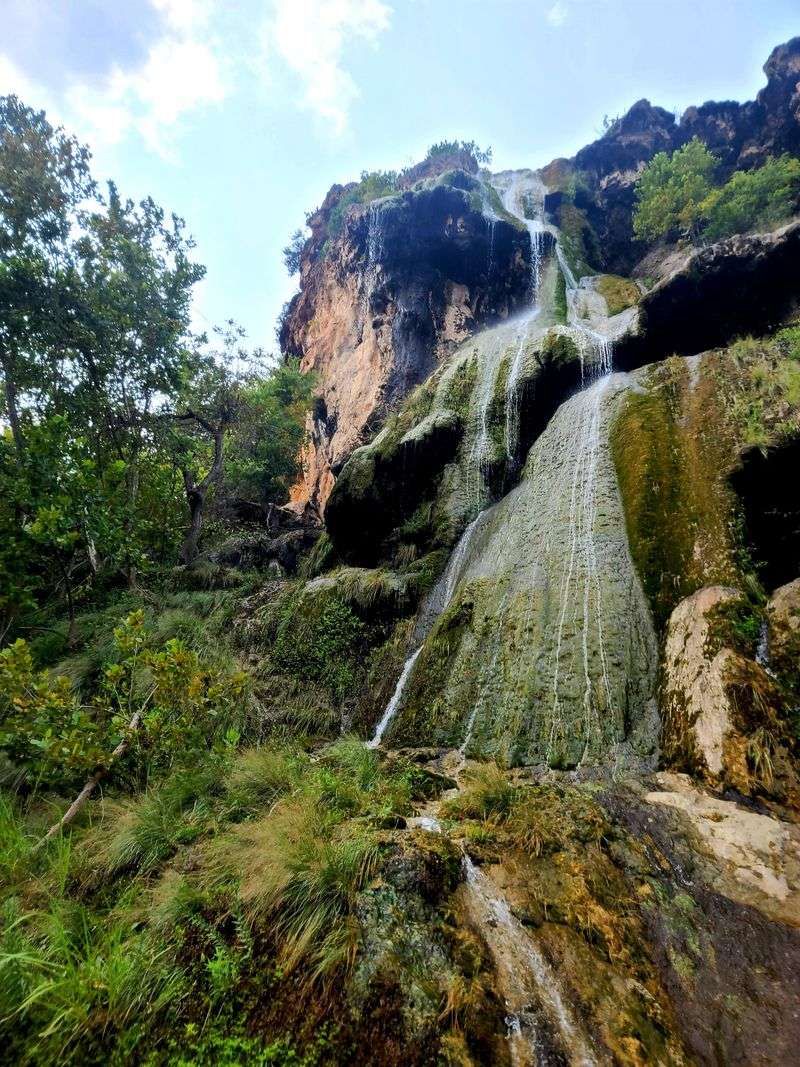
Water spills over a 60-foot travertine cliff covered in emerald moss and ferns, creating one of the most photogenic waterfalls in Texas. Gorman Falls hides in a remote corner of Colorado Bend State Park, accessible only by a moderately strenuous hike that keeps casual visitors away. The falls don’t depend on rainfall like most Texas waterfalls.
Instead, they’re fed by springs that maintain consistent flow year-round, supporting lush vegetation that seems impossibly green against the typical Hill Country browns and tans.
The hike to reach the falls covers about three miles round-trip with several steep sections. The trail descends into a canyon, crosses rocky terrain, and requires some scrambling over boulders near the falls themselves. Proper hiking shoes are essential since the rocks can be slippery, especially near the base where spray keeps everything damp.
The effort filters out crowds, meaning you’ll often have the falls to yourself or share them with just a few other visitors.
What makes Gorman Falls special is the travertine formation that creates the cliff face. This porous rock forms when calcium carbonate precipitates from the spring water, building up layer by layer over thousands of years. The constant moisture supports mosses, ferns, and other plants that thrive in the humid microclimate.
The combination of flowing water, green vegetation, and golden travertine creates a color palette that photographers dream about.
Swimming isn’t allowed at the falls themselves to protect the fragile ecosystem. The springs that feed the falls support several endangered species, including the fountain darter. The park takes conservation seriously, balancing public access with protection of sensitive habitats.
Guided tours occasionally visit the falls, offering insights into the geology and ecology that casual hikers might miss.
Colorado Bend State Park offers numerous other attractions, including Gorman Cave (accessible only by guided tour), additional hiking trails, and river access for fishing and paddling. The park’s remote location keeps visitation lower than more accessible Hill Country destinations. No cell service reaches most of the park, adding to the sense of isolation.
Primitive camping lets you extend your visit and explore more of what the park offers. Gorman Falls rewards those willing to work for their views, proving that some of Texas’s best natural features still require effort to experience.
14. Devil’s Sinkhole State Natural Area (Rocksprings)
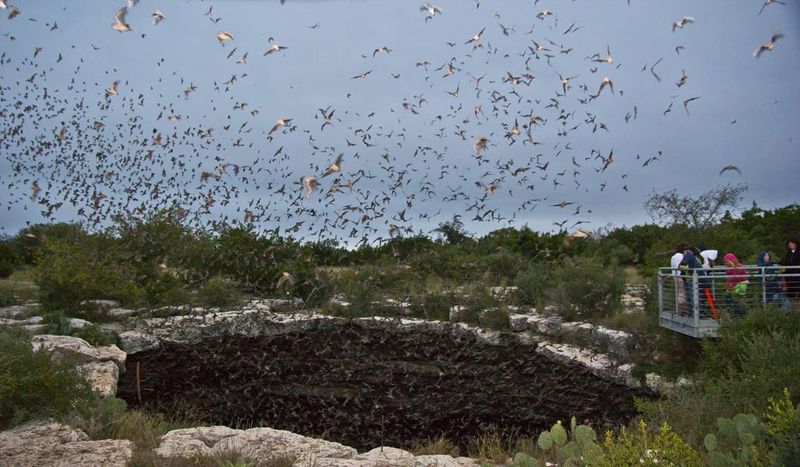
A massive cavern opens in the earth like a giant throat, dropping 350 feet straight down into darkness. Devil’s Sinkhole formed when the ceiling of an underground cave collapsed, creating a vertical shaft that now hosts one of Texas’s largest bat colonies. During summer months, millions of Mexican free-tailed bats roost in the sinkhole during the day before emerging each evening in a spiraling tornado of wings.
The spectacle rivals the more famous bat flights at Carlsbad Caverns, yet far fewer people know about it.
Access is strictly controlled to protect both visitors and the sensitive ecosystem. The Nature Conservancy manages the property, offering guided tours that must be reserved in advance. Tours typically schedule around the bat emergence, which occurs roughly 30 minutes after sunset from May through October.
Visitors gather at an observation platform with a clear view of the sinkhole opening. As darkness falls, a few scouts emerge first, followed by an increasing stream that builds into a massive column of bats spiraling counterclockwise out of the opening.
The bats head out to feed on insects, consuming tons of agricultural pests each night across the surrounding ranchland. They’ll fly up to 50 miles from the roost searching for food before returning before dawn. The emergence can last over an hour as millions of individuals take flight.
The sound is remarkable, a rushing whoosh of wings that grows louder as more bats join the exodus. Hawks sometimes hunt around the sinkhole, picking off bats as they emerge.
During winter, the Mexican free-tailed bats migrate to Mexico, but the sinkhole remains geologically fascinating. The massive opening measures about 40 feet across at the surface, widening as it descends. Rock climbers occasionally receive permits to rappel into the sinkhole, though this requires special permission and technical expertise.
The cavern at the bottom contains formations and passages that few people ever see.
The natural area sits in remote Edwards County, requiring a drive on unpaved roads to reach the meeting point. The isolation has helped preserve the site, keeping it pristine for both the bats and the visitors lucky enough to witness the emergence. Tours fill quickly once the summer season begins, so early booking is essential.
This natural wonder demonstrates the hidden complexity beneath Texas’s surface, where vast underground spaces support life in ways most people never imagine.
15. Westcave Outdoor Discovery Center (Round Mountain)
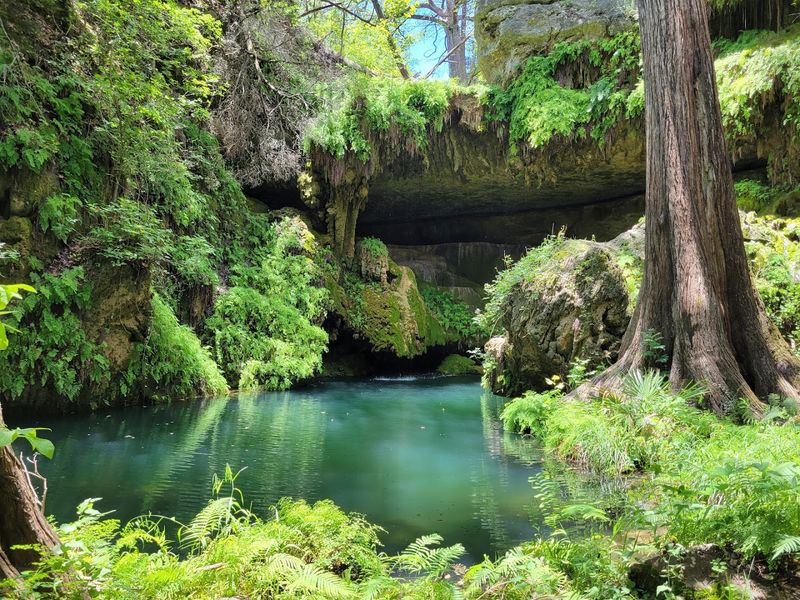
A collapsed grotto creates a hidden canyon where a 40-foot waterfall spills into a pool surrounded by ferns and maiden hair that seem better suited to a rainforest than Central Texas. Westcave Preserve protects this fragile ecosystem along with the upland habitats above the canyon. The preserve operates as an outdoor education center, balancing conservation with public access through guided tours that teach visitors about Hill Country ecology while minimizing impact on sensitive areas.
The preserve sits on a sharp bend of the Pedernales River, where millions of years of erosion carved a canyon through layers of limestone. The grotto formed when part of the canyon ceiling collapsed, creating an alcove where moisture collects and rare plants thrive. The constant humidity inside the grotto supports species that couldn’t survive in the drier uplands just a few hundred yards away.
Resurrection ferns coat the rock walls, turning brown during dry periods but greening up immediately when moisture returns.
Guided tours are required to access the grotto and waterfall, running on weekends and some weekdays throughout the year. The tours last about 90 minutes and involve descending into the canyon via a series of stairs and platforms. Guides explain the geology, ecology, and human history of the area while leading groups down to the grotto floor.
The temperature drops noticeably as you descend, and the air becomes increasingly humid. Standing inside the grotto with water cascading overhead and ferns all around creates an almost magical atmosphere.
The preserve’s uplands offer self-guided hiking trails through typical Hill Country terrain. Oak, juniper, and mesquite dominate the vegetation, with prickly pear and various wildflowers adding color seasonally. The trails provide views across the Pedernales River valley and connect to overlooks where you can peer down into the canyon.
Bird watchers spot golden-cheeked warblers during breeding season, along with various other species throughout the year.
Conservation drives every decision at Westcave, from the limited tour sizes to the careful management of trails and facilities. The preserve depends on admission fees, memberships, and donations to continue its educational mission. Photography is permitted, though tripods aren’t allowed in the grotto due to space constraints.
The preserve sits roughly an hour west of Austin, making it accessible for day trips while maintaining enough distance to feel like an escape from urban areas. This hidden gem demonstrates how fragile ecosystems can persist in unexpected places when protected and managed thoughtfully.
Share this story