In Louisiana, a restaurant can feel like a living archive, where recipes carry family memory, dining rooms echo with local legends, and every plate seems to say something about the state itself. From New Orleans institutions shaped by Creole tradition to beloved stops that reflect Cajun roots and Gulf Coast abundance, these historic restaurants offer far more than a good meal – they let you taste the layers of Louisiana history in a way museums simply cannot.
You can trace the influence of French, African, Spanish, Italian, and American cultures through classic dishes, old-school service, and rooms that have welcomed generations of locals, travelers, politicians, musicians, and families celebrating life’s biggest milestones. If you want to understand Louisiana beyond the postcards and festival posters, start with a table, an appetite, and these nine remarkable places where the stories are just as memorable as the food.
1. Dooky Chase’s Restaurant
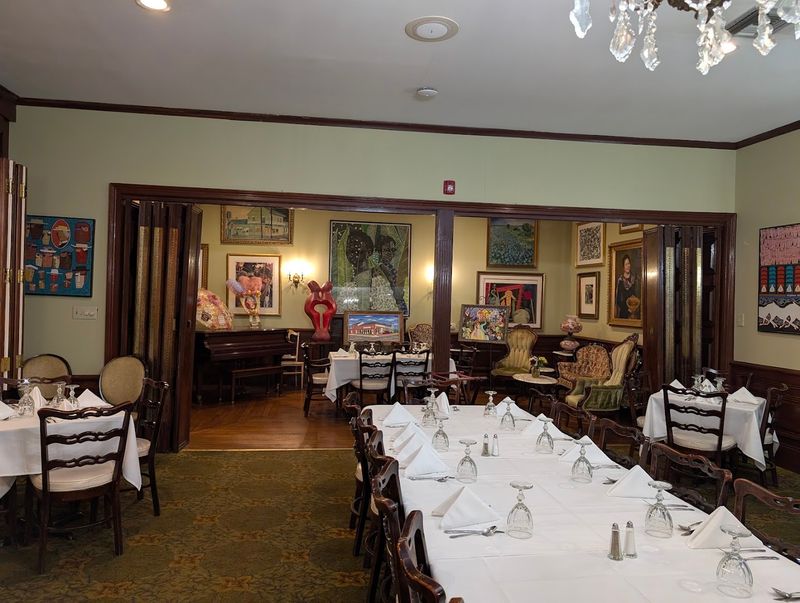
Stepping inside feels like entering one of Louisiana’s most meaningful cultural landmarks, where food, civil rights history, and Creole tradition all share the same table.
In New Orleans, Dooky Chase’s Restaurant became legendary not only for polished hospitality and unforgettable gumbo, but also for the leadership of Leah Chase, whose influence reached far beyond the kitchen.
You can sense immediately that this is a place where generations have gathered to celebrate, organize, and honor the city’s Black culinary legacy.
The menu reflects the depth of Louisiana cooking with dishes that feel rooted in memory rather than trends.
Rich gumbos, perfectly seasoned fried chicken, shrimp Clemenceau, and stuffed shrimp speak to the kind of Creole craftsmanship that rewards patience, balance, and confidence.
Every plate seems to carry the message that Louisiana cuisine is not just about indulgence but about preserving stories that might otherwise fade.
What makes the experience especially powerful is the way art, history, and dining intersect under one roof.
The restaurant has long displayed an impressive collection of African American art, turning a meal into something that also feels reflective and deeply connected to the community around it.
During the civil rights era, local leaders met here, and that legacy still gives the room an energy that feels important without ever becoming stiff or formal.
If you’re exploring Louisiana through its historic restaurants, this is the kind of place that reminds you why food matters.
Dooky Chase’s Restaurant is woven into the story of New Orleans, but it also speaks to the wider spirit of the state, where resilience, creativity, and hospitality often meet over a shared meal.
You leave full, of course, yet what lingers most is the sense that you were welcomed into a chapter of Louisiana history that is still alive, still generous, and still being served every day.
2. Tujague’s Restaurant
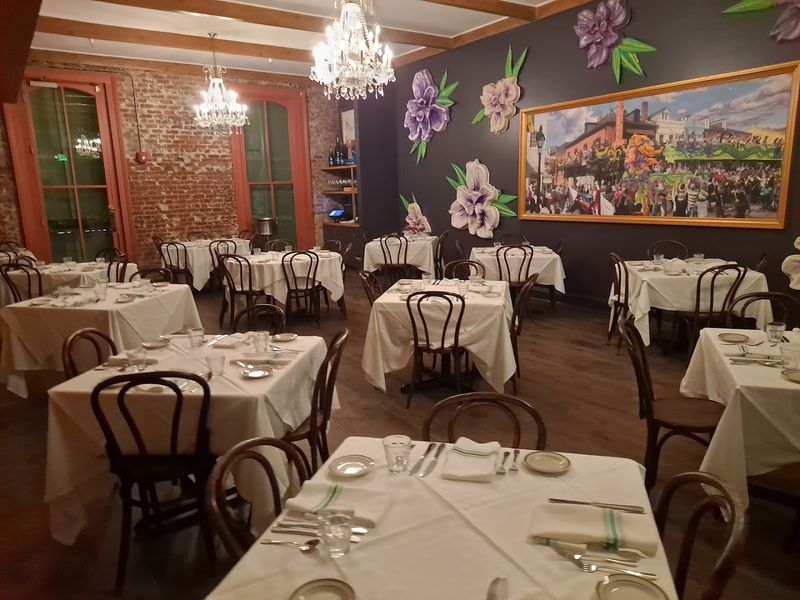
Few meals in Louisiana come wrapped in as much French Quarter atmosphere as the one waiting behind these historic doors.
Tujague’s Restaurant has been part of New Orleans dining culture since the nineteenth century, and it still carries the kind of old-world energy that makes dinner feel like an event instead of a routine reservation.
When you settle in, you are not just choosing a place to eat, you are stepping into a long-running conversation about tradition, pleasure, and the theater of Creole cuisine.
The restaurant is especially known for classics that feel inseparable from the city itself.
Its brisket, shrimp remoulade, and other enduring house specialties reveal the practical elegance of Louisiana cooking, where bold seasoning and careful technique matter more than unnecessary reinvention.
You can taste the confidence of a kitchen that understands history and does not need to shout to prove it.
What I find memorable here is the balance between formality and warmth.
The dining rooms feel historic in the best sense, with details that recall another era, yet the experience remains welcoming rather than intimidating, which fits Louisiana beautifully.
In a state where hospitality often feels instinctive, this restaurant shows how refinement and ease can coexist without losing any character.
Its longevity also says something important about New Orleans and the broader Louisiana food landscape.
Restaurants survive for generations only when they become part of local ritual, and Tujague’s Restaurant has done that by giving visitors a reliable taste of the city’s enduring personality.
By the time dessert arrives, you understand that the real appeal is not simply age or reputation, but the way this place preserves a distinctive slice of Louisiana life through consistency, ceremony, and dishes that still make people return with genuine excitement.
3. Casamento’s Restaurant
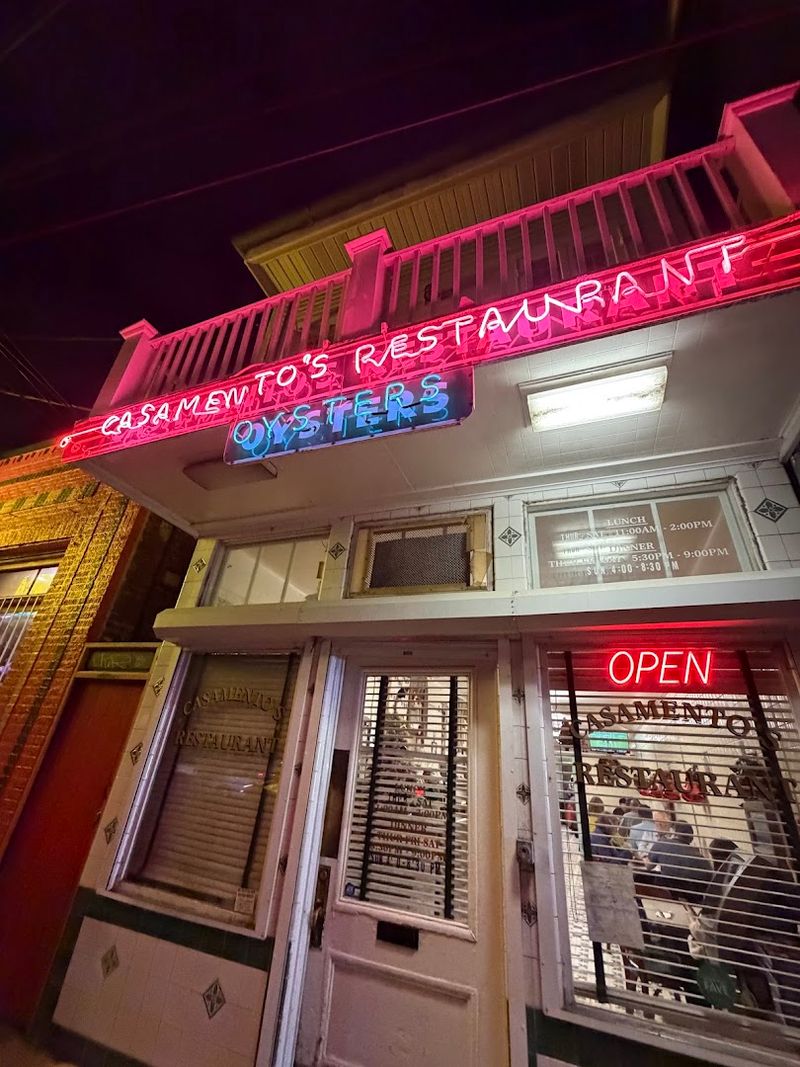
Some Louisiana restaurants tell their story through grand dining rooms, but this one does it with simplicity, seafood, and a fiercely loyal following.
Casamento’s Restaurant has long been one of New Orleans’ essential spots for oysters, and its modest, old-fashioned charm is part of what makes the experience so memorable.
When you walk in, the tiled interior and straightforward atmosphere immediately signal that the focus here has always been on doing one thing exceptionally well.
The menu celebrates the Gulf in a way that feels honest and deeply local.
Fried oysters, oyster loafs, seafood platters, and creamy macaroni create the kind of meal that is comforting, crisp, and satisfying without trying to be flashy.
In Louisiana, where seafood is both a tradition and a point of pride, that clarity of purpose feels especially authentic.
This restaurant also reflects an important thread in the state’s culinary identity – the contribution of immigrant families who helped shape neighborhood food culture.
Casamento’s Restaurant was founded by an Italian family, and its place in New Orleans history speaks to the blend of communities that helped define Louisiana dining over time.
You can feel that neighborhood legacy in the room, where the mood often seems less like a tourist attraction and more like a cherished local habit.
What stays with you most is the sense that not every historic restaurant needs chandeliers or white tablecloths to matter.
In Louisiana, character often lives in places that remain stubbornly true to themselves, and this is one of them.
Casamento’s Restaurant endures because it offers something increasingly rare – a direct connection to old New Orleans through oysters, atmosphere, and a style of hospitality that feels unpolished in the most appealing way, as if the city decided long ago that this place was already perfect enough and should simply keep being itself.
4. Mandina’s Restaurant
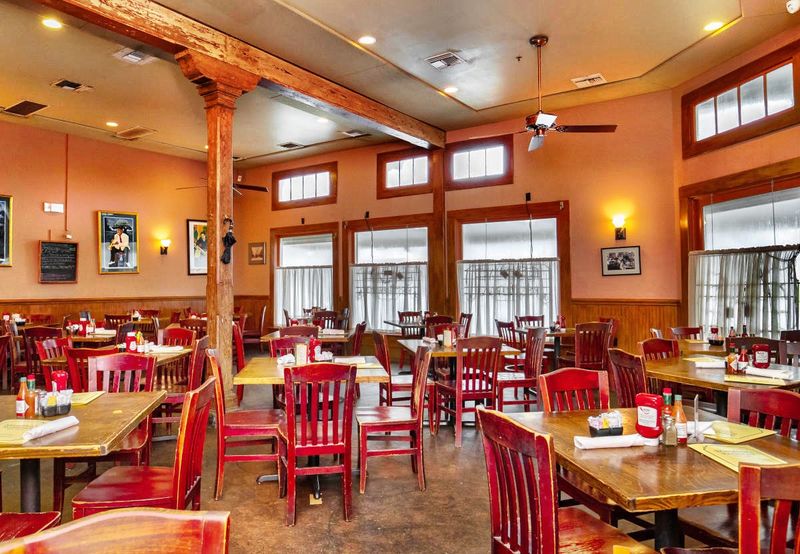
A great Louisiana restaurant often feels like a neighborhood memory that happens to welcome outsiders, and that is exactly the charm waiting here.
Mandina’s Restaurant has long been treasured in New Orleans for serving Creole Italian comfort food in a setting that feels relaxed, familiar, and deeply woven into local life.
Rather than leaning on spectacle, it wins you over through consistency, personality, and the unmistakable sense that generations have come here for reasons that go beyond hunger.
The menu captures a side of Louisiana cooking that deserves more attention, especially if you want to understand how different cultural influences blended across the state.
Dishes like trout amandine, turtle soup, red gravy, seafood pasta, and onion rings reflect a crossroads where Italian family traditions met the flavors and ingredients of New Orleans.
That combination feels Louisiana particularly because it turns heritage into something lived and delicious rather than merely preserved for display.
There is also a warmth to the experience that makes the restaurant feel approachable from the moment you sit down.
You are not being asked to admire history from a distance here, because the point is to participate in it the way locals do – by ordering generously, lingering over familiar favorites, and letting the room’s easy rhythm pull you in.
Historic restaurants can sometimes feel self-conscious, but this one remains grounded in everyday pleasure.
That may be why Mandina’s Restaurant holds such a lasting place in the city’s affection.
It represents the kind of Louisiana institution that tells its story quietly, through family ownership, dependable cooking, and the steady loyalty of diners who keep returning year after year.
By the end of the meal, you understand that its significance comes not from grand claims, but from the way it preserves a very real, very local tradition of gathering around food that feels both personal and unmistakably tied to New Orleans.
5. Middendorf’s Restaurant
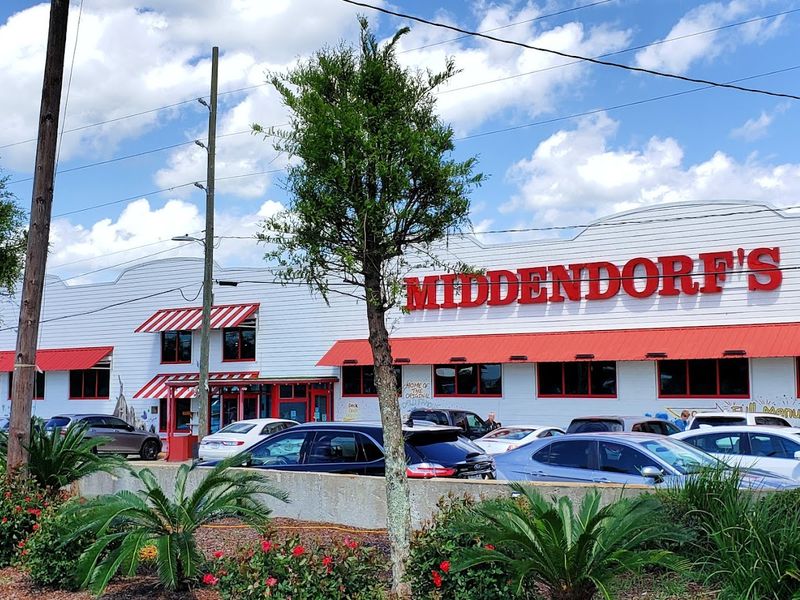
Driving through Louisiana, you quickly learn that some of the state’s most beloved meals wait outside the big-city spotlight.
Middendorf’s Restaurant, located near the wetlands and waterways that shape so much of South Louisiana life, has built its reputation on thin fried catfish and a welcoming style that feels proudly unpretentious.
The setting, the food, and the history all come together in a way that reminds you that Louisiana’s culinary identity extends far beyond the French Quarter.
The signature catfish is the kind of dish people remember long after the trip ends.
Fried to a delicate crisp and served with the sort of straightforward sides that let the fish remain the star, it shows how Louisiana cooking can be both simple and deeply distinctive.
In a state defined by water, marshland, and fishing traditions, seafood served this well becomes more than dinner – it becomes a regional expression.
What makes the restaurant historic is not only its age, but the way it reflects a particular Louisiana landscape and lifestyle.
Middendorf’s Restaurant has long welcomed travelers, families, and regulars who understand that places like this help connect communities across the state.
You can feel the rhythm of road trips, weekend outings, and multigenerational meals in the atmosphere, which gives the experience an easy authenticity that no trend-driven concept could reproduce.
If you are trying to taste Louisiana in a fuller sense, this stop matters because it highlights the state’s broader geography and culture.
Not every landmark meal comes with white tablecloths or urban glamour, and Middendorf’s Restaurant proves that history can be just as compelling in a casual dining room where the specialty has been perfected over decades.
You leave with a clearer picture of Louisiana as a place where the land and water shape the table, and where a famous plate of catfish can tell as rich a story as any grander culinary institution.
6. Antoine’s Restaurant
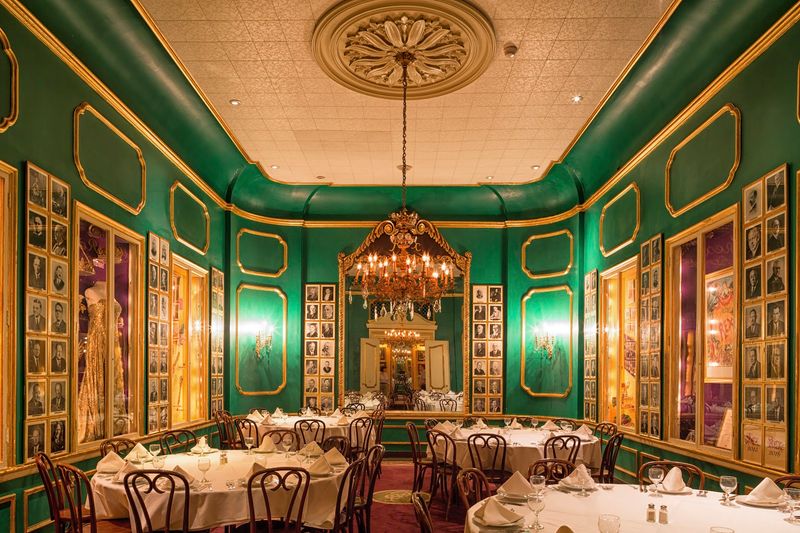
Few dining rooms in Louisiana make history feel as tangible, layered, and ceremonious as this one.
Antoine’s Restaurant has stood as a New Orleans institution since the nineteenth century, and its legacy within Creole fine dining is almost impossible to overstate.
From the moment you enter, the scale of the place, the old-world decor, and the sense of occasion all suggest that dinner here belongs to a much longer story.
The menu is built around classic French Creole traditions that helped define how the city, and much of Louisiana, came to be understood through food.
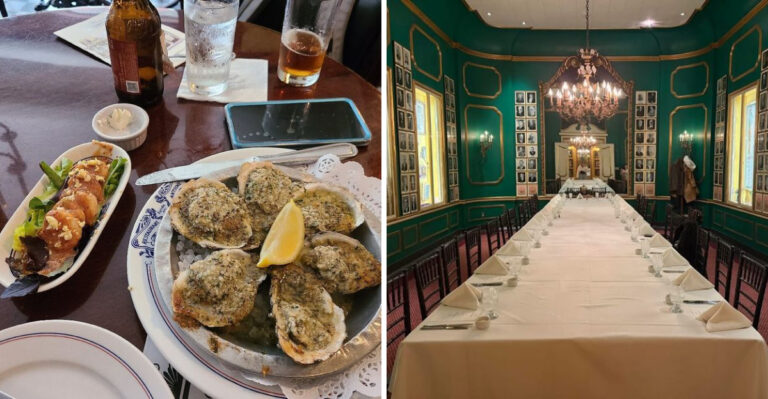
Oysters Rockefeller, pompano, rich sauces, and carefully prepared seafood dishes embody a style of dining that values ritual, refinement, and continuity.
You are tasting more than famous recipes here, because each course reflects the confidence of a restaurant that has influenced generations of cooks and diners.
One of the most fascinating parts of the experience is how the restaurant preserves the social history of New Orleans inside its many rooms.
Private spaces, carnival traditions, and decades of celebrations have left behind an atmosphere that feels almost theatrical, yet it remains sincerely rooted in local custom rather than performance for visitors.
That combination is deeply Louisiana – grand, flavorful, and aware that pleasure and tradition often belong together.
What makes Antoine’s Restaurant essential is the way it captures a version of Louisiana hospitality that is formal without becoming cold.
Even if you arrive curious mainly about a famous dish or a legendary name, you leave recognizing how powerfully restaurants can shape a city’s identity over time.
In a state where food often serves as history, memory, and celebration all at once, this restaurant stands as one of the clearest examples of how a meal can preserve elegance, community ritual, and the enduring prestige of New Orleans Creole culture.
7. Galatoire’s Restaurant
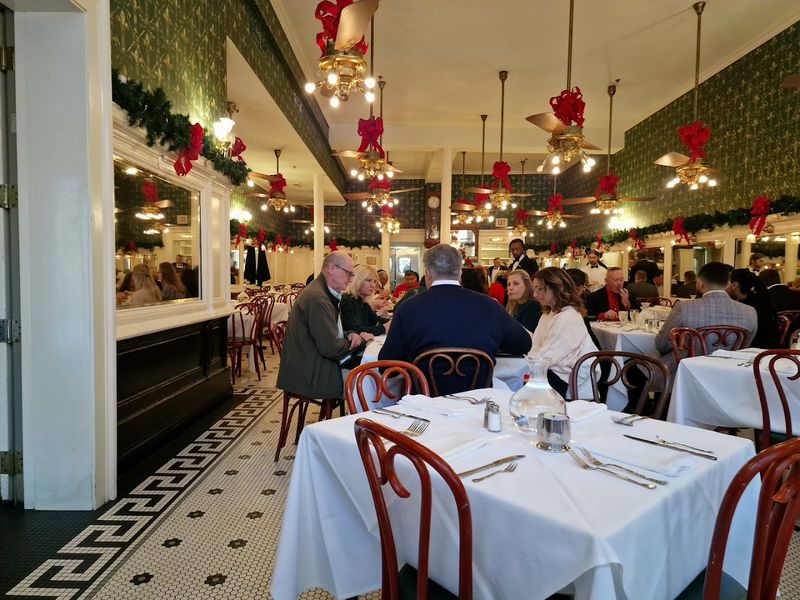
There are Louisiana restaurants where the meal matters, and then there are places where the entire social ritual becomes part of the attraction.
Galatoire’s Restaurant belongs firmly in the second category, offering a New Orleans dining experience shaped as much by tradition, conversation, and atmosphere as by the food itself.
On Bourbon Street, it has long stood apart from the surrounding spectacle by maintaining a sense of classic Creole elegance that feels rooted rather than performative.
The menu celebrates enduring favorites with the kind of assurance that comes from practice and loyalty.
Shrimp remoulade, crabmeat maison, trout, soufflé potatoes, and rich seafood preparations reflect a culinary style that is distinctly tied to the city and, more broadly, to Louisiana’s love of layered flavor.
You can feel how these dishes became traditions, not because they were fashionable, but because people genuinely wanted them again and again.
What sets the restaurant apart is the energy in the room, especially during lively lunches that have become a cultural event in themselves.
Jackets, old customs, attentive service, and the hum of regulars all create an atmosphere where dining feels social in a deeply local way.
Louisiana hospitality often carries a sense of ceremony without stiffness, and this place captures that balance beautifully.
Visiting Galatoire’s Restaurant gives you insight into how restaurants can become institutions through habit, status, and emotional connection.
It is not simply about preserving recipes from the past but about preserving a way of gathering that still feels meaningful in the present.
In a state where meals often mark celebration as much as sustenance, this restaurant continues to embody the spirit of New Orleans with remarkable clarity, proving that history can stay vibrant when it is kept alive by people who still dress up, show up, and treat lunch like an occasion worth honoring.
8. Mosca’s Restaurant
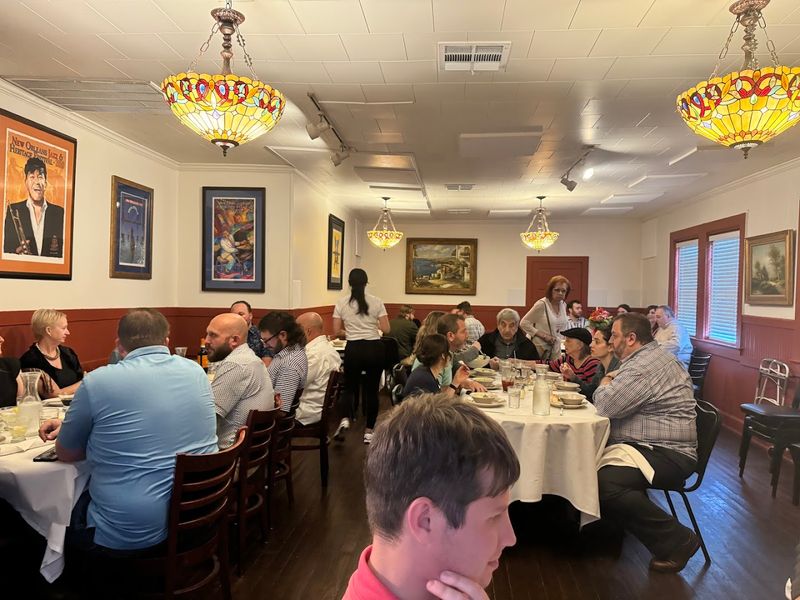
Some of Louisiana’s most memorable historic restaurants feel almost secretive, as if part of their appeal depends on being discovered rather than advertised.
Mosca’s Restaurant has exactly that quality, drawing diners with a combination of old-school atmosphere, family-style hospitality, and a menu that reflects the state’s rich Italian influence.
The setting feels timeless in a way that encourages you to slow down, order generously, and settle in for a meal that unfolds at its own pace.
The food is central to why this place has become such a legend.
Oysters Mosca, chicken a la grande, and other house specialties blend bold seasoning, garlic, richness, and comfort in a style that is unmistakably connected to Louisiana’s regional character.
Although the roots are Italian, the spirit is local, showing how communities across the state transformed inherited traditions through Gulf ingredients and Southern abundance.
There is something especially compelling about the restaurant’s refusal to feel polished for modern expectations.
Instead of chasing trends, Mosca’s Restaurant leans into the pleasures that made it famous in the first place – generous portions, familiar rituals, and a room that seems designed for long conversations.
That confidence gives it a kind of authenticity that many newer restaurants work hard to imitate but rarely achieve.
Its place in Louisiana history comes from more than longevity alone.
This is a restaurant that demonstrates how the state’s culinary story has always been shaped by overlapping identities, with immigrant traditions becoming inseparable from local taste over time.
By the end of the meal, you understand why people speak about Mosca’s Restaurant with such affection, because it offers not only distinctive food but also a rare feeling of continuity, as though the same pleasures that delighted earlier generations are still waiting for you at the table, unchanged in all the right ways.
9. Brennan’s Restaurant
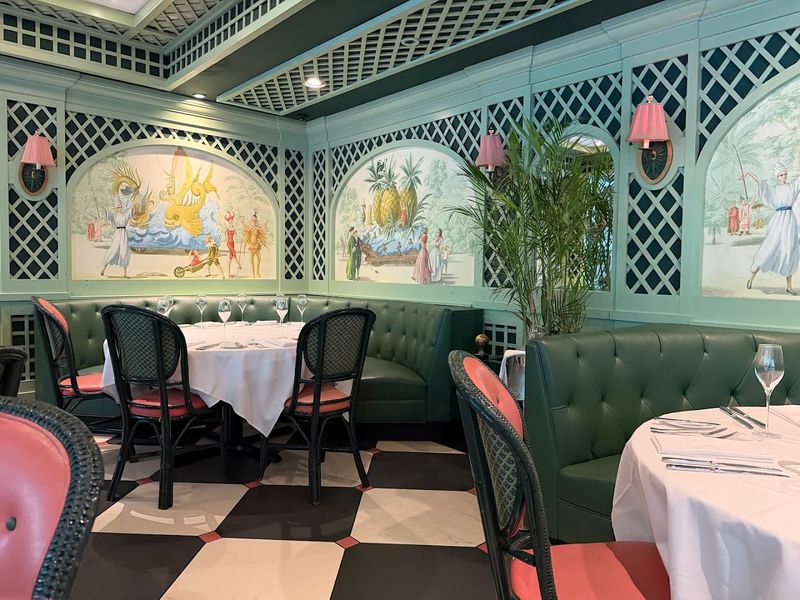
In Louisiana, even breakfast can come with grandeur, theatrical flair, and a deep sense of place.
Brennan’s Restaurant has long been one of New Orleans’ most recognizable dining landmarks, known for refined Creole cooking, polished service, and the kind of charm that makes a meal feel celebratory before the first plate even arrives.
The building’s character and the restaurant’s longstanding reputation give the experience a special energy that feels both elegant and unmistakably local.
The menu is famous for dishes that helped shape the city’s dining identity, especially when it comes to brunch and breakfast traditions.
Eggs Hussarde, turtle soup, and the iconic Bananas Foster speak to a style of Louisiana hospitality that embraces pleasure without apology.
You are reminded quickly that in this state, a restaurant can become historic not just by lasting a long time, but by creating rituals that people continue to crave.
Part of the appeal lies in how effortlessly the restaurant balances sophistication with warmth.
Brennan’s Restaurant feels polished, yet it still invites you to relax into the experience, whether you are lingering over coffee or watching dessert arrive with dramatic flair.
That combination reflects a broader Louisiana sensibility, where ceremony matters, but enjoyment matters just as much.
If you are tracing the story of Louisiana through its classic restaurants, this stop earns its place by showing how hospitality can become cultural memory.
The restaurant has helped define what a special meal in New Orleans looks like for generations, and its influence reaches beyond any single dish.
You leave with the sense that Brennan’s Restaurant has preserved a distinctly Louisiana idea of dining – gracious, flavorful, a little theatrical, and deeply committed to making guests feel that the table is not merely a place to eat, but a place to mark time, celebrate life, and return to tradition with real delight.
Share this story