You can be standing beside traffic, old mill buildings, or a quiet dirt road one minute, then hearing water drop over rock the next. That is the funny little secret about New Jersey’s waterfalls: they do not always announce themselves with long wilderness approaches or dramatic entrance signs.
Some roar in the middle of a city. Some slip through ravines behind county parks. Others show up after rain like nature decided to add a bonus feature to your walk. This list is for waterfall chasers who like a little variety.
There are big-name landmarks, mossy forest cascades, family-friendly trails, rugged scrambles, roadside surprises, and a few places that require extra planning because access is limited.
Go after a rainy stretch or in spring if you want the best flow, wear shoes that can handle slick rocks, and do not underestimate how muddy New Jersey can get when it is showing off.
1. Paterson Great Falls
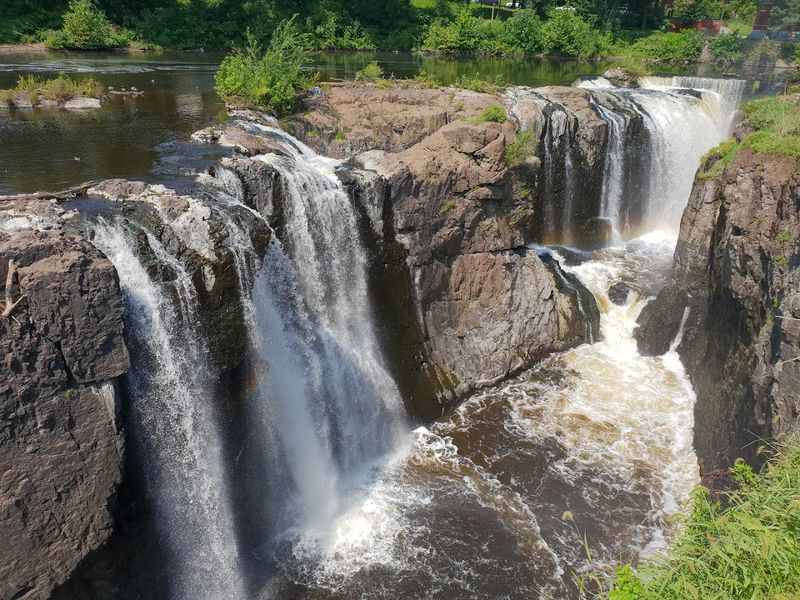
The sound arrives before the view does, which is exactly how a waterfall this powerful should introduce itself. In the middle of Paterson, the Passaic River drops hard into a rocky chasm, throwing mist, noise, and drama into a setting surrounded by bridges, brick mills, and the bones of early American industry.
It is not the quiet woodland waterfall people picture when they hear “New Jersey hike,” and that is what makes it such a knockout. This is the waterfall to visit when you want scale without committing to a long trail.
The main viewing areas are easy to reach, and the experience feels more like stepping into a living history lesson than wandering into a secluded nature preserve. Alexander Hamilton saw the power of the falls as a way to fuel manufacturing, and Paterson grew around that idea.
Today, the water still looks like it could power half the state if it felt like it. Go after steady rain for the most impressive flow, but expect more people when the falls are roaring.
Parking can vary by time and day, so give yourself a little patience. Bring a camera, but do not rush the visit.
The best part is watching how the city, the river, and the old industrial landscape all crash into one another.
2. Buttermilk Falls
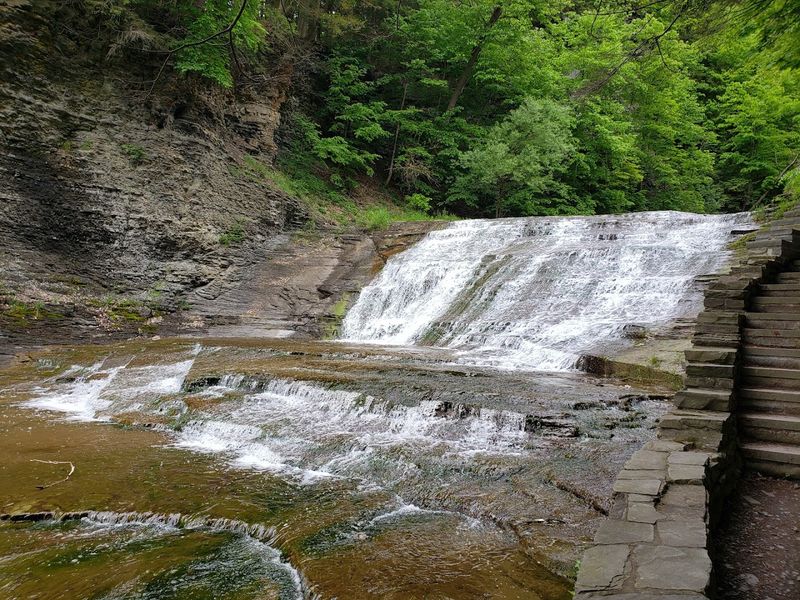
A gravel-road arrival makes this one feel like you have been let in on something, even though Buttermilk Falls is one of New Jersey’s best-known cascades. The waterfall spills down a steep rock face in the Delaware Water Gap area, and on a good-flow day it looks almost silky, sliding and fanning over the stone in long white ribbons.
It is big, direct, and wonderfully unfussy: park, walk over, and there it is. The easy access is a major part of the appeal.
You can admire the lower view without turning the visit into a serious hike, but there are stairs beside the falls for anyone who wants to climb higher and get a different angle. From there, more ambitious hikers can connect into longer routes, including trails that head toward ridge and forest scenery.
Just know that the trail beyond the falls gets steep quickly, so this is not a flip-flop stroll. The mood here changes fast with weather.
After rain, it has presence; during dry stretches, it can be more delicate. Spring is the safest bet for that full waterfall effect.
Because it is popular, early arrival helps, especially on mild weekends. Pack water, wear real shoes, and leave time for nearby stops if you want to turn it into a Sussex County waterfall day.
3. Hemlock Falls
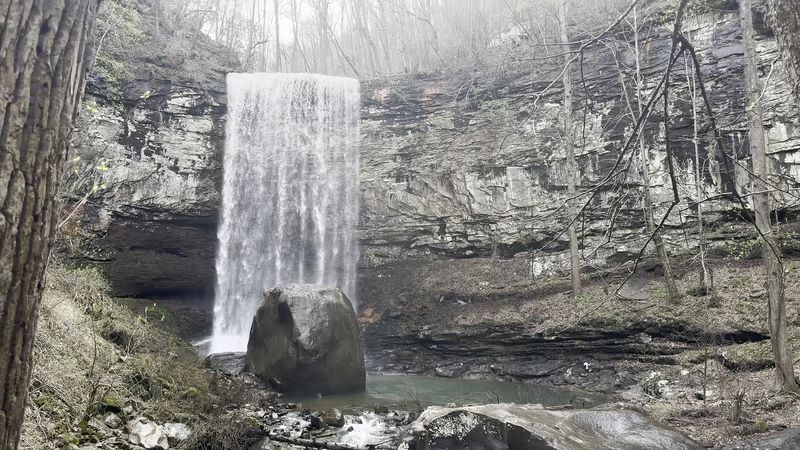
A walk to Hemlock Falls feels like a small escape hidden inside one of Essex County’s busiest outdoor playgrounds. South Mountain Reservation gives you woods, trails, rocky streambeds, and enough route options to make the visit as easy or as ambitious as you want.
Then, deep in the reservation, the waterfall drops over a stone ledge in a way that feels surprisingly tucked away for a place so close to Maplewood, Millburn, West Orange, and South Orange. What makes Hemlock Falls especially easy to love is the balance.
It is scenic enough to feel like a destination, but not so remote that you have to plan your whole day around it. Families, casual walkers, dog walkers, and hikers all end up here, often from different trailheads, which gives the area a steady neighborhood-meets-forest feel.
The falls are especially pretty after rain, when the water spreads across the rock instead of trickling down in thin strands. The trails around South Mountain can be rocky and muddy, so choose footwear with grip.
Pair the falls with a longer loop if you want a fuller hike, or keep it simple and make the waterfall the main event. Either way, the reward is that rare North Jersey combo: easy access, real woodland scenery, and a waterfall that feels earned without being exhausting.
4. Boonton Falls
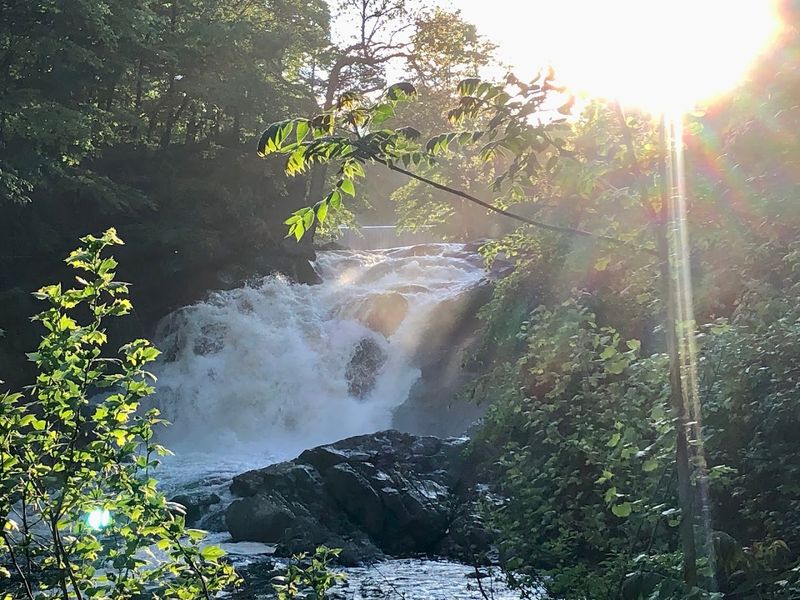
Boonton Falls has a great sense of timing. You can wander away from downtown Boonton, step into Grace Lord Park, and suddenly the Rockaway River is doing something much louder and wilder than you expected.
The falls tumble through a rocky gorge below town, giving the whole place a rugged edge that contrasts nicely with Boonton’s shops, restaurants, and old industrial character. This is one of those waterfalls that reminds you how many New Jersey towns grew up around moving water.
The river once helped power local industry, and even now the falls feel tied to the town’s identity rather than separate from it. The park itself adds to the experience, with trails, a gazebo, playground space, and enough short paths to stretch your legs without turning the outing into a full hike.
The best move is to visit after decent rain, when the Rockaway River has enough volume to make the falls look properly dramatic. The trail down can be uneven, and the viewing spots require attention, so do not treat it like a paved overlook.
Afterward, downtown Boonton is right there for coffee, lunch, or a slow browse. That easy nature-town pairing is the reason Boonton Falls belongs on any New Jersey waterfall list.
5. Silver Spray Falls
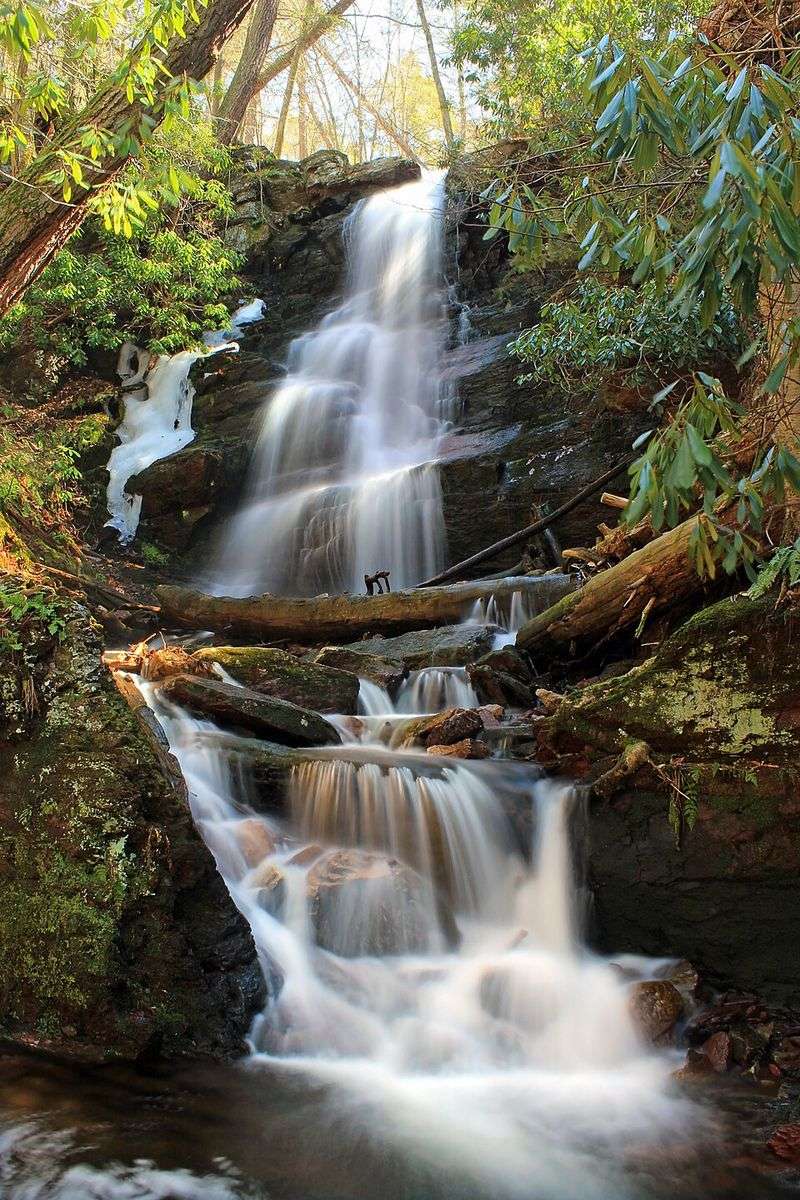
The fun of Silver Spray Falls is that it does not behave like a polished attraction. It is the waterfall people often call “Hidden Falls,” and while that nickname gets tossed around too freely in travel writing, this one earns it more than most.
Near the Buttermilk Falls area in the Delaware Water Gap, Silver Spray sits off the obvious route, reached by a short but less formal approach that makes the reveal feel personal. When the water is running well, it drops in a narrow, silvery column through a green ravine, with moss, rock, and shade doing most of the decorating.
It is not about big crowds or broad viewing platforms. It is about finding a cooler pocket of woods, hearing the water before you see it, and getting that little “oh, there it is” moment that hikers secretly love.
This is a better choice for people comfortable with uneven footing and informal trail conditions. It is not the place to improvise recklessly or wander onto questionable routes just for a photo.
Go prepared, stay aware of slick ground, and consider pairing it with Buttermilk Falls if you are already in the neighborhood. The contrast between Buttermilk’s easy drama and Silver Spray’s tucked-away feel makes the two together especially satisfying.
6. Tillman Falls
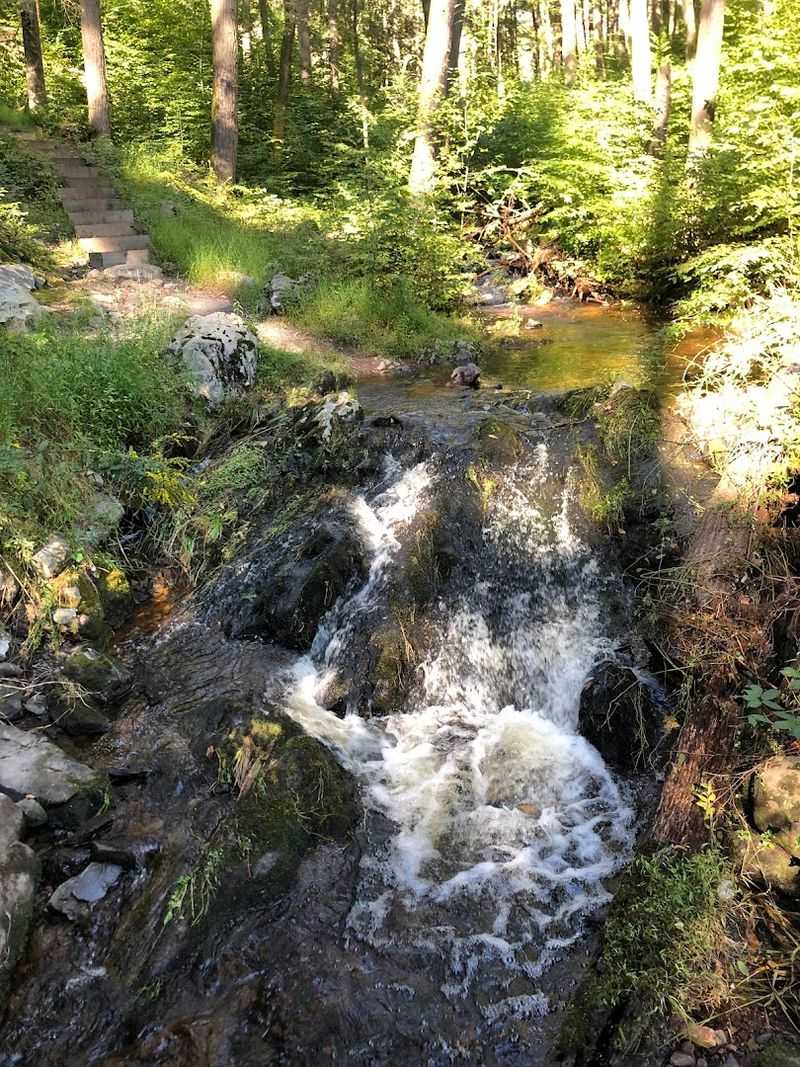
Tillman Falls is less about one huge drop and more about the way water moves through a ravine that feels older, cooler, and quieter than the world just outside it. In the Tillman Ravine section of Stokes State Forest, the brook slides, spills, and cuts through rock under hemlocks and hardwoods.
The falls and cascades here feel woven into the landscape, not staged as one big overlook. That is the charm.
You go for the whole ravine: the shade, the stream crossings, the damp stone, the sound of water moving beside the trail. The waterfall moments arrive as part of the walk, rewarding anyone who likes noticing details rather than racing to a single viewpoint.
Mountain laurel and rhododendron add texture in season, and the forest has the deep-green look that makes summer hikes feel cooler than they have any right to be. The trails are manageable for many hikers, but roots, rocks, mud, and wet leaves can make footing tricky.
Spring and post-rain visits bring the best flow, though the ravine is lovely even when the water is gentler. If you prefer your waterfalls with atmosphere rather than spectacle, Tillman Falls delivers exactly that: a shaded, streamside ramble that feels calm without being boring.
7. Peanut Leap Cascade
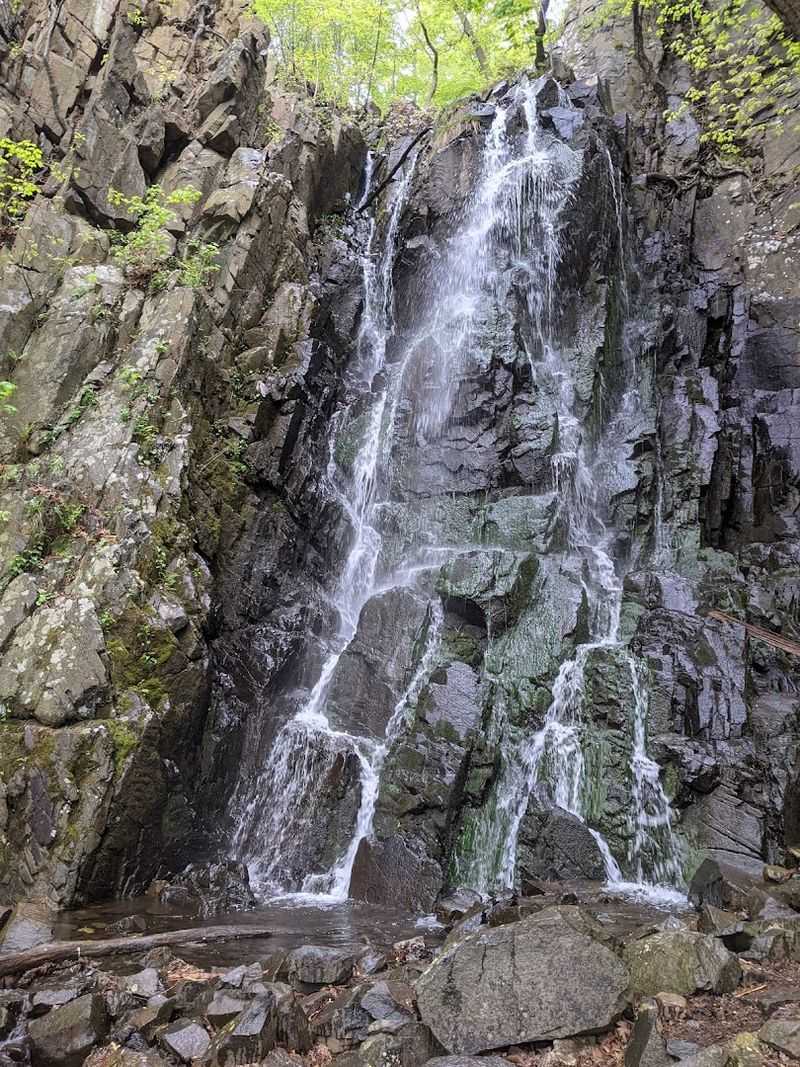
A waterfall beside the Hudson feels almost too good to be real, but Peanut Leap Cascade makes you work just enough to believe it. Located in the Palisades, this spot combines steep trails, river views, stone ruins, and a cascade that drops through one of the prettiest corners of the park.
The payoff is not just the water; it is the whole strange, dramatic setting between cliff and river. The classic approach often starts near State Line Lookout, where the views are already doing a lot of heavy lifting.
From there, the route heads down toward the river, and that means one important thing: what goes down must climb back up. This is not a casual boardwalk stroll.
The trails can be steep, rocky, and demanding, especially if you connect the outing with longer Palisades routes. At the cascade, look for the way the water threads through the stone and greenery before making its way toward the Hudson.
The nearby remnants of old garden features add a slightly mysterious touch, as if the woods are still holding onto someone’s ambitious summer project from another era. Go when trail conditions are dry, bring water, and save energy for the return climb.
Peanut Leap is playful, scenic, and just challenging enough to feel like an adventure.
8. Tinton Falls
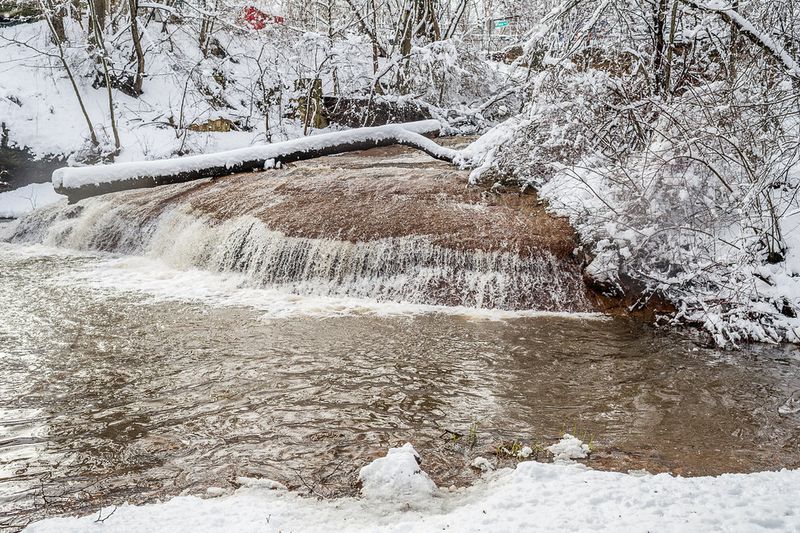
A waterfall with a town named after it deserves a closer look, even if it is not the roaring giant it may have been centuries ago. Tinton Falls sits in Monmouth County, where water, iron, and early industry shaped the area long before modern traffic started rolling through.
The falls are tied to the borough’s history, especially the old ironworks era, which gives the site more depth than a quick glance might suggest. This is not a wilderness waterfall, and that is part of the point.
It is a reminder that waterfalls in New Jersey are often layered into everyday places: near roads, neighborhoods, bridges, and old settlement patterns. The drop itself is modest compared with North Jersey’s mountain cascades, but it has real character, especially if you enjoy places where natural features and local history overlap.
Planning a visit takes a little more care than simply pulling into a state park lot. Respect posted signs, stick to legal viewing areas, and do not assume every nearby piece of land is public just because the waterfall is famous locally.
Tinton Falls is best approached as a short history-and-scenery stop rather than a long hike. Pair it with time in the surrounding Monmouth County area, and you get a compact but memorable look at how water helped shape one of New Jersey’s older communities.
9. Laurel Falls
Laurel Falls rewards the kind of hiker who likes a quieter side quest. Found in the Worthington State Forest and Delaware Water Gap orbit, it does not have the instant name recognition of Buttermilk Falls or the crowd-pulling force of Mount Tammany.
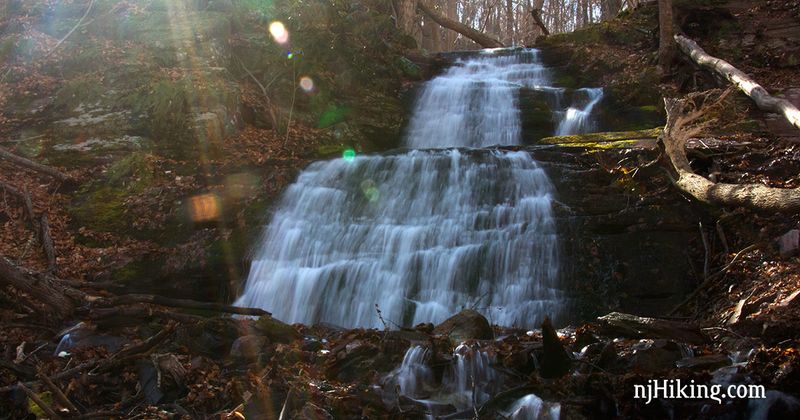
That works in its favor. The falls sit along a stream fed from the Sunfish Pond area, and when the water is moving well, the cascade has a clean, sliding look that feels elegant rather than overpowering.
The best thing to do here is slow down. This is not a place to sprint in, snap a picture, and leave.
The surrounding woods, the rocky footing, and the sound of the stream all help set the pace. Depending on your route, Laurel Falls can be folded into a bigger Delaware Water Gap hike, but it also works as a shorter waterfall stop for people who want scenery without committing to a brutal climb.
Because the flow depends heavily on rainfall and season, timing matters. Spring is usually kinder than late summer.
Wear shoes that can handle damp rocks, and do not be surprised if the trail feels rougher than the distance suggests. Laurel Falls is not the loudest waterfall on this list, but it has the low-key beauty that keeps hikers talking about “one more stop” long after they planned to head home.
10. Dunnfield Creek Falls
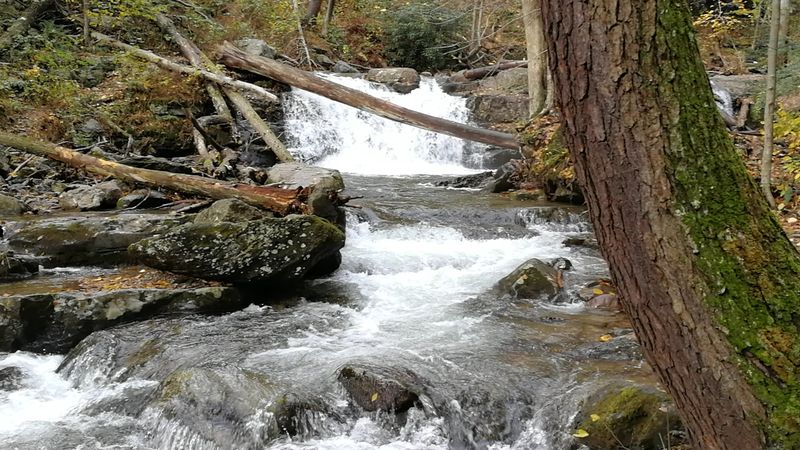
There is something almost musical about Dunnfield Creek. The water does not simply drop once and call it a day; it chatters, slips, pools, and keeps you company along the trail.
Near the Delaware Water Gap, Dunnfield Creek Falls is part of a rocky stream corridor that has become a favorite for hikers who like their waterfall visits with a proper walk attached. The falls themselves are not the only reason to come.
The creekside trail has that classic Water Gap mix of clear water, mossy stones, hemlocks, and trail junctions that tempt you into going farther than planned. You can keep the outing waterfall-focused or connect it with longer routes toward the Appalachian Trail and surrounding ridges.
That flexibility makes it a strong pick for both casual explorers and hikers building a bigger day. Parking near the Delaware Water Gap can fill early, especially on weekends with good weather, so this is not a lazy late-morning destination if you dislike circling for a spot.
The trail is rocky and can be slick after rain, which is also when the cascades look their best. Dunnfield Creek Falls is for readers who want the sound of water beside them for more than five minutes, with enough trail texture to make the whole outing feel satisfyingly outdoorsy.
11. Chikahoki Falls
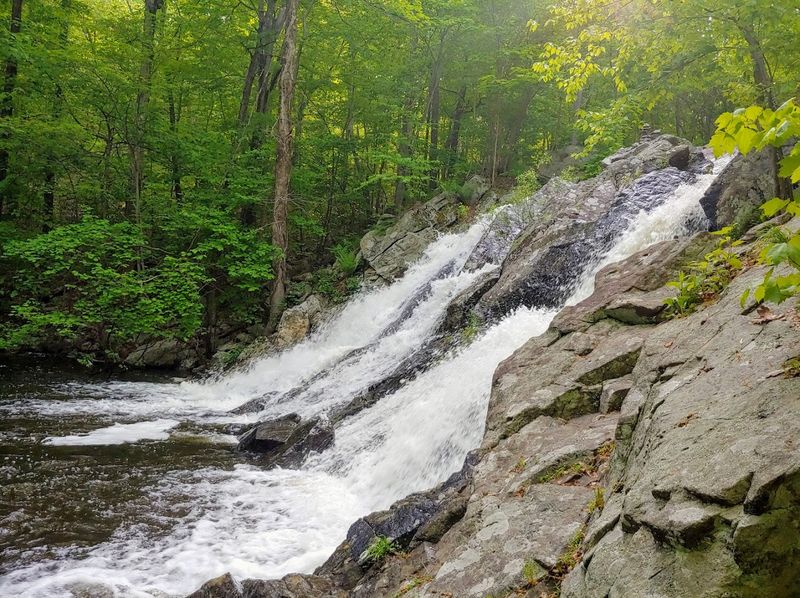
The approach to Chikahoki Falls has a little Highlands attitude. Norvin Green State Forest is rugged, rocky, and full of trails that can humble anyone who assumes North Jersey hiking is automatically easy.
That makes the waterfall feel like a true reward. After working through the woods near Posts Brook, hikers find a cascade that splits and drops into a pool with more personality than its modest height might suggest.
This is a good pick for people who like a waterfall wrapped into a fuller hike. Chikahoki Falls is often paired with Otter Hole, Wyanokie High Point, or other Norvin Green routes, which means you can design anything from a moderate outing to a more demanding loop.
The surrounding forest has boulders, ledges, reservoir views, and enough elevation change to keep the day interesting. The footing is the practical detail to respect.
Trails in Norvin Green can be rocky, and water crossings or wet spots may become more complicated after storms. On the plus side, those same rainy periods give the falls more body and sound.
Bring a map, pay attention to blazes, and do not treat this as a casual neighborhood path. Chikahoki Falls is a little wild, a little moody, and exactly the kind of place that makes Passaic County hikers feel smug.
12. Otter Hole Falls
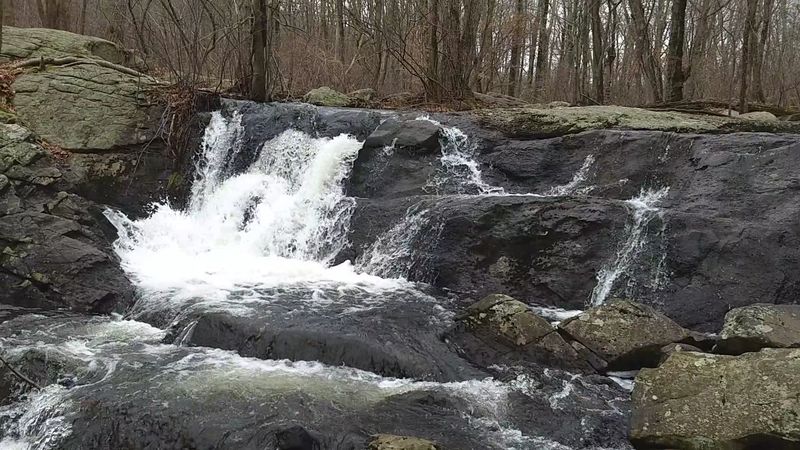
Sometimes the easiest waterfall on the route is still worth stopping for, and Otter Hole Falls proves it. In Norvin Green State Forest, this cascade sits close to the Otter Hole parking area, making it a satisfying quick reward before or after tackling more demanding trails nearby.
It is not the tallest or most theatrical waterfall in New Jersey, but it has a friendly, approachable quality that makes it hard to skip. The water steps down over rock in a compact series of drops, surrounded by the rougher woodland character that defines Norvin Green.
Because it is so close to the trailhead, Otter Hole is especially nice for hikers who want a taste of the area without committing to a long loop. More adventurous visitors can use it as a warm-up before continuing toward Chikahoki Falls or climbing to viewpoints that look across the Wanaque Reservoir region.
Do not let the convenient access fool you into wearing bad shoes. The ground around streams and falls can still be slippery, and Norvin Green has a way of making even short walks feel rocky.
Visit after rain for better flow, but be careful near wet stone. Otter Hole Falls is the kind of stop that gives you a quick nature fix, then politely asks whether you are ready for something harder.
13. Hacklebarney State Park Waterfall
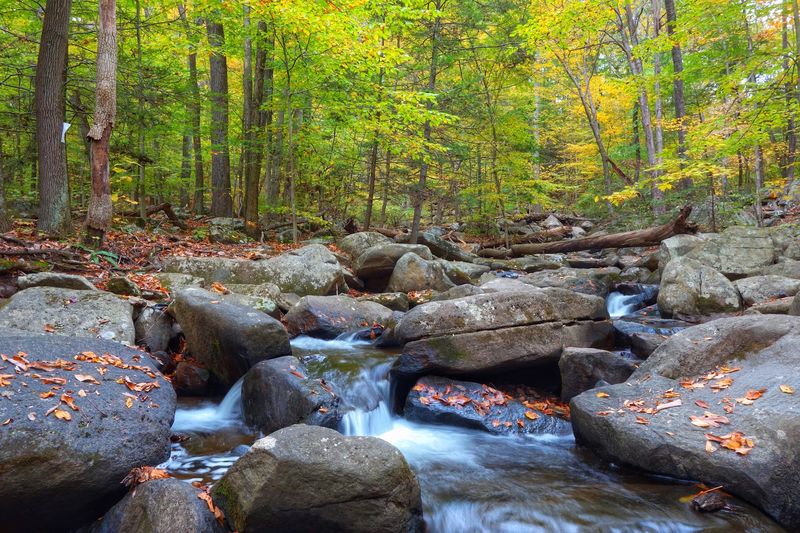
Hacklebarney does not rely on one perfect postcard waterfall. It wins people over with a whole river gorge full of movement.
The Black River cuts through the park with speed and texture, slipping around boulders, dropping in small falls, and filling the ravine with that constant rushing sound that makes people lower their voices without realizing it. It feels less like visiting a single waterfall and more like walking through a landscape built around water.
The trails are approachable, which makes Hacklebarney a favorite for families, casual hikers, photographers, and anyone who wants a strong nature payoff without disappearing into the backcountry. Wooden bridges, stone steps, big rocks, and shaded paths give the walk plenty of variety.
In fall, the combination of moving water and color can be ridiculous in the best way, but spring brings stronger flow and a fresher green look. This is also a good waterfall outing to pair with nearby Chester.
After the park, you are not far from farm markets, cider, baked goods, and small-town browsing, which is a very New Jersey way to reward yourself for walking along a gorge. Parking can get tight on beautiful weekends, so arrive earlier than your appetite for crowds.
The waterfalls here may be smaller, but the full Hacklebarney experience is one of the state’s easiest nature wins.
14. Tumble Falls
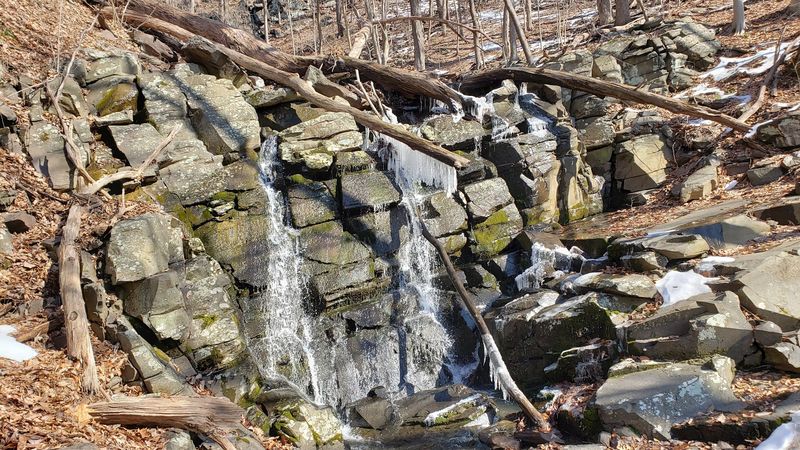
A waterfall you can spot near a scenic byway has a different kind of charm. Tumble Falls, in Kingwood Township, is not a major hiking destination with big signs and polished overlooks.
It is more of a roadside curiosity with a pretty setting, tied to the quieter, rolling landscape between Frenchtown and Stockton. The name alone sounds like something from an old local map, and the place still carries that off-the-main-drag feeling.
The falls are intermittent, which means timing matters more here than at larger waterfalls with steady drainage. After rain, the water has enough energy to tumble over the rock and justify the detour.
During dry stretches, it may be far less impressive, so manage expectations and treat it as a scenic add-on rather than the centerpiece of a whole day. Access is the detail to handle carefully.
The waterfall area includes private property, so visitors should view only from safe, legal public areas and avoid wandering where they do not belong. That does not make Tumble Falls less interesting; it just makes it a better fit for thoughtful waterfall chasers who understand that not every beautiful place is an open playground.
Combine it with a drive along Route 29, a canal towpath walk, or time in Frenchtown, and it becomes a small but memorable stop.
15. Watchung Reservation Waterfall
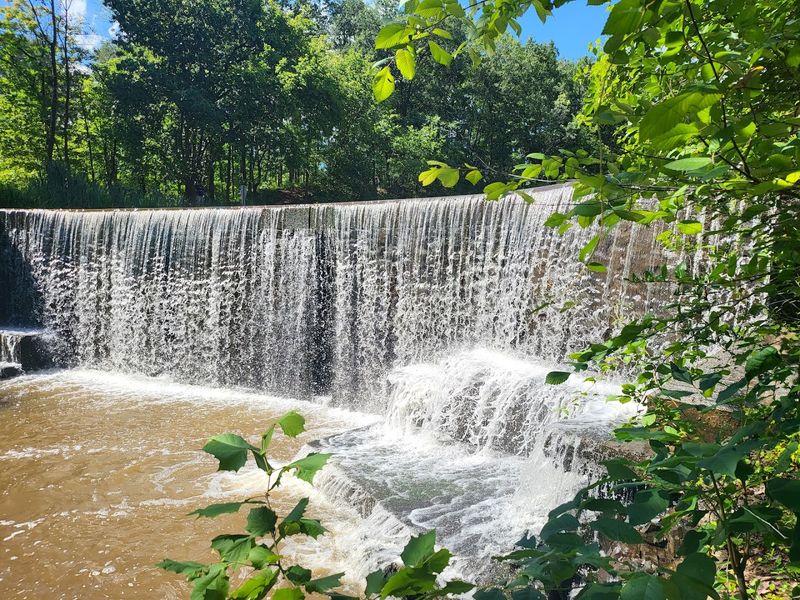
Watchung Reservation has a way of making Union County feel bigger than it looks on a map. Inside the reservation, trails wind around Lake Surprise, through woods, past historic features, and along Blue Brook, where small waterfall moments appear as part of the landscape.
This is not a giant plunge that shakes the ground. It is a gentler kind of waterfall stop, best appreciated by walkers who like finding details along the way.
The appeal here is variety. You can build a route around the lake, explore the History Trail, look for old village remnants, or turn the waterfall into one piece of a longer reservation wander.
Families like the area because there are options; hikers like it because the trail network can be adjusted depending on time and energy. The water features are especially pleasant after rain, when the brook has enough flow to sound lively instead of shy.
Parking and access are generally manageable compared with more remote waterfall areas, but the reservation can get busy on weekends. Wear shoes you do not mind getting muddy, especially if you plan to wander beyond the easiest paths.
Watchung’s waterfall is not trying to compete with Paterson or Buttermilk. It is there to make an already-good walk feel more textured, and that is a perfectly good reason to include it.
16. Van Campens Glen Falls
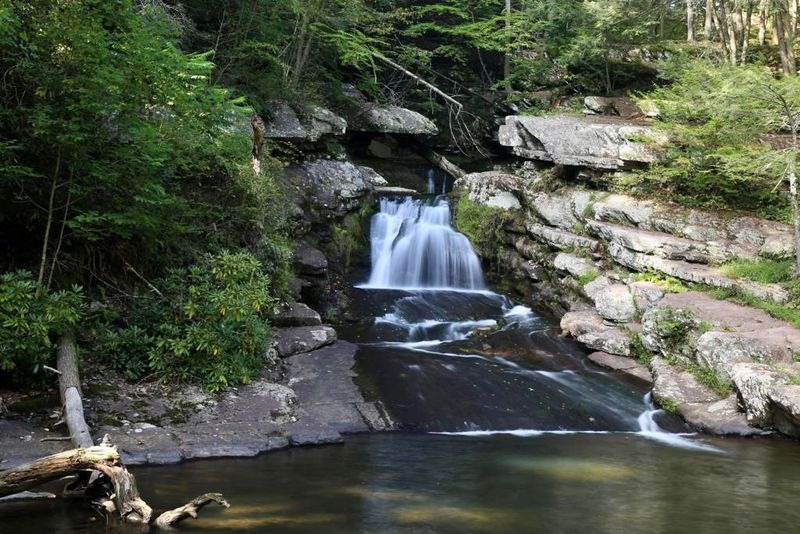
Van Campens Glen feels like the kind of place where the trail should come with a “slow down” sign. The brook moves through a narrow, rocky glen in the Delaware Water Gap area, creating cascades, shelves, pools, and small drops before reaching the more familiar falls.
The main waterfall is not enormous, but its shape and setting make it one of the more graceful stops on this list. What makes this spot special is the way water and rock work together.
The falls have a layered feel, with the stream sliding and dropping in stages rather than simply falling straight down. Around it, the glen adds shade, texture, and a sense of enclosure that makes the hike feel cooler and more intimate than an open ridge trail.
It is a great choice for anyone who likes photographing moving water or lingering beside a stream. Trail conditions and access in the Delaware Water Gap can change, so this is one to check before heading out.
Do not assume every road or parking area is open year-round, and be ready for muddy or slick footing. If conditions are good, Van Campens Glen is a beautiful half-day outing: not too hard, not too showy, and full of small details that reward people who are paying attention.
17. Greenbrook Falls
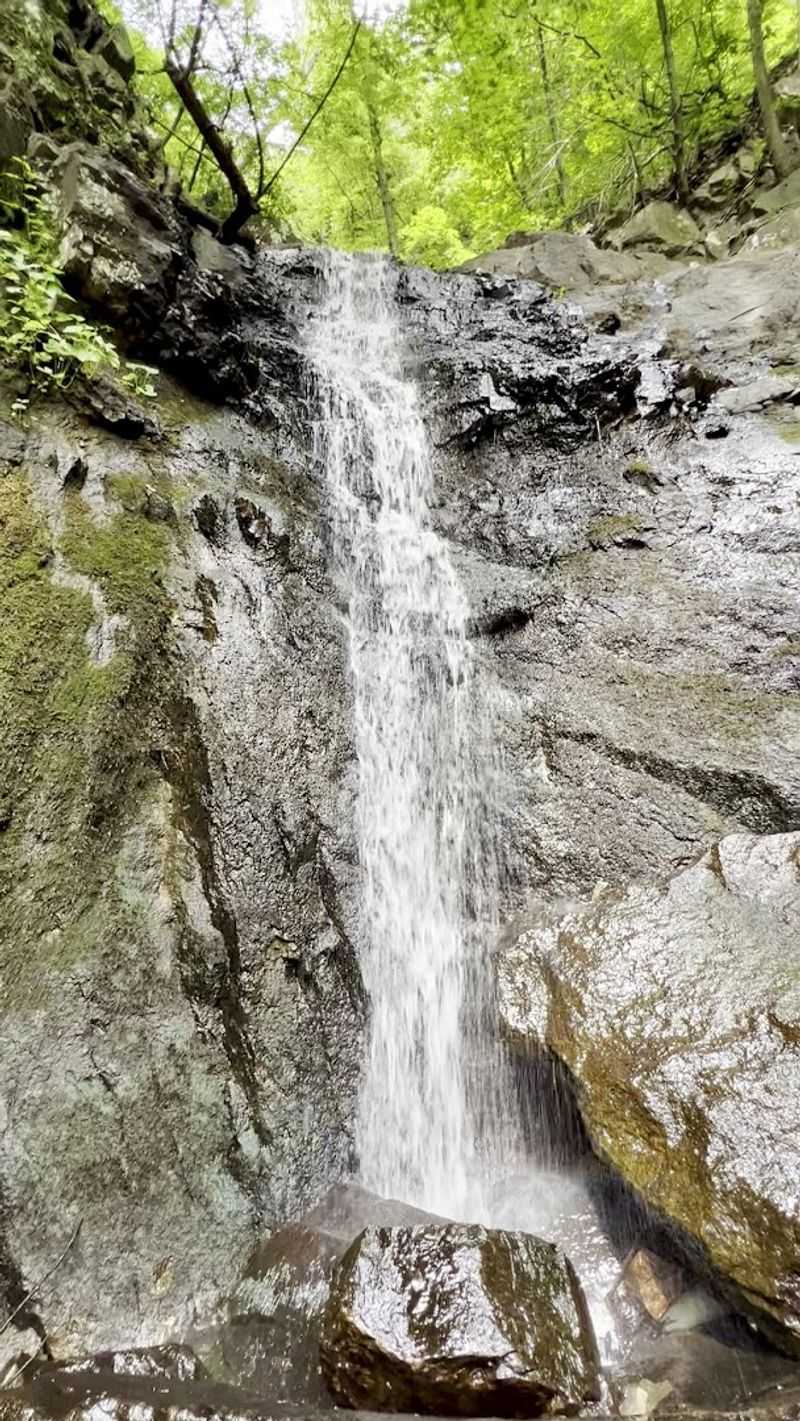
Greenbrook Falls is a reminder that impressive does not always mean easy. Dropping along the Palisades, it is often discussed as one of the tallest waterfall features in New Jersey, but access is not as straightforward as a regular public park trail.
The falls are connected with the Greenbrook Sanctuary area, where public access can be limited, so this is a destination that requires planning rather than spontaneous wandering. That planning is part of why it belongs in the article.
Readers should know about Greenbrook Falls because it is one of the state’s most striking waterfall settings, but they should also know that this is not a place to trespass into for a quick photo. The Palisades landscape is steep, sensitive, and sometimes dangerous, with cliffs, loose rock, and changing trail conditions.
Respecting access rules is not optional here; it is how places like this remain protected. When viewed appropriately, the falls offer a completely different waterfall experience from the inland forest cascades.
Water drops toward the Hudson River corridor, framed by the dramatic wall of the Palisades. The best visit is one that starts with checking current access and conditions, then treating the area with care.
Greenbrook Falls is less of a casual outing and more of a prized local landmark for patient, respectful nature lovers.
18. Apshawa Falls
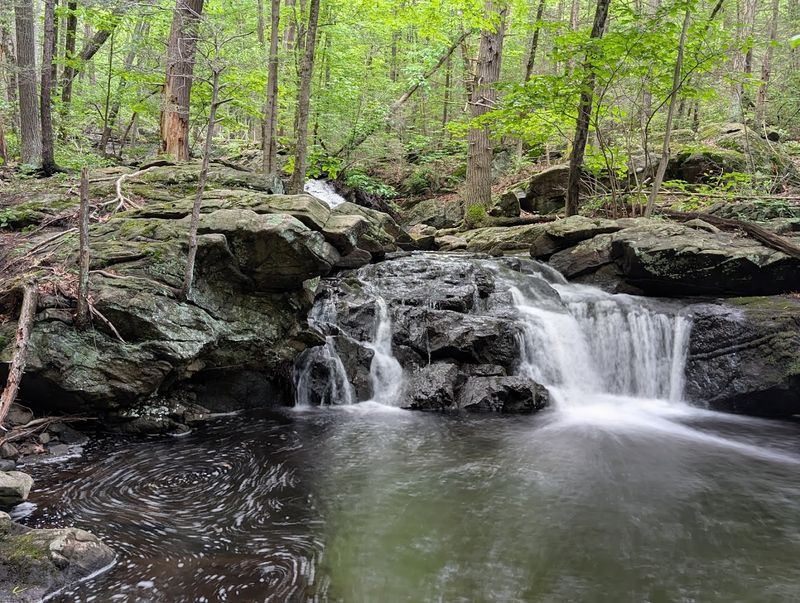
The route to Apshawa Falls comes with more than water. In West Milford’s Apshawa Preserve, hikers can find forest trails, Apshawa Brook, reservoir views, old water infrastructure ruins, and the kind of mixed terrain that makes a moderate hike feel nicely varied.
The waterfall itself is not a roaring monster, but it fits the preserve beautifully: rocky, wooded, and just far enough in to feel like a discovery. This is a good pick for people who like a hike with chapters.
One stretch may be quiet hardwood forest, another may pass water tank ruins, another may angle toward Butler Reservoir, and then the brook brings in the falls. That variety keeps the outing from feeling repetitive, especially for hikers who get bored on straight out-and-back trails.
The preserve also feels a little less polished than some county parks, which gives it a satisfying backwoods edge. The trails can include roots, rocks, hills, and stream crossings, so bring footwear with grip and expect mud after rain.
The parking area is not huge, making earlier visits smarter on good-weather weekends. Apshawa Falls is the kind of place to choose when you want a waterfall, yes, but also a proper wander.
It is less about one dramatic viewpoint and more about leaving with dirt on your shoes and a good story.
19. Schooley’s Mountain Falls
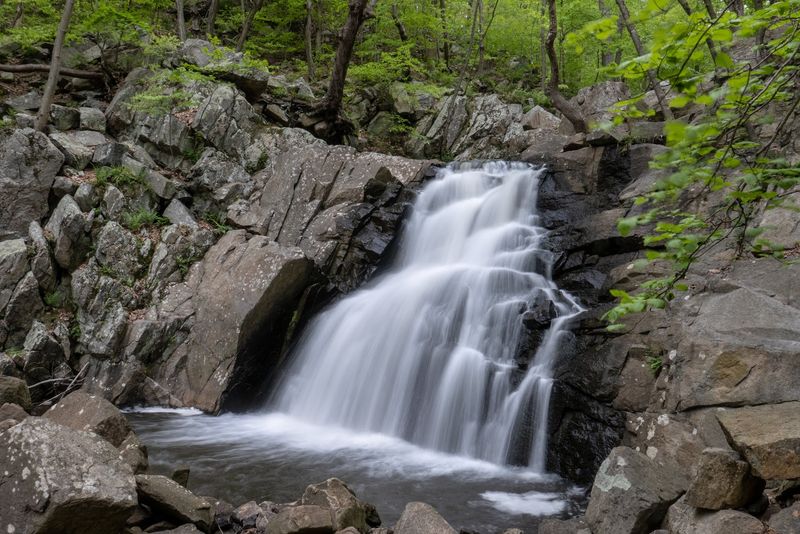
A small stream can do a lot when it has the right rocks to play with. At Schooley’s Mountain County Park in Long Valley, Electric Brook runs through a pretty gorge, creating cascades and waterfall views along a trail that is short enough for a casual outing but interesting enough to avoid feeling like a token walk.
It is one of those places that quietly overdelivers. The waterfall trail is especially good for families or anyone who wants scenery without committing to a strenuous day.
The path follows water, passes boulders, and can be extended toward an overlook or looped with other park trails. There is also a lake in the park, which gives the whole visit more range than a simple waterfall in-and-out.
Kids tend to like the bouldery sections, while adults appreciate that the hike feels like a real change of scenery without requiring an expedition. After rain, the cascades are livelier and the gorge looks its best.
In dry periods, the water may be calmer, but the setting still holds up. Expect roots, uneven ground, and the usual slick spots near the stream.
Schooley’s Mountain Falls is not trying to be the biggest waterfall in New Jersey. It is trying to be an easy, pretty, satisfying local hike, and it succeeds.
20. Little Falls
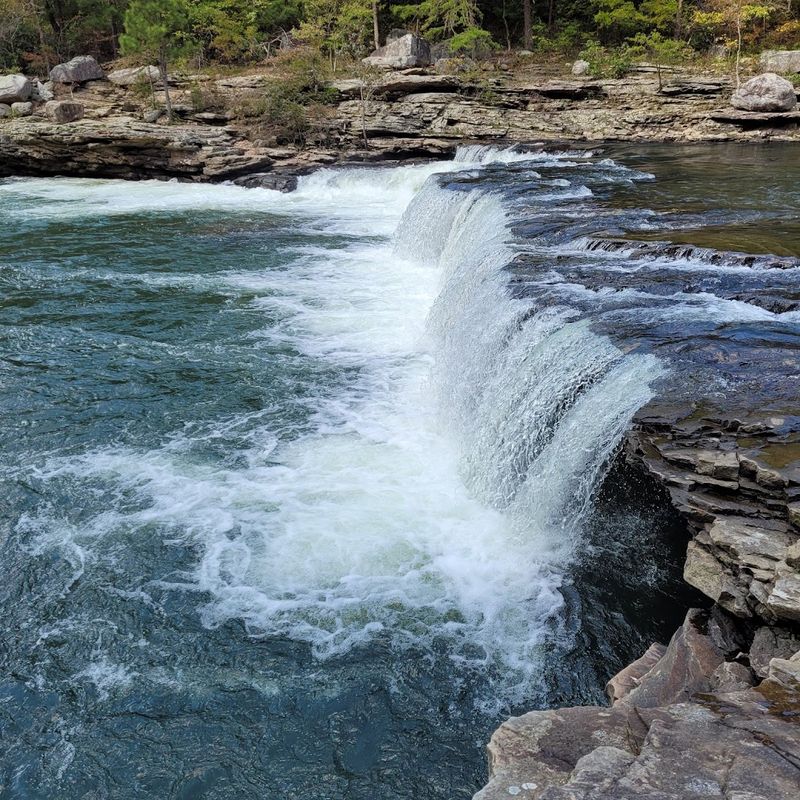
The name sounds modest, but Little Falls has a long memory. This Passaic County community was named for a waterfall along the Passaic River, and while the original falls were altered heavily over time, the area still carries the story of water, canals, mills, and local industry.
Visiting here is less like hiking to a pristine cascade and more like tracing the outline of a landscape that shaped a town. That makes Little Falls an unusual but worthwhile entry.
The waterfall history is tied to the Morris Canal, old river crossings, and the industrial use of stone and water power. For readers who enjoy places where nature has been changed, redirected, and argued with by people for centuries, Little Falls offers a different kind of interest.
It is not the place to go expecting a remote forest plunge. It is a place to look at how a river feature became part of a town’s identity.
The most practical approach is to treat this as a short historical stop, not a traditional waterfall hike. Stick to public paths and safe viewing areas, especially around riverbanks and old infrastructure.
Pair it with a walk through nearby greenway or canal-related sites if you want more context. Little Falls may not be flashy, but it has one of the more layered stories on this list.
21. Bridal Veil Falls
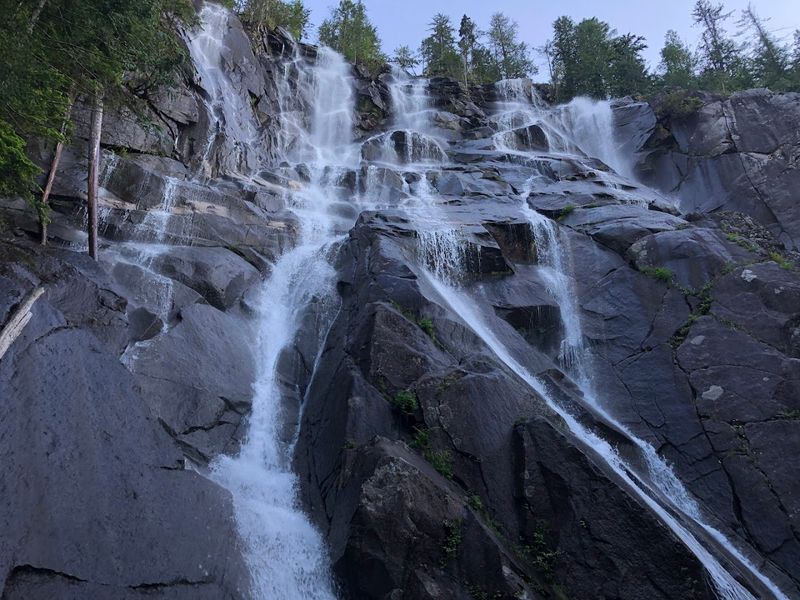
There is a little bit of theater in a waterfall you can walk behind. Bridal Veil Falls in North Haledon, near the William Paterson University area, drops over rock in a way that creates a shallow cave-like space behind the water.
That one feature gives it a playful edge and makes it stand apart from the many New Jersey cascades you can only admire from the front. The setting has its own personality, too.
The falls are associated with an old quarry area, so the landscape feels different from a deep forest ravine. Rock walls, falling water, and the unusual behind-the-falls view make it a favorite for people who like their nature stops with a bit of surprise.
In winter, freezing conditions can turn the falls into icy formations, though that also makes footing more serious and demands extra caution. Reaching the falls can be trickier than its near-road location suggests, and visitors should be mindful of property boundaries, trail conditions, and posted restrictions.
This is not a place to scramble carelessly for a better angle. Go after rain if you want stronger flow, wear shoes with traction, and keep safety ahead of the photo.
Bridal Veil Falls is memorable because it feels different, and that is exactly why it deserves a spot.
22. Stony Brook Falls
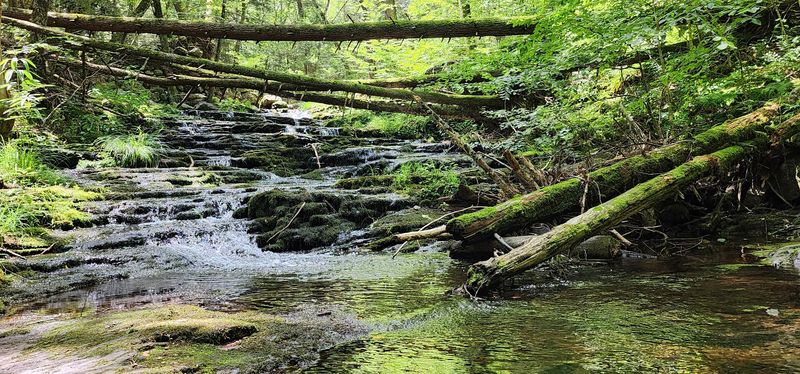
Stony Brook Falls is a friendly waterfall for people who like their hikes short, woodsy, and not overly complicated. Located in Stokes State Forest, the area includes more than one cascade along Stony Brook, giving visitors a chance to see stepped water, sloped rock, and small pools without taking on a punishing route.
It is a solid choice when you want a waterfall outing but do not want the day to become a test. The falls are especially nice because they sit in a broader state forest setting.
You can keep the outing easy from the day-use area or extend onto nearby trails if your legs are asking for more. The surrounding woods feel classic Sussex County: shady, quiet, and just rugged enough to remind you that you are not in a manicured park.
The sound of Stony Brook adds a steady backdrop as you move between viewpoints. Flow can vary, so spring or post-rain visits are best.
Even when the water is lighter, the rock shapes and forest setting keep the walk pleasant. Families appreciate the manageable distance, while hikers can use it as a mellow add-on to a larger Stokes State Forest day.
Stony Brook Falls does not shout for attention. It simply gives you a good, easy reason to get outside.
23. Bass Lake Falls
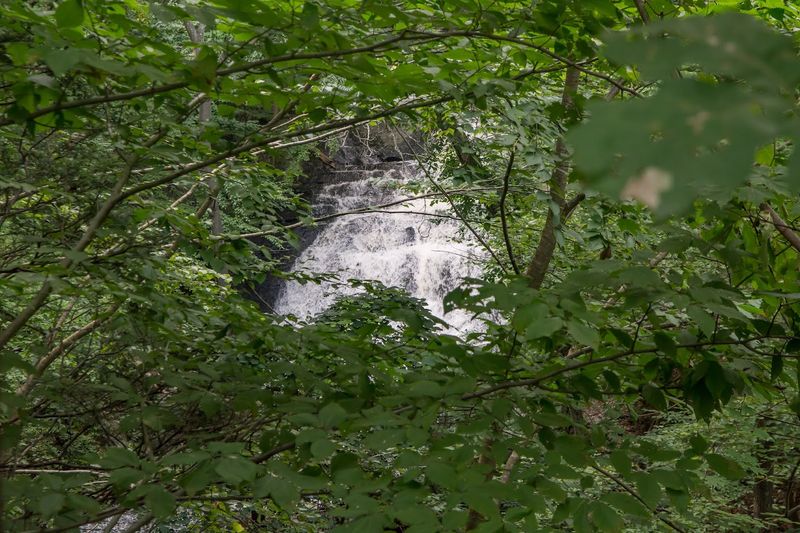
Bass Lake Falls is the entry on this list that comes with the biggest planning note. Located around the Princeton-Blairstown Center property in Hardwick Township, it is not a standard drop-in public waterfall hike.
That matters. The falls may be beautiful, and the surrounding woods may sound tempting, but readers should not treat the area like an open state park unless they are there through proper access, programming, or permission.
That said, Bass Lake Falls is worth including because it shows how many New Jersey waterfalls sit on land with complicated access. Not every cascade is beside a public trailhead or inside a county park.
Some are on private, nonprofit, educational, or restricted properties, which means the responsible way to appreciate them is by understanding the rules before planning a visit.
For those who encounter the area through an approved program or retreat, the appeal is obvious: quiet woodland, lake-fed water, and a cascade that feels far removed from the busier waterfall circuits.
For everyone else, this is more of a “know it exists” spot than a casual Saturday destination. The bigger lesson is a useful one for waterfall chasers: beauty does not cancel boundaries.
Bass Lake Falls belongs on the list, but so does the reminder to plan carefully and respect access limits.
24. Scudder Falls
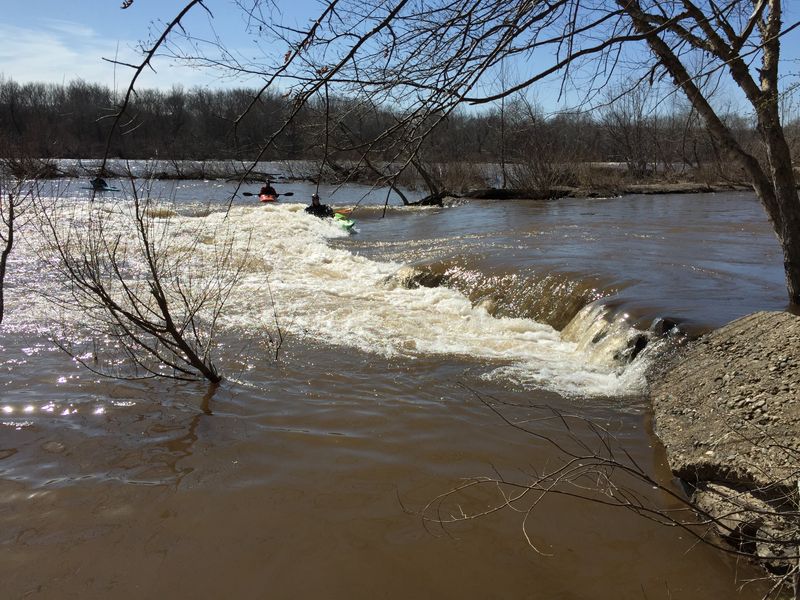
Scudder Falls is not a classic curtain of water dropping from a forest ledge. It is a stretch of whitewater on the Delaware River near Ewing and the New Jersey-Pennsylvania line, shaped by rock, river flow, and old human alterations.
That makes it a different kind of waterfall stop: broader, lower, louder in a river-rapid way, and closely tied to paddling culture rather than hiking alone. The best way to understand Scudder Falls is to think of movement across width instead of height.
The Delaware pushes through uneven riverbed features, creating waves and churning water that attract kayakers and whitewater enthusiasts when conditions line up. For non-paddlers, the appeal is more about watching the river work, especially from public access areas or nearby paths where you can safely take in the scene.
This is one to approach with respect. River conditions change, and whitewater that looks fun from a distance can be dangerous up close.
Stay out of restricted areas, be careful near wet rocks, and do not enter the water unless you have the right skill, gear, and conditions. Scudder Falls adds variety to a New Jersey waterfall list because it is not a neat woodland cascade.
It is the Delaware showing some muscle.
25. Lockatong Waterfall
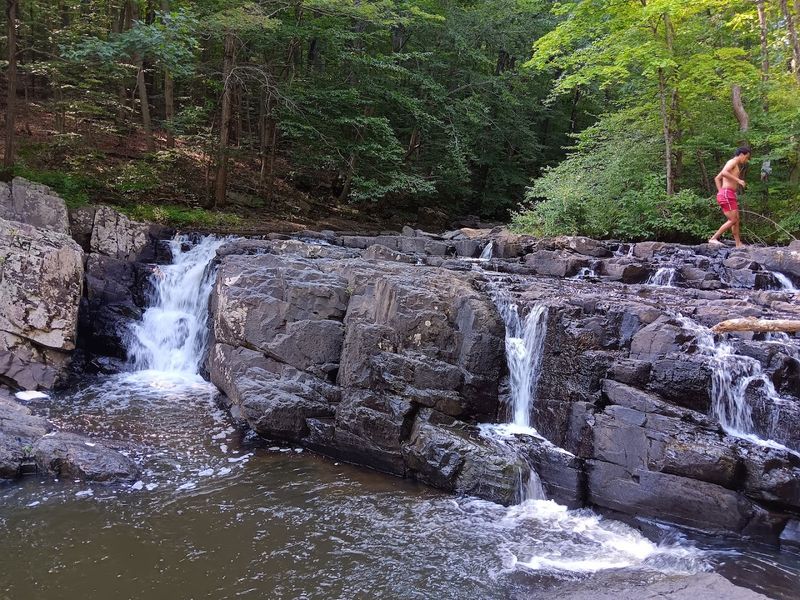
The Lockatong has a quieter kind of drama. In Hunterdon County, Lockatong Creek moves through wooded, rocky terrain and drops over ledges that feel wonderfully removed from the busier waterfall routes up north.
Lockatong Waterfall, often visited as Lockatong High Falls, gives hikers a short but satisfying outing with creek views, mud, roots, and enough roughness to feel like you found something local and real. This is a good waterfall for people who enjoy understated places.
The trail is not polished into perfection, and that is part of the appeal. You may deal with muddy sections near the start, uneven footing, and a final approach that asks you to pay attention.
Then the creek opens into a rocky drop that feels bigger in mood than in measurement, especially after rain when the water spreads across the ledge. Because this area is more low-key than famous North Jersey falls, it is wise to bring a map and not rely on vague directions.
Wear shoes that can handle mud, and check hunting-season considerations if you are exploring wildlife management lands nearby. Lockatong Waterfall is not flashy.
It is calm, wooded, and just hidden enough to make you feel like you have earned the quiet.
Share this story