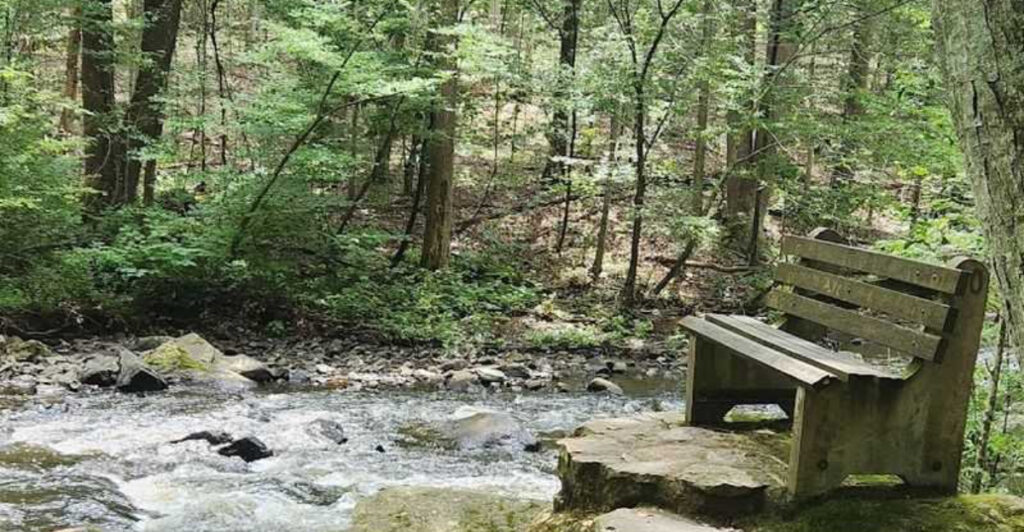
The water gives itself away before the trail does. You hear it somewhere below the trees, rushing over stone, disappearing behind hemlocks, then coming back louder around the next bend.
That is the little trick Hacklebarney State Park plays on you. One minute you are in Morris County, not far from Chester and Long Valley.
The next, you are looking down into a rocky gorge where the Black River tumbles through boulders like it has been rehearsing for a fantasy movie. Hacklebarney is not huge, flashy, or packed with big overlook drama.
Its magic is closer to the ground. Moss on stone.
Cold air near the ravine. Footbridges, pools, roots, and water moving in every direction.
It is the kind of New Jersey place that feels impossible to explain until someone sees it for themselves, preferably on a morning when the woods are quiet and the river is doing all the talking.
A Morris County Escape That Looks Too Magical To Be Real
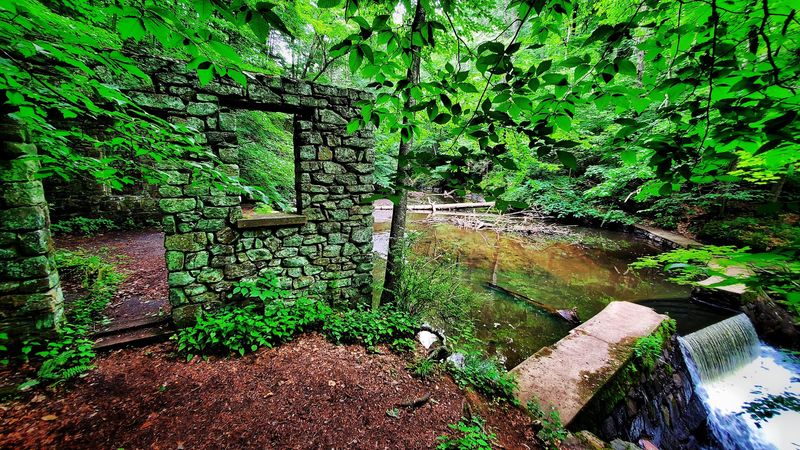
It takes about five minutes at Hacklebarney State Park for the outside world to start feeling a little suspicious. The parking lot sits off Hacklebarney Road in Long Valley, and from there the park does not make a big production out of itself.
No grand entrance. No dramatic reveal. Just trees, trail signs, picnic tables, and the gentle sense that you should keep walking. Then the land begins to dip, the air cools, and the trail starts threading toward the Black River.
Hacklebarney sits in one of those corners of Morris County where New Jersey forgets to act crowded. Chester’s shops and farm stands are nearby, Route 206 is not exactly another planet, and yet the park feels tucked away from the usual suburban rhythm.
That contrast is what makes the place feel so strange in the best way. You do not have to drive deep into the mountains to find it.
You can be standing in a hemlock-lined gorge before your coffee has even worn off. The park is open from sunrise to sunset, and there is no entrance fee, which makes it an easy little escape when you want something more interesting than another loop around the neighborhood.
The official trails add up to almost five miles, so this is not an all-day wilderness expedition unless you choose to stretch it out. It is more of a choose-your-own-pace park.
Families come for the picnic areas and short walks. Anglers head toward the water. Hikers link the trails together and make a solid loop out of it. The fantasy-movie feeling comes from how quickly the scenery changes.
A wide gravel path can lead to a rocky riverside stretch. A sunny picnic grove can give way to a shaded ravine. A quiet brook can suddenly turn into a cascade. Hacklebarney does not announce its magic with a sign. It lets you stumble into it one bend at a time.
The Black River Gorge Is the Star of the Show
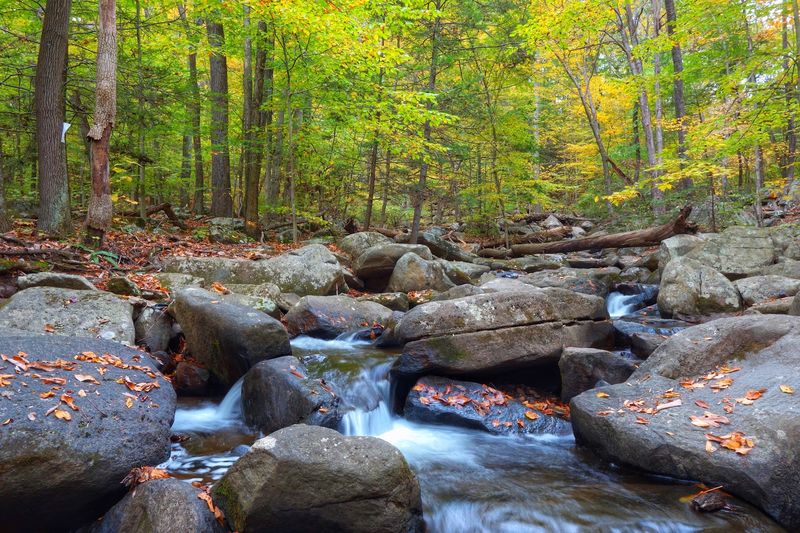
Here is what separates Hacklebarney from a nice wooded park with a few pretty trails: the Black River does not politely pass through the scenery. It carves the whole mood of the place.
The river runs through the middle of the park, fed by Trout Brook and Rinehart Brook, and the result is a rocky, water-shaped gorge that feels far more dramatic than you expect from a park in Morris County.
The best parts are down near the water, where the river moves around boulders, slips into pools, and rushes through narrow channels.
In some stretches, it is loud enough to drown out conversation. In others, it quiets down and slides darkly under the trees, which is somehow even more cinematic.
You can see why this place attracts hikers who want scenery without committing to a punishing climb. The payoff comes quickly, especially if you follow the trails that bring you close to the river.
The Riverside Trail is the big one for that classic Hacklebarney experience. It is about 1.8 miles and follows the park’s main waterways, including the Black River and its tributaries.
Parts of it can be rocky, rooty, and slick when the water is high, so this is not the place for flimsy sandals or distracted scrolling. Wear shoes with decent grip and expect the trail to ask for your attention in a few spots.
That said, the gorge is not just for serious hikers. The park’s trail network includes easier gravel and paved stretches, and the Main Trail gives access to several other routes.
You can make the visit as gentle or as adventurous as you want. That flexibility is part of Hacklebarney’s charm.
You can bring someone who “doesn’t really hike” and still get them to a place where the river looks like it belongs on a movie poster. The Black River is also a trout stream, so do not be surprised to spot anglers tucked along the banks in season.
They know what everyone else figures out eventually: the river is the reason you came.
Giant Boulders and Cascading Water Make Every Turn Feel Cinematic
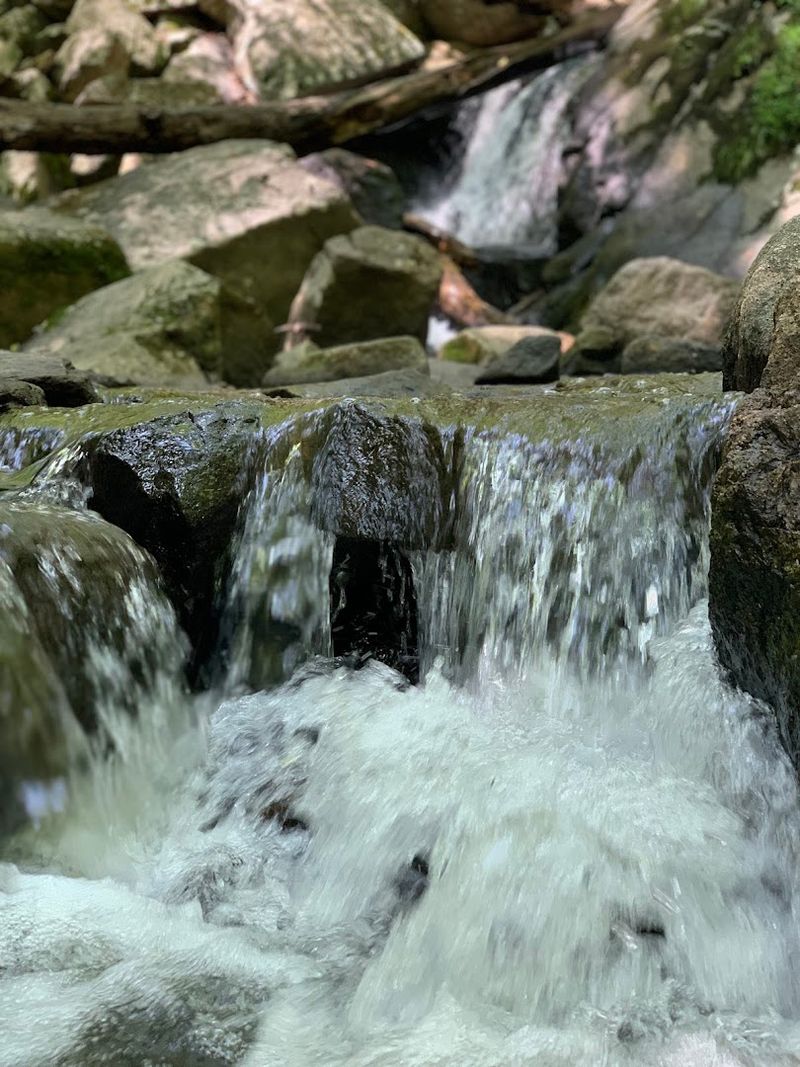
The rocks at Hacklebarney look as if some giant tossed them into the gorge and wandered off before cleaning up. They sit along the river in big gray clusters, forcing the water to split, drop, swirl, and hurry around them.
That is where the park gets its drama. Not from one enormous waterfall with a viewing platform and a crowd, but from dozens of smaller moments that keep showing up when you least expect them.
A brook slips over a ledge. The Black River folds around a boulder and flashes white.
A shallow pool forms between stones, clear enough that you can watch the current wrinkle across the surface. The sound changes constantly. Sometimes it is a steady rush. Sometimes it is a low rumble from below the trail.
Sometimes it is just water tapping its way over rock, like the park is doing its own background score. The Waterfall Trail is short, roughly a tenth of a mile, but it earns its name by leading toward cascades along Trout Brook.
It is a good reminder that Hacklebarney is not about distance as much as density. You do not need to walk far for something interesting to happen.
Even the tiny Three Pools Trail, around 0.12 miles, has a name that sounds like it was borrowed from a fantasy map. This is also where the park demands a little common sense.
Wet stone is slick. Riverbanks can be uneven. The prettiest boulder is not always the safest one to climb on, and the best photo is not worth a twisted ankle. Hacklebarney rewards slowing down.
Watch where you step, then look up. The view is usually better when you are not rushing through it.
For readers who like a little local history with their scenery, the park has another layer beneath all that green. In the 19th century, this area was connected to iron ore mining.
That past is not the first thing most people notice now, but it adds a nice twist. What once had an industrial purpose has become one of New Jersey’s most atmospheric natural escapes.
Hemlock Trees Give the Trails That Enchanted Forest Feeling
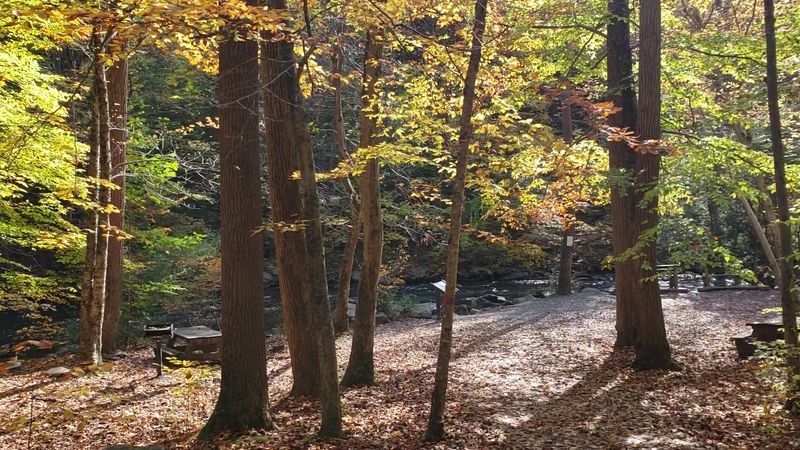
The hemlocks are doing a lot of the heavy lifting here. Without them, Hacklebarney would still be pretty.
With them, it becomes moody, shaded, and a little otherworldly. Their dark green branches lean over the ravine, soften the light, and make even a bright afternoon feel like you have wandered into a cooler, older pocket of the state.
This is especially noticeable as you move closer to the gorge. The temperature seems to drop near the water, and the forest closes in just enough to make the trail feel hidden. Not scary-hidden. More like secret-passage-hidden.
The kind of place where kids start narrating their own adventure and adults suddenly remember that walking in the woods can still feel exciting.
The park’s official trail descriptions mention a mix of hardwood upland forest, hillsides, hemlock ravine, and freshwater stream environments, which is the practical way of saying Hacklebarney packs a lot of scenery into a compact trail system.
One stretch may have tall hardwoods and a more open feeling. Another drops toward the river and gets darker, greener, and cooler.
The Wintershine Trail, about 0.35 miles, moves through hemlock and mixed hardwood forest above the Black River, giving you that layered woodland feeling without requiring a major hike. There are also plenty of places where the forest and the park’s family-friendly side overlap.
Picnic tables are scattered in wooded areas and near the water, and the playground area gives families a natural basecamp before or after a short hike. It is not unusual to see people arrive with sandwiches, kids, and big plans to “just walk a little,” then end up staying longer because the trails keep pulling them forward.
The best enchanted-forest effect happens after rain, when the moss looks brighter, the water sounds stronger, and the tree trunks seem darker against the trail. Hacklebarney is beautiful on a clear day, but a damp morning gives it personality.
Bring a light jacket, expect mud in places, and let the woods do their thing.
The Park Changes Into a Different Fantasy World Every Season
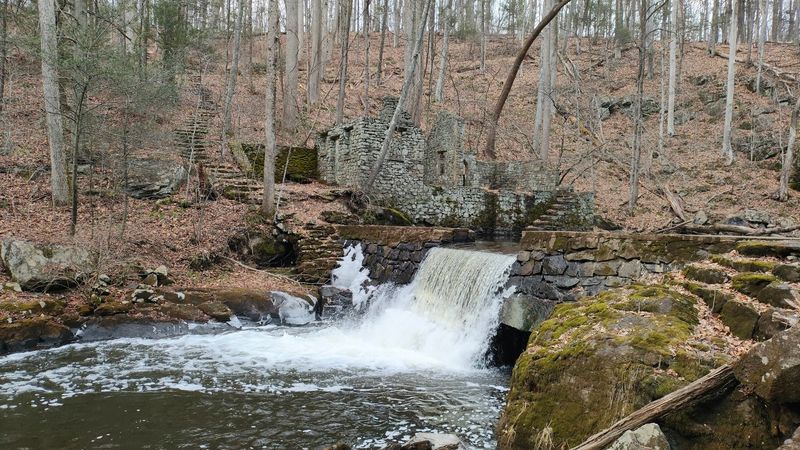
Some New Jersey parks have a best season. Hacklebarney has several, and they all seem to be arguing for first place.
Spring brings faster water, soft green leaves, and that fresh forest smell that makes every trail feel newly opened. If the brooks are running strong, the cascades have extra energy, and the gorge feels alive in a way that is hard to fake.
Summer is when the Black River Gorge becomes the park’s natural air-conditioning. Even on warm days, the shaded ravine can feel cooler than the open areas above it.
This is the season for a relaxed walk, a picnic under the trees, and a reminder that not every summer outing in New Jersey needs boardwalk crowds or beach traffic. Hacklebarney gives you water sounds without needing a beach badge.
Fall is the show-off season, and honestly, it has every right to be. Morris County does autumn well, and Hacklebarney’s mix of hemlocks, hardwoods, gray boulders, and moving water makes the color feel richer.
The orange and gold leaves look especially sharp against the dark evergreens and wet stone. Pair that with a stop in nearby Chester, or a seasonal farm-stand run in the area, and you have the kind of North Jersey fall day people try to recreate every year.
Winter changes the whole personality of the park. The crowds thin, the river sounds louder without leaves on the trees, and ice can form around rocks and edges of the brooks.
You have to be more careful with footing, especially near the river, but the reward is a quieter, starker version of Hacklebarney. It feels less like a fairy tale and more like the chapter where the heroes are traveling before sunrise.
The trick is not expecting the same park twice. Hacklebarney is shaped by water, shade, and weather, so the mood changes constantly.
That is a big part of why locals go back. The trails are familiar, but the place rarely feels exactly the same.
Why Hacklebarney Still Feels Like One of New Jersey’s Best Natural Secrets
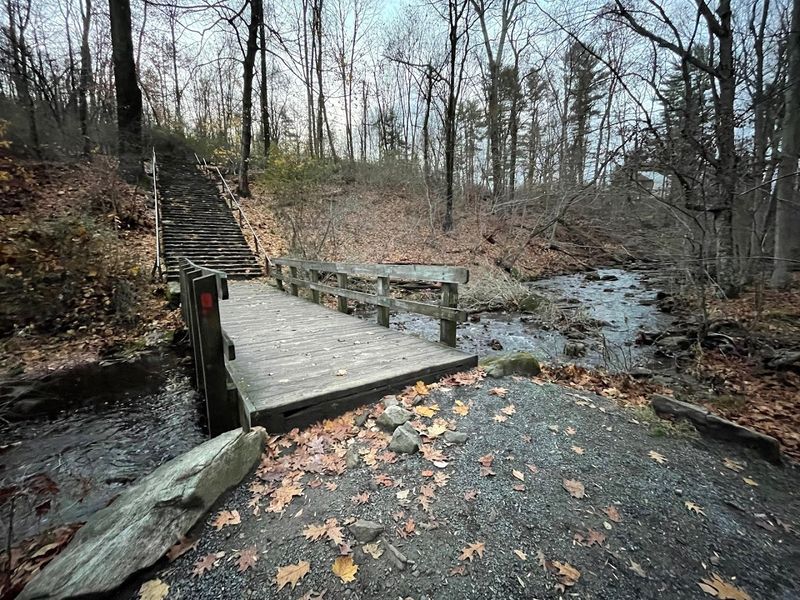
Calling Hacklebarney a secret is not entirely fair. Plenty of New Jersey hikers, anglers, families, and fall-color chasers know exactly where it is.
But it still feels secret because the park has resisted becoming too polished. It does not overwhelm you with amenities or try to turn nature into an attraction.
It gives you trails, water, rocks, trees, picnic spots, and enough quiet to notice all of it. That is increasingly rare.
In a state where many beautiful places come with timed tickets, packed lots, steep parking fees, or a long list of rules before you even get out of the car, Hacklebarney stays refreshingly simple. The entrance fee is none.
The hours follow the sun. The main thing you need is a decent pair of shoes and enough sense not to underestimate wet rocks.
Its location helps, too. Being between Long Valley and Chester means the park can fit into a larger day without turning into a production.
You can hike in the morning, stop in Chester afterward, grab something sweet, browse a few shops, or head toward one of the nearby farms when the season is right. But the park itself never feels like filler.
It is the main event, even if you only spend an hour or two there. The scale is part of the appeal.
With roughly five miles of official trails, Hacklebarney is big enough to explore but small enough to understand. You can come with kids, with a friend who wants a pretty walk, or by yourself when you need the sound of moving water to reset your brain.
The park meets each visit differently. And then there is that gorge.
The Black River rushing through boulders, the hemlocks leaning over the ravine, the little cascades flashing between trees. It all feels slightly too cinematic for a regular afternoon in New Jersey, which is exactly why Hacklebarney lingers in your head after you leave.
It is not pretending to be Middle Earth. It just happens to look like the kind of place where the map should have burned edges.
Share this story