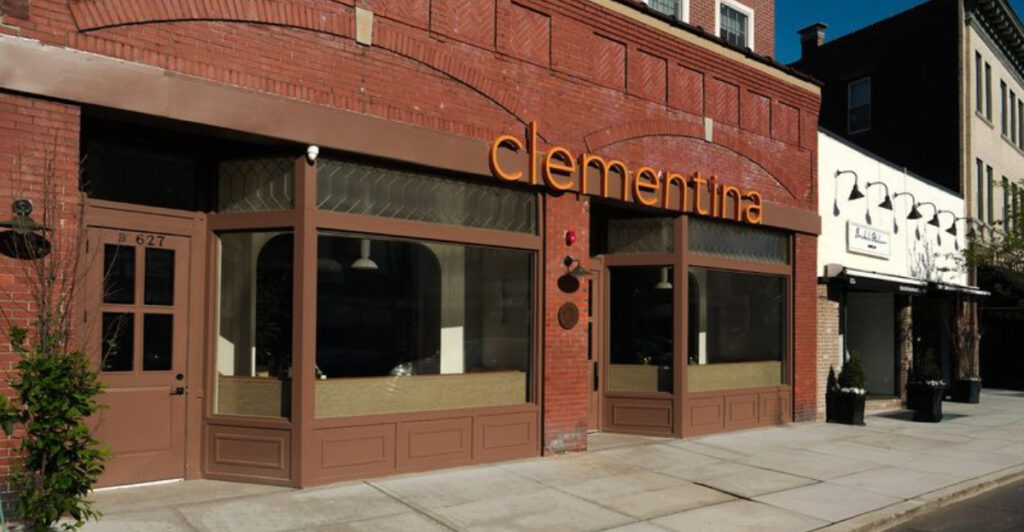
The first thing you notice at Clementina is that the room does not behave like a former hardware store. Light bounces.
Curves soften the edges. Brick arches peek through like they have been waiting patiently for someone to make them useful again.
At 627 Valley Road in Upper Montclair, the new Italian restaurant could have easily leaned into the usual safe formula: white tablecloths, a few framed Italy photos, maybe a lemon somewhere for good measure. Instead, New Jersey designer Blanche Garcia gave the space a full personality.
Clementina opened on June 5, bringing Chef and Partner Michele Rocchi’s Adriatic-influenced cooking to a stretch of town that already takes restaurants seriously. But the real surprise is how much the room does before a plate even hits the table.
It feels bright without being sterile, polished without acting fancy, and unmistakably Montclair in the best possible way.
A dark Valley Road space gets a second life
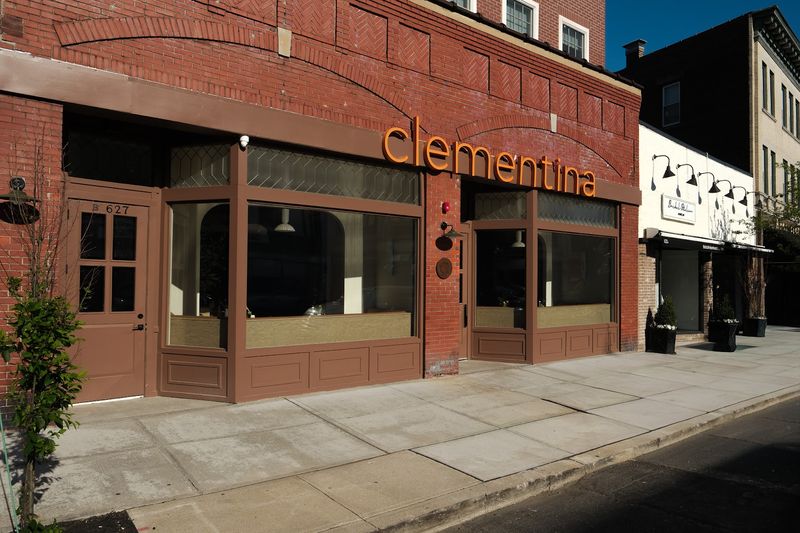
Before Clementina arrived, 627 Valley Road was known for something very different from handmade pasta and hand-blown sconces. The Upper Montclair address was formerly home to Saunders Hardware, a longtime neighborhood business that closed in 2024.
That matters because Montclair people remember spaces. They remember what used to be where, who ran it, which storefront sat empty too long, and which block suddenly started getting more interesting.
Turning a practical, unglamorous former hardware space into a restaurant with this much visual confidence is not a little refresh. It is a full reintroduction.
The challenge was obvious from the start: the building had character, but it was not naturally set up to glow. The primary natural light comes from the bay windows at the front, which means the deeper parts of the room could have easily felt flat or shadowy.
Instead of pretending that problem did not exist, the design uses it as the starting point. The restaurant does not try to erase the bones of the building.
It keeps the brick, respects the structure, and lets the original architectural character do some of the heavy lifting. That is the clever part.
Clementina does not look like a restaurant that was dropped into Montclair from a mood board. It looks like a restaurant that paid attention to where it landed.
The old space is still there in pieces, but now it has white oak, textured plaster, softened curves, greenery, and a dining room that feels intentionally layered. It is not just a makeover.
It is the kind of transformation that makes locals slow down on Valley Road and do the classic Montclair double take: wait, that’s what’s in there now?
Blanche Garcia saw possibility where others saw a problem

Blanche Garcia’s work at Clementina is a good reminder that restaurant design is not just about making a room pretty enough for Instagram. Pretty is easy.
Solving a difficult room and making the result feel effortless is the real trick. Garcia, the New Jersey-based designer behind B.
Garcia Designs, approached Clementina with the kind of eye that sees limitation as material. Limited daylight?
Build layers of light. Historic brick? Do not cover it up. Long sightlines? Break them with greenery and intimate seating zones. The result feels less like a decorated restaurant and more like a room with a plan.
Garcia’s design leans into natural materials and softness, using white oak, plaster, curved forms, and plant life to keep the dining room from feeling rigid. That is especially important in Montclair, where diners have options and can spot a forced concept in about eight seconds.
Clementina needed to feel grown-up, but not stiff. It needed to match Michele Rocchi’s coastal Italian point of view without turning into a theme restaurant.
No fake villa energy. No “Tuscan” cosplay. Just a warm, modern room with enough old-world influence to make sense with the menu. Garcia also understood that a restaurant in Upper Montclair has to work at different speeds.
It has to feel right for a Wednesday dinner, a Friday night reservation, a birthday table, and the couple that swears they are “just getting a light bite” before ordering half the menu.
Her answer was not one big visual gesture, but a series of smaller decisions that add up: the custom host stand, floating wood elements, soft shapes, olive tones, preserved brick, and lighting that keeps the room moving.
It is confident design without the ego trip.
How light became the star of Clementina
The funniest thing about Clementina’s glow is that the room did not start with an unfair advantage. This was not some sun-drenched glass box begging to be photographed.
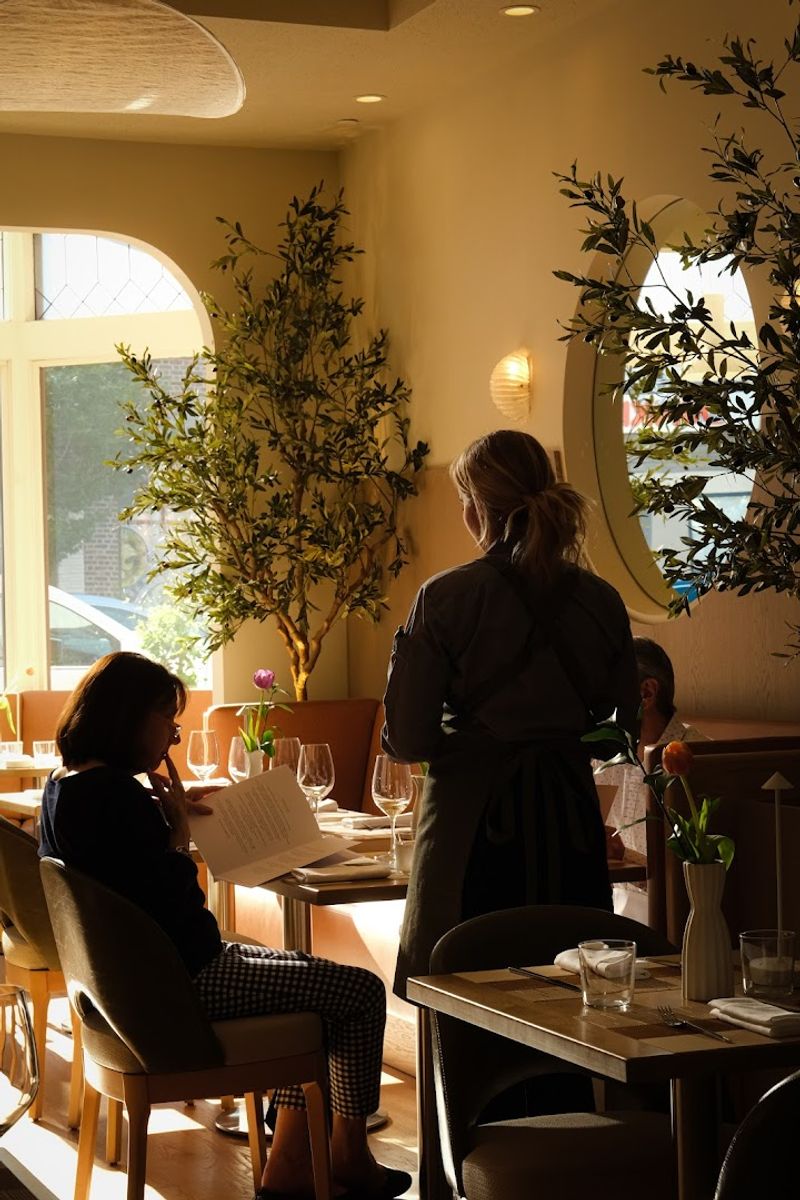
With natural light mainly entering through the front bay windows, the design had to create its own rhythm as guests move farther inside. Garcia’s answer was layering, and once you know that, you can see it everywhere.
Recessed circular mirrors are carved into the walls of the main dining area, paired with hand-blown Italian sconces that help bounce and multiply the light. Overhead, a trio of oversized cloud-like chandeliers made with commercial rice paper diffuses brightness in a way that feels soft rather than showy.
It is a smart move because restaurant lighting can go wrong fast. Too bright and everyone feels like they are eating in a boutique fitting room.
Too dim and people start using phone flashlights to read the menu, which is nobody’s finest dining moment. Clementina lands in the middle.
The light is part of the atmosphere, but it does not shout over the food. It helps the brick look warmer, the wood feel richer, and the olive-toned seating settle into the room naturally.
It also supports the restaurant’s name, which nods to citrus, the Mediterranean, and a certain feminine brightness. That could have been a branding detail that lived only on paper.
Instead, the room carries it. The light gives Clementina its first impression and then keeps working in the background while the menu takes over.
When a plate of tagliatelle with shellfish lands at the table, or the warm chocolate fondant shows up with cream gelato and Lagavulin whisky, the room already knows how to frame the moment.
Old Montclair history meets modern Italian warmth
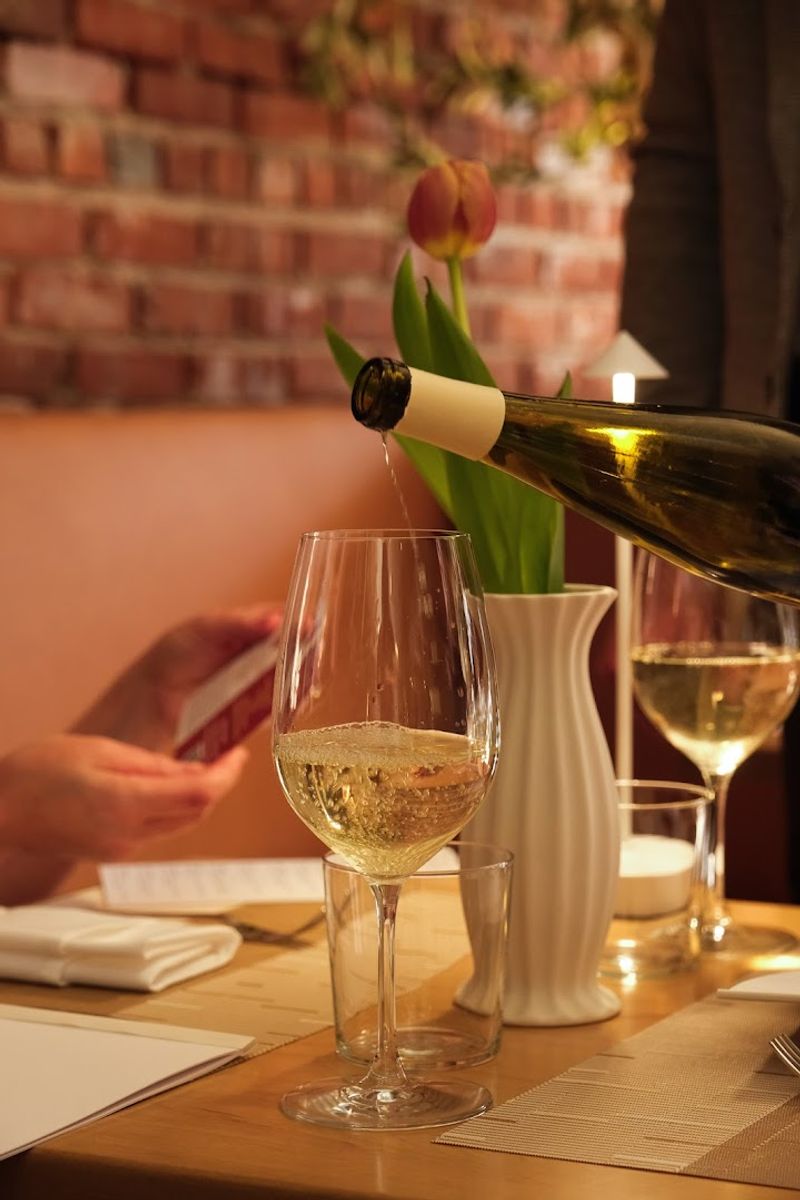
Montclair has never been shy about Italian restaurants. The town has long had red-sauce favorites, chef-driven newcomers, neighborhood pasta spots, and the kind of places where everyone has a strong opinion about which table is best.
Clementina enters that conversation from a slightly different angle. Chef and Partner Michele Rocchi is from Senigallia, a coastal city in Italy’s Marche region, and the menu reflects that Adriatic influence rather than leaning only on the greatest hits people expect.
There is grilled sea bass with roasted potatoes, capers, red onion, black olives, herbs, and balsamic-finished jus. There is maccheroncini al fumé, a Marche-style pasta with tomato, smoked pancetta, cream, smoked scamorza, and a touch of smoked paprika.
There is chicken al potacchio, another Marche-rooted dish, made with white wine, wild fennel, garlic, tomato, and black olives. The design follows the same idea: rooted, but not stuck in the past.
Existing brick and architectural bones were preserved and repurposed, while new archways echo traditional Italian forms without turning the room into a museum set. White oak and textured plaster keep it current.
The greenery brings in a coastal freshness that connects back to Rocchi’s background. This is where the old building really starts to make sense.
A space with more than a century of local history does not need to be scrubbed clean to feel new. It needs someone to understand which parts deserve to stay.
Clementina’s brick arches give the room weight, while the softer materials make it hospitable. That balance is why the restaurant does not feel like it is chasing trends.
It feels like it wants to be here for a while.
The design details that make the room feel alive
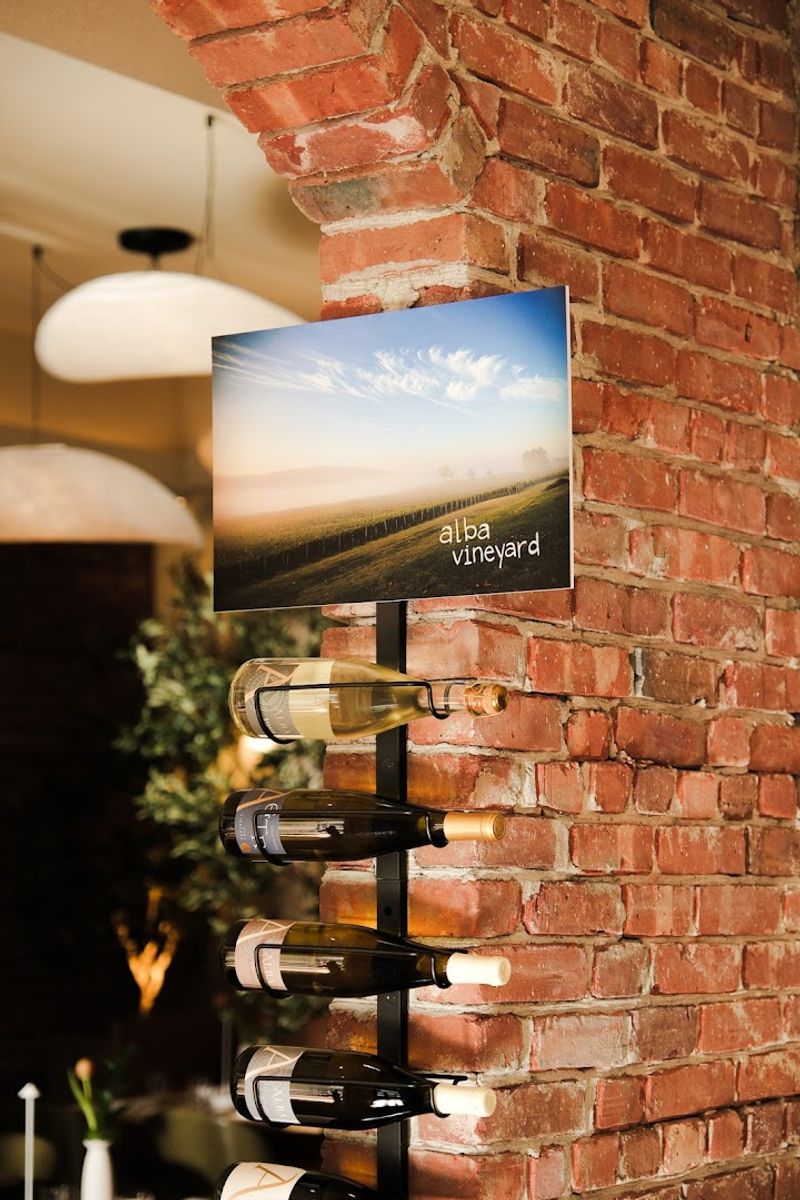
Some restaurant interiors look great in one wide shot and then get less interesting the longer you sit there. Clementina goes the other way.
The closer details are where the room gets fun. The greenery is not just decorative filler; it helps divide the dining room, soften sound, and create a little breathing room between tables.
Because the interior does not have enough natural light for real plants to thrive everywhere, the team used high-quality faux olive trees and custom planters with intention. That may sound like a small thing, but anyone who has sat two feet from another table’s anniversary toast knows privacy is not small.
The furniture supports the same warm, organic feeling. Maple and white oak tones, natural wood chairs, olive green, cognac, brick red, cream, and brushed stainless steel all show up in the palette without making the room feel overdesigned.
Then there is the shift in mood as you move through the restaurant. The main dining room is brighter and more open, while the chef’s table experience turns darker and more intimate, with merlot walls, banquette seating, and a custom curved table.
It feels like the restaurant has a second personality tucked inside it. Even the bathrooms were not treated as an afterthought, which is one of those hospitality details people pretend not to care about and then absolutely mention later.
Deep merlot tile, brushed brass accents, a custom fluted-glass door, and an imported hand-carved stone sink carry the story all the way through. That is what makes Clementina feel alive.
It does not rely on one photo-friendly wall. The design keeps rewarding attention, from the host stand to the sconces to the unexpected little room that feels made for a lingering second glass.
Why Clementina already feels like a Montclair destination
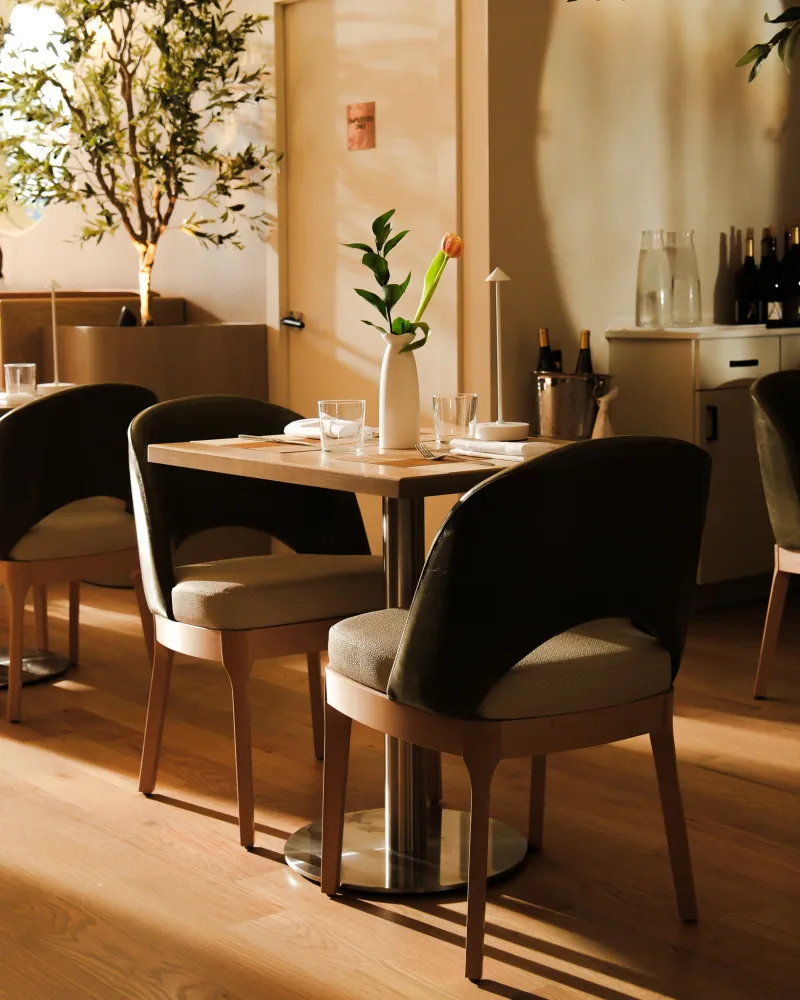
A restaurant becomes a local destination when it gives people more than one reason to talk about it. Clementina has the address, the design, the chef, and the early buzz, but it also has the details that make a place easy to remember.
It is at 627 Valley Road in Upper Montclair, open for dinner Wednesday and Thursday from 5 to 10 p.m., Friday and Saturday from 5 to 11 p.m., and Sunday from 4 to 10 p.m.
The menu is specific enough to stand out, with first-course dishes like tuna tataki with basil-scented red peppers, soy caramel, and frozen pineapple-lime-mint cubes, and pastas like house-made egg tagliatelle with lobster, shrimp, crab, fresh tomato, and thyme.
Desserts are not phoned in either. The tiramisù is reinterpreted with rum-scented mascarpone espuma, coffee and anise granita, meringue, caramelized nuts, cocoa nibs, and cocoa powder.
That is a lot more memorable than “save room for dessert.” Still, the reason Clementina feels bigger than another new opening is how completely the room and the food seem to understand each other. The Adriatic influence on the menu connects with the olive trees, natural textures, soft lighting, and old brick.
The former hardware store past gives the space a little local grit under all that polish. And the design gives Montclair something it loves: a restaurant with personality, but not attitude.
Clementina feels special without feeling sealed off from the neighborhood. It has enough drama for a night out and enough warmth to become someone’s regular table.
That combination is harder to pull off than it looks, which is exactly why the room sticks with you.
Share this story